Filmy Fern
Hymenophyllum australe
Last updated:
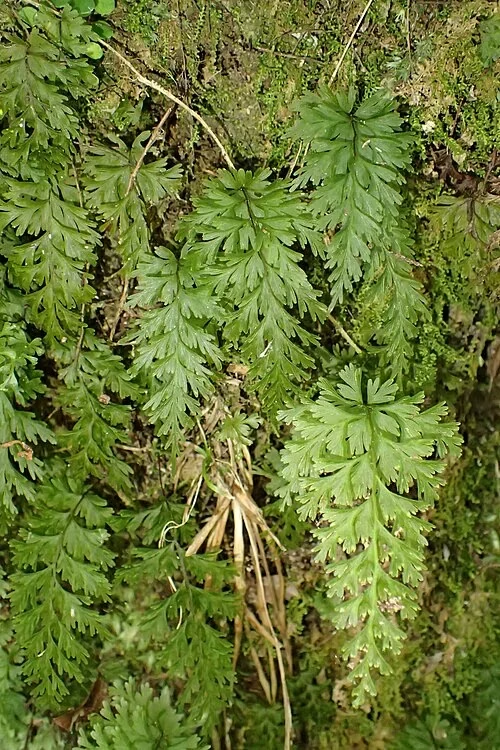
Hymenophyllum australe is a filmy fern that lives almost entirely in and beside running water. Its dark green to black-green fronds, 4-21 cm long and distinctly triangular, cling to wet boulders and dripping overhangs in deeply shaded river gorges, around waterfalls and in stream-bank seepages, sometimes partly submerged. It is scattered through both main islands and Stewart Island from 30 to 850 m, and also grows in eastern Australia. Long known in New Zealand as H. atrovirens, it is ranked At Risk - Naturally Uncommon because its specialised streamside habitat is limited and patchy. Explore more native ferns in our native plant guide.
Plant Description
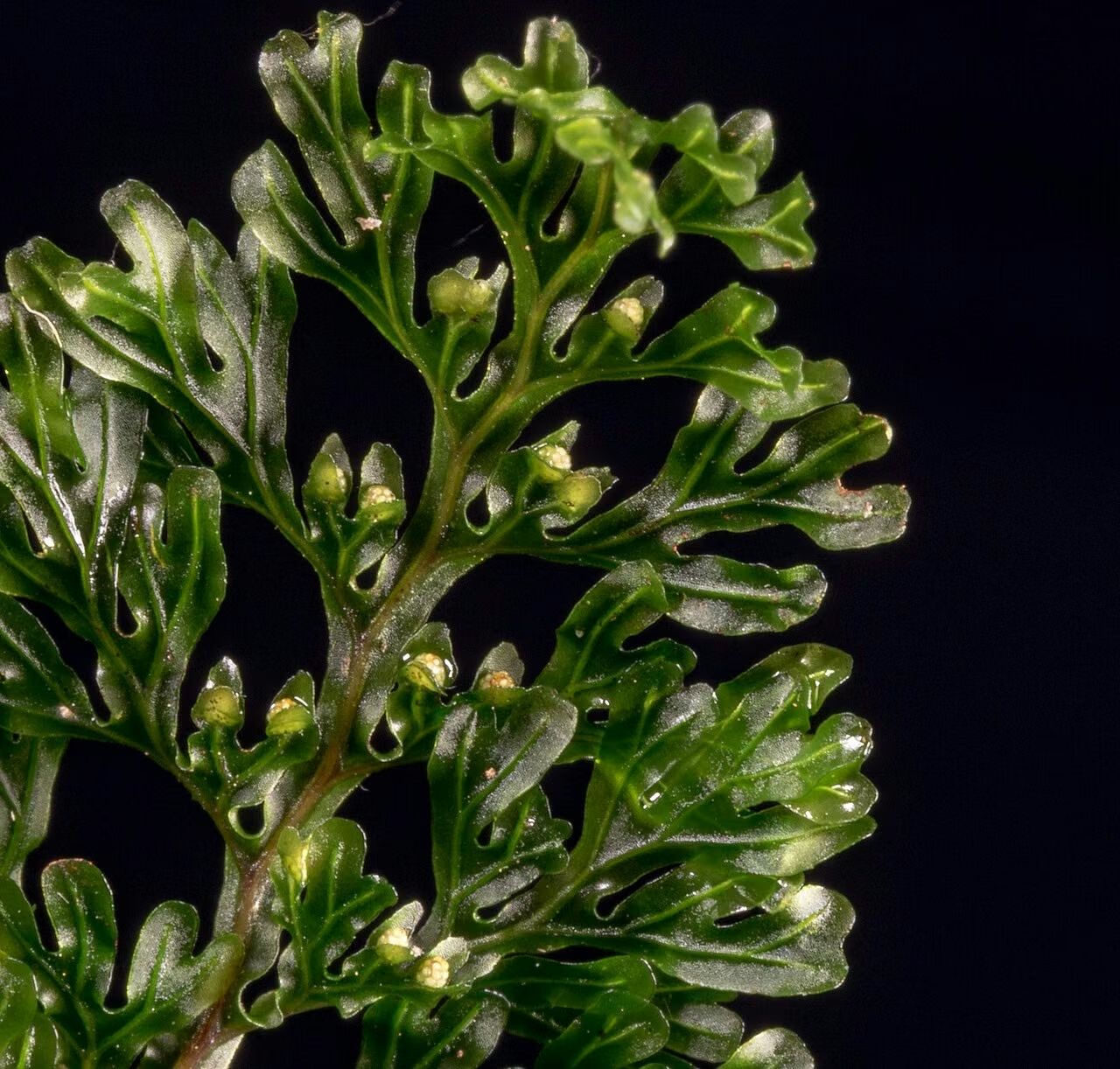
Hymenophyllum australe is a creeping filmy fern whose fronds arise from long-creeping rhizomes on wet rock. Fronds are about 38-210 mm long. The stipes are dark brown throughout and narrowly winged almost to the base, and the hairless, membranous blades are dark green to black-green, distinctly deltoid to narrowly deltoid, and two to four times divided. The ultimate segments are linear to oblong with smooth margins.
The sori sit at the tips of the ultimate segments, solitary or in pairs, and protrude rather than being sunken into the blade. The two indusial flaps are smooth-edged or notched and lack crests. Like all filmy ferns, the blade is only one cell thick between the veins, so the fronds collapse quickly if the air dries.
Its closest look-alike is H. flexuosum, which has larger, lighter yellow-green, more finely divided fronds with a broad crinkled wing on the stipe. H. pluviatile is also similar but grows on forest trees and banks rather than in the splash zone. The combination of dark, triangular fronds and a rocky riverside position is the best field clue.
Quick Facts
| Scientific Name | Hymenophyllum australe |
|---|---|
| Height | Fronds 4-21 cm long |
| Spread | Patches on long-creeping rhizomes over wet rock |
| Water Needs | Constantly wet; often splashed or partly submerged |
| Light | Deep shade |
| Frost Tolerance | Moderate; recorded to 850 m |
| Salt Tolerance | Low; a freshwater streamside plant |
| Growth Rate | Slow |
| Lifespan | Perennial |
Climate Best Suited to
It needs cool, permanently humid microclimates created by shaded flowing water, from lowland to lower montane levels; regional climate matters less than the gorge or waterfall it grows in.
Regional Suitability
| City | Climate Suitability |
|---|---|
| Auckland | Low |
| Wellington | Low |
| Christchurch | Low |
| Dunedin | Low |
Plant Habitat
In New Zealand H. australe is recorded from Northland, Auckland, the Volcanic Plateau, Gisborne, Taranaki and the southern North Island, and in the South Island from Western Nelson, Canterbury, Otago and Fiordland, plus Stewart Island/Rakiura. Its altitudinal range is about 30-850 m. Outside New Zealand it occurs in Queensland, New South Wales, Victoria and Tasmania.
It is almost exclusively a rheophyte. It grows on rock, or rarely low on tree trunks, in dark, dripping overhangs and holes within the flood zone of steep-sided, densely forested rivers, canyons and gorges, under and around waterfalls and in seepages along narrow stream banks. Some plants sit just above the water line and others are partly submerged.
Growing Requirements
Soil Requirements
It needs no soil. The rhizomes grip bare or mossy rock that is constantly wet from spray, seepage or flowing water.
- Wet boulders and rock faces in streams
- Mossy rock in the flood zone
- Rarely low tree trunks beside water
Light Requirements
It grows in some of the darkest places in New Zealand forest: overhangs and holes in steep, forested gorges.
- Deep shade
- No direct sun
- Sheltered by gorge walls and canopy
Water Requirements
Water is its defining requirement. Spray, seepage or the stream itself keeps the fronds saturated almost continuously.
- Constant spray or dripping water
- Tolerates periodic flooding and partial submersion
- Will not survive drying out
Planting and Establishing
Hymenophyllum australe is not a garden plant. NZPCN says it is difficult to grow and should not be removed from the wild, and its need for constantly wet, shaded, flowing-water conditions cannot realistically be met outdoors in a garden.
If you own land with a shaded stream gorge or waterfall, the best contribution is to keep the surrounding forest intact, fence stock out of the stream and avoid works that change water flow or open the canopy.
Ecological Role
This fern is part of the spray-zone community of mosses, liverworts and other filmy ferns that coat rock in shaded waterways. Its ability to tolerate periodic flooding and submersion lets it occupy a niche few other ferns use.
It reproduces by minute wind-dispersed spores and spreads over rock by its creeping rhizomes. Flood scouring can remove patches, so it depends on stable, well-shaded channels.
Uses & Significance
Garden Uses
It has no practical garden use; it is best appreciated in the wild on bush walks through wet gorges.
- Botanical interest along forest streams
- Indicator of stable, shaded waterways
- Close-up photography subject
Ecological Value
It adds to the diversity of the specialised plant community on wet rock and signals healthy, shaded stream habitat.
- Rheophytic filmy fern with a narrow niche
- Part of spray-zone moss and fern mats
- Shared with eastern Australia
Landscaping Uses
It is not used in landscaping. Its value on a property lies in protecting any shaded stream, gorge or waterfall where it grows.
Riparian planting that thickens canopy cover along streams helps keep the cool, humid conditions it and other filmy ferns need.
Seasonal Care Calendar
Spring
High flows and constant spray keep fronds lush.
- Good time to search waterfalls and gorges
- Watch footing on wet rock
Summer
Low flows can expose plants to drier air, but deep shade usually protects them.
- Look for protruding sori at segment tips
- Do not disturb plants on exposed rock
Autumn
Rising stream levels rehydrate any stressed fronds.
- Spores continue to be shed
- Record sites and altitudes
Winter
Floods may scour some patches; plants persist in sheltered overhangs.
- No action needed
- Avoid streams in flood
When to Prune and How Much
No pruning is needed. Leave plants entirely undisturbed on the rock where they grow.
Removing debris or moss from around plants is not recommended, as it can strip away the rhizomes.
How to Grow Filmy Fern
NZPCN states that Hymenophyllum australe is difficult to propagate and should not be removed from the wild, and it is not commercially available. No species-specific propagation protocol was found. The notes below outline the general methods fern specialists use for filmy ferns, which would apply only to material already in legal cultivation. Because this species lives in spray and seepage, any attempt would need a sealed, permanently saturated environment, cool temperatures and very low light, ideally with a slow trickle of water over the substrate rather than occasional misting. Expect slow growth and losses.
By Division of Rhizomes
Small sections of creeping rhizome with a few attached fronds are the most likely way to establish a new plant, since the rhizome already carries roots.
- Use only material from an existing cultivated plant
- Cut a short length of rhizome bearing at least two fronds
- Pin it onto wet, porous rock or a slab of tree fern fibre
- Keep in a closed case with running or dripping rainwater
- Hold at cool temperatures in deep shade until new fronds appear
From Spores
Filmy fern spores are green and short-lived, so they must be sown fresh. Success with this species has not been documented.
- Collect a fertile frond when the terminal sori are mature
- Sow immediately on sterile, moist sphagnum or fine peat
- Seal the container and keep it cool and shaded
- Wait many months for gametophytes, keeping the surface saturated throughout
Pests & Diseases
No pests or diseases are recorded for this species. Its threats are environmental rather than biological.
Changes to stream flow, sedimentation, canopy loss along waterways and drying of gorges through clearance can all eliminate the dripping, shaded conditions it depends on.
Cultural Significance
No Māori name or traditional use specific to this species was found in the sources consulted.
The epithet australe is Latin for southern, referring to its occurrence in Australia and New Zealand. The genus name Hymenophyllum means membranous leaf, from the Greek humen and phullon.
Bonus Tip
If you find a dark, almost black-green filmy fern dripping under a waterfall or wedged in a gorge overhang just above the water, check it carefully: that position is exactly where H. australe grows, and records of this Naturally Uncommon fern are worth uploading to iNaturalist NZ with a photo of the triangular frond outline.
Related Plants
Explore other native plants that share similar characteristics or habitats with Filmy Fern (Hymenophyllum australe), offering further insights into New Zealand's diverse flora. These related species provide context and opportunities for complementary planting in your garden.
Hydrocotyle microphylla
Hydrocotyle microphylla
Hydrocotyle pterocarpa
Hydrocotyle pterocarpa
Hydrocotyle robusta agg
Hydrocotyle robusta agg
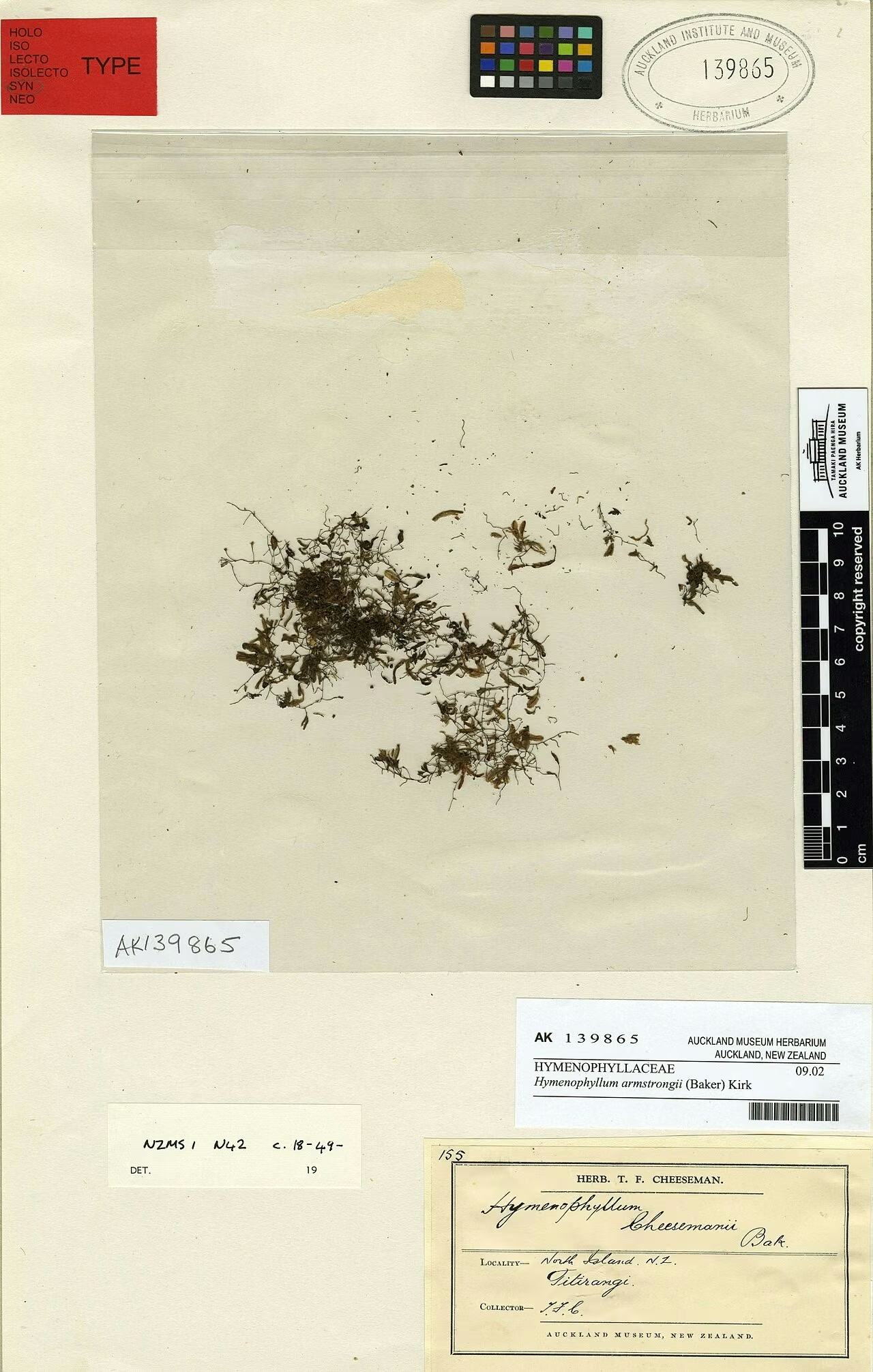
Hymenophyllum armstrongii
Hymenophyllum armstrongii
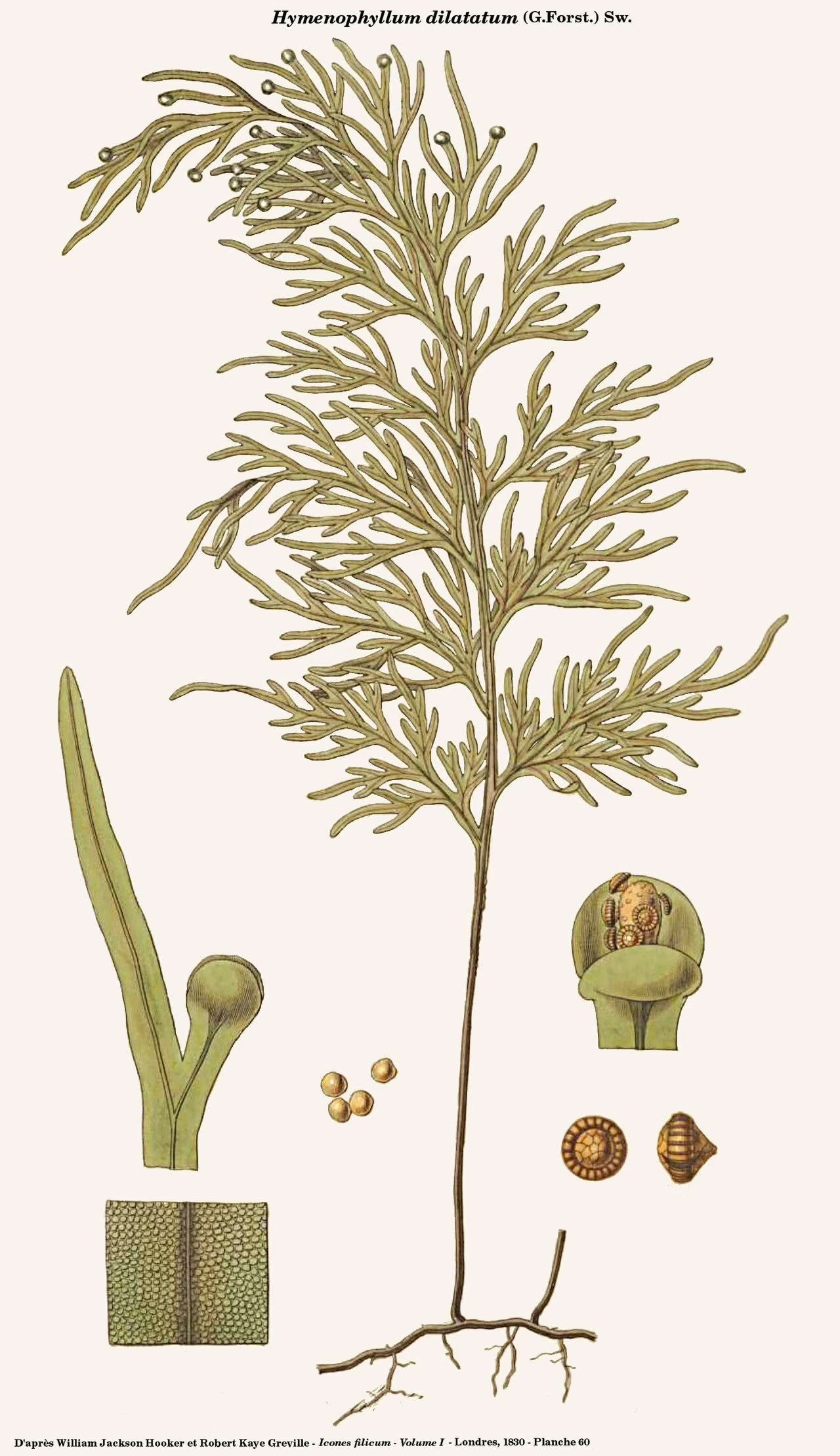
Matua Mauku
Hymenophyllum dilatatum
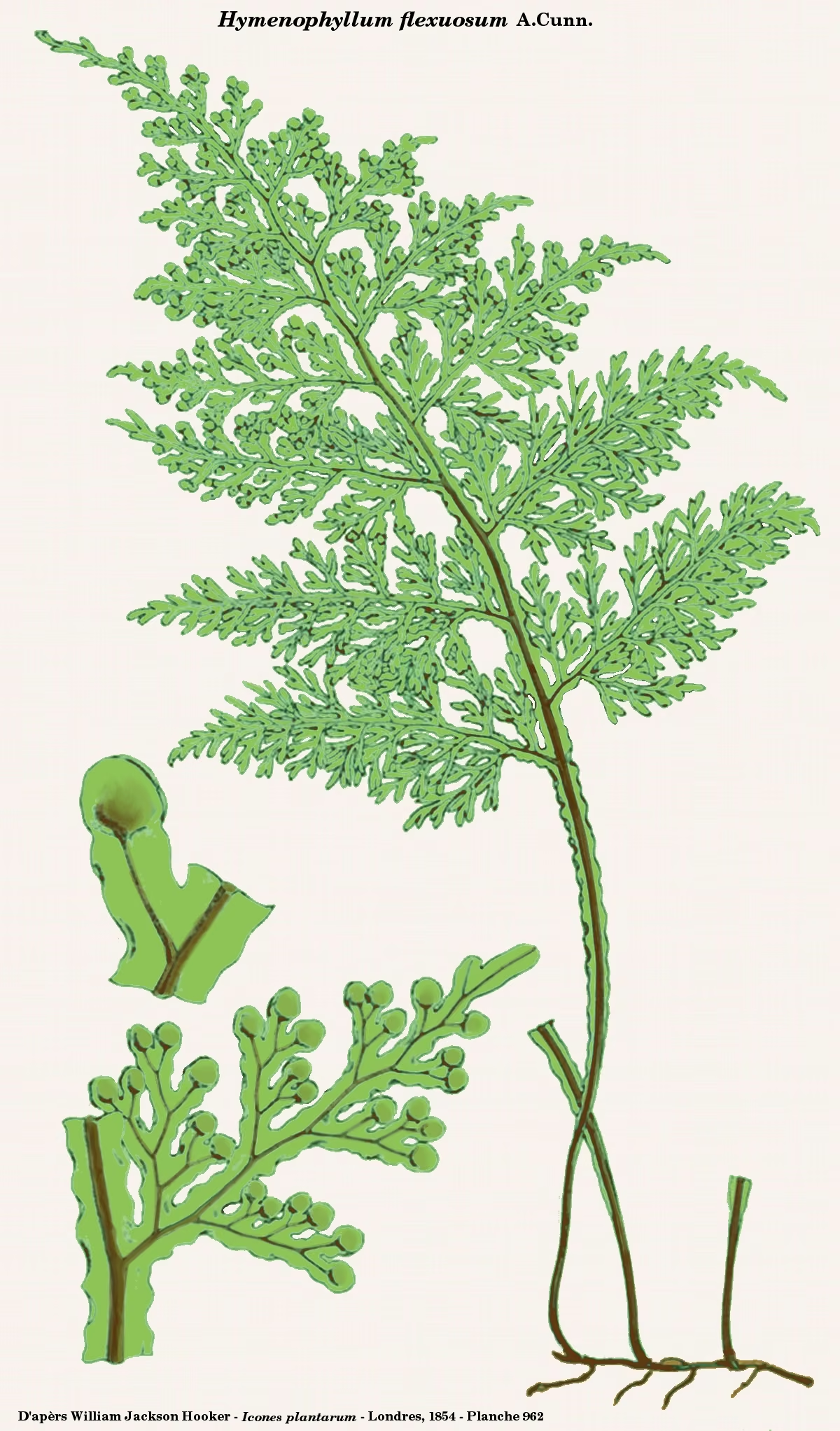
Hymenophyllum flexuosum
Hymenophyllum flexuosum
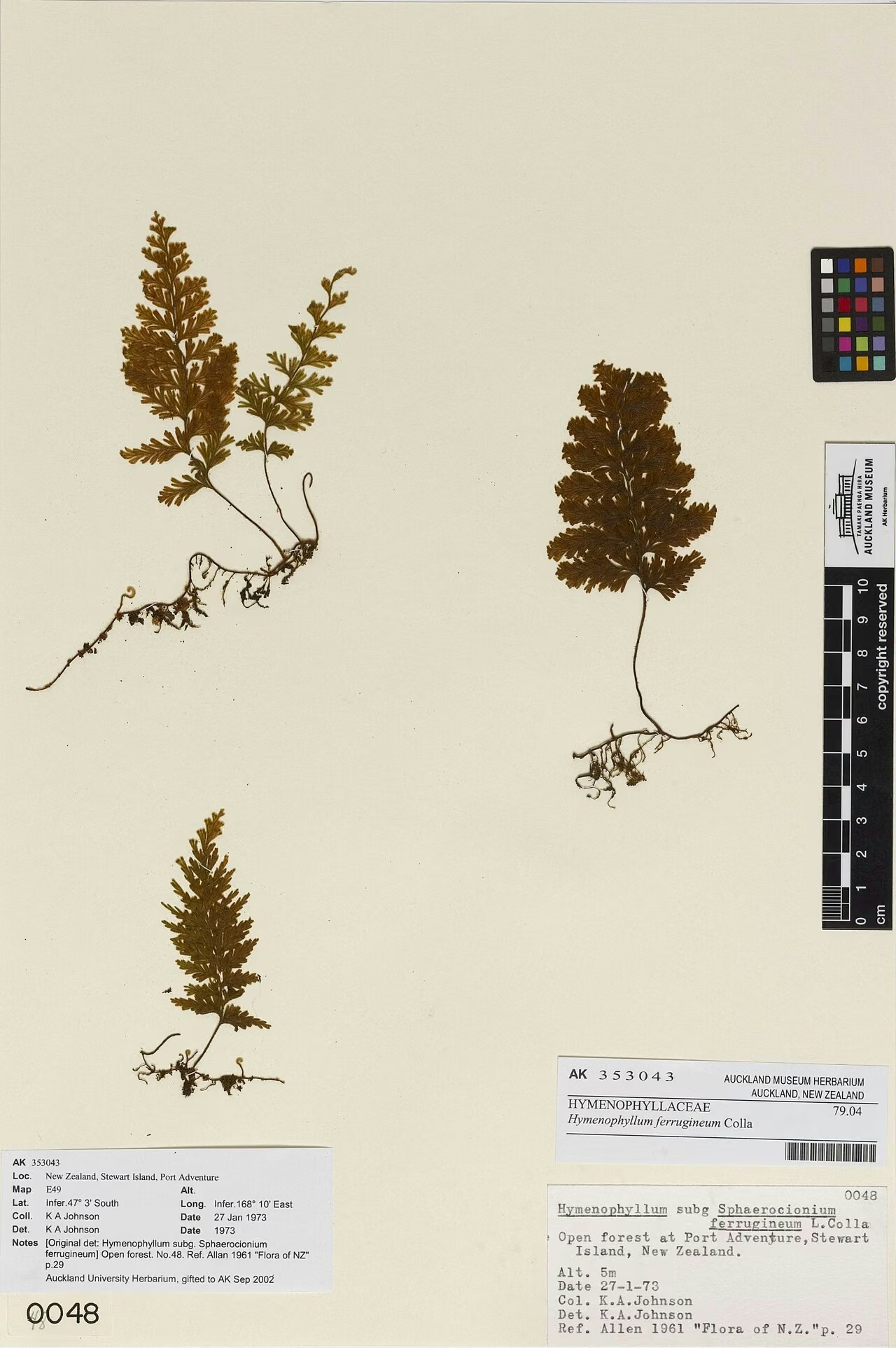
Rusty Filmy Fern
Hymenophyllum frankliniae
Drooping Filmy Fern
Drooping Filmy Fern
Plant Conservation
Hymenophyllum australe is ranked At Risk - Naturally Uncommon (2023) with the qualifiers RR (range restricted), SO (secure overseas) and Sp (sparse). It is also Regionally Naturally Uncommon in Northland and Wellington.
Protecting forested catchments, maintaining natural stream flows and shading, and keeping stock out of waterways are the most useful actions. Plants should never be collected from the wild.
Frequently Asked Questions
What kind of habitat does Hymenophyllum australe need?
It is almost always rheophytic, growing on rock in and around flowing water in dark, dripping places: river gorges and canyons, under waterfalls and in seepages on the banks of narrow, heavily shaded streams.
Is Hymenophyllum australe the same as Hymenophyllum atrovirens?
Yes. New Zealand plants were long called H. atrovirens, but the Flora of New Zealand now treats them as the same species as Australian H. australe, and atrovirens is a synonym.
How do you tell Hymenophyllum australe from Hymenophyllum flexuosum?
H. australe has smaller, darker, strongly triangular fronds and grows on rock beside flowing water, while H. flexuosum has larger, lighter yellow-green fronds with a crinkled stipe wing and grows on forest banks and logs.
Why is Hymenophyllum australe classed as Naturally Uncommon?
Its habitat of shaded, dripping rock in river gorges and around waterfalls is naturally scarce and scattered, so populations are small and sparse even though the fern occurs on both main islands.
Sources and Further Reading
The botanical, growing, and conservation details for Filmy Fern (Hymenophyllum australe) on this page draw on the New Zealand plant references below. Consult them for full technical records and the latest distribution data.