Pennywort
Hydrocotyle microphylla
Last updated:
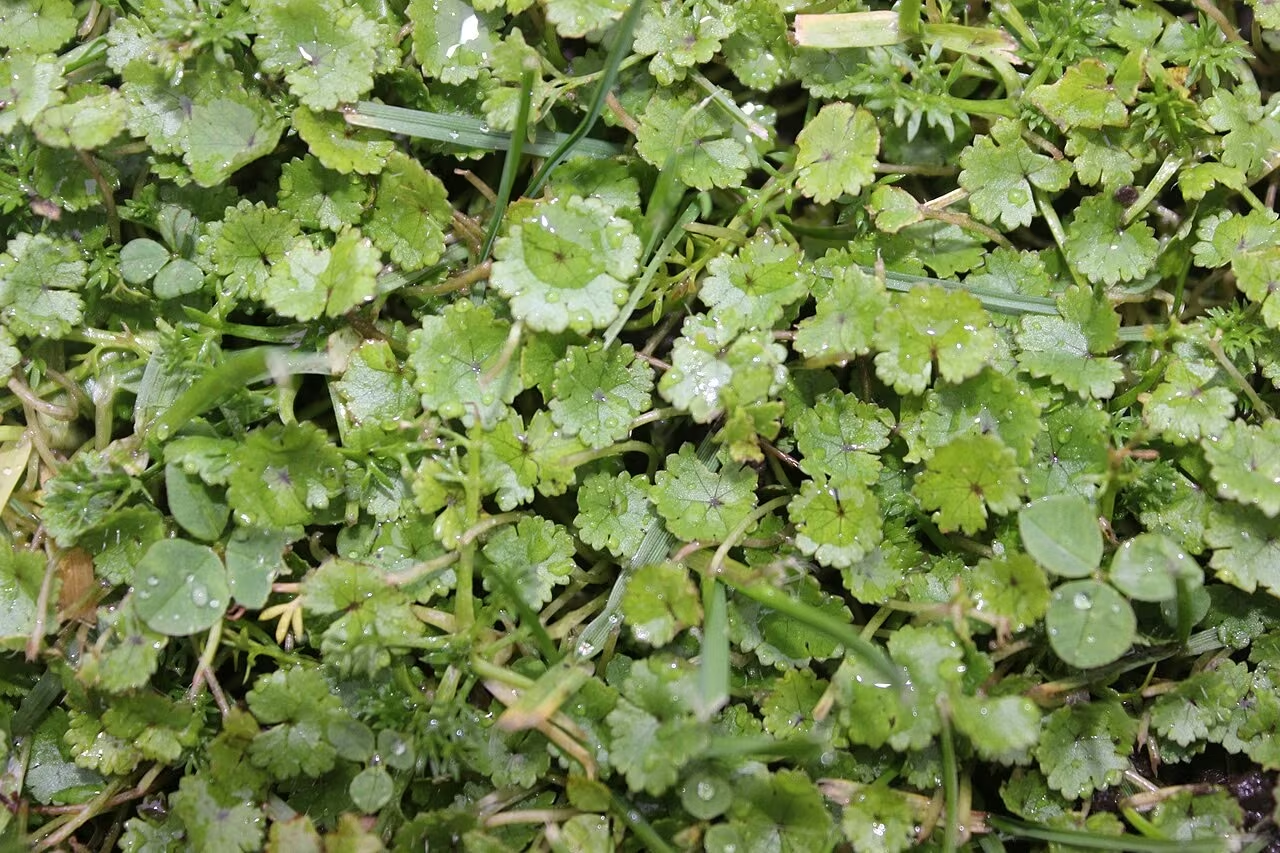
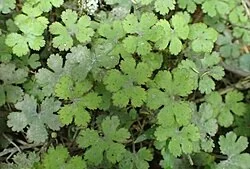
Hydrocotyle microphylla is a small-leaved native pennywort endemic to New Zealand. It forms large, low patches of slender creeping stems with thick, usually dark glossy green, hairless leaves just 5-15 mm across, each shallowly cut into about five toothed lobes. It grows from the North Island to Stewart Island and the Chatham Islands in damp places on riverbeds, grassy banks and coastal sites, and in wetter districts it has also settled into lawns. Small flower clusters on stalks about as long as the leaves appear from December to February. It is ranked Not Threatened. Explore more native ground covers in our native plant guide.
Plant Description
Hydrocotyle microphylla is a perennial herb that forms large patches of slender creeping stems. Its leaves are simple, usually dark glossy green and hairless, though occasionally sparsely hairy above or below. They are small, 5-10 mm and rarely up to 15 mm in diameter, and divided a fifth to a third of the way to the centre (sometimes two-thirds) into usually five segments. Each segment is broadly oblong to obovate with about three rounded teeth tipped with blunt, gristly points, and the leaf margins are flat.
The flowers sit in simple umbels of usually five to ten (from two to twelve) on stalks about as long as the leaves, so the clusters stand level with the foliage. Individual flowers are almost stalkless. Flowering is from December to February and fruiting from January to March. The hairless fruits are 1.3-1.7 mm long and about 1 mm wide, sharp along the back, with slender, slightly raised or inconspicuous ribs.
It is easily confused with other small-leaved pennyworts. Compared with H. heteromeria it has thicker, glossier leaves and stalked umbels; compared with H. novae-zeelandiae it has smaller fruits. Hairy forms can resemble small plants of H. moschata. NZPCN links to Chris Ecroyd's 2022 identification guide to the small-leaved species for help separating them.
Quick Facts
| Scientific Name | Hydrocotyle microphylla |
|---|---|
| Height | Very low mat; leaves 5-15 mm across |
| Spread | Forms large patches |
| Water Needs | Damp; equally at home in and out of wetlands |
| Light | Full sun to partial shade |
| Frost Tolerance | Good; reaches Stewart Island and Chatham Islands |
| Salt Tolerance | Some; grows at coastal sites, but not quantified |
| Growth Rate | Moderate to fast in damp ground |
| Lifespan | Perennial |
Climate Best Suited to
It suits moist temperate climates throughout New Zealand, from northern lowlands to the cool, wet south and the Chatham Islands.
Regional Suitability
| City | Climate Suitability |
|---|---|
| Auckland | Medium |
| Wellington | High |
| Christchurch | Medium |
| Dunedin | High |
Plant Habitat
Hydrocotyle microphylla is endemic to New Zealand and is recorded from the North Island, South Island, Stewart Island/Rakiura and the Chatham Islands.
The Flora of New Zealand describes its habitat as damp situations in riverbeds, on grassy banks and at coastal sites, and notes that it has become established as a lawn weed in wetter areas. NZPCN rates it as facultative: it occurs commonly both in wetlands and on drier ground. Regionally it is Endangered in Auckland and Naturally Uncommon in Northland, but Not Threatened in Otago and Wellington.
Growing Requirements
Soil Requirements
It grows in damp riverbed gravels and sands, grassy bank soils and coastal turf, and tolerates the compacted soils of lawns.
- Damp sand, gravel or loam
- Copes with low-fertility soils
- Tolerates compaction in turf
Light Requirements
Riverbeds, grassy banks and coastal sites are mostly open, so it is more sun-tolerant than shade-loving relatives such as waxweed.
- Full sun in moist ground
- Partial shade also suitable
- Needs open, short vegetation to compete
Water Requirements
It needs damp soil but is not restricted to wetlands, growing equally well on moist banks and in seepages.
- Keep soil moist through summer
- Tolerates brief flooding on riverbeds
- Declines on dry, free-draining ground
Planting and Establishing
It is seldom sold, but small rooted pieces establish easily in damp, open ground. Plant 15-20 cm apart into moist soil on a bank, in a rock garden seepage or between paving in a damp courtyard, and it will knit into a glossy mat.
Plant in autumn or spring when soil is moist. Use local material, especially in Auckland and Northland where the species is regionally scarce.
Ecological Role
The small stalked flower clusters are presumably visited by small insects, but no pollination studies were found. NZPCN notes that Hydrocotyle mericarps are dispersed by water and wind, which suits a plant of riverbeds where floods carry fruit and fragments downstream.
On riverbeds and grassy banks it forms part of the low herb turf that colonises open, disturbed ground, helping to stabilise silt and sand between stones.
Uses & Significance
Garden Uses
A neat, glossy-leaved native mat for damp, open spots where something low is wanted.
- Between pavers and stepping stones in damp areas
- Rock garden seepages
- Riverbank and stream restoration
Ecological Value
It helps cover and bind damp, open ground on riverbeds and banks.
- Stabilises silt and sand on riverbeds
- Native turf component on coastal and grassy banks
- Regionally significant in Auckland and Northland
Landscaping Uses
The dark, shiny leaves look attractive as a living mulch in a damp rock garden or along the edge of a stream, and it tolerates occasional foot traffic and mowing.
In dry, sunny gardens it struggles; reserve it for places that stay moist all year.
Seasonal Care Calendar
Spring
Growth resumes and stems creep across moist ground.
- Plant or divide patches
- Weed around young plantings
Summer
Flowering from December to February, with small umbels at leaf height.
- Water during dry spells
- Fruits begin to form from January
Autumn
Fruit ripens through to March and is carried away by water and wind.
- Collect fruit if wanted for sowing
- Good planting season as rain returns
Winter
Evergreen mats persist with slow growth.
- Little care needed
- Avoid heavy traffic on saturated patches
When to Prune and How Much
No pruning is required. Mowing or trimming keeps it dense and low.
Lift creeping stems from beds or paths where they are not wanted.
How to Grow Pennywort
No specific propagation advice for Hydrocotyle microphylla was found in NZPCN or the Flora of New Zealand, but its habit of forming large patches from slender creeping stems makes it easy to increase by division. It also sets plenty of seed, with umbels of five to ten flowers producing fruit from January to March. Because the species is Regionally Endangered in Auckland, take material only from cultivated plants or with appropriate permission there, and use local stock for restoration so that regional variation is kept.
By Division
Sections of mat with rooted stems re-establish quickly when kept damp.
Cool, damp weather in autumn or early spring gives the best results, because freshly divided pieces wilt quickly in summer heat.
- Lift a small piece of mat from the edge of an established patch
- Tease it into pieces with several leaves and roots
- Plant into moist soil or pot into a damp, gritty mix
- Keep moist and lightly shaded until new growth appears
- Plant out potted pieces once roots fill the pot
From Seed
Fruits ripen from January to March. Each tiny fruit splits into two mericarps.
Seed is a good way to raise larger numbers of plants for a riverbank planting.
- Collect brown fruiting umbels in late summer
- Rub gently to release the mericarps
- Sow on the surface of a fine, damp seed mix
- Keep moist in good light and prick out seedlings when large enough to handle
- Grow on until a small mat forms, then plant out
Pests & Diseases
No significant pests or diseases are recorded. Slugs and snails may graze leaves in sheltered damp spots.
In the wild, the bigger issue is competition: taller exotic grasses and weeds on riverbeds and banks can shade out low native herbs like this one.
Cultural Significance
No Māori name or traditional use specific to this species was found in the sources consulted, so none is given here.
The species was named by Allan Cunningham, the English botanist who collected in northern New Zealand in the 1820s and 1830s. Its epithet microphylla means small-leaved, describing leaves that are seldom more than a centimetre across.
Bonus Tip
To separate this species from waxweed in a lawn, check the flower stalks: if the tiny flower clusters are raised on stalks level with the leaves rather than hidden at their base, and the leaves feel thick and look dark and shiny, you probably have Hydrocotyle microphylla.
Related Plants
Explore other native plants that share similar characteristics or habitats with Pennywort (Hydrocotyle microphylla), offering further insights into New Zealand's diverse flora. These related species provide context and opportunities for complementary planting in your garden.
Hydrocotyle dissecta
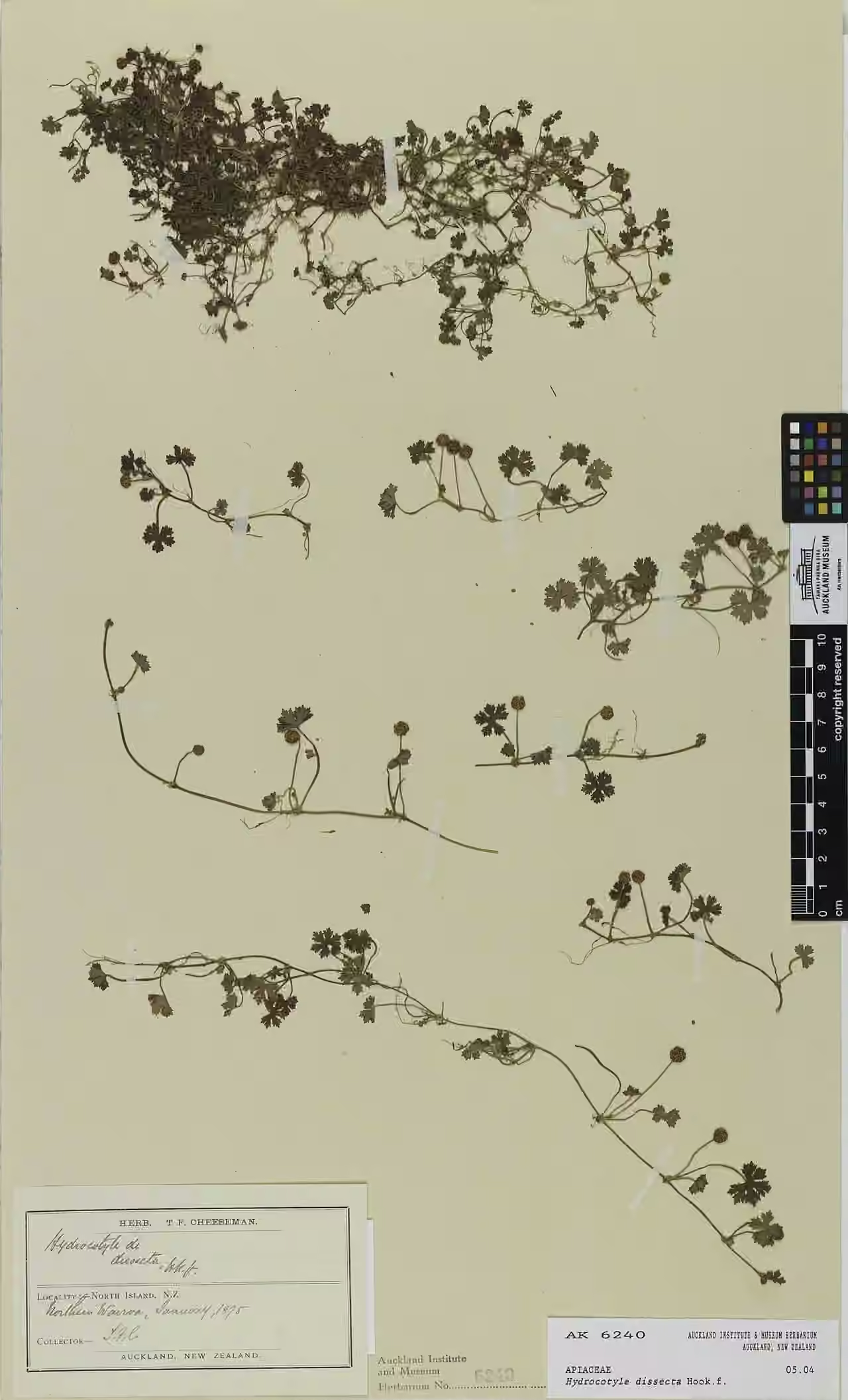
Hydrocotyle dissecta
Waxweed
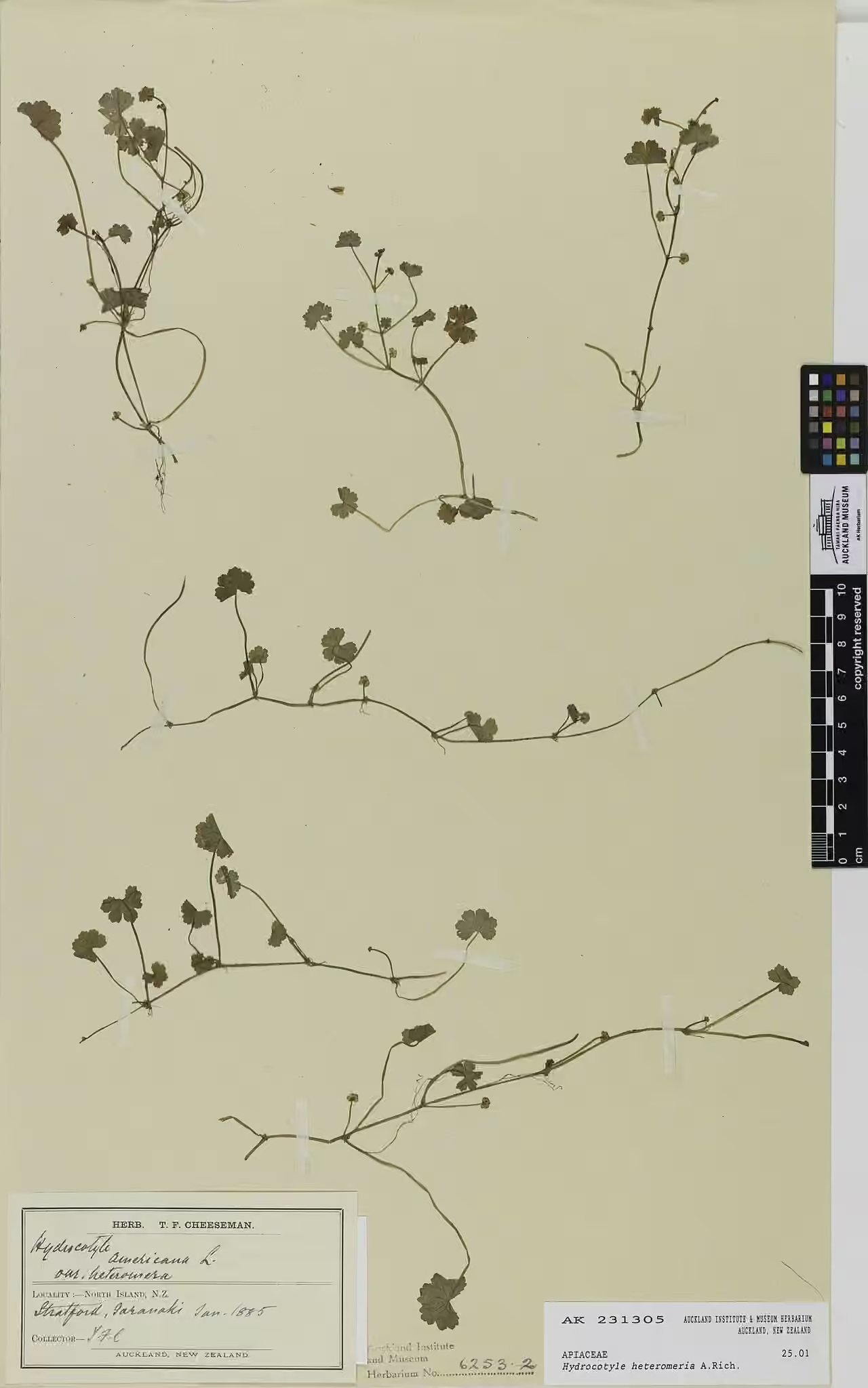
Hydrocotyle heteromeria
Hydrocotyle hydrophila
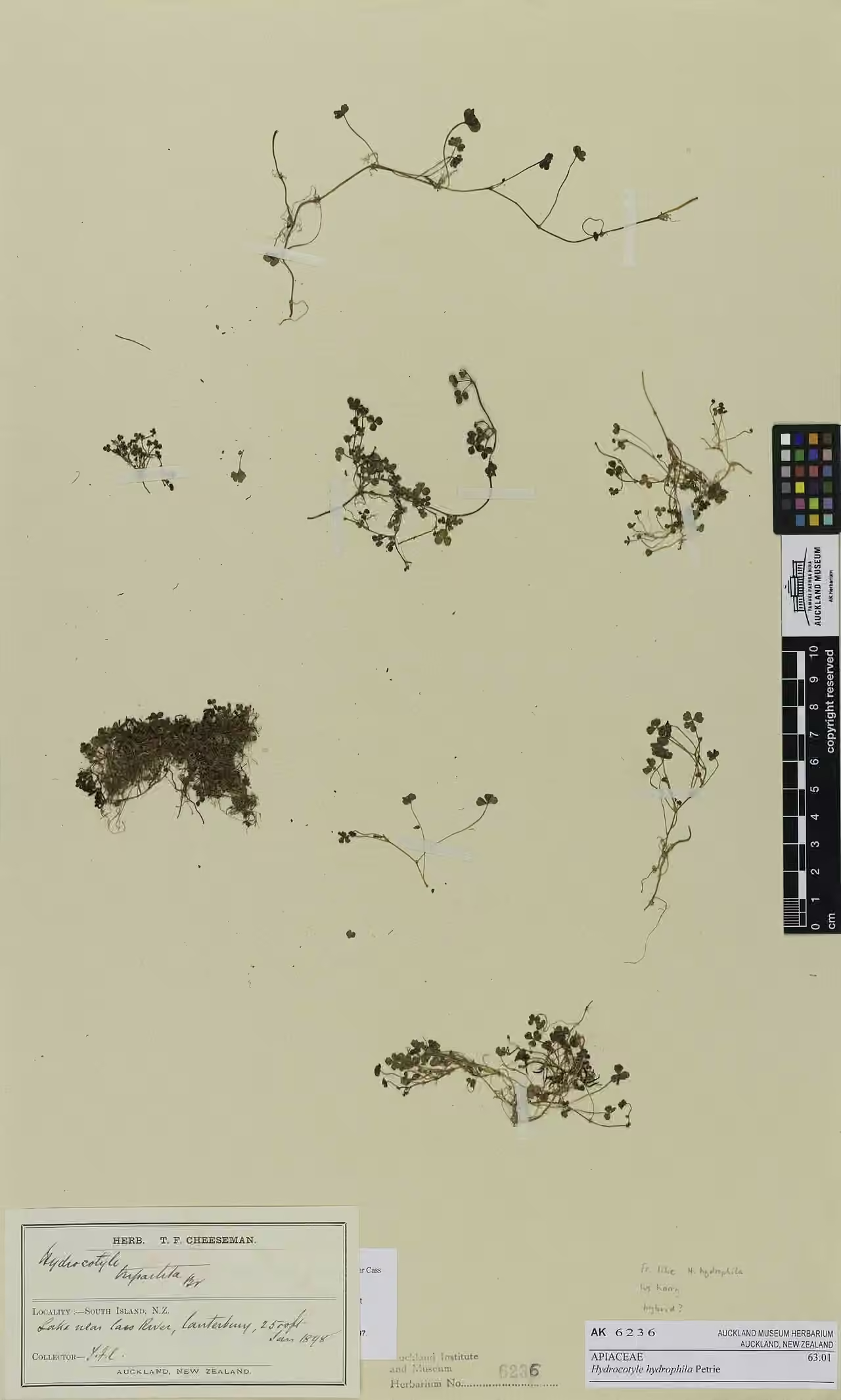
Hydrocotyle hydrophila
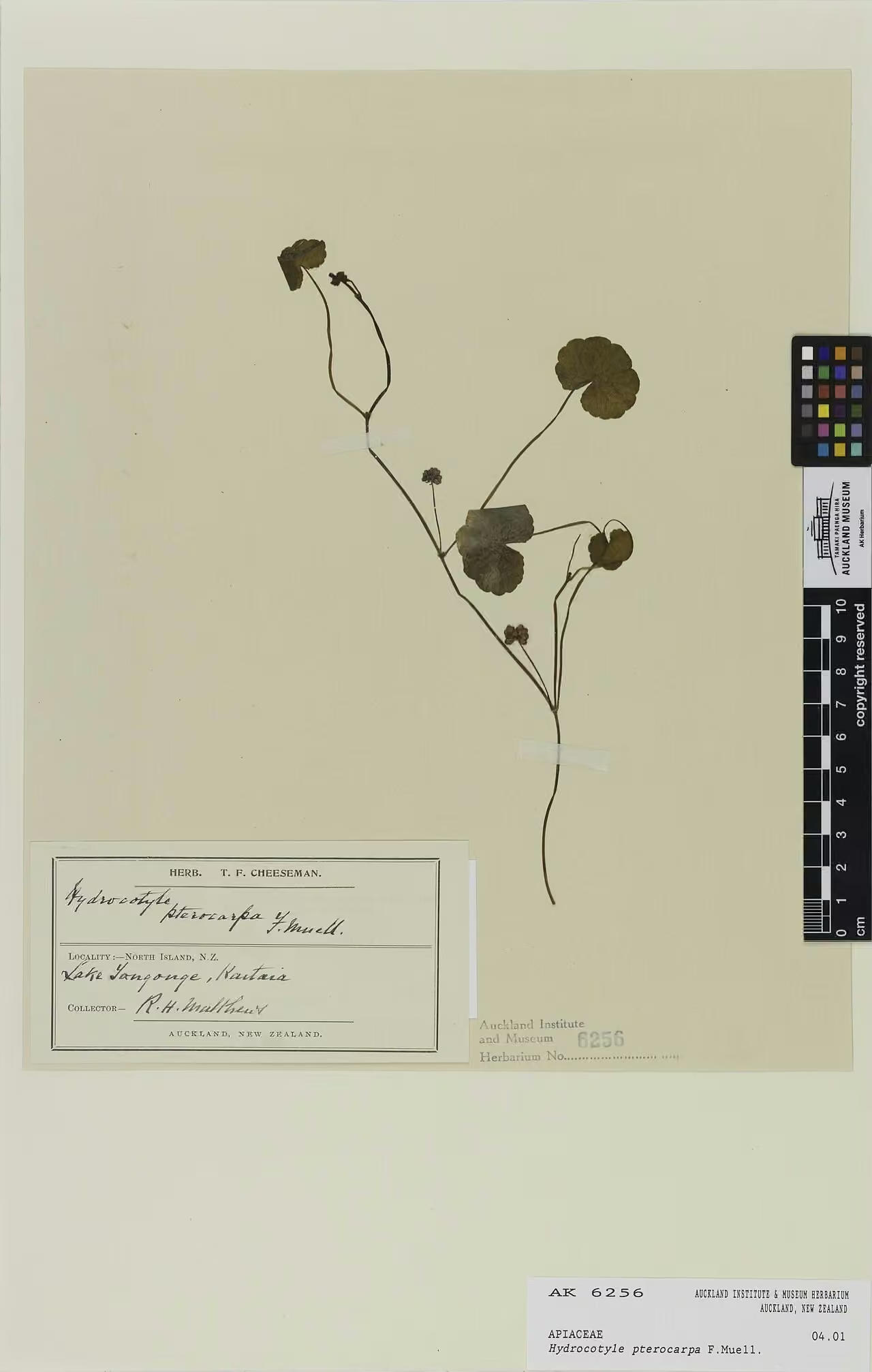
Hydrocotyle pterocarpa
Hydrocotyle pterocarpa
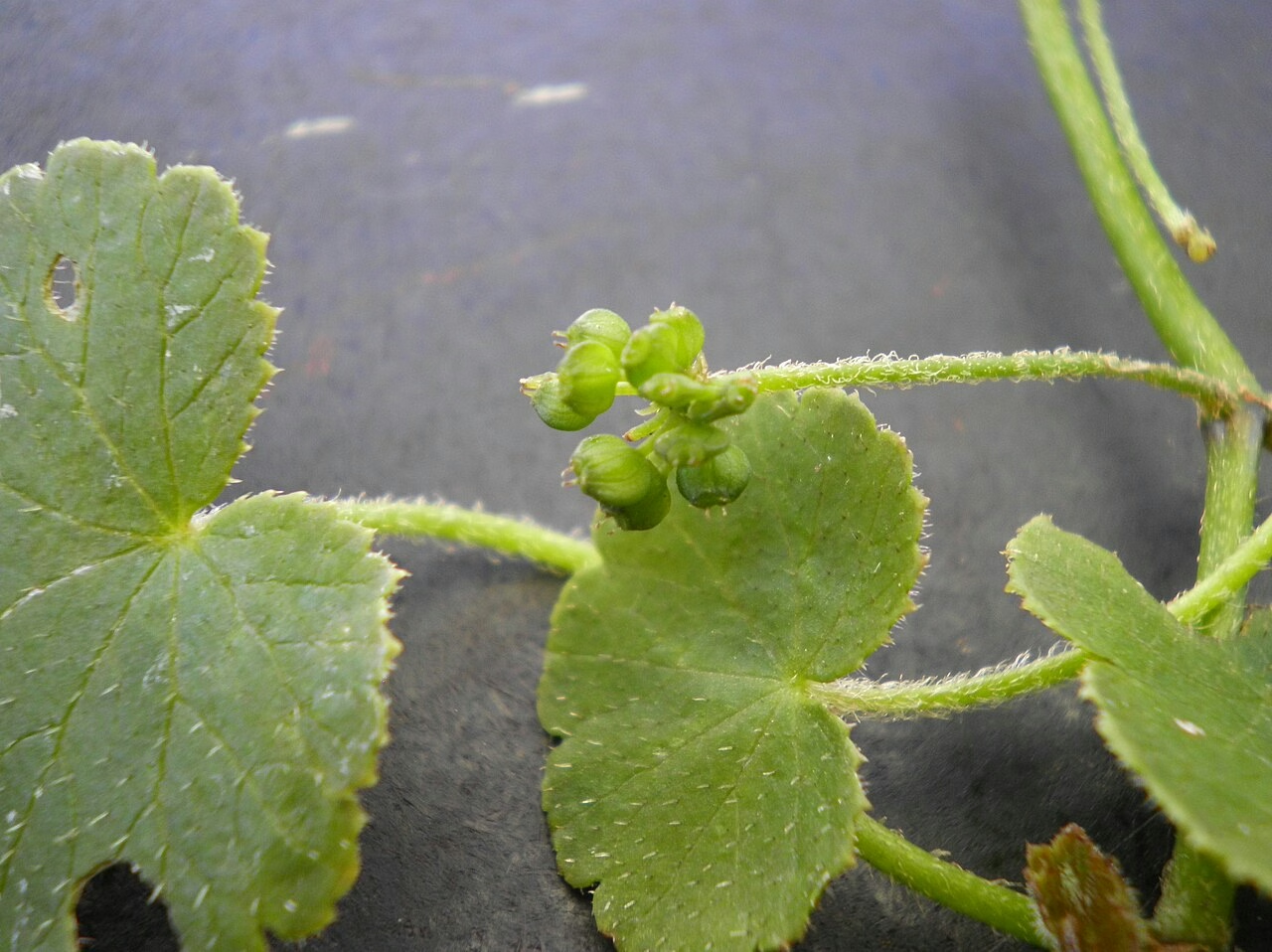
Hydrocotyle robusta agg
Hydrocotyle robusta agg
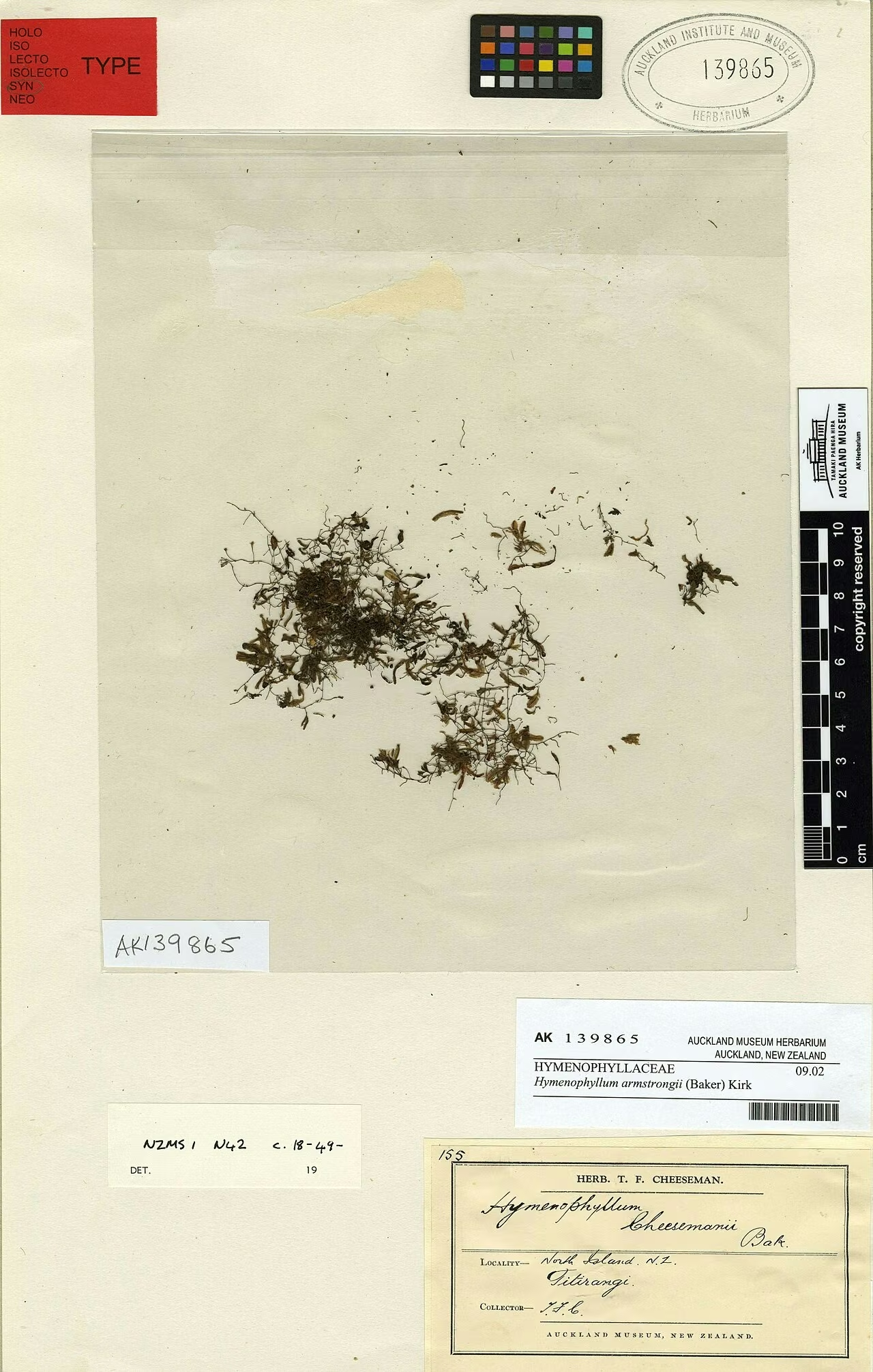
Hymenophyllum armstrongii
Hymenophyllum armstrongii
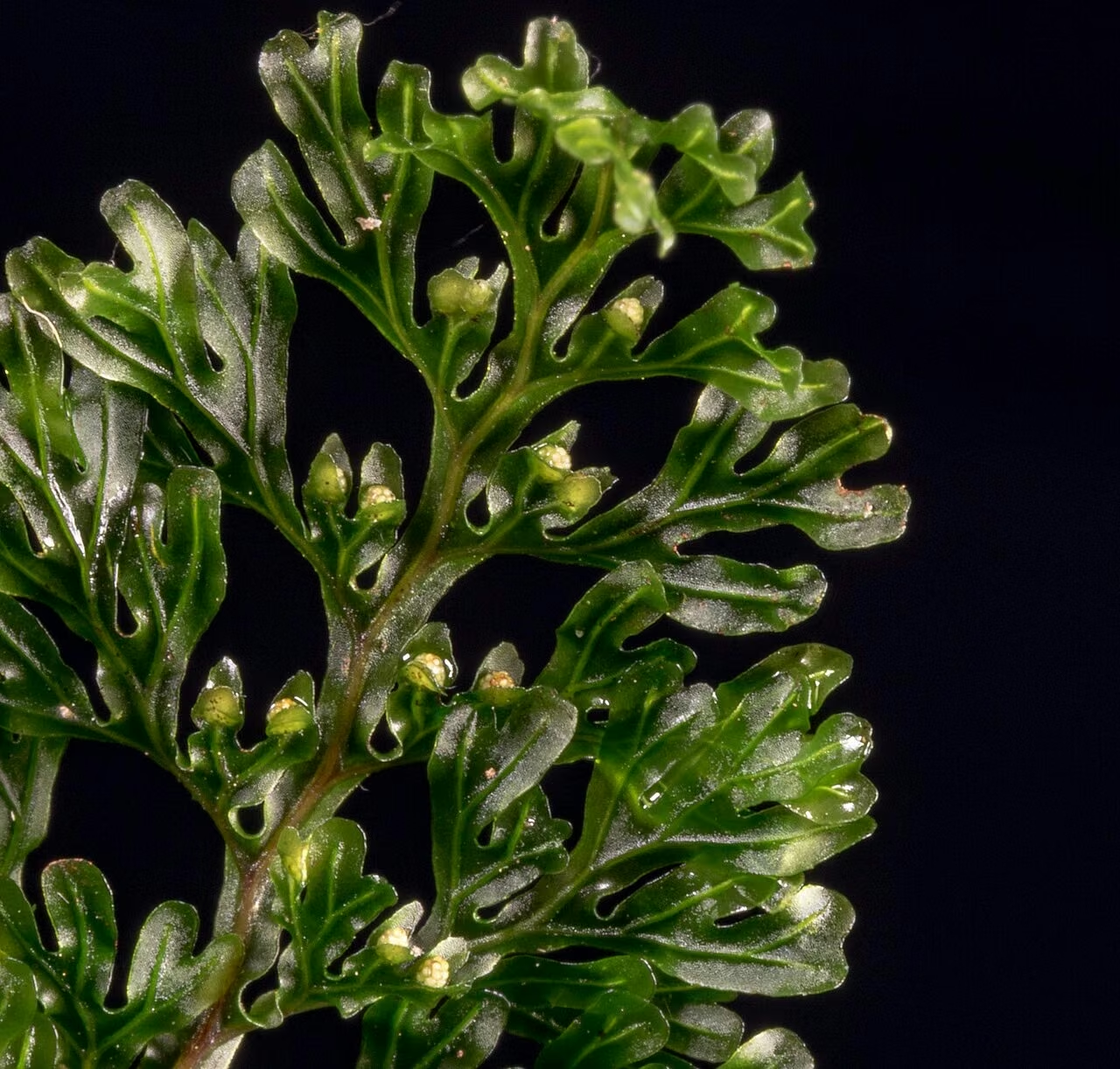
Hymenophyllum australe
Hymenophyllum australe
Trailing Pennywort
Trailing Pennywort
Plant Conservation
Hydrocotyle microphylla was ranked Not Threatened in every national assessment from 2004 to 2023. Regionally it is Endangered in Auckland and Naturally Uncommon in Northland, while it is Not Threatened in Otago and Wellington.
Loss of open riverbed and coastal habitats to weeds and development is the most likely pressure in the north. Weed control on riverbeds and leaving damp grassy banks unsprayed help it persist.
Frequently Asked Questions
How do you identify Hydrocotyle microphylla?
Look for simple, thick, dark glossy leaves 5-10 mm across, rarely 15 mm, divided about a fifth to a third of the radius into five segments, each with three blunt teeth. Its flower clusters sit on stalks roughly as long as the leaves.
What is the difference between Hydrocotyle microphylla and waxweed?
Waxweed (H. heteromeria) has thinner, pale, delicate leaves and nearly stalkless flower clusters. H. microphylla has thicker, darker glossy leaves and stalked flower clusters, according to the Flora of New Zealand.
When does Hydrocotyle microphylla flower?
It flowers from December to February, with small umbels of usually five to ten flowers, and its fruits follow from January to March.
Sources and Further Reading
The botanical, growing, and conservation details for Pennywort (Hydrocotyle microphylla) on this page draw on the New Zealand plant references below. Consult them for full technical records and the latest distribution data.