Trailing Pennywort
Hydrocotyle elongata
Last updated:
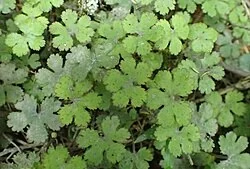
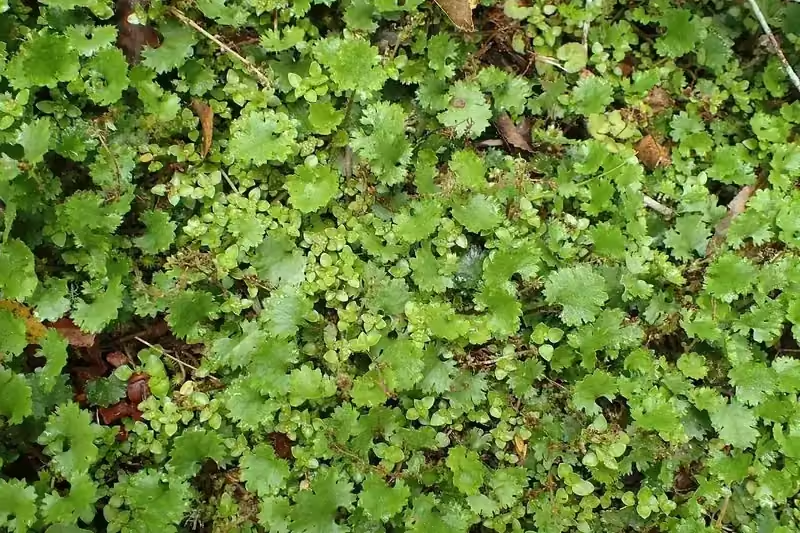
Trailing pennywort (Hydrocotyle elongata) is an endemic New Zealand perennial groundcover with soft, pale lime-green leaves that are more deeply cut than those of other native Hydrocotyle. The leaves are 10 to 25 mm across, divided into serrated segments, and carried on slender creeping stems that root at the nodes to form extensive patches only 5 to 10 cm high. Small greenish-white flowers appear from spring to late summer. Fast-growing, frost tolerant and salt tolerant, it grows through the North and South Islands in damp, shaded forest floors, grassland margins and stream banks. Explore more native ground covers in our native plant guide.
Plant Description
Identification and Physical Characteristics
Hydrocotyle elongata , commonly known as Trailing Pennywort, is an endemic New Zealand perennial groundcover. It is distinguished by its soft, pale lime-green leaves, which are typically larger and more intricately cut than those of other native Hydrocotyle species. The leaves are dull green, moderately hairy, and usually 10-25 mm in diameter, divided into five segments that are often 3-lobed and serrated. It forms extensive patches with slender, creeping stems that root at the nodes. Inconspicuous greenish or white flowers are borne in simple umbels on long peduncles, appearing from spring to late summer, followed by small, ribbed, hairy fruits. This plant is remarkably adaptable, thriving in a wide range of conditions from damp forest patches to open grasslands.
Quick Facts
| Scientific Name | Hydrocotyle elongata |
|---|---|
| Height | 5-10 cm (creeping) |
| Spread | Spreading indefinitely |
| Water Needs | Moderate to High |
| Light | Full sun to dry shade |
| Frost Tolerance | Tolerant |
| Salt Tolerance | Tolerant |
| Growth Rate | Fast |
| Lifespan | Perennial |
Climate Best Suited to
Trailing Pennywort is highly adaptable to various New Zealand climates, thriving from coastal to montane regions. It excels in temperate conditions and is notably frost and wind tolerant. Its ability to grow in both dry shade and damp areas makes it a versatile choice for many garden settings across the country.
Regional Suitability
| City | Climate Suitability |
|---|---|
| Auckland | Suitable |
| Wellington | Suitable |
| Christchurch | Suitable |
| Dunedin | Suitable |
| Hamilton | Suitable |
| Tauranga | Suitable |
Plant Habitat
Natural Occurrence and Ecology
Hydrocotyle elongata is found throughout the North and South Islands of New Zealand, inhabiting a broad range of damp and shaded environments. Typical habitats include the floors of various forest types, particularly in patches of dark, damp forest, as well as the margins of open grasslands and stream banks. It demonstrates remarkable ecological plasticity, thriving in diverse settings from dry shade to consistently moist areas.
Growing Requirements
Soil Requirements
Highly adaptable to various soil types, from sandy to clay. Prefers well-drained but consistently moist conditions.
- Well-drained soil
- Tolerates most soil types (clay, loam, sand)
- pH adaptable
Light Requirements
Exceptional tolerance for dry shade, but also grows well in partial shade to full sun with adequate moisture.
- Dry shade
- Partial shade
- Full sun (with consistent moisture)
Water Requirements
Moderate to high water needs. Can tolerate short periods of dryness in shade, but thrives with consistent moisture.
- Regular watering in dry periods
- Prefers consistently moist conditions
- Not drought tolerant in full sun
Planting and Establishing
Establishment Guidance
Plant Trailing Pennywort in areas where a low-maintenance groundcover is desired. Ensure good soil contact after planting and water well. While it adapts to dry shade, providing initial moisture will help it establish quickly. Space plants according to desired coverage, as it will spread to fill gaps.
Ecological Role
Biodiversity and Ecosystem Impact
As a mat-forming groundcover, Hydrocotyle elongata plays a role in stabilizing soil and preventing erosion, particularly on forest floors and banks. Its dense foliage provides shelter for a variety of small invertebrates and contributes to the understory biodiversity of its native habitats.
Uses & Significance
Garden Uses
An excellent groundcover for difficult dry shade areas, under trees, or as a lawn substitute in damp, shaded spots.
- Dry shade groundcover
- Underplanting
- Rock gardens
- Between pavers
Ecological Value
Contributes to biodiversity and soil stabilization in forest and damp environments.
- Erosion control
- Habitat for small invertebrates
Landscaping Uses
In landscaping, Trailing Pennywort is invaluable for its ability to create a lush, green carpet in challenging shaded or damp areas where other plants might struggle. It is ideal for naturalistic plantings, woodland gardens, or as a softening element between rocks and paving. Its fast growth makes it effective for quickly establishing cover.
Seasonal Care Calendar
Spring
New growth emerges. This is a good time to divide and transplant or to plant new specimens.
- Divide and replant
- Apply slow-release fertilizer if desired
Summer
Monitor moisture levels, especially in full sun. Trim if spread is too vigorous.
- Water during dry periods
- Trim runners as needed
Autumn
General tidy-up of any spent foliage. Can still divide plants.
- Tidy dead leaves
- Divide plants
Winter
Little care needed. May die back slightly in very cold climates but will recover.
- Minimal watering
- Protection in extreme cold
When to Prune and How Much
Pruning for Hydrocotyle elongata is primarily for managing its spread and maintaining its neat appearance. Its vigorous, creeping habit means it can quickly cover ground, so occasional trimming will be necessary to keep it within desired boundaries.
- Trim runners as needed, any time of year.
- Cut back aggressively if it becomes invasive.
Simply use shears or scissors to cut back any stems that are growing out of bounds. This plant responds well to pruning and will quickly fill in any trimmed areas with fresh growth. Regular light pruning encourages a denser mat.
How to Grow Trailing Pennywort
Growing Trailing Pennywort ( Hydrocotyle elongata ) is a straightforward process, making it an excellent choice for both novice and experienced gardeners seeking an adaptable and resilient groundcover. This endemic New Zealand species is particularly valued for its ability to thrive in a variety of challenging conditions, including the often-difficult dry shade, a characteristic that sets it apart from many other groundcover plants. Its lush, lime-green foliage and mat-forming habit can quickly transform bare patches into vibrant, verdant carpets.
Site Selection and Soil Preparation
One of the most remarkable features of Hydrocotyle elongata is its versatility regarding light exposure. It can flourish in full sun, partial shade, or even deep dry shade. When choosing a planting site, consider its vigorous spreading nature and select an area where it has room to expand or where its spread can be easily managed. While it tolerates a wide range of soil types-including chalk, clay, loam, and sand-it performs best in well-drained soil. If your soil is very heavy clay or extremely sandy, incorporating some compost or other organic matter will improve its texture and water-holding capacity, although this is often not strictly necessary for this hardy plant.
Planting Instructions
Planting Trailing Pennywort is simple. Dig a shallow hole approximately the same depth as the plant's root ball and twice as wide. Gently place the plant in the hole, ensuring the crown is level with the soil surface. Backfill with soil, lightly firming around the base of the plant to remove any air pockets. Water thoroughly immediately after planting to help settle the soil and reduce transplant shock. If planting multiple specimens, space them adequately apart, typically 30-50 cm, as they will quickly grow to fill the gaps.
Watering and Ongoing Care
While * Hydrocotyle elongata * can withstand periods of dryness once established, especially in shaded locations, it appreciates consistent moisture. In full sun, it will require more regular watering during dry spells to maintain its lush appearance. The plant is generally low-maintenance and resistant to most pests and diseases. The primary care involves managing its spread, as its creeping stems root readily wherever they touch the ground.
Propagation through Division
Propagating Trailing Pennywort is exceptionally easy and highly successful through simple division.
- Identify Healthy Sections: Look for established patches with vigorous growth and a healthy root system.
- Lift and Divide: Gently lift a section of the plant from the ground using a spade or trowel. You will notice its slender stems rooting at various points along their length.
- Separate Portions: Carefully separate portions of the plant, ensuring each new section has both foliage and a healthy network of roots. You can easily pull apart individual rooted runners.
- Replant: Plant these divisions directly into their new location in prepared soil. For best results, keep the soil consistently moist until new growth appears, indicating successful establishment. This method is effective year-round but is most successful in spring or early autumn.
Pests & Diseases
Hydrocotyle elongata is a robust plant and rarely succumbs to significant pest or disease problems. It is generally considered pest-free in a garden setting. Occasionally, slugs and snails might graze on its tender leaves, especially in very damp conditions.
Cultural Significance
While specific traditional Māori cultural uses for Hydrocotyle elongata are not as prominently documented as for some other native species, it is a ubiquitous component of New Zealand's undergrowth and damp environments. As such, it forms part of the rich natural tapestry that influenced Māori daily life, ecology, and land management practices, contributing to the overall biodiversity and health of the ecosystem.
- Biodiversity support
- Erosion control
Bonus Tip
Utilize its ability to thrive in dry shade to green up challenging areas under mature trees where other plants struggle due to lack of light and moisture.
Cultivating this species effectively involves a deep understanding of its natural adaptations and environmental preferences. By mimicking its native habitat-whether that be the cool, moist understory of a temperate rainforest or the exposed, well-drained slopes of an alpine range-gardeners can ensure robust growth and long-term health. Regular observation and minimal, targeted intervention are often the best strategies for maintaining the unique characteristics and ecological contributions of this remarkable New Zealand native plant.
Related Plants
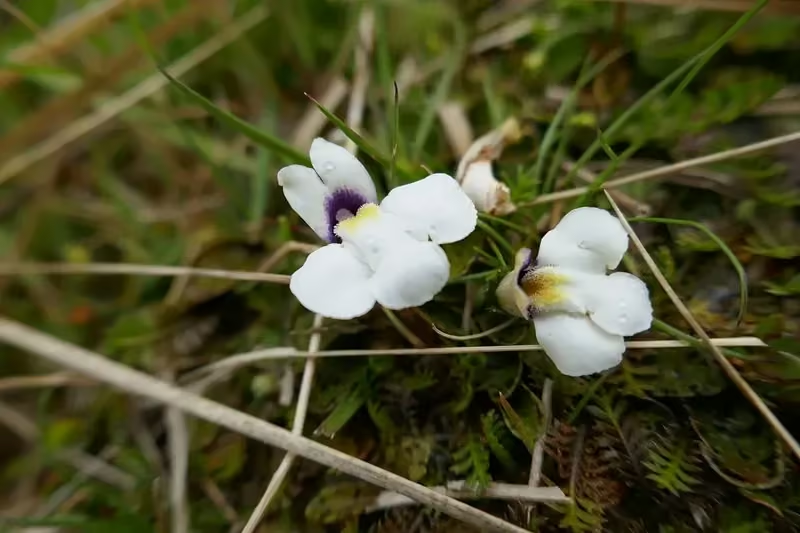
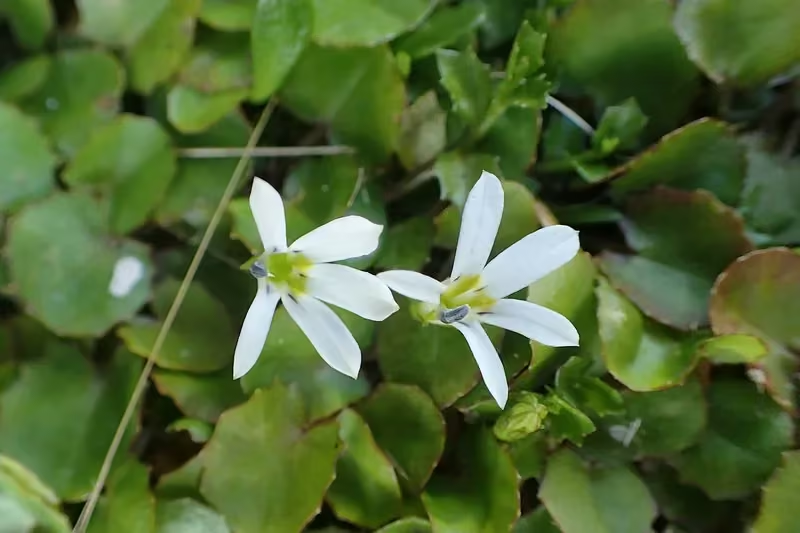
Explore other native plants that share similar characteristics or habitats with Trailing Pennywort ( Hydrocotyle elongata ), offering further insights into New Zealand's diverse flora. These related species provide context and opportunities for complementary planting in your garden.

Plant Conservation
Conservation Status and Threats
Hydrocotyle elongata is classified as 'Not Threatened' in New Zealand. Its widespread distribution and adaptability to various habitats contribute to its secure conservation status. As a common and resilient native, it plays an important role in local ecosystems, particularly in providing groundcover and habitat for small fauna.
Frequently Asked Questions
How big does trailing pennywort get?
It creeps just 5 to 10 cm high but spreads indefinitely, forming extensive mats.
Is Hydrocotyle elongata frost tolerant?
Yes, it is both frost tolerant and salt tolerant, and grows quickly.
Where does trailing pennywort grow naturally?
It grows in damp, shaded forest floors, grassland margins and stream banks nationwide.
Does it prefer sun or shade?
It is adaptable, growing from full sun through to dry shade.
Sources and Further Reading
The botanical, growing, and conservation details for Trailing Pennywort (Hydrocotyle elongata) on this page draw on authoritative New Zealand plant references and citizen-science observation records. Consult the sources below for full technical records and the latest distribution data.