Pennywort
Hydrocotyle hydrophila
Last updated:
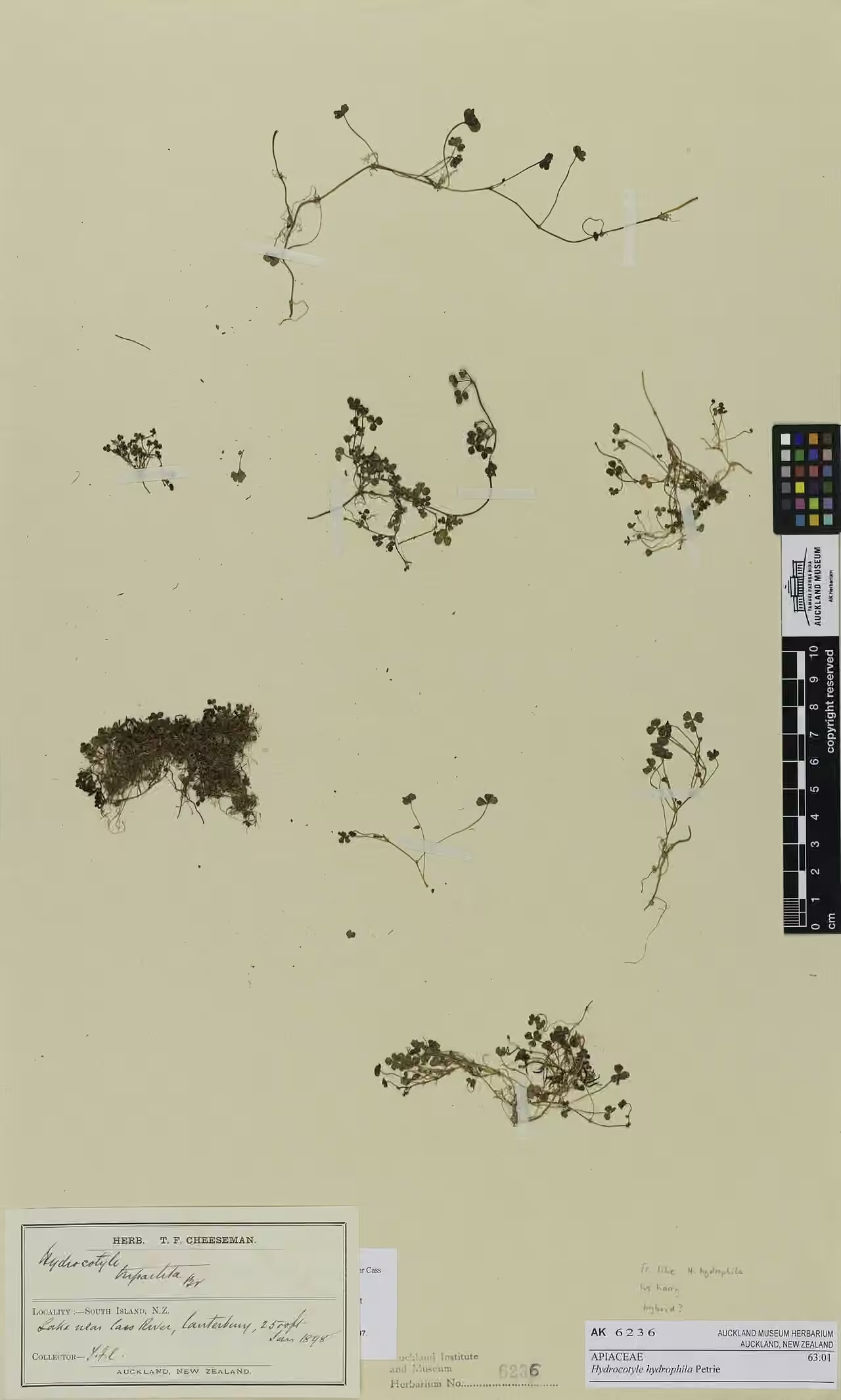
Hydrocotyle hydrophila is a tiny, water-loving pennywort endemic to New Zealand. Unlike most of its relatives it has leaves split into three separate leaflets, each only 1-5 mm long, on slender creeping stems that form small to large patches. It is a true wetland plant of swamps, lake and stream edges and coastal lagoons, especially in turf that is flooded from time to time. It is common in lowland to montane areas of the North Island and scattered in the east and south of the South Island. It is Not Threatened nationally but regionally Critical in Auckland. Explore more native ground covers in our native plant guide.
Plant Description
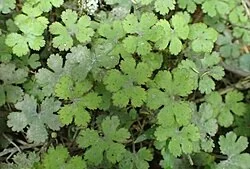
Hydrocotyle hydrophila is a usually hairless perennial with slender creeping stems that form small to large patches. Its leaves are three-foliolate: each leaf carries three separate, stalkless leaflets that are dull or shiny green, obovate-wedge-shaped to almost round, 1-4 mm long and occasionally 5 mm, and either entire or with two or three shallow rounded lobes. The leaf stalk is usually hairless, very rarely with a few backward-pointing hairs near the blade.
The flowers are minute and carried singly or in pairs in simple umbels on stalks about as long as or shorter than the leaves. They are usually stalkless. The hairless fruits are 1.2-1.8 mm long and 1-1.2 mm wide, more or less rounded on the back, with obscure or slightly raised ribs, and split into two mericarps that are dispersed by water and wind.
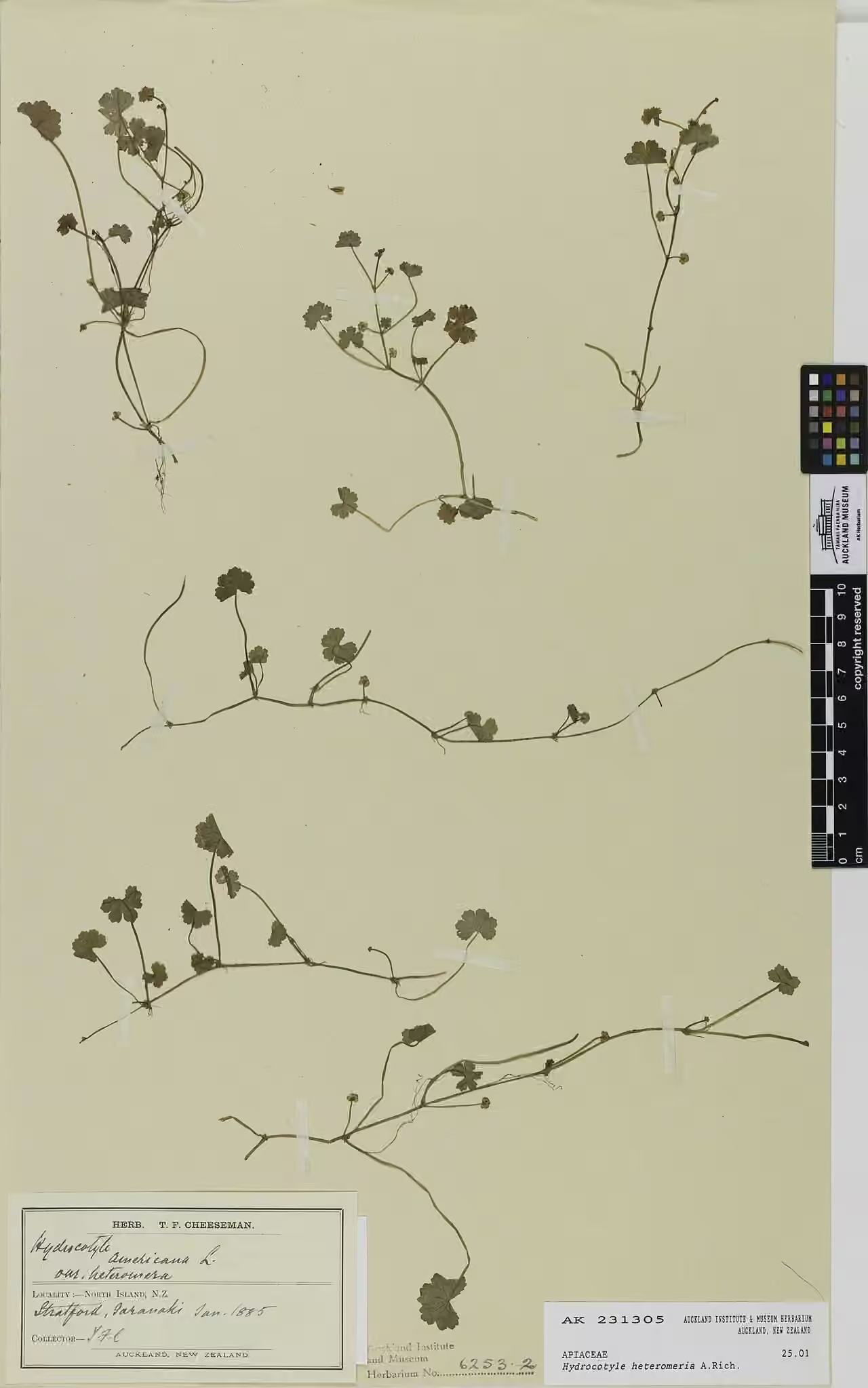
Its three-parted leaves separate it from the simple-leaved pennyworts such as H. microphylla and H. heteromeria. The most similar species is H. sulcata, which has larger, more deeply lobed leaves and larger fruits with prominent ribs. Allan's 1961 Flora treated this plant as a variety of H. tripartita, another three-leaflet species.
Quick Facts
| Scientific Name | Hydrocotyle hydrophila |
|---|---|
| Height | A few centimetres; leaflets 1-5 mm long |
| Spread | Small to large patches |
| Water Needs | Wet; tolerates periodic submergence |
| Light | Full sun to light shade in open turf |
| Frost Tolerance | Good; ranges into montane areas |
| Salt Tolerance | Some; grows around coastal lagoons, but not quantified |
| Growth Rate | Moderate |
| Lifespan | Perennial |
Climate Best Suited to
It suits any New Zealand climate where wetland margins stay moist, from mild northern lowlands to cooler montane and southern sites.
Regional Suitability
| City | Climate Suitability |
|---|---|
| Auckland | Medium |
| Wellington | Medium |
| Christchurch | Medium |
| Dunedin | Medium |
Plant Habitat
Hydrocotyle hydrophila is endemic to New Zealand. In the North Island it is common in lowland to montane areas; in the South Island it is found at scattered localities in the east and south, again from lowland to montane altitudes.
It is an obligate wetland plant: NZPCN notes it is almost always a hydrophyte and rarely found away from wetlands. Typical habitats are swamps, lake and stream edges and coastal lagoons, particularly the short turf zones that are periodically submerged as water levels rise and fall. It is regionally Critical in Auckland, Endangered in Wellington and Not Threatened in Otago.
Growing Requirements
Soil Requirements
It roots into wet silt, sand or peat at the water's edge, where soil is saturated much of the year.
- Wet, fine sediments or peaty soil
- Tolerates periods of shallow flooding
- Open ground with little competition from tall plants
Light Requirements
Turf communities on lake and lagoon margins are open and sunny, and this tiny plant is easily shaded out by taller vegetation.
- Full sun or light shade
- Keep taller sedges and grasses from overtopping it
- Open, low-growing turf suits it best
Water Requirements
Water is the defining need. It thrives where levels fluctuate, alternating between shallow submergence and wet exposed ground.
- Constantly wet soil
- Shallow seasonal flooding is beneficial
- Will not survive drying out
Planting and Establishing
No horticultural information was found for this species and it is not generally available from nurseries. In wetland restoration it would be planted as small plugs into the turf zone at the edge of a pond or lake, in the band that is flooded in winter and exposed in summer.
Plant in spring when water levels begin to drop, and keep competing weeds and taller plants clear until it spreads.
Ecological Role
Hydrocotyle hydrophila is part of New Zealand's specialised lakeshore and lagoon turf communities, made up of tiny creeping herbs that tolerate repeated flooding. These turfs are naturally kept short and open by fluctuating water and are vulnerable to invasion by taller exotic plants.
Its mericarps are dispersed by water and wind, allowing it to move around lake margins and between wetlands. Pollinators of its minute, one or two flowered umbels have not been recorded.
Uses & Significance
Garden Uses
A specialist plant for wetland restoration and natural pond edges rather than ordinary gardens.
- Turf zone around natural ponds
- Lake and lagoon margin restoration
- Bog garden edges kept free of taller plants
Ecological Value
It is a characteristic member of turf vegetation on fluctuating wetland margins, a habitat that has declined in many regions.
- Contributes to rare lakeshore turf communities
- Helps bind soft wet sediments
- Regionally significant in Auckland and Wellington
Landscaping Uses
In a large wildlife pond with gently sloping margins, a mat of this pennywort can carpet the drawdown zone between open water and taller rushes, giving a natural, fine-textured edge.
It is too small and specialised for use as a general ground cover, and should not be crowded with vigorous marginal plants such as raupō or exotic grasses.
Seasonal Care Calendar
Spring
As water levels fall, exposed turf begins active growth.
- Plant plugs into the drawdown zone
- Clear taller weeds from around patches
Summer
Tiny flowers appear among the leaves; patches spread across wet exposed ground.
- Ensure the margin does not dry out completely
- Check for overtopping by grasses
Autumn
Fruits are shed and carried by water as levels start to rise.
- Leave seed to disperse naturally
- Remove invading exotic plants before winter
Winter
Patches may be submerged for weeks, which the plant tolerates.
- No action needed
- Avoid trampling flooded margins
When to Prune and How Much
No pruning is required. The main maintenance is keeping taller plants from shading and smothering the low turf.
Hand-weed carefully around patches rather than spraying, as herbicides can drift onto these tiny plants.
How to Grow Pennywort
No species-specific propagation information was found for Hydrocotyle hydrophila. Its slender creeping stems form patches and root as they spread, so dividing rooted pieces is the most practical method. Fruits are produced on single or paired flowers, so seed is scarce and very small. Because it is regionally Critical in Auckland and Endangered in Wellington, collecting from wild populations in those regions should only be done as part of an authorised restoration programme, and local material should always be used for local sites.
By Division
Small plugs of turf containing rooted stems are the easiest way to establish new patches.
Plugs grown on in saturated pots establish far better than bare stems pushed into wet mud.
- Cut a small plug, about 5 cm across, from a cultivated or authorised source patch
- Pot it in a mix of sand and peat kept saturated in a tray of water
- Grow on in full light until the stems spread to the edge of the pot
- Plant into the wet margin of the restoration site in spring
- Mark planting spots so they are not trampled or weeded out
From Seed
Each umbel bears only one or two flowers, so fruits must be searched for carefully among the leaves.
- Collect ripe brown fruits by hand from late summer
- Sow on a wet, fine sand and peat mix
- Stand the tray in shallow water so the surface stays moist
- Prick out seedlings into small pots once they have several leaves
Pests & Diseases
No specific pests or diseases are recorded. The main problems are habitat-related: taller exotic plants invading lakeshore turf, and changes to water levels that leave margins permanently dry or permanently flooded.
Livestock trampling and pugging of wet margins can also damage turf communities, although light grazing may help keep competitors short in some sites.
Cultural Significance
No Māori name or traditional use specific to this species was found in the sources consulted, so none is given here.
The species was described by Donald Petrie, the Otago school inspector and botanist. Its epithet hydrophila means water-loving, a fitting name for a plant that is almost never found away from wetlands.
Bonus Tip
When searching a lake edge for this species, look closely at the short turf just above the water line in late summer. Under a hand lens, the three separate tiny leaflets on each leaf are the quickest way to pick it out from the simple-leaved pennyworts growing alongside.
Related Plants
Explore other native plants that share similar characteristics or habitats with Pennywort (Hydrocotyle hydrophila), offering further insights into New Zealand's diverse flora. These related species provide context and opportunities for complementary planting in your garden.
Hoheria ovata
Hoheria ovata
Hydrocotyle dissecta
Hydrocotyle dissecta
Waxweed
Hydrocotyle heteromeria
Hydrocotyle microphylla
Hydrocotyle microphylla
Hydrocotyle pterocarpa
Hydrocotyle pterocarpa
Hydrocotyle robusta agg
Hydrocotyle robusta agg
Hymenophyllum armstrongii
Hymenophyllum armstrongii
Trailing Pennywort
Trailing Pennywort
Plant Conservation
Hydrocotyle hydrophila has been ranked Not Threatened nationally in every assessment from 2004 to 2023. Regionally its picture is very different: Regionally Critical in Auckland and Regionally Endangered in Wellington, with the Auckland listing qualified as data poor and range restricted.
Drainage of wetlands, invasion of lakeshore turf by exotic plants and altered water levels are the main pressures on its habitat. Protecting natural water-level fluctuations and controlling weeds on wetland margins benefit this and other turf species.
Frequently Asked Questions
What does Hydrocotyle hydrophila look like?
It is a usually hairless creeping herb whose leaves are divided into three stalkless leaflets, each obovate to rounded and 1-4 mm long, rarely to 5 mm. Flower heads carry only one or two tiny flowers.
Where does Hydrocotyle hydrophila grow?
It grows in swamps, on lake and stream edges and around coastal lagoons, especially in turf that is periodically submerged. It is common in the North Island and scattered in eastern and southern parts of the South Island.
How is Hydrocotyle hydrophila different from Hydrocotyle sulcata?
The Flora of New Zealand says the two look alike, but H. hydrophila has smaller, less deeply lobed leaflets and smaller fruits with less prominent ribs.
Is Hydrocotyle hydrophila rare?
Nationally it is Not Threatened, but it is ranked Regionally Critical in Auckland and Regionally Endangered in Wellington, where suitable lake and swamp turf has been lost.
Sources and Further Reading
The botanical, growing, and conservation details for Pennywort (Hydrocotyle hydrophila) on this page draw on the New Zealand plant references below. Consult them for full technical records and the latest distribution data.