Pennywort
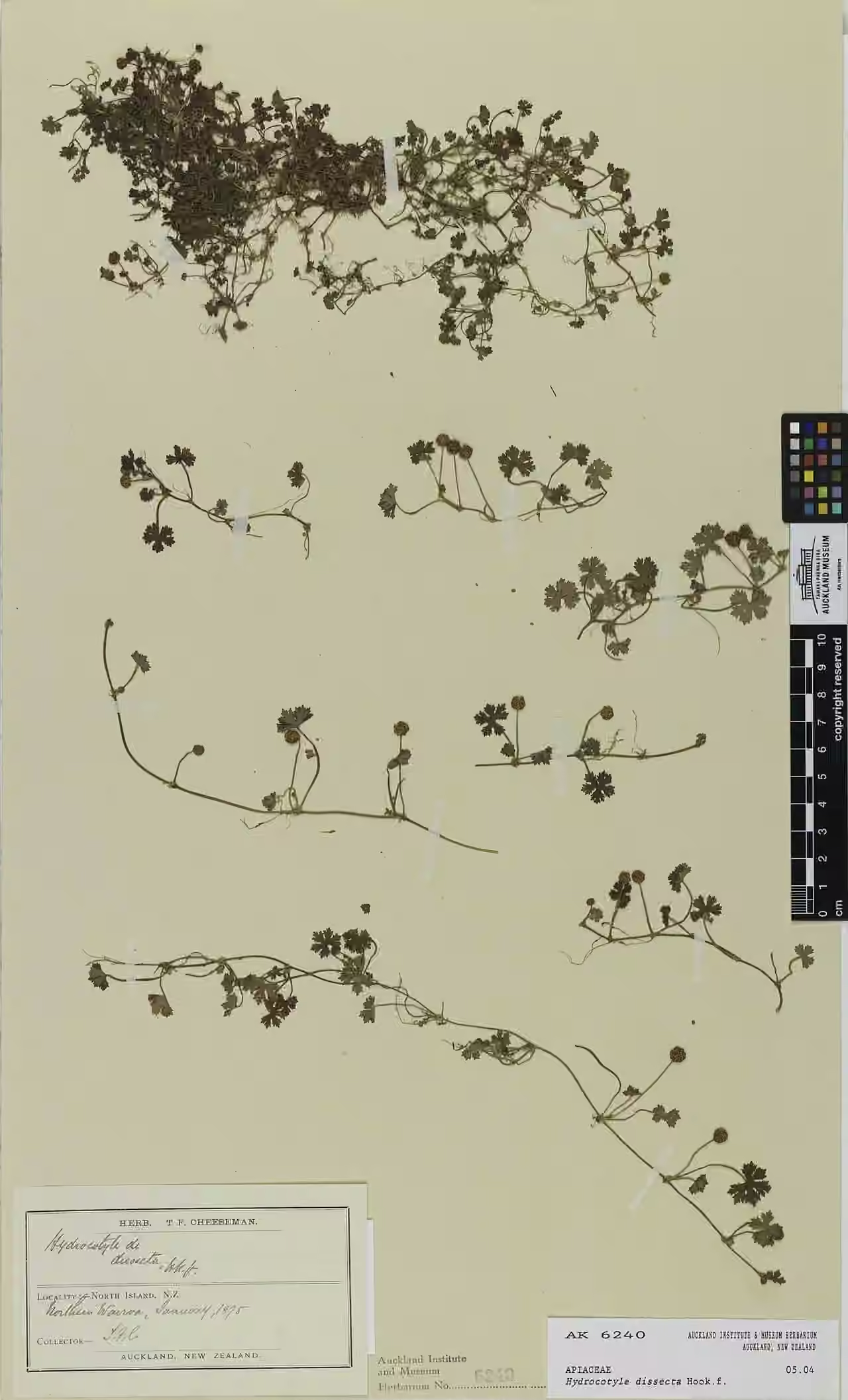
Hydrocotyle dissecta
Last updated:
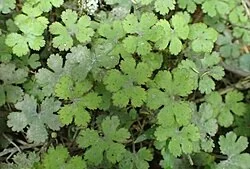
Hydrocotyle dissecta is a creeping native pennywort endemic to New Zealand, recognised by its softly hairy, dull green leaves that are cut more deeply than in any of its relatives, into five to seven narrow, toothed segments. It forms large patches of slender stems over the ground at forest margins, on river terraces and in other open, lowland to montane places through most of the North and South Islands, though it avoids the dry east coast. Small umbels of brownish to pinkish flowers appear from November to February. It is ranked Not Threatened nationally. Explore more native ground covers in our native plant guide.
Plant Description
Hydrocotyle dissecta is a perennial herb with slender stems that creep along the ground and build up into large patches. Its leaves are simple, dull green and densely hairy above and below, 5-35 mm in diameter. Each blade is deeply divided, between half and four-fifths of the way to the centre, into five to seven narrow, oblong to obovate segments, and each segment is usually again three-lobed with serrated edges. The result is a lacy, finely cut leaf quite unlike the rounded, shallowly lobed leaves of most other New Zealand pennyworts.
Flowers are tiny and borne in simple, many-flowered umbels. NZPCN describes the flower colour as brown and red to pink. Flowering runs from November to February and fruiting from January to March. The hairless fruits are about 1.5-1.8 mm long and 1-1.2 mm wide, splitting into two mericarps that are spread by water and wind.
Among the 16 or so New Zealand Hydrocotyle species, the depth of leaf division is the key feature. H. heteromeria and H. microphylla have hairless leaves divided only a fifth to a third of the radius, while the hairy H. moschata has broader, shallower lobes. A natural hybrid with H. elongata is recorded, and plants vary considerably, so intermediate leaves can occur.
Quick Facts
| Scientific Name | Hydrocotyle dissecta |
|---|---|
| Height | Low creeping herb; leaves 5-35 mm across |
| Spread | Forms large patches |
| Water Needs | Moist; usually on non-wetland ground |
| Light | Partial shade to sun at forest edges |
| Frost Tolerance | Good; reaches montane altitudes |
| Salt Tolerance | No information available |
| Growth Rate | Moderate once established |
| Lifespan | Perennial |
Climate Best Suited to
It suits the moist temperate climate of most of New Zealand from lowland to lower montane levels, but is absent from the driest eastern districts.
Regional Suitability
| City | Climate Suitability |
|---|---|
| Auckland | Medium |
| Wellington | High |
| Christchurch | Low |
| Dunedin | Medium |
Plant Habitat
Hydrocotyle dissecta is endemic to New Zealand and occurs through the North and South Islands, mostly from about latitude 35 degrees south, so it is uncommon in the far north. The Flora of New Zealand notes it is absent from dry east coast areas. It ranges from lowland to lower montane altitudes.
Its habitats are open places such as forest margins, clearings and river terraces. NZPCN classes it as facultative upland: occasionally in wetlands, but usually on drier ground. It is regionally Naturally Uncommon in Northland, Wellington and Otago, and Not Threatened in Auckland.
Growing Requirements
Soil Requirements
It grows in the moist, humus-rich soils of forest edges and the silty or stony alluvium of river terraces.
- Moist but free-draining loam or alluvial soil
- Tolerates light, stony ground on river terraces
- Leaf litter or compost helps hold moisture
Light Requirements
Forest margins and clearings give it a mix of sun and shade, which suits it best.
- Dappled light or morning sun
- Tolerates fairly open sites in moist districts
- Avoid hot, dry, fully exposed positions
Water Requirements
It needs reliable moisture but is not a true wetland plant, and its absence from dry eastern districts suggests drought is a limit.
- Keep soil evenly moist in summer
- Does not need standing water
- Water during dry spells in eastern gardens
Planting and Establishing
No published horticultural notes for this species were found, and it is rarely, if ever, offered by nurseries. Where it is grown, plant rooted pieces into moist, humus-rich soil at the edge of a shrub border or restoration planting, mimicking a forest margin.
Space pieces 20-30 cm apart and keep them watered until the stems begin to creep and root. Do not dig plants from the wild.
Ecological Role
Its tiny flowers are presumably visited by small insects, though pollination of this species has not been studied. The two-part fruits are dispersed by water and wind, which helps it colonise river terraces and disturbed forest edges.
As a mat-forming herb of forest margins it is part of the low ground layer that covers bare soil, alongside other pennyworts, Nertera and small ferns. It is variable and hybridises with H. elongata, which makes it of interest for studies of the genus.
Uses & Significance
Garden Uses
This is mainly a plant for native ground-layer plantings and restoration projects rather than ornamental gardens.
- Ground layer at the edge of native shrub plantings
- Shady banks and woodland paths
- Riverside restoration on alluvial terraces
Ecological Value
It adds to the diversity of native herbs on forest margins and helps bind bare soil.
- Covers and stabilises soil at forest edges
- Contributes to native herb diversity
- Endemic species worth keeping in local restoration plantings
Landscaping Uses
The finely cut, hairy foliage gives a soft, fern-like texture that contrasts well with glossy-leaved natives such as Coprosma and Pittosporum. Allow it to weave between larger plants along a shady path edge.
It will not stand heavy foot traffic like a lawn and may spread beyond where it is wanted in moist soils, so give it a defined area.
Seasonal Care Calendar
Spring
Fresh leaves emerge and the stems resume creeping.
- Plant or divide now
- Mulch to keep soil moist
Summer
Flowering runs from November to February, with brownish to pink umbels among the leaves.
- Water in dry spells
- Fruits begin forming from January
Autumn
Fruits ripen up to March and are shed to be carried by water and wind.
- Collect fruit for sowing if wanted
- Trim back stems straying into paths
Winter
Growth slows; the patch remains evergreen in mild areas.
- Little care needed
- Check drainage in very wet spots
When to Prune and How Much
No pruning is needed. If the patch spreads beyond its space, pull up or cut the outer creeping stems at any time of year.
Removing a few stems from the edge each spring keeps it in bounds and gives material for propagation.
How to Grow Pennywort
No species-specific propagation guidance for Hydrocotyle dissecta was found in NZPCN or the Flora of New Zealand. Its creeping habit of slender stems forming large patches means that dividing rooted pieces is the most dependable way to increase it, as with other mat-forming native pennyworts. Seed is produced from January to March and can also be tried. Use only plants already in cultivation or material collected with landowner permission, and keep sources local where it is being used for restoration so that regional forms are not mixed.
By Division
Lengths of creeping stem that have already rooted establish quickly in moist conditions.
- In spring or early autumn, lift a section from the edge of an established patch
- Cut it into pieces that each have several leaves and some roots
- Pot into a moist, free-draining mix or plant straight into prepared ground
- Keep shaded and moist until new leaves appear
- Plant out once the pot is filled with roots
From Seed
Fruits ripen from January to March. Each fruit splits into two small mericarps, which can be sown fresh.
- Collect ripe, brown fruiting umbels in late summer
- Sow on the surface of a fine seed mix and press lightly in
- Keep the tray moist in a sheltered, partly shaded place
- Prick out seedlings when they have a few true leaves
- Grow seedlings on in pots until they form a small mat before planting out
Pests & Diseases
No significant pests or diseases are recorded for Hydrocotyle dissecta. Slugs and snails may graze the soft leaves in damp, shaded spots.
The bigger risk in restoration plantings is competition from vigorous exotic grasses and weeds such as tradescantia, which can smother low native herbs. Hand weeding around young patches helps.
Cultural Significance
No Māori name or traditional use specific to this species was found in the sources consulted, so none is given here.
The species was named by Joseph Dalton Hooker in 1853 in his Botany of the Antarctic Voyage. The epithet dissecta means dissected or deeply divided, referring to its distinctive leaves, while Hydrocotyle combines the Greek hydor (water) and cotyle (cup).
Bonus Tip
If you find a pennywort with hairy, deeply cut leaves near a river terrace, compare a few leaves before naming it: shallower-lobed plants nearby may be the H. dissecta x H. elongata hybrid, and the depth of division is the most reliable feature to check.
Related Plants
Explore other native plants that share similar characteristics or habitats with Pennywort (Hydrocotyle dissecta), offering further insights into New Zealand's diverse flora. These related species provide context and opportunities for complementary planting in your garden.
Anthoxanthum recurvatum
Anthoxanthum recurvatum
Kāretu
Anthoxanthum redolens
Hoheria ovata
Hoheria ovata
Waxweed
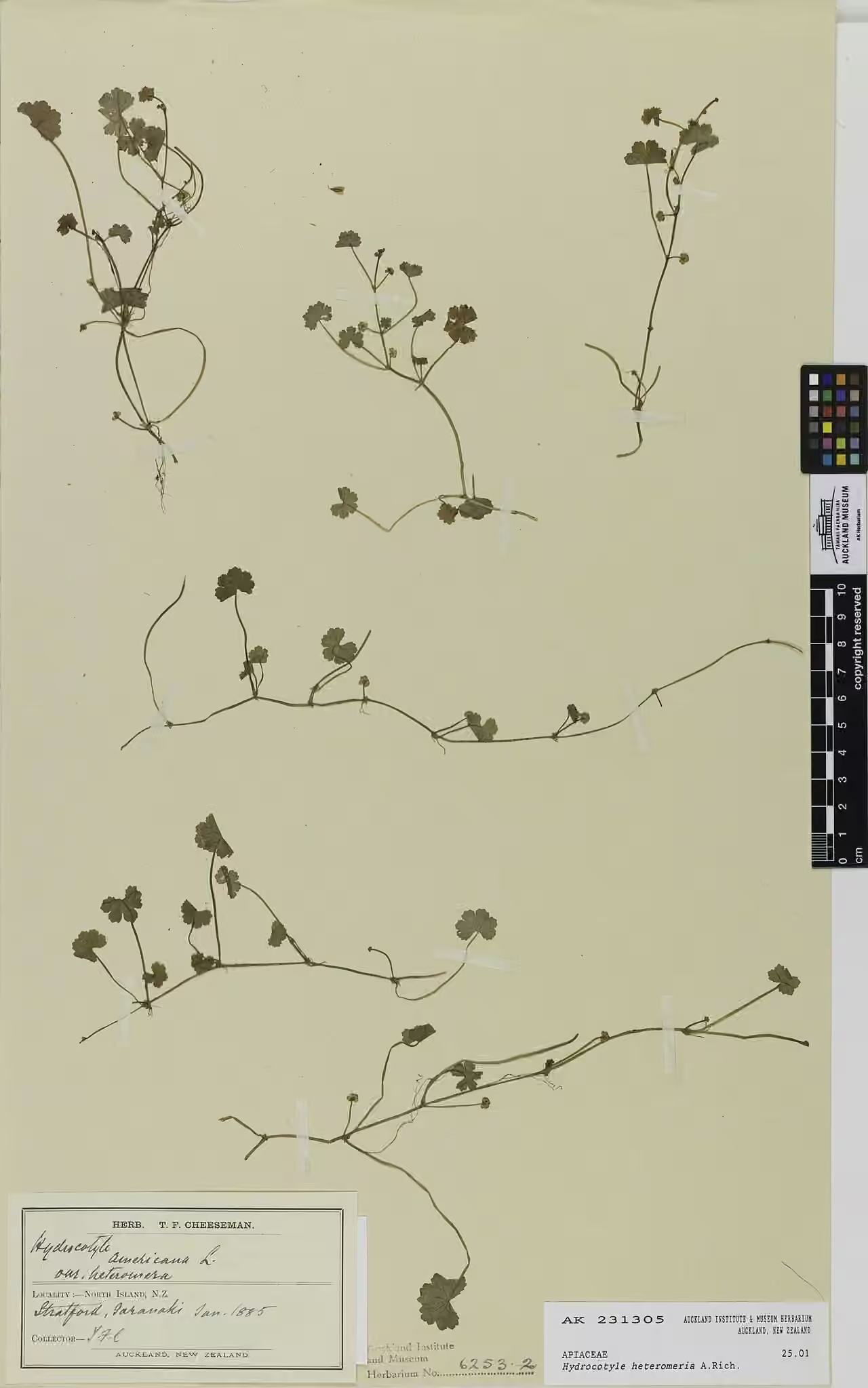
Hydrocotyle heteromeria
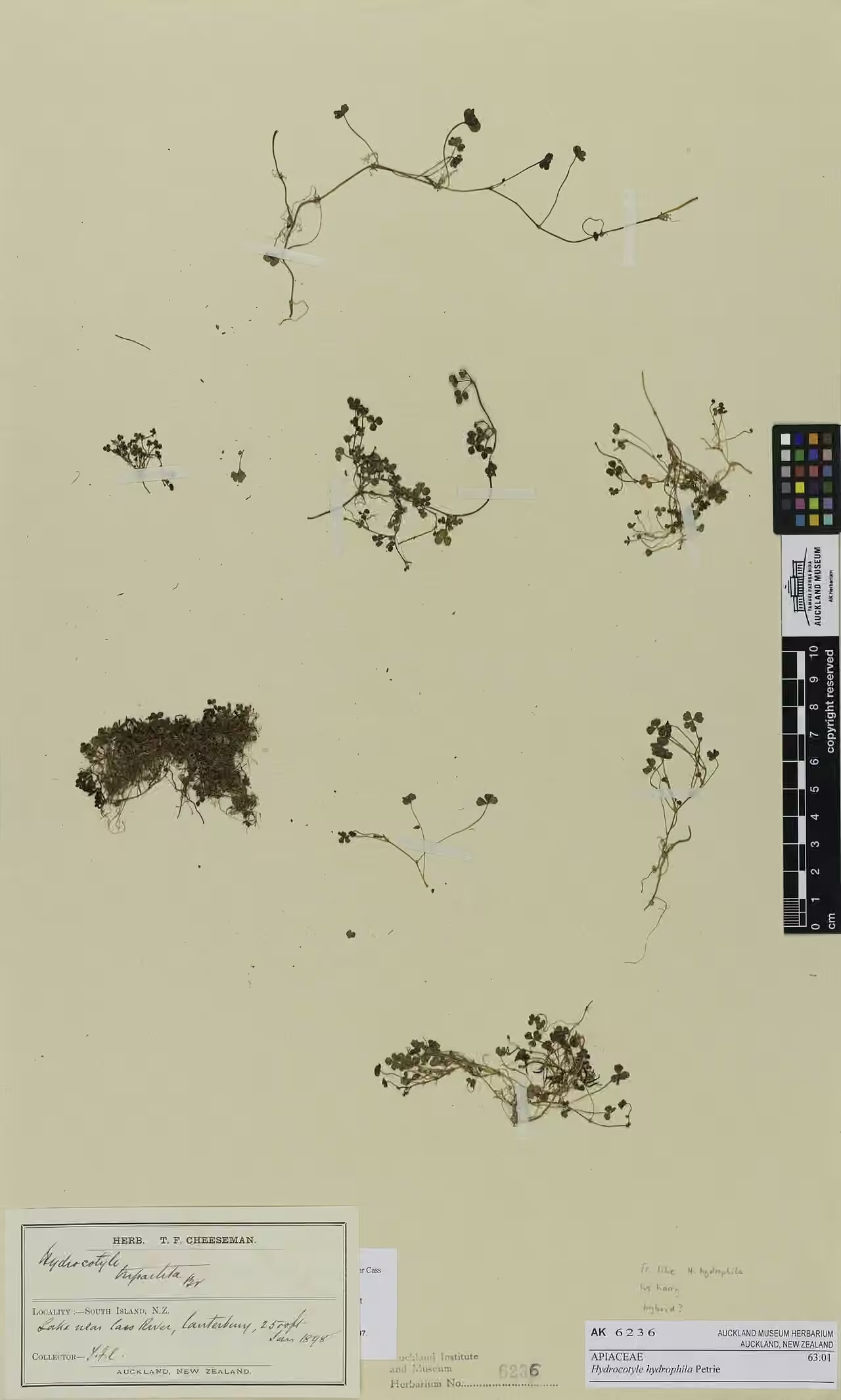
Hydrocotyle hydrophila
Hydrocotyle hydrophila
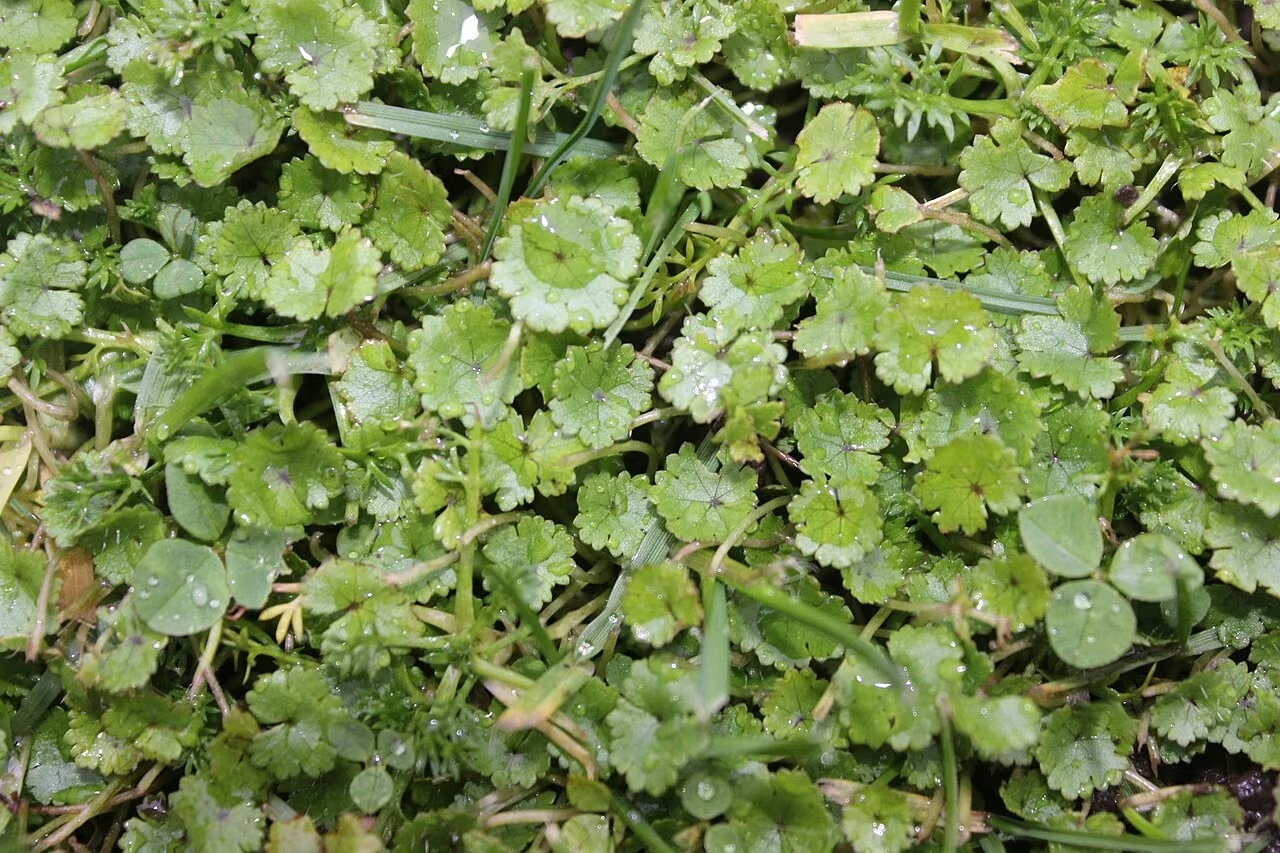
Hydrocotyle microphylla
Hydrocotyle microphylla
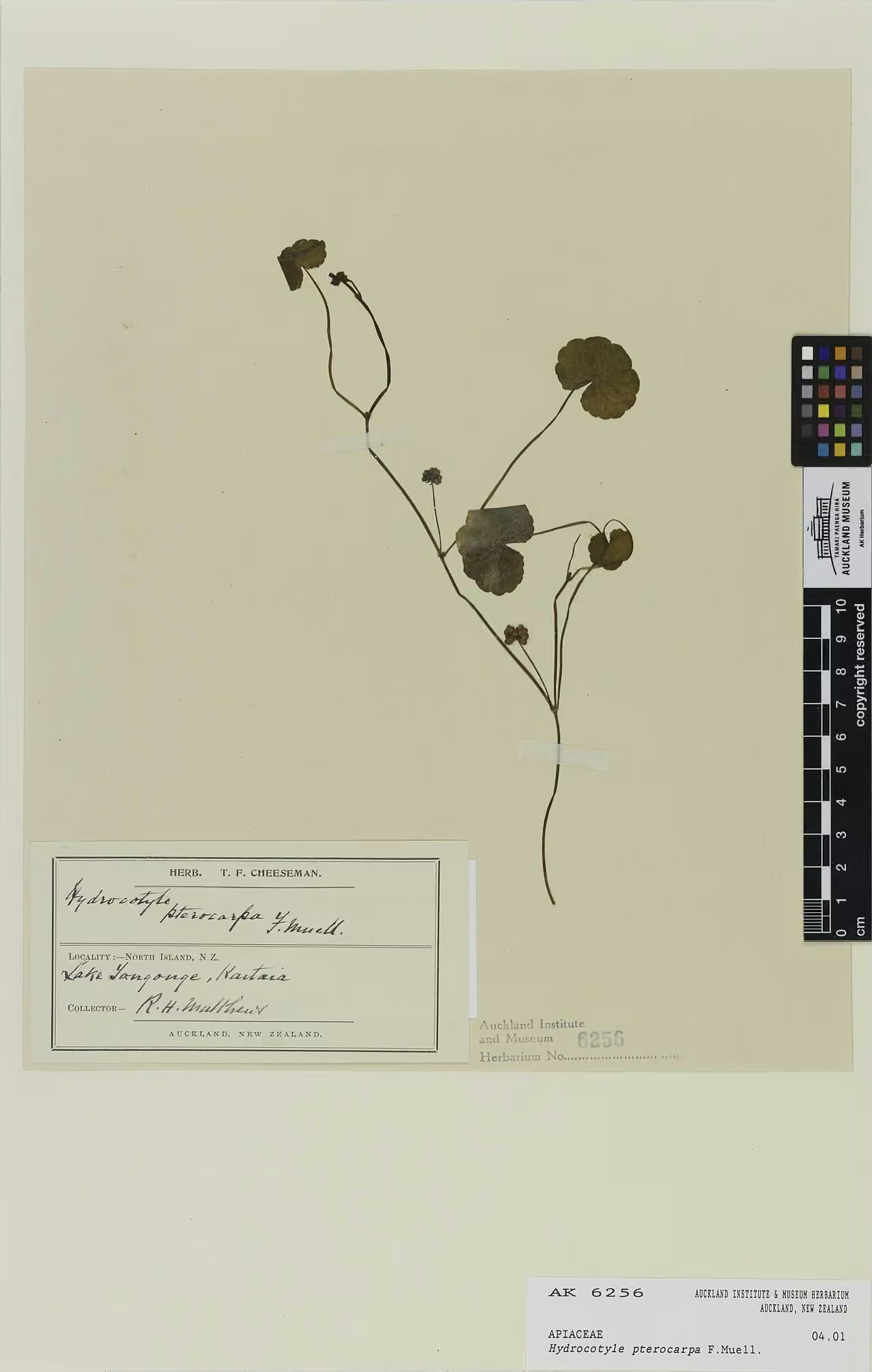
Hydrocotyle pterocarpa
Hydrocotyle pterocarpa
Trailing Pennywort
Trailing Pennywort
Plant Conservation
Hydrocotyle dissecta has been assessed as Not Threatened at every national assessment from 2004 to 2023. Regionally it is ranked Naturally Uncommon in Northland, Wellington and Otago, reflecting patchy or poorly known occurrence there, and Not Threatened in Auckland with qualifiers noting that data on its population size and trend are poor.
Weed invasion of forest margins and river terraces is the most likely local pressure. Controlling weeds and allowing native ground cover to persist at forest edges helps it.
Frequently Asked Questions
How do you identify Hydrocotyle dissecta?
Its leaves are densely hairy on both surfaces and divided half to four-fifths of the way to the centre into 5-7 narrow segments, each usually three-lobed and serrated. The Flora of New Zealand says the deeply dissected leaves are the easiest way to recognise it.
Where does Hydrocotyle dissecta grow in New Zealand?
It is found throughout the North and South Islands except in dry eastern districts, on lowland to montane forest margins, river terraces and other open places, mostly from about latitude 35 degrees south.
Does Hydrocotyle dissecta hybridise with other pennyworts?
Yes. Allan's Flora of New Zealand records a natural hybrid between H. dissecta and H. elongata, and notes the species is quite variable, partly because of growing conditions.
Sources and Further Reading
The botanical, growing, and conservation details for Pennywort (Hydrocotyle dissecta) on this page draw on the New Zealand plant references below. Consult them for full technical records and the latest distribution data.