Riverbed Shrub
Helichrysum depressum
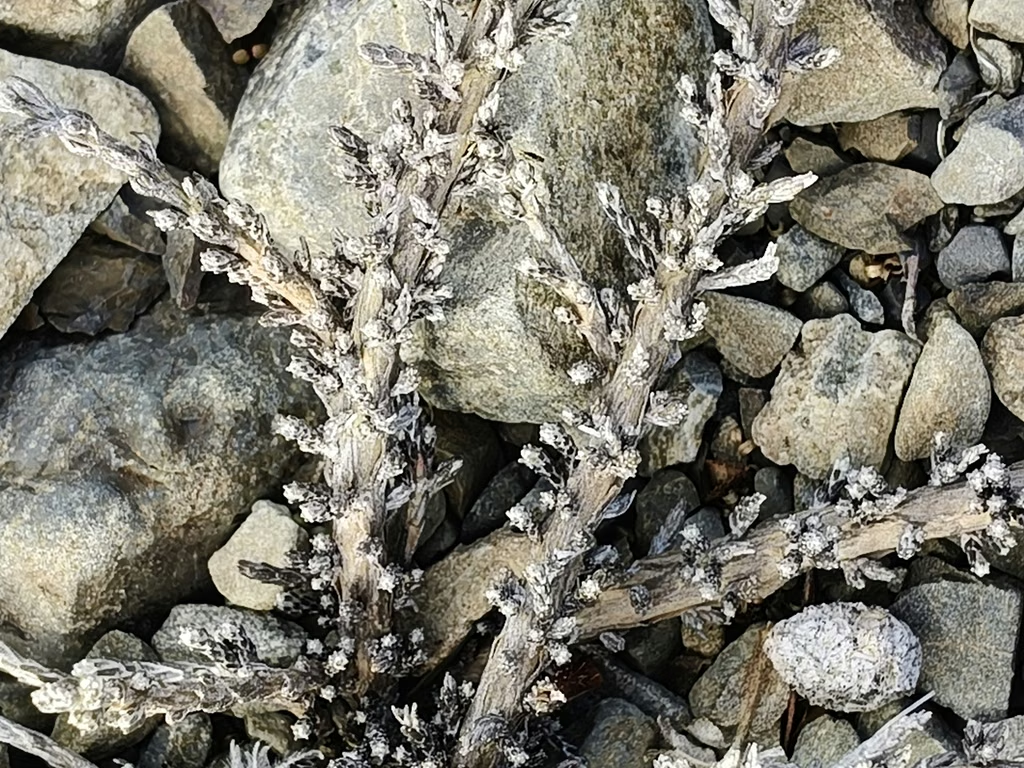
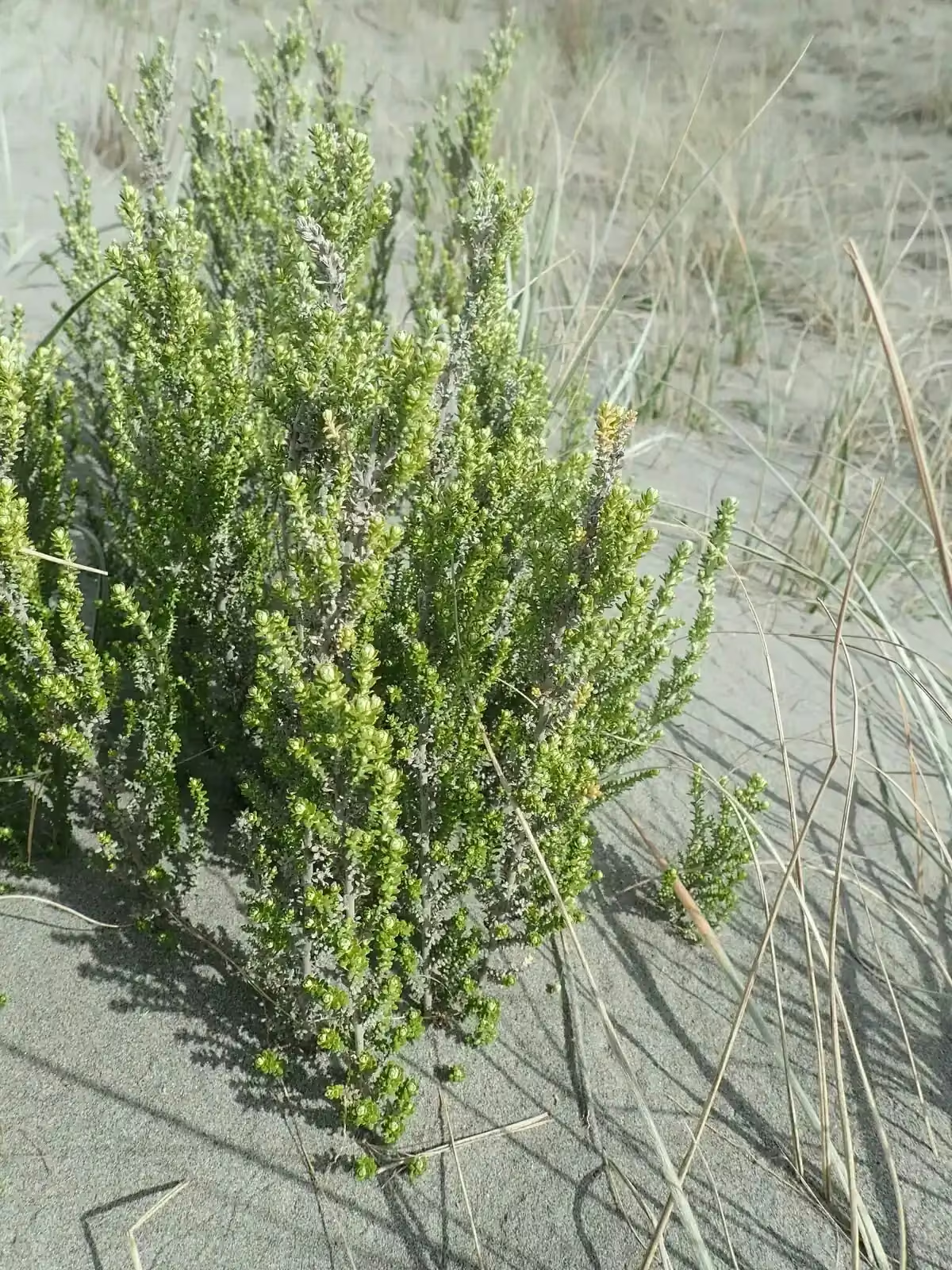
Helichrysum depressum is an endemic New Zealand shrub of gravelly riverbeds and glacial moraines. Its fine, grey-felted branchlets often give it a dry, almost leafless appearance. The shrub is usually prostrate, occasionally more upright, and can reach 1 m tall.
Identification
The shrub is usually prostrate, occasionally more upright, and can reach 1 m tall. Its fine branchlets are 1-2 mm across including the closely overlapping leaves and felt.
The stalkless leaves are narrow, usually 2.5-4 mm long and covered with grey or white felt. Young plants and shaded shoots have leaves that spread away from the stems.
Quick facts
| Scientific Name | Helichrysum depressum |
|---|---|
| Earlier name | Ozothamnus depressus |
| Family | Asteraceae |
| Growth | Usually prostrate; occasionally to 1 m |
| Habitat | Gravelly riverbeds and glacial moraines |
| Flowering | January to February |
| National status | Not Threatened (2023) |
| Height | Usually prostrate; occasional upright plants reach 1 m |
| Water Needs | A cultivation watering requirement is not given in the cited accounts |
| Light | Riverbeds, rocky outcrops and stony places in its natural habitat |
| Spread | Sprawling branches; maximum patch width unquantified |
| Frost Tolerance | Minimum tolerated temperature is not documented |
| Salt Tolerance | Salt tolerance is not documented |
| Growth Rate | Annual extension is not quantified in the cited accounts |
| Lifespan | Woody perennial shrub |
Natural range
DOC describes this shrub as mainly a South Island plant, with one small population in Hawke’s Bay. Its recorded sites include gravelly riverbeds and glacial moraines rather than a single region or altitude.
| City | Climate Suitability |
|---|---|
| Auckland | Not assessed |
| Wellington | Not assessed |
| Christchurch | Not assessed |
Habitat and distribution
Helichrysum depressum occurs mainly in South Island riverbeds. DOC also records it on glacial moraines and notes a small Hawke’s Bay population in the North Island.
The prostrate habit and fine, felt-covered branchlets give this riverbed shrub an appearance that can resemble dry twigs.
Natural growing conditions
Gravelly riverbeds and glacial moraines are the habitats described by DOC. The cited Flora and NZPCN accounts do not provide a tested garden soil, watering schedule or temperature range for this particular shrub.
Planting considerations
The species is usually prostrate, although Flora records occasionally upright plants up to 1 m tall. The cited profiles describe its riverbed habitat but do not give a species-specific planting protocol.
Growth and dispersal
The adult leaves overlap and press against the branchlets, which are obscured by leaves and felt. NZPCN reports that the small pappus-bearing fruits are dispersed by wind across the landscape.
Observing the plant
Examine the fine branchlets for tiny overlapping leaves rather than assuming they are bare. The outer leaf surfaces have a flat, paper-like grey felt; inner surfaces are densely felted.
Garden context
The shrub’s low, sprawling form is described from riverbeds and moraines, but the cited New Zealand profiles do not report garden trials. Young plants and shaded shoots can have visibly spreading leaves.
Flowers and fruit
DOC records small yellowish flowers from January to February; NZPCN describes the flower heads as white. The fruits bear a pappus and are carried by wind after flowering.
Growth form
Plants are normally prostrate, with fine branchlets whose apparent width includes overlapping leaves and felt. The botanical sources do not prescribe a pruning schedule or a method for shaping this species.
How to Grow Riverbed Shrub (Helichrysum depressum)
Seed and the earlier generic name
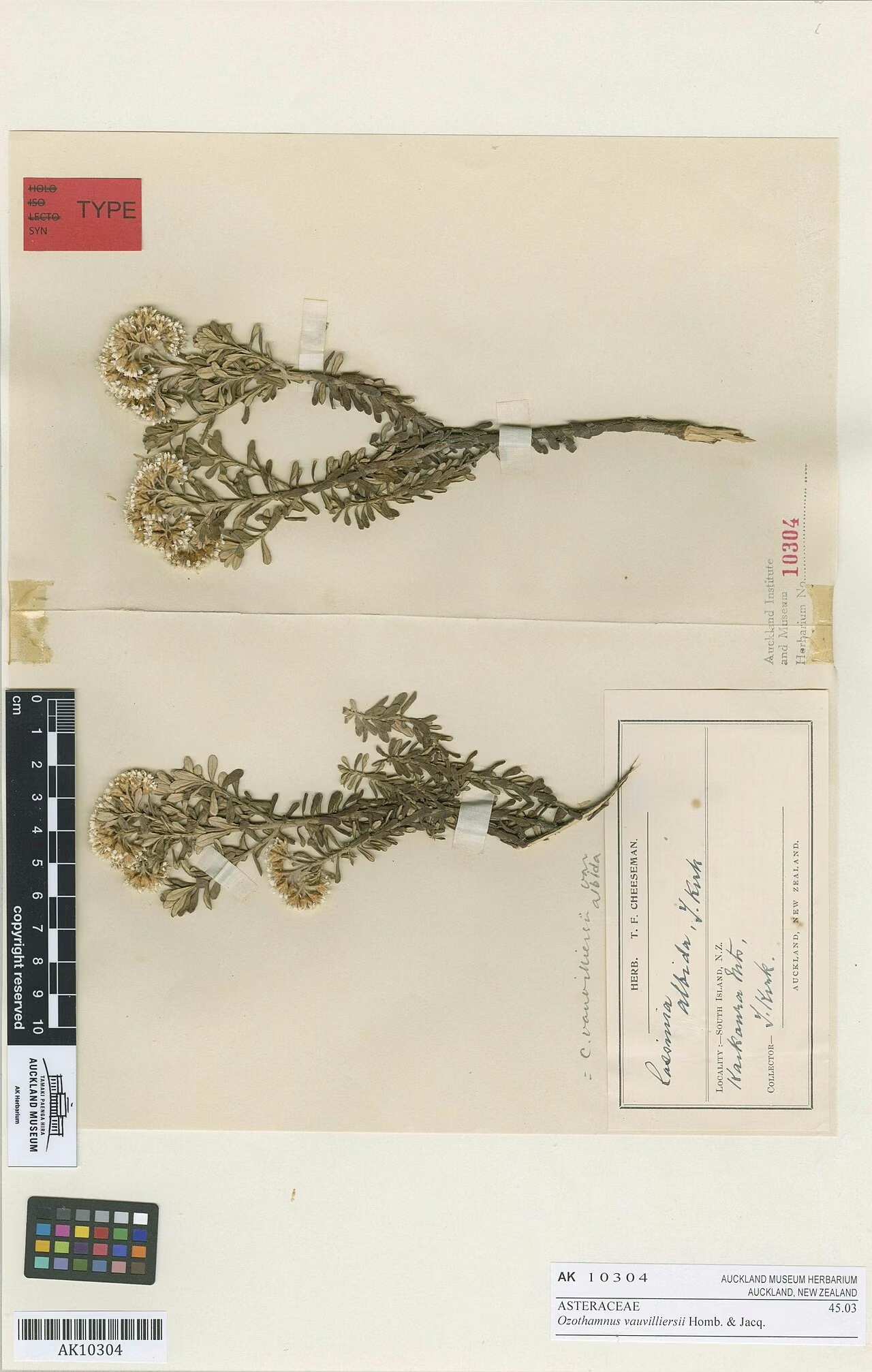
Flora of New Zealand records this shrub under Helichrysum depressum, with Ozothamnus depressus as its earlier name. The species produces small achenes with a pappus, and NZ Plant Conservation Network records wind dispersal. The cited botanical accounts do not provide a tested seed-germination or cutting-rooting procedure for cultivation.
Recognising the sprawling structure
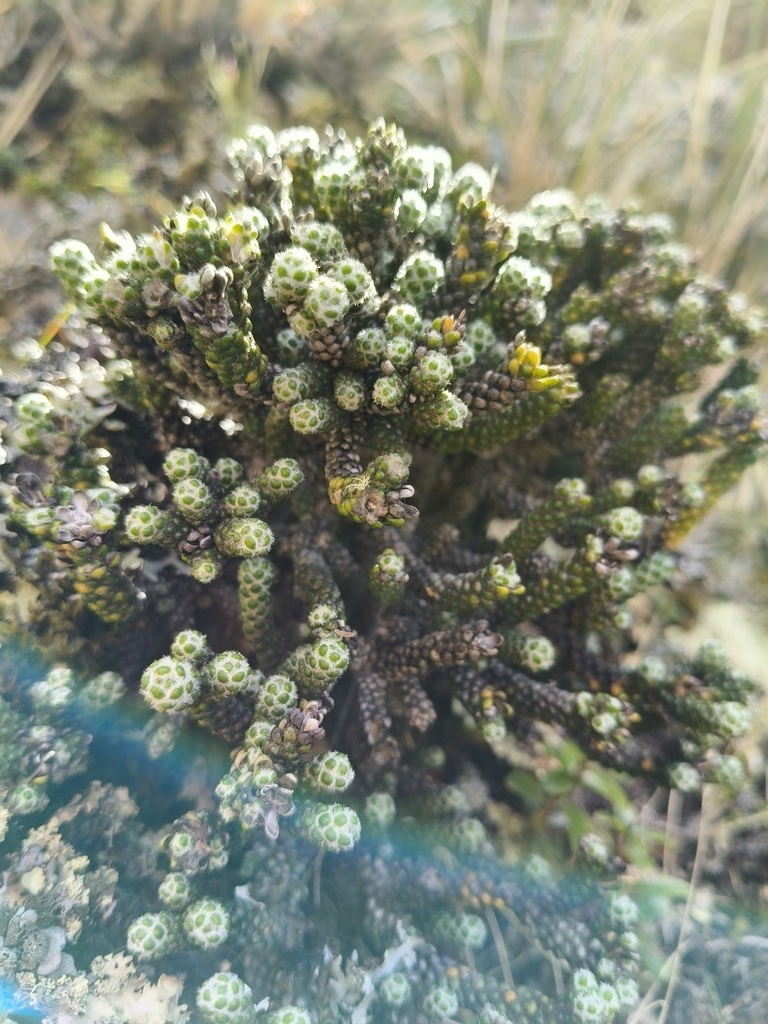
Most plants grow close to the ground, although occasional upright shrubs reach about 1 m. Branchlets are slender, approximately 1-2 mm across including their leaves and felt. Closely overlapping scale-like leaves obscure much of the stems. This fine branching structure gives the plant a different outline from the thicker coral-like shoots of Helichrysum coralloides.
Following young and shaded shoots
The narrow adult leaves are usually about 2.5-4 mm long. Their outer surfaces carry a flat, grey, paper-like felt, while the inner faces are densely woolly. Leaves on young plants and shaded shoots spread away from the stem. This documented variation helps interpret foliage that looks less tightly appressed than the mature sun-exposed shoots.
Reproductive growth in the riverbed setting
Natural sites include riverbeds, rock outcrops and other stony ground in lowland to montane districts. Flower heads are solitary, stalkless and roughly 3-5 mm across. DOC records flowering in January-February. The fruits are smooth, cylindrical and about 1.8-2.3 mm long. No irrigation schedule, planting distance or measured annual branch extension is supplied by the cited Flora treatment.
Plant health
The NZPCN and Flora profiles do not list species-specific pests or disease treatments. Grey felt and closely pressed leaves are normal features that can make the living plant look dry or leafless.
Naming and classification
The name depressum refers to a flattened or pressed-down habit. Ozothamnus depressus is the earlier name listed by Flora of New Zealand for Helichrysum depressum.
Distinguishing the coral shrub
Helichrysum depressum has much finer branchlets, about 1-2 mm across including leaves, than the thick 4-10 mm branchlets described for H. coralloides. Both have closely overlapping, felted leaves.
Related New Zealand shrubs
Explore other native everlasting shrubs and related daisy-family plants from New Zealand.

Conservation
Helichrysum depressum is endemic to New Zealand and was assessed as Not Threatened nationally in 2023. DOC describes it as common in its South Island riverbed and moraine habitats.
Frequently asked questions
Is every plant completely prostrate?
No. A ground-hugging habit is usual, but the Flora description includes occasional more upright plants up to 1 m tall.
Why do some leaves spread away from the stems?
Spreading foliage is documented on young plants and shaded shoots, while mature leaves are usually closely appressed.
Is Ozothamnus depressus an earlier name?
Yes. It is the earlier generic combination for Helichrysum depressum.
Sources
Botanical description and naming: Flora of New Zealand. Habitat and flowering: DOC braided river field guide. Conservation and dispersal: NZPCN.
Its mostly prostrate habit and overlapping, felt-covered leaves are useful characters for recognising this riverbed shrub.
Last updated: