Mountain Daisy
Celmisia discolor
Last updated:
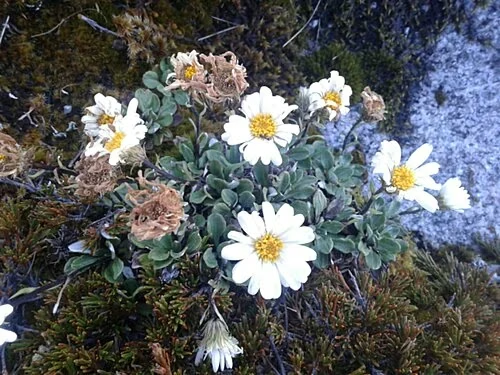
The Mountain Daisy (Celmisia discolor) is a perennial alpine herb endemic to New Zealand's South Island, growing in herbfields and grasslands between about 1000 and 1700 metres. Reaching 0.10 to 0.20 metres tall and spreading 0.30 to 0.60 metres, it forms rosettes of stiff, leathery leaves that are dark green above and distinctly paler, silvery-white and felted beneath, a contrast that gives the species its name. In summer it bears white daisy flowers with yellow centres on woody stems. It favours open, well-drained stony ground with full sun and good air movement, and is very hardy to frost and snow. Explore more New Zealand alpine plants in our native plant guide.
Plant Description
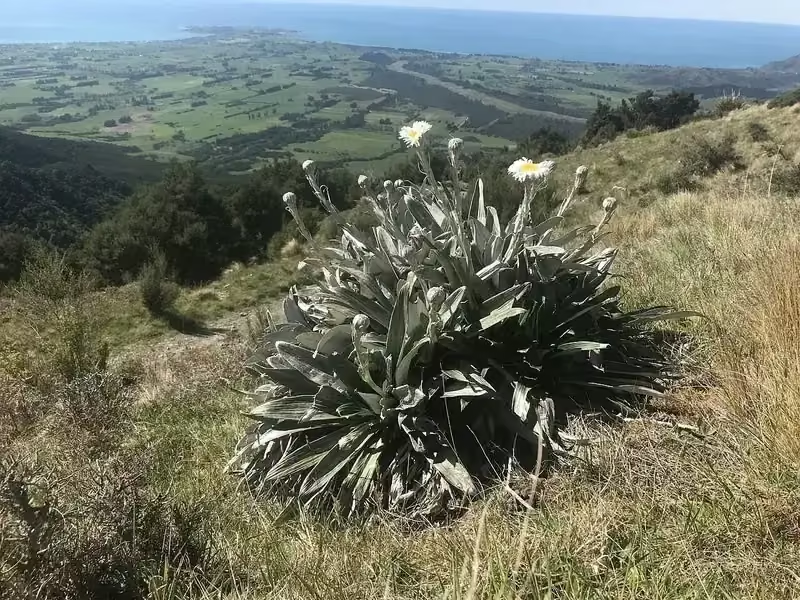
Celmisia discolor , commonly known as Mountain Daisy, is a beautiful perennial herb endemic to the South Island of New Zealand. This species forms attractive rosettes of leaves that are typically dark green on the upper surface and distinctly paler or silvery-white felted beneath, a characteristic reflected in its name "discolor." Its leaves are often stiff and leathery, well-suited to the exposed conditions of its alpine habitat. In summer, it produces charming white, daisy-like flowers with yellow centers, held aloft on woody, often hairy stems, adding a vibrant touch to montane and alpine landscapes.
Quick Facts
| Scientific Name | Celmisia discolor |
|---|---|
| Height | 0.10-0.20 metres |
| Spread | 0.30-0.60 metres |
| Water Needs | Moderate; requires consistent moisture but dislikes waterlogging |
| Light | Full sun to partial shade |
| Frost Tolerance | Very High (Alpine hardy) |
| Salt Tolerance | Low |
| Growth Rate | Slow |
| Lifespan | 15-30 years |
Climate Best Suited to
The Mountain Daisy ( Celmisia discolor ) is a specialist of the alpine and subalpine environments of New Zealand's South Island. It is exceptionally hardy to severe frosts, snow, and strong winds. It requires cool temperatures and good air circulation, making it challenging in hot, humid lowland gardens. In cultivation, it thrives in well-drained, gritty soils that remain consistently moist, mimicking its natural habitat where snowmelt provides constant hydration.
Regional Suitability
| City | Climate Suitability |
|---|---|
| Auckland | Poor (too hot and humid) |
| Wellington | Marginal (needs very good drainage) |
| Christchurch | Good |
| Dunedin | Excellent |
| Invercargill | Excellent |
Plant Habitat
Celmisia discolor is endemic to the South Island of New Zealand, predominantly found in alpine to subalpine herb-fields and grasslands, at elevations between 1000 and 1700 metres. It prefers open, well-drained positions on stony ground, where it can receive ample sunlight and benefit from good air movement. While widespread, it is less common in the drier eastern regions and south of Canterbury, favoring more consistently moist alpine sites.
Growing Requirements
Soil Requirements
Demands exceptionally well-drained, gritty, and stony soil that remains cool and moist. It is highly sensitive to heavy or waterlogged conditions, which can lead to root rot.
- Moist, very gritty, free-draining soil
- Stony or scree-like substrates
- Intolerant of heavy clay or waterlogging
Light Requirements
Grows best in full sun in its natural alpine range. In lowland gardens, it benefits from partial shade during the hottest part of the day to prevent leaf scorch.
- Full sun in cool climates
- Partial shade in hot areas
- Needs bright, open exposure
Water Requirements
Requires consistent moisture, particularly during its active growth phase. While it tolerates occasional dry spells, prolonged drought will stress the plant.
- Consistent moisture, but never soggy
- Water deeply and infrequently
- Intolerant of prolonged drought or waterlogging
Planting and Establishing
To plant Mountain Daisy, choose a site that provides perfect drainage, such as a rock garden, scree bed, or a very free-draining raised bed. Incorporate abundant grit, scoria, or coarse sand into the planting mix. Plant the daisy with its crown slightly elevated above the surrounding soil level and top-dress with a generous layer of fine gravel to prevent moisture accumulation around the base and encourage good air circulation. Water thoroughly upon planting and maintain consistent moisture during establishment.
Ecological Role
Celmisia discolor plays a vital role in stabilizing alpine soils and contributing to the biodiversity of high-altitude grasslands, providing shelter and food for specialized alpine fauna.
Uses & Significance
Garden Uses
A highly sought-after plant for alpine gardens, scree beds, and containers, where its unique foliage and charming flowers can be admired.
- Alpine and rock gardens
- Scree beds and raised planters
- Container gardening
Ecological Value
Its flowers provide nectar for native alpine insects, including butterflies and moths, which are important pollinators in these often-barren environments.
- Nectar source for alpine pollinators
- Habitat for small invertebrates
- Soil stabilization in exposed areas
Landscaping Uses
Ideal for specialized landscaping projects aiming to replicate a true New Zealand alpine aesthetic. Its architectural form makes it a striking feature plant.
Seasonal Care Calendar
Spring
Remove any dead or damaged foliage from the previous winter to promote air circulation and prevent fungal issues. A very light, low-nitrogen feed can be given if needed.
- Clear winter debris
- Check for signs of rot
- Light low-nitrogen feed
Summer
Monitor soil moisture carefully, ensuring it remains consistently damp but not wet. Ensure good air circulation, especially during warmer, humid periods.
- Maintain consistent moisture
- Ensure good air flow
- Watch for aphids and mites
Autumn
After flowering, spent flower stalks can be removed for neatness. Prepare the site for winter, ensuring drainage remains excellent to prevent waterlogging.
- Remove spent flower stalks
- Check drainage for winter
- Refresh gravel top-dressing
Winter
Requires minimal attention during winter. It is exceptionally frost-hardy and benefits from snow cover, which insulates it from extreme cold.
- Minimal intervention
- Ensure protection from excessive wetness
- Resistant to cold and snow
When to Prune and How Much
Pruning is generally limited to removing spent flower stalks and any dead or yellowing leaves from the rosettes to maintain plant health and prevent rot.
- Remove spent flower stalks
- Tidy dead or yellowing foliage
- Avoid cutting into the main rosette
Always use sterilized, fine-pointed tools to avoid introducing pathogens and for precision around the tight foliage.
How to Grow Mountain Daisy
Cultivating Mountain Daisy ( Celmisia discolor ) is a rewarding endeavor for any gardener interested in New Zealand's unique flora. This species can be propagated through several methods, each requiring specific conditions to ensure healthy growth and establishment. Successful propagation depends on mimicking the plant's natural environment and providing consistent care during the early stages of development.
From Seed
Propagation from seed is often the most effective way to produce a large number of Mountain Daisy plants. Seeds should be collected when they are fully mature. Freshly collected seeds generally have higher germination rates than those that have been stored for long periods.
Mountain Daisy can be grown from fresh seed, but it requires specific conditions for successful germination. Collect fresh seeds when ripe in late summer.
- Sow on the surface of a very gritty, free-draining seed mix.
- Keep moist and in a cold frame.
- Germination can be slow and irregular.
- Grow on carefully in individual pots.
Providing natural winter chilling can aid germination, and protecting young seedlings from excessive moisture is critical.
From Cuttings
For those wishing to replicate specific characteristics of a parent plant, vegetative propagation via cuttings is the preferred method. This technique ensures that the new plants are genetically identical to the source. Semi-hardwood cuttings taken during the appropriate season usually yield the best results for this species.
Hardwood cuttings can be taken, but success rates can be variable and establishment is slow.
- Take small, firm cuttings in late spring to early summer.
- Dip in strong rooting hormone powder.
- Insert into a very gritty, well-aerated propagation mix.
- Provide bottom heat and ensure high humidity.
Additional Methods
Depending on the growth habit of Mountain Daisy, other methods such as division or layering might also be viable options. Division is particularly suitable for plants that form dense clumps or have spreading root systems, while layering can be used for species with trailing or flexible stems.
Division is not typically recommended as it can be very stressful for this slow-growing plant.
- Avoid division unless absolutely necessary.
- If attempting, divide in early spring with extreme care.
- Ensure each division has a substantial root system.
Pests & Diseases
Highly susceptible to root and collar rot if drainage is poor or conditions are too humid. Aphids can sometimes be a problem on new growth. Ensure excellent drainage and good air circulation to prevent issues.
Cultural Significance
Mountain Daisy is valued by alpine plant enthusiasts for its unique silver foliage, representing the specialized adaptations of New Zealand's high-country flora.
- Prized by alpine plant collectors
- Represents unique alpine adaptations
- Endemic to the South Island
Bonus Tip
To achieve the best silvery colour and compact form, ensure your Mountain Daisy receives maximum sunlight and impeccable drainage, mimicking its high-country habitat.
Related Plants
Explore other native plants that share similar characteristics or habitats with Mountain Daisy ( Celmisia discolor ), offering further insights into New Zealand's diverse flora. These related species provide context and opportunities for complementary planting in your garden. For another alpine plant, explore Silky Mountain Daisy.
Silver Mountain Daisy
Celmisia coriacea
Celmisia spectabilis
Celmisia spectabilis

Large Mountain Daisy
Celmisia semicordata
Snow Tussock Daisy
Celmisia sessiliflora

False Spaniard
Celmisia lyallii
Monro's Mountain Daisy
Celmisia monroi
Celmisia verbascifolia
Celmisia verbascifolia

Akaroa Daisy
Celmisia mackaui
Plant Conservation
Celmisia discolor is currently classified as "Not Threatened" in the New Zealand Threat Classification System. It is widespread in suitable habitats across the South Island. However, like many alpine species, it is vulnerable to habitat degradation from recreational activities, browsing by introduced animals, and the impacts of climate change on its specialized high-country environments.
Frequently Asked Questions
How tall does the Mountain Daisy grow?
It grows 0.10 to 0.20 metres tall and spreads 0.30 to 0.60 metres wide.
At what altitude does Celmisia discolor grow?
It grows in South Island alpine and subalpine areas between about 1000 and 1700 metres.
Why is it called discolor?
Its leaves are dark green above and silvery-white beneath, giving a two-toned, discoloured look.
Is the Mountain Daisy frost hardy?
Yes, it is very hardy to severe frost, snow and strong winds.
Sources and Further Reading
The botanical, growing, and conservation details for Mountain Daisy (Celmisia discolor) on this page draw on authoritative New Zealand plant references and citizen-science observation records. Consult the sources below for full technical records and the latest distribution data.