Holy Grass
Hierochloe equiseta
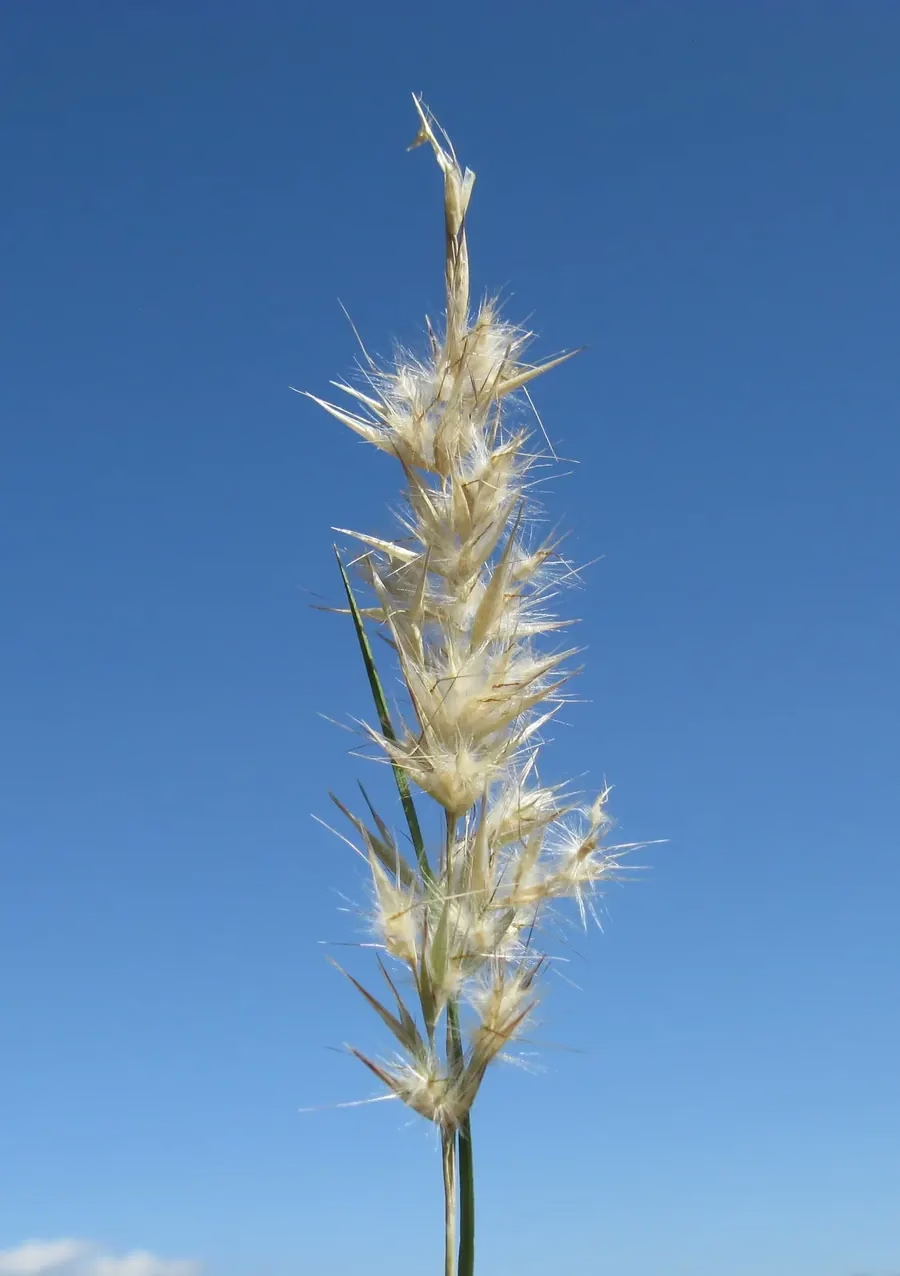
Hierochloe equiseta is an endemic New Zealand holy grass with loose tufts and spreading, drooping flower heads. It is also known as Anthoxanthum equisetum following a 2024 transfer to that genus.
Identification
The grass forms fairly robust, loose tufts. Its leaf sheaths are mostly deep purple, and its tapering blades are 15-30 cm long and 4-8 mm wide. Stems reach 30-60 cm; the 8-15 cm panicle has slender drooping branches with relatively few spikelets near their tips.
Quick facts
| Scientific Name | Hierochloe equiseta Zotov |
|---|---|
| Alternative name | Anthoxanthum equisetum |
| Common name | Holy grass |
| Family | Poaceae |
| Origin | Endemic to New Zealand |
| Stem height | 30-60 cm |
| Leaf length | 15-30 cm |
| National status | Not Threatened (2023) |
| Height | Flowering stems 30-60 cm tall |
| Water Needs | Both wetland and non-wetland records; no cultivation schedule supplied |
| Light | A tested cultivation light rating is not given |
| Spread | Robust loose tufts; maximum width unquantified |
| Frost Tolerance | Minimum tolerated temperature is not documented |
| Salt Tolerance | Salt tolerance is not documented |
| Growth Rate | Annual extension is not quantified in the cited accounts |
| Lifespan | Tufted grass; longevity in years is not quantified |
Natural range
Zotov’s original account records this endemic grass from Taranaki Maunga / Mount Egmont and the Ruahine ranges southwards along the main ranges. Its type specimen was collected at Bold Peak in the Humboldt Mountains, Otago.
| City | Climate Suitability |
|---|---|
| Auckland | Not assessed |
| Wellington | Not assessed |
| Christchurch | Not assessed |
Habitat
Records include shingly areas around eroding rock outcrops in the mountains and wetland vegetation at Fortification Creek. The national wetland plant list rates it facultative, meaning it occurs in both wetland and non-wetland settings.
Natural growing conditions
This grass has been recorded in mountain vegetation on shingly ground and in wetland plots. These field observations describe its range of settings; the cited botanical accounts do not provide a tested garden soil recipe.
Planting considerations
Its natural form is a loose tuft with flowering stems 30-60 cm tall. The cited species description gives measurements and flowering structure but does not provide a species-specific planting distance or establishment method.
Wetland and mountain records
The national wetland plant list assigns Hierochloe equiseta a facultative rating. An Otago wetland monitoring survey recorded it at Fortification Creek, while another field assessment noted it on shingly mountain ground.
Field identification
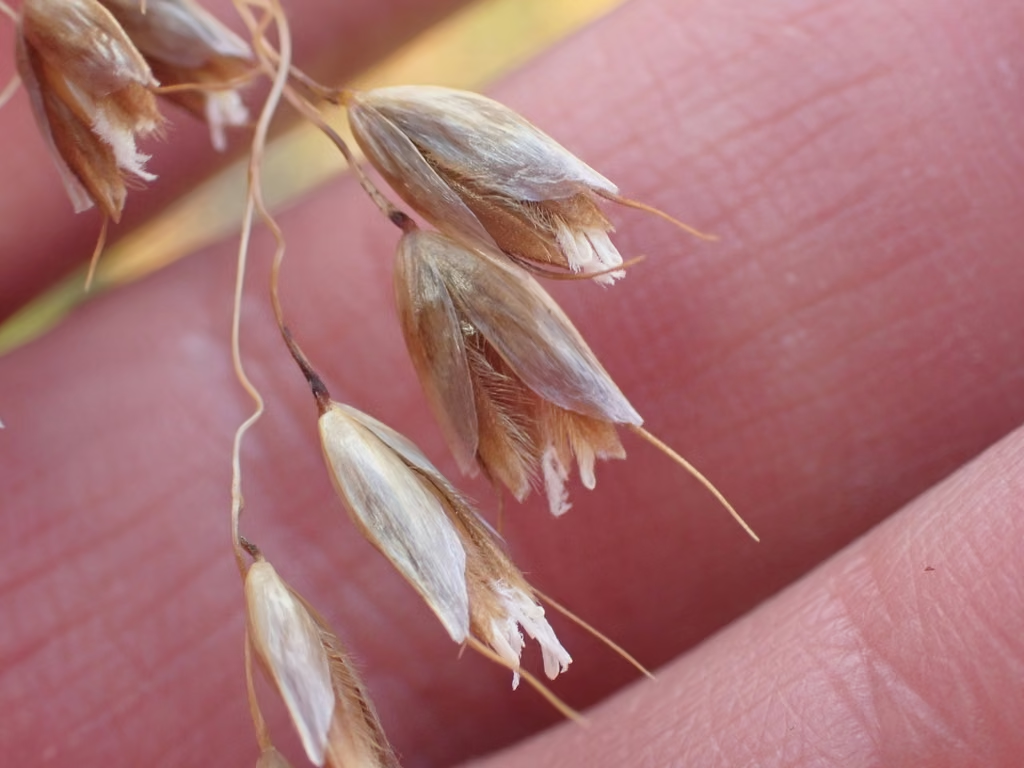
Look for deep-purple leaf sheaths and a very loose, spreading panicle whose slender branches droop. Under a lens, the spikelets have brown male florets with long awns and a paler central floret.
Garden context
The species has loose tufts, purple sheaths and open flower panicles, making it visually different from dense tussock grasses. The cited sources describe wild plants rather than providing species-specific garden trials.
Flowering structures
The open panicle is 8-15 cm long, with branches commonly paired at the nodes. The male florets are light brown to brown, while the bisexual floret is paler and often golden and glossy at maturity.
Leaf and stem growth
The leaf blades taper and have toothed margins, while the upper surfaces carry hairs on prominent ribs. These features are normal for the species; the cited Flora account does not prescribe pruning.
How to Grow Holy Grass (Hierochloe equiseta)
Seed records and Anthoxanthum
The name Anthoxanthum equisetum appears in recent classifications for the grass treated here as Hierochloe equiseta. Keep those names linked when checking observations or labelled material. The Flora of New Zealand account provides a detailed botanical description, but no tested seed-sowing temperature, germination period or division procedure for this species.
Allowing for a Loose, Robust Tuft
Its leaves reach approximately 15-30 cm long and 4-8 mm wide. The leaf sheaths are mostly deep purple, and the upper blade surface has abundant hairs on prominent ribs. Flowering stems stand about 30-60 cm tall. These dimensions are useful when documenting an established plant and distinguish it from much finer, shorter-leaved holy grasses.
Watching the drooping panicle
The open panicle is roughly 8-15 cm long. Slender branches hang loosely, usually in pairs at the nodes, and carry relatively few spikelets near their ends. The lower portions of the branches are bare. This arrangement is an important reproductive identification feature; it should be checked directly before assigning a seed collection to the species.
Reading the habitat evidence
Records include mountain shingle around eroding rock outcrops and wetland vegetation at Fortification Creek. The national wetland plant list classifies it as facultative, consistent with occurrences in both wetlands and non-wetland settings. These records do not quantify a garden soil recipe or watering interval. No measured annual tuft expansion is supplied in the cited botanical account.
Plant health
Deep-purple leaf sheaths and hairs along the upper leaf ribs are natural features described for this grass. The cited sources do not identify species-specific pests, diseases or treatments.
Names and classification
The 2023 national assessment uses Hierochloe equiseta. In 2024 de Lange and James published the combination Anthoxanthum equisetum, and NZPCN adopted it as part of its treatment of the holy grasses.
Inside the spikelet
Each spikelet has two brown male florets with stout awns and a paler bisexual floret. The bisexual floret can be golden and glossy when mature, with long golden-brown hairs near its tip.
Other native grasses
Explore other New Zealand grasses from open habitats, wetlands and mountain country.
Conservation
The 2023 assessment lists this endemic grass as nationally Not Threatened under Hierochloe equiseta. The type locality is Bold Peak in the Humboldt Mountains, where the original specimen was collected in 1936.
Frequently asked questions
Is Anthoxanthum equisetum another name for this grass?
Yes. It is the combination used in a recent generic treatment for the species traditionally called Hierochloe equiseta.
What colour are the leaf sheaths?
The Flora description records sheaths that are mostly deep purple.
Is it confined to wetlands?
No. The national wetland list gives it a facultative classification, and records include mountain shingle as well as wetland vegetation.
Sources
Detailed identification and measurements: Flora of New Zealand. Name transfer: de Lange and James, 2024.
Wetland status: New Zealand Wetland Plant List. Type specimen: Allan Herbarium CHR 9679.
Last updated: