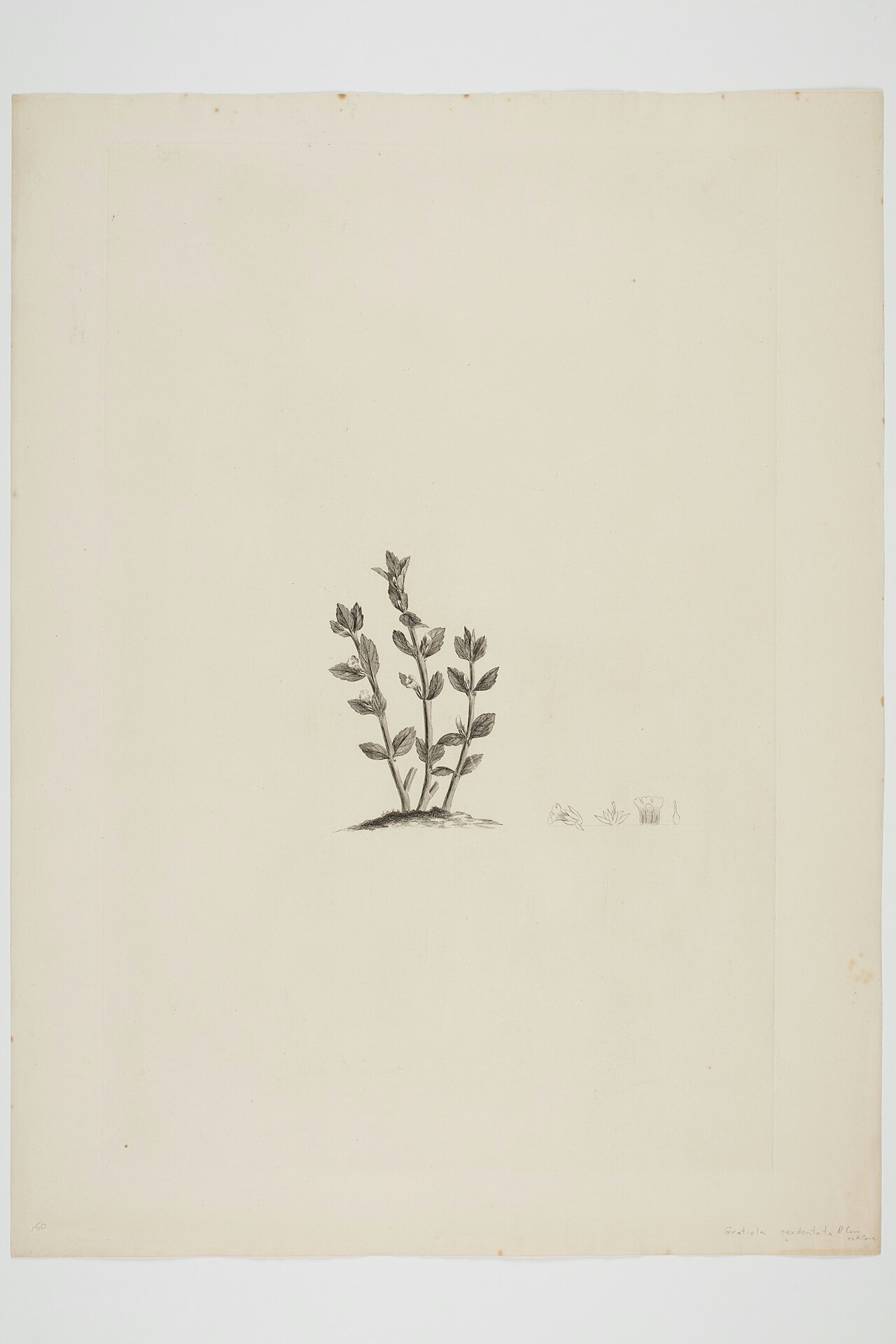
Gratiola
Gratiola sexdentata
Last updated:
Gratiola sexdentata is a small, endemic semi-aquatic herb that forms patches up to about 30 cm across and tall on the muddy margins of lakes, ponds, tarns and rivers. It occurs through the North and South Islands but is patchy, locally common in places and absent from large parts of the country. Its dark purple-spotted stems, small leaves with purple stitch marks along the edges, and white flowers with a yellow throat and fine purple lines make it easy to recognise once known. It can flower in any month and is a useful plant for native pond edges and wetland restoration. Explore more native flowering plants in our native plant guide.
Plant Description
Gratiola sexdentata is a terrestrial to semi-aquatic perennial herb, hairless or finely sticky-hairy, with erect to widely spreading stems that rise from a prostrate base. It forms patches up to about 300 mm across and up to 300 mm tall. The stems are mostly erect and coloured dark purple or maroon, often spotted.
The leaves are stalkless or nearly so, opposite, ovate to lanceolate and about 6 to 20 mm long, with entire or triangular-toothed margins marked with small purple stitch-like flecks. The flowers, about 10 to 12 mm long, are borne singly on slender stalks in the leaf axils. Each has a white corolla with a yellowish base and yellow throat, usually with 4 to 8 fine purple lines inside. The fruit is a thin-walled, roughly ovoid to globose capsule about 5 mm long.
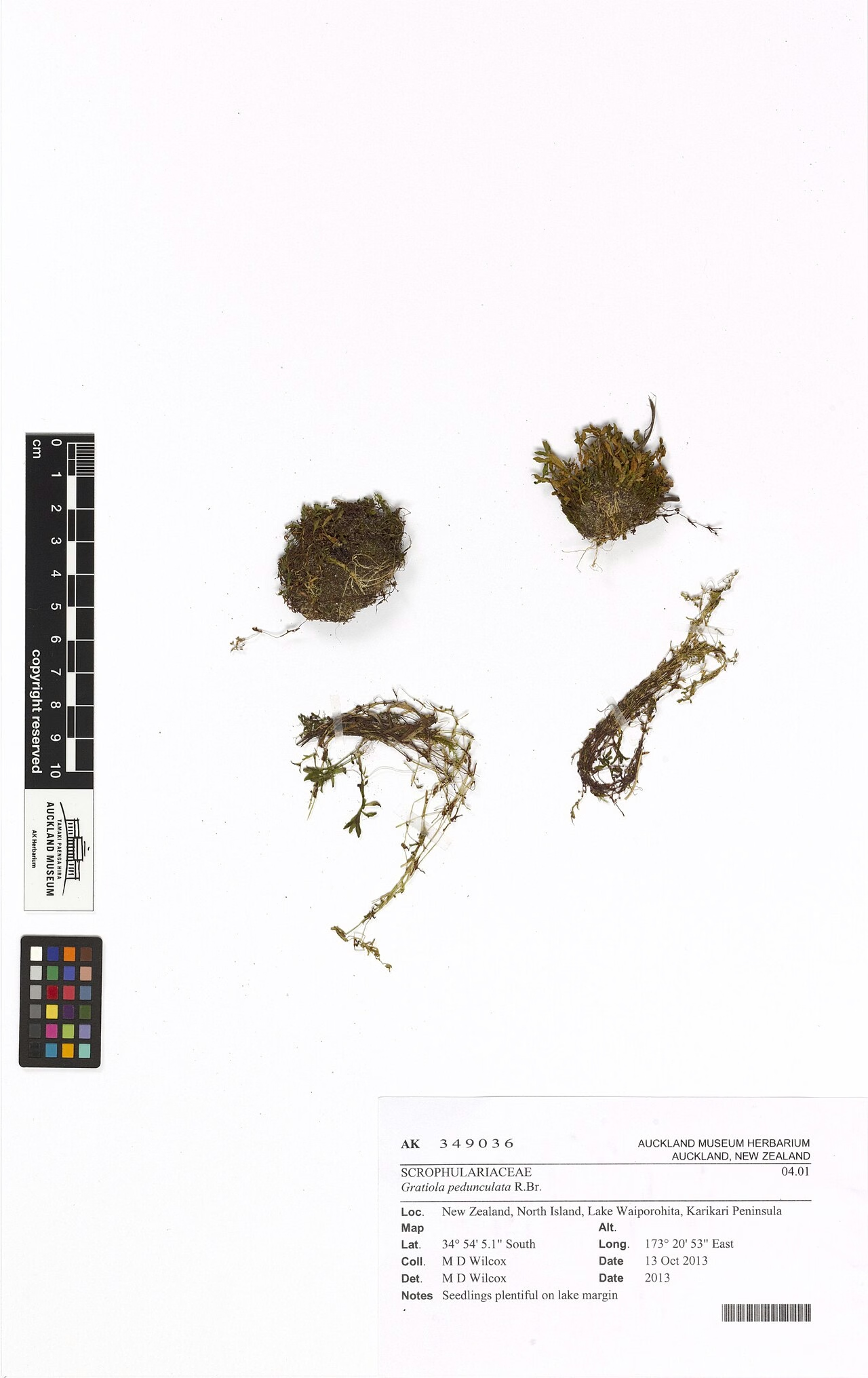
It is separated from the other indigenous gratiolas by its smaller, ovate-lanceolate leaves with purple marks along the margins and its dark purple-spotted stems. Gratiola pedunculata, by contrast, is very sticky with golden glands and has unspotted lime-green leaves.
Quick Facts
| Scientific Name | Gratiola sexdentata |
|---|---|
| Height | Up to 0.3 m |
| Spread | Patches up to 0.3 m across |
| Water Needs | High; must grow in or beside water |
| Light | Full sun to light shade |
| Frost Tolerance | Moderate; occurs south to Otago |
| Salt Tolerance | No information available; a freshwater margin plant |
| Growth Rate | Moderate to fast in wet conditions |
| Lifespan | Perennial |
Climate Best Suited to
Grows across a broad range of New Zealand climates from Northland to Otago wherever lake or river margins stay wet, and suits mild, damp conditions best.
Regional Suitability
| City | Climate Suitability |
|---|---|
| Auckland | High |
| Wellington | High |
| Christchurch | Medium |
| Dunedin | Medium |
Plant Habitat
Gratiola sexdentata is endemic and widespread through the North and South Islands. It can be locally common, yet it is absent from large parts of the country, and several regions now treat it as uncommon or declining.
Its habitat is the margins of lakes, ponds, tarns and rivers, where it grows in low marginal turf communities or colonises recently exposed mud and silt as water levels drop. These fluctuating shorelines keep taller vegetation at bay and give it the open, wet ground it needs.
Growing Requirements
Soil Requirements
It roots into wet mud, silt and fine sediment on shorelines, often where the ground is periodically flooded.
- Saturated silt, mud or sandy loam
- Open ground that is not overgrown by tall plants
- Tolerates periodic flooding
Light Requirements
As a plant of open shorelines it does best in good light, though it will tolerate some shade from neighbouring sedges.
- Full sun to light shade
- Avoid deep shade under trees or tall rushes
Water Requirements
NZPCN notes that it needs to grow in water. Constant moisture is the key to success.
- Plant at the water line or in a few centimetres of water
- Never let the root zone dry out
Planting and Establishing
Plant in spring or early summer on the shallow edge of a pond, in a bog garden or in a container stood in water. Set plants so the base sits at or just below the water line, and space several plants 15 to 20 cm apart to form a patch quickly.
Keep the planting area free of taller weeds such as creeping bent and Mercer grass, which can smother low turf plants.
Ecological Role
Gratiola sexdentata is a characteristic member of the low turf communities on the margins of lakes, tarns and rivers, a habitat that relies on fluctuating water levels to stay open. It readily colonises freshly exposed mud and silt.
Its small, open flowers are likely visited by small insects, but no specific pollinator studies were found. Loss and modification of wetland margins, along with weed invasion, are thought to be the reasons it has declined in some regions.
Uses & Significance
Garden Uses
A neat, small native for the very edge of a pond or a wetland planting, flowering over a long season.
- Pond and stream margins
- Bog gardens
- Water-filled containers and bowls
- Wetland restoration in turf zones
Ecological Value
It helps rebuild native lakeshore turf, a habitat that has been lost or invaded by weeds across much of lowland New Zealand.
- Stabilises exposed mud and silt
- Supports native turf communities
- Regionally uncommon, so locally sourced plants are valuable in restoration
Landscaping Uses
Use drifts of it along a shallow pond edge, where its dark stems and white flowers soften the line between water and land. It combines well with other low wetland natives such as Lilaeopsis, Glossostigma and small sedges.
In a small garden, a wide shallow bowl of water planted with Gratiola sexdentata makes an attractive feature on a sunny patio.
Seasonal Care Calendar
Spring
Growth quickens as temperatures rise. A good time to plant, divide and take cuttings.
- Plant out new stock
- Divide crowded patches
Summer
Flowers are produced freely, and the patch spreads across wet ground. Water levels in ponds may fall, so top up as needed.
- Keep roots wet
- Collect ripe capsules
Autumn
It continues to flower and fruit, as NZPCN records flowering and fruiting year round.
- Sow fresh seed
- Weed the margin
Winter
Growth slows in cold districts but plants remain present on the wet margin.
- Remove smothering debris
- Keep containers topped up
When to Prune and How Much
Pruning is not required. Trim straggly or flowered stems in spring to encourage dense new growth from the base.
If a patch spreads beyond where it is wanted, simply pull out or cut away the rooted pieces and replant them elsewhere.
How to Grow Gratiola
NZPCN describes Gratiola sexdentata as easy to propagate from fresh seed, rooted pieces or stem cuttings, with the important proviso that it needs to grow in water. Because it is regionally uncommon in several parts of the country, use plants or seed from your own district wherever possible so restoration plantings keep local genetic character. Collect only small amounts from wild patches, and only with landowner permission.
From Seed
Capsules ripen through much of the year. The fine seed should be sown fresh on a permanently wet surface.
- Collect brown capsules just before they split
- Sow seed thinly on the surface of a fine, silty or sandy mix
- Stand the tray in shallow water so the mix is saturated
- Keep in a bright place and protect from slugs
- Pot seedlings on when large enough to handle, keeping the pots in water
By Division and Cuttings
The creeping bases root as they spread, so rooted pieces can be separated at almost any time of year. Unrooted stem cuttings also strike readily in water. Division is the fastest way to fill a pond margin, because each rooted piece already has roots and establishes quickly in warm, wet conditions.
- Lift a section of an established patch with roots attached
- Replant directly into wet mud or a pot standing in water
- For cuttings, take 5 cm stem tips and remove the lower leaves
- Insert into saturated mix or float them in shallow water until roots form
Pests & Diseases
Few pest problems are recorded. Slugs and snails may graze young growth in a garden setting.
The greatest threat in the wild is competition from introduced wetland weeds and grasses that overgrow lakeshore turf, along with drainage and changes to water levels.
Cultural Significance
No Māori name or traditional Māori use is recorded for Gratiola sexdentata in the sources consulted.
The name was published by Allan Cunningham in the early nineteenth century, and William Colenso later described the same plant again as Gratiola glandulifera. The genus name Gratiola means little beauty, and sexdentata is Latin for six-toothed.
Bonus Tip
Look closely at the leaf edges with a hand lens: the small purple stitch marks along the margins, combined with purple-spotted stems, are the quickest way to confirm Gratiola sexdentata and separate it from introduced water weeds that grow in the same places.
Related Plants
Explore other native plants that share similar characteristics or habitats with Gratiola (Gratiola sexdentata), offering further insights into New Zealand's diverse flora. These related species provide context and opportunities for complementary planting in your garden.
Notogrammitis pseudociliata
Notogrammitis pseudociliata
Notogrammitis rawlingsii
Notogrammitis rawlingsii
Notogrammitis rigida
Notogrammitis rigida
Gratiola pedunculata
Gratiola pedunculata
Sand Gunnera
Gunnera dentata
Creeping Gunnera
Gunnera prorepens
Haastia recurva var. recurva
Haastia recurva var. recurva
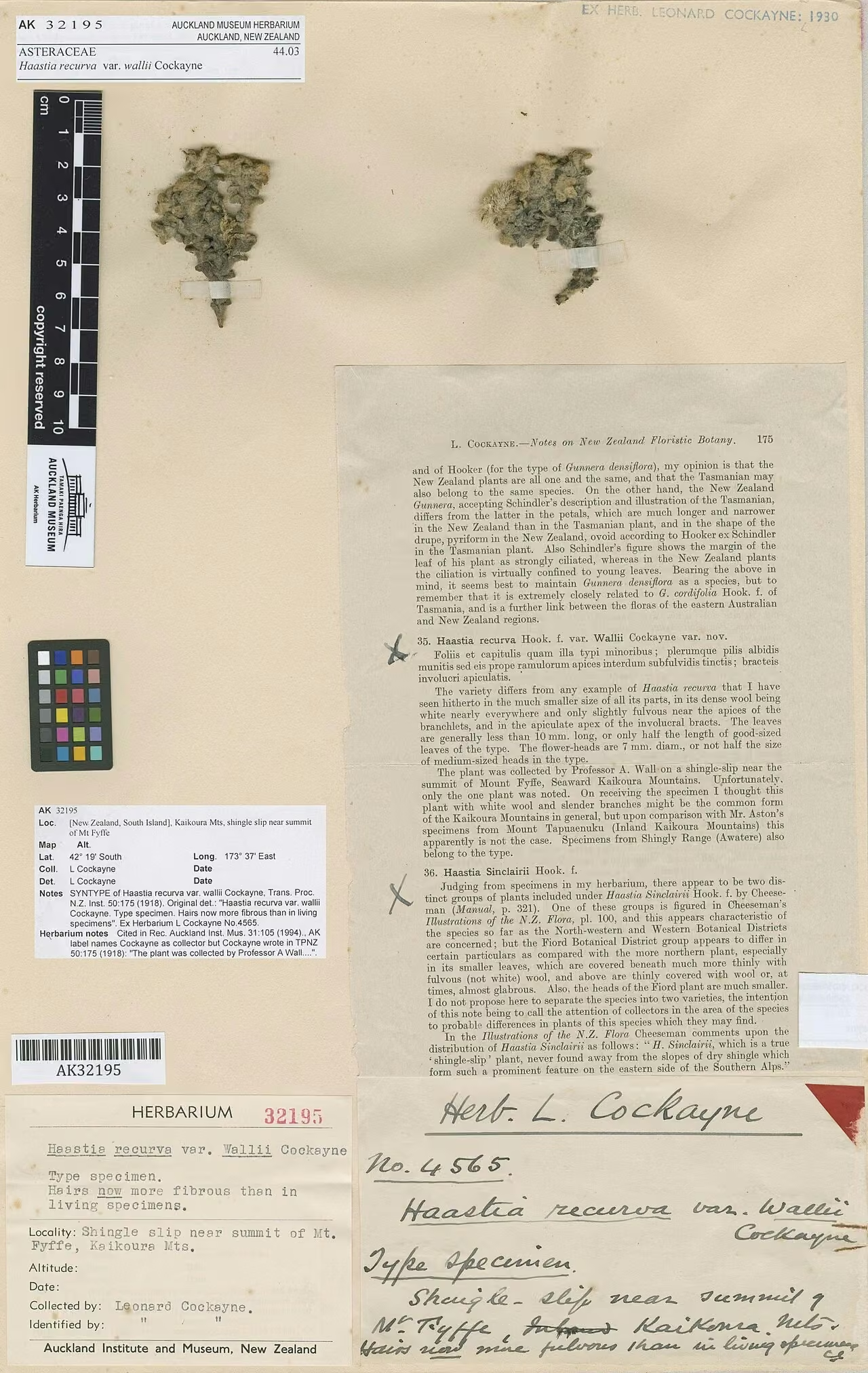
Haastia recurva var. wallii
Haastia recurva var. wallii
Plant Conservation
Nationally Gratiola sexdentata is ranked Not Threatened (2023), but regional assessments show it is in trouble in parts of its range: Regionally Endangered in Wellington, Regionally Vulnerable in Auckland, Regionally Declining in Otago and Regionally Naturally Uncommon in Northland.
Protecting natural water-level fluctuations, fencing lake and tarn margins from stock, and controlling invasive marginal weeds all help. Including it in wetland restoration plantings using locally sourced material is a practical way to support it.
Frequently Asked Questions
Where does Gratiola sexdentata grow?
It is endemic to New Zealand and grows on lake, pond, tarn and river margins in marginal turf or on freshly exposed mud and silt in both main islands.
Is Gratiola sexdentata threatened?
Nationally it is ranked Not Threatened, but regional assessments list it as Regionally Endangered in Wellington, Regionally Vulnerable in Auckland, Regionally Declining in Otago and Regionally Naturally Uncommon in Northland.
Can Gratiola sexdentata be grown in a garden pond?
Yes. NZPCN says it is easy from fresh seed, rooted pieces or stem cuttings, but it needs to grow in water, so a pond margin or water-filled container suits it best.
When does Gratiola sexdentata flower?
NZPCN records it flowering and fruiting year round, so flowers can appear in any season when conditions are mild and wet.
Sources and Further Reading
The botanical, growing, and conservation details for Gratiola (Gratiola sexdentata) on this page draw on the New Zealand plant references below. Consult them for full technical records and the latest distribution data.