Strap Fern
Notogrammitis rawlingsii
Last updated:
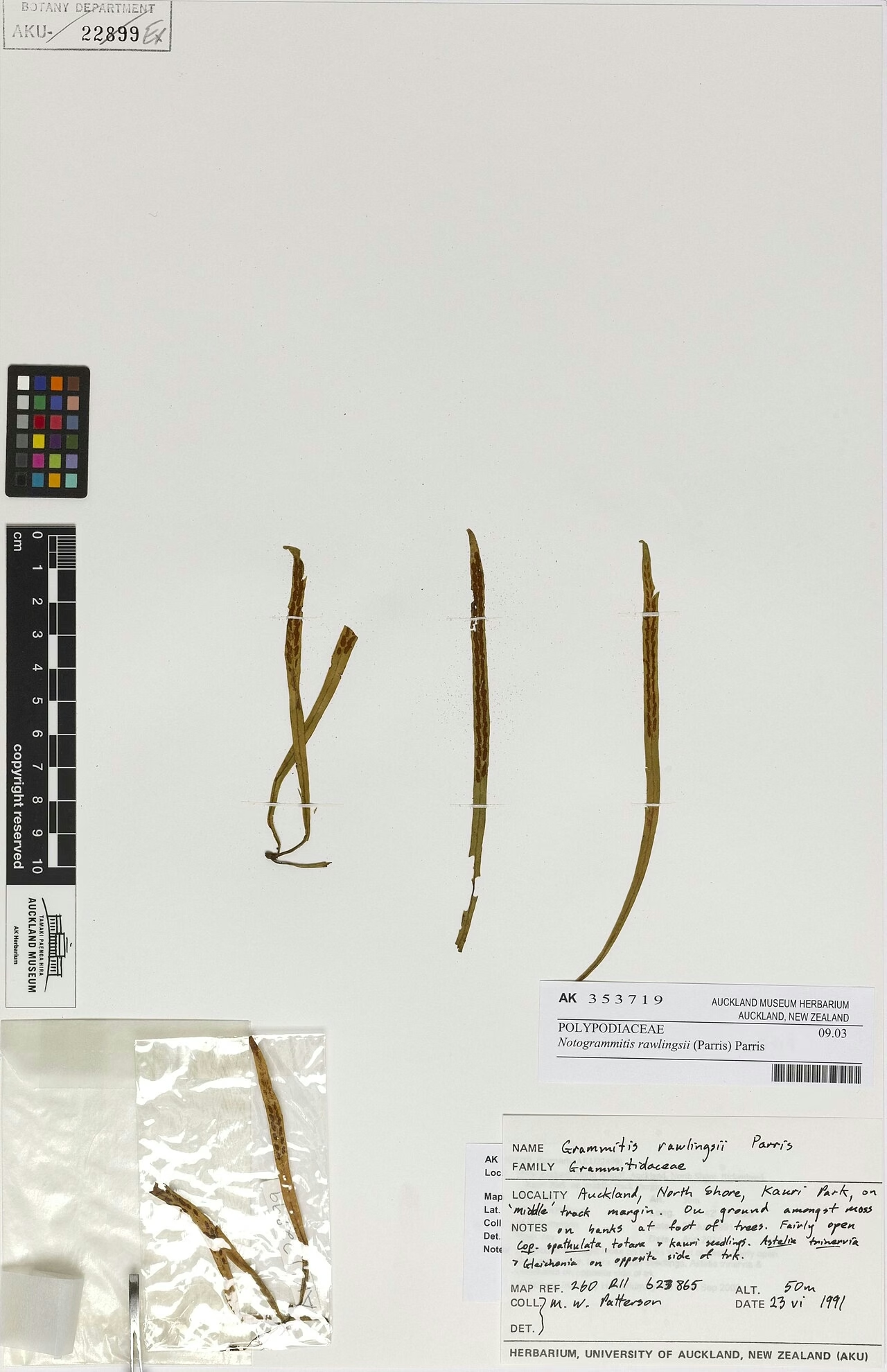
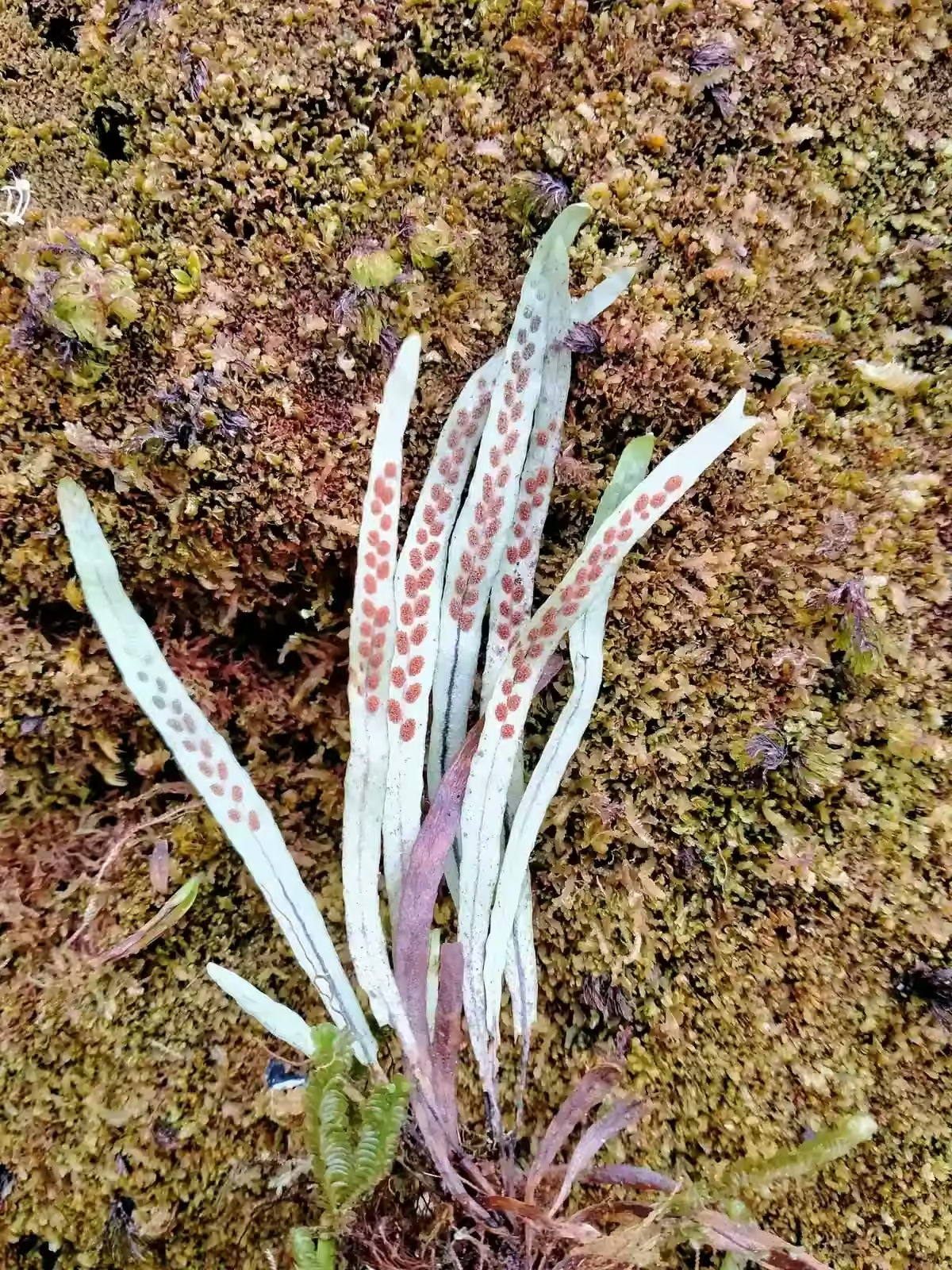
Notogrammitis rawlingsii (formerly Grammitis rawlingsii) is an uncommon endemic strap fern of northern kauri forest. Its narrow, undivided fronds, typically 10-14 cm long and about 5 mm wide, look much like those of the common strap fern, but stout dark red-brown hairs surround and fill its sori. It grows among mosses on rotting logs, exposed roots and the ground, or as a low epiphyte, from Herekino and Puketi Forests south to the Coromandel Peninsula, Mt Pirongia and Hauturu and Great Barrier islands. It is ranked At Risk - Naturally Uncommon, and illegal collecting and forest drying are thought to have pushed it close to extinction at its type locality in Waipoua Forest. Explore more native ferns in our native plant guide.
Plant Description
Notogrammitis rawlingsii has a short-creeping rhizome with ovate to narrowly ovate scales 2.8-7.1 mm long. Its fronds are linear, undivided and taper into an indistinct, winged stipe. They range from 31-165 mm long and 3-6 mm wide, though NZPCN gives a typical size of 103-137 mm by 4.5-5.5 mm. The blade is pale green and thin, either hairless or with sparse pale brown hairs.
The sori are elliptic, elongated along the veins, 2-5 mm long and borne in 2-44 pairs, usually 12-22, in the upper half of the frond. The key feature is the stout, dark red-brown hairs that grow within and around each sorus, giving the fertile part of the frond a rusty appearance under a hand lens.
It is most often confused with common strap fern, Notogrammitis billardierei, which has similar long, linear fronds but lacks the encircling red-brown hairs around the sori. N. rawlingsii also tends to have a more upright habit.
Quick Facts
| Scientific Name | Notogrammitis rawlingsii |
|---|---|
| Height | Fronds 3.1-16.5 cm long, mostly 10.3-13.7 cm |
| Spread | Small tufts about 10-20 cm across |
| Water Needs | Humid forest floor and mossy logs |
| Light | Shade under kauri forest canopy |
| Frost Tolerance | Low to moderate; lowland to 600 m in the north |
| Salt Tolerance | No information available |
| Growth Rate | Slow |
| Lifespan | Perennial |
Climate Best Suited to
Suits the warm, humid, frost-light climate of northern New Zealand, where kauri forest grows. It is restricted to lowland and lower montane elevations up to about 600 m.
Regional Suitability
| City | Climate Suitability |
|---|---|
| Auckland | Medium |
| Wellington | Low |
| Christchurch | Low |
| Dunedin | Low |
Plant Habitat
Notogrammitis rawlingsii is found only in the northern North Island, from Herekino and Puketi Forests south to the Coromandel Peninsula and Mt Pirongia, and on Te Hauturu-o-Toi/Little Barrier Island and Aotea/Great Barrier Island. It ranges from about 20 m to 600 m, reaching its highest point on Mt Pirongia. NZPCN notes that it is locally common around Warkworth and in some Auckland kauri forest remnants.
It is characteristically associated with kauri forest or kauri forest remnants, and occasionally podocarp or hard beech forest. It grows among mosses on rotting logs, on exposed roots, on the ground or as a low epiphyte.
Growing Requirements
Soil Requirements
It roots into moss and decaying wood rather than mineral soil, often on the kauri forest floor.
- Moss on rotting logs
- Exposed tree roots in kauri forest
- Moss-covered ground and low trunks
Light Requirements
It grows in the shaded understorey of kauri and podocarp forest.
- Shade under a closed canopy
- Suffers where canopy loss lets in sun and wind
Water Requirements
It needs the steady humidity of intact forest, and NZPCN identifies gradual drying of the forest as a threat.
- Constantly damp moss and wood
- Vulnerable to drying of forest remnants
Planting and Establishing
Notogrammitis rawlingsii should not be planted or collected. NZPCN states it should not be removed from the wild, and illegal collection by fern enthusiasts is a recognised threat to it.
The most useful action is to protect the kauri forest remnants where it lives, keeping fallen logs in place and the canopy intact.
Ecological Role
Its minute spores are dispersed by wind, allowing it to colonise moss on logs and roots within kauri forest. It belongs to the community of mosses, liverworts and small ferns that cover the kauri forest floor and lower trunks.
No specific animal associations are documented in the sources consulted.
Uses & Significance
Garden Uses
It has no place in gardens. Because collecting is one of its main threats, it should be left where it grows.
- Observe and photograph it, never collect it
- Report sightings outside known sites to iNaturalist NZ or NZPCN
Ecological Value
It is a distinctive part of the kauri forest flora and found nowhere else in the world.
- Endemic to northern New Zealand
- Closely tied to kauri forest and its remnants
- Helps mark intact, humid forest floor habitat
Landscaping Uses
This fern is not used in landscaping and should not be. Its value lies entirely in its natural kauri forest habitat.
Landowners with kauri remnants can help by fencing out stock, keeping logs on the ground and following kauri hygiene practices on tracks.
Seasonal Care Calendar
Spring
New fronds develop on mossy logs and roots as the forest warms.
- Stay on tracks in kauri forest
Summer
Dry summers in northern forest remnants put plants under stress.
- Leave canopy and fallen wood intact to hold moisture
Autumn
Fertile fronds show their rusty, hairy sori; exact sporing times are not documented in the sources consulted.
- Check sori with a hand lens without picking fronds
Winter
The fern remains evergreen through the mild, wet northern winter.
- No action needed
When to Prune and How Much
No pruning is needed. Wild plants should not be touched.
Fronds die back naturally among the moss and decaying wood.
How to Grow Strap Fern
Notogrammitis rawlingsii is not a candidate for home propagation. NZPCN describes it as difficult to propagate, states that it should not be removed from the wild, and lists illegal collection by fern enthusiasts among its threats. No propagation protocol for this species was found in the sources consulted. The general methods below describe how small grammitid ferns are usually handled by specialists and would only be appropriate within an authorised conservation programme. Grammitid ferns produce green spores, which in ferns typically lose viability quickly, so spores would need to be sown immediately after release.
From Spores
Spore sowing is the least damaging approach because a single fertile frond releases many spores. In a conservation programme this would be done under permit from the Department of Conservation.
- Obtain authorisation before taking any material
- Release spores from one fertile frond onto clean paper overnight
- Sow at once onto sterile, fine peat and moss under cover
- Keep in bright, indirect light and mist with sterile water
- Grow young plants on moss-covered wood to mimic their natural habitat
By Division
Division is only relevant to plants already held in a conservation collection, since lifting wild plants is not acceptable.
- Use only established cultivated tufts with several crowns
- Separate a crown with roots and moss in mild, humid weather
- Secure onto a moist, moss-covered piece of rotting wood
- Keep shaded, sheltered and humid until healthy new fronds emerge
Pests & Diseases
No specific pests or diseases are recorded for this fern. Its documented threats are illegal collection, gradual drying of forest and small population size.
Because it depends on kauri forest, anything that degrades that forest, including canopy loss in remnants, also reduces its habitat.
Cultural Significance
No Māori name or traditional use specific to Notogrammitis rawlingsii is recorded in the sources consulted.
The species was named by fern specialist Barbara Parris in honour of G.B. (Joe) Rawlings (1906-1978), a forest pathologist and botanist in Northland. Its type locality is Waipoua Forest, home of Tāne Mahuta, where NZPCN reports the fern is now very close to extinction.
Bonus Tip
On a walk through kauri forest, look closely at strap ferns growing on mossy logs or kauri roots. A hand lens on a fertile frond will show whether the sori are ringed with stout rusty hairs; if so, you may have found this uncommon endemic. Photograph it and record it on iNaturalist NZ rather than touching it.
Related Plants
Explore other native plants that share similar characteristics or habitats with Strap Fern (Notogrammitis rawlingsii), offering further insights into New Zealand's diverse flora. These related species provide context and opportunities for complementary planting in your garden.
Notogrammitis ciliata
Notogrammitis ciliata
Notogrammitis patagonica
Notogrammitis patagonica
Notogrammitis pseudociliata
Notogrammitis pseudociliata
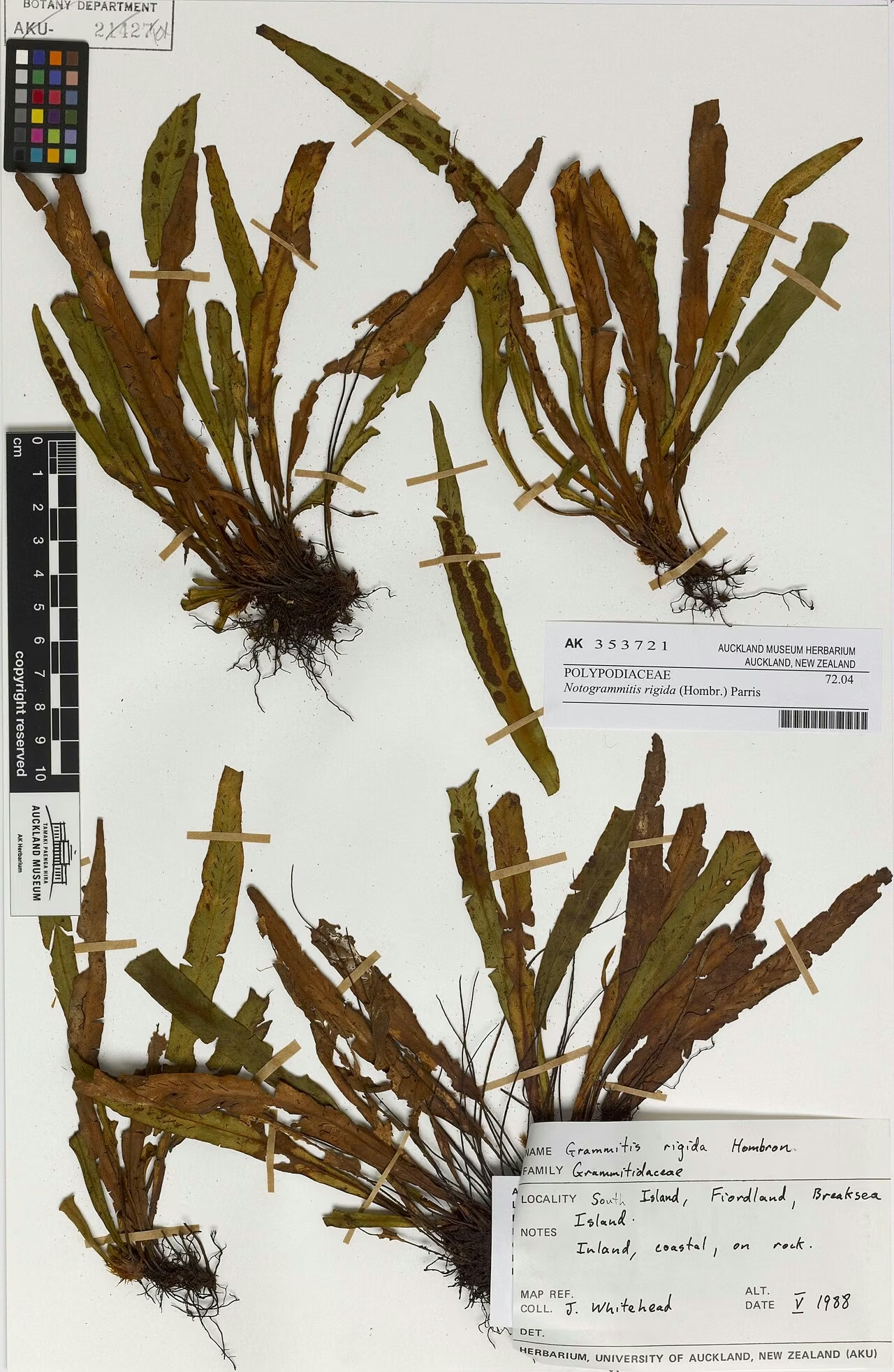
Notogrammitis rigida
Notogrammitis rigida
Gratiola pedunculata
Gratiola pedunculata
Gratiola sexdentata
Gratiola sexdentata
Sand Gunnera
Gunnera dentata
NZ Flora
NZ Flora
Plant Conservation
Notogrammitis rawlingsii is ranked At Risk - Naturally Uncommon (2023) with the qualifier Sparse, unchanged since 2009. Regionally it is assessed as Naturally Uncommon in Northland and Regionally Vulnerable in Auckland. NZPCN describes it as highly localised with small populations, threatened by illegal collection and gradual forest drying.
Protecting kauri forest and its remnants, keeping canopy cover and fallen logs, and never collecting the fern are the main ways to help it.
Frequently Asked Questions
Who is Notogrammitis rawlingsii named after?
It honours G.B. (Joe) Rawlings (1906-1978), a forest pathologist and botanist who worked in Northland.
How do you tell Notogrammitis rawlingsii from common strap fern?
Both have long, narrow undivided fronds, but N. rawlingsii has stout dark red-brown hairs within and encircling its sori and an upright habit. The sori of common strap fern (N. billardierei) are hairless.
Where does Notogrammitis rawlingsii grow?
It is confined to the northern North Island, from Herekino and Puketi Forests to the Coromandel Peninsula and Mt Pirongia, including Hauturu and Great Barrier Island, almost always in or near kauri forest.
Why is Notogrammitis rawlingsii at risk?
It is naturally localised with small populations. NZPCN says illegal collection by fern enthusiasts and gradual drying of forest are threats, and it is now very close to extinction at its type locality in Waipoua Forest.
Sources and Further Reading
The botanical, growing, and conservation details for Strap Fern (Notogrammitis rawlingsii) on this page draw on the New Zealand plant references below. Consult them for full technical records and the latest distribution data.