Strap Fern
Notogrammitis rigida
Last updated:
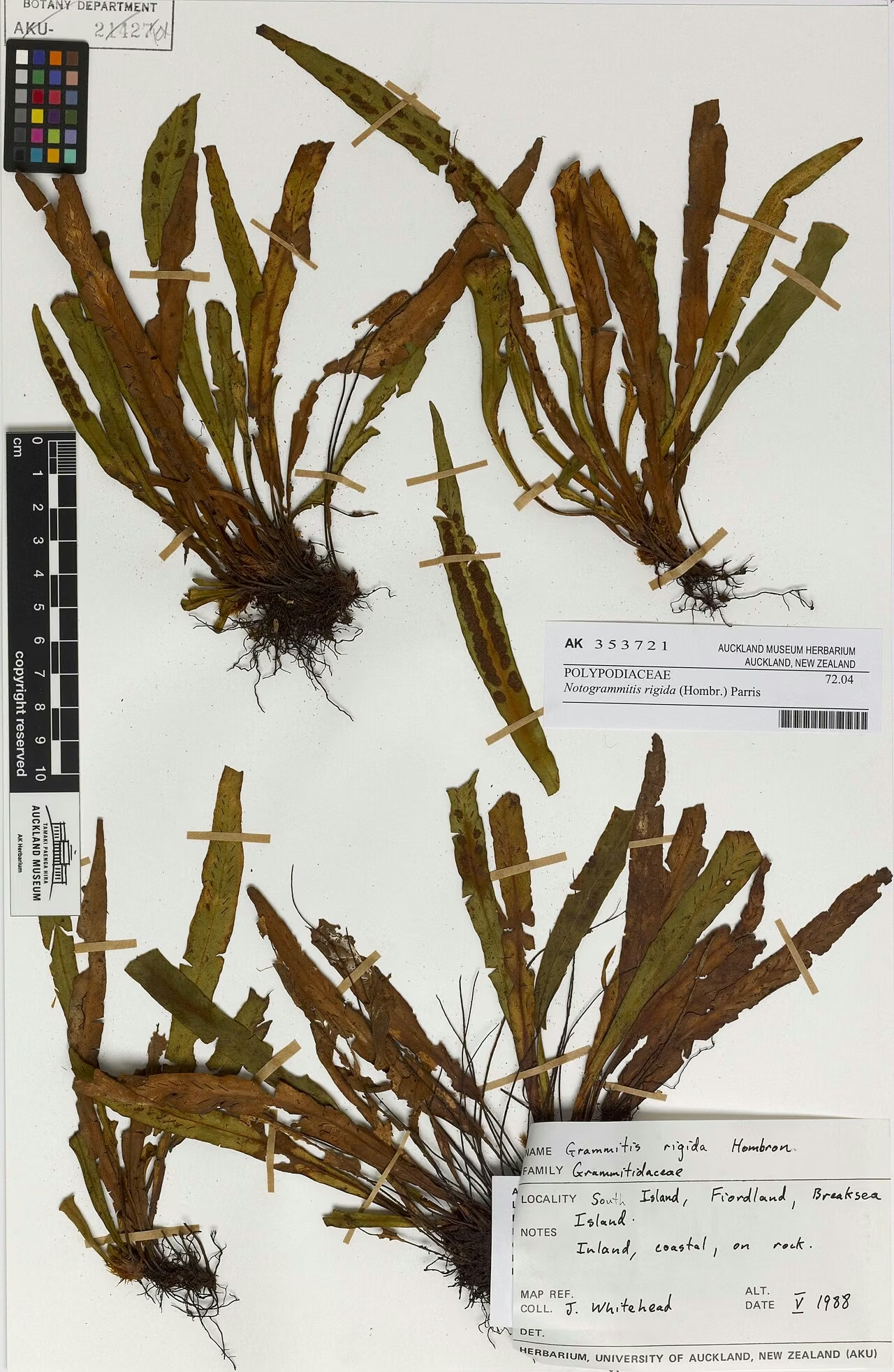
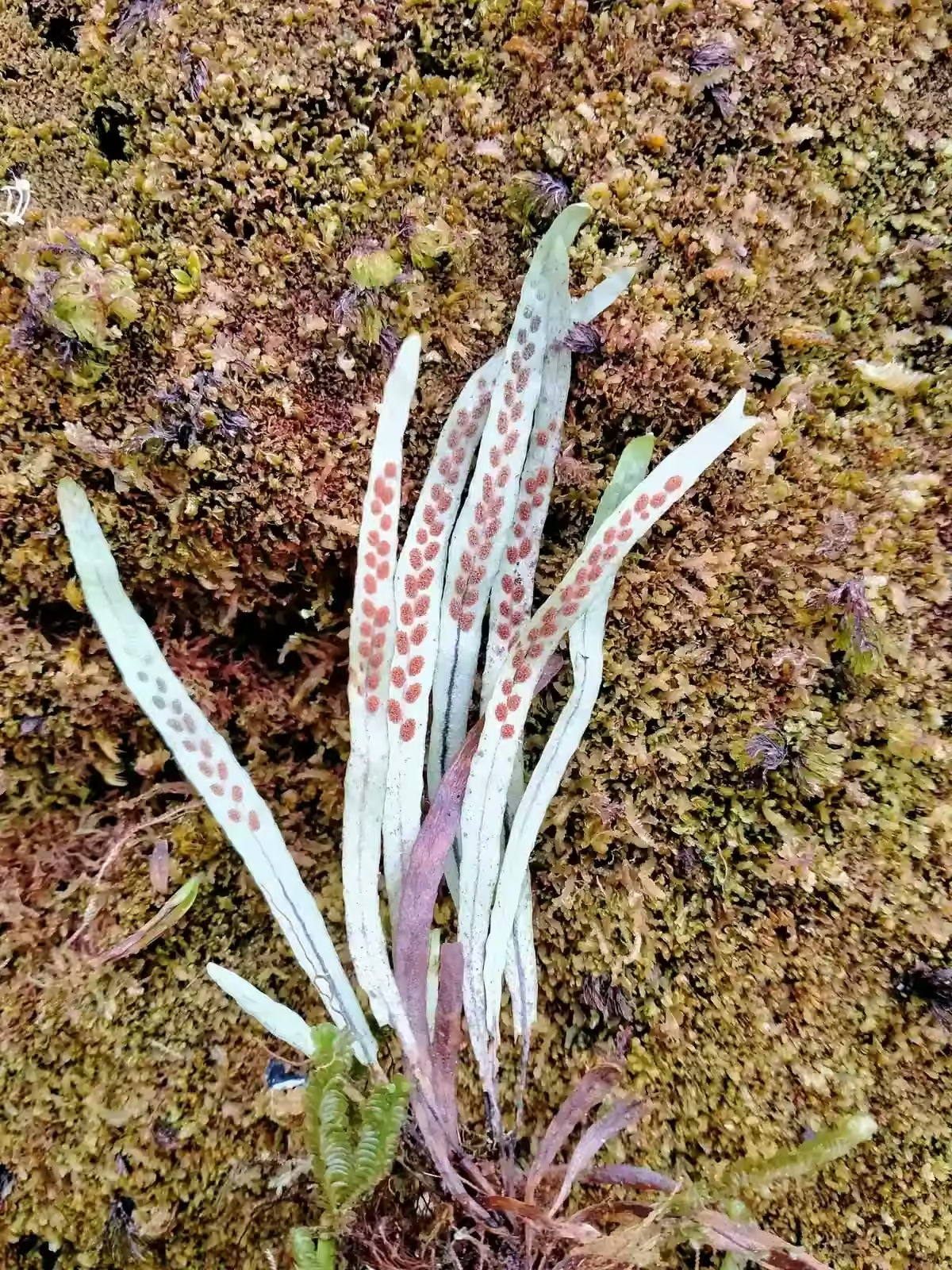
Notogrammitis rigida (formerly Grammitis rigida) is the largest undivided strap fern in New Zealand. Its thick, leathery, bright to dark green fronds reach 7.5-22 cm long and up to 2 cm wide, and their edges often bear irregular lobes and projections. It is endemic to the wet coastal far south, growing on mossy rock faces, shaded cliffs and recesses just above high tide, and sometimes as a low epiphyte in coastal forest and shrubland, on the Fiordland and Southland coasts, Solander Island, Stewart Island/Rakiura and the Auckland Islands. It is ranked At Risk - Naturally Uncommon because of its restricted range, with no evidence of decline. Explore more native ferns in our native plant guide.
Plant Description
Notogrammitis rigida is a tufted fern with an erect to short-creeping rhizome clothed in long, narrow, pale to red-brown scales 8-15 mm long. Its fronds have no distinct stipe and are undivided, narrowly elliptic to narrowly obovate, 75-220 mm long and 9-20 mm wide, with an acute tip and a long-tapering base. They are thick and leathery, dark or bright green above and paler beneath.
The margins are entire or carry irregular lobes and projections. The fronds are hairless or have sparse brown hairs up to 1.2 mm on the underside of the midrib and blade. The sori are elliptic, elongated along the veins, 2-10 mm long and borne in 12-30 pairs in the middle and upper part of the frond, without hairs.
NZPCN describes it as distinctive and unlikely to be confused with any other strap fern. Its large size, wide, leathery fronds and coastal southern habitat separate it from the common strap fern, N. billardierei, which has smaller, thinner pale green fronds and usually grows on trees in forest.
Quick Facts
| Scientific Name | Notogrammitis rigida |
|---|---|
| Height | Fronds 7.5-22 cm long |
| Spread | Tufts roughly 15-30 cm across |
| Water Needs | Constantly wet, high-rainfall coast |
| Light | Shade to partial shade on cliffs and recesses |
| Frost Tolerance | Moderate; coastal sites in the far south |
| Salt Tolerance | Tolerates salt spray just above high tide |
| Growth Rate | Slow |
| Lifespan | Perennial |
Climate Best Suited to
Suits the cool, very wet, windy and humid coastal climate of the far south, with high rainfall and frequent salt-laden air. It is not suited to drier eastern or northern climates.
Regional Suitability
| City | Climate Suitability |
|---|---|
| Auckland | Low |
| Wellington | Low |
| Christchurch | Low |
| Dunedin | Low |
Plant Habitat
This endemic fern is restricted to the Fiordland and Southland coasts of the South Island, Solander Island, Stewart Island/Rakiura and the Auckland Islands, from sea level to about 300 m. It is characteristic of high-rainfall coastal regions and can be locally common where conditions suit it.
NZPCN describes it as confined to mossy rock faces, shaded cliff faces and recesses just above the high tide mark, occasionally growing as a low epiphyte in coastal shrubland. The Flora of New Zealand adds that it occurs in beech, Olearia colensoi and southern rātā (Metrosideros umbellata) forest or under mānuka, amongst mosses on wet coastal rocks, cliffs and slips, often very close to the sea.
Growing Requirements
Soil Requirements
It roots into moss and thin humus on coastal rock rather than into soil.
- Mossy rock faces and cliffs near the sea
- Wet slips and recesses
- Bark of low coastal shrubs and trees
Light Requirements
It favours shaded cliff faces, recesses and the understorey of coastal forest and scrub.
- Shade to partial shade
- Shelter from direct sun provided by rock or canopy
Water Requirements
Its coastal habitat in the far south receives very high rainfall, and its rock faces stay wet much of the time.
- Constantly moist, mossy surfaces
- Leathery fronds cope with salt spray and wind
Planting and Establishing
Notogrammitis rigida is not grown commercially, and NZPCN states that it should not be removed from the wild. It is not suitable for gardens.
Visitors to the coasts of Rakiura and Fiordland can look for it on shaded, mossy rocks just above the shore, but should leave it undisturbed.
Ecological Role
Its spores are dispersed by wind, which helps it reach scattered coastal cliffs and offshore islands as far south as the Auckland Islands. It grows within moss communities on wet rock and in coastal forest dominated by southern rātā, Olearia colensoi, beech and mānuka.
No specific animal associations are documented in the sources consulted.
Uses & Significance
Garden Uses
It has no practical role in gardens and is best seen on southern coastlines.
- A fern to look for on coastal walks in Rakiura and Fiordland
- Specialist conservation collections only
Ecological Value
It is part of the distinctive coastal flora of the high-rainfall far south.
- Endemic, with a range centred on Fiordland, Rakiura and the subantarctic
- Characteristic of wet coastal rock and southern rātā forest
- The largest undivided strap fern in New Zealand
Landscaping Uses
This fern is not used in landscaping. Its wet, salt-exposed coastal rock habitat is very hard to recreate in a garden.
For a leathery, strap-leaved fern effect in a shaded garden, nursery-grown native ferns suited to local conditions are a better option.
Seasonal Care Calendar
Spring
New leathery fronds unfurl on coastal rocks as days lengthen.
- Watch for fresh bright green fronds
Summer
Frequent rain keeps its rock faces wet through the southern summer.
- Search shaded recesses just above the tide
Autumn
Fertile fronds carry paired, hairless sori; sporing time is not documented in the sources consulted.
- Check frond undersides without picking them
Winter
Its thick fronds remain evergreen through the cold, stormy coastal winter.
- No action needed
When to Prune and How Much
No pruning is required. Old fronds wither and fall among the moss.
Wild plants should never be cut or collected.
How to Grow Strap Fern
NZPCN describes Notogrammitis rigida as difficult to propagate and states that it should not be removed from the wild. No propagation protocol specific to this species was found in the sources consulted. The general methods below are those used by fern specialists for grammitid ferns and would only suit an authorised conservation or botanic garden collection. Like other grammitid ferns it produces green spores, which in ferns usually lose viability quickly, so they must be sown fresh. Cultivated plants would need very high humidity, cool temperatures and a moist, mossy surface, conditions that are difficult to provide away from its southern coastal home.
From Spores
The large fronds carry many pairs of sori, so a single fertile frond provides plenty of spores. Collect only with authorisation or from a cultivated plant.
- Lay a fertile frond on clean paper in a sealed envelope overnight
- Sow spores immediately onto sterile, fine peat and moss
- Cover and keep cool, in bright indirect light
- Mist with sterile water so the surface never dries
- Move young plants onto a mossy rock or bark slab once established
By Division
A cultivated plant that has formed more than one crown can be separated carefully, though tufted grammitid ferns are slow to recover.
- Divide only established cultivated plants
- Separate a crown with its roots and surrounding moss
- Secure to a moist, mossy rock or bark slab
- Keep cool, shaded and humid until new fronds appear
Pests & Diseases
No specific pests are recorded. Its coastal habitat is largely remote and protected, and NZPCN reports no evidence of decline.
In cultivation, warmth and low humidity are the most likely causes of failure.
Cultural Significance
No Māori name or traditional use specific to Notogrammitis rigida is recorded in the sources consulted.
The species was first described as Notogrammitis rigida by the French naval surgeon Jacques Hombron, and some later New Zealand botanists treated it as a variety of the common strap fern. The epithet rigida means rigid, referring to its stiff, leathery fronds.
Bonus Tip
If you see a strap fern on a wet rock face within sight of the sea in Fiordland or on Rakiura, check its width: fronds over a centimetre wide, thick and leathery, often with irregular lobes on the edges, are almost certainly Notogrammitis rigida, since no other New Zealand strap fern is that broad.
Related Plants
Explore other native plants that share similar characteristics or habitats with Strap Fern (Notogrammitis rigida), offering further insights into New Zealand's diverse flora. These related species provide context and opportunities for complementary planting in your garden.
Notogrammitis patagonica
Notogrammitis patagonica
Notogrammitis pseudociliata
Notogrammitis pseudociliata
Notogrammitis rawlingsii
Notogrammitis rawlingsii
Gratiola pedunculata
Gratiola pedunculata
Gratiola sexdentata
Gratiola sexdentata
Sand Gunnera
Gunnera dentata
Creeping Gunnera
Gunnera prorepens
NZ Flora
NZ Flora
Plant Conservation
Notogrammitis rigida is ranked At Risk - Naturally Uncommon (2023), as it has been since 2009, having been listed as Sparse in 2004. NZPCN notes that it is naturally uncommon rather than declining, is locally common within suitable habitat and shows no evidence of decline.
Much of its range lies within Fiordland and Rakiura National Parks and the Auckland Islands nature reserve. Leaving coastal plants undisturbed is the main way visitors can help.
Frequently Asked Questions
What is the largest strap fern in New Zealand?
Notogrammitis rigida. The Flora of New Zealand describes it as easily the largest undivided species of the genus in New Zealand, with fronds up to 22 cm long and 2 cm wide.
Where does Notogrammitis rigida grow?
It grows on the high-rainfall coasts of Fiordland and Southland, on Solander Island, Stewart Island/Rakiura and the Auckland Islands, from sea level to about 300 m, often within reach of salt spray.
How can you recognise Notogrammitis rigida?
NZPCN calls it distinctive and unlikely to be confused with other strap ferns, because of its wide, bright green, leathery fronds with irregular marginal lobes and projections and its hairless sori.
Is Notogrammitis rigida declining?
NZPCN regards it as naturally uncommon rather than declining. It can be locally common in suitable coastal habitat, and there is as yet no evidence of decline across its range.
Sources and Further Reading
The botanical, growing, and conservation details for Strap Fern (Notogrammitis rigida) on this page draw on the New Zealand plant references below. Consult them for full technical records and the latest distribution data.