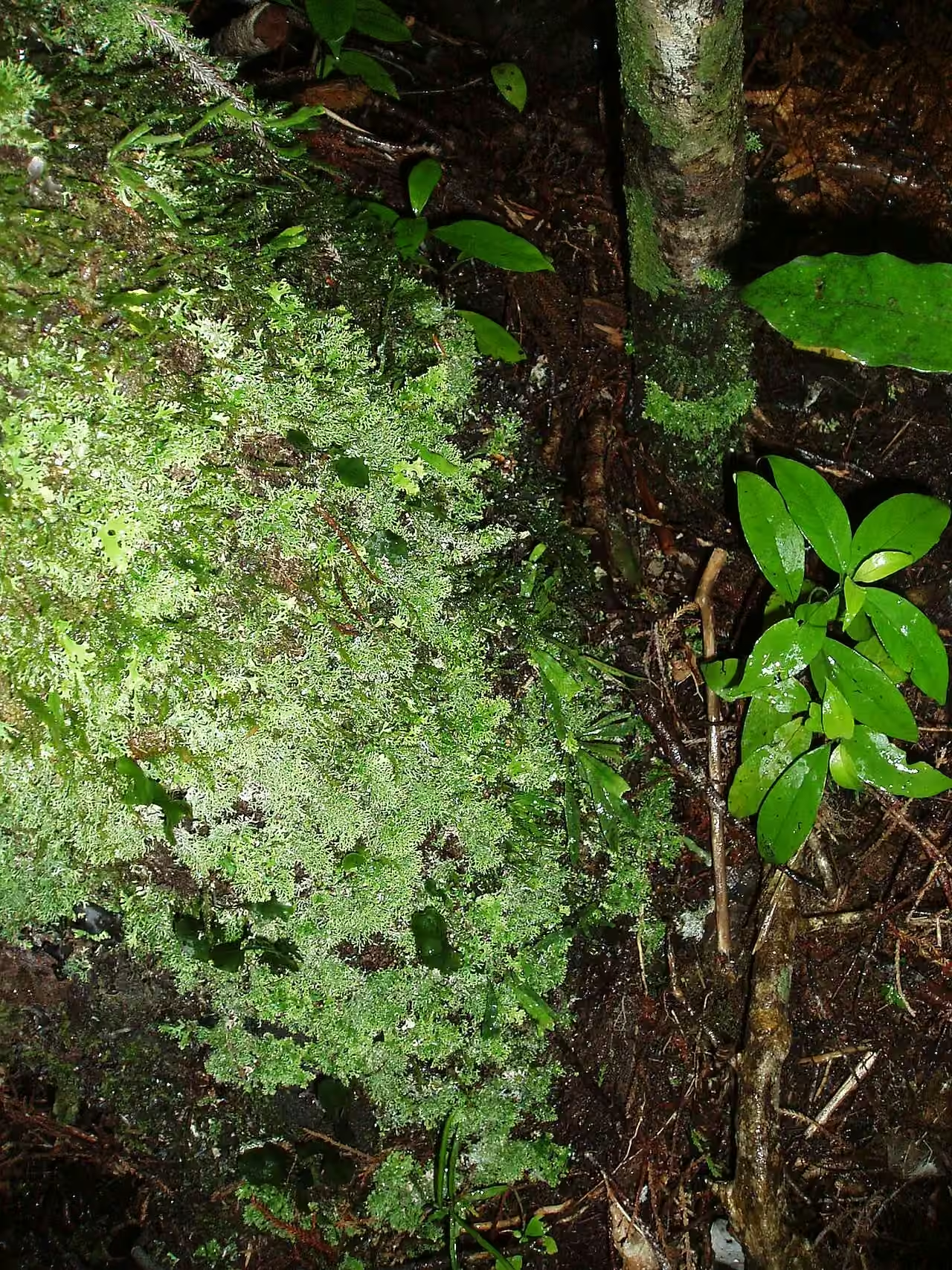
Strap Fern
Notogrammitis pseudociliata
Last updated:
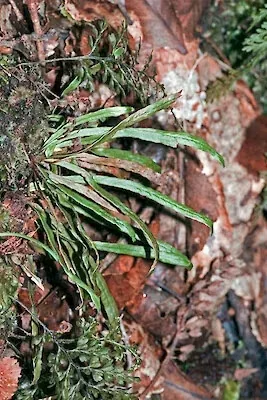
Notogrammitis pseudociliata (formerly Grammitis pseudociliata) is a small tufted strap fern that grows almost always on the trunks and branches of podocarp and broadleaved trees. Its undivided, pale green fronds are usually 4.6-9.6 cm long and covered in pale brown hairs, and their margins are often scalloped and wavy. It occurs from Kaitaia to Stewart Island/Rakiura, mainly in the wetter west of both main islands, and is especially common in Westland forest. It is also native to Tasmania. Its name means false ciliata, because it was long confused with the smaller, ground-dwelling N. ciliata. It is ranked Not Threatened. Explore more native ferns in our native plant guide.
Plant Description
Notogrammitis pseudociliata grows in tufts from an erect to short-creeping rhizome bearing pale red-brown, narrowly ovate scales up to about 5 mm long. The fronds have no distinct stipe and are undivided, narrowly elliptic to oblanceolate, 22-165 mm long and 3-12 mm wide, though most are 46-96 mm long and 5-8.8 mm wide. They are pale green and thin, with margins that are entire or shallowly scalloped and often wavy.
Pale brown hairs are abundant on the stalk area (up to about 1.8 mm long), along the margins (up to 1.2 mm) and on the frond surface. The sori are elliptic, elongated along the veins, 1.2-5.2 mm long and arranged obliquely in 2-32 pairs, usually 8-22, in the middle and upper part of the frond.
It is most often confused with Notogrammitis ciliata. N. pseudociliata is larger, usually grows on trees rather than banks and rocks, has broader, often undulate fronds and has marginal hairs shorter than those of N. ciliata. Common strap fern (N. billardierei) also grows on trees but has sparse hairs mostly at the frond base and hairless sori.
Quick Facts
| Scientific Name | Notogrammitis pseudociliata |
|---|---|
| Height | Fronds 2.2-16.5 cm long, mostly 4.6-9.6 cm |
| Spread | Small tufts on trunks, about 10-20 cm across |
| Water Needs | High humidity and frequent rain |
| Light | Shade in closed forest |
| Frost Tolerance | Moderate; reaches about 975 m |
| Salt Tolerance | No information available |
| Growth Rate | Slow |
| Lifespan | Perennial |
Climate Best Suited to
Suits mild, very wet and humid forest climates, especially the high-rainfall western districts of both islands. It is uncommon where the climate is drier.
Regional Suitability
| City | Climate Suitability |
|---|---|
| Auckland | Low |
| Wellington | Low |
| Christchurch | Low |
| Dunedin | Low |
Plant Habitat
Notogrammitis pseudociliata occurs from Kaitaia southwards through the North Island to the southern North Island, and in the South Island from western Nelson to Stewart Island/Rakiura, predominantly in the west. It is common in Westland, with scattered populations elsewhere in the western South Island, and ranges from about 5 m to 975 m. It also grows in Tasmania.
It is a plant of coastal to montane closed forest, including kauri, podocarp and broadleaved forest. It is almost always an epiphyte on trees such as kauri and rimu, and only occasionally grows on moss-covered rocks, shaded cliff faces or clay banks.
Growing Requirements
Soil Requirements
As an epiphyte it does not grow in soil, rooting instead into moss and humus on bark.
- Moss cushions on podocarp and broadleaved trunks
- Occasionally mossy rock or shaded clay banks
Light Requirements
It lives in the shaded, humid interior of tall forest.
- Shade on trunks and lower branches
- Exposed forest edges are too bright and dry
Water Requirements
High rainfall and constant humidity keep its mossy perches damp.
- Most frequent in high-rainfall western forests
- Cannot survive long dry spells on bare bark
Planting and Establishing
Notogrammitis pseudociliata is not available from nurseries, and NZPCN states that it should not be removed from the wild. It is not a practical garden plant.
Its survival depends on retaining large podocarp and broadleaved trees with mossy trunks in humid forest, so protecting old trees is the most effective way to help it.
Ecological Role
Its minute spores are carried by the wind, landing on moss-covered bark where new plants establish. It forms part of the epiphyte community on rimu, kauri and other forest trees, alongside mosses, liverworts, filmy ferns and other strap ferns.
No specific animal associations are documented in the sources consulted.
Uses & Significance
Garden Uses
It has no real role in gardens and is best seen on the trunks of trees in western forests.
- A fern for forest walks in Westland and western Northland
- Specialist collections only, with spore-raised plants
Ecological Value
It adds to the diversity of epiphytes in podocarp and broadleaved forest.
- Part of the epiphyte layer on kauri, rimu and other trees
- Shared only with Tasmania outside New Zealand
- A useful indicator of humid, old-growth forest interior
Landscaping Uses
This fern is not used in landscaping. Only mature, humid native forest provides the mossy bark it needs.
In a large restoration project, keeping old trees and fallen mossy wood helps maintain conditions for epiphytic ferns to arrive naturally.
Seasonal Care Calendar
Spring
New fronds unroll on mossy trunks as growth resumes.
- Look for fresh, hairy, wavy-edged fronds on rimu trunks
Summer
Fronds may curl in dry spells and recover with rain.
- Avoid opening up the canopy near host trees
Autumn
Fertile fronds bear oblique paired sori; the sporing season is not documented in the sources consulted.
- Check frond margins for scalloping and hairs
Winter
It remains evergreen through the wet western winter.
- No action needed
When to Prune and How Much
Pruning is unnecessary. Dead fronds break down among the moss on the host tree.
If grown, snip away only fully dead fronds at their base.
How to Grow Strap Fern
NZPCN describes Notogrammitis pseudociliata as difficult to propagate and states that it should not be removed from the wild. No published propagation method for this species was found in the sources consulted. The steps below are the general approach used for small epiphytic ferns. Grammitid ferns are notable for green spores, which in ferns generally remain viable for only a short time, so fresh sowing is essential. Because it is an epiphyte, young plants are best grown on to a piece of mossy bark or tree fern fibre rather than potting mix. Use only material from plants already in cultivation or from naturally fallen branches.
From Spores
Sori sit in oblique pairs in the middle and upper part of the frond. Take one fertile frond with mature sori from a cultivated plant or a fallen branch.
- Place the frond on clean paper in a sealed envelope for a day
- Sow the green spores straight away onto sterile, finely sieved peat and moss
- Cover and keep in bright, indirect light at mild temperatures
- Mist regularly with sterile water
- Transfer young plants onto mossy bark or tree fern fibre once they have small fronds
By Division
A cultivated tuft with several growing points can be split, but small epiphytic ferns establish slowly after disturbance.
- Separate a crown with its roots and moss in mild, humid weather
- Tie it firmly to a slab of bark or tree fern trunk
- Hang in deep shade with high humidity
- Mist frequently until new growth appears
Pests & Diseases
No specific pests are recorded. The main pressures on wild plants are loss of host trees through clearance and drying of the forest interior at exposed edges.
In cultivation, low humidity quickly kills epiphytic grammitid ferns, and stagnant, overly wet conditions cause rot.
Cultural Significance
No Māori name or traditional use specific to Notogrammitis pseudociliata is recorded in the sources consulted.
The species was described as Notogrammitis pseudociliata by the grammitid fern specialist Barbara Parris, and its name records how closely it resembles G. ciliata. It was transferred to Notogrammitis in 2012 by Perrie and Parris.
Bonus Tip
A quick way to separate this fern from N. ciliata is to notice what it is growing on. A hairy strap fern with wavy, scalloped edges on a rimu or kauri trunk is almost certainly N. pseudociliata, while a smaller hairy strap fern on a clay track bank is more likely N. ciliata.
Related Plants
Explore other native plants that share similar characteristics or habitats with Strap Fern (Notogrammitis pseudociliata), offering further insights into New Zealand's diverse flora. These related species provide context and opportunities for complementary planting in your garden.
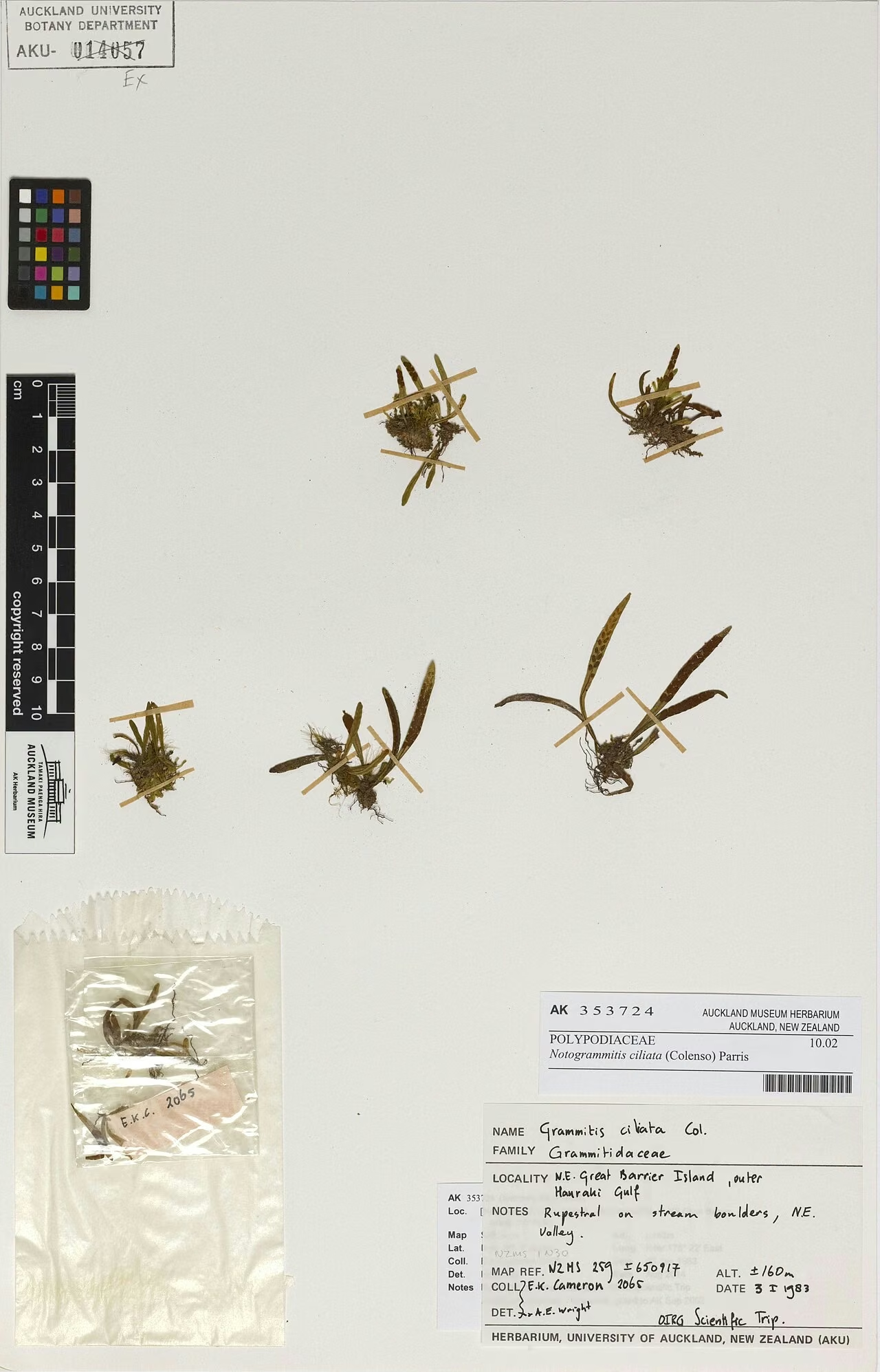
Notogrammitis ciliata
Notogrammitis ciliata
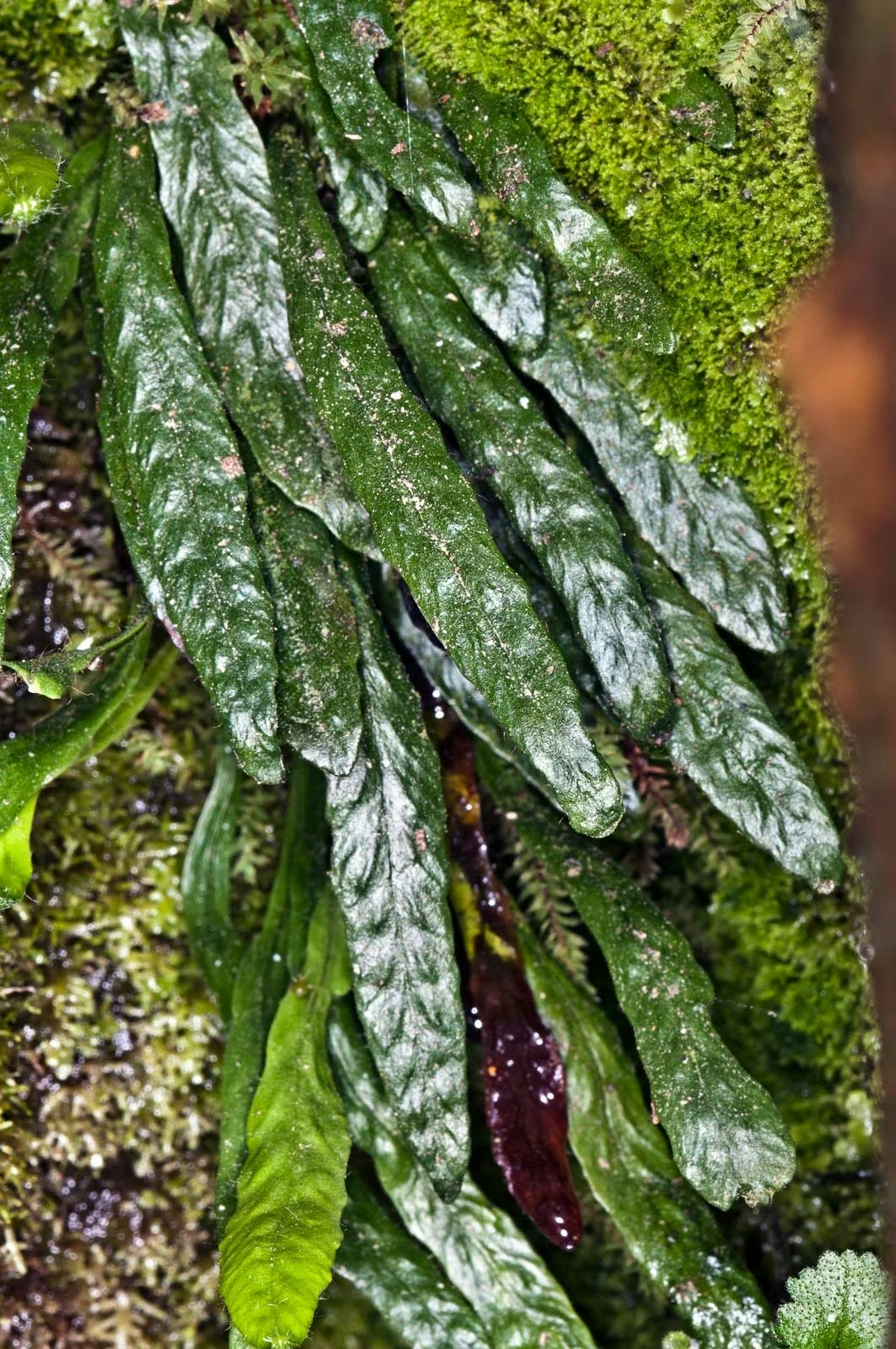
Notogrammitis patagonica
Notogrammitis patagonica
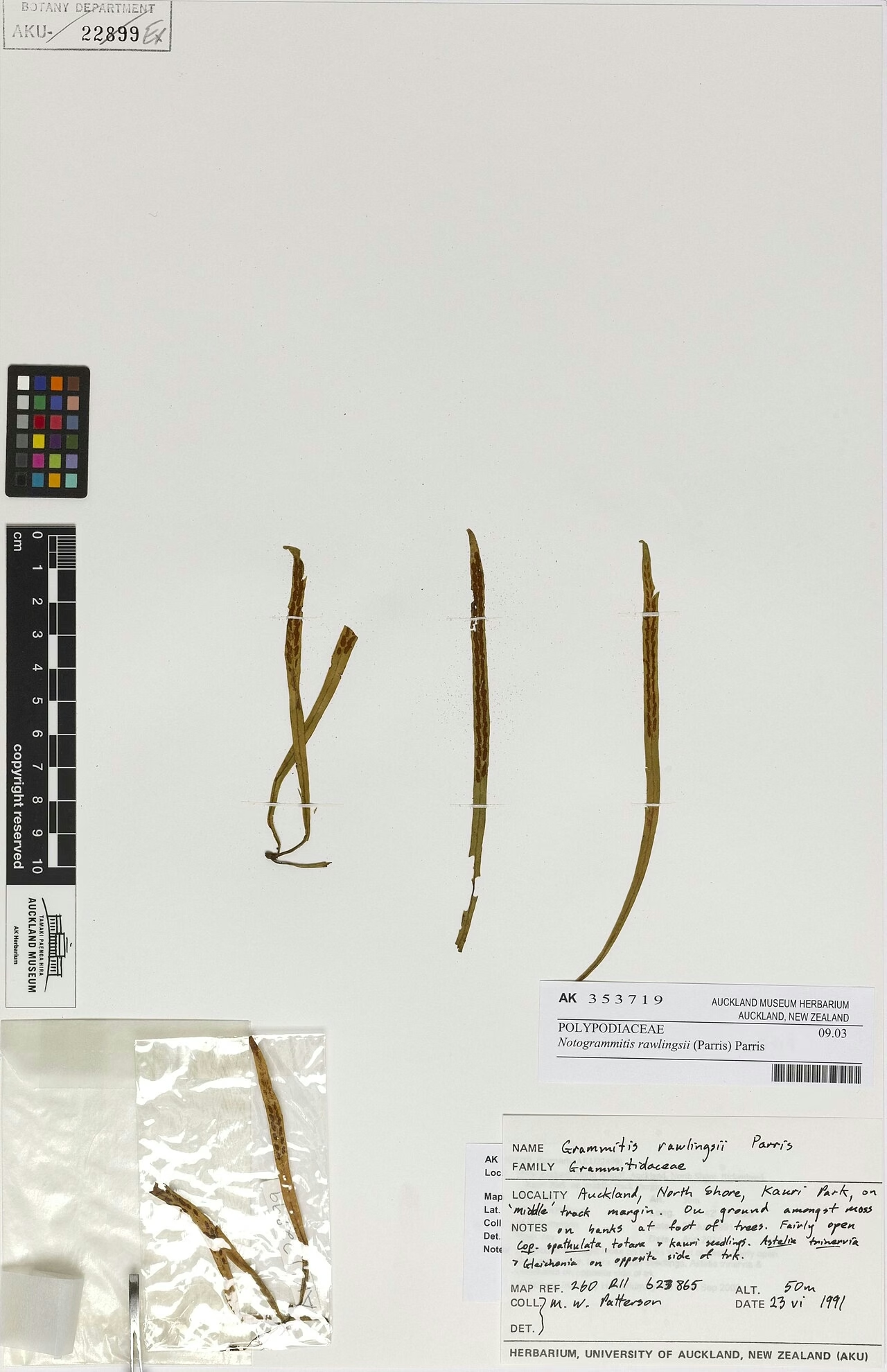
Notogrammitis rawlingsii
Notogrammitis rawlingsii
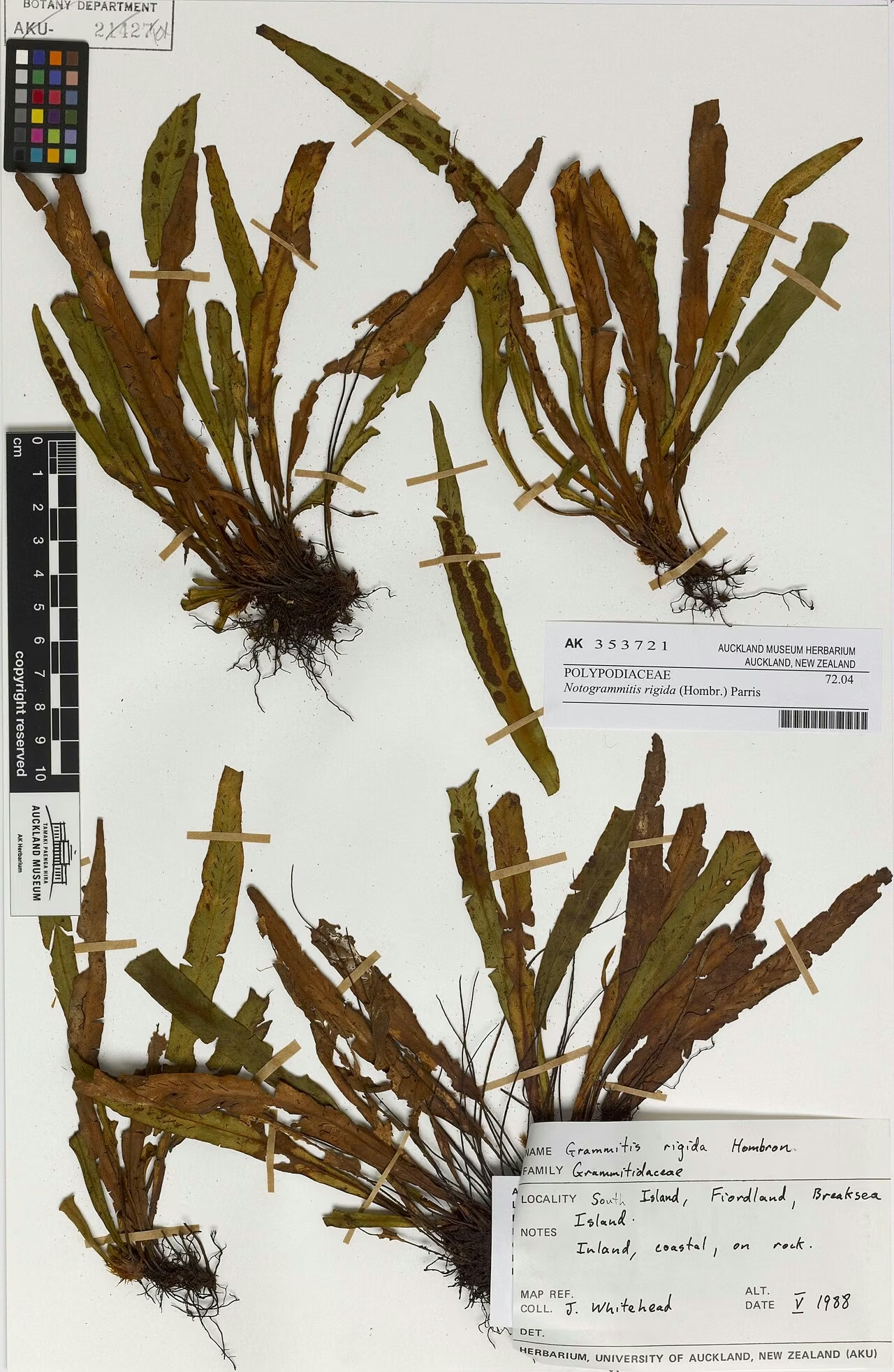
Notogrammitis rigida
Notogrammitis rigida
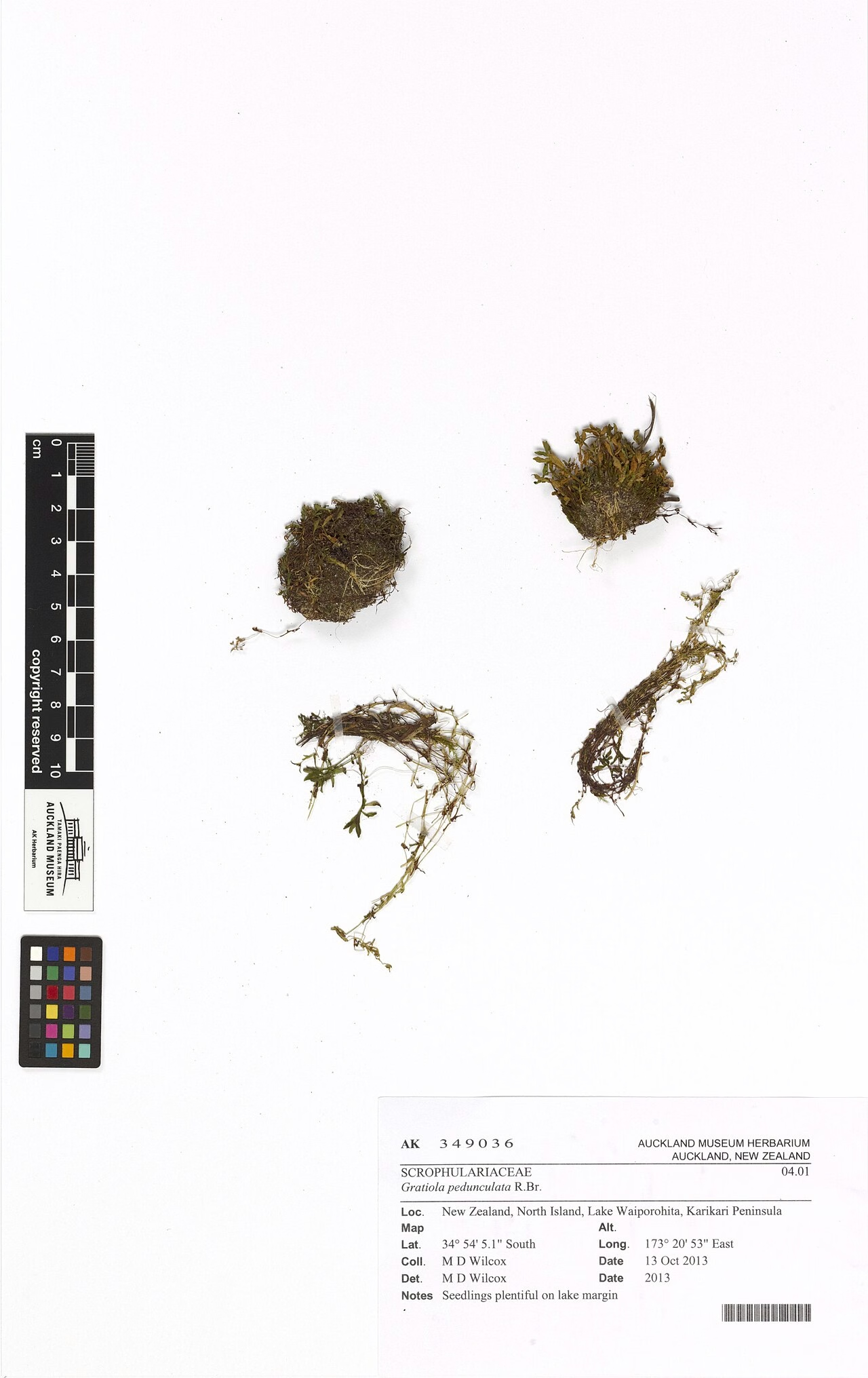
Gratiola pedunculata
Gratiola pedunculata
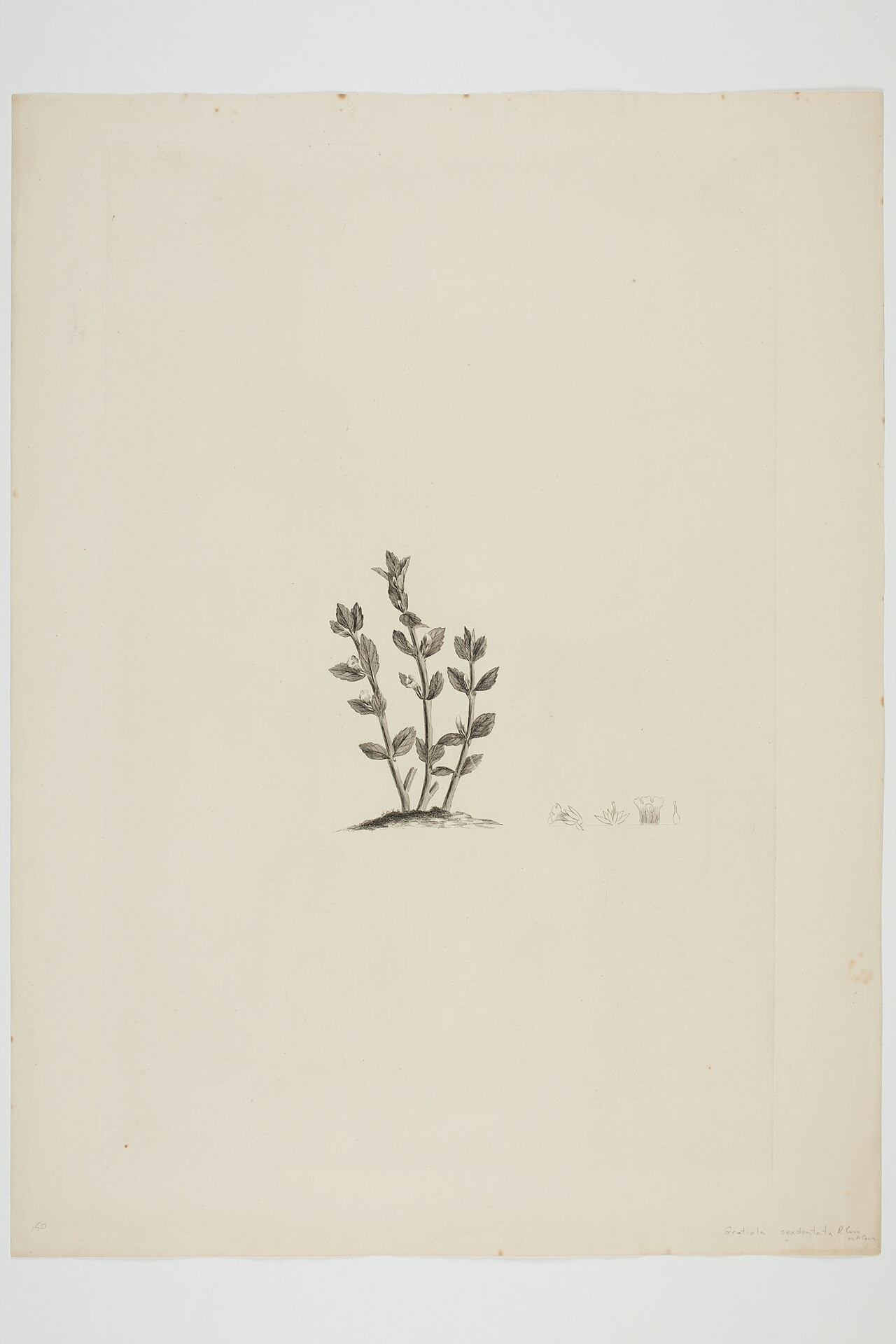
Gratiola sexdentata
Gratiola sexdentata
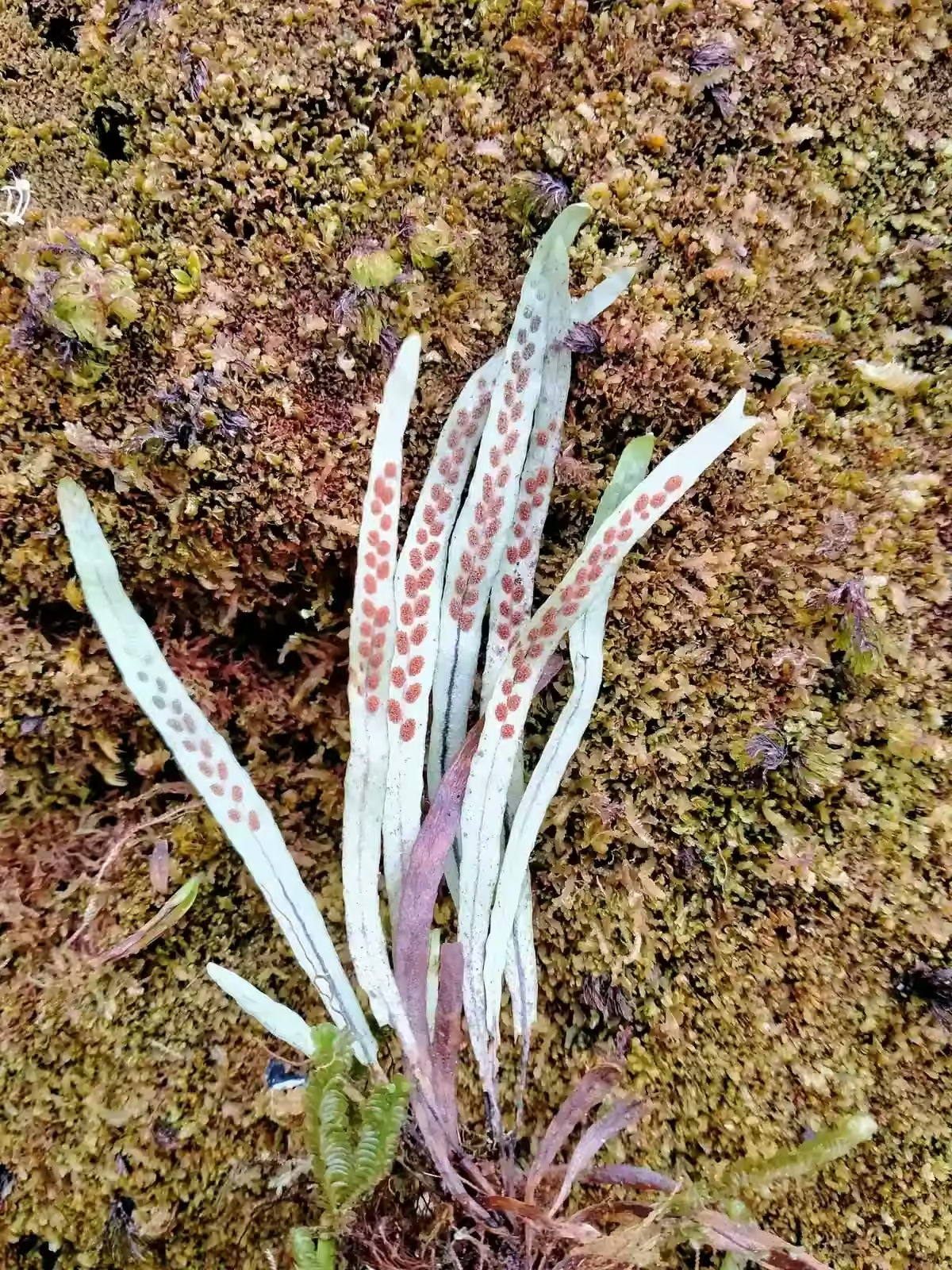
NZ Flora
NZ Flora
Common Strap Fern
Common Strap Fern
Plant Conservation
Notogrammitis pseudociliata is ranked Not Threatened (2023) with the qualifier Secure Overseas, the same as in 2017. In Auckland it is considered Regionally Threatened - Regionally Vulnerable (2025).
Protecting old podocarp, kauri and broadleaved trees and keeping forest canopies intact support this fern, particularly in northern regions where it is scarcer.
Frequently Asked Questions
What does pseudociliata mean?
It means false ciliata. The species looks like Notogrammitis ciliata and was long confused with it, but it is larger, hairy with shorter marginal hairs and grows mainly on trees.
Does Notogrammitis pseudociliata grow on trees?
Yes. The Flora of New Zealand describes it as an epiphyte almost always growing on podocarp or broadleaved trees, including kauri and rimu, and only occasionally on mossy rock or clay banks.
Where is Notogrammitis pseudociliata found?
It grows from Kaitaia south through both main islands to Stewart Island, mostly in western districts, from about 5 to 975 m altitude. It is common in Westland and also occurs in Tasmania.
Is it threatened in Auckland?
Nationally it is Not Threatened, but the 2025 Auckland regional assessment ranks it Regionally Vulnerable, as it is uncommon in that region.
Sources and Further Reading
The botanical, growing, and conservation details for Strap Fern (Notogrammitis pseudociliata) on this page draw on the New Zealand plant references below. Consult them for full technical records and the latest distribution data.