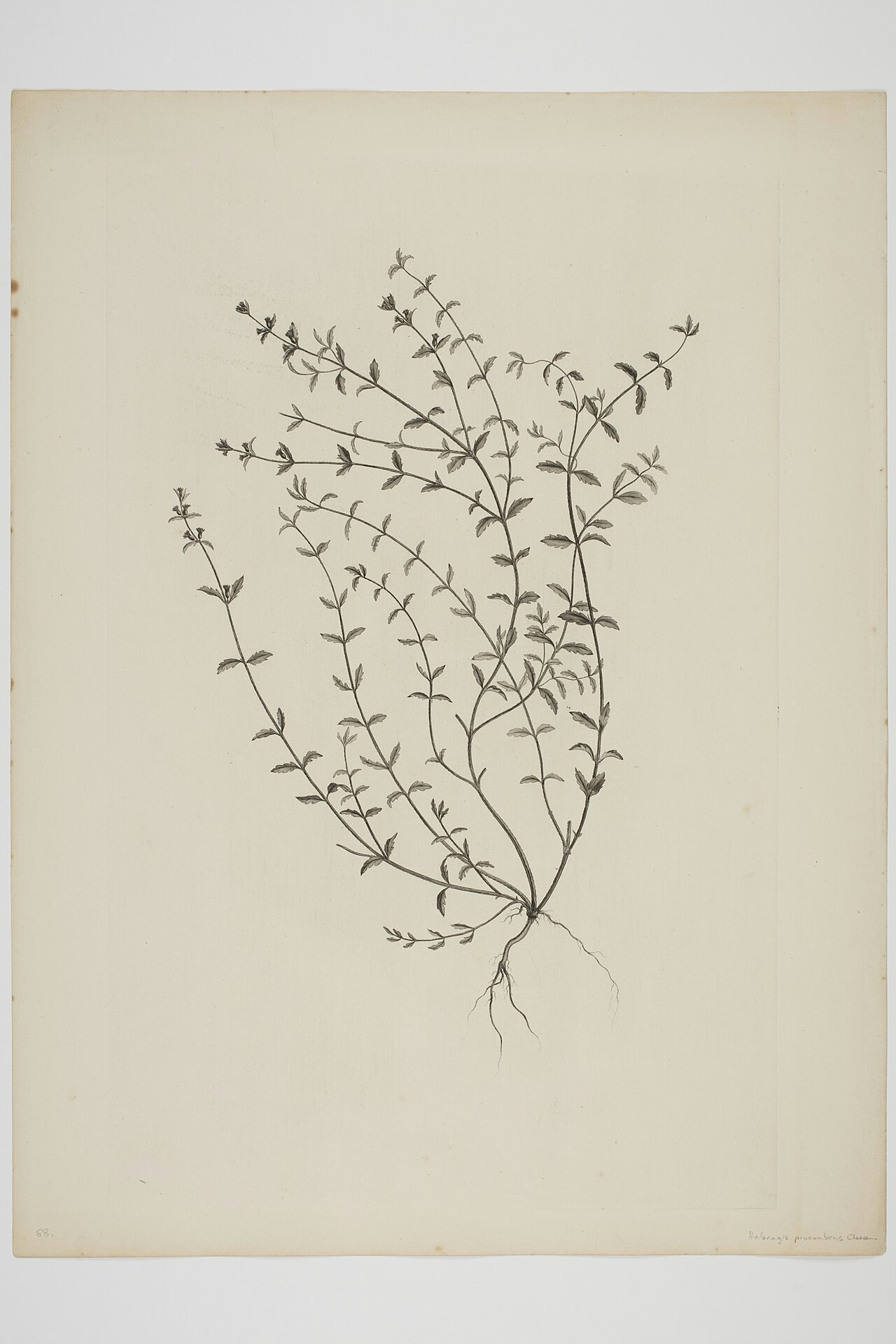
Mountain Raspwort
Gonocarpus montanus
Last updated:
Mountain raspwort (Gonocarpus montanus) is a small perennial herb of the water-milfoil family, Haloragaceae, that grows 10-15 cm tall with trailing or ascending, four-angled stems. Its tiny leaves are opposite, thick-edged and toothed, and its minute flowers are greyish to violet-purple in New Zealand. It grows in subalpine and alpine country, including mānuka scrub and tussock grassland, and is also native to south-eastern Australia and Tasmania. It is ranked Not Threatened. Although rarely noticed, it is one of several low raspworts that knit together open ground in our mountain grasslands. Explore more native ground covers in our native plant guide.
Plant Description
Gonocarpus montanus is a low perennial herb with procumbent to ascending stems 10-15 cm tall. The stems are four-angled, so young shoots can look square in cross-section, and they carry short hairs pressed flat against the stem, often in lines along the internodes. The leaves are opposite, ovate to broadly lanceolate, 3.5-10 mm long and 2-6 mm wide, leathery, on short stalks, with a thickened margin bearing 4-6 small teeth on each side.
The flowers are tiny and borne in the upper leaf axils. Each has four sepals about 1 mm long, four petals 1.5-1.8 mm long, four stamens and four staminodes. In New Zealand the flowers are greyish to violet-purple. The ovary is 8-ribbed, and the dry, one-seeded fruit is only 1.5-1.6 mm long, silver-grey and not shiny.
Within New Zealand it is most likely to be confused with other small raspworts. NZPCN separates it by its opposite primary floral bracts (at least low on the flower), opposite leaves, appressed hairs on young growth and the 8-ribbed fruit with 2-3 calluses between the ribs. Gonocarpus aggregatus has 4-8 ribbed fruit without calluses, G. incanus has alternate floral bracts, and G. micranthus has bracts that fall early and hairless stems. In Australia it is separated from G. serpyllifolius by its more robust habit, larger thicker leaves and dull fruit.
Quick Facts
| Scientific Name | Gonocarpus montanus |
|---|---|
| Height | 0.1-0.15 m |
| Spread | Low patches, roughly 0.2-0.4 m |
| Water Needs | Moist but free-draining |
| Light | Full sun to light shade in open ground |
| Frost Tolerance | High; a subalpine to alpine species |
| Salt Tolerance | No information available; not a coastal plant |
| Growth Rate | Slow to moderate |
| Lifespan | Perennial |
Climate Best Suited to
Suits cool, moist mountain climates with cold winters and mild summers. Hot, humid lowland conditions are unlikely to suit it.
Regional Suitability
| City | Climate Suitability |
|---|---|
| Auckland | Low |
| Wellington | Medium |
| Christchurch | Medium |
| Dunedin | Medium |
Plant Habitat
In New Zealand Gonocarpus montanus grows in the subalpine and alpine zones, where it has been recorded in mānuka (Leptospermum scoparium) scrub and tussock grassland. Detailed regional distribution records were not available in the sources consulted. Outside New Zealand it occurs in the mountains of New South Wales, the ACT, Victoria and Tasmania.
In Australia it grows in open sites in feldmark, moorland, wet subalpine forest and alpine heath, with an outlying population on Mt William in the Grampians of Victoria. Across its range it favours open, sunny ground with low competition rather than dense vegetation.
Growing Requirements
Soil Requirements
It grows on the thin, low-fertility mineral and peaty soils typical of subalpine grassland and scrub.
- Gritty, free-draining soil that stays moist
- Low fertility; rich soils encourage competing plants
- Open ground with little smothering litter
Light Requirements
As a plant of open tussock and scrub margins, it prefers good light and is easily overtopped by taller plants.
- Full sun in cool climates
- Light shade acceptable where summers are warm
- Keep clear of spreading groundcovers that would shade it out
Water Requirements
Mountain soils where it grows are moist for much of the year but rarely waterlogged.
- Water during dry spells in summer
- Avoid wet, stagnant conditions around the crown
Planting and Establishing
Mountain raspwort is not a standard nursery plant in New Zealand, and no commercial source was found. If it is grown, it should come from legally collected seed or from established cultivated plants rather than being dug from the wild.
Plant into a sunny spot in a rock garden, scree bed or alpine trough with gritty soil, pressing it in firmly and top-dressing with fine gravel to keep the stems dry. Water in well and keep moist until it has rooted into the surrounding soil.
Ecological Role
NZPCN records that the fruit of Gonocarpus montanus is wind dispersed. The tiny dry fruits are released from the low stems and scattered across open ground, helping the plant colonise bare patches among tussocks and shrubs.
The pollinators of its minute flowers are not documented in the sources consulted. Like other low raspworts it forms part of the inter-tussock herb layer that binds the soil surface in mountain grasslands.
Uses & Significance
Garden Uses
Its value in gardens is limited to specialist alpine and native plant collections, where its neat paired leaves suit close inspection.
- Rock gardens and scree beds in cool districts
- Alpine troughs alongside other small native herbs
- Gap filler between stones in moist, sunny paving
Ecological Value
It contributes to the diversity of the small herb flora in subalpine grassland and scrub.
- Covers bare ground between tussocks and shrubs
- Part of the native Haloragaceae flora shared with south-eastern Australia
- A species worth recording in vegetation plots (NVS code GONMON)
Landscaping Uses
In a designed planting, use mountain raspwort as a small textural element among rocks, where its reddish-tinged stems and tiny flowers can be seen at close range. It is too small to read from a distance and works best near paths or in raised beds.
Combine it with other low natives of open mountain ground, such as small Raoulia mats or native gentians, and avoid vigorous groundcovers that would overrun it.
Seasonal Care Calendar
Spring
New shoots lengthen from the overwintering stems as the soil warms.
- Weed carefully around plants
- Top up gravel mulch
Summer
Flowering runs from about November to February, with small greyish to purple flowers in the upper leaf axils.
- Water in dry weather
- Watch for ripening fruit late in summer
Autumn
The small dry fruits ripen and fall, ready for wind dispersal.
- Collect seed from cultivated plants
- Clear fallen leaves off the mat
Winter
Growth largely stops through the cold months, when the plants sit low among surrounding tussocks and shrubs.
- Ensure good drainage
- No feeding needed
When to Prune and How Much
No regular pruning is needed. The plant stays low and compact on its own.
If stems become straggly or partly dead after winter, trim them back lightly in spring to encourage fresh shoots from the base.
How to Grow Mountain Raspwort
No published propagation protocol specific to Gonocarpus montanus was found in the sources consulted, and NZPCN gives no propagation notes for it. The methods below are based on how small Gonocarpus and other low perennial herbs are generally raised, combined with what is known of this species: it flowers in summer, sets tiny one-seeded fruits about 1.5 mm long, and has trailing stems that may root where they touch moist ground. Use only seed or material from cultivated plants or legally collected sources, and expect slow, small-scale results suited to an alpine collection rather than mass planting.
From Seed
The silver-grey fruits ripen in late summer and are shed readily, so check plants often. Each fruit holds a single seed, and sowing the whole fruit is simplest.
- Collect ripe grey fruits by shaking stems over a paper bag in late summer
- Sow on the surface of a gritty seed mix and cover lightly with fine grit
- Leave the tray outside over winter so it receives natural cold
- Keep moist and expect germination in spring
- Prick out seedlings into small pots once they have a few pairs of leaves
From Cuttings and Layering
Procumbent stems in contact with damp gravel may root at the nodes. Rooted pieces can be separated, or short tip cuttings taken in late spring and summer.
- Take 3-5 cm tip cuttings from non-flowering shoots
- Remove the lowest pair of leaves and insert into a mix of pumice and peat
- Keep in a cool, bright, humid spot out of direct sun
- Pot on once roots appear, usually after several weeks
Pests & Diseases
No specific pests or diseases are recorded for this species. In cultivation the main risks are slugs and snails on young shoots and rot if the plant sits in wet, poorly drained soil.
In the wild, being overgrown by taller introduced grasses and weeds such as Hieracium in tussock country would reduce the open ground it depends on.
Cultural Significance
No traditional Māori name or use is recorded for Gonocarpus montanus in the sources consulted.
The genus name Gonocarpus means 'angled fruit', describing the ribbed fruits, and montanus means 'of mountains'. The species was first described by Joseph Hooker in the genus Haloragis, Thomas Cheeseman later described New Zealand material as Haloragis procumbens, and Anthony Orchard transferred it to Gonocarpus in his 1975 revision of the family.
Bonus Tip
To confirm this species in the field, use a hand lens on the fruit: Gonocarpus montanus has 8 ribs with two or three tiny calluses between each pair, whereas the similar G. aggregatus has smooth spaces between the ribs. Checking whether the leaves are paired and the young stems carry flattened hairs settles most identifications.
Related Plants
Explore other native plants that share similar characteristics or habitats with Mountain Raspwort (Gonocarpus montanus), offering further insights into New Zealand's diverse flora. These related species provide context and opportunities for complementary planting in your garden.
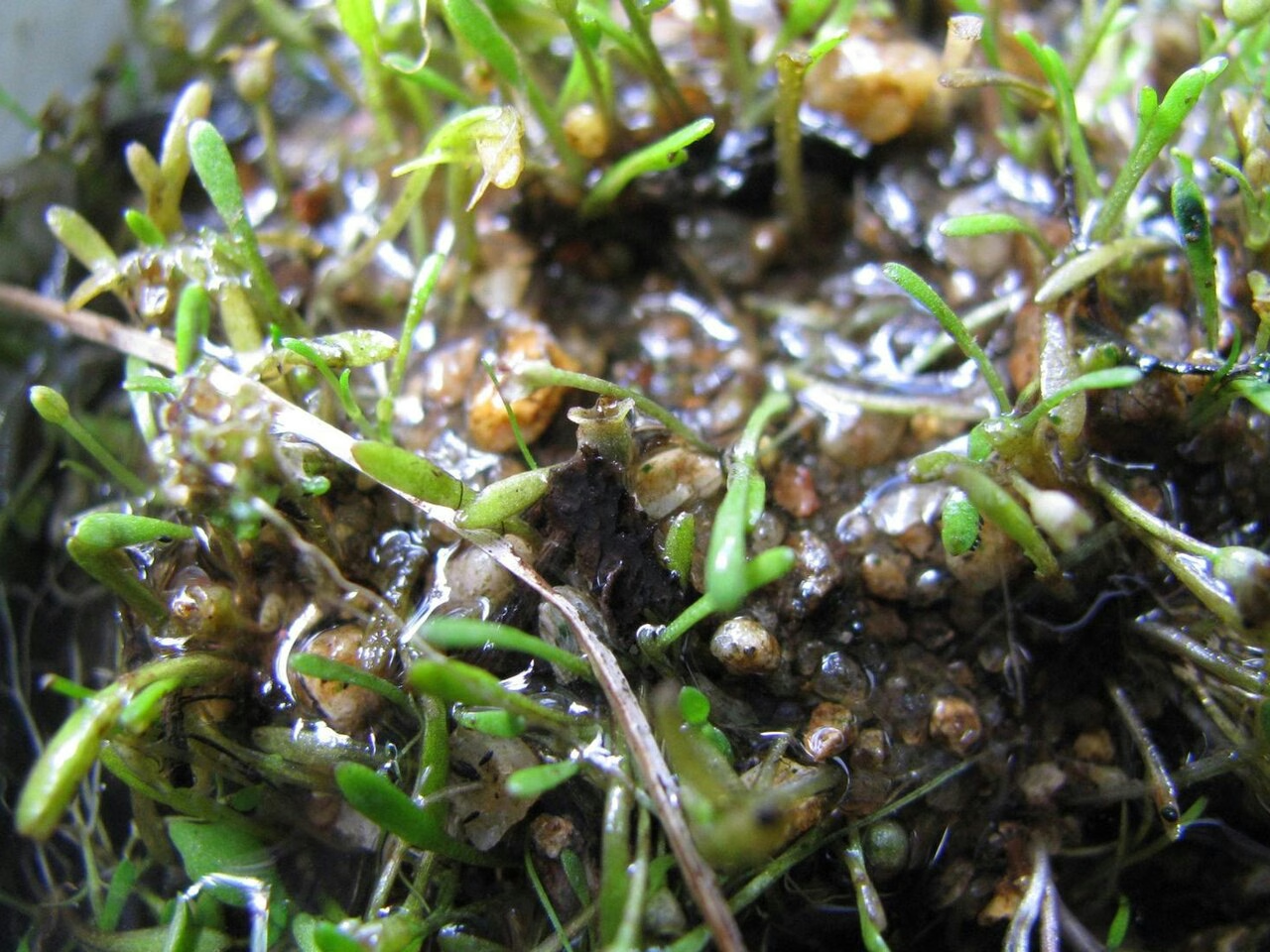
Glossostigma cleistanthum
Glossostigma cleistanthum
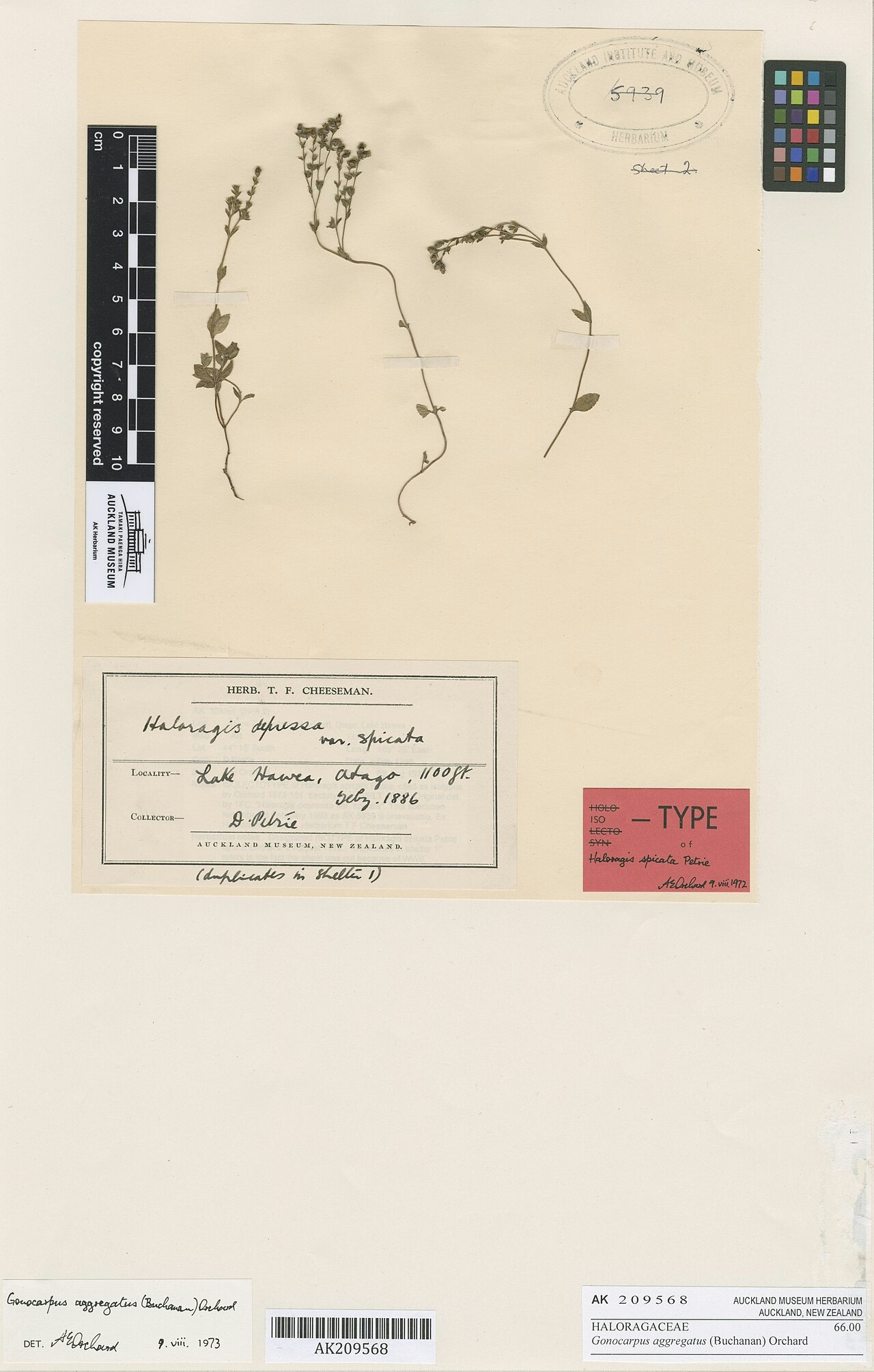
Gonocarpus aggregatus
Gonocarpus aggregatus
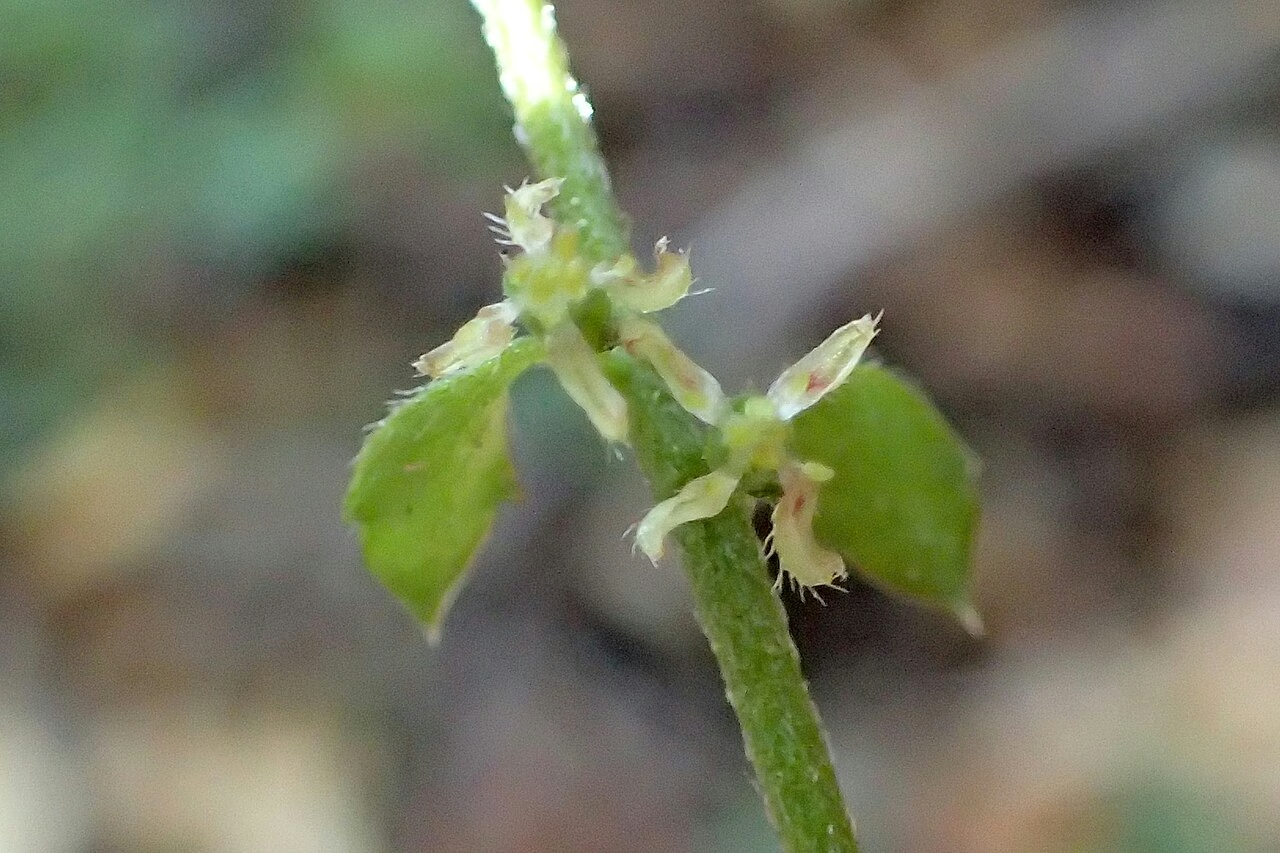
Gonocarpus incanus
Gonocarpus incanus
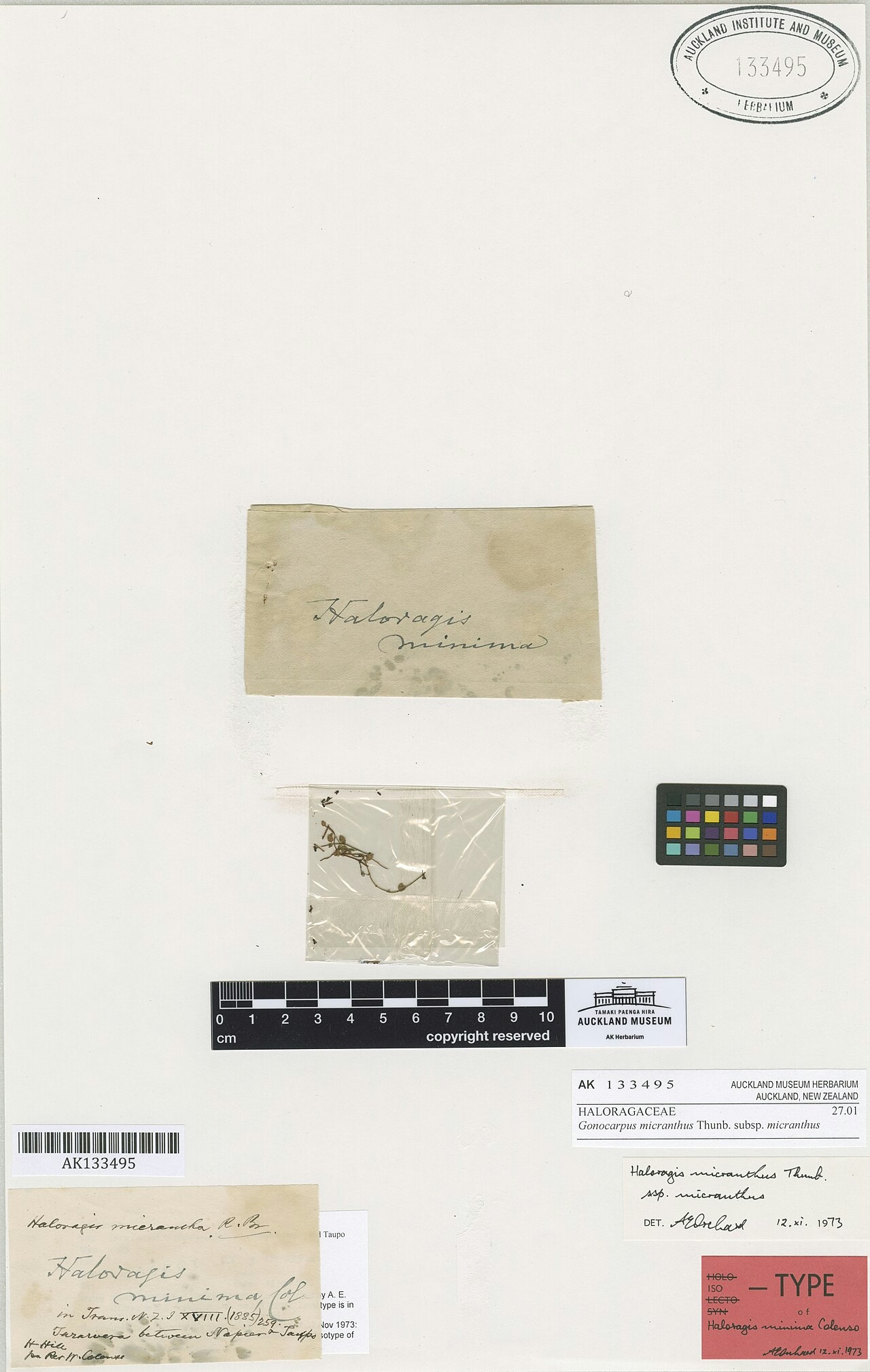
Creeping Raspwort
Gonocarpus micranthus
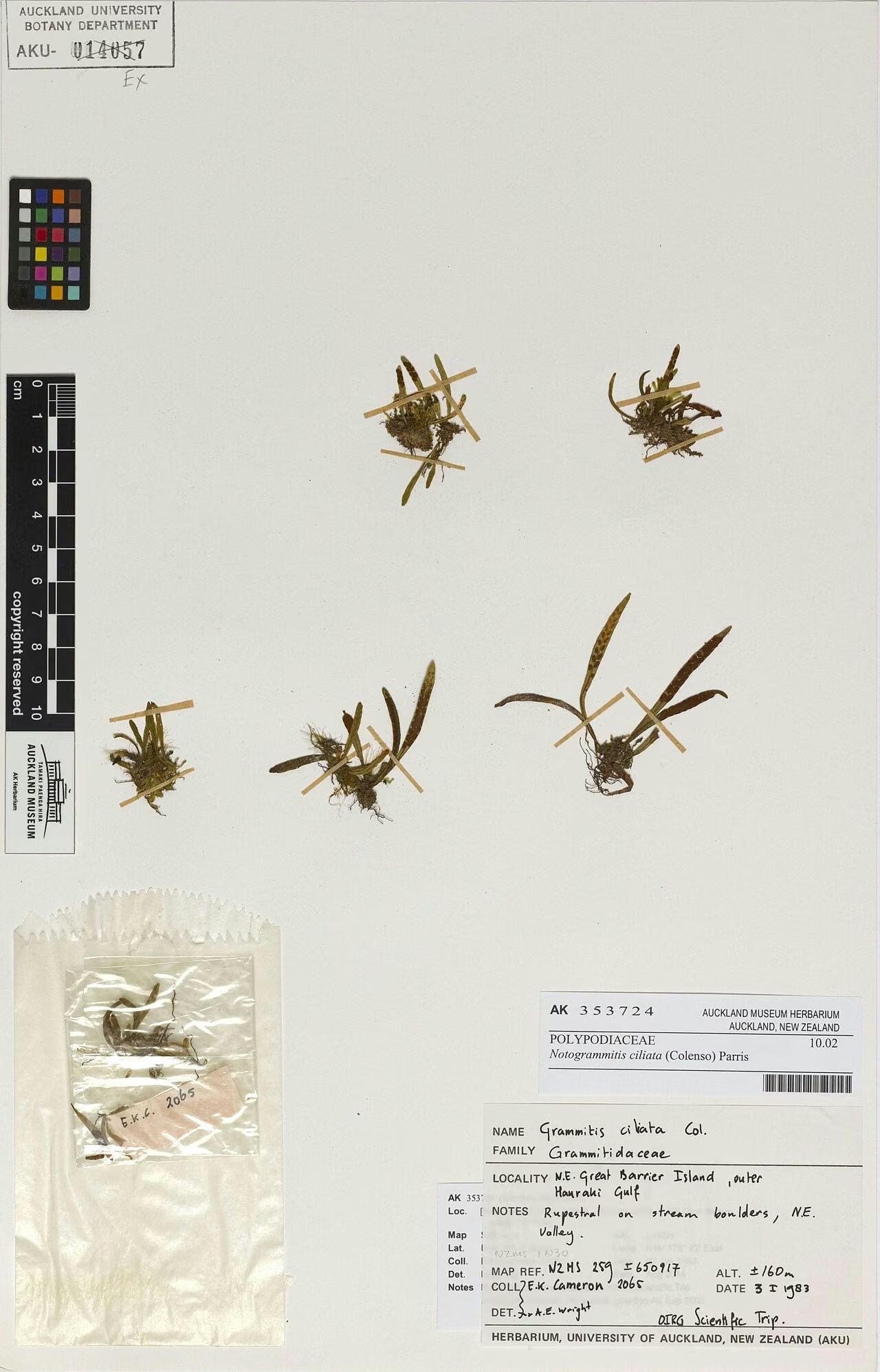
Notogrammitis ciliata
Notogrammitis ciliata
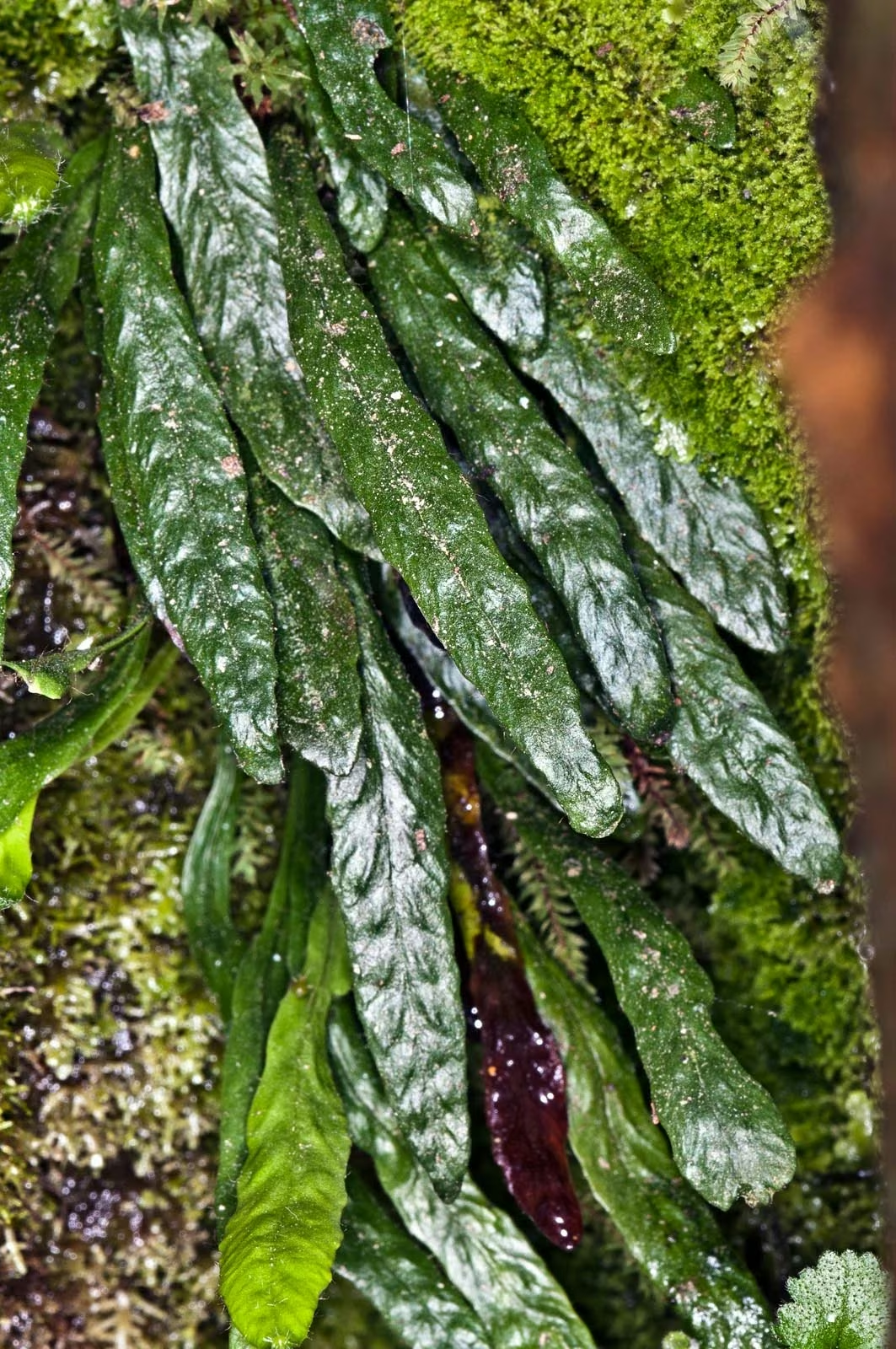
Notogrammitis patagonica
Notogrammitis patagonica
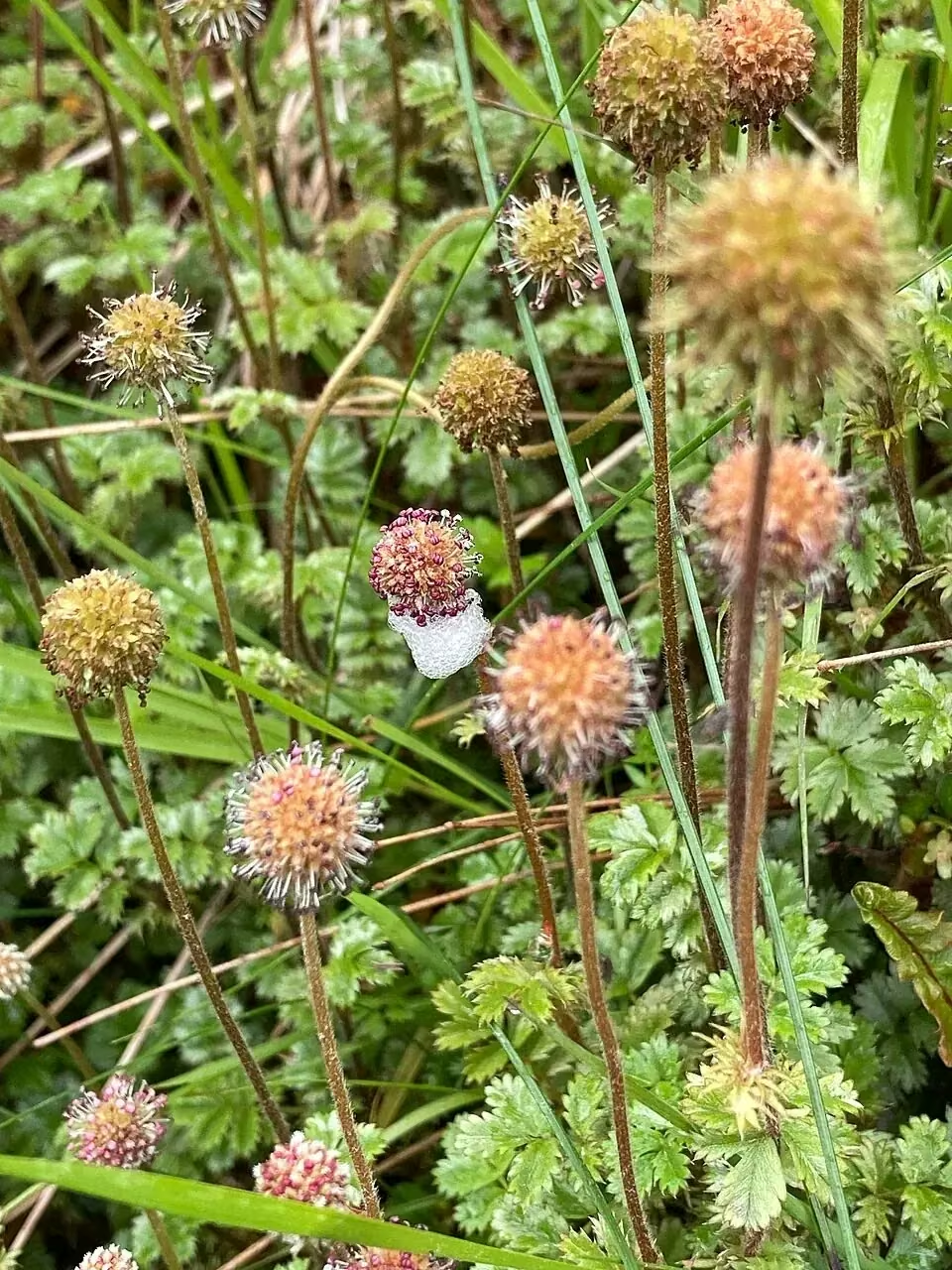
Bidibid
Bidibid
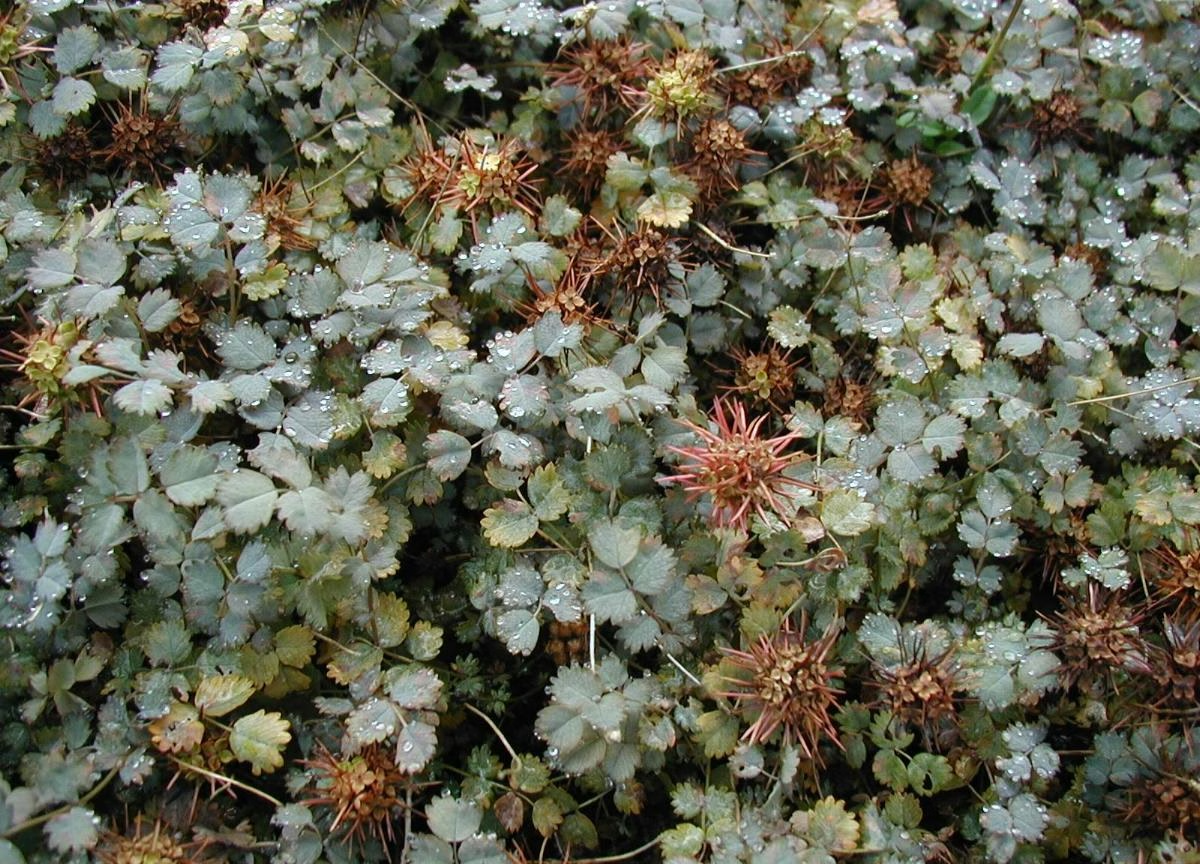
Acaena buchananii
Acaena buchananii
Plant Conservation
Gonocarpus montanus is ranked Not Threatened in the 2023 New Zealand Threat Classification, as it was in 2004, 2009, 2012 and 2017, and it is regarded as Regionally Not Threatened in Otago and Wellington.
Protecting open subalpine grassland and scrub from weed invasion and heavy disturbance benefits it along with the many other small herbs that share this habitat.
Frequently Asked Questions
What is mountain raspwort?
Mountain raspwort is Gonocarpus montanus, a small mat-forming herb in the Haloragaceae that grows in subalpine and alpine grassland and scrub in New Zealand and south-eastern Australia.
How do you tell Gonocarpus montanus from other raspworts?
NZPCN notes its opposite leaves, opposite lower floral bracts, appressed hairs on young parts and an 8-ribbed fruit with 2-3 small calluses between the ribs. Gonocarpus aggregatus lacks the calluses and G. incanus has alternate floral bracts.
Is Gonocarpus montanus native to New Zealand only?
No. Although NZPCN lists it as endemic, the Flora of New Zealand and Australian floras record it as also native to New South Wales, Victoria, the ACT and Tasmania.
When does mountain raspwort flower?
Australian floras give its flowering season as November to February, and New Zealand plants flower over the same summer period with small greyish to purple flowers.
Sources and Further Reading
The botanical, growing, and conservation details for Mountain Raspwort (Gonocarpus montanus) on this page draw on the New Zealand plant references below. Consult them for full technical records and the latest distribution data.