Mudmat
Glossostigma cleistanthum
Last updated:
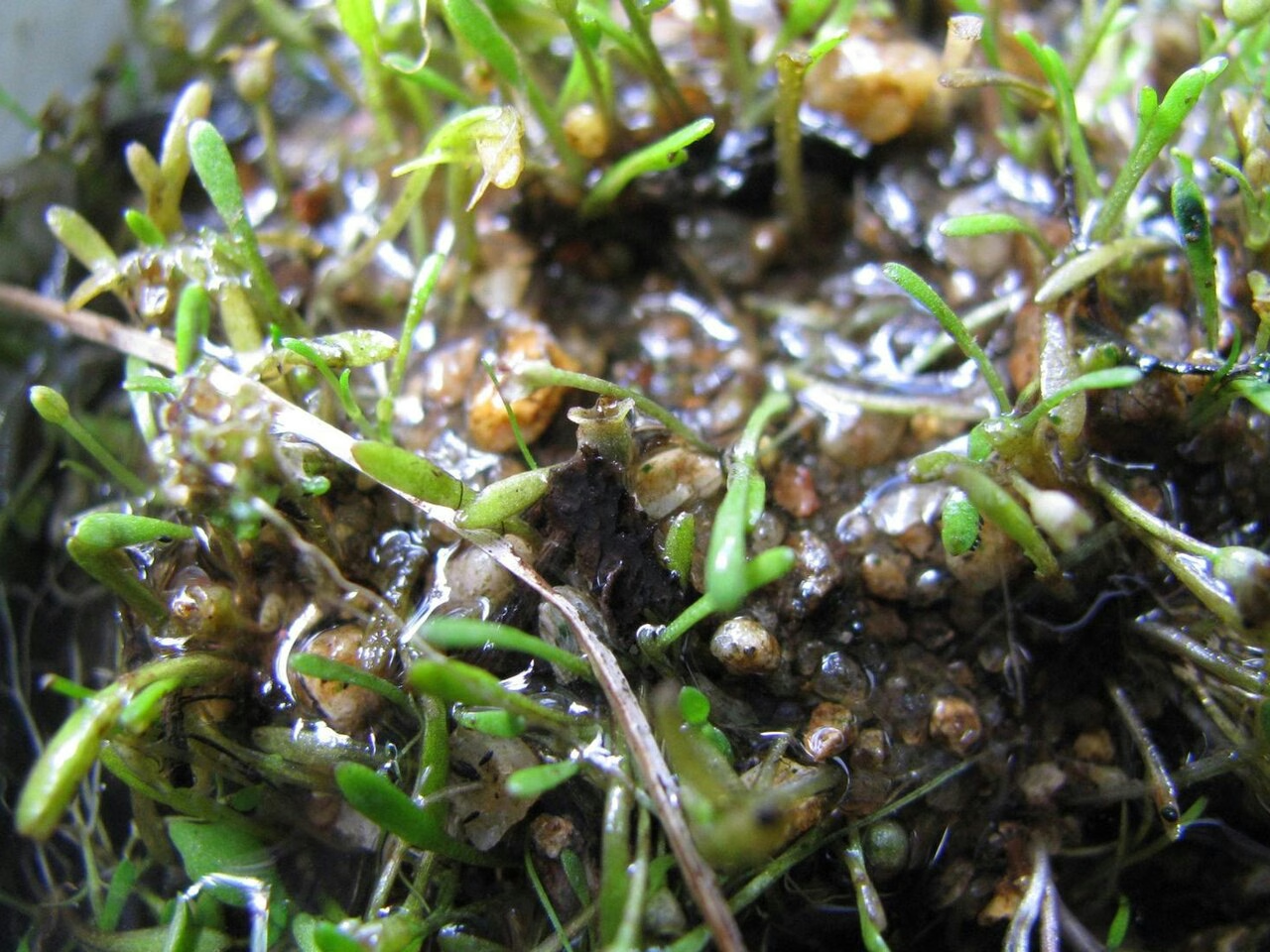
Mudmat (Glossostigma cleistanthum) is a tiny creeping aquatic herb, usually less than 2 cm tall, that forms turf on silty and sandy lake shores. Its narrow, paired leaves stand up like miniature rabbit ears. Its name refers to its cleistogamous flowers: underwater, the flowers never open and pollinate themselves in the bud, while plants exposed above water can produce open flowers. In New Zealand it has been collected from lakes such as Lake Wairarapa, Lake Dive on Taranaki, Lake Waihola, Lake Ruataniwha and Lake Monowai. It is also native to Australia and has become invasive in the north-eastern United States. Explore more native ground covers in our native plant guide.
Plant Description
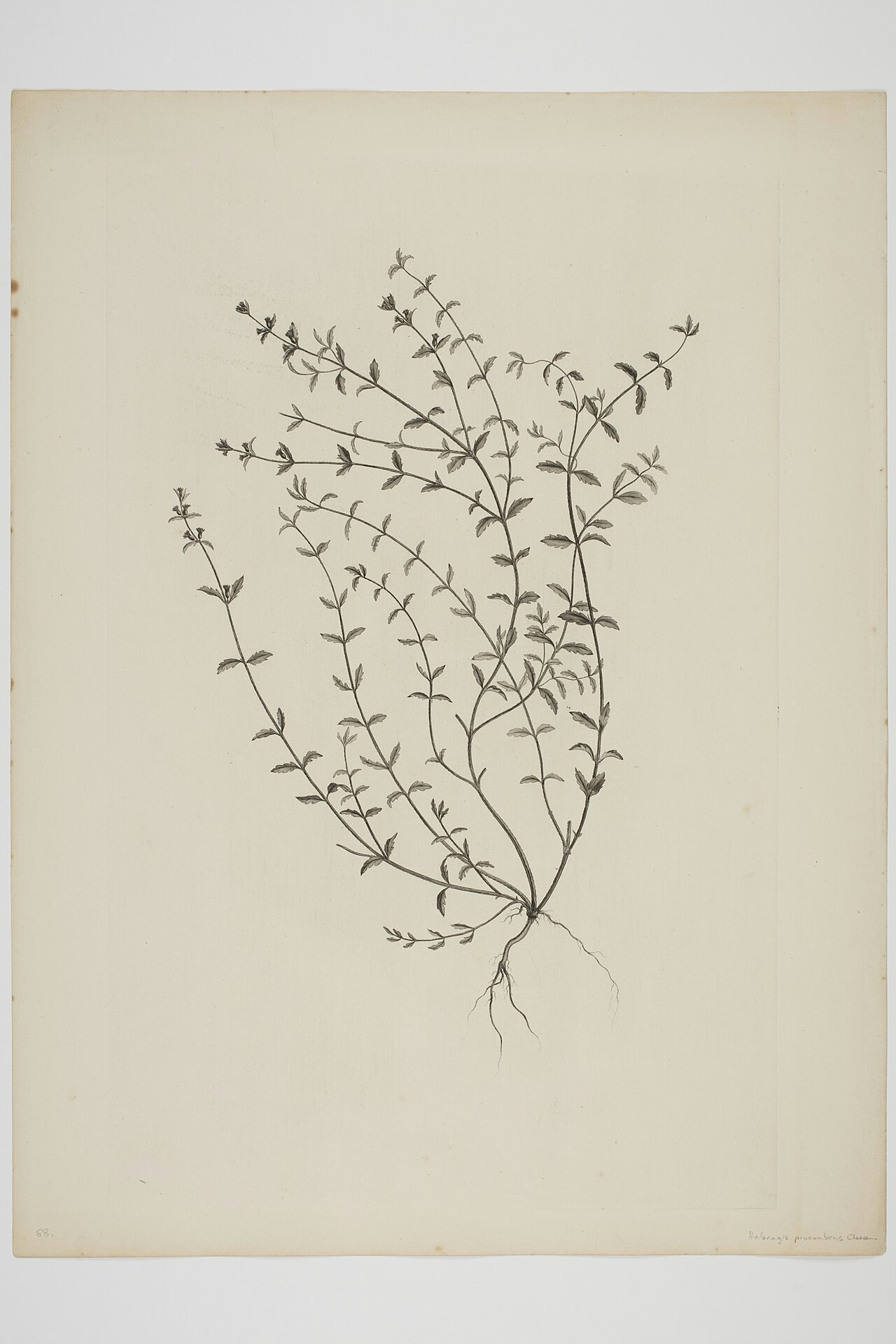
Glossostigma cleistanthum is a very small creeping herb that roots along the stems and spreads to form a dense green turf, usually less than 2 cm high. The bright green, narrow leaves are borne in pairs and are often likened to tiny rabbit ears; they are longer on submerged plants than on plants growing on exposed mud.
Its flowers are tiny and green to white. Submerged plants produce cleistogamous flowers that stay closed and self-pollinate, whereas plants growing out of the water can produce open (chasmogamous) flowers on short stalks. NZPCN records that its seeds are dispersed by ballistic projection, wind and water.
Several other Glossostigma species grow in New Zealand, and the genus name refers to the tongue-shaped stigma common to them. Detailed separation of the species relies on flower and seed features and is best done with a botanical key; the earlier name G. submersum is an invalid synonym for this species.
Quick Facts
| Scientific Name | Glossostigma cleistanthum |
|---|---|
| Height | Usually under 2 cm |
| Spread | Creeping; forms extensive turf |
| Water Needs | Aquatic; shallow water or saturated mud |
| Light | Full sun; needs clear water |
| Frost Tolerance | Good; recorded from inland Southland and Canterbury lakes |
| Salt Tolerance | Low; a freshwater plant |
| Growth Rate | Fast in suitable conditions |
| Lifespan | Perennial when submerged; emergent growth may behave as an annual |
Climate Best Suited to
Grows in lakes and wetlands across a wide climatic range, from the mild lower North Island to cold inland Canterbury and Southland lakes, provided the water is clear and nutrient-poor.
Regional Suitability
| City | Climate Suitability |
|---|---|
| Auckland | Medium |
| Wellington | Medium |
| Christchurch | Medium |
| Dunedin | Medium |
Plant Habitat
Mudmat is indigenous to New Zealand and also native to Australia. Herbarium collections come from both main islands, including Lake Wairarapa, Lake Dive on Mt Taranaki, Lake Waihola in Otago, Lake Ruataniwha in Canterbury and Lake Monowai in Southland, and it has also been found at the edges of artificial lakes. Regional threat listings show it is present but scarce in Northland and Wellington.
It grows in the littoral zone of lakes and ponds and on periodically flooded shores, on silt between stones or on sand on gently sloping shorelines with little wave action. Specimen labels record it at depths from the water line to about 1.8 m. It prefers oligotrophic water, with high clarity and low nutrients. NZPCN classes it as an obligate wetland plant.
Growing Requirements
Soil Requirements
It roots into fine silt, mud or sand on gently sloping lake beds and shores.
- Silty or sandy substrate
- Low nutrient conditions
- Stable shores with little wave disturbance
Light Requirements
Because it lives under shallow water, it depends on clear water to receive enough light.
- Full sun
- Clear, low-turbidity water
Water Requirements
It is aquatic or amphibious, growing submerged or on saturated mud that is periodically exposed.
- Shallow fresh water up to about 1.8 m deep
- Tolerates seasonal drawdown onto wet mud
Planting and Establishing
Mudmat is rarely grown in gardens. In a wildlife pond with clear, nutrient-poor water it can be established on a shallow shelf of fine sand or silt.
Do not buy aquarium Glossostigma for outdoor ponds: imported stock may be a different species, and aquarium plants should never be released into natural waterways.
Ecological Role
Its turf helps stabilise fine sediments on gentle lake shores and forms part of the low-growing native lake margin vegetation known as turf communities. These communities provide habitat for aquatic invertebrates and feeding areas for wading birds.
Its ability to self-pollinate underwater means it can set seed without insects, while open flowers on exposed plants allow occasional cross-pollination. Seeds spread by ballistic projection, wind and water, and waterfowl may carry plant fragments between water bodies.
Uses & Significance
Garden Uses
Of limited garden use, but valuable in restoration of lake margins.
- Clear-water wildlife ponds
- Lake shore turf restoration projects
- Educational displays of aquatic plants
Ecological Value
Mudmat contributes to the low turf vegetation of clear lake shores, a habitat that has declined with eutrophication and weed invasion.
- Stabilises lake bed sediments
- Shelter for aquatic invertebrates
- Indicator of clear, low-nutrient water
Landscaping Uses
In a constructed wetland it can cover shallow sandy margins as a living carpet beneath taller rushes and sedges.
It will only persist where the water stays clear and nutrient-poor; in fertile ponds it is quickly shaded out by algae and larger plants.
Seasonal Care Calendar
Spring
Growth resumes as water warms, and exposed plants begin to spread across mudflats.
- Check water clarity
- Remove algae from shallow shelves
Summer
Falling lake levels expose plants, which may then produce open flowers.
- Keep shelves at least wet
- Avoid adding fertiliser to the pond
Autumn
Seed is set from both closed and open flowers.
- Leave turf undisturbed
- Remove fallen leaves from the water
Winter
Emergent plants may die back while submerged plants persist.
- Allow natural water level rises
- Avoid trampling margins
When to Prune and How Much
No pruning is required. If mudmat spreads into areas where it is not wanted in a pond, lift small patches by hand.
Never dispose of cuttings into streams or drains.
How to Grow Mudmat
No published propagation guidance for mudmat in New Zealand was found in the sources consulted. Its biology suggests two practical approaches: sowing its seed onto saturated silt, or transplanting small rooted patches of its creeping stems from cultivated stock. Because it is Regionally Endangered in Northland and Wellington, plants should never be taken from wild lakes without authorisation. Equally, aquarium-trade Glossostigma should not be planted outdoors, since its identity and origin are often not known and the genus is invasive overseas.
From Seed
Mudmat produces seed from closed, self-pollinated flowers underwater as well as from open flowers above water. Seed is naturally dispersed by ballistic projection, wind and water.
- Collect seed-bearing plants from a cultivated source in late summer.
- Spread the seed over a tray of fine sand or silt kept saturated.
- Keep the tray in full light with water at or just above the surface.
- Allow seedlings to knit together into a turf before moving.
By Division of Rooted Runners
The creeping stems root at the nodes, so small plugs of turf establish readily on suitable substrate.
This is the quickest way to start a patch in a restoration pond, because a plug carries its own rooted stems and some of the original sediment.
- Cut a small plug of turf with roots and substrate attached.
- Press it into fine silt or sand on a shallow pond shelf.
- Keep it covered by a few centimetres of clear water or on saturated mud until it spreads.
Pests & Diseases
Mudmat has no notable insect pests, but it is very vulnerable to being smothered by introduced aquatic weeds such as oxygen weeds (Lagarosiphon, Egeria) and by algae growth in nutrient-enriched water.
Sediment, nutrient run-off, artificial changes in lake levels and grazing or trampling by livestock along lake margins all degrade its habitat.
Cultural Significance
No Māori name or traditional use specific to Glossostigma cleistanthum is recorded in the sources consulted. The species was formally described by the Australian botanist W.R. Barker in 1992 in the Journal of the Adelaide Botanic Gardens.
Overseas, mudmat is known for its invasion of north-eastern United States lakes, first recorded at Hamburg Cove, Connecticut in 1992, where it can reach very high densities and threaten rare native plants.
Bonus Tip
When surveying a lake shore for mudmat, look in late summer when water levels are lowest. Exposed gentle shores of silt between stones are the best places to find the tiny paired leaves, which are easily overlooked among other turf plants.
Related Plants
Explore other native plants that share similar characteristics or habitats with Mudmat (Glossostigma cleistanthum), offering further insights into New Zealand's diverse flora. These related species provide context and opportunities for complementary planting in your garden.
Stewart Island Aniseed
Gingidia flabellata
Gingidia grisea
Gingidia grisea
Gingidia trifoliolata
Gingidia trifoliolata
Alpine Tangle Fern
Gleichenia alpina
Gonocarpus aggregatus
Gonocarpus aggregatus
Gonocarpus incanus
Gonocarpus incanus
Creeping Raspwort
Gonocarpus micranthus
Mountain Raspwort
Gonocarpus montanus
Plant Conservation
Nationally, Glossostigma cleistanthum is ranked Not Threatened (2023) with qualifiers DPS, DPT (data poor on size and trend) and SO (secure overseas). Regionally it is ranked Endangered in Northland (2026) and Wellington (2025), and Data Deficient in Auckland and Otago.
Maintaining water clarity, reducing nutrient and sediment inputs, controlling invasive aquatic weeds and fencing lake margins from stock all help protect it and the turf communities it belongs to.
Frequently Asked Questions
What is mudmat?
Mudmat is Glossostigma cleistanthum, a minute creeping herb in the family Phrymaceae that forms turf on muddy and sandy lake margins and in shallow water, often less than 2 cm tall.
What does cleistanthum mean?
It refers to cleistogamous flowers, which do not open and are self-pollinated in the bud. Mudmat produces these when submerged and can form open flowers when exposed.
Is Glossostigma cleistanthum invasive?
Not in New Zealand, where it is native. It has become a problem weed in Connecticut, Rhode Island, New Jersey and Pennsylvania, probably introduced through the aquarium trade.
Is mudmat threatened in New Zealand?
Nationally it is Not Threatened, but it is ranked Regionally Endangered in Northland and Wellington and is Data Deficient in Auckland and Otago.
Sources and Further Reading
The botanical, growing, and conservation details for Mudmat (Glossostigma cleistanthum) on this page draw on the New Zealand plant references below. Consult them for full technical records and the latest distribution data.