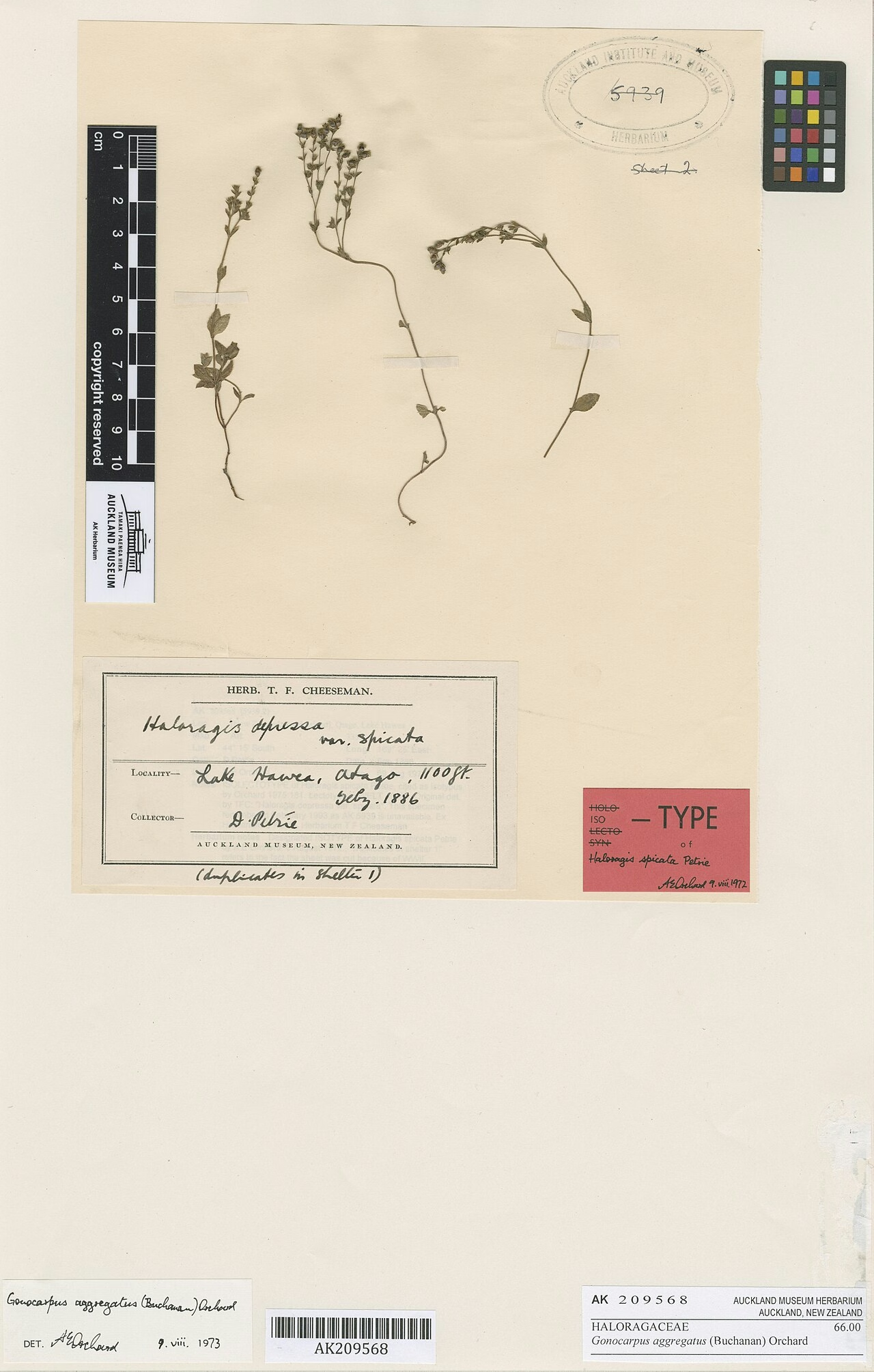
Raspwort
Gonocarpus aggregatus
Last updated:
Gonocarpus aggregatus is a small, wiry, creeping herb in the water milfoil family (Haloragaceae) found only in New Zealand. It spreads by much-branched underground stems, sending up shoots usually 2 to 10 cm tall with tiny, toothed, hairy leaves in opposite pairs and solitary reddish flowers in the leaf axils. It occurs on the North, South, Stewart and Chatham Islands in open places on sand, shingle, peat and rock crevices, from coastal sites to subalpine bogs and tussock grassland. It is easily overlooked but common enough to be ranked Not Threatened. It was long known as Haloragis depressa. Explore more native ground covers in our native plant guide.
Plant Description
Gonocarpus aggregatus is a wiry perennial herb that spreads by much-branched underground stems, which dry yellow in herbarium specimens. Above-ground shoots are usually 2 to 10 cm long, occasionally 20 cm, with scattered soft hairs most abundant on young growth, and stems that are very obscurely four-angled.
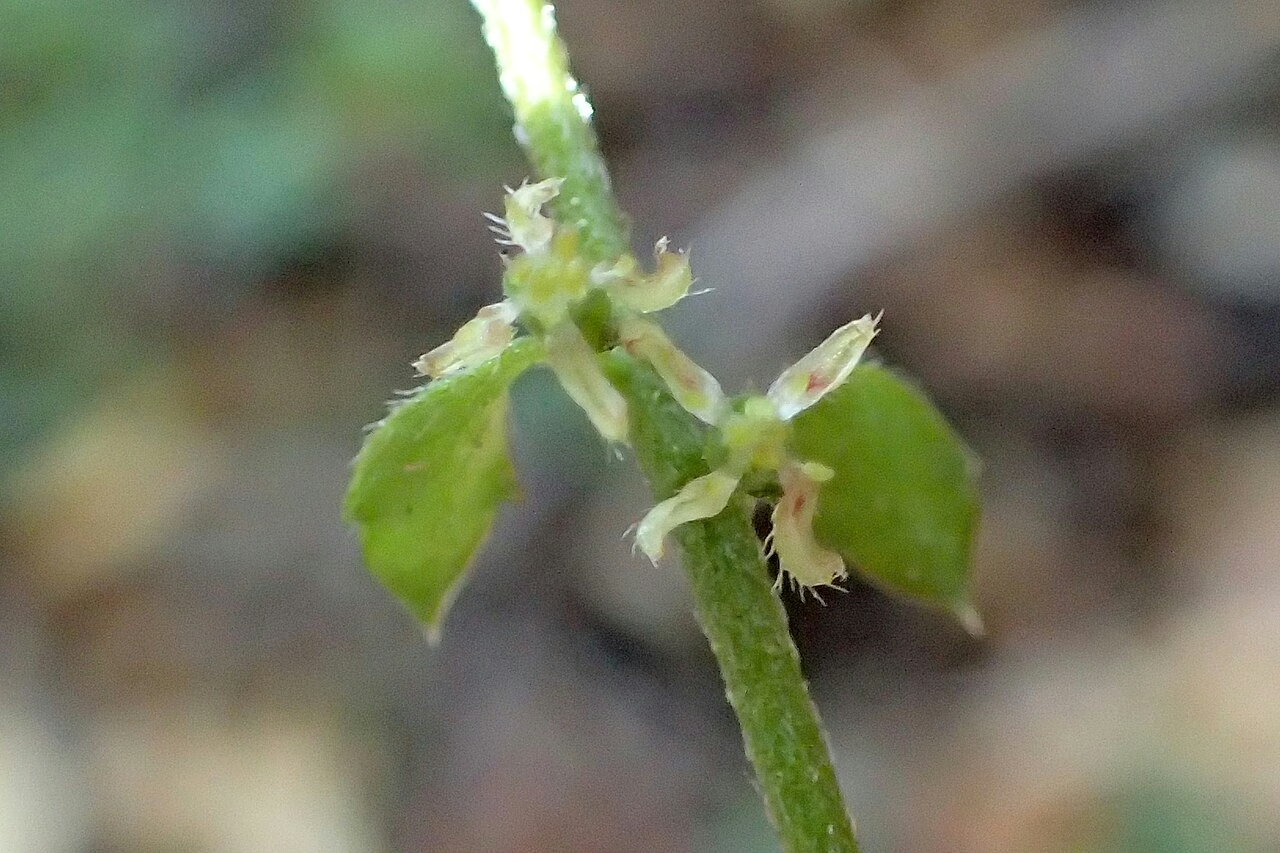
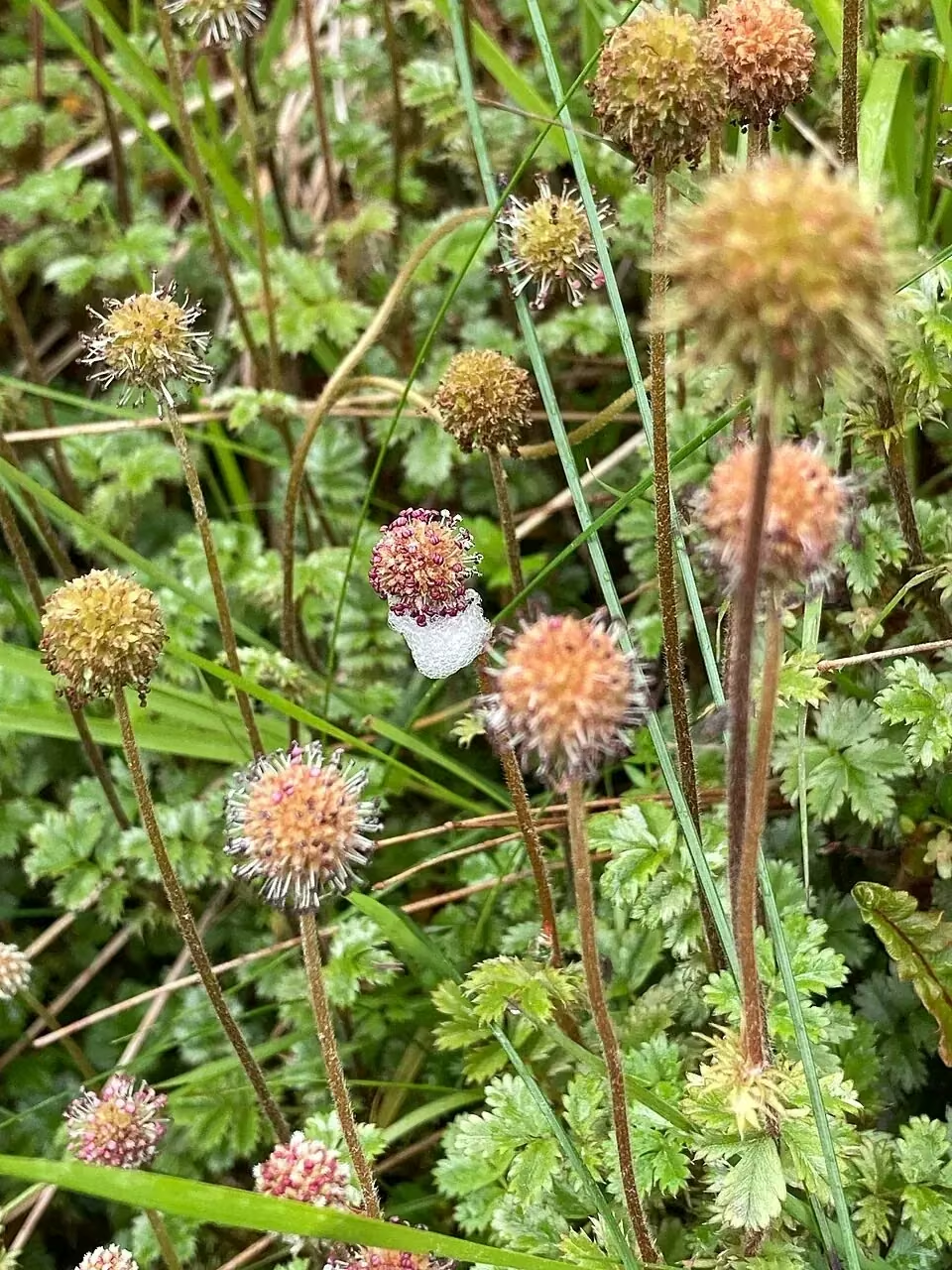
The leaves are mostly opposite, ovate, about 5 mm long (range 2 to 15 mm), hairy on both surfaces, with a cartilaginous margin cut by two to four (occasionally five) notches per side. Flowers are solitary in the leaf axils, usually in a few opposite pairs, with reddish hooded petals about 2 mm long bearing stiff hairs on the keel, and eight stamens. The fruit is brown and shining when ripe, about 2 mm long, four-angled and usually one-seeded. Flowering and fruiting run from November to April.
It is separated from Gonocarpus montanus by its fruits, which have 4 to 8 ribs and no calluses, and by its leaves being hairy on both surfaces. Flora treatments note considerable variation in flowers and fruit, and several historic names based on abnormal specimens have been rejected.
Quick Facts
| Scientific Name | Gonocarpus aggregatus |
|---|---|
| Height | 2-10 cm, occasionally to 20 cm |
| Spread | Spreads by underground stems into loose patches |
| Water Needs | Moderate; tolerates both damp peat and dry sand |
| Light | Full sun; open sites |
| Frost Tolerance | High; reaches subalpine bogs |
| Salt Tolerance | No information available |
| Growth Rate | Slow to moderate |
| Lifespan | Perennial |
Climate Best Suited to
Tolerates a wide range of climates, from the mild far north and the Chatham Islands to cold subalpine bogs in Fiordland and inland Otago.
Regional Suitability
| City | Climate Suitability |
|---|---|
| Auckland | Medium |
| Wellington | Medium |
| Christchurch | Medium |
| Dunedin | High |
Plant Habitat
This endemic species occurs on the North Island, South Island, Stewart Island and Chatham Islands. Its type locality is low boggy ground at Whangaroa in Northland, and specimens have been collected as far south as Fiordland and Southland.
It grows in open places on sand, shingle, peat or in rock crevices. Herbarium labels record it from an Oreobolus cushion bog near beech forest edge in the Cameron Mountains, from tussock grassland with low shrubs and Aciphylla near Lake Wānaka, and from riverbed country along the Hopkins River.
Growing Requirements
Soil Requirements
It grows in thin, often infertile substrates where taller plants cannot dominate.
- Sand, shingle, peat or gritty rock-garden mix
- Low fertility is preferred
- Free-draining but not parched
Light Requirements
All recorded habitats are open sites without a closed canopy.
- Full sun
- Avoid shading by taller plants
Water Requirements
It occupies both damp peat bogs and drier sand and shingle, so moderate, even moisture suits it in cultivation.
- Water in dry spells
- Tolerates seasonally wet ground
Planting and Establishing
Gonocarpus aggregatus is seldom offered for sale, but it can be grown in a trough, rock garden or among other turf plants in a sunny site with low-fertility, gritty soil.
Plant small rooted pieces into a weed-free patch where it can creep without being swamped by grasses.
Ecological Role
Its small flowers show evidence of protandry, with pollen released before the stigmas are receptive, which encourages cross-pollination, probably by wind or small insects; specific pollinators have not been recorded. NZPCN states that its fruit is dispersed by wind.
As a low creeping herb of open ground it forms part of turf, bog and stony grassland communities, filling small gaps between cushion plants, sedges and tussocks. NZPCN rates it FACU, meaning it usually grows on non-wetland ground but sometimes in wetlands.
Uses & Significance
Garden Uses
A tiny plant for detailed native plantings rather than mass display.
- Troughs and miniature native gardens
- Gap filler in rock gardens
- Restoration of open turf and bog communities
Ecological Value
It contributes to the diversity of low-growing native vegetation in open habitats across New Zealand.
- Endemic to New Zealand
- Binds thin soils on sand and shingle
- Part of native turf and bog plant communities
Landscaping Uses
Its reddish flowers and small toothed leaves are best appreciated at close range, so use it at the front of a trough or between stepping stones in a native garden.
Combine with other small natives such as Leptinella, Hydrocotyle and Raoulia in a low-fertility gravel garden.
Seasonal Care Calendar
Spring
New shoots emerge from the underground stems.
- Weed around the patch
- Top up gravel mulch
Summer
Flowering and fruiting start in November and continue through summer.
- Water during long dry periods
- Look for the reddish hooded petals
Autumn
Brown shining fruits ripen through to April.
- Collect ripe fruit for sowing
- Leave stems to shed seed
Winter
Above-ground growth is minimal, with the plant persisting through its underground stems.
- Avoid disturbing the soil
- No feeding needed
When to Prune and How Much
No pruning is needed. If old shoots become untidy, trim them back in late winter before new growth starts.
Keep taller neighbours cut back so the plant remains in full light.
How to Grow Raspwort
No specific propagation guidance for Gonocarpus aggregatus has been published in the sources consulted, and it is rarely grown. Two methods follow from its biology. It spreads by much-branched underground stems, so rooted pieces of an established cultivated patch can be separated, and it sets small one-seeded fruits from November to April that can be sown. Because it is common and widespread, the main caution is to collect material only with landowner permission and never from conservation land without authorisation.
By Division
Division of the underground stems is the quickest way to obtain new plants. Each piece should carry several shoots and a length of rooted stem.
- In spring, lift a section from the edge of a cultivated patch with a trowel.
- Separate pieces that have roots and at least a few shoots.
- Pot into a gritty, low-fertility mix or plant directly into prepared ground.
- Keep moist until new shoots appear, then water less often.
From Seed
The fruit is about 2 mm long and is wind-dispersed, so collect it promptly once it becomes brown and shining.
Seedlings are tiny and slow at first, so sow thinly and protect the tray from heavy rain that could wash the seed away.
- Collect ripe fruits between late summer and autumn.
- Sow on the surface of a fine, gritty seed mix and press in lightly.
- Keep in a bright, sheltered spot and moist until seedlings appear.
- Transplant small clumps of seedlings together rather than singly.
Pests & Diseases
No specific pests or diseases of Gonocarpus aggregatus are recorded. In gardens the main risk is competition from grasses and weeds, which can easily overwhelm such a small plant.
In the wild, weed invasion of open sand, shingle and bog habitats is a more significant concern than pests.
Cultural Significance
No Māori name or traditional use specific to Gonocarpus aggregatus is recorded in the sources consulted. It was described by John Buchanan as Haloragis aggregata and later transferred to Gonocarpus by Anthony Orchard in his revision of the Haloragaceae.
The epithet aggregatus comes from the Latin for flocking together or clustering, and Gonocarpus means angled fruit.
Bonus Tip
To confirm identification in the field, use a hand lens on the leaves: hairs on both surfaces, combined with fruits lacking calluses between the ribs, separate it from the similar Gonocarpus montanus.
Related Plants
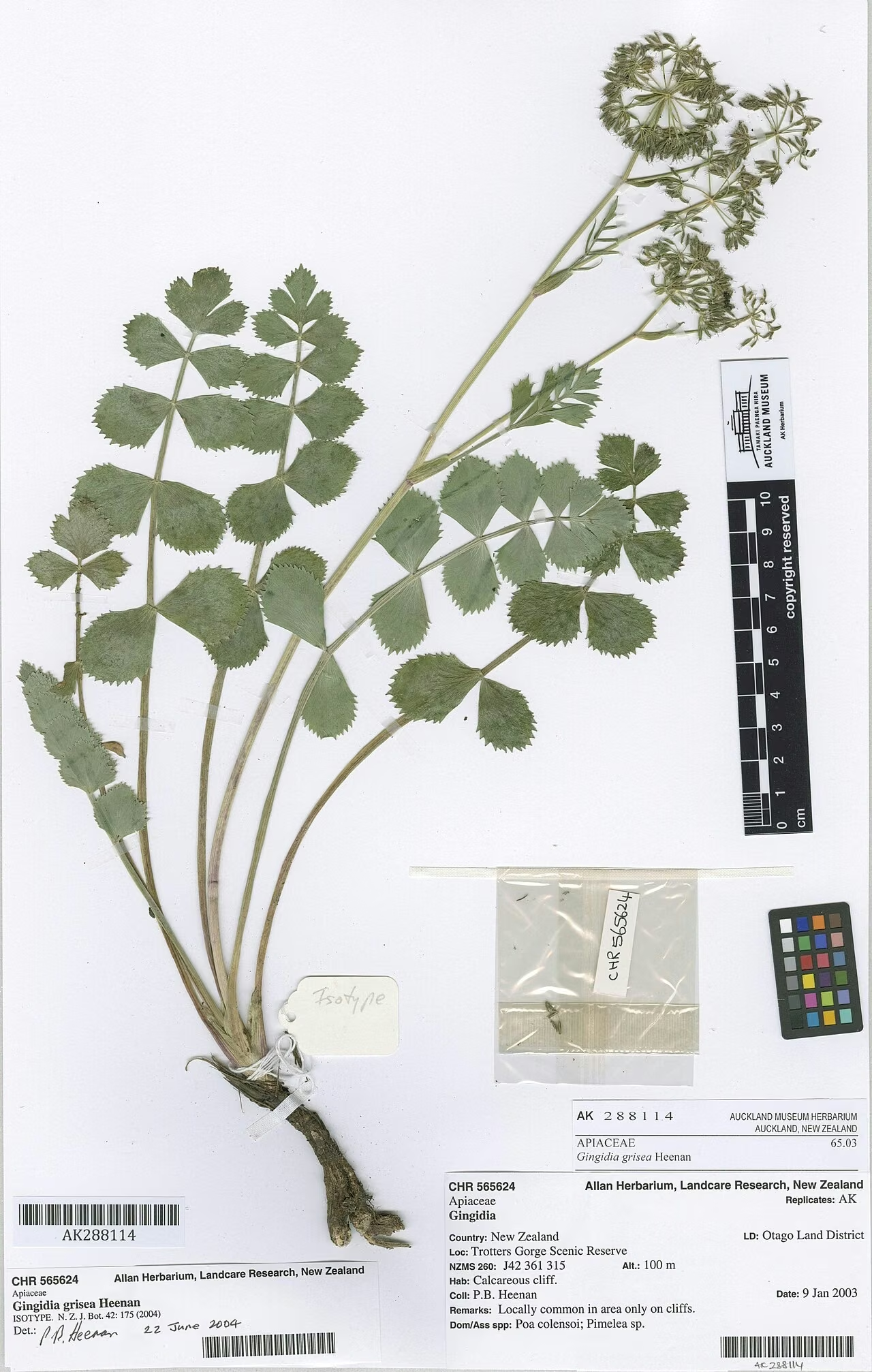
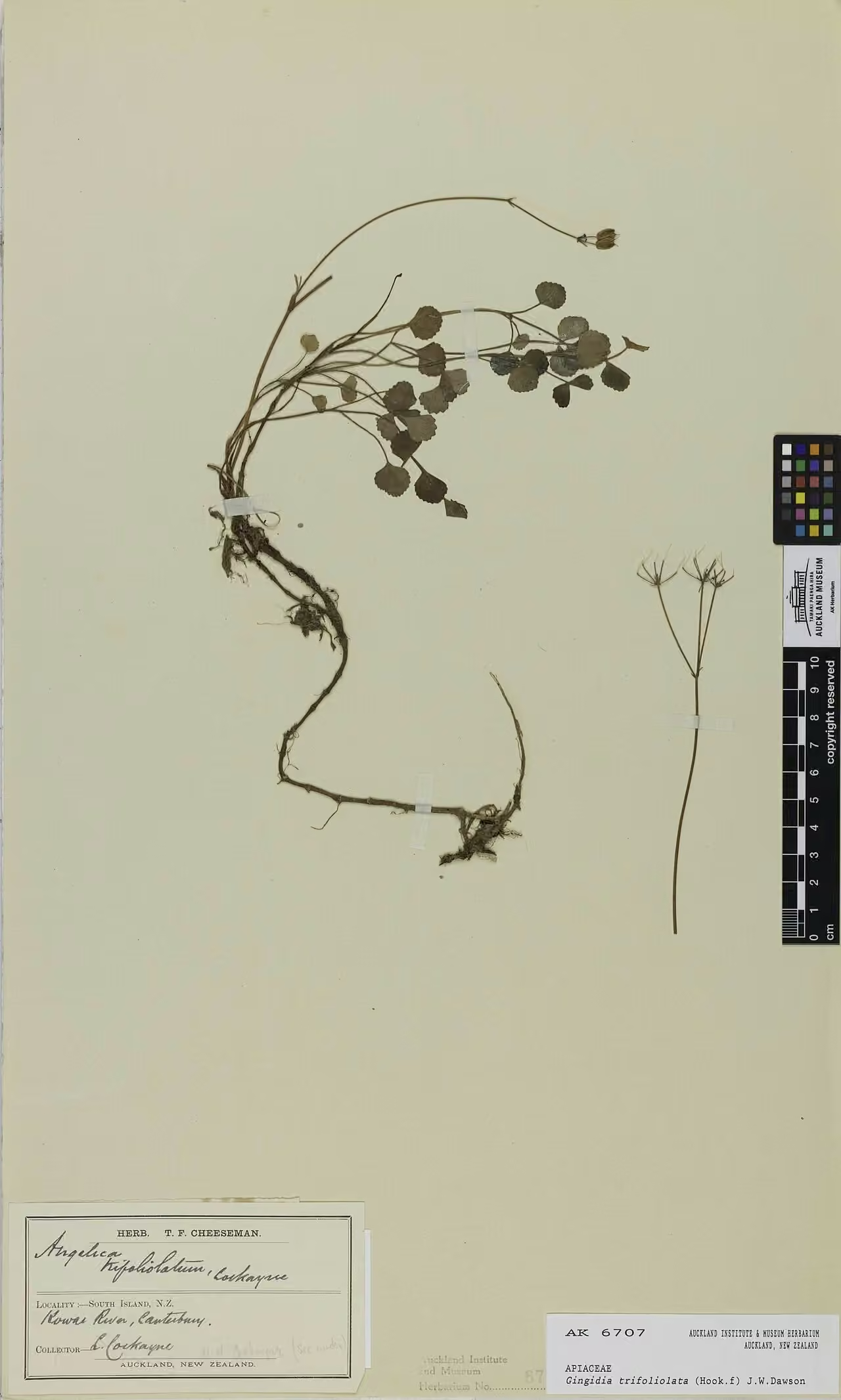
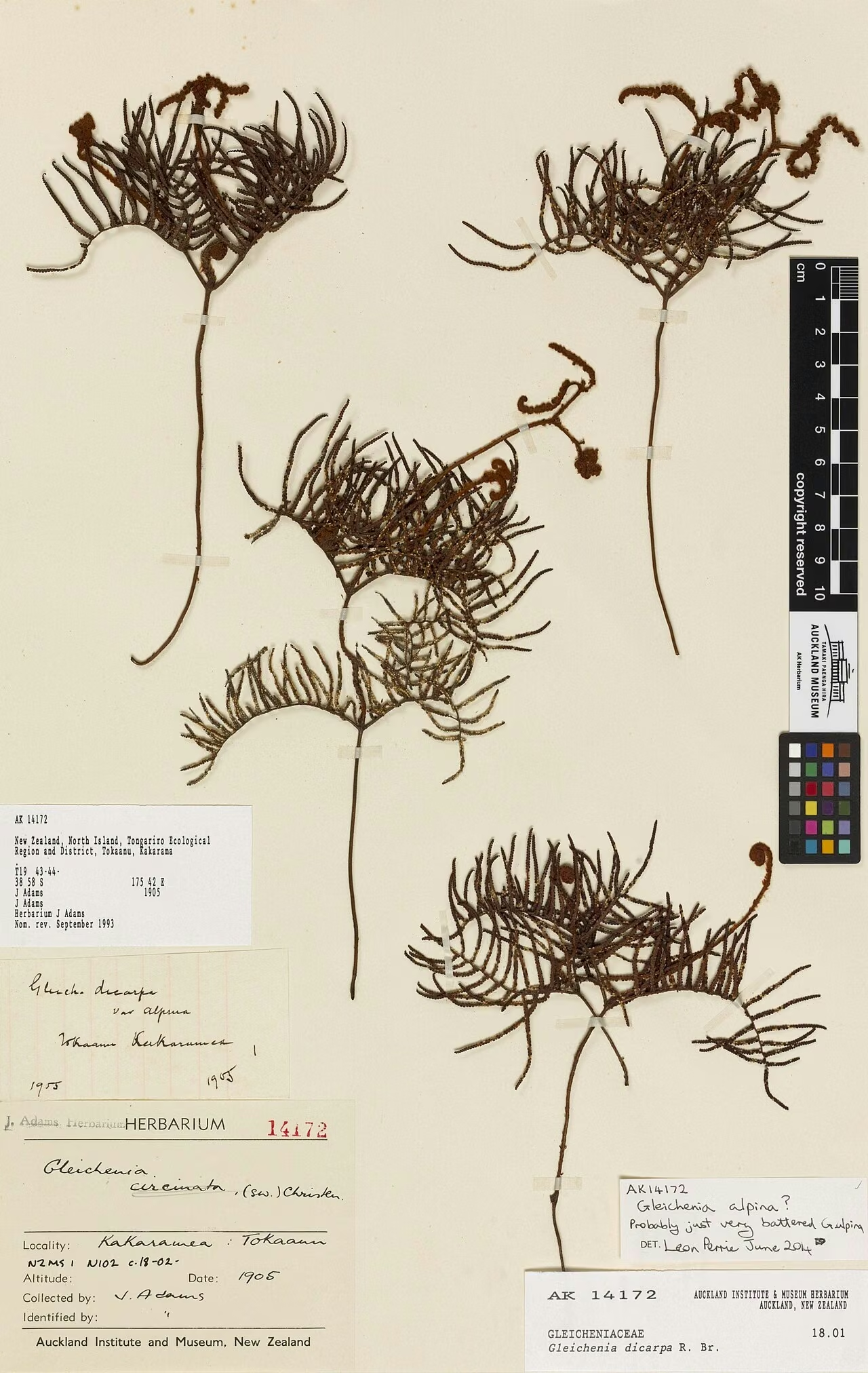
Explore other native plants that share similar characteristics or habitats with Raspwort (Gonocarpus aggregatus), offering further insights into New Zealand's diverse flora. These related species provide context and opportunities for complementary planting in your garden.
Plant Conservation
Gonocarpus aggregatus is ranked Not Threatened (2023). It is widespread across the main islands, Stewart Island and the Chatham Islands.
Its open habitats, such as bogs, sandy places and stony grasslands, are nonetheless vulnerable to drainage, weed invasion and development, so protecting these ecosystems benefits it alongside many other small native plants.
Frequently Asked Questions
How do you identify Gonocarpus aggregatus?
Look for a low wiry herb with opposite, ovate, notched leaves that are hairy on both surfaces, solitary reddish flowers in the leaf axils, and brown, shiny, four-angled fruit about 2 mm long.
What is the difference between Gonocarpus aggregatus and Gonocarpus montanus?
NZPCN notes G. aggregatus has 4 to 8 ribbed fruit without calluses and leaves hairy on both surfaces, while G. montanus has opposite floral bracts and 8-ribbed fruit with calluses.
Where does Gonocarpus aggregatus grow?
It is found on the North, South, Stewart and Chatham Islands in open places on sand, shingle, peat and rock crevices, including bogs and tussock grassland.
What was Gonocarpus aggregatus previously called?
It has been known as Haloragis aggregata, Haloragis depressa and Gonocarpus depressus, among other names, before Anthony Orchard's revision placed it in Gonocarpus.
Sources and Further Reading
The botanical, growing, and conservation details for Raspwort (Gonocarpus aggregatus) on this page draw on the New Zealand plant references below. Consult them for full technical records and the latest distribution data.