Strap Fern
Notogrammitis patagonica
Last updated:
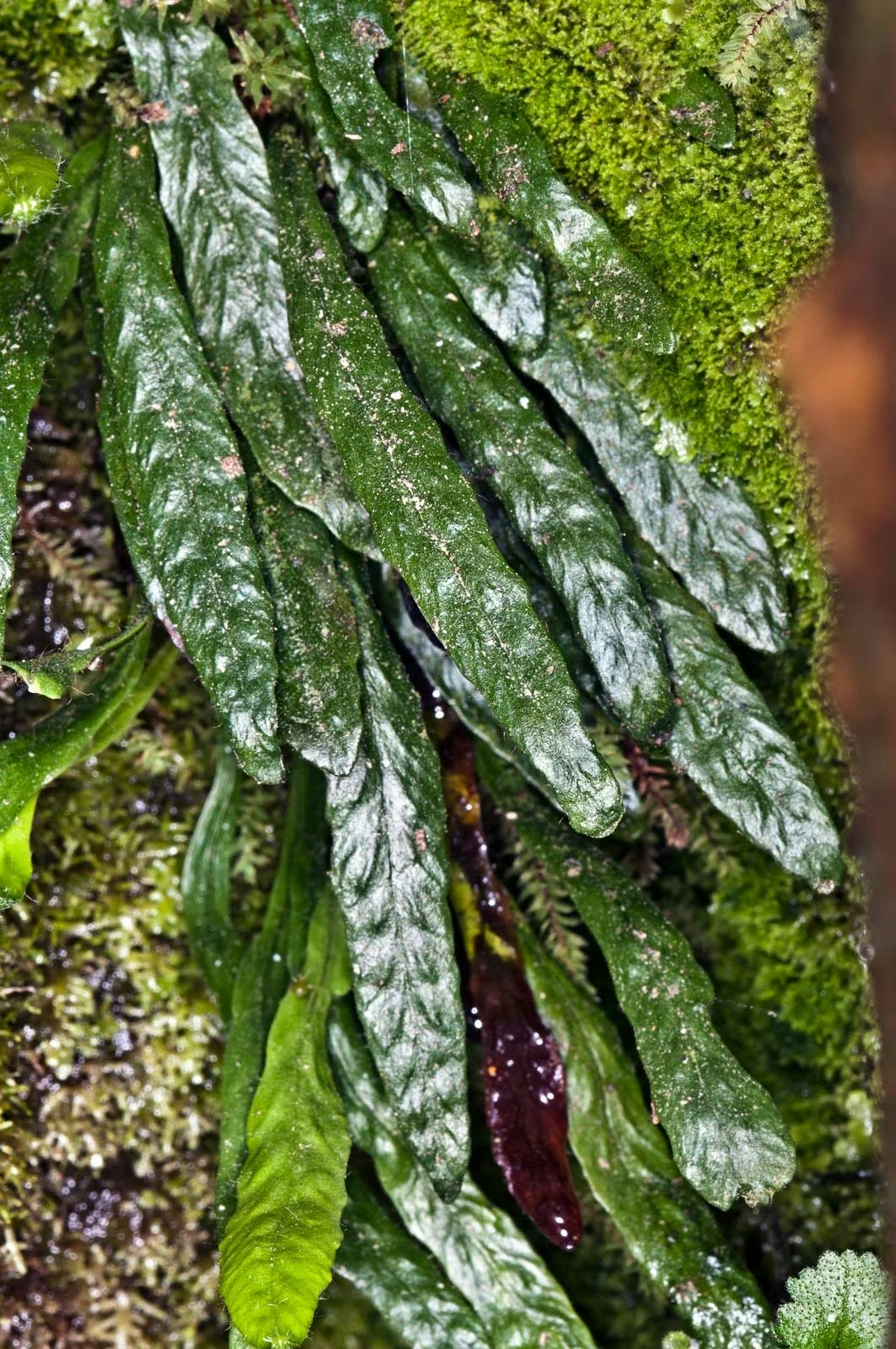
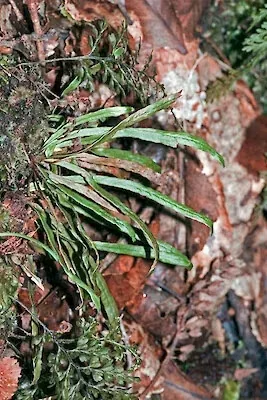
Notogrammitis patagonica (formerly Grammitis patagonica) is a small creeping strap fern of wet rock in New Zealand's mountains. Its long-creeping rhizome sends up undivided, narrow fronds, mostly 2-7 cm long, on distinct black stalks, and both the stalks and the sori bristle with dark red-brown hairs. It grows on sheltered cliffs, rock crevices, talus and damp banks from montane forest up to alpine herbfield at 1635 m, especially on limestone and marble. As its name suggests, it is shared with Patagonia in Chile and Argentina. It occurs in both main islands and on the Chatham and Campbell Islands and is ranked Not Threatened. Explore more native ferns in our native plant guide.
Plant Description
Notogrammitis patagonica has a long-creeping rhizome with pale red-brown, ovate scales up to about 4 mm long. Fronds arise singly along the rhizome rather than in a tight tuft. Each has a distinct black stipe 1-30 mm long and an undivided, narrowly obovate to linear-spathulate blade 6-160 mm long and 2-10 mm wide, though NZPCN gives a typical range of 20-70 mm. The blade is pale green and thin to leathery.
Abundant dark red-brown hairs up to 3 mm long cover the stipe, and further hairs, simple or branched, occur along the margins, midrib and surface. The sori are rounded to elliptic, in 1-17 pairs in the upper half of the frond, and are densely hairy with the same red-brown hairs.
The combination of a long-creeping rhizome, a distinct dark stipe and hairy fronds and sori identifies it. Notogrammitis crassior has smaller, hairless fronds. N. gunnii is very similar but has fronds up to about 95 mm long and shorter, paler hairs on the stipe and sori. N. ciliata and N. billardierei have erect, tufted rhizomes and lack a distinct stipe.
Quick Facts
| Scientific Name | Notogrammitis patagonica |
|---|---|
| Height | Fronds 0.6-16 cm long, mostly 2-7 cm |
| Spread | Creeping mats on rock, size not recorded |
| Water Needs | Wet, seeping rock or damp banks |
| Light | Shade to partial shade on sheltered rock |
| Frost Tolerance | High; reaches alpine herbfield |
| Salt Tolerance | No information available |
| Growth Rate | Slow |
| Lifespan | Perennial |
Climate Best Suited to
Suits cool, wet montane to alpine climates, from the high central North Island ranges to the southern South Island and the subantarctic. It is not suited to warm lowland gardens.
Regional Suitability
| City | Climate Suitability |
|---|---|
| Auckland | Low |
| Wellington | Low |
| Christchurch | Low |
| Dunedin | Medium |
Plant Habitat
In the North Island it is recorded from the Auckland region, the Volcanic Plateau, Gisborne, Taranaki and south to the Tararua Range, mostly between 1000 and 1635 m. In the South Island it extends from western Nelson to Fiordland and Dunedin, and it also occurs on the Chatham Islands, where it descends to about 10 m, and Campbell Island. Outside New Zealand it grows in Chile and Argentina.
NZPCN describes its habitat as montane to alpine sheltered rock outcrops and cliff faces in closed forest, subalpine scrub, talus slopes, tussock grassland and herbfield. It favours wet cliff faces, rock crevices, damp banks and stream margins, prefers limestone and marble, and also grows on andesite, basalt, granite, rhyolite, schist, greywacke, mudstone and sandstone.
Growing Requirements
Soil Requirements
It creeps over rock and through thin moss or humus in crevices, rather than growing in deep soil.
- Limestone and marble outcrops are favoured
- Wet rock faces and crevices of many rock types
- Thin humus on talus and damp banks
Light Requirements
It typically occupies sheltered rock, under forest or scrub cover or in shaded recesses in open country.
- Shaded or sheltered rock faces
- Partial light in alpine herbfield where cloud is frequent
Water Requirements
Constant moisture from seepage, spray or frequent rain is a feature of most of its sites.
- Wet cliff faces and stream margins
- Does not tolerate prolonged drying
Planting and Establishing
Notogrammitis patagonica is not available from nurseries, and NZPCN says it should not be removed from the wild. It is not suitable for general planting.
In a specialist alpine house, a creeping fern of wet limestone would need a cool, permanently moist tufa or limestone block in shade, but no record of successful cultivation was found in the sources consulted.
Ecological Role
Its minute spores are spread by wind, which helps explain its occurrence on scattered rock outcrops across New Zealand, on remote islands and in South America. Its creeping rhizome allows a single plant to spread across a rock face and into crevices.
Specific animal associations are not documented in the sources consulted.
Uses & Significance
Garden Uses
It has no practical role in gardens and should be appreciated in the wild.
- Look for it on wet limestone and marble outcrops in the mountains
- Specialist collections only, from spore-raised plants
Ecological Value
It is one of a small number of ferns that reach alpine herbfield in New Zealand and part of the specialised flora of wet rock.
- Characteristic of limestone and marble outcrops
- Links the floras of New Zealand and Patagonia
- Occurs on the Chatham Islands and Campbell Island
Landscaping Uses
Notogrammitis patagonica is not used in landscaping. Its natural setting, creeping over wet limestone in the mountains, is very difficult to reproduce in a garden.
For a similar look on a shaded, damp rockery, more easily grown nursery ferns are a better choice.
Seasonal Care Calendar
Spring
In alpine sites growth resumes after snow melt, while lowland Chatham Islands plants grow earlier.
- Watch for new fronds along creeping rhizomes
Summer
The main growing period at higher altitude, when fertile fronds develop their hairy sori.
- Search wet cliffs and crevices on limestone
Autumn
Mature sori shed spores to the wind; the precise timing is not documented in the sources consulted.
- Check frond tips for red-brown hairy sori
Winter
Plants at altitude may be buried by snow, which insulates the rock surface.
- No action needed
When to Prune and How Much
Pruning is not needed. Old fronds wither and drop among the moss and rock.
If grown, trim only dead fronds with fine scissors, avoiding the creeping rhizome.
How to Grow Strap Fern
NZPCN states that Notogrammitis patagonica is difficult to propagate and should not be removed from the wild. No tested method for this species was found in the sources consulted. The general approaches below are those used for small creeping rock ferns. Grammitid ferns produce green spores, which in ferns typically remain viable only briefly, so they must be sown fresh. Its long-creeping rhizome does offer a second route, since a rooted section can establish independently. Any attempt should use material already in cultivation and should aim to reproduce the cool, constantly moist, sheltered rock it grows on, ideally with a limestone component.
From Spores
Fertile fronds carry hairy sori in their upper half. Collect a single frond when the sori are plump and dark.
- Release spores onto clean paper overnight in a sealed envelope
- Sow immediately onto sterile, fine peat mixed with crushed limestone
- Keep covered in cool, bright, indirect light
- Mist with sterile water to keep the surface constantly moist
- Move sporelings onto a damp tufa or limestone block once established
By Division of the Rhizome
Because the rhizome creeps, a section with its own roots and a few fronds can be cut from an established cultivated plant.
- Choose a rhizome section with at least two fronds and visible roots
- Cut cleanly and lift with moss and grit attached
- Pin onto moist limestone grit or tufa in a shaded spot
- Keep cool and humid until new fronds appear
Pests & Diseases
No specific pests are recorded. Rock-face plants are vulnerable to physical disturbance such as rock fall, quarrying of limestone outcrops and trampling at popular sites.
In cultivation, warmth and stagnant humidity are likely to cause rot and moulds.
Cultural Significance
No Māori name or traditional use is recorded for Notogrammitis patagonica in the sources consulted.
The species was described by the Danish botanist Carl Christensen as Polypodium patagonicum, moved to Grammitis by Barbara Parris and then to Notogrammitis in 2012. Some early New Zealand botanists treated it as a variety of the common strap fern.
Bonus Tip
When tramping past wet limestone or marble bluffs in the mountains, look for small strap fronds on black, hairy stalks spaced along a creeping stem. If the fronds and sori are covered in dark red-brown hairs, you have very likely found Notogrammitis patagonica; a hairless, tiny spoon-shaped frond suggests N. crassior instead.
Related Plants
Explore other native plants that share similar characteristics or habitats with Strap Fern (Notogrammitis patagonica), offering further insights into New Zealand's diverse flora. These related species provide context and opportunities for complementary planting in your garden.
Creeping Raspwort
Gonocarpus micranthus
Mountain Raspwort
Gonocarpus montanus
Notogrammitis ciliata
Notogrammitis ciliata
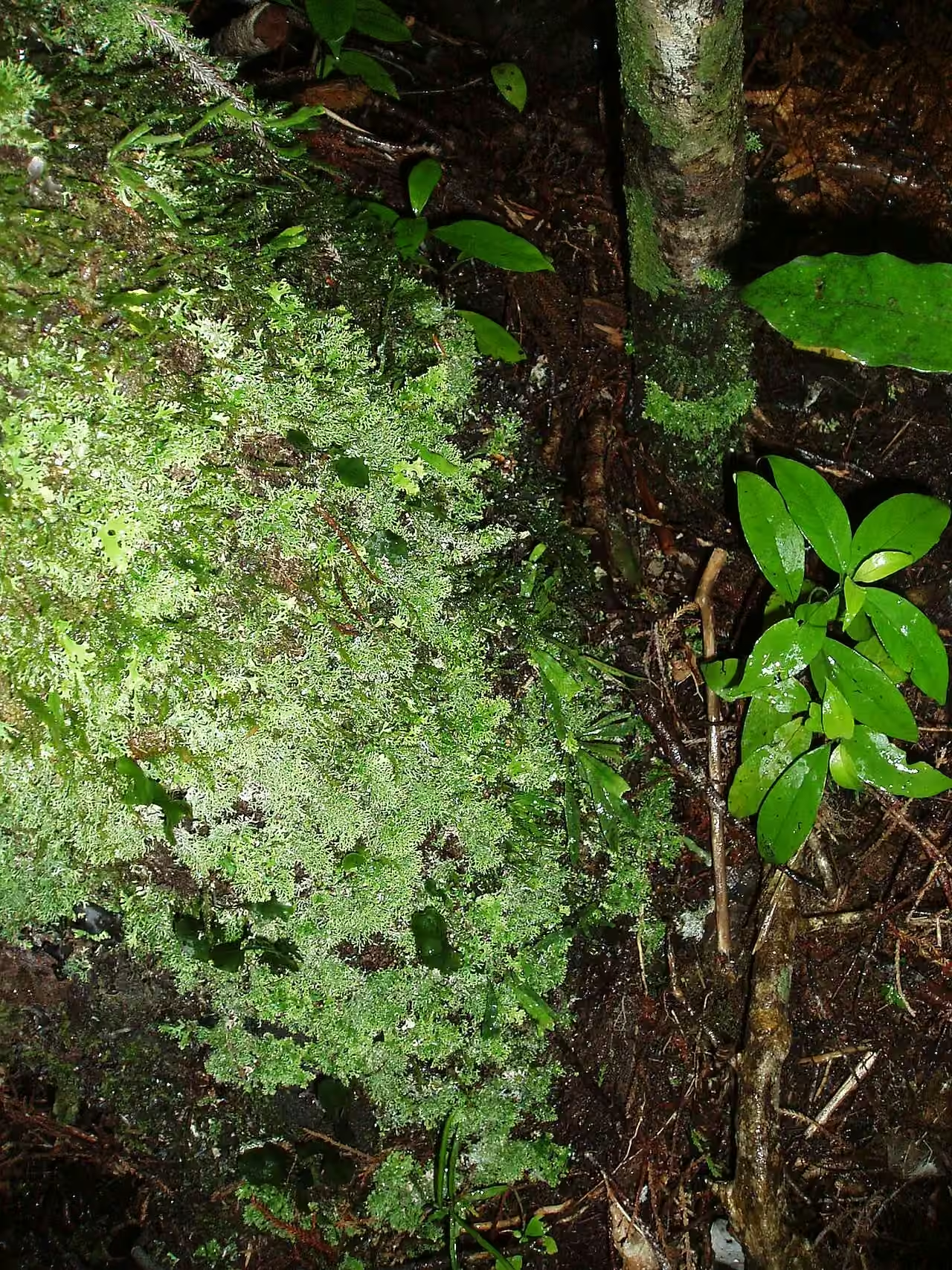
Notogrammitis pseudociliata
Notogrammitis pseudociliata
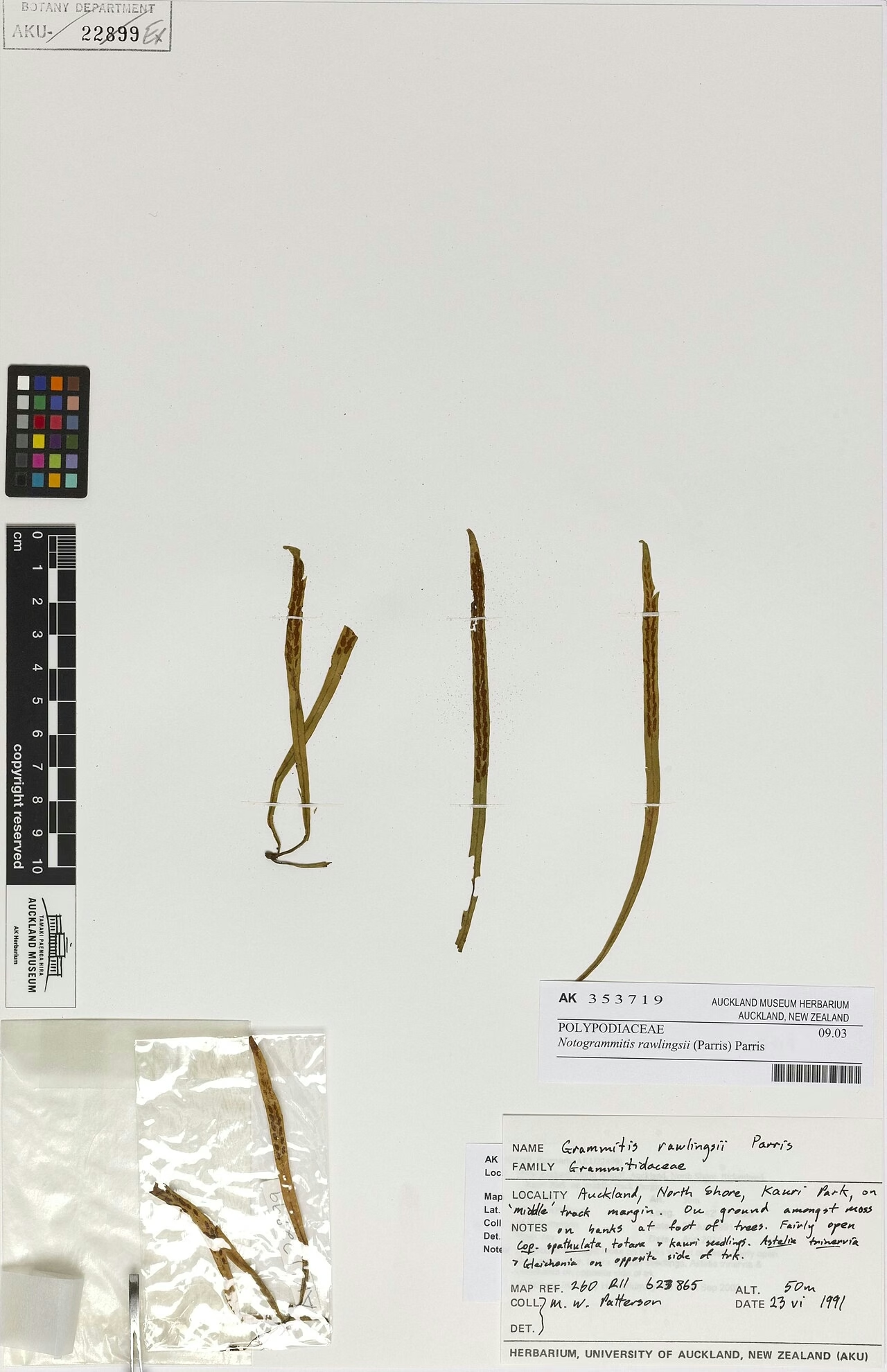
Notogrammitis rawlingsii
Notogrammitis rawlingsii
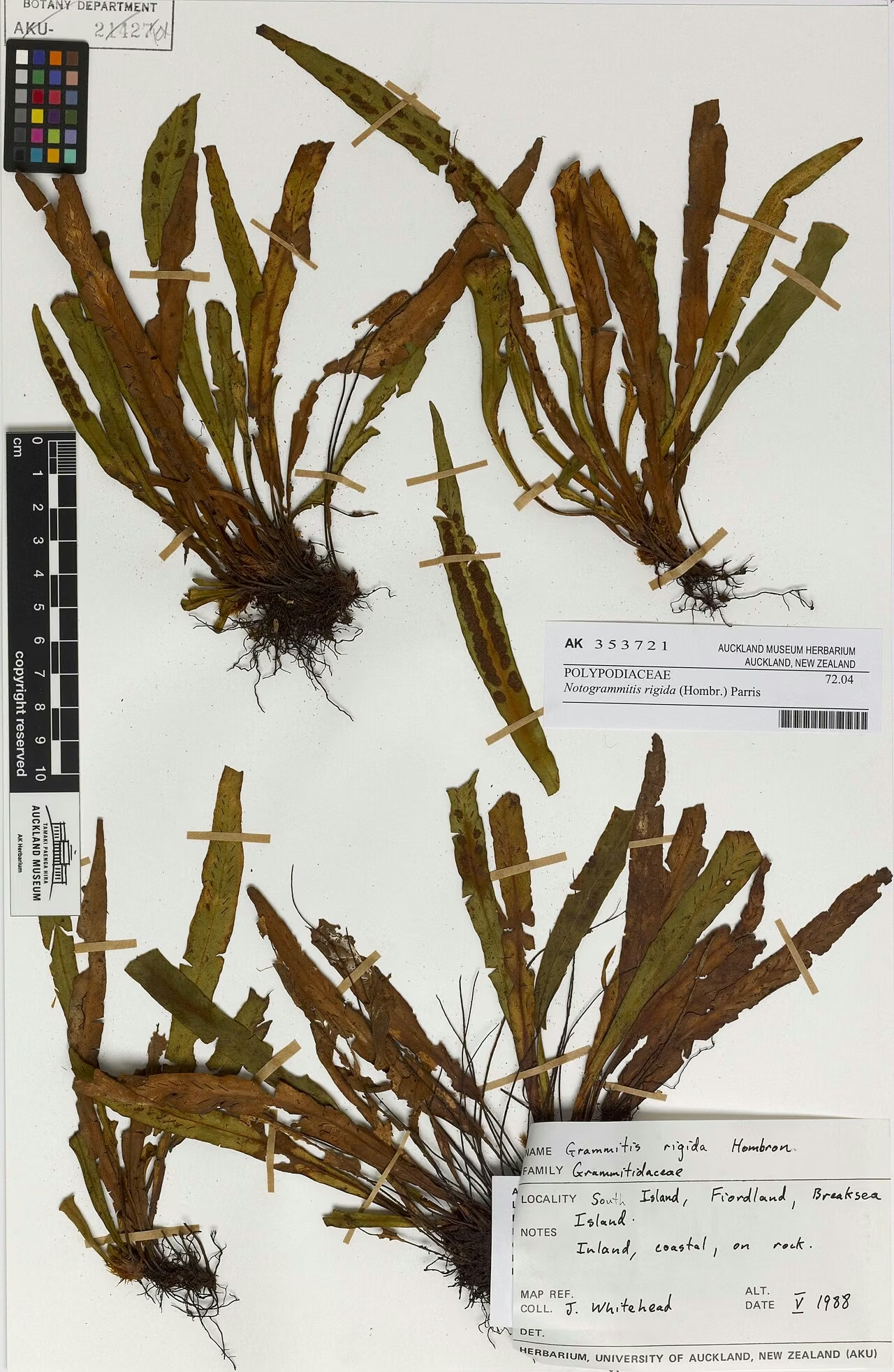
Notogrammitis rigida
Notogrammitis rigida
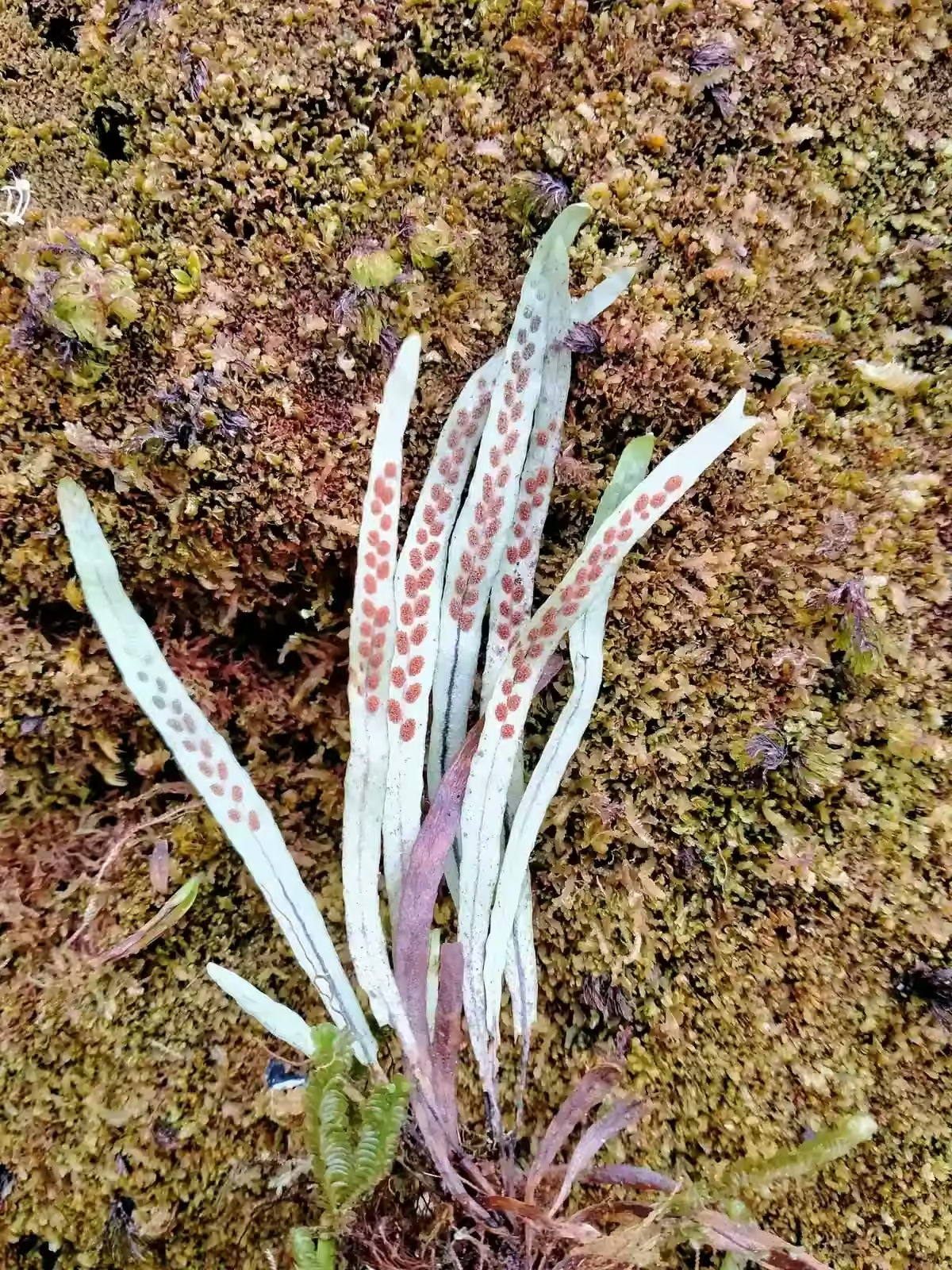
NZ Flora
NZ Flora
Common Strap Fern
Common Strap Fern
Plant Conservation
Notogrammitis patagonica is ranked Not Threatened (2023) with the qualifier Secure Overseas, reflecting its occurrence in South America. It is considered Regionally Not Threatened in Otago and Regionally Data Deficient in Wellington.
Protecting limestone and marble outcrops and their surrounding forest and grassland from quarrying and weed invasion helps this and other specialist rock plants.
Frequently Asked Questions
Why is it called patagonica?
The name refers to Patagonia. The species was first described from South America and also grows in Chile and Argentina, as well as in New Zealand.
Where does Notogrammitis patagonica grow in New Zealand?
It grows on wet cliff faces, rock crevices, talus slopes and damp banks from montane forest to alpine herbfield in both main islands, and on the Chatham and Campbell Islands.
How do you tell Notogrammitis patagonica from N. crassior?
Both creep over rock in the mountains, but N. patagonica has hairy fronds and dark red-brown hairs in its sori, while N. crassior has small hairless fronds with sori clustered at the tips.
Is Notogrammitis patagonica rare?
No. It is ranked Not Threatened in New Zealand with the qualifier Secure Overseas, although it is listed as Regionally Data Deficient in the Wellington region.
Sources and Further Reading
The botanical, growing, and conservation details for Strap Fern (Notogrammitis patagonica) on this page draw on the New Zealand plant references below. Consult them for full technical records and the latest distribution data.