Bidibid
Acaena buchananii
Last updated:
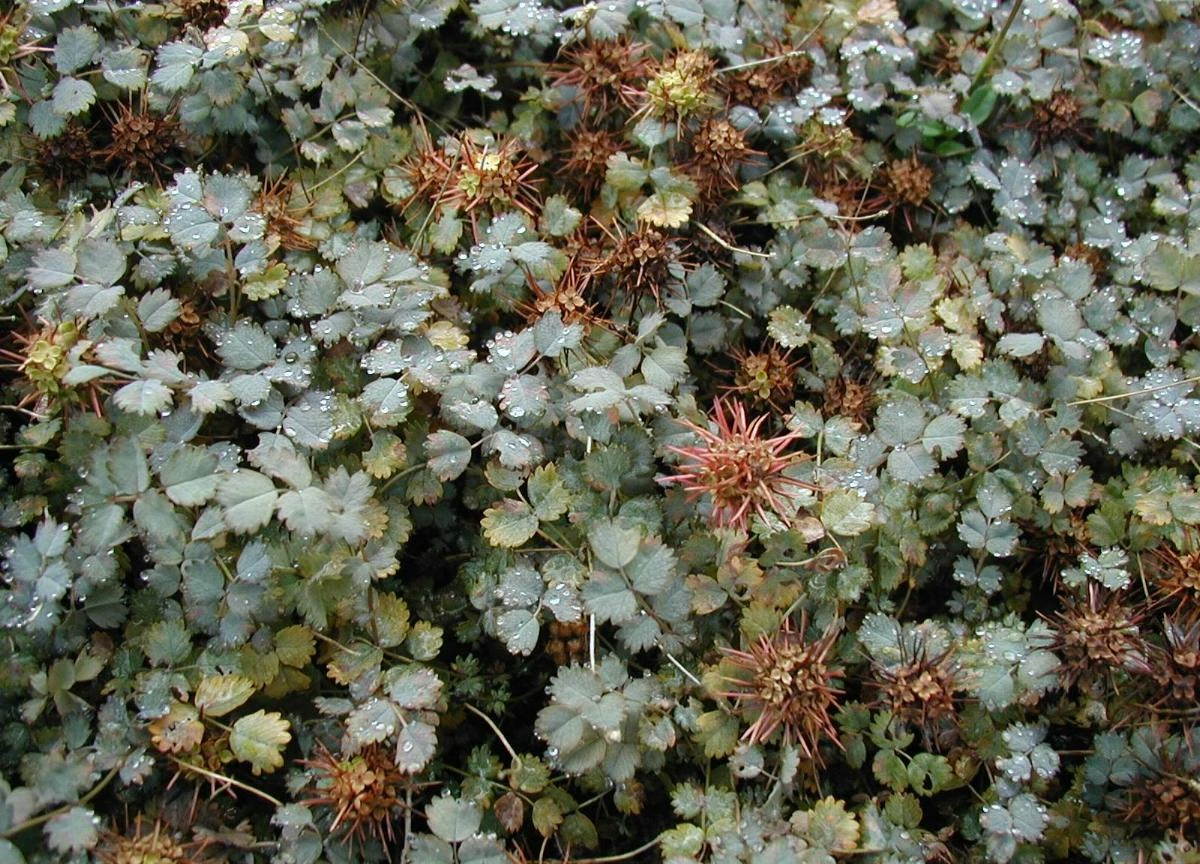
Acaena buchananii is a low, mat-forming bidibid (piripiri) endemic to the eastern South Island, from Marlborough to Otago. It hugs the ground at about 2 cm tall but can spread into a loose mat up to 1 m across, with dull milky grey-green, finely toothed leaves. In early summer it produces white flower heads that ripen into burrs bearing four erect yellow or red spines. Once locally common in short dry tussockland, river terraces and lightly grazed pasture of the inland basins, it is now ranked At Risk - Declining because much of that dry lowland habitat has been converted to farmland, irrigation, orchards and vineyards. Explore more native ground covers in our native plant guide.
Plant Description
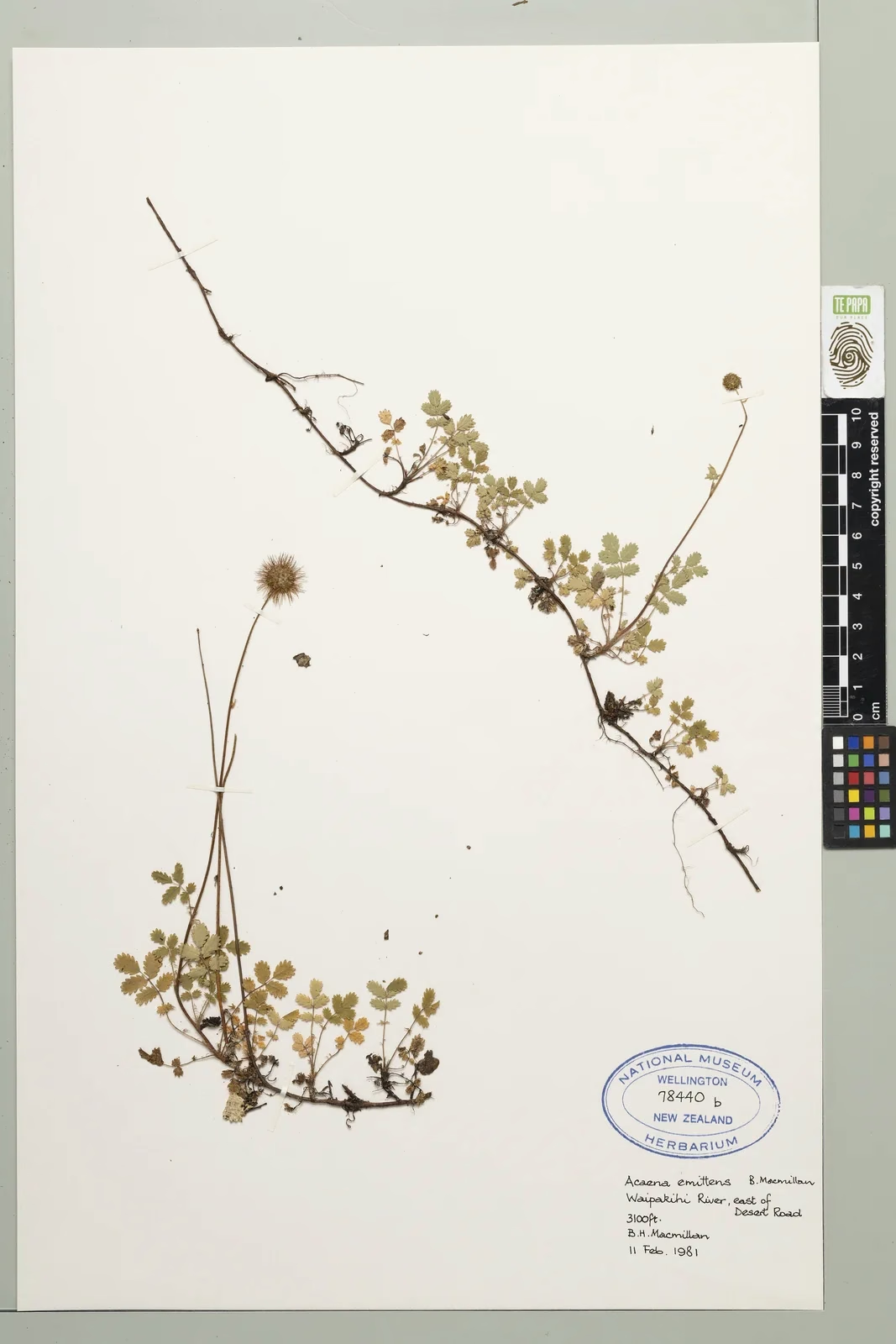
Acaena buchananii is a prostrate, trailing perennial herb in the rose family (Rosaceae). Its slender stems, about 1.2 mm thick and up to 10 cm long, are sparsely hairy and root at the nodes, so a single plant gradually knits into a loose mat up to 1 m in diameter while rarely standing more than 2 cm high. The overall colour is a distinctive dull, milky grey-green.
The leaves are odd-pinnate, 15 to 90 mm long, with 11 to 13 broad, egg-shaped leaflets. Each leaflet has a deeply serrated margin with 7 to 14 blunt or rounded teeth, and each tooth ends in a fine hair. Flowers are white and gathered into a stemless head of about 10 small florets, each with four sepals, two white-anthered stamens and two white styles. After flowering the heads develop into roughly cone-shaped fruits, each with four yellow or red spines up to 15 mm long, tipped with backward-pointing hairs. The fruits dry pale brown to translucent cream when ripe.
The closest look-alike is Acaena tesca. NZPCN separates A. buchananii by its more compact growth with densely tufted leafy stems, its pale milky green or grey foliage, and its compressed seed heads with erect yellow spines. A grey-leaved, red-spined form has been named var. picta, but its status is unresolved.
Quick Facts
| Scientific Name | Acaena buchananii |
|---|---|
| Height | About 2 cm (foliage), seed heads a little higher |
| Spread | Loose mats up to 1 m across |
| Water Needs | Low; adapted to dry inland basins |
| Light | Full sun |
| Frost Tolerance | High; grows in frosty inland basins up to about 800 m |
| Salt Tolerance | Low; an inland species, salt tolerance not recorded |
| Growth Rate | Moderate to fast once established |
| Lifespan | Perennial |
Climate Best Suited to
Suited to the dry, continental climate of the eastern South Island inland basins, with hot summers, hard winter frosts and low rainfall.
Regional Suitability
| City | Climate Suitability |
|---|---|
| Auckland | Low |
| Wellington | Medium |
| Christchurch | High |
| Dunedin | Medium |
Plant Habitat
This bidibid is endemic to the eastern South Island, from Marlborough south to Otago. It grows from near sea level up to about 800 m, in lowland to montane country, but is centred on the inland basins such as those of Canterbury and Central Otago.
Its habitat is short, dry tussockland and turf, montane riverbeds and the stony margins of tussock grassland. It can be locally common in closely grazed, unimproved pasture, where grazing keeps taller grasses from shading it out, but it does not persist where land has been cultivated, oversown or irrigated.
Growing Requirements
Soil Requirements
In the wild it grows on thin, stony, free-draining soils of river terraces and dry basin floors, which are low in fertility.
- Use a gritty, free-draining soil
- Avoid rich, heavily fertilised beds that favour competing grasses
- Gravel or stony ground suits its natural habit
Light Requirements
A plant of open, short turf, it needs full sun and does poorly when overtopped by taller plants.
- Plant in an open, sunny position
- Keep taller grasses and weeds from shading the mat
Water Requirements
It is adapted to low rainfall and summer drought in the inland basins. Waterlogging is more of a risk than dryness.
- Water only while establishing
- Ensure winter drainage is good
- Do not irrigate established plants heavily
Planting and Establishing
Plant rooted pieces or potted plants in autumn or spring into weed-free, sunny, stony ground. Space plants about 30 to 50 cm apart if you want them to knit into a continuous mat.
Because the burrs cling to clothing and pet fur, choose a spot away from paths where people or dogs regularly brush past, such as a rock garden edge or a dry bank.
Ecological Role
The spiny fruits are built for animal dispersal. NZPCN notes they attach to fur, feathers and clothing, and may also be moved by wind and by seed-eating animals. In pre-human New Zealand, ground-feeding birds are likely to have been the main carriers.
As a low, spreading mat it helps bind bare stony ground in dry tussockland and riverbed habitats, sharing that role with other small native herbs of the inland basins.
Uses & Significance
Garden Uses
A good choice for a dry, sunny rock garden or gravel garden in eastern South Island conditions, and for restoring dry tussockland plantings.
- Rock gardens and scree beds
- Gravel and dry-stone wall edges
- Dryland restoration plantings in Canterbury and Otago
Ecological Value
Growing this declining species helps keep a characteristic plant of the dry eastern South Island in the landscape.
- Supports a declining endemic species
- Covers bare stony ground in dryland plantings
- Part of the natural short tussock turf community
Landscaping Uses
Use its milky grey-green foliage as a contrast against darker native groundcovers or between stones in a dryland garden. In flower and fruit, the erect yellow or red spines add a second season of colour.
It looks most natural combined with other dryland natives such as small tussocks, scabweeds and low coprosmas on a stony, sunny bank.
Seasonal Care Calendar
Spring
New leafy shoots extend from the mat as the weather warms.
- Weed around plants before the growth flush
- Plant rooted pieces now
Summer
Flowering runs from November to December, and the burrs begin to form from December.
- Watch for the white flower heads
- Water young plants during long dry spells
Autumn
Fruiting continues through to April, when the dry, pale burrs readily detach.
- Collect ripe burrs for seed if wanted
- Check pets and socks after walking nearby
Winter
The mat sits quietly through the hard frosts of inland winters.
- Keep drainage clear
- No feeding needed
When to Prune and How Much
No regular pruning is needed. If the mat spreads beyond where you want it, simply cut or pull back the trailing stems at the edge.
Trimming off the developing seed heads after flowering reduces the number of burrs if they are a nuisance near paths.
How to Grow Bidibid
NZPCN describes Acaena buchananii as very easy to propagate from rooted pieces, which is by far the simplest method because the trailing stems root at their nodes as they grow. Seed can also be used, which is the better choice for restoration projects that want genetic diversity, but it is slower. Because the species is At Risk - Declining, use material from cultivated plants or collect sparingly with landowner permission, and keep plantings in their natural eastern South Island range where possible.
By Division of Rooted Pieces
Rooted sections can be cut from the edge of a mat at almost any time of year, though spring and autumn give the best results because the soil is moist and temperatures are mild.
- Find a stem at the edge of the mat that has rooted into the soil
- Cut it free with a few centimetres of stem either side of the roots
- Pot it into a gritty, free-draining mix or plant it straight into the garden
- Water in and keep just moist until new growth appears
From Seed
The burrs ripen between December and April. Seed can be sown fresh, although germination of Acaena seed is often irregular, so be patient.
- Collect dry, pale brown burrs in late summer or autumn
- Sow them on the surface of a gritty seed mix and cover lightly
- Leave the tray outdoors in a sheltered, sunny place over winter
- Prick out seedlings once they have several leaves and grow on in pots
Pests & Diseases
No significant pests or diseases are recorded for this species. In gardens, the main problems are being smothered by vigorous grasses and rotting in heavy, poorly drained soil.
In the wild, the main threat is habitat loss rather than pests or disease.
Cultural Significance
Bidibid species in general are known as piripiri in te reo Māori, and the English name bidibid is derived from it. No traditional Māori use specific to Acaena buchananii is recorded in the sources consulted.
The species name honours John Buchanan (1819 to 1898), a New Zealand botanist and scientific artist who collected and illustrated many native plants, particularly in Otago.
Bonus Tip
If you want this plant for its foliage but not its burrs, grow it in a dry rock garden and clip off the flower heads in early summer; you keep the grey-green mat and avoid the spiny fruit that cling to socks and pets.
Related Plants
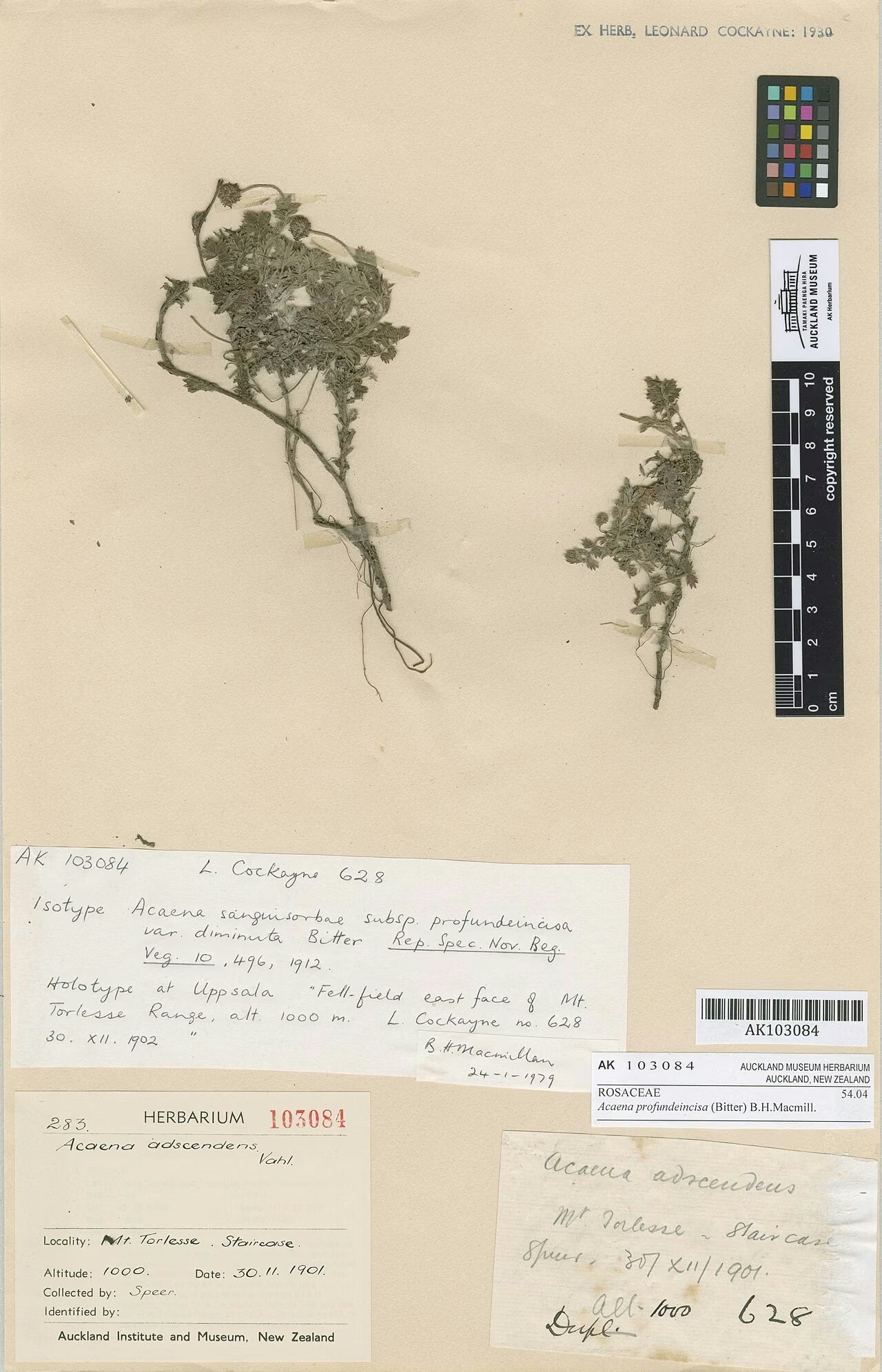
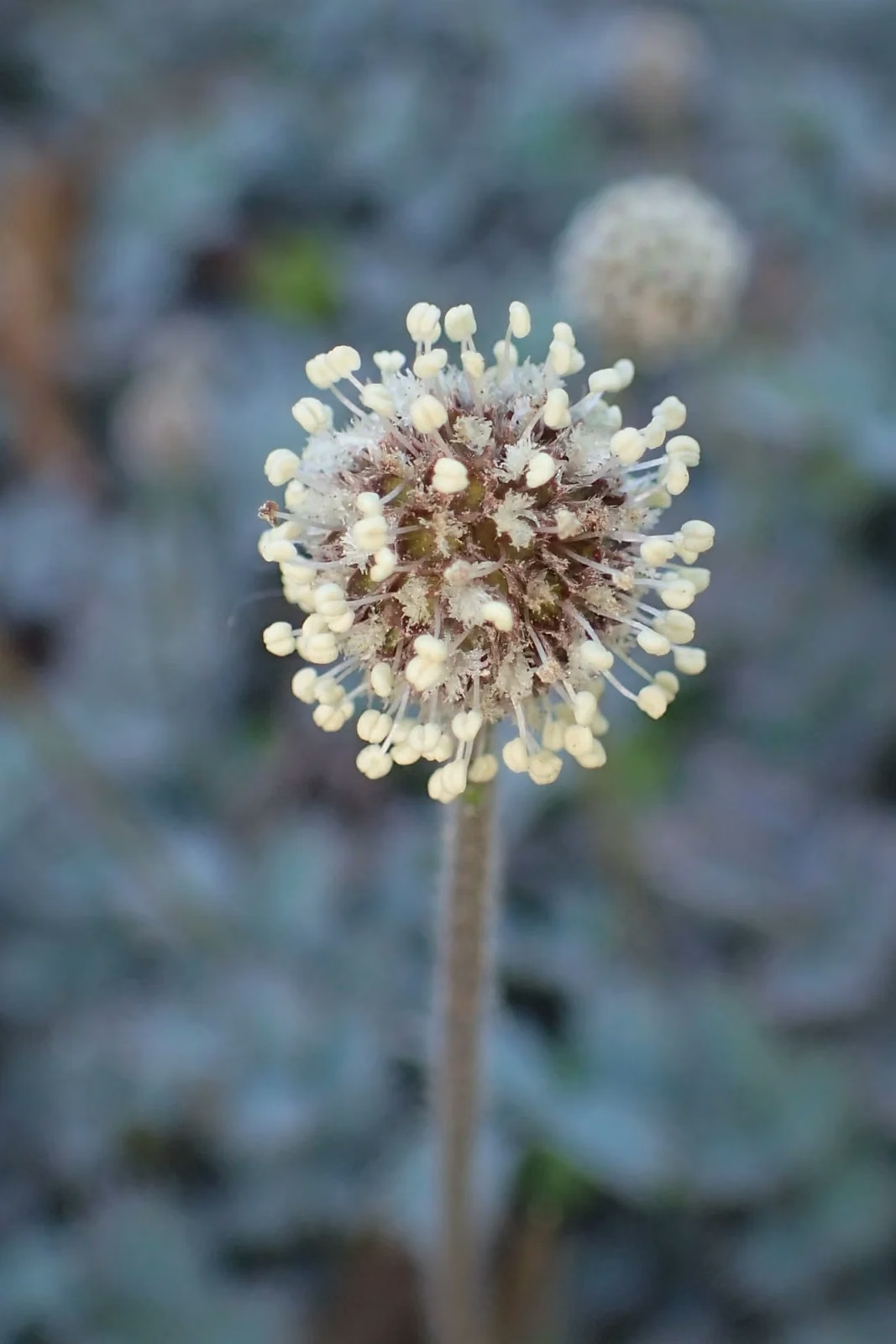
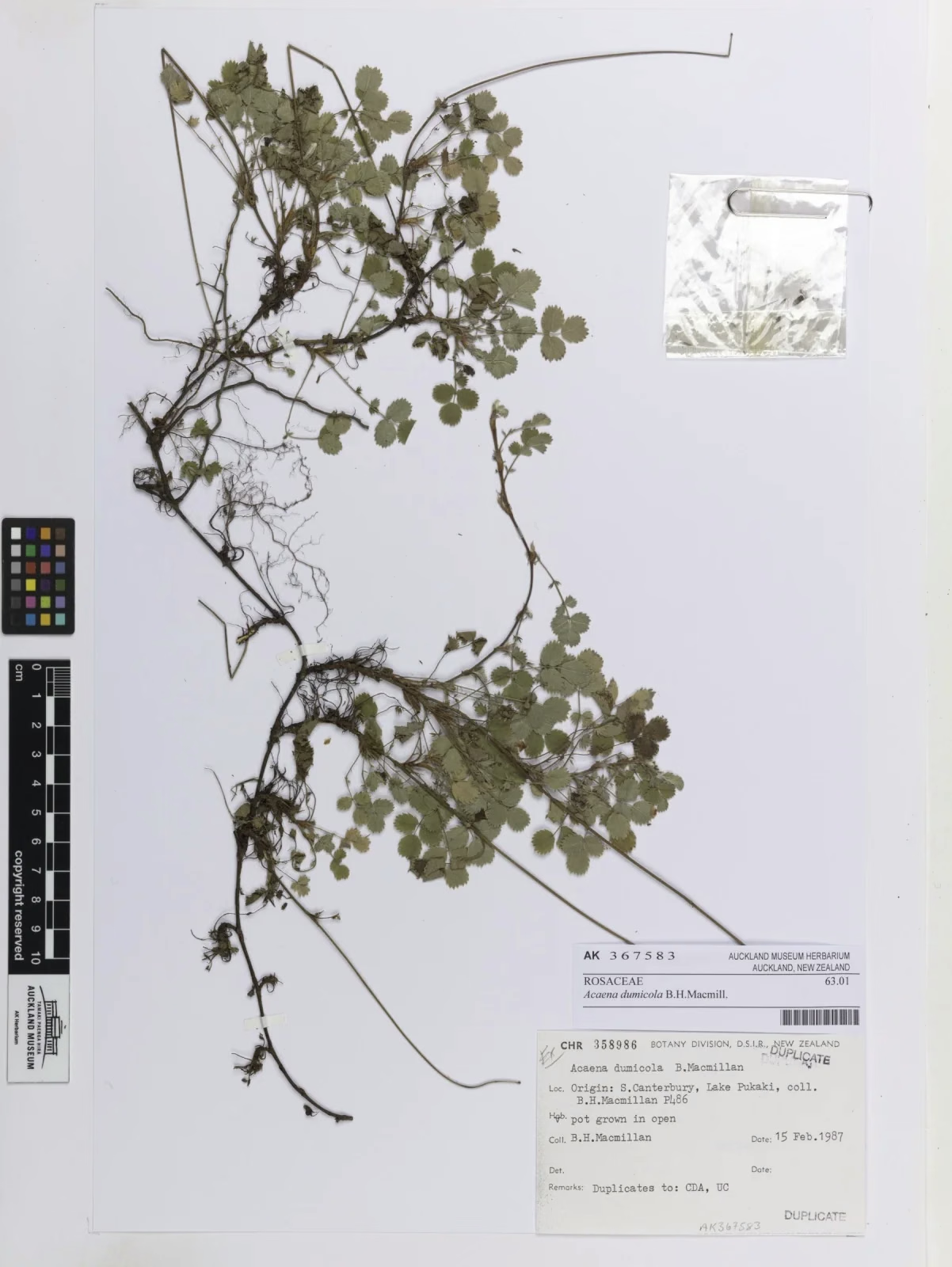
Explore other native plants that share similar characteristics or habitats with Bidibid (Acaena buchananii), offering further insights into New Zealand's diverse flora. These related species provide context and opportunities for complementary planting in your garden.
Plant Conservation
Acaena buchananii is ranked At Risk - Declining (2023), with qualifiers noting that data on its distribution and trend are poor. In Otago it is considered Regionally Vulnerable. NZPCN identifies habitat destruction through cultivation, oversowing, irrigation, and orchard and vineyard development as the main threat.
Protecting remaining areas of short, unimproved dry tussockland and riverbed habitat is the most useful action, along with growing locally sourced plants in dryland restoration projects across Canterbury and Otago.
Frequently Asked Questions
Is Acaena buchananii a weed or a native plant?
It is a native New Zealand plant, endemic to the eastern South Island from Marlborough to Otago, and is ranked At Risk - Declining.
Why do bidibid burrs stick to socks and clothing?
Each fruit carries four spines tipped with backward-facing hairs, which catch in fur, feathers and fabric so the seed is carried away from the parent plant.
What colour are the spines on Acaena buchananii?
The spines are usually yellow, sometimes red, and up to 15 mm long, held erect on compact seed heads above the grey-green foliage.
How do you propagate Acaena buchananii?
NZPCN describes it as very easy to grow from rooted pieces, because the trailing stems root where they touch the ground.
Sources and Further Reading
The botanical, growing, and conservation details for Bidibid (Acaena buchananii) on this page draw on the New Zealand plant references below. Consult them for full technical records and the latest distribution data.