Raspwort
Gonocarpus incanus
Last updated:
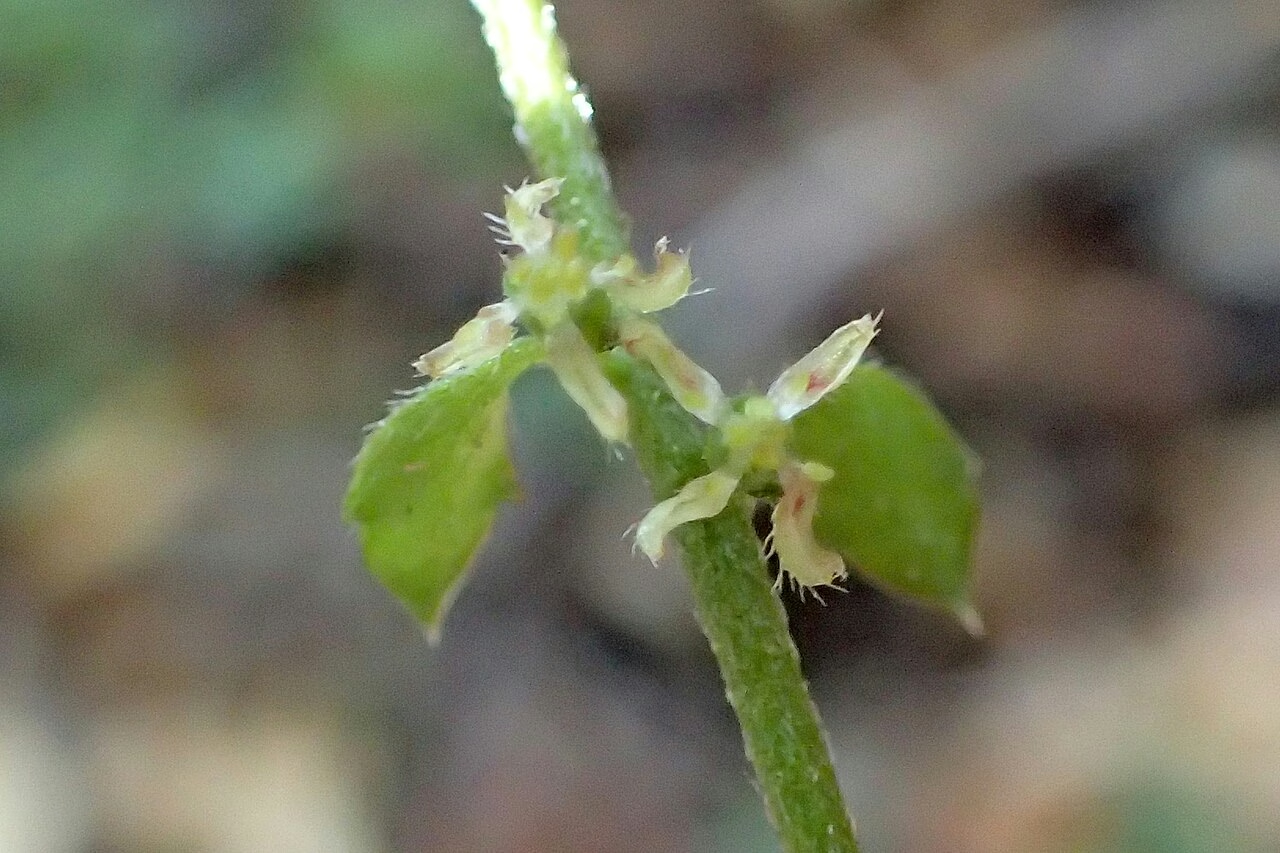
Gonocarpus incanus is a wiry, erect or loosely branched herb up to 40 cm tall in the water milfoil family (Haloragaceae), endemic to New Zealand. It is rough to the touch and greyish from stiff white hairs pressed flat against its stems and leaves, which gives it the name incanus, meaning hoary. Small opposite, toothed leaves and spikes of tiny erect flowers with hooded petals appear in early summer, followed by pale, ribbed fruits. It grows on dry, hard, often rocky ground in the North Island and the northern South Island. It is ranked Not Threatened. The Flora of New Zealand records the vernacular name piripiri for it. Explore more native ground covers in our native plant guide.
Plant Description
Gonocarpus incanus is a wiry herb, erect or diffusely branched, up to 40 cm tall. Its obscurely four-angled stems are scabrid, covered in stiff white hairs pressed flat against the surface. The leaves are opposite on very short stalks and elliptic-lanceolate, ranging from about 8 mm long with two or three notches in the cartilaginous margin to 15 mm long with up to six sharp teeth on each side, and are hairy on both surfaces.
The flowers are erect, about 3 mm long and strongly protandrous. They have triangular sepals, hooded petals with stiff hairs on the keels, four stamens and four staminodes, and an eight-angled ovary. The fruit is pale, about 1.25 mm long, ovoid and constricted below the sepals, with eight distinct ribs that keep some stiff hairs and faces that are minutely papillose and wrinkled. Flowering runs from November to January and fruiting from November to March.
It has alternate primary floral bracts throughout, which separates it from Gonocarpus micranthus with its deciduous bracts, hairless stems and nodding, callus-free fruit. The Flora notes that it is more erect and bristly than the related species it treated as Haloragis procumbens, and has paler, more patterned fruit with hairs on the ribs.
Quick Facts
| Scientific Name | Gonocarpus incanus |
|---|---|
| Height | Up to 0.4 m |
| Spread | Small clump, about 0.1-0.3 m |
| Water Needs | Low; dry, hard ground |
| Light | Full sun |
| Frost Tolerance | Light frosts; a mainly northern species |
| Salt Tolerance | No information available |
| Growth Rate | Moderate |
| Lifespan | Perennial |
Climate Best Suited to
Suits warm-temperate northern climates with dry summers on exposed ground, extending south to the northern South Island.
Regional Suitability
| City | Climate Suitability |
|---|---|
| Auckland | High |
| Wellington | Medium |
| Christchurch | Low |
| Dunedin | Low |
Plant Habitat
Gonocarpus incanus is endemic to New Zealand. The Flora of New Zealand records it from the North Island and the northern part of the South Island, noting that it is absent from many districts within that range. It is regionally Not Threatened in Northland, Auckland and Wellington, and herbarium collections come from Northland, including the Whangaroa Harbour.
It grows on dry, hard ground, often on exposed rocky hills; the original collection was from dry, exposed rocky hills at Whangaroa. These are open sites with poor soil where taller vegetation is sparse.
Growing Requirements
Soil Requirements
It favours infertile, compacted or rocky soils that dry out in summer.
- Poor clay, gravel or rocky soil
- Free-draining
- No fertiliser needed
Light Requirements
Its habitats are open and exposed, with little shade.
- Full sun
- Keep clear of taller shrubs
Water Requirements
Once established it copes with dry summers on hard ground.
- Water only while establishing
- Avoid waterlogged soil
Planting and Establishing
Plant in an open, sunny bank or rock garden with poor soil, where taller plants will not overshadow it. It suits restoration of eroded clay banks and gumland edges in the north.
Plant in autumn or early winter so roots establish before summer drought.
Ecological Role
Its flowers are strongly protandrous, releasing pollen before the stigmas are receptive, which favours cross-pollination; the stigmas bear long multicellular hairs that suit trapping wind-borne pollen. NZPCN notes that its fruit is wind dispersed.
It is part of the low herb layer of open, infertile northern vegetation, such as gumland heath where mānuka, tangle fern and sedges dominate, filling gaps on bare ground.
Uses & Significance
Garden Uses
A modest, wiry herb for naturalistic plantings on difficult dry ground.
- Dry banks and rock gardens
- Restoration of poor clay soils
- Native meadow and heath plantings
Ecological Value
It contributes to plant diversity on infertile, open northern sites.
- Endemic to New Zealand
- Colonises bare, hard ground
- Part of low heath and scrub communities
Landscaping Uses
Its greyish, bristly stems and fine toothed leaves add texture among low native shrubs and grasses on a dry bank.
Combine with mānuka, Pimelea and small native grasses to suggest northern heathland.
Seasonal Care Calendar
Spring
New shoots grow up from the base as temperatures rise.
- Weed competing grasses
- Check plants after winter rain
Summer
Flowering runs from November to January, with fruits ripening into March.
- No watering needed once established
- Collect fruit as it ripens
Autumn
Fruit dispersal finishes and stems begin to brown.
- Sow seed
- Plant new specimens
Winter
The plant persists at low height through winter.
- Cut back old stems in late winter
- Ensure good drainage
When to Prune and How Much
Cut back old, untidy stems to near the base in late winter to encourage fresh growth.
Otherwise no pruning is needed; avoid fertilising, which may make it floppy.
How to Grow Raspwort
No published propagation guide for Gonocarpus incanus was found, and it is seldom grown. It produces abundant tiny one-seeded fruits from November to March, which are dispersed by wind, so seed is the most practical method. Established clumps that have formed several stems at the base may also be split carefully. Because it is common and widespread in the north, material can usually be obtained with landowner permission without harming wild populations.
From Seed
Collect the pale, ribbed fruits as soon as they are ripe, before wind carries them away. Each fruit usually contains a single seed with a hard pericarp.
- Cut fruiting stems into a paper bag between December and March.
- Shake out and separate the tiny fruits from chaff.
- Sow on the surface of a free-draining seed mix and press in lightly.
- Keep in a sunny, sheltered place and moist until germination.
- Pot seedlings in small groups once they are large enough to handle.
- Plant out into a dry, sunny site in autumn.
By Division
Older plants with several stems arising from the base can be divided, keeping roots on each piece.
Division is less productive than seed and can set plants back, so treat it as a way to move or share an existing plant rather than to raise large numbers. Keep divisions lightly watered until they show new growth.
- Lift a cultivated clump in late winter.
- Split it into pieces each with roots and stems.
- Replant immediately in poor, free-draining soil and water in.
Pests & Diseases
No pests or diseases specific to Gonocarpus incanus are recorded. Its stiff hairs probably make it unattractive to many browsers, although this has not been documented.
The main risk in gardens is rot in rich, wet soil and smothering by vigorous grasses.
Cultural Significance
The Flora of New Zealand records piripiri as a vernacular name for Gonocarpus incanus, a name more commonly associated with the bidibidi (Acaena). No traditional Māori use specific to this species is recorded in the sources consulted.
It was first described by Allan Cunningham, who collected on dry rocky hills at Whangaroa, and was long treated within the Australian Haloragis tetragyna before being recognised as a separate endemic species.
Bonus Tip
Use a hand lens on the ripe fruit to identify it: an ovoid fruit with eight ribs carrying stiff hairs and two or three small calluses between the ribs points to Gonocarpus incanus rather than its hairless relative G. micranthus.
Related Plants
Explore other native plants that share similar characteristics or habitats with Raspwort (Gonocarpus incanus), offering further insights into New Zealand's diverse flora. These related species provide context and opportunities for complementary planting in your garden.
Gingidia trifoliolata
Gingidia trifoliolata
Alpine Tangle Fern
Gleichenia alpina
Glossostigma cleistanthum
Glossostigma cleistanthum
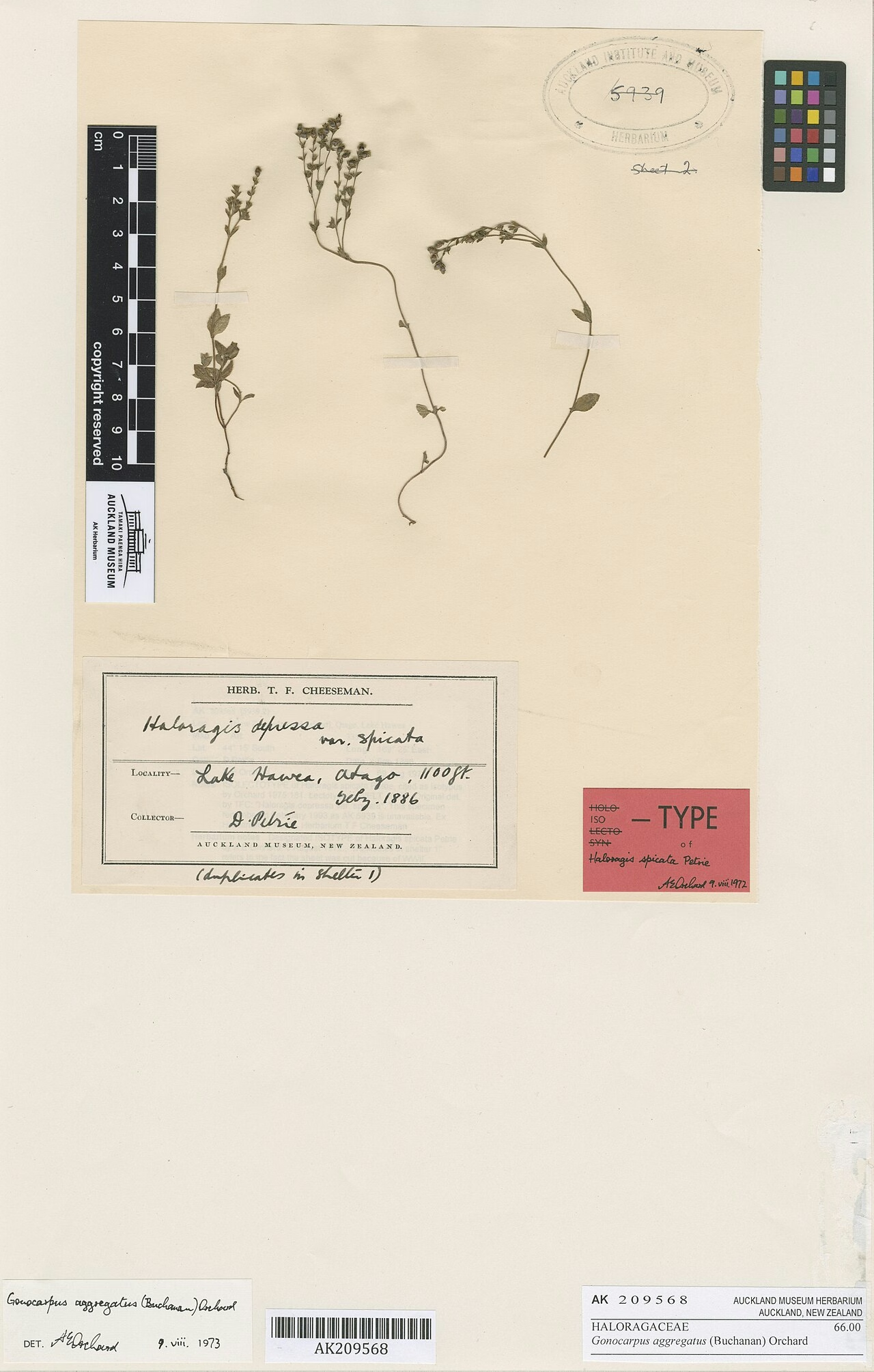
Gonocarpus aggregatus
Gonocarpus aggregatus
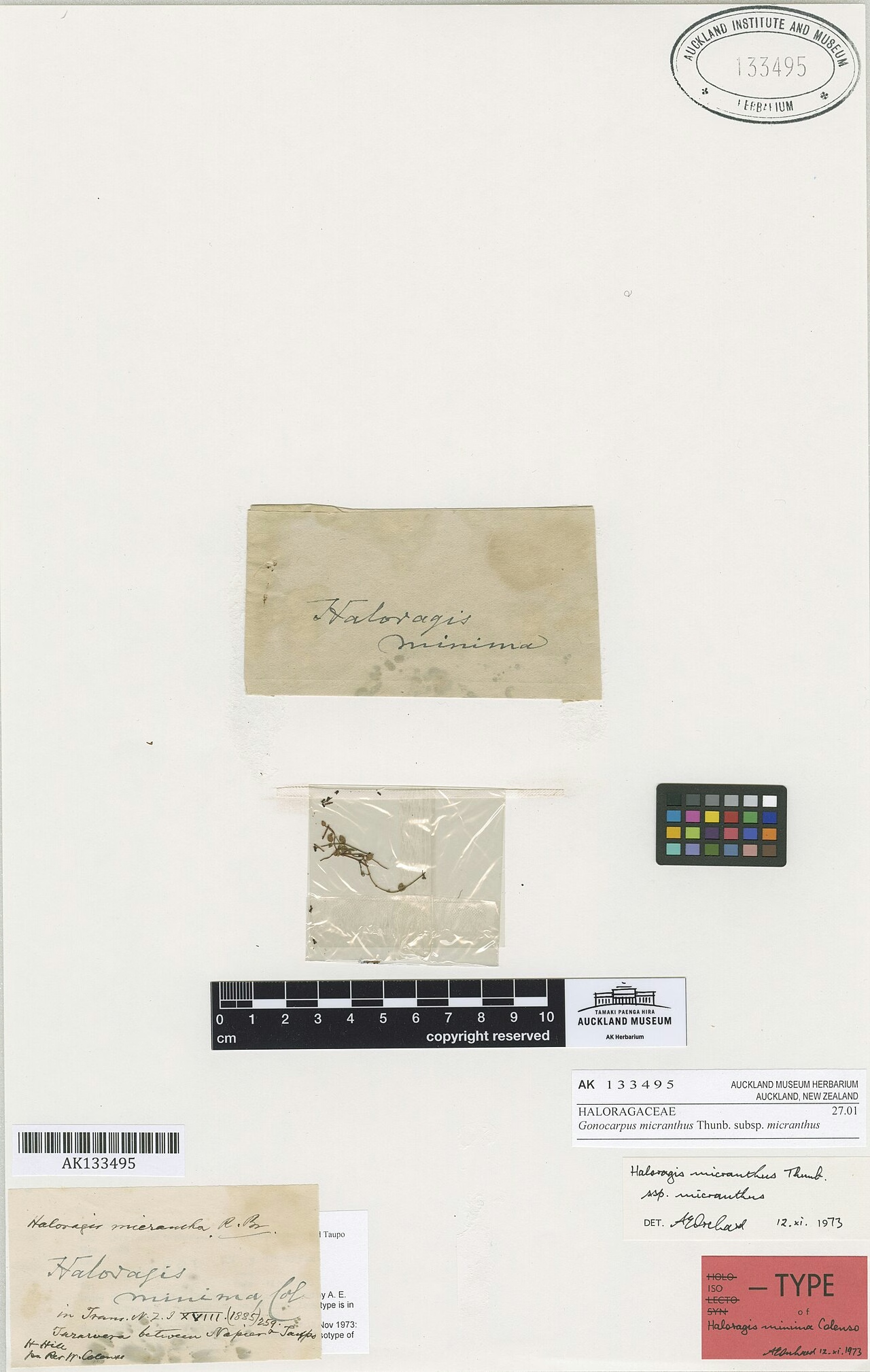
Creeping Raspwort
Gonocarpus micranthus
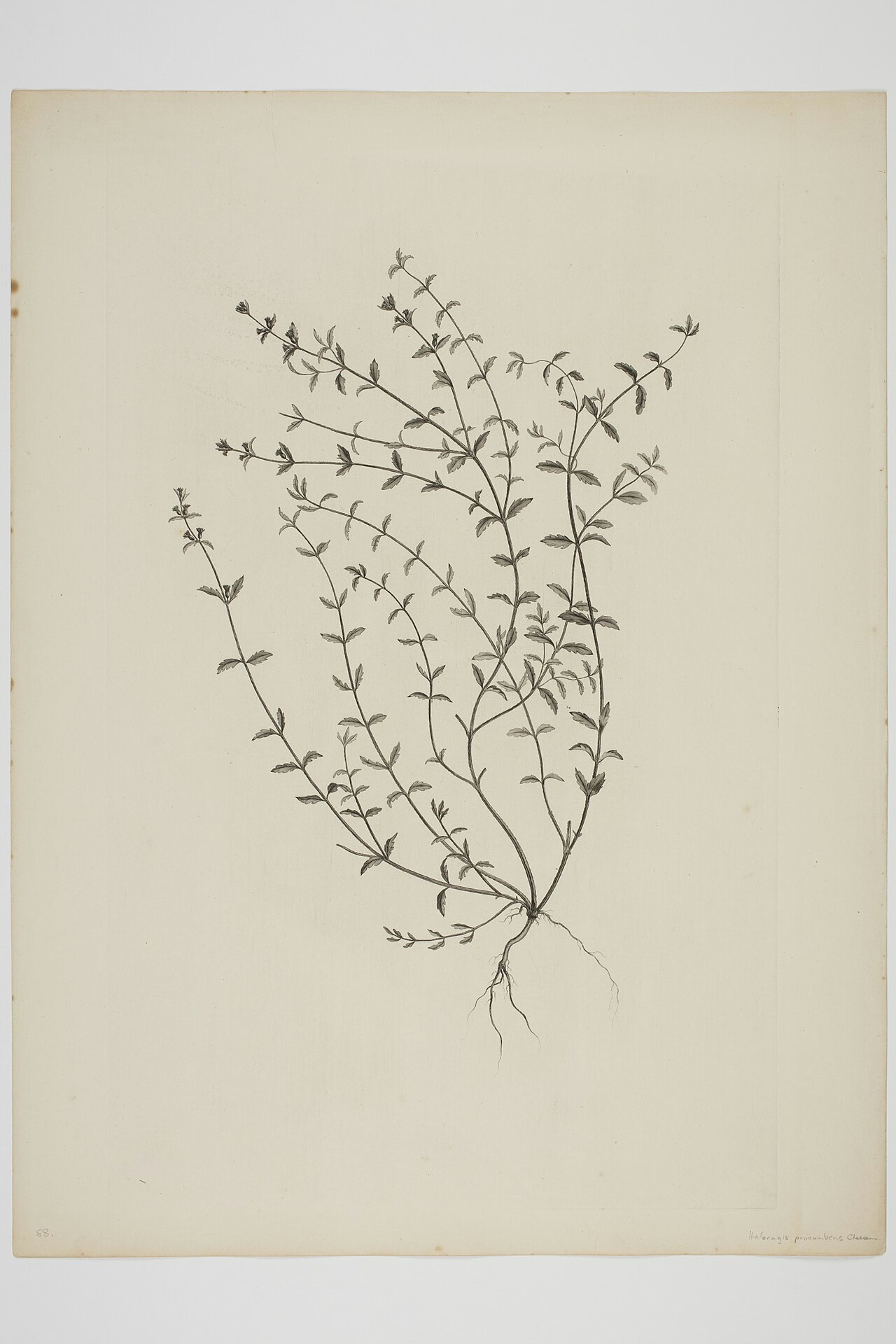
Mountain Raspwort
Gonocarpus montanus
Notogrammitis ciliata
Notogrammitis ciliata
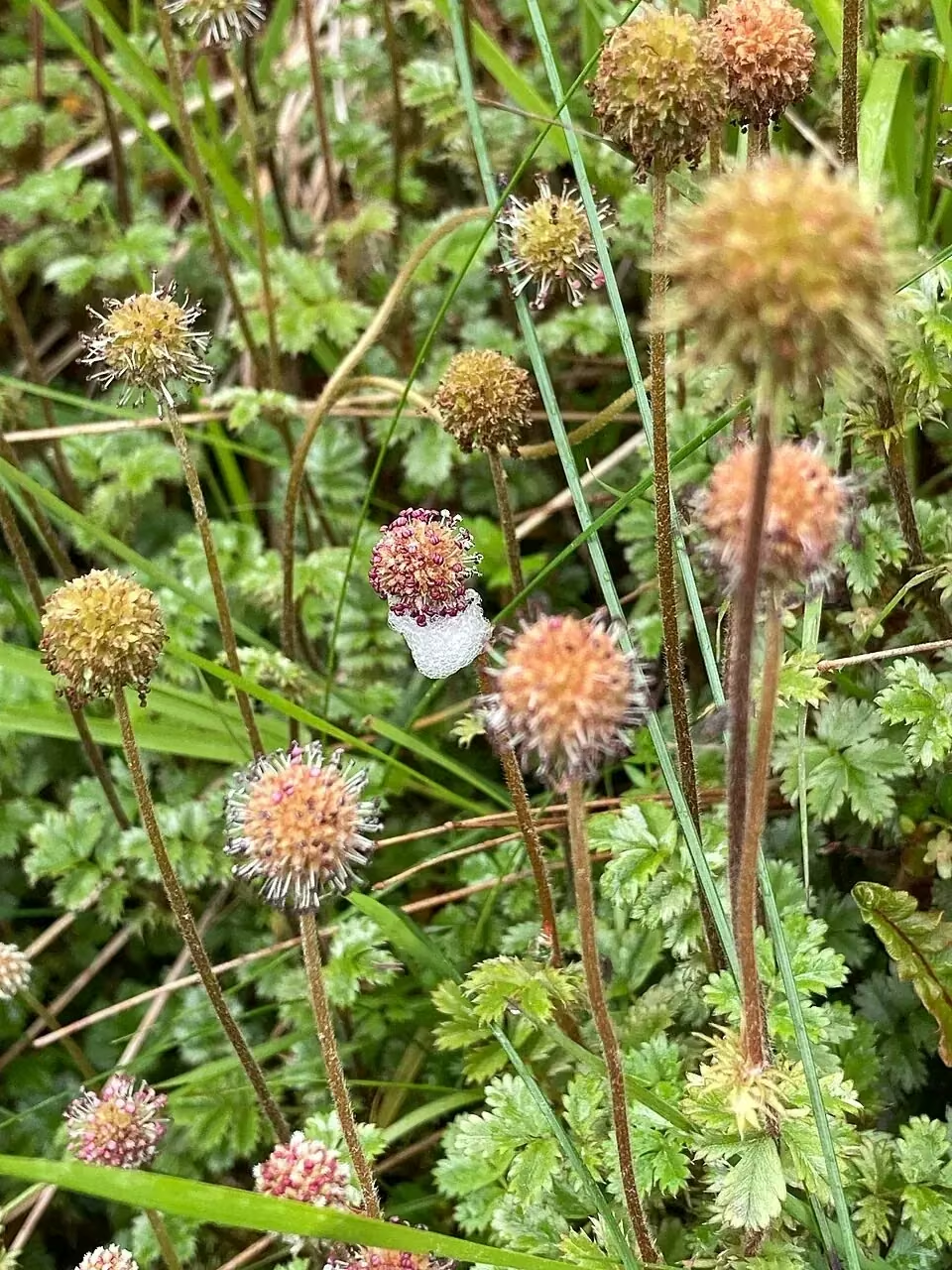
Bidibid
Bidibid
Plant Conservation
Gonocarpus incanus is ranked Not Threatened (2023) and is regionally Not Threatened in Northland, Auckland and Wellington.
Its open, infertile habitats such as gumlands are among New Zealand's naturally uncommon ecosystems and have been reduced by development, fire and weed invasion, so protecting these sites benefits it along with rarer species.
Frequently Asked Questions
What does Gonocarpus incanus look like?
It is a wiry herb up to 40 cm tall, rough with stiff white appressed hairs, with opposite elliptic-lanceolate toothed leaves 8 to 15 mm long and tiny flowers with hooded petals.
How is Gonocarpus incanus different from Gonocarpus micranthus?
G. incanus has hairy stems, alternate floral bracts and ovoid 8-ribbed fruit with calluses between the ribs, while G. micranthus is hairless, with deciduous bracts and nodding fruit without calluses.
Where does Gonocarpus incanus grow?
The Flora of New Zealand records it from the North Island and the northern South Island on dry, hard ground, and it was first collected on dry, exposed rocky hills at Whangaroa.
What does incanus mean?
Incanus means hoary, describing the greyish whiteness caused by hairs lying over a green surface, which is very noticeable on this species.
Sources and Further Reading
The botanical, growing, and conservation details for Raspwort (Gonocarpus incanus) on this page draw on the New Zealand plant references below. Consult them for full technical records and the latest distribution data.