Strap Fern
Notogrammitis ciliata
Last updated:
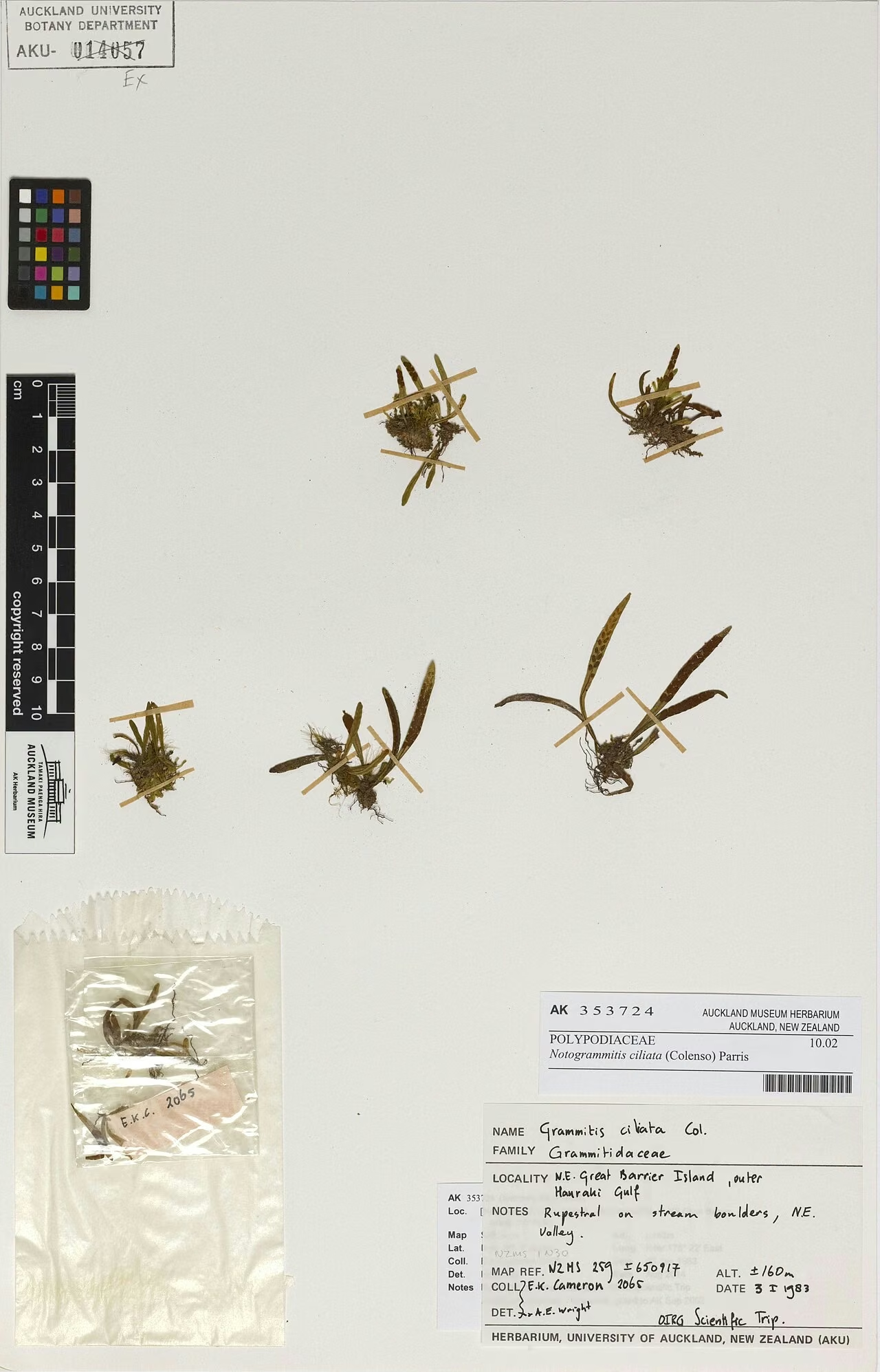
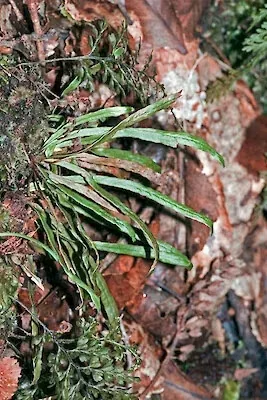
Notogrammitis ciliata (formerly Grammitis ciliata) is a tiny endemic strap fern whose undivided fronds, mostly 2.5-4.5 cm long, are fringed with scattered hairs along their margins. Unlike most of its relatives it usually grows on the ground or on rock rather than on trees, favouring damp clay banks, track cuttings, stream banks and mossy boulders under kauri, broadleaved and beech forest and mānuka-kānuka scrub. It is found from the Three Kings Islands and Northland south to Fiordland, from near sea level to about 1075 m. It is ranked Not Threatened, and the Latin name ciliata means fringed with hairs. Explore more native ferns in our native plant guide.
Plant Description
Notogrammitis ciliata grows from an erect to short-creeping rhizome bearing pale brown scales. The fronds are undivided, linear to narrowly obovate and taper into a very short, winged stipe up to about 7 mm long. They range from 9-80 mm long and 1.5-6 mm wide, though most are 25-45 mm long and 2.5-4.5 mm wide.
The whole frond is usually hairy. Hairs up to about 2 mm long, either simple or branched, are scattered along the margin, the midrib and the blade surface. The sori are rounded to elliptic, 1-4 mm long, in 1-24 pairs in the middle and upper part of the frond, set parallel or slightly oblique to the midrib, and contain long hairs that can be longer than those on the blade.
It is recognised by its erect rhizome, lack of a distinct stipe, small fronds and marginal hairs of similar length to the soral hairs. Notogrammitis pseudociliata is larger, mainly epiphytic and has wavy, scalloped margins with shorter hairs. N. patagonica and N. gunnii differ in having long-creeping rhizomes and growing mainly in mountain habitats. NZPCN notes that N. ciliata is quite variable between populations.
Quick Facts
| Scientific Name | Notogrammitis ciliata |
|---|---|
| Height | Fronds 1-8 cm long, mostly 2.5-4.5 cm |
| Spread | Small tufts a few centimetres across |
| Water Needs | Damp, humid conditions |
| Light | Shade to partial shade |
| Frost Tolerance | Moderate; reaches about 1075 m |
| Salt Tolerance | No information available |
| Growth Rate | Slow |
| Lifespan | Perennial |
Climate Best Suited to
Suits mild, humid lowland to montane climates with reliable rainfall. It grows from subtropical Northland and the Three Kings Islands to cool western South Island forest.
Regional Suitability
| City | Climate Suitability |
|---|---|
| Auckland | Medium |
| Wellington | Medium |
| Christchurch | Low |
| Dunedin | Low |
Plant Habitat
This endemic fern occurs on the Three Kings Islands, through the North Island from Northland to Wellington, and in the South Island from western Nelson to Fiordland. It ranges from near sea level to about 1075 m, and in north-west Nelson it has been recorded up to 860 m in the Cobb Valley.
It is usually terrestrial, growing on damp earth and clay banks, track banks, stream banks and mossy rock faces and boulders in closed forest, often over sedimentary and metamorphic rocks. It occurs under kauri, broadleaved and beech forest and in mānuka-kānuka scrub, and is only rarely a low epiphyte.
Growing Requirements
Soil Requirements
It roots into thin films of moss and damp mineral soil on steep, freshly exposed or stable banks.
- Damp clay or silty banks
- Moss-covered rock faces and boulders
- Sedimentary and metamorphic substrates
Light Requirements
It grows in the shade of forest and scrub, often on banks where some light reaches the ground.
- Shade to dappled light
- Track cuttings under canopy are a typical site
Water Requirements
Its banks stay damp from seepage, rain and humid forest air.
- Needs constant dampness
- Fronds shrivel on banks exposed to drying wind and sun
Planting and Establishing
Notogrammitis ciliata is not available from nurseries, and NZPCN states that it should not be removed from the wild. It is not a plant for general gardens.
Along walking tracks, leaving shaded clay cuttings undisturbed, rather than grading or spraying them, allows this small fern and others like it to persist.
Ecological Role
Its minute spores are dispersed by wind, letting it colonise newly exposed banks and rock faces in shaded forest. It often grows with mosses, liverworts and other small ferns that bind the surface of damp banks.
No specific animal associations are documented in the sources consulted.
Uses & Significance
Garden Uses
It has no practical role in gardens because it is difficult to grow and should not be collected.
- A fern to look for on track banks rather than to plant
- Specialist fern collections only, using spore-raised material
Ecological Value
It is part of the small-fern and bryophyte community that stabilises shaded banks in forest.
- Endemic to New Zealand
- Helps bind the surface of damp clay banks
- Occurs on the Three Kings Islands as well as the mainland
Landscaping Uses
This fern is not used in landscaping. In a shaded native garden, a natural clay bank or mossy rock face kept moist may be colonised by small ferns from wind-blown spores over time.
Avoid scraping clean or spraying shaded banks next to bush tracks, as they are prime habitat for this and other small native ferns.
Seasonal Care Calendar
Spring
New fronds emerge from the small erect rhizome as banks stay moist and temperatures rise.
- Look for fresh, hairy fronds on track banks
Summer
Banks can dry in summer, and fronds may curl until rain returns.
- Leave shading vegetation intact above banks
Autumn
Fertile fronds carry paired, hairy sori. The exact sporing season is not documented in the sources consulted.
- Use a hand lens to compare soral and marginal hairs
Winter
The fern is evergreen and remains visible on damp banks through winter.
- No action needed
When to Prune and How Much
No pruning is required. Old fronds die back naturally among the moss.
If grown, remove only dead fronds with fine scissors so as not to disturb the shallow rhizome.
How to Grow Strap Fern
NZPCN describes Notogrammitis ciliata as difficult to propagate and says it should not be removed from the wild. No propagation protocol specific to this species was found in the sources consulted. The general methods below are those used by fern growers for small grammitid ferns, which produce green spores that do not store well, so sowing must be done promptly. As a mainly terrestrial species of damp banks, it may be slightly easier to grow on a moss-and-clay surface than its tree-dwelling relatives, but this is untested and losses should be expected. Use only spores or plants from legally obtained cultivated material.
From Spores
Spores form in the hairy paired sori in the upper half of the frond. Collect a single fertile frond from a cultivated plant when the sori look ripe.
- Lay the frond on clean paper in a closed envelope overnight to release spores
- Sow straight away onto a sterile mix of fine peat and sieved clay loam
- Seal the container and keep it in bright, indirect light at mild temperatures
- Mist only with sterile water to prevent algae and moulds
- Transfer young plants onto a mossy clay surface when large enough to handle
By Division
Mature cultivated tufts sometimes produce more than one crown. These can be separated with care, keeping the attached moss and soil.
- Separate crowns in cool, damp weather
- Keep a block of the original moss and soil around each piece
- Settle onto a shaded, damp clay surface
- Cover with a clear dome until growth resumes
Pests & Diseases
No specific pests are recorded. Threats to individual plants include track maintenance that scrapes or sprays banks, slips, and drying when overhead cover is removed.
In cultivation, slugs on tiny sporelings and damping off in stagnant, overly wet conditions are the main problems.
Cultural Significance
No Māori name or traditional use specific to Notogrammitis ciliata is recorded in the sources consulted.
The species was described as Notogrammitis ciliata by William Colenso, the missionary-botanist who collected widely in the North Island in the nineteenth century. It was later treated by some authors as a hairy variety of the common strap fern before being recognised again as a distinct species.
Bonus Tip
The quickest field check for this species is where it grows and how hairy its edges are: a tiny strap fern on a clay track bank with hairs along the frond margin about as long as the hairs in its sori is very likely Notogrammitis ciliata. A larger, wavy-edged fern with similar hairs growing on a tree trunk is more likely N. pseudociliata.
Related Plants
Explore other native plants that share similar characteristics or habitats with Strap Fern (Notogrammitis ciliata), offering further insights into New Zealand's diverse flora. These related species provide context and opportunities for complementary planting in your garden.
Gonocarpus incanus
Gonocarpus incanus
Creeping Raspwort
Gonocarpus micranthus
Mountain Raspwort
Gonocarpus montanus
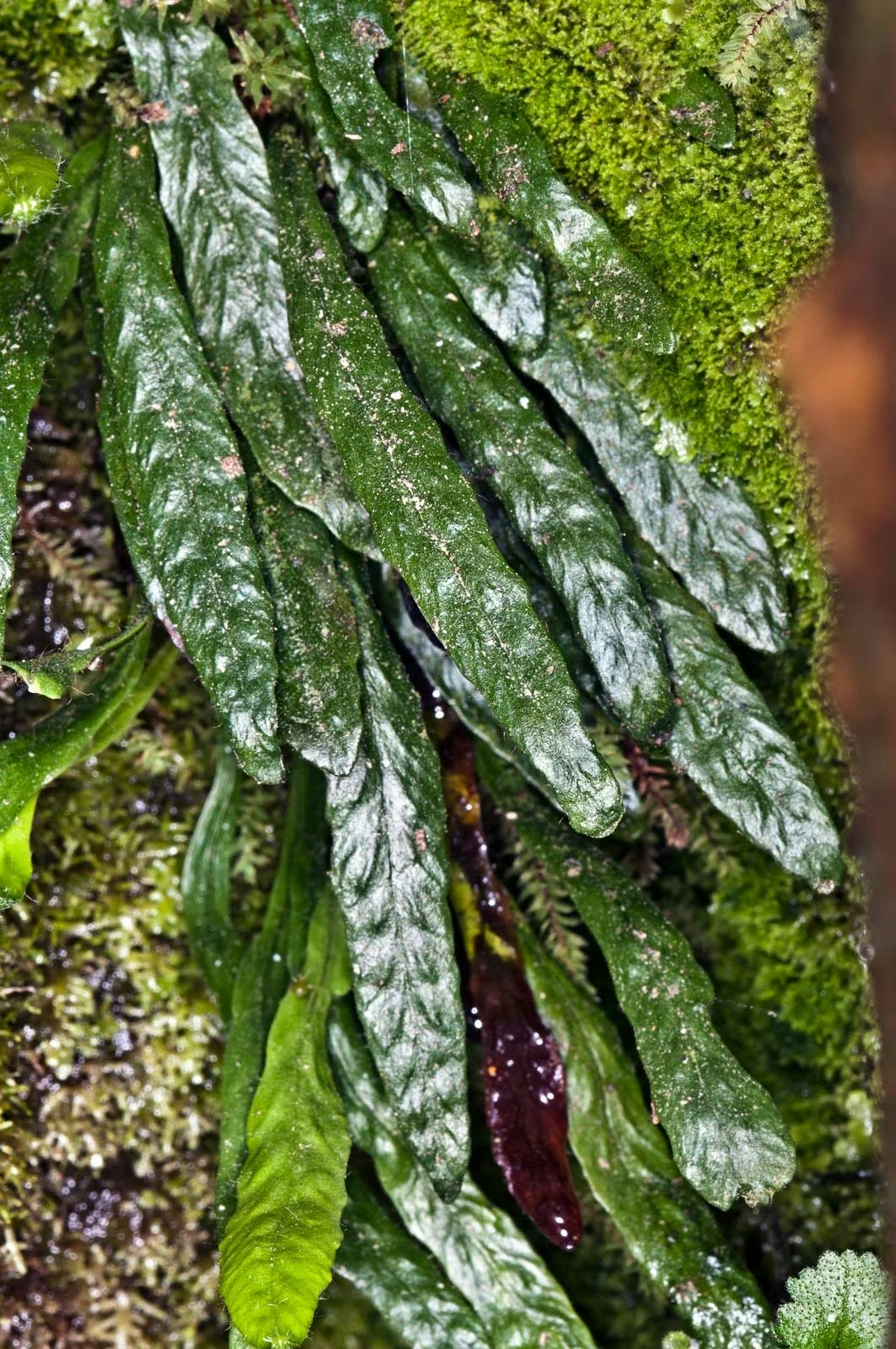
Notogrammitis patagonica
Notogrammitis patagonica
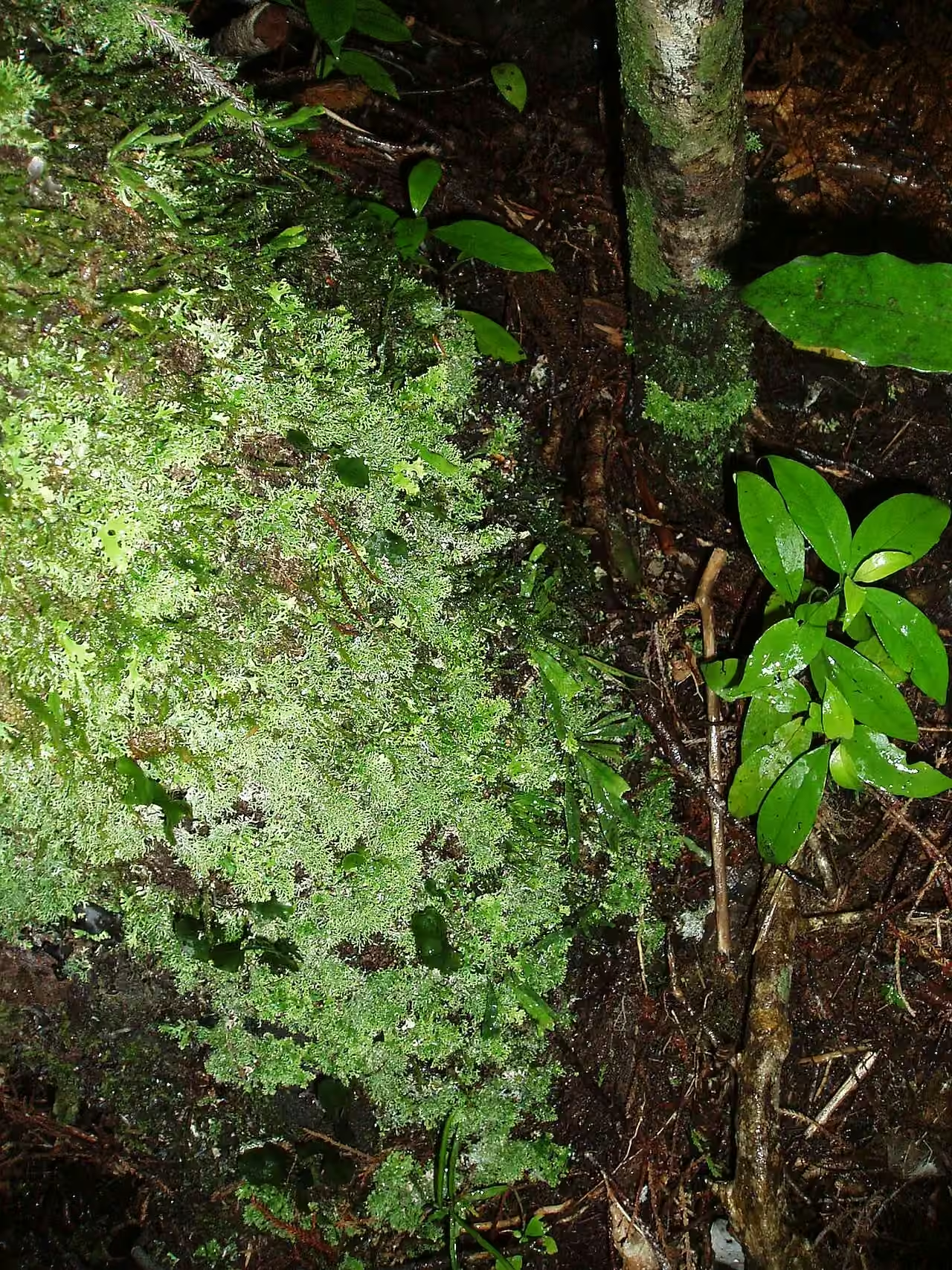
Notogrammitis pseudociliata
Notogrammitis pseudociliata
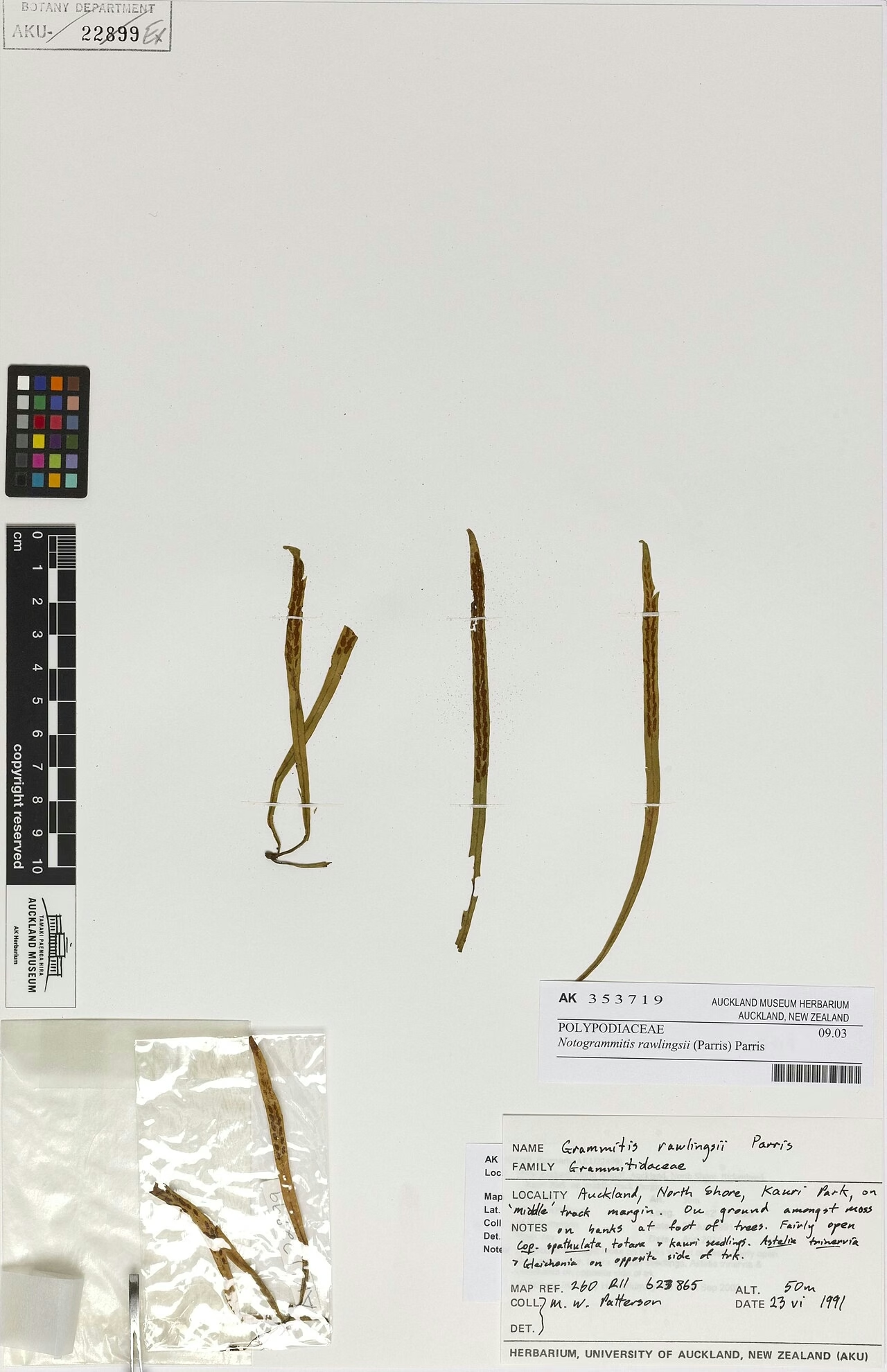
Notogrammitis rawlingsii
Notogrammitis rawlingsii
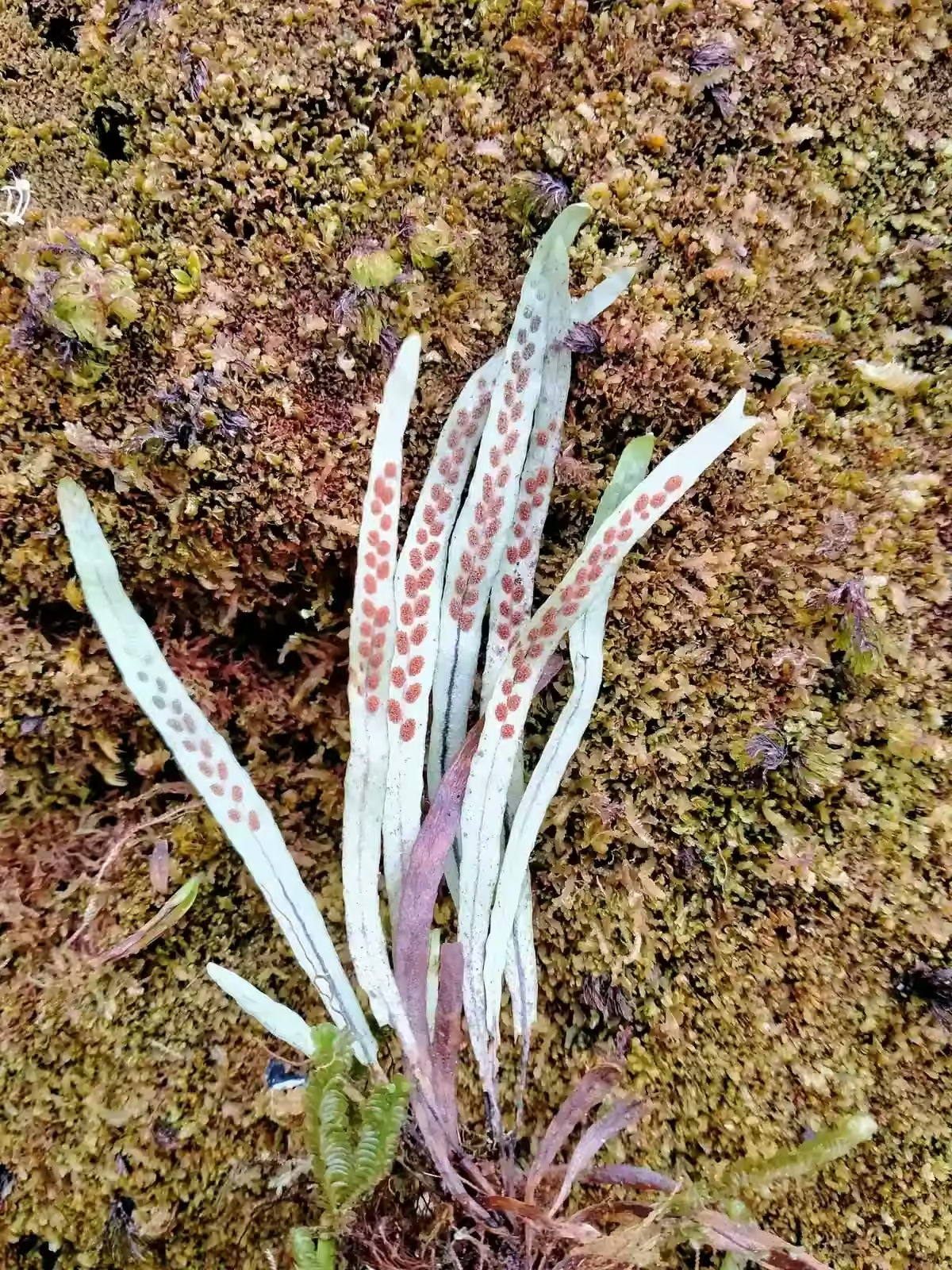
NZ Flora
NZ Flora
Common Strap Fern
Common Strap Fern
Plant Conservation
Notogrammitis ciliata is ranked Not Threatened (2023) and has held that status in every national assessment since 2004. In Otago it is considered Regionally Naturally Uncommon.
Protecting forest cover over its banks and taking care during track maintenance are the most useful measures for this small endemic fern.
Frequently Asked Questions
What does ciliata mean in Notogrammitis ciliata?
Ciliata is Latin for fringed with hairs, describing the scattered hairs along the frond margins that are about as long as the hairs in the sori.
Where can I find Notogrammitis ciliata?
Look on shaded, damp clay track banks, stream banks and mossy rock faces in forest from Northland to Fiordland. It is mostly terrestrial and only rarely grows as a low epiphyte.
How is Notogrammitis ciliata different from N. pseudociliata?
N. pseudociliata is usually larger and grows mainly on trees, with fronds often scalloped and wavy and shorter marginal hairs. N. ciliata is smaller and grows chiefly on banks and rocks.
Is Notogrammitis ciliata endemic to New Zealand?
Yes. Both NZPCN and the Flora of New Zealand record it as endemic, found only in the North and South Islands and on the Three Kings Islands.
Sources and Further Reading
The botanical, growing, and conservation details for Strap Fern (Notogrammitis ciliata) on this page draw on the New Zealand plant references below. Consult them for full technical records and the latest distribution data.