Avens
Geum divergens
Last updated:
Geum divergens is a compact endemic avens up to about 18 cm tall, with dense rosettes of wrinkled leaves and one to five white flowers up to 35 mm across in November and December. It is known only from the Hanmer Range area of the northern South Island, including Miromiro, Mt Captain and Mt Charon, where it grows at about 1300 to 1600 m on sandstone crevices, ledges, fine colluvium and erosion pavements. Its tiny range means it is ranked At Risk - Naturally Uncommon. It is closely related to the more widespread alpine avens, Geum uniflorum, but is larger in all its parts. Explore more native flowering plants in our native plant guide.
Plant Description
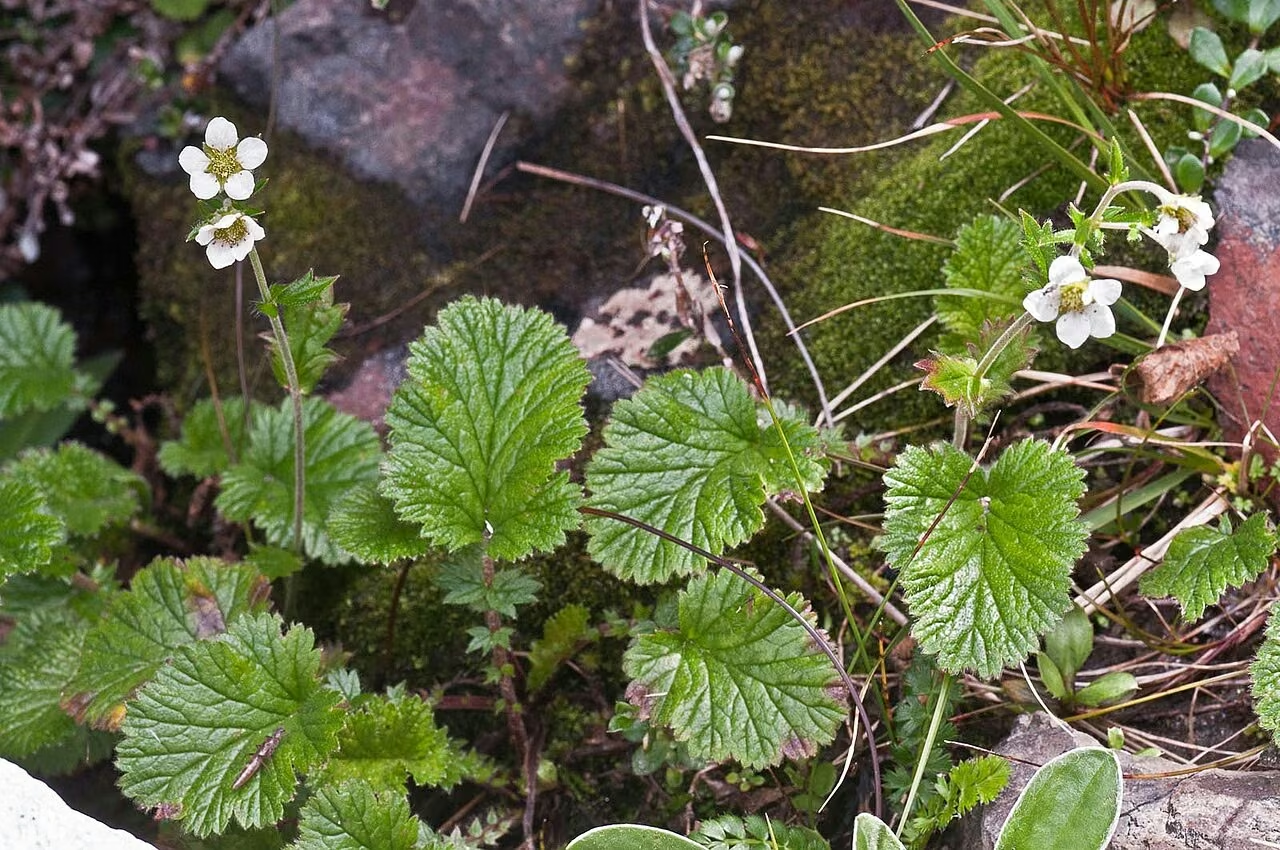
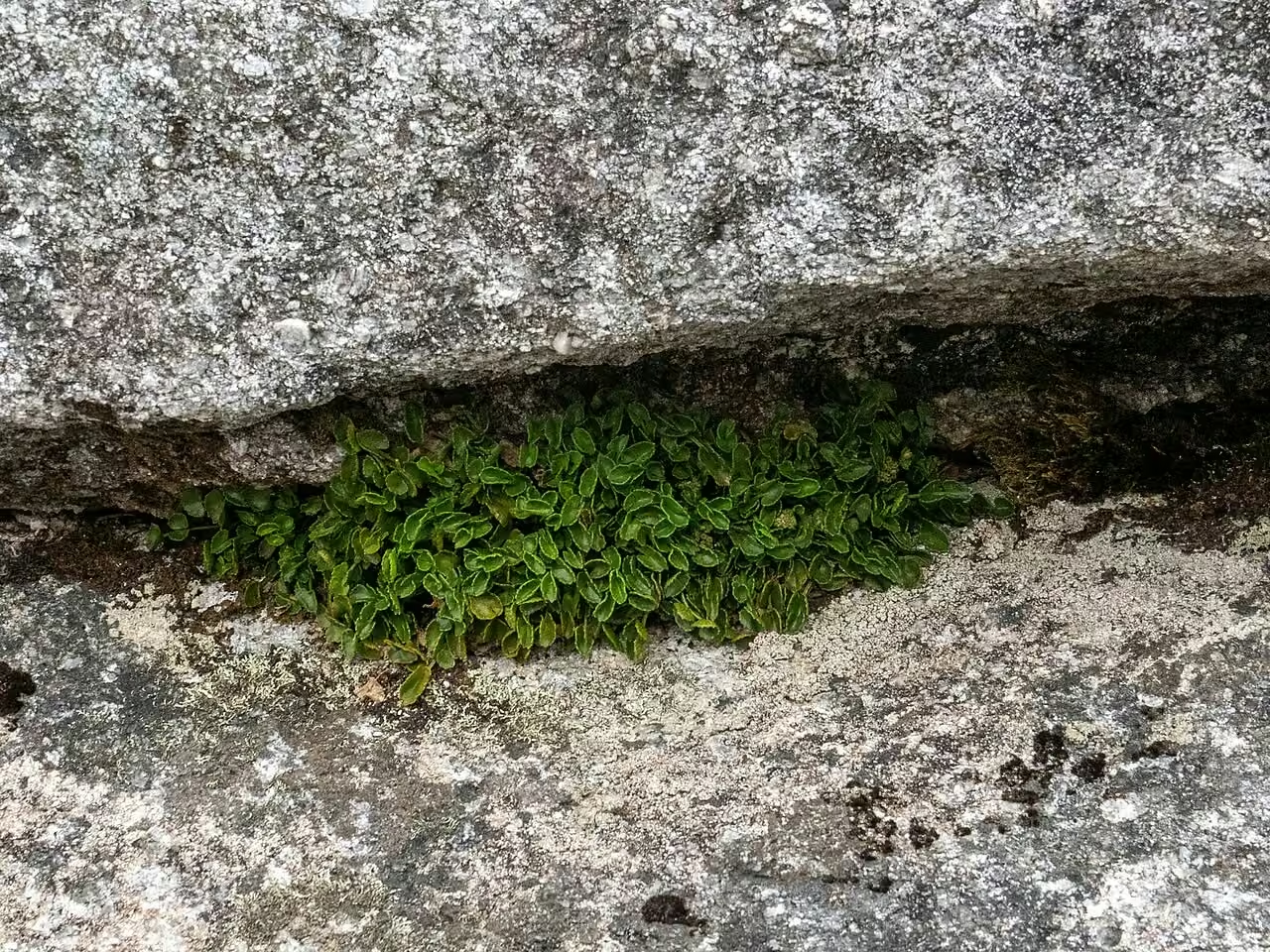
Geum divergens is a compact herb up to 180 mm tall, growing from a stout, woody, creeping rhizome. Its basal leaves form dense rosettes. They are pinnate, with 2 to 4 pairs of minute lateral leaflets and a large terminal leaflet 20 to 35 mm long, and are rugose (wrinkled), dull light green at first and fading to yellowish red. The leaf margins are fringed with white hairs and the leaf stalks are densely downy with longer hairs mixed in.
Plants bear one to five flowers up to 35 mm in diameter. The petals are white, about 12 to 15 mm long, around a green central disc with yellow anthers. Flowering is in November and December, and fruit ripens in January and February as clusters of hairy achenes with a pappus that aids wind dispersal.
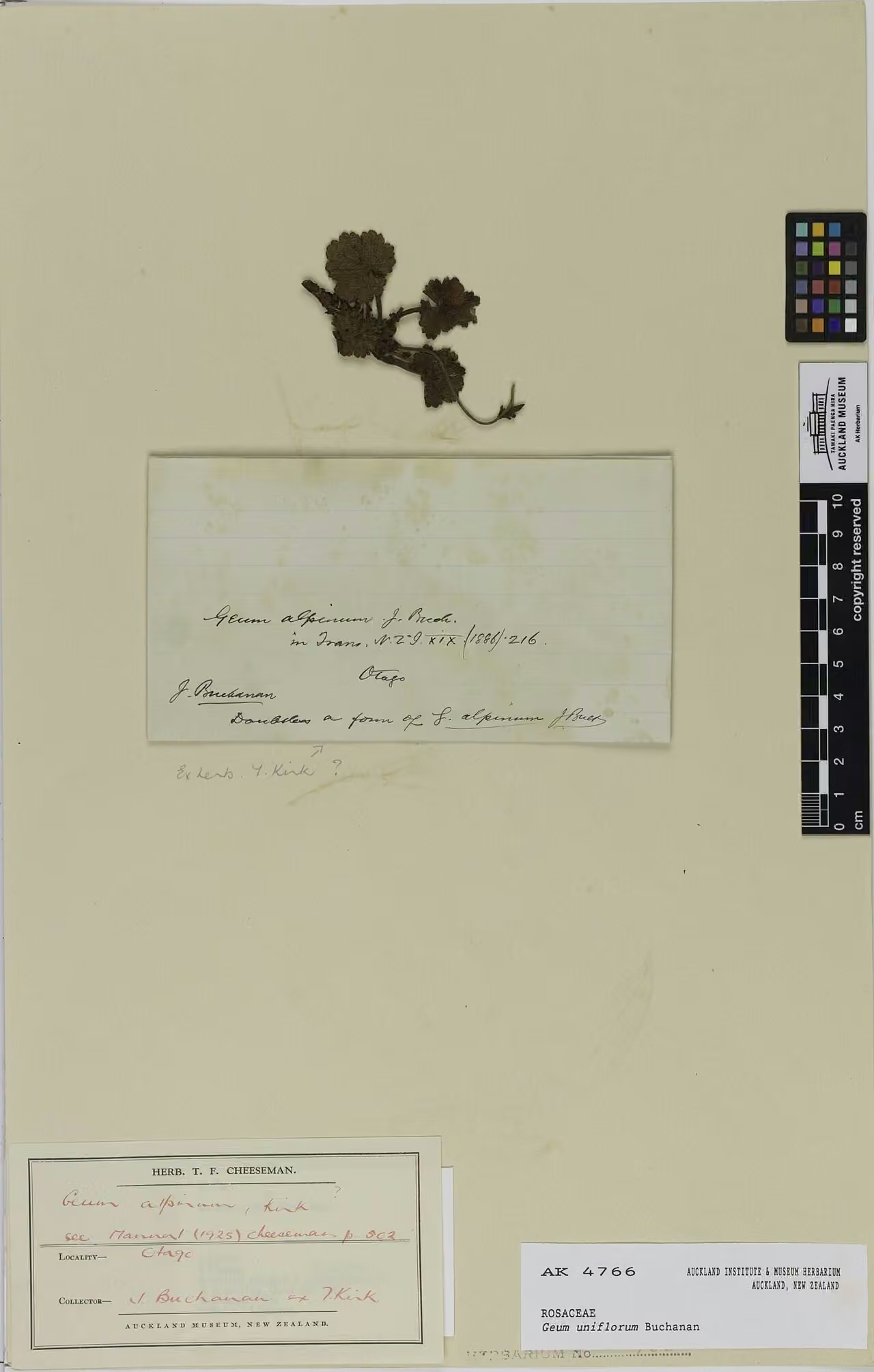
It is closely allied to alpine avens (Geum uniflorum), which is smaller, has solitary creamy white flowers with a crimson centre and purple anthers, and has leaf margins edged with harsh golden or orange-red hairs.
Quick Facts
| Scientific Name | Geum divergens |
|---|---|
| Height | Up to 0.18 m in flower |
| Spread | Forms small patches from a creeping woody rhizome |
| Water Needs | Moderate; well-drained rocky sites |
| Light | Full sun |
| Frost Tolerance | High; subalpine to alpine |
| Salt Tolerance | Low; an inland mountain plant |
| Growth Rate | Slow |
| Lifespan | Perennial |
Climate Best Suited to
Suits the cold, dry-summer mountain climate of the inland Canterbury and Marlborough ranges, with winter snow and frost.
Regional Suitability
| City | Climate Suitability |
|---|---|
| Auckland | Low |
| Wellington | Low |
| Christchurch | Medium |
| Dunedin | Medium |
Plant Habitat
Geum divergens is endemic to the South Island and known only from the Hanmer Range area, on Miromiro, Mt Captain and Mt Charon, between about 1300 and 1600 m above sea level.
It colonises sandstone rock crevices and ledges, fine colluvium and erosion pavements within subalpine forest, scrub and tussock grassland. These are open, unstable rocky sites where competition from taller plants is limited.
Growing Requirements
Soil Requirements
In the wild it roots into crevices and fine rock debris derived from sandstone.
- Very free-draining, gritty mix
- Low fertility
- Rock crevice or scree conditions in cultivation
Light Requirements
It grows on open rock faces, ledges and erosion pavements.
- Full sun
- Good air movement
Water Requirements
Its rocky habitat drains quickly, though the creeping rhizome reaches moisture deep in crevices.
- Water regularly in summer in pots
- Keep drier and cool in winter
Planting and Establishing
NZPCN notes that, like other New Zealand geums, it is easily grown in pots in an alpine house and in a rock garden in cooler climates. Use a deep, very gritty mix and a sunny position.
In a rock garden, plant it into a crevice or scree bed where the rhizome can run among stones. Keep surrounding plants low so they do not shade it.
Ecological Role
Its pappate achenes are dispersed by wind, allowing it to colonise bare crevices and erosion pavements nearby. Specific pollinators have not been studied, but its open white flowers with exposed anthers are typical of mountain flowers visited by flies and native bees.
As a coloniser of unstable rock and fine colluvium, it occupies early stages of vegetation on eroding mountain ground in the Hanmer Range.
Uses & Significance
Garden Uses
A choice plant for specialist alpine growers rather than general gardens.
- Alpine house pots
- Crevice and scree gardens in cool climates
- Collections of rare South Island endemics
Ecological Value
It is a distinctive part of the small endemic flora of the Hanmer Range.
- A range-restricted endemic of conservation interest
- Provides early summer flowers on bare rock
- Helps stabilise fine rock debris with its creeping rhizome
Landscaping Uses
Grow it as a feature in a rock or crevice garden, where its wrinkled, reddening leaves and large white flowers stand out against grey stone.
Combine it with other small alpine plants that like the same sharp drainage and full sun.
Seasonal Care Calendar
Spring
New leaves emerge from the rhizome as snow melts.
- Begin watering pots
- Top-dress with fresh grit
Summer
Flowers in November and December, then sets fruit in January and February.
- Collect fresh seed
- Keep roots cool
Autumn
Leaves fade to yellowish red as the season ends.
- Sow fresh seed
- Remove spent flower stems
Winter
Dormant under cold conditions, often snow-covered in the wild.
- Protect pots from prolonged wet
- Do not overwater
When to Prune and How Much
Remove spent flowering stems once seed has been collected and tidy dead leaves in spring. No other pruning is required.
Avoid disturbing the creeping rhizome.
How to Grow Avens
NZPCN states that New Zealand geums including this species are best grown from fresh seed. Because Geum divergens is naturally uncommon and confined to a few peaks, seed should come only from cultivated plants or from collection carried out with the permission of the Department of Conservation. Plants with several rosettes along the creeping rhizome can also be divided carefully, which is a practical way to share material between growers.
From Seed
Collect the hairy achenes in January or February as they ripen and loosen from the head. Sow straight away on a gritty mix. Germination may be delayed until after winter cold, so keep pots outside in a cool, shaded position and do not discard them too early. Move seedlings into individual pots as soon as they can be handled, and keep the mix open with plenty of grit or pumice to mimic the fine sandstone debris the species grows in naturally.
- Collect ripe achenes from cultivated plants
- Sow fresh on a very gritty seed mix
- Cover with a thin layer of grit
- Keep pots cool and moist outdoors
- Prick out seedlings into deep pots
- Grow on in an alpine house or cold frame
By Division
The creeping rhizome produces separate rosettes over time. Divide in early spring as growth begins.
- Ease the plant out of its pot
- Cut a rooted rosette from the rhizome
- Pot into gritty mix
- Keep cool and lightly moist until new roots form
Pests & Diseases
No specific pests are recorded. In cultivation, slugs and snails can damage leaves and flowers, and plants may rot in poorly drained or humid conditions.
In the wild, browsing by introduced animals and weed invasion of rocky habitats are general threats to small alpine herbs, though none is documented as causing decline in this species.
Cultural Significance
No Māori name or traditional Māori use is recorded for Geum divergens in the sources consulted.
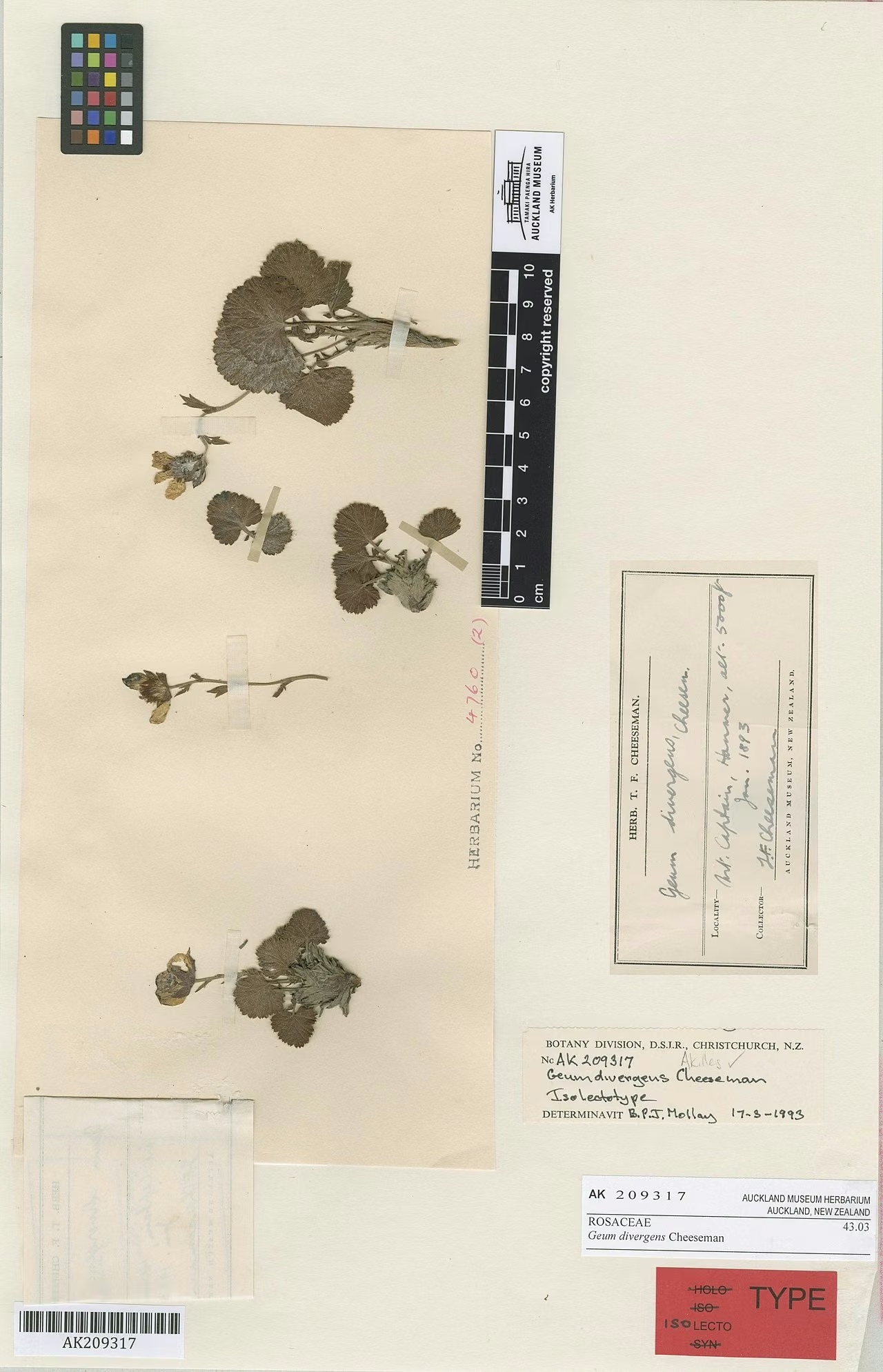
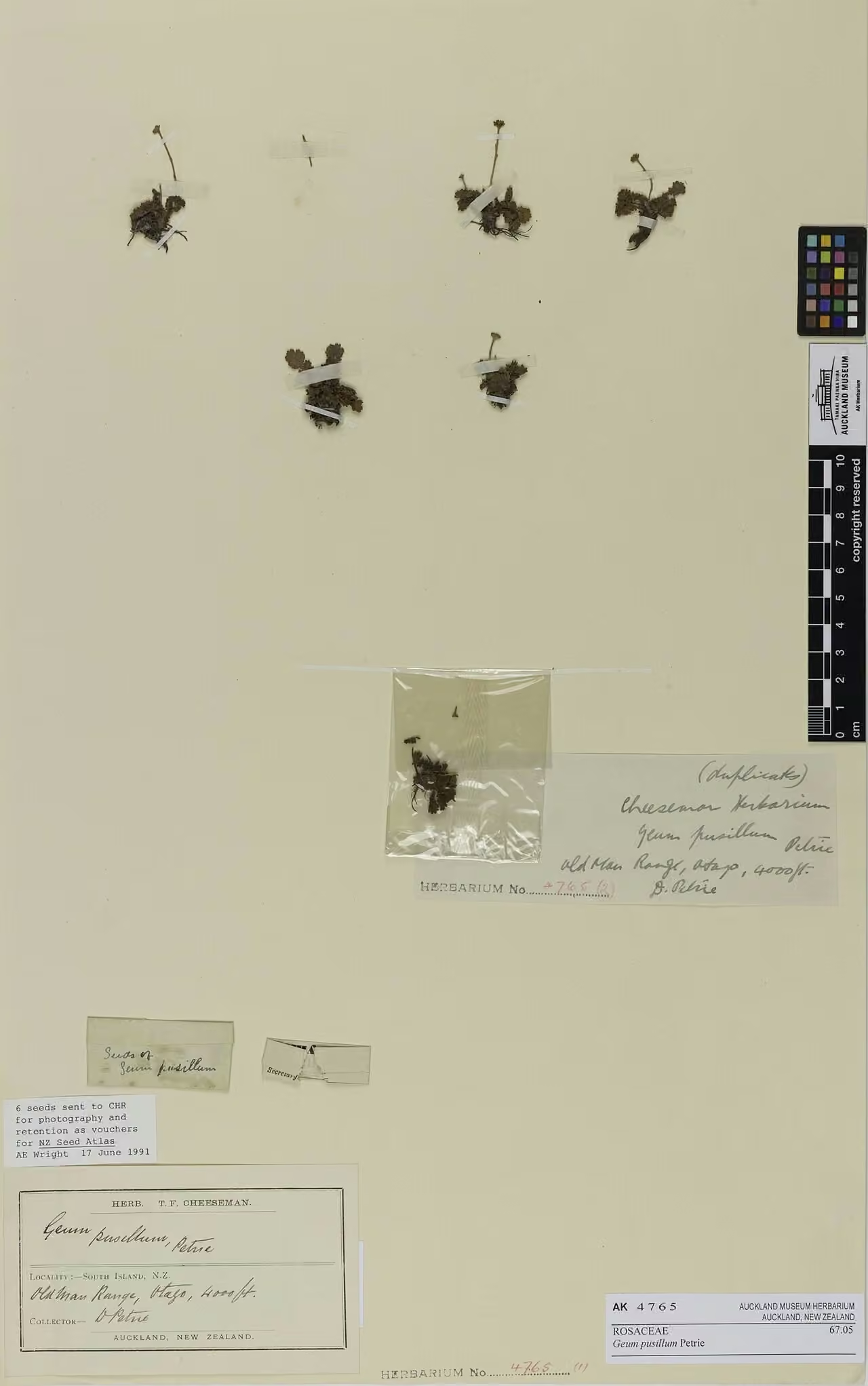
Thomas Cheeseman described the species in 1916. Its name has an odd history: NZPCN notes that the type specimen appeared to have yellow flowers, but all wild plants seen have white flowers whose petals fade to yellow when dried.
Bonus Tip
If a dried herbarium specimen or pressed flower of this geum looks yellow, do not be misled: the living petals are white. This trait explains why early descriptions, including the Flora of New Zealand, list yellow petals.
Related Plants
Explore other native plants that share similar characteristics or habitats with Avens (Geum divergens), offering further insights into New Zealand's diverse flora. These related species provide context and opportunities for complementary planting in your garden.
Plant Conservation
Geum divergens is ranked At Risk - Naturally Uncommon (2023) with the qualifier Range Restricted. Its entire known range is a few peaks of the Hanmer Range.
Because the population is confined to such a small area, any new threat, such as weeds spreading into rocky habitat or increased browsing, could affect the whole species. Monitoring its sites and keeping cultivated populations are sensible safeguards.
Frequently Asked Questions
Where is Geum divergens found?
Only in the Hanmer Range area of the South Island, on Miromiro, Mt Captain and Mt Charon, at about 1300 to 1600 m above sea level.
What colour are Geum divergens flowers?
Wild plants have white flowers with a green centre and yellow anthers. The original description said yellow because the petals turn yellow when dried, which is how the type specimen appeared.
How is Geum divergens different from alpine avens?
It is allied to Geum uniflorum but is larger overall, with dense leafy rosettes, wrinkled leaves with white-fringed margins, densely hairy leaf stalks and up to five flowers per plant rather than one.
Sources and Further Reading
The botanical, growing, and conservation details for Avens (Geum divergens) on this page draw on the New Zealand plant references below. Consult them for full technical records and the latest distribution data.