Cockayne's Geum
Geum cockaynei
Last updated:
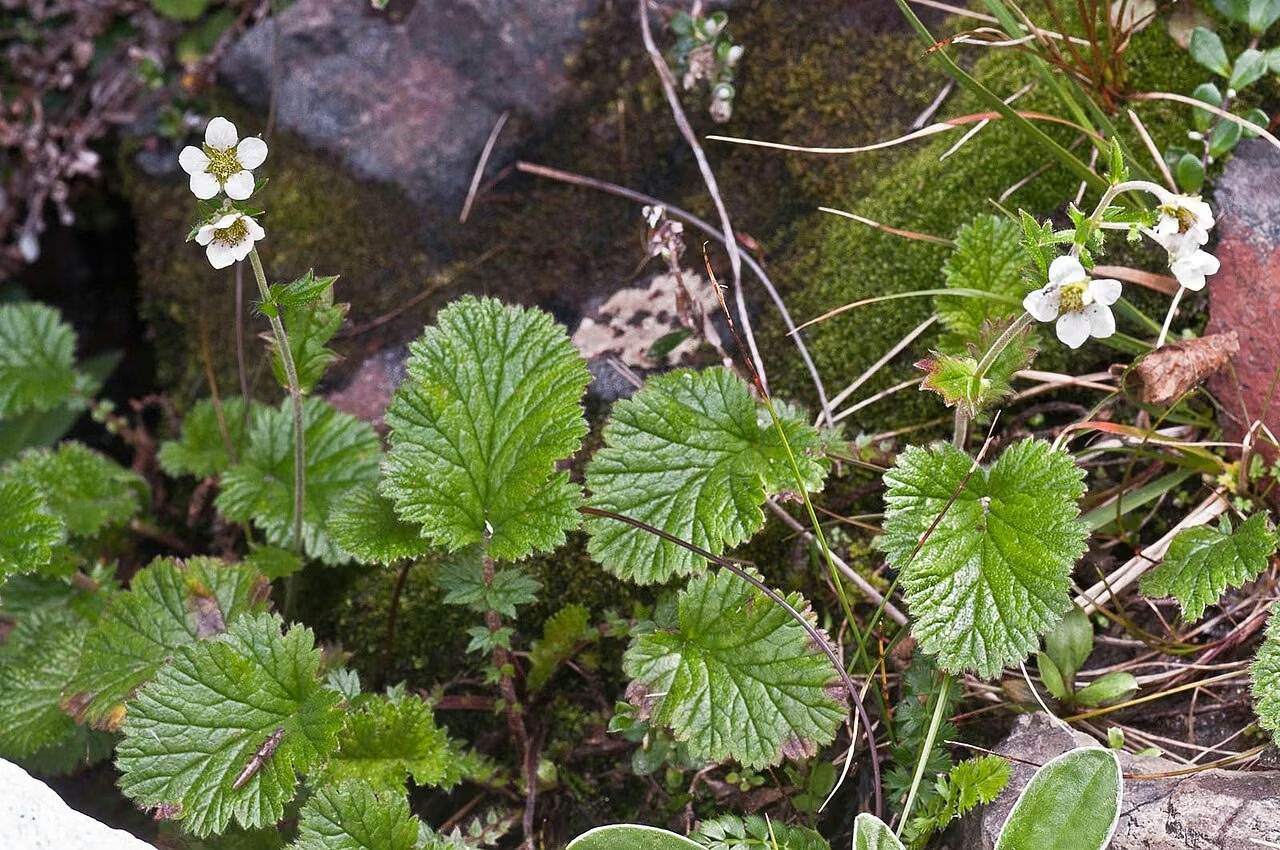
Cockayne's geum (Geum cockaynei) is an endemic perennial herb of damp mountain grassland that grows up to 40 cm tall in flower. It forms a rosette of bronze-green to green, white-hairy pinnate leaves from a woody base and sends up branched stems carrying up to about 30 creamy white flowers from December to March. It grows in montane to subalpine grassland, herbfield, rocky sites and stream banks in the North Island from the Raukumara Range south and throughout the South Island mountains. It is ranked Not Threatened and is named after Leonard Cockayne, often called New Zealand's greatest botanist. Explore more native flowering plants in our native plant guide.
Plant Description
Geum cockaynei is an erect herb up to 40 cm tall when flowering, bronze-green, red-green or green in colour, arising from a woody base. The basal leaves are distinctly white-hairy and pinnate with an odd terminal leaflet: there are up to 15 pairs of lateral leaflets, the lower ones small, and a larger rounded terminal leaflet 10 to 70 mm long.
The flowering stems are branched and carry from one to about 30 flowers, typically around 25. The petals are creamy white and 4 to 10 mm long. After flowering, the fruiting heads develop into clusters of achenes topped with feathery hairs (pappus) that catch the wind.
NZPCN notes that it differs from Geum albiflorum of the Auckland Islands by its many-flowered inflorescences and larger petals; G. albiflorum also has smaller leaves and shorter styles. On the mainland, the other native geums, such as Geum uniflorum, Geum leiospermum and Geum parviflorum, have fewer or much smaller flowers.
Quick Facts
| Scientific Name | Geum cockaynei |
|---|---|
| Height | Up to 0.4 m in flower |
| Spread | Compact basal rosette; spread not recorded in the sources |
| Water Needs | Moist; damp grassland and stream banks |
| Light | Full sun to light shade |
| Frost Tolerance | High; montane to subalpine |
| Salt Tolerance | Low; a mountain plant |
| Growth Rate | Moderate |
| Lifespan | Perennial |
Climate Best Suited to
Suits cool, moist montane and subalpine climates with reliable rainfall and cold winters. It struggles in hot, humid lowland summers.
Regional Suitability
| City | Climate Suitability |
|---|---|
| Auckland | Low |
| Wellington | Medium |
| Christchurch | Medium |
| Dunedin | High |
Plant Habitat
Cockayne's geum is endemic to New Zealand. In the North Island it ranges from the Raukumara Range southwards through the central and southern ranges, and it extends throughout the mountains of the South Island.
It grows in montane to subalpine grassland and herbfield, favouring damp tussock grassland, rocky sites and stream banks where the ground stays moist.
Growing Requirements
Soil Requirements
In the wild it grows in moist mountain soils among tussock and herbs, often near streams.
- Moist, humus-rich but free-draining soil
- Gritty mix in pots or rock gardens
- Avoid stagnant waterlogging
Light Requirements
It grows in open grassland and herbfield with good light.
- Full sun in cool climates
- Light afternoon shade in warmer districts
Water Requirements
Its natural sites are damp, so it needs consistent moisture through the growing season.
- Do not let the root zone dry out in summer
- Water pots regularly
Planting and Establishing
Grow Cockayne's geum in a cool, moist rock garden pocket or in a pot in an alpine house, as NZPCN recommends. In southern and inland gardens it can be grown outdoors among low tussocks and alpine herbs.
Plant in autumn or early spring into gritty, humus-rich soil and keep well watered until established. A gravel mulch helps keep the crown clean and cool.
Ecological Role
NZPCN records that the feathery-tipped achenes are dispersed by wind. The open creamy flowers are accessible to the flies, native bees and moths that pollinate most white-flowered mountain herbs, though specific pollinator studies for this species were not found.
It is a component of the herb layer in damp tussock grassland and stream-side herbfield, colonising rocky and moist openings among the tussocks.
Uses & Significance
Garden Uses
A neat rosette plant with sprays of creamy flowers, suited to specialist alpine and native gardens.
- Rock gardens in cool climates
- Alpine house pots
- Moist margins of native tussock plantings
Ecological Value
As a widespread endemic herb of mountain grassland it supports native insects and contributes to herbfield diversity.
- Summer flowers for native pollinators
- Wind-dispersed seed helps it colonise disturbed moist ground
- Part of the characteristic flora of damp tussock grassland
Landscaping Uses
Pair Cockayne's geum with small tussocks, mountain daisies and other alpine herbs in a cool rock garden. The bronze tints of its hairy leaves contrast well with grey or silver foliage.
Its branched sprays of creamy flowers rise above the rosette in mid to late summer, giving height to an otherwise low planting.
Seasonal Care Calendar
Spring
New leaves expand from the woody base as the ground warms.
- Top-dress pots with grit
- Begin regular watering
Summer
Flowering from December to March, with creamy white flowers on branched stems.
- Keep moist
- Watch for fruiting heads forming
Autumn
Fruit ripens through to April and seed is dispersed by wind.
- Collect and sow fresh seed
- Remove spent stems
Winter
The plant rests, often with reddish older leaves persisting.
- Protect pots from prolonged wet
- Leave outdoor plants to experience winter cold
When to Prune and How Much
Cut flowering stems back to the rosette once the seed has been collected or shed. Remove dead leaves from around the crown in late winter.
No other pruning is needed.
How to Grow Cockayne's Geum
NZPCN advises that Cockayne's geum is easily grown and is best raised from fresh seed. The seeds are achenes with a feathery pappus, produced from December to April, and they blow away quickly once ripe, so heads should be watched closely. Established clumps that have formed several crowns from the woody base can also be divided, which is useful for propagating a particularly good form.
From Seed
Collect the fluffy fruiting heads as soon as the achenes loosen. Sow immediately, as fresh seed germinates most reliably. Keep pots outdoors in a cool, shaded spot through autumn and winter if germination does not occur straight away. Exposure to winter cold is often what triggers germination in mountain herbs, so do not discard pots that show nothing in the first few months. Seedlings dislike drying out and warm, stuffy conditions, so a shade house or a sheltered south-facing spot is better than a glasshouse. Because the pappus makes the achenes bulky, a light dusting of grit over the sown seed helps hold it in place.
- Collect ripe achenes before they blow away
- Sow fresh onto a gritty seed mix
- Cover lightly with fine grit
- Keep cool and moist in a shaded place
- Prick out seedlings into individual pots
- Grow on for a season before planting out
By Division
Older plants may develop several rosettes on the woody base. Divide them in early spring or autumn.
- Lift the clump carefully
- Separate rosettes, each with its own roots
- Pot into gritty mix
- Keep cool and moist until re-established
Pests & Diseases
No serious pests are recorded for Cockayne's geum. Slugs and snails may damage young leaves, and plants can rot if kept too wet and warm in winter.
In the wild, browsing animals and the spread of introduced grasses into damp tussock grassland can affect native herbs, but the species is secure overall.
Cultural Significance
No Māori name or traditional Māori use is recorded for Geum cockaynei in the sources consulted.
The species honours Leonard Cockayne, whose studies of New Zealand vegetation laid the foundations of plant ecology in the country. It was first described in the genus Oncostylus and transferred to Geum by Brian Molloy and Colin Webb in 1994. NZPCN suggests the genus name may derive from the Greek geuo, to give a pleasant flavour, referring to aromatic roots in some species.
Bonus Tip
Sow seed the day you collect it. NZPCN specifically recommends fresh seed for New Zealand geums, so plan seed collection for when you have pots and mix ready.
Related Plants
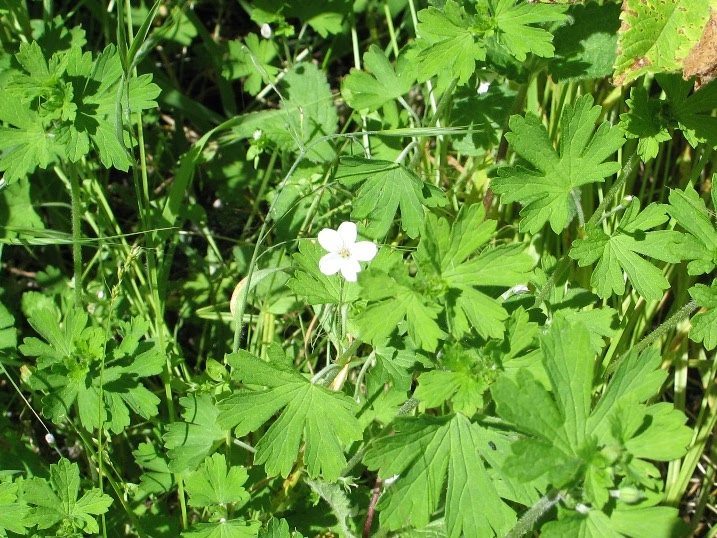
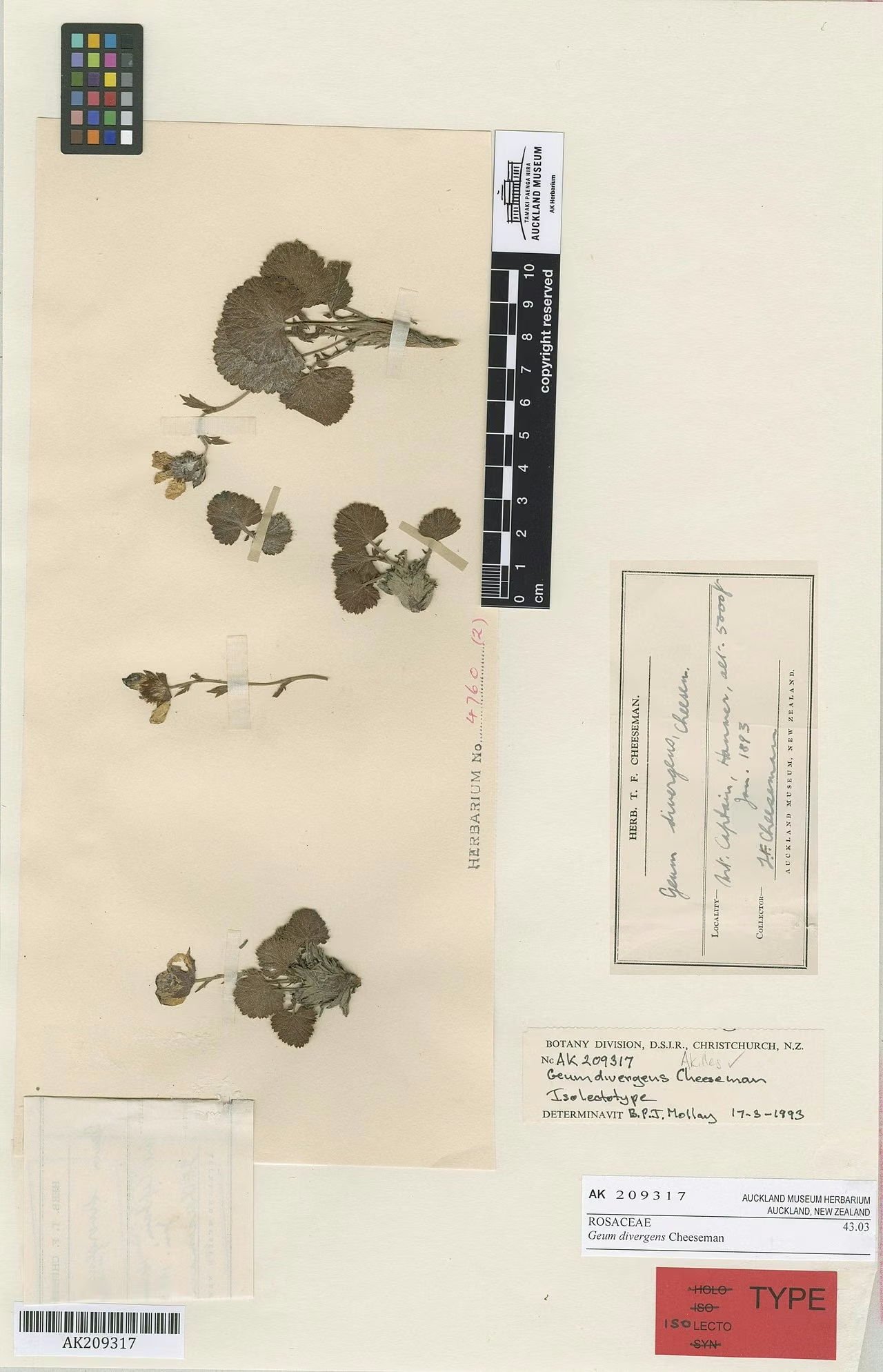
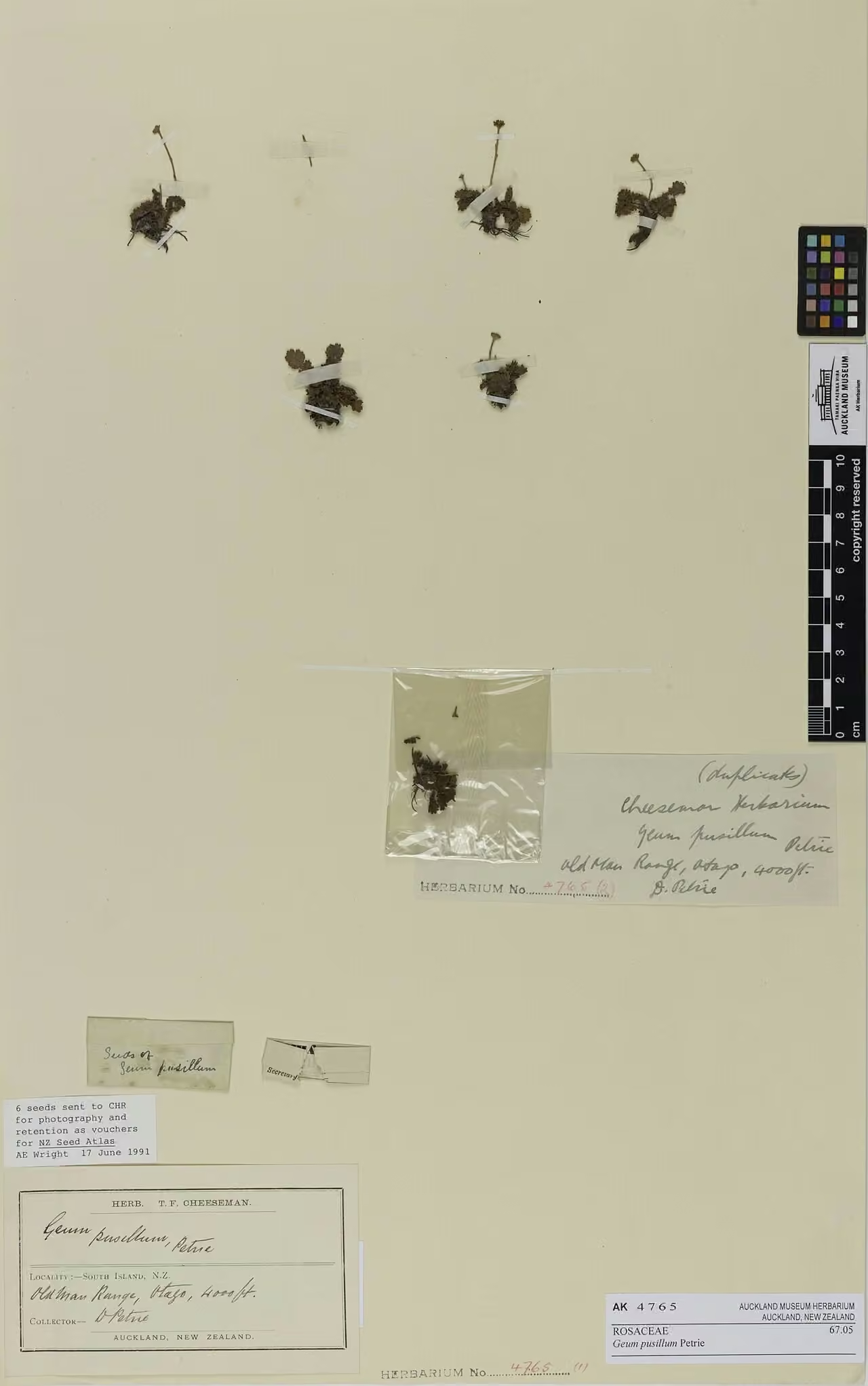
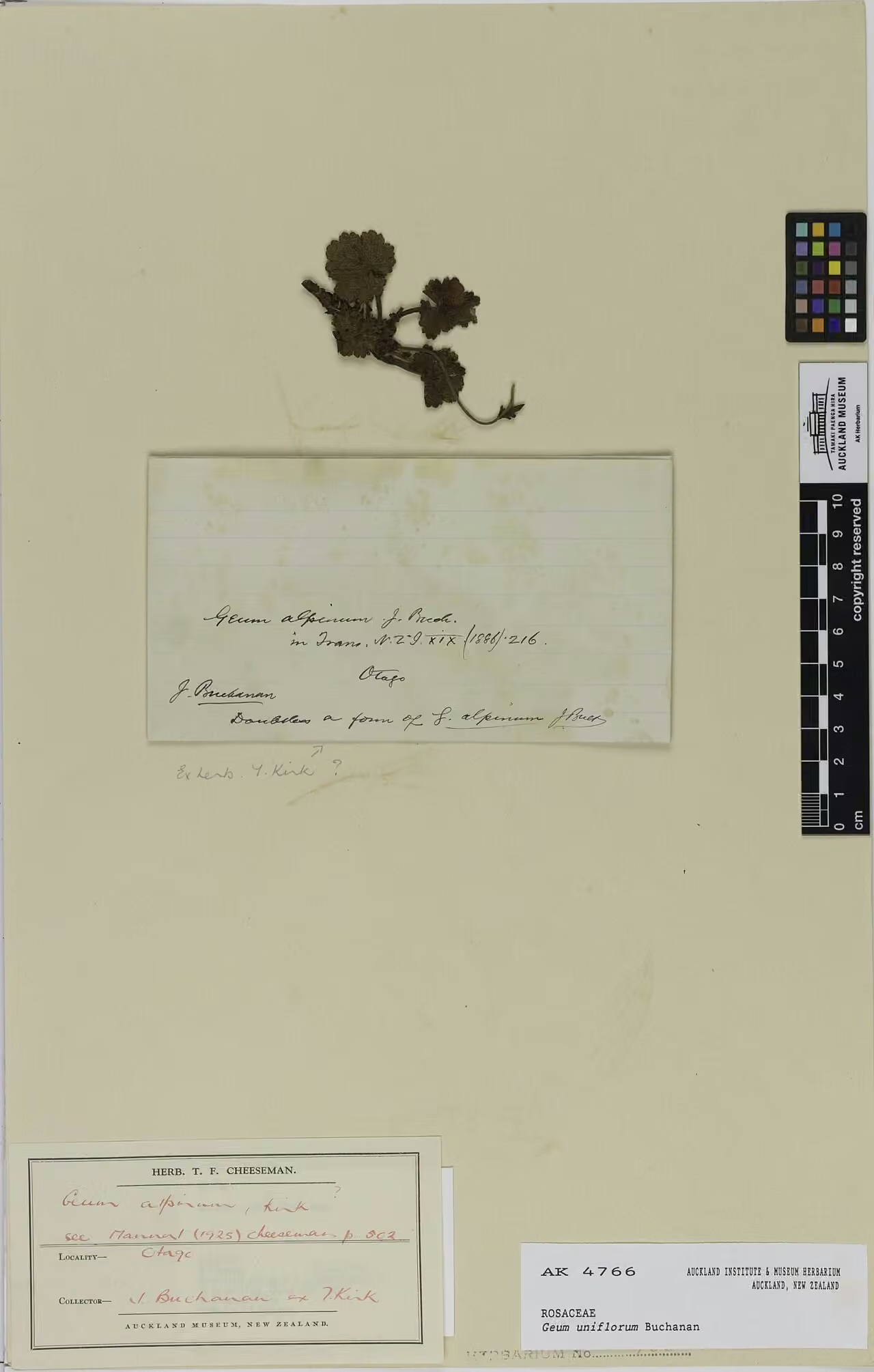
Explore other native plants that share similar characteristics or habitats with Cockayne's Geum (Geum cockaynei), offering further insights into New Zealand's diverse flora. These related species provide context and opportunities for complementary planting in your garden.
Plant Conservation
Geum cockaynei is ranked Not Threatened (2023). It is widespread in the mountains of both main islands and there are no signs of significant decline.
Protecting damp tussock grassland and stream-side herbfield from weed invasion and heavy grazing helps keep this and other mountain herbs secure.
Frequently Asked Questions
Who is Geum cockaynei named after?
It honours Leonard Cockayne (1855 to 1934), the pioneering ecologist and botanist whom NZPCN describes as New Zealand's greatest botanist.
How do you tell Geum cockaynei from other New Zealand geums?
It is the tallest, many-flowered mainland species, with flowering stems carrying up to about 30 creamy white flowers. Alpine avens (Geum uniflorum) and Geum divergens bear only one to five large flowers.
Where does Cockayne's geum grow?
It grows in montane to subalpine damp tussock grassland, herbfield, rocky sites and stream banks, from the Raukumara Range in the North Island south through the South Island.
Can you grow Geum cockaynei in a garden?
Yes. NZPCN says it is easily grown in pots in an alpine house, and in a rock garden in cooler climates, and is best raised from fresh seed.
Sources and Further Reading
The botanical, growing, and conservation details for Cockayne's Geum (Geum cockaynei) on this page draw on the New Zealand plant references below. Consult them for full technical records and the latest distribution data.