Avens
Geum pusillum
Last updated:
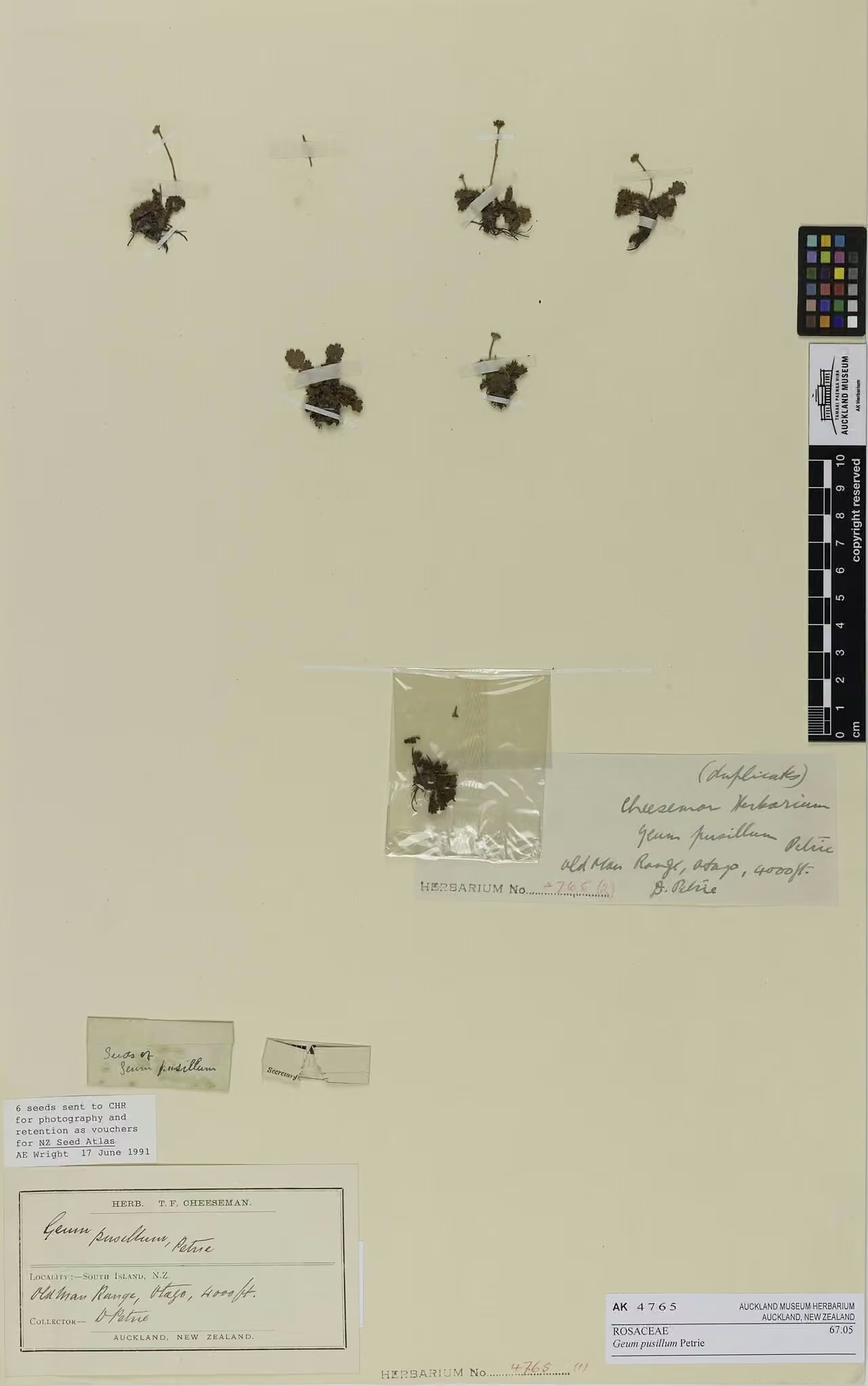
Geum pusillum is one of New Zealand's smallest geums, a diminutive endemic herb that forms loose, flat patches only 1 to 10 cm tall in flower. Its purple-brown to bronze-green pinnate leaves and solitary white flowers, with petals only about 1.5 mm long, are easily overlooked. It is known only from the Old Man Range and Garvie Mountains of Central Otago, where it grows in alpine snowbanks and flushes among mats of Ranunculus and Kelleria or beside Coprosma niphophila. Its very specialised habitat and small range make it At Risk - Naturally Uncommon. The epithet pusillum means insignificant or weak. Explore more native flowering plants in our native plant guide.
Plant Description
Geum pusillum forms diffuse, prostrate patches and is purple-brown to bronze-green in colour. It grows from a slender, ascending rootstock clothed in persistent fibrous remains of old leaves. The basal leaves are up to 25 mm long, occasionally to 45 mm, and pinnate, with up to 5 or 7 pairs of small lateral leaflets and a terminal leaflet 3 to 10 mm long that is round in outline with rounded teeth, sometimes faintly three to five lobed. The leaves are sparsely to moderately covered in white hairs.
The flowers are minute and almost always solitary on a short, downy stalk, with white petals about 1.2 to 1.5 mm long. The achenes are minute and hairless, unlike the hairy achenes of many other New Zealand geums.
It most closely resembles small forms of Geum leiospermum, but differs in its downy flower stalk lacking long hairs mixed in, and in having lateral leaflets less reduced compared with the terminal leaflet.
Quick Facts
| Scientific Name | Geum pusillum |
|---|---|
| Height | 0.01 to 0.1 m in flower |
| Spread | Diffuse, flat patches |
| Water Needs | High; snowbank and flush habitats stay wet |
| Light | Full sun |
| Frost Tolerance | Very high; high alpine |
| Salt Tolerance | Low; an inland alpine plant |
| Growth Rate | Slow |
| Lifespan | Perennial |
Climate Best Suited to
Adapted to the harsh high alpine climate of the Central Otago block mountains, where snow lies late into summer and frosts can occur at any time of year.
Regional Suitability
| City | Climate Suitability |
|---|---|
| Auckland | Low |
| Wellington | Low |
| Christchurch | Low |
| Dunedin | Low |
Plant Habitat
Geum pusillum is endemic to Central Otago and known from the Old Man Range and Garvie Mountains, broad schist block mountains with extensive high alpine plateaux.
It inhabits late snowbanks and alpine flushes, typically growing within mats of Ranunculus or Kelleria, or among the prostrate shrub Coprosma niphophila. These sites are wet with snowmelt for much of the growing season and have a very short snow-free period.
Growing Requirements
Soil Requirements
It grows in wet, fine, often peaty soils of snowbank hollows and seepages.
- Constantly moist soil
- Low fertility
- Gritty, open texture in pots to prevent stagnation
Light Requirements
Its snowbank and flush habitats are open and treeless.
- Full light
- Cool root run is essential
Water Requirements
Snowmelt keeps its habitat wet through much of summer.
- Never allow to dry out in the growing season
- Cold, moist conditions are more important than heavy watering
Planting and Establishing
This is a specialist plant suitable only for experienced alpine growers. NZPCN notes it can be cultivated in pots in an alpine house and is best raised from fresh seed.
Grow it in a shallow pan of gritty, peaty mix stood in a tray of cool water or a plunge bed, so the roots stay cold and moist. It is not commercially available and should not be collected from the wild.
Ecological Role
NZPCN records that its achenes are dispersed by wind. It is part of the specialised snowbank vegetation of the Central Otago ranges, where mat-forming herbs and dwarf shrubs grow in the brief summer after snowmelt.
Its pollination has not been documented in the sources consulted. The minute white flowers are likely to be visited by small flies, which are the main pollinators in high alpine herbfields.
Uses & Significance
Garden Uses
Geum pusillum is of interest only to alpine plant specialists and botanical collections.
- Alpine house pans
- Plunge beds in cold southern districts
- Conservation and research collections
Ecological Value
It is a characteristic, if inconspicuous, member of the unique snowbank flora of the Old Man Range and Garvie Mountains.
- Range-restricted endemic of conservation interest
- Part of the mat and cushion community of late snowbanks
- Indicator of intact alpine flush habitat
Landscaping Uses
It has no realistic landscape use because of its tiny size and exacting needs.
In an alpine collection it can be displayed in a shallow trough with mat-forming snowbank plants such as small Ranunculus species, where its bronze rosettes add texture.
Seasonal Care Calendar
Spring
In the wild it remains under snow until late spring or early summer.
- Keep pots cold
- Start watering as growth resumes
Summer
Flowers from November to February immediately after snowmelt.
- Keep moist and cool
- Watch for ripening achenes
Autumn
Fruit ripens through to March and seed is shed.
- Sow fresh seed
- Reduce watering slightly
Winter
Dormant beneath snow in its natural habitat.
- Keep pots cold but not waterlogged
- Protect from winter wet with a cover
When to Prune and How Much
No pruning is required. Simply remove dead leaves and old flower stalks carefully with tweezers.
Avoid disturbing the slender rootstock.
How to Grow Avens
NZPCN advises that Geum pusillum can be cultivated in pots in an alpine house and is best grown from fresh seed. The species is naturally uncommon and restricted to two mountain ranges, so any seed should come from cultivated plants or from collection authorised by the Department of Conservation. The plant spreads into diffuse patches, so careful division of an established potted plant is also possible.
From Seed
The achenes are minute and hairless, so handle them carefully. Sow fresh on the surface of a fine, gritty, peaty mix and keep cold and moist. A period of winter chilling, as in the snowbank habitat, is likely to help germination.
Because the seed and seedlings are so small, sow thinly and water from below by standing pots in a tray, which avoids washing the seed away. Grow seedlings on in a cool position, as warm, humid conditions quickly cause losses in high alpine plants. Plants raised this way should be kept in pans rather than planted out, except in the coldest southern gardens.
- Collect ripe achenes from cultivated plants
- Sow fresh on a fine gritty peat mix
- Cover with a dusting of fine grit
- Stand pots in a cold frame or plunge bed
- Keep moist through winter
- Prick out seedlings into small pans when large enough
By Division
Separate rooted pieces from the edge of an established patch in spring as growth begins.
- Choose a vigorous potted plant
- Tease out a rooted portion
- Pot into a gritty peat mix
- Keep cool, moist and lightly shaded until established
Pests & Diseases
No specific pests are recorded. In cultivation the greatest risks are heat, drying out and rot in warm, humid conditions. Slugs can destroy tiny plants quickly.
In the wild, changes to snow cover and trampling or vehicle damage to alpine flushes are possible pressures on snowbank plants, but none has been documented for this species.
Cultural Significance
No Māori name or traditional Māori use is recorded for Geum pusillum in the sources consulted.
Donald Petrie, the Otago botanist who explored the Central Otago ranges, described the species in 1896. It has also been placed in the genus Oncostylus as Oncostylus pusillus.
Bonus Tip
To find Geum pusillum in the field, look closely inside the mats of snowbank Ranunculus and Kelleria in late summer: its bronze, pinnate leaves and tiny white flowers are easily missed among the larger mat plants.
Related Plants
Explore other native plants that share similar characteristics or habitats with Avens (Geum pusillum), offering further insights into New Zealand's diverse flora. These related species provide context and opportunities for complementary planting in your garden.
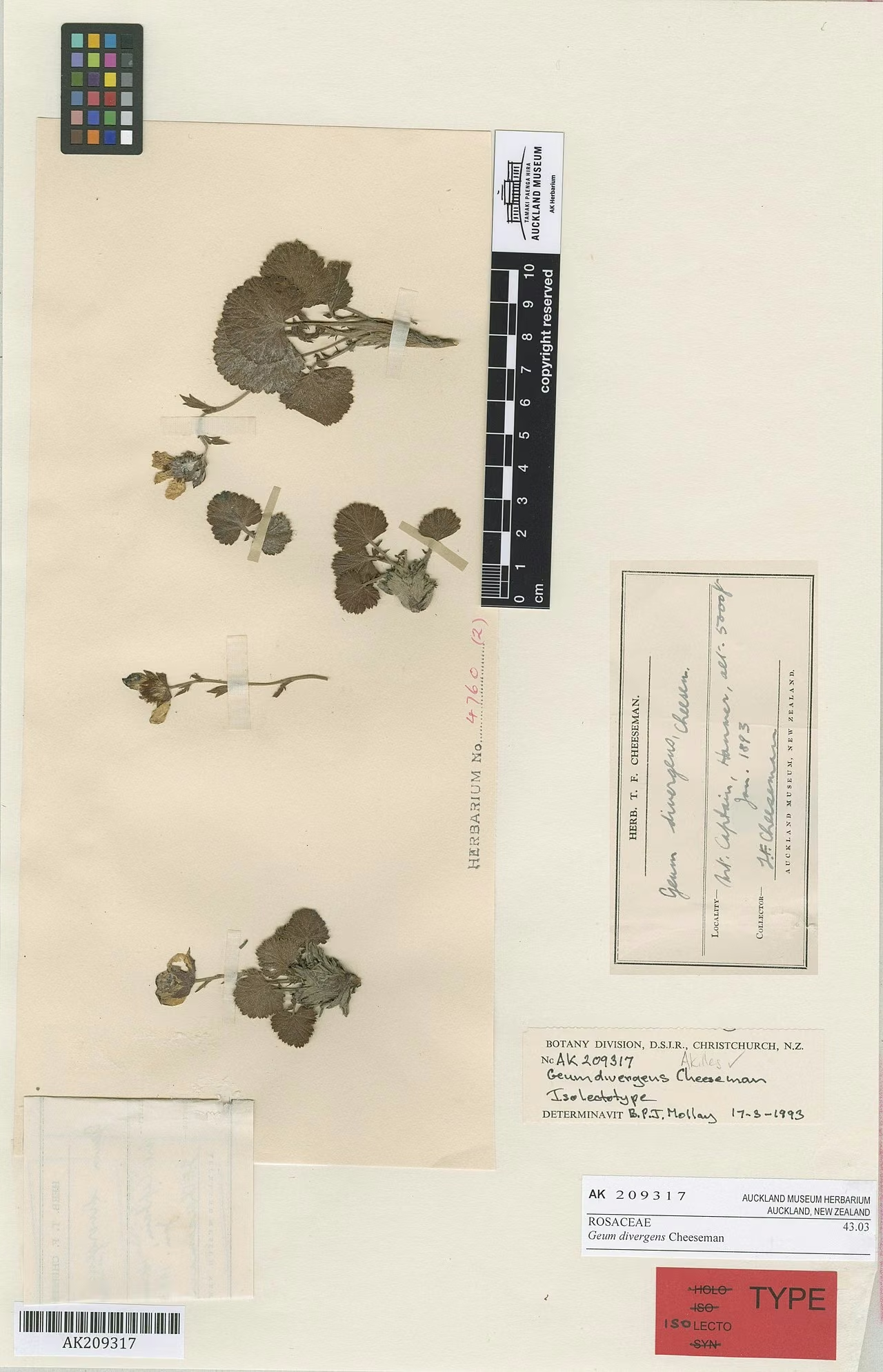
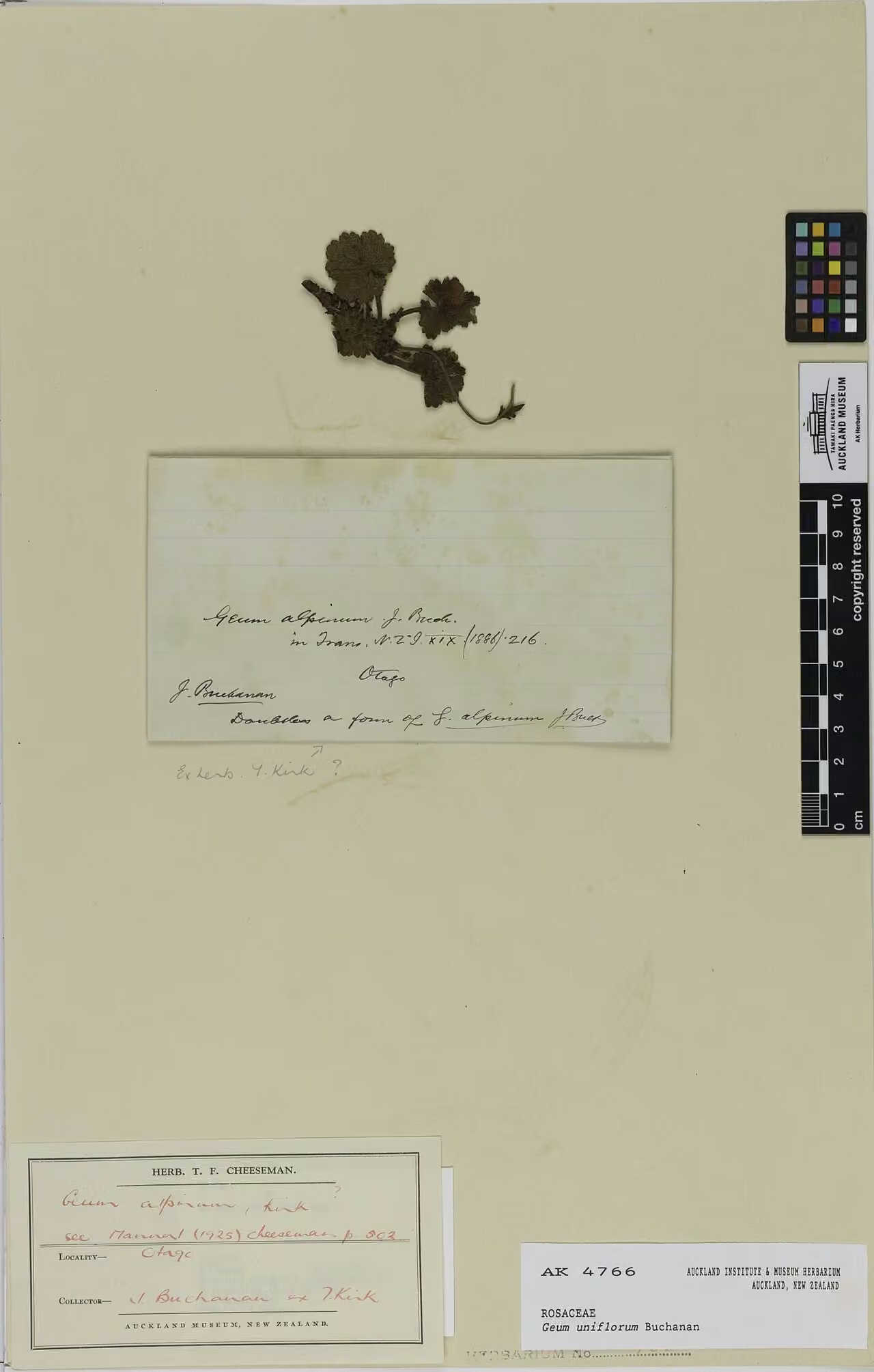
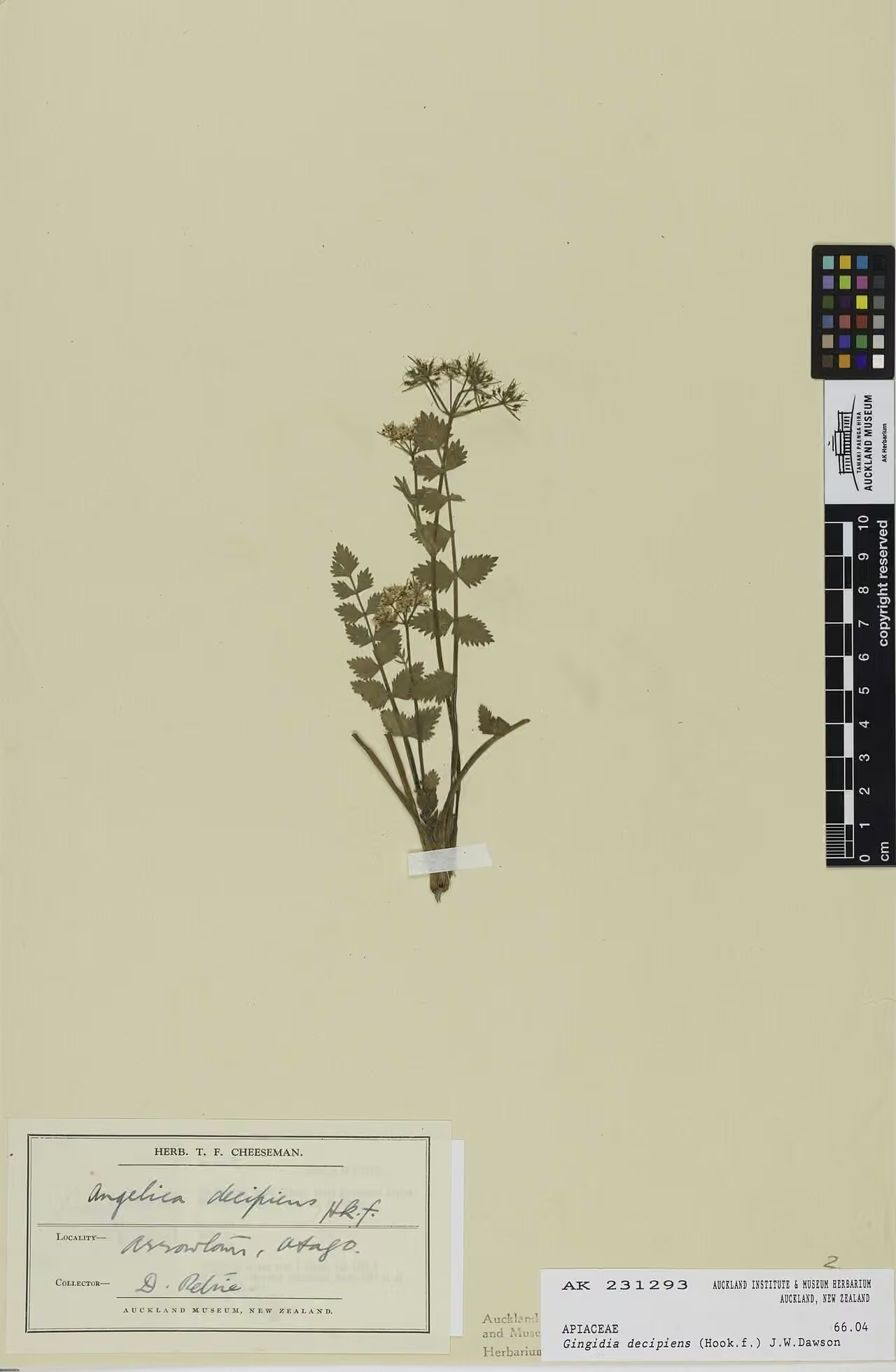
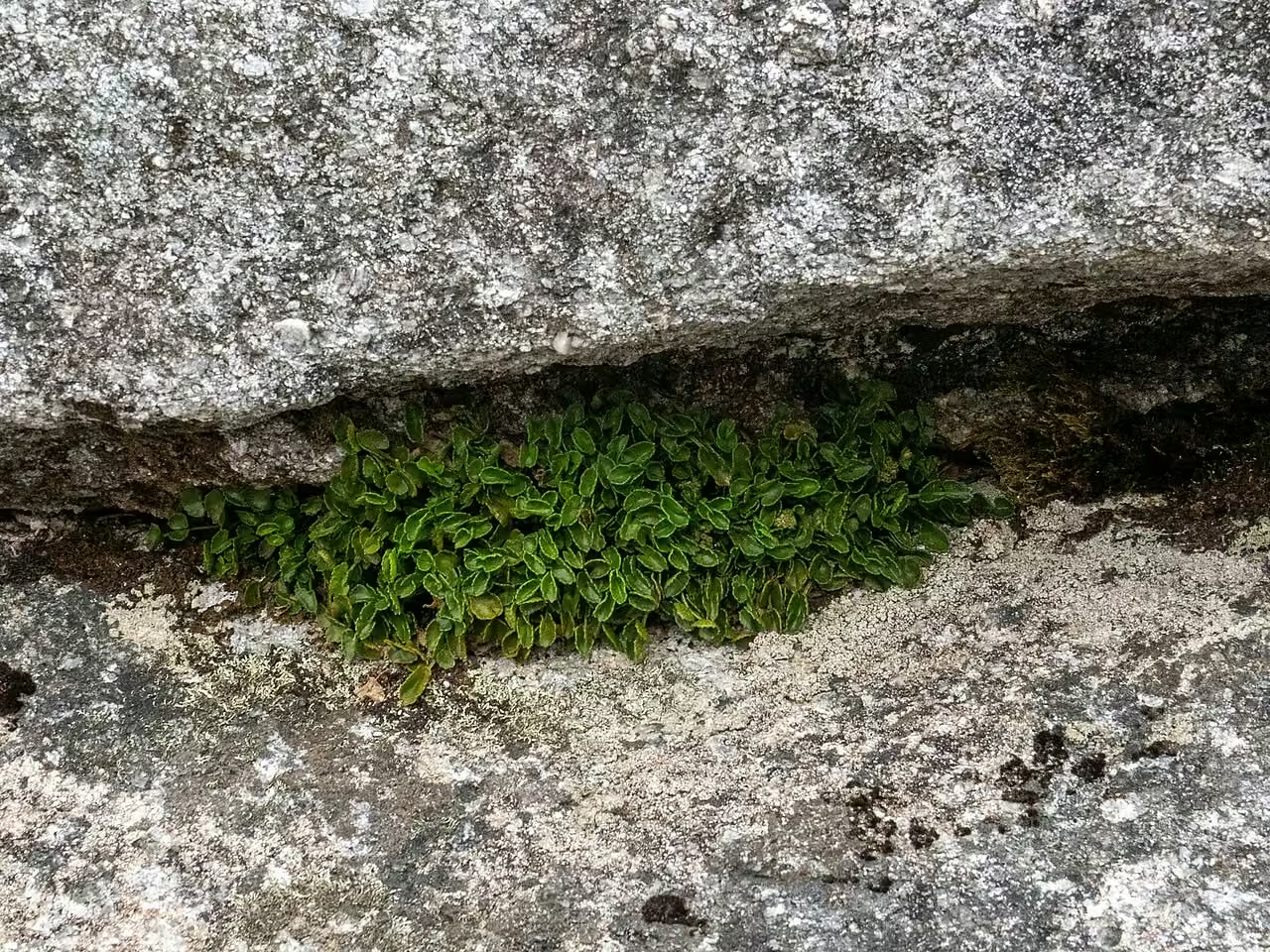
Plant Conservation
Geum pusillum is ranked At Risk - Naturally Uncommon (2023) with the qualifiers Sparse, Range Restricted and Data Poor: Size. It is known only from the Old Man and Garvie Ranges.
Its dependence on late snowbanks makes it potentially vulnerable to warming that reduces snow duration. Protecting alpine flushes from damage by vehicles and stock, and further survey to clarify population size, would help.
Frequently Asked Questions
Where does Geum pusillum grow?
It is endemic to Central Otago, known from the Old Man Range and Garvie Mountains, where it grows in alpine snowbanks and flushes.
How small is Geum pusillum?
Plants are only 10 to 100 mm tall in flower, with leaves up to about 25 mm long and white petals about 1.2 to 1.5 mm long.
What does the name pusillum mean?
Pusillum is Latin for insignificant or weak, a fitting name for this tiny alpine avens that hides among cushion and mat plants.
How can Geum pusillum be told from Geum leiospermum?
NZPCN says it resembles reduced forms of Geum leiospermum but has a downy flower stalk without intermixed long hairs, and lateral leaflets that are usually less reduced relative to the terminal leaflet.
Sources and Further Reading
The botanical, growing, and conservation details for Avens (Geum pusillum) on this page draw on the New Zealand plant references below. Consult them for full technical records and the latest distribution data.