Pinakitere
Geranium homeanum
Last updated:
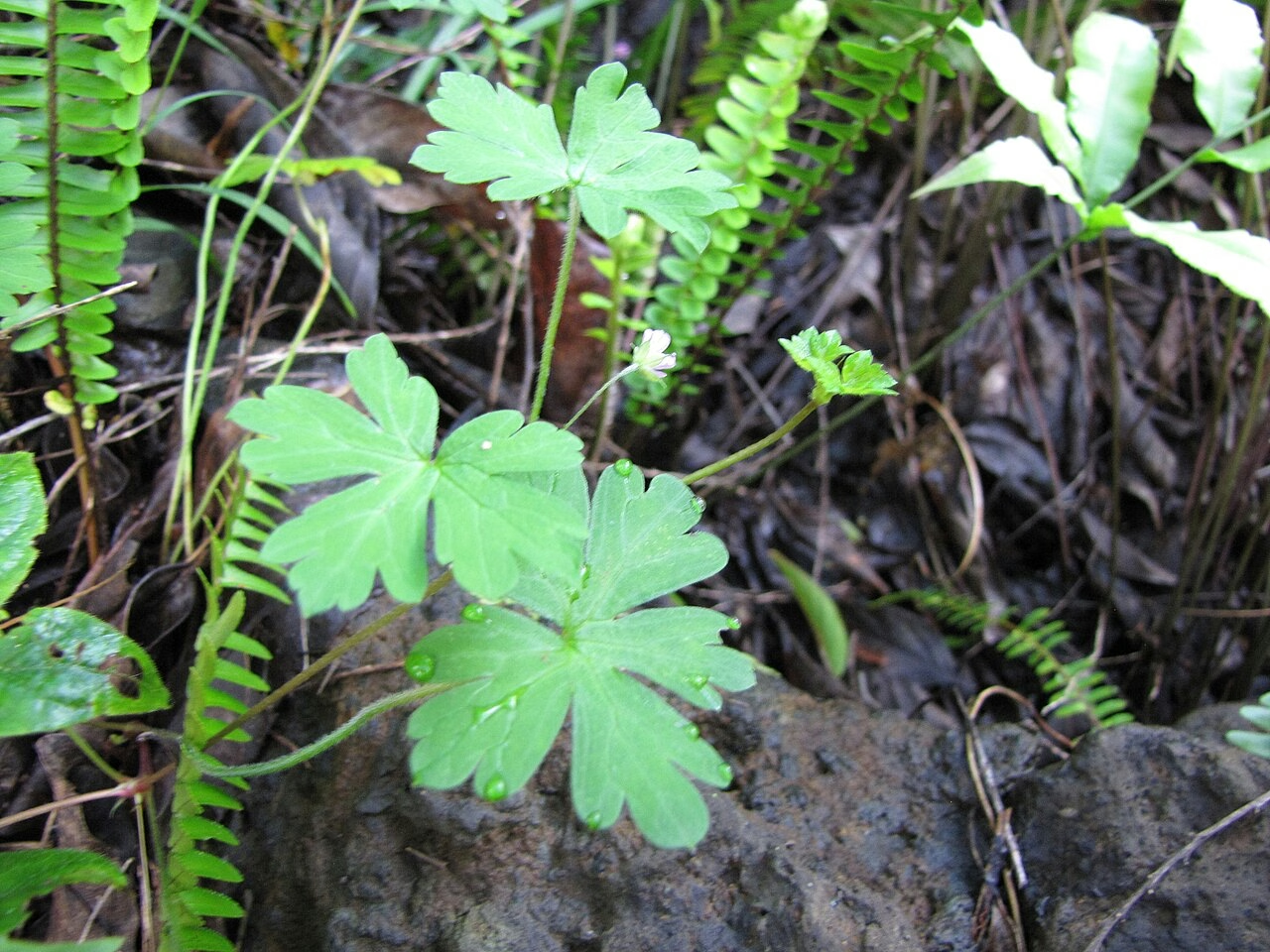
Pinakitere (Geranium homeanum) is a perennial native cranesbill with a stout taproot, rounded deeply lobed leaves up to about 9 cm across and small pale pink flowers carried in pairs from September to April. It grows in open lowland places, especially near the coast, on grassland, cliffs and sometimes waste ground, throughout the North Island and in the northern South Island, becoming rare south of Nelson and Marlborough. It also occurs naturally in Australia. Flora of New Zealand notes that it now grows mainly in modified habitats and may have become much more common over the past two centuries. Explore more native flowering plants in our native plant guide.
Plant Description
Geranium homeanum is a perennial herb with a cylindrical taproot up to about 2 cm thick, often divided, topped by a short, stout crown that produces several flowering stems. The basal leaves sit on stalks up to about 30 cm long. Each leaf blade is kidney-shaped to round, up to about 9 cm across, and cut three-quarters or more of the way to the base into usually 5 to 7 broad, blunt lobes, the larger lobes bearing 5 to 9 teeth. The leaves are sparsely hairy on both surfaces.
The flowers are carried in pairs. The sepals are 3 to 3.5 mm long and the petals are about 4.5 mm long, obovate and pale pink. As with all cranesbills, the fruit is a beaked capsule that splits into five one-seeded mericarps; in this species the mericarps are hairy and the beak reaches up to 12 mm. The seeds are about 2 mm long, oblong and reddish brown with shallow rectangular pits.
Compared with Geranium potentilloides, which has small leaves up to about 3 to 4 cm across and flowers usually borne singly, pinakitere has larger, broader-lobed leaves and paired flowers. It also needs to be told apart from introduced weedy geraniums such as Geranium dissectum, which has more finely dissected leaves.
Quick Facts
| Scientific Name | Geranium homeanum |
|---|---|
| Height | Low, spreading herb; flowering stems arise from a short stout crown |
| Spread | Leaves up to about 9 cm across on stalks up to 30 cm long |
| Water Needs | Low to moderate; grows on dry open coastal sites |
| Light | Full sun to light shade |
| Frost Tolerance | Moderate; mainly a lowland plant |
| Salt Tolerance | Tolerates coastal sites, often grows near the sea |
| Growth Rate | Moderate |
| Lifespan | Perennial |
Climate Best Suited to
Suits mild lowland and coastal climates of the North Island and northern South Island, including dry, sunny coastal faces. It becomes rare in the colder south.
Regional Suitability
| City | Climate Suitability |
|---|---|
| Auckland | High |
| Wellington | Medium |
| Christchurch | Low |
| Dunedin | Low |
Plant Habitat
Pinakitere occurs in the North Island and South Island but is rare south of Nelson and Marlborough. It is also indigenous to Australia. Regional assessments rank it as Regionally Not Threatened in Northland and Auckland, but Regionally Critical in the Wellington region and Data Deficient in Otago, reflecting how scarce it is towards the south.
Its habitat is open lowland ground, commonly coastal: grassland, cliffs and banks, and sometimes waste places. Flora of New Zealand notes that it now grows chiefly in modified habitats, and that it may have increased considerably over the past 200 years as forest was cleared and open ground created.
Growing Requirements
Soil Requirements
It grows in open, well-drained ground on coastal banks, cliffs and grassland, and copes with the disturbed soils of roadsides and waste places.
- Free-draining soil, including clay banks and rocky cliff soils
- Tolerates low fertility
- Avoid ground that stays waterlogged
Light Requirements
A plant of open sites, it flowers best with plenty of sun.
- Full sun on open banks and grassland
- Tolerates light shade but becomes leggy under heavy cover
Water Requirements
The deep taproot helps it survive dry summer spells on exposed coastal faces.
- Water young plants until established
- Established plants need little extra watering
Planting and Establishing
Plant pinakitere in an open, sunny spot with free drainage, such as a dry bank, rockery edge or coastal grassland planting. Because of the taproot, set out young potted seedlings rather than trying to move established plants.
Space plants about 30 cm apart so the leaf rosettes can spread. In restoration of coastal grassland or cliff vegetation it can be sown or planted among low native grasses where competition from rank pasture grasses is limited.
Ecological Role
Like other cranesbills, the small open flowers are visited by insects, and the fruit disperses seed explosively: as the beaked capsule dries, its five segments curl and flick the seeds away from the parent. NZPCN lists dispersal by wind, ballistic projection and possibly attachment for related native geraniums.
Its tendency to occupy open, disturbed ground means it acts as an early coloniser of bare coastal banks and cleared land, and Flora of New Zealand suggests it has benefited from the creation of such habitat since European settlement.
Uses & Significance
Garden Uses
Pinakitere is a modest, low plant for informal native gardens rather than a showy ornamental.
- Dry banks and rough coastal plantings
- Native grassland or meadow-style plantings
- Rockery edges in warm northern gardens
Ecological Value
As a native herb of open coastal country it adds genuine local diversity to plantings that would otherwise be filled with introduced weeds.
- Flowers offer nectar and pollen to small insects over a long season
- Helps restore the herb layer of coastal grassland and cliff vegetation
- A regionally rare plant in Wellington, so local-source plants are worthwhile there
Landscaping Uses
Use pinakitere in the gaps between low tussocks and coastal shrubs, where its rounded lobed leaves and scattered pale pink flowers soften the planting without dominating it.
It suits naturalistic coastal schemes alongside plants such as native linum, coastal grasses and low groundcovers. Avoid heavy mulch over the crown, which can encourage rot.
Seasonal Care Calendar
Spring
New leaves expand from the crown and flowering begins as early as September.
- Weed around young plants
- Check that seedlings are well established before summer
Summer
Main flowering and fruiting period, with pale pink flowers in pairs and beaked fruit forming behind them.
- Collect seed as capsules turn brown
- Water new plantings in dry spells
Autumn
Flowering tails off by April and late seed is shed.
- Allow some seed to fall to replace older plants
- Tidy old flowering stems
Winter
Growth slows and the plant persists from its taproot and basal leaves.
- Ensure drainage is good to avoid crown rot
- Sow stored seed in late winter
When to Prune and How Much
Little pruning is needed. Cut back spent flowering stems once seed has been shed to keep the plant tidy, and remove yellowing basal leaves.
If plants become straggly under competition, clearing surrounding weeds is more effective than cutting the geranium itself.
How to Grow Pinakitere
Pinakitere is best raised from seed, which it produces freely through a long flowering season from September to April. Because its fruit throws seed away from the plant as it dries, the main challenge is collecting seed before it is shed. The taproot means that dividing established plants is difficult, so seed is the method to rely on for restoration plantings and gardens.
From Seed
Collect fruit when the beaked capsules begin to turn brown but before the segments curl and fling their seed. Placing ripening fruiting stems in a paper bag lets them dry and release seed safely. Sow fresh, or store dry and sow in late winter or spring.
Seed of many geraniums has a hard coat; if germination is slow, lightly nicking or rubbing the seed on fine sandpaper may help.
- Gather brown fruiting stems and dry them in a paper bag
- Separate the reddish brown seeds from the husks
- Sow on a free-draining seed mix and cover lightly with fine grit
- Keep moist in a sheltered, bright place
- Prick out seedlings into deep pots to allow the taproot to develop
- Plant out once a strong rosette has formed
From Self-Sown Seedlings
Where plants grow in gardens, seedlings often appear nearby. These can be lifted while small, before the taproot lengthens, and potted on.
- Lift seedlings with two or three true leaves
- Keep as much root as possible and pot into deep containers
- Grow on in light shade until established
Pests & Diseases
No serious pests specific to pinakitere are recorded. Slugs and snails may graze young seedlings, and crowns can rot in poorly drained, wet soils over winter.
Its main problem in the wild is competition from rank introduced grasses and weeds on the open sites it needs.
Cultural Significance
Flora of New Zealand records pinakitere as a vernacular name for Geranium homeanum. No information on traditional Māori use of this plant was found in the sources consulted.
The species was described by the Russian botanist Nikolai Turczaninow in 1863 from a New Zealand specimen. Hooker had earlier treated it as a variety of the European Geranium dissectum, and later New Zealand botanists called it Geranium australe.
Bonus Tip
Because pinakitere often grows among weedy introduced geraniums, check the leaves before weeding: its leaves are broad and rounded with 5 to 7 broad, toothed lobes and it has a thick taproot, whereas the common weed Geranium dissectum has finely cut, ragged leaves.
Related Plants
Explore other native plants that share similar characteristics or habitats with Pinakitere (Geranium homeanum), offering further insights into New Zealand's diverse flora. These related species provide context and opportunities for complementary planting in your garden.
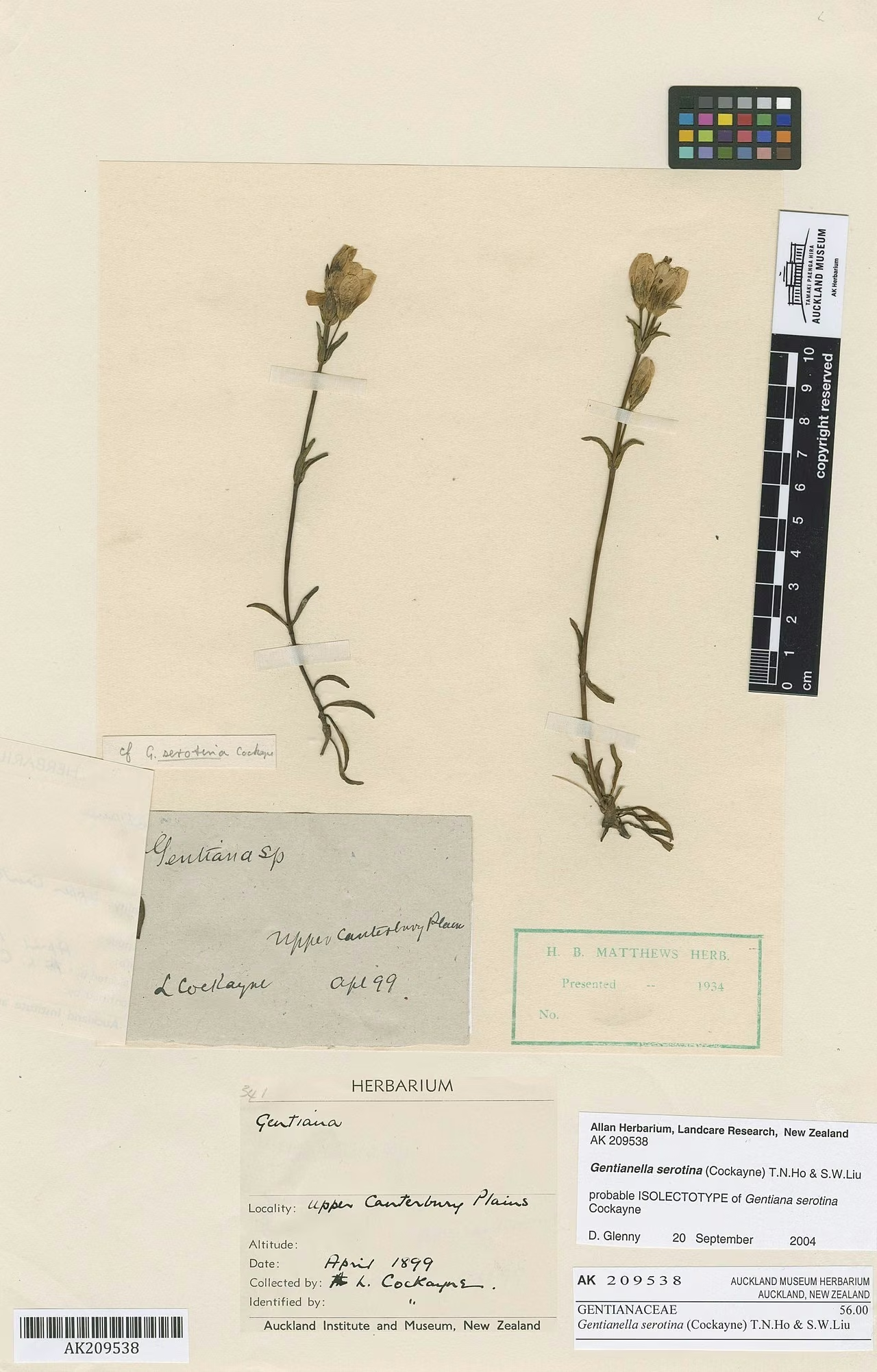
Gentianella serotina
Gentianella serotina
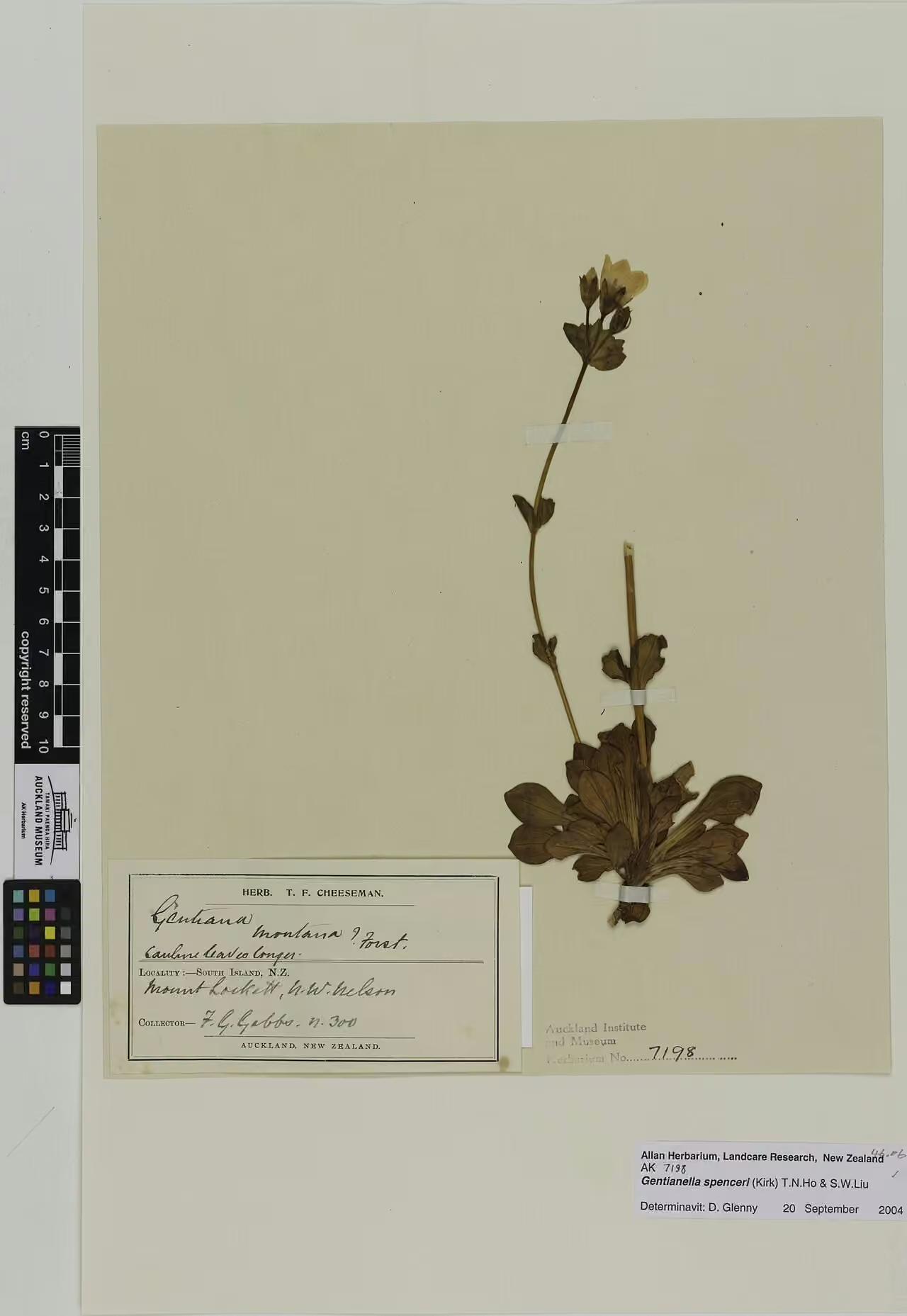
Spencer's Gentian
Gentianella spenceri
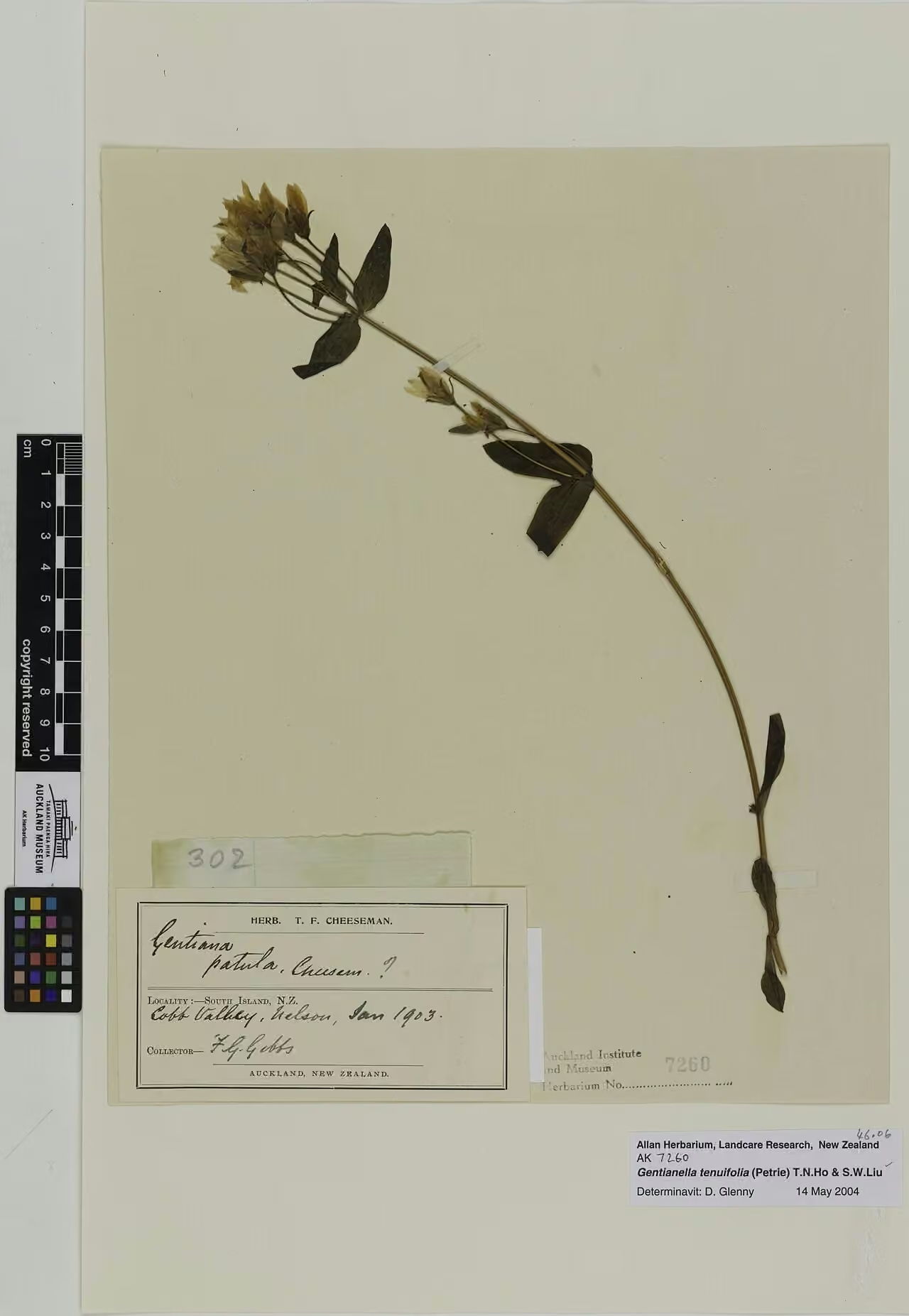
Gentianella tenuifolia
Gentianella tenuifolia
Gentianella vernicosa
Gentianella vernicosa
Small-Leaved Cranesbill
Geranium microphyllum
Soft Cranesbill
Geranium potentilloides
Cockayne's Geum
Geum cockaynei
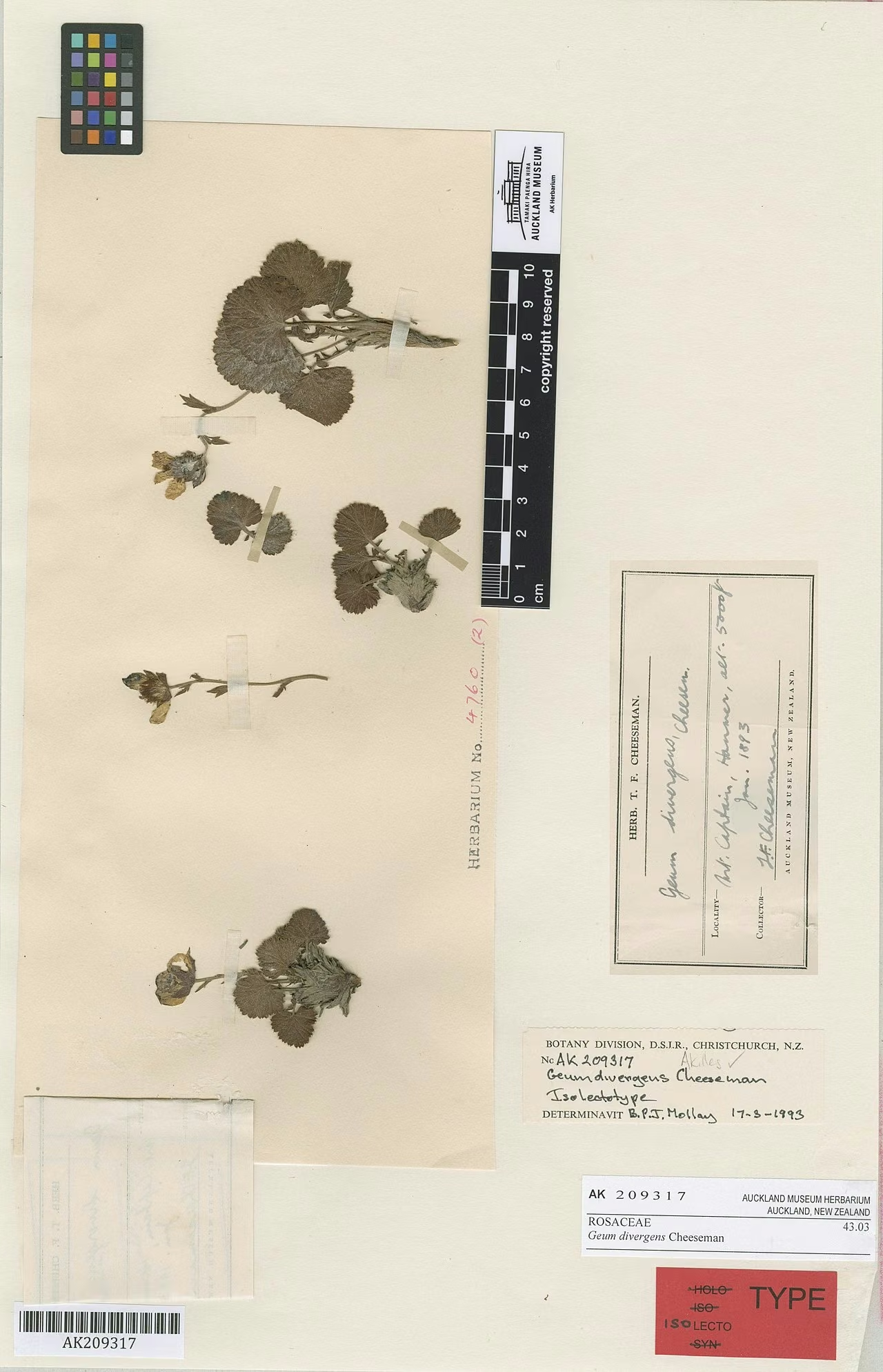
Geum divergens
Geum divergens
Plant Conservation
Geranium homeanum is ranked Not Threatened nationally (2023), with the qualifier Secure Overseas because it is also native to Australia. It is common in the northern North Island but is rare in the south, being ranked Regionally Critical in the Wellington region.
It is a plant of open ground, so its main threats are rank grass and weeds smothering coastal banks and grasslands. Keeping some open, low-competition coastal habitat and using local-source seed in plantings will help where it is uncommon.
Frequently Asked Questions
Is Geranium homeanum a native plant or a weed?
It is a genuine native. Geranium homeanum is indigenous to New Zealand and Australia, although it often turns up in disturbed places such as roadsides and waste ground alongside introduced geraniums.
What colour are the flowers of pinakitere?
The petals are pale pink, about 4.5 mm long and 3 mm wide, and the flowers are usually borne in pairs on each flowering stem.
Where does Geranium homeanum grow in New Zealand?
It grows in open lowland sites, often coastal, including grassland and cliffs, across the North Island and the northern South Island, and is rare south of Nelson and Marlborough.
What was Geranium homeanum previously called?
Older New Zealand floras, including Allan's 1961 Flora, called it Geranium australe, and Hooker described it as Geranium dissectum var. glabratum.
Sources and Further Reading
The botanical, growing, and conservation details for Pinakitere (Geranium homeanum) on this page draw on the New Zealand plant references below. Consult them for full technical records and the latest distribution data.