Gentian
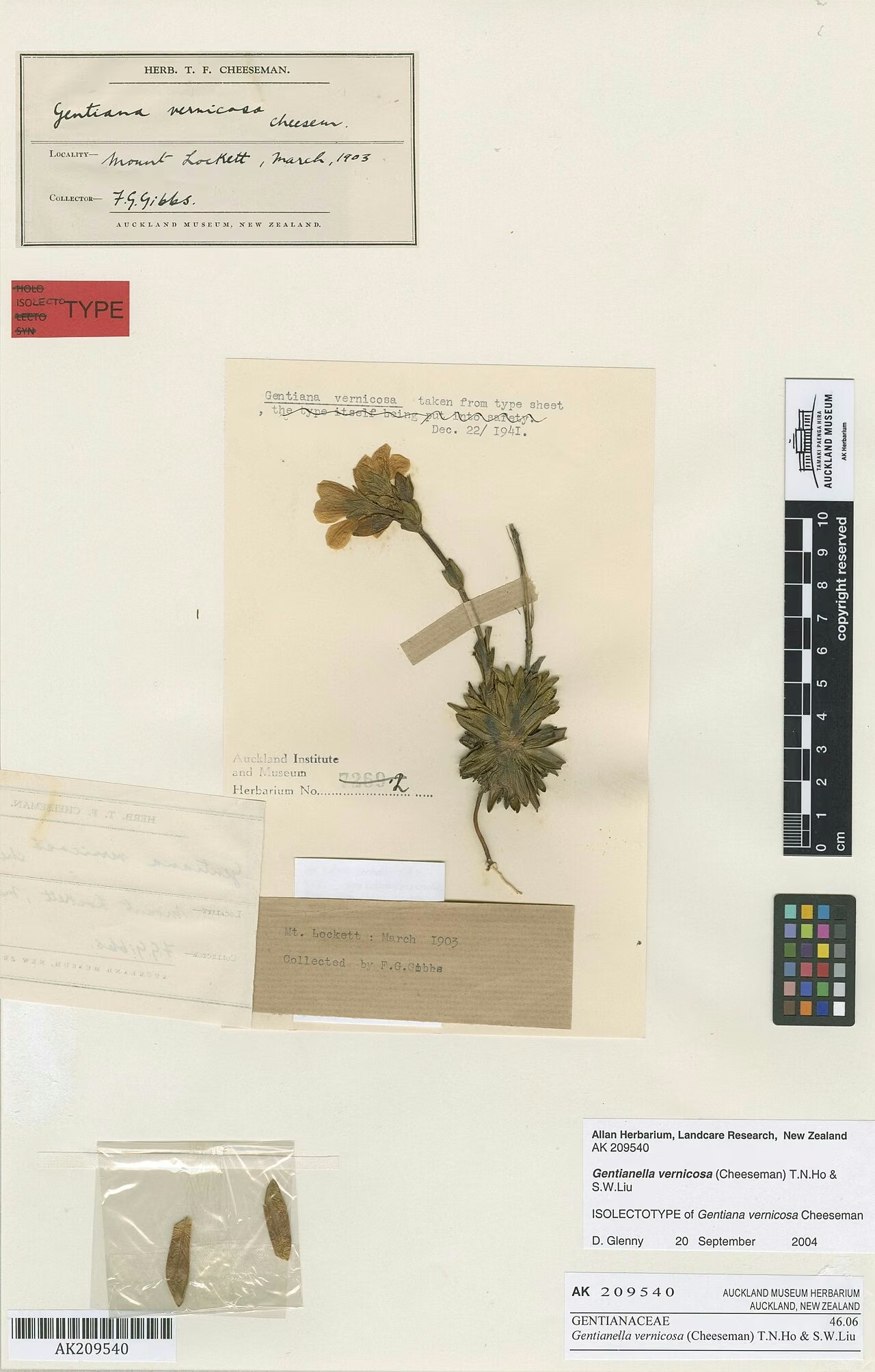
Gentianella vernicosa
Last updated:
Gentianella vernicosa is an endemic New Zealand gentian of the northern South Island mountains, named for its glossy, varnished-looking leaves. It is a small perennial herb 8-29 cm tall in flower, with dark purple-black stems and clusters of white flowers about 13-17 mm long that open in late summer and autumn, mainly in April. It grows in higher montane to subalpine grassland, herbfield and peaty sedgeland from north-west Nelson, including Mount Arthur and the Cobb area, to the upper Awatere in Marlborough. Unlike many native gentians, which die after flowering, it usually flowers year after year. It is rated Not Threatened. Explore more native flowering plants in our native plant guide.
Plant Description
Gentianella vernicosa is a small herb with a long, slender root and a branched crown (caudex) 35-120 mm long, from which arise one to several stems that first spread and then turn upright. The stems are usually tinted purple-black, rarely green. Leaves form compact tufts at the base and are narrowly elliptic, about 12-31 mm long and 2-6 mm wide, thick, glossy and dark green without projecting veins, occasionally tinged crimson underneath. Upper stem leaves are smaller and set in distant pairs.
Flowers are carried in terminal clusters of two to seven. The corolla is white with uncoloured veins and about 13-17 mm long, with lobes cut most of the way down, and the anthers are blue-black with a yellow opening. The capsule is about 13-18 mm long. Flowering is from February to April.
Among New Zealand gentians, the combination of thick, glossy, varnished leaves without visible veins, dark stems, pure white flowers with unmarked veins and a perennial, repeatedly flowering habit identifies this species. Many other native Gentianella, such as the widespread snow gentians, are monocarpic and die after a single flowering, and several have flowers with purple-striped veins.
Quick Facts
| Scientific Name | Gentianella vernicosa |
|---|---|
| Height | 8-29 cm in flower |
| Spread | Small tufts; stems arise from a branched caudex 35-120 mm long |
| Water Needs | Moist; tolerates damp peaty ground |
| Light | Full sun (open grassland and herbfield) |
| Frost Tolerance | High; subalpine plant |
| Salt Tolerance | No information available; an inland mountain species |
| Growth Rate | Slow |
| Lifespan | Perennial (polycarpic), rarely biennial |
Climate Best Suited to
It suits the cool, wet mountain climate of north-west Nelson, with frequent cloud, heavy rainfall, cold winters and short growing seasons. It would struggle in warm lowland gardens.
Regional Suitability
| City | Climate Suitability |
|---|---|
| Auckland | Low |
| Wellington | Low |
| Christchurch | Low |
| Dunedin | Medium |
Plant Habitat
Gentianella vernicosa is endemic to the northern South Island. Allan's Flora gives its range as north-west to south-west Nelson and east to the upper Awatere drainage in Marlborough. Herbarium collections come from Mount Arthur and the Mount Arthur plateau, the type locality of Mount Lockett north of Mount Arthur, the saddle between the Cobb River and Burgoo Stream in Kahurangi National Park, the Marino Mountains and the Brunner Range.
It occurs in higher montane to subalpine grassland and herbfield. Specimen labels record it at about 1540 m on Mount Arthur among Chionochloa pallens and C. australis tussock with Celmisia, at the margins of tarns, and at about 1100 m in red tussock and Carpha sedgeland over Sphagnum peat. It is rated a facultative wetland plant, growing both in boggy and drier ground.
Growing Requirements
Soil Requirements
In the wild it grows in mountain grassland soils and peat, which are acidic, cool and often moist. In cultivation a gritty, humus-rich alpine mix is the closest match.
- Gritty mix with peat-free humus or fine bark
- Consistently moist but never stagnant
- Low fertility; avoid strong fertiliser
Light Requirements
It is a plant of open tussock grassland and herbfield, so it needs good light with only the cover of low surrounding vegetation.
- Full sun in cool climates
- Bright light with protection from hot afternoon sun in warmer districts
Water Requirements
Its natural sites receive very high rainfall and include tarn margins and peat bogs, so it should never dry out.
- Keep evenly moist, especially in summer
- A trough or pot standing in a cool, moist spot suits it
- Ensure drainage so roots do not rot in warm weather
Planting and Establishing
This gentian is rarely if ever offered by nurseries and is essentially a plant for alpine enthusiasts or restoration within its natural range. If grown, plant it in a trough, raised scree bed or pot of gritty, moist alpine mix in a cool, bright position.
Plant in early spring or autumn, firm gently and water in. Small plants are easily lost among taller neighbours, so place it with low cushion plants and small tussocks rather than vigorous perennials.
Ecological Role
Its open white flowers appear late in the season when few other alpine plants are flowering. Native gentians are generally pollinated by insects such as flies and native bees; specific pollinator studies for Gentianella vernicosa were not found. Seeds are released from the dry capsule and are small.
It forms part of the herb layer in subalpine tussock grassland and peaty sedgeland of north-west Nelson, alongside snow tussocks and Celmisia. As a polycarpic perennial it persists at a site over several seasons rather than depending each year on new seedlings, as monocarpic gentians do.
Uses & Significance
Garden Uses
Suited only to specialist alpine gardens, troughs or alpine house collections in cool districts, where its late white flowers and glossy rosettes can be appreciated up close.
- Alpine trough or raised scree bed
- Specialist native gentian collection
- Restoration of subalpine herbfield within its natural range
Ecological Value
It contributes late-season flowers to the subalpine plant community of north-west Nelson and is one of many endemic gentians that make New Zealand a centre of Gentianella diversity.
- Late-season nectar and pollen source for alpine insects
- Part of the herb layer of tussock grassland and peat bogs
- Endemic element of the Nelson mountain flora
Landscaping Uses
In a trough or alpine bed, pair its dark green, glossy rosettes with silver-leaved cushion plants and small Celmisia so that the white autumn flowers stand out. Dark purple-black stems add an extra contrast against pale gravel mulch.
Because it is small, place it at the front of a planting or at eye level in a raised trough, and keep surrounding plants low so it receives full light.
Seasonal Care Calendar
Spring
Tufts of glossy basal leaves resume growth as snow melts and temperatures rise.
- Top up gritty mulch
- Begin regular watering in cultivation
Summer
Flowering stems develop; in the wild some flowering begins in February.
- Keep plants cool and moist
- Shade troughs from strong afternoon sun
Autumn
Main flowering period, centred on April, followed by capsules ripening.
- Enjoy the white flowers
- Collect seed from ripe, dry capsules
Winter
Plants are dormant and in the wild are often under snow.
- Protect pots from prolonged waterlogging
- Leave plants undisturbed
When to Prune and How Much
No pruning is needed. Spent flowering stems can be left until capsules have ripened and seed has been gathered, then snipped off at the base.
Avoid cutting into the basal leaf tufts, because this perennial gentian relies on its crown of leaves to flower again in later years.
How to Grow Gentian
No published propagation method specific to Gentianella vernicosa was found; NZPCN gives no propagation notes for it. New Zealand gentians in general are raised from fresh seed, and some growers report that a period of cold improves germination. Because this species is a polycarpic perennial with a branched crown, careful separation of crown pieces may also be possible, though this is untested in published sources. Any material should come from cultivated plants or from collections made with appropriate Department of Conservation permission, as much of its range lies within Kahurangi National Park.
From Seed
Collect capsules as they dry and begin to split in autumn, after the main April flowering. The seed is small and should be sown as fresh as possible.
- Pick dry, splitting capsules and shake the seed onto paper.
- Sow on the surface of a fine, gritty, moist seed mix without burying the seed.
- Place the tray outdoors or in a cold frame over winter so it receives natural cold.
- Keep the mix moist at all times and protect from slugs.
- Expect germination in spring; pot seedlings into gritty alpine mix once large enough to handle.
By Division
Well-established plants with a branched caudex produce several leaf tufts, and a tuft with its own roots can be carefully removed. Only attempt this with vigorous cultivated plants.
- Lift the plant in early spring as growth begins.
- Gently separate a rooted branch of the crown with a clean knife.
- Pot into a moist, gritty mix and keep shaded and cool until established.
- Return the parent plant to its position promptly and water well.
Pests & Diseases
No pests or diseases specific to this species are recorded. In the wild, introduced browsers such as deer, chamois and hares graze many alpine herbs, and the soft flowering stems of gentians are likely to be eaten where these animals are common.
In cultivation the main risks are slugs and snails on seedlings, root rot in warm, wet conditions and drying out in summer.
Cultural Significance
No Māori name or traditional use of Gentianella vernicosa is recorded in the sources consulted. The genus name Gentianella means little Gentiana, after Gentius, an ancient king of Illyria, while vernicosa means varnished.
Thomas Cheeseman described the species as Gentiana vernicosa from material collected by F. G. Gibbs on Mount Lockett, north of Mount Arthur, in March 1903. It has since been placed in Chionogentias and is now treated in Gentianella, and Cheeseman's Gentiana gracilifolia is regarded as the same species.
Bonus Tip
If you are hunting for this gentian on the Mount Arthur tops, go in March or April rather than midsummer. It flowers after most alpine plants have finished, and the white flowers on dark stems are much easier to spot than the low glossy rosettes.
Related Plants
Explore other native plants that share similar characteristics or habitats with Gentian (Gentianella vernicosa), offering further insights into New Zealand's diverse flora. These related species provide context and opportunities for complementary planting in your garden.
Charleston Gentian
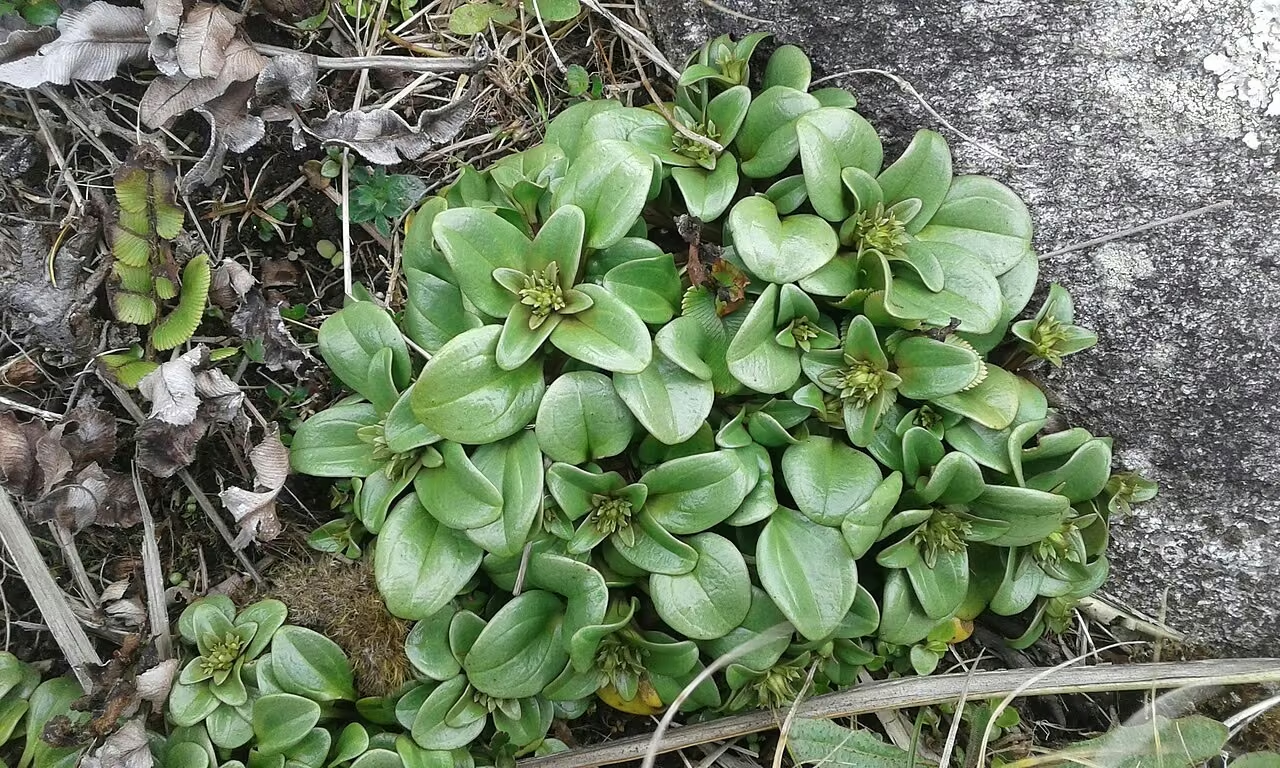
Gentianella stevenii
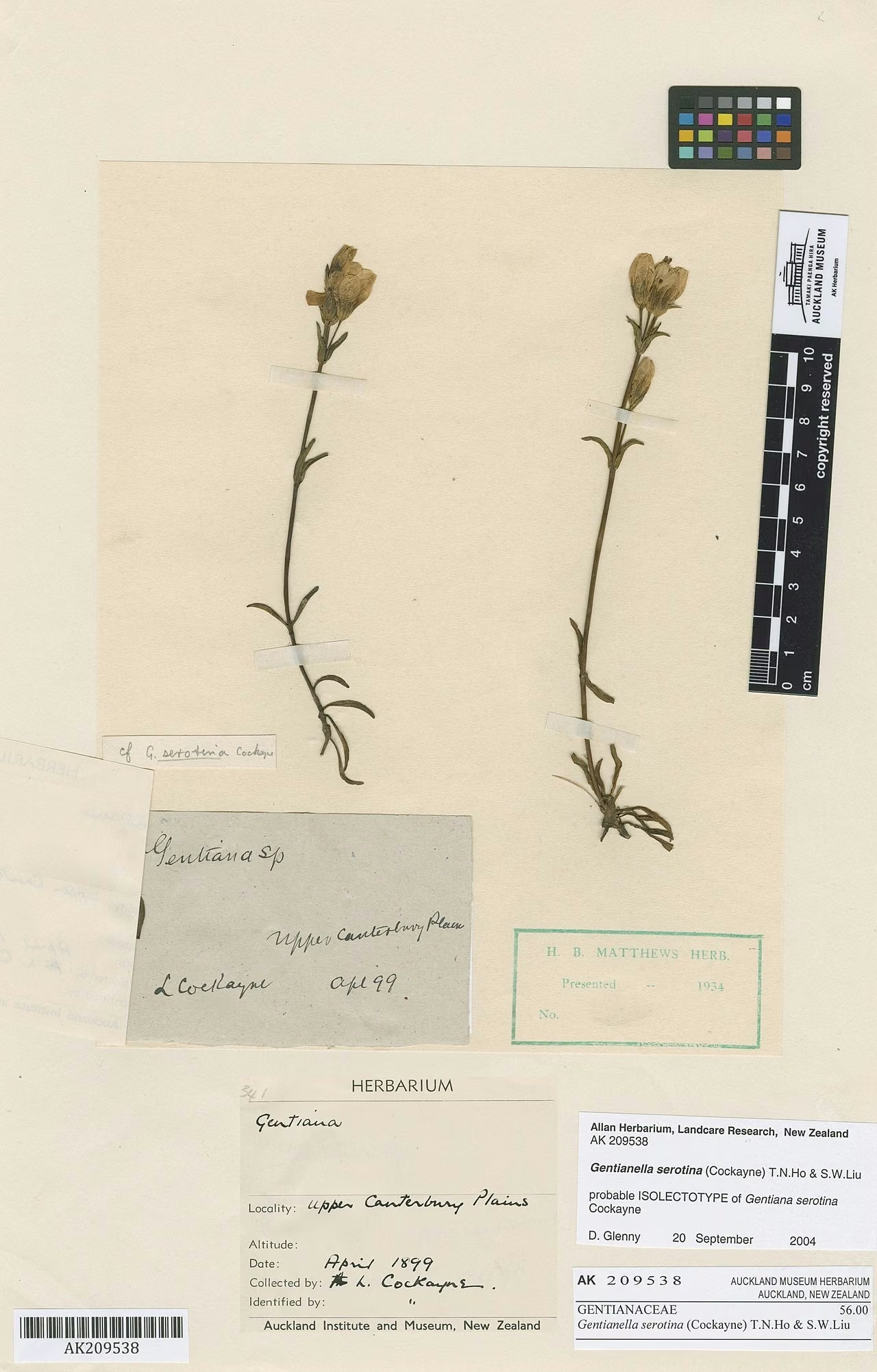
Gentianella serotina
Gentianella serotina
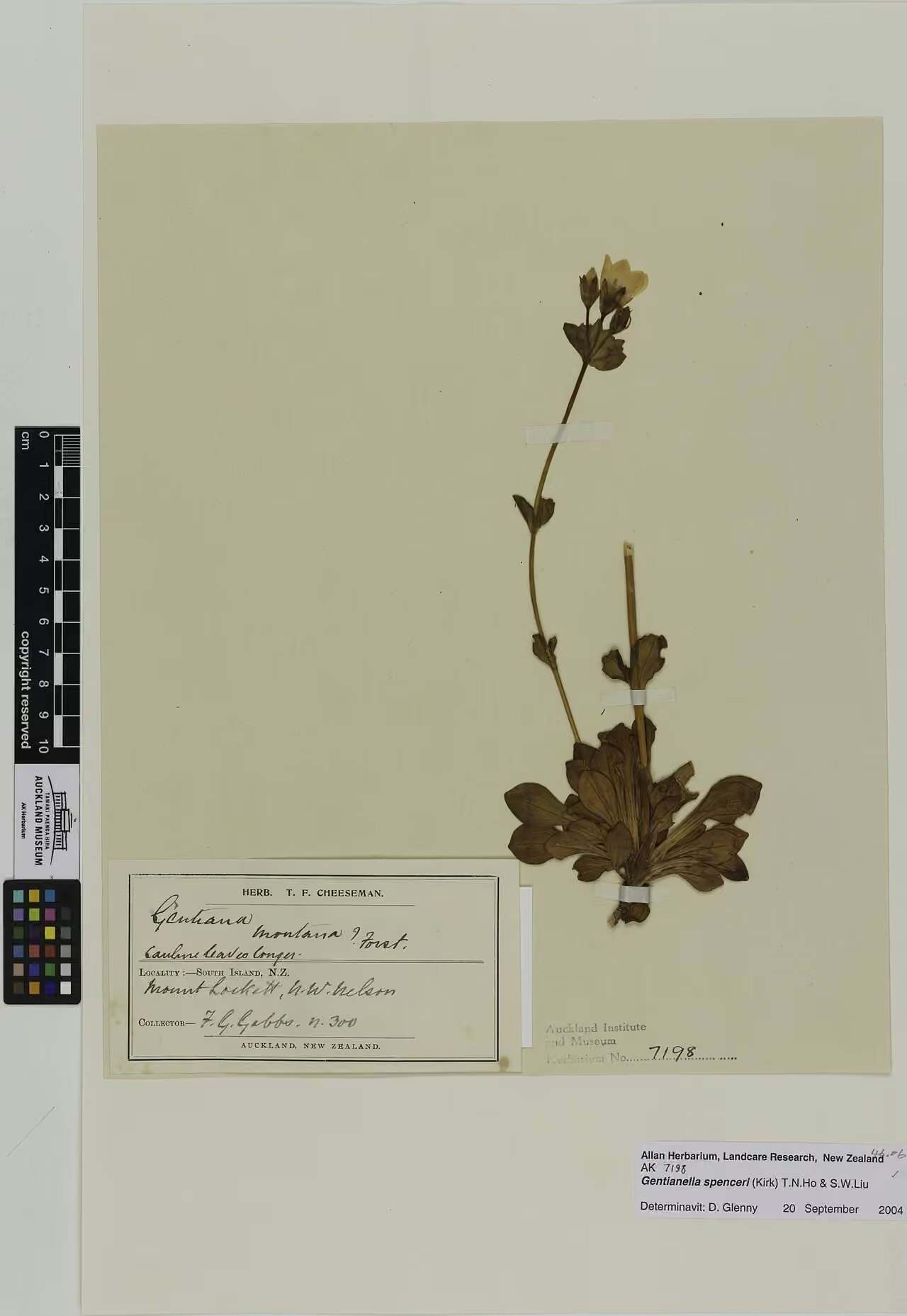
Spencer's Gentian
Gentianella spenceri
Gentianella tenuifolia
Gentianella tenuifolia
Pinakitere
Geranium homeanum
Small-Leaved Cranesbill
Geranium microphyllum
Soft Cranesbill
Geranium potentilloides
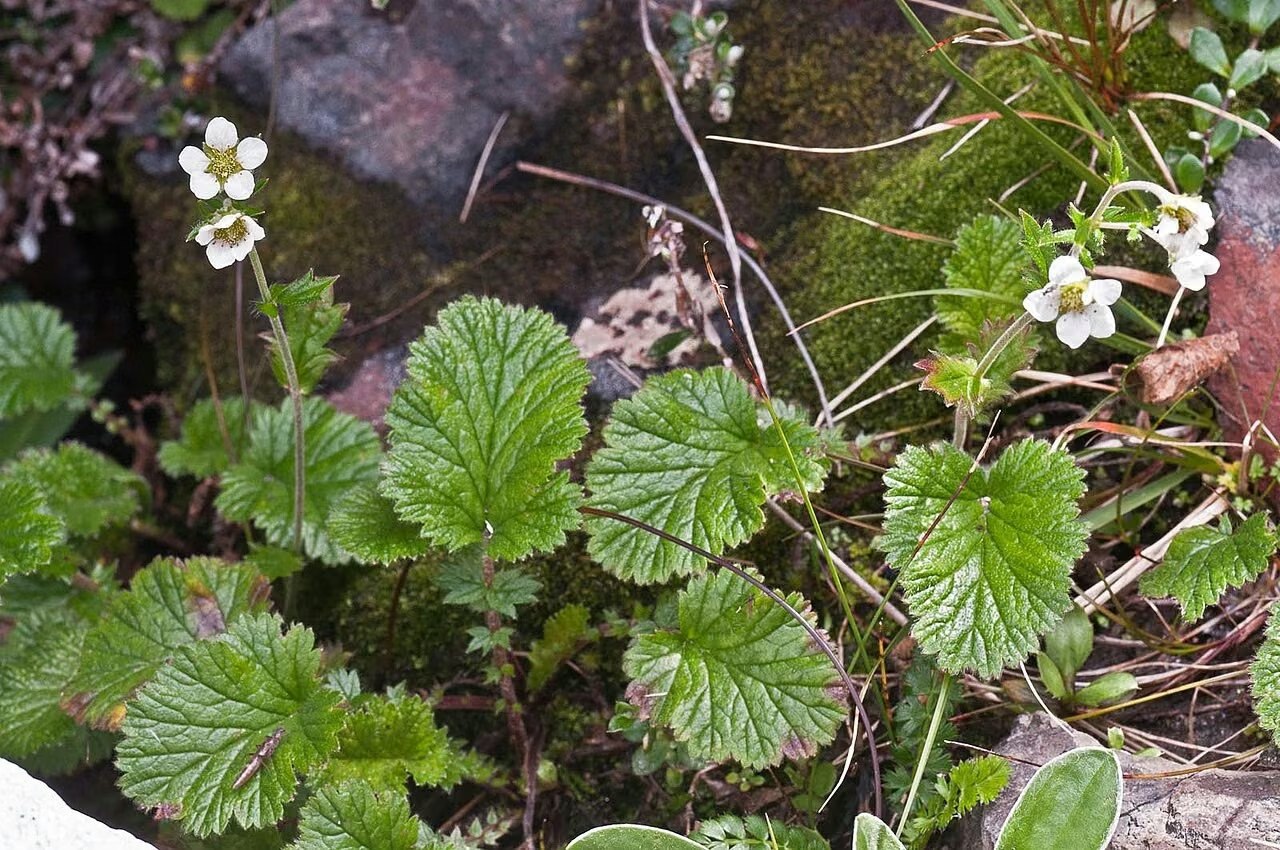
Cockayne's Geum
Geum cockaynei
Plant Conservation
Gentianella vernicosa has been rated Not Threatened in every assessment from 2004 to 2023. Much of its range lies within Kahurangi National Park and other conservation land in the north-west South Island.
Potential pressures are browsing by deer, chamois and hares, trampling around popular alpine tracks, and longer-term warming that could shrink subalpine habitat. Browser control and keeping to formed tracks on the Mount Arthur plateau help protect it.
Frequently Asked Questions
What does vernicosa mean?
Vernicosa means varnished, referring to the thick, glossy, dark green leaves that look as if they have been polished.
When does Gentianella vernicosa flower?
It flowers late in the alpine season, from about February but mainly in April, with white flowers on purple-black stems.
Where can I see Gentianella vernicosa in the wild?
It grows in subalpine grassland and herbfield in north-west Nelson, for example on the Mount Arthur plateau and near the Cobb in Kahurangi National Park, and south-east to the upper Awatere.
Does Gentianella vernicosa die after flowering?
Usually not. The NZ Flora describes it as polycarpic, flowering in successive years, and only rarely behaving as a biennial that dies after flowering.
Sources and Further Reading
The botanical, growing, and conservation details for Gentian (Gentianella vernicosa) on this page draw on the New Zealand plant references below. Consult them for full technical records and the latest distribution data.