Spencer's Gentian
Gentianella spenceri
Last updated:
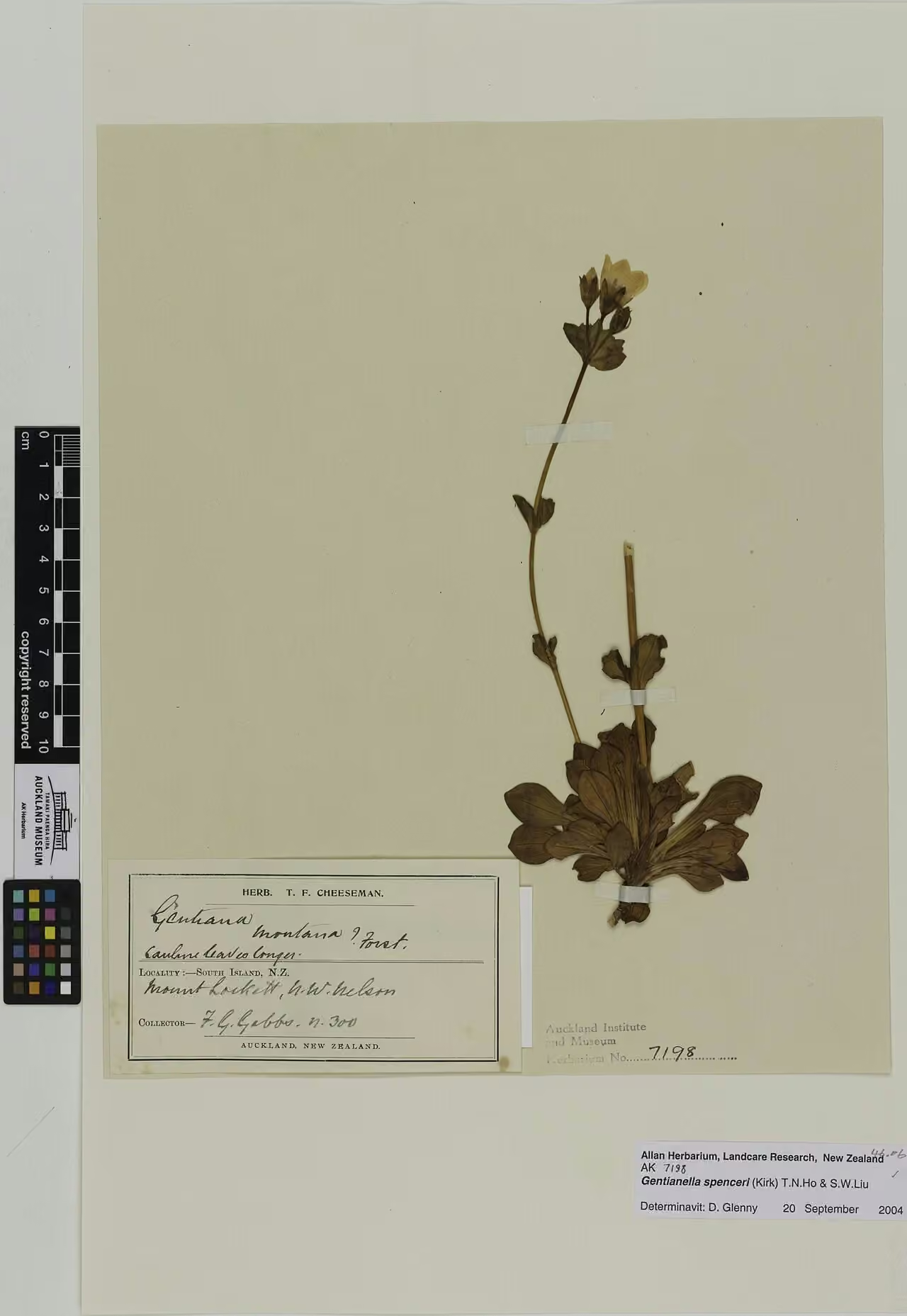
Spencer's gentian (Gentianella spenceri) is a South Island gentian of subalpine beech forest, found from Nelson through Westland to about the Whitcombe River. It is a biennial that flowers once and dies, growing 85 to 270 mm tall from a single rosette of rounded leaves. Its small white flowers, usually with purple or crimson veins, appear mainly from January to February. Unlike most New Zealand gentians, which favour open grassland or herbfield, it grows in Nothofagus forest, scrub, forest clearings and along ridges. It is ranked Not Threatened. Explore more native flowering plants in our native plant guide.
Plant Description
Spencer's gentian is a monocarpic biennial: it grows as a rosette in its first year, flowers, sets seed and dies. It has an unbranched caudex 20 to 100 mm long topped by a single basal rosette. The rosette leaves are orbicular to obovate, 25 to 93 mm long and 13 to 22 mm wide, with rounded tips and often a very slight lobing. They may be tinted crimson or purple-black.
In flower the plant is 85 to 270 mm tall and carries 3 to 33 flowers on short stalks 1.5 to 10 mm long. The corolla is 9.3 to 14 mm long, white and sometimes tinted on the outside of the lobes, with veins usually coloured purple or crimson. The stigmas are crimson and the anthers have orange-red mouths.
NZPCN identifies it by the combination of round leaves with rounded and often slightly lobed tips, and the unbranched caudex with a single basal rosette. Its forest habitat also sets it apart from most other gentians in its range.
Quick Facts
| Scientific Name | Gentianella spenceri |
|---|---|
| Height | 85-270 mm in flower |
| Spread | Single rosette, about 0.1-0.2 m |
| Water Needs | Moist; high-rainfall forest |
| Light | Partial shade to sun in clearings |
| Frost Tolerance | High; subalpine |
| Salt Tolerance | None recorded; an inland species |
| Growth Rate | Moderate; flowers in its second year |
| Lifespan | Biennial (monocarpic) |
Climate Best Suited to
Suits the very wet, cool, cloudy climate of the subalpine forests of Nelson and Westland, with heavy rainfall and frequent frost and snow at higher elevations.
Regional Suitability
| City | Climate Suitability |
|---|---|
| Auckland | Low |
| Wellington | Low |
| Christchurch | Low |
| Dunedin | Medium |
Plant Habitat
Gentianella spenceri is endemic to the South Island, ranging from Nelson through Westland to about the Whitcombe River.
Its habitat is subalpine Nothofagus (beech) forest and associated scrub, forest clearings and ridges. This is an unusual setting for a New Zealand gentian, as most species of the genus grow in open grassland, herbfield or coastal turf.
Growing Requirements
Soil Requirements
It grows in the leaf litter and organic soils of subalpine beech forest and scrub.
- Moist, humus-rich forest soil
- Good drainage on ridges and slopes
- Low competition from ground cover
Light Requirements
It grows under and around subalpine forest, in clearings, along ridges and at scrub margins.
- Dappled shade to partial sun
- More flowers where clearings let in light
Water Requirements
Its range is one of the wettest parts of New Zealand, so the soil rarely dries out.
- Consistently moist soil
- Free drainage to avoid waterlogging
Planting and Establishing
NZPCN describes Spencer's gentian as difficult to grow and says it should not be removed from the wild. It is not available in the nursery trade.
Any attempt with legally sourced seed would need a cool, humus-rich but free-draining mix in partial shade, kept moist, with seed sown every year to replace plants that die after flowering.
Ecological Role
Spencer's gentian is a small herb of the subalpine beech forest floor, clearings and ridges of the western South Island. As a monocarpic biennial, it relies entirely on seed to persist, so disturbance that creates small openings in the forest can provide sites for seedlings.
The insects that pollinate its purple-veined white flowers and the way its seed is dispersed are not documented in the sources consulted.
Uses & Significance
Garden Uses
It has little garden use because it is short-lived and difficult to grow.
- Specialist collections only
- Best appreciated on subalpine forest tracks in Nelson and Westland
Ecological Value
It is one of the few New Zealand gentians adapted to forest rather than open habitats.
- Endemic to Nelson and Westland
- Part of the subalpine beech forest herb flora
- Adds summer flowers to forest clearings and ridges
Landscaping Uses
Spencer's gentian is not used in landscaping. In a botanic garden it could be grown in a shaded woodland bed under native shrubs, where its rounded rosettes and veined white flowers can be seen at close range.
Because each plant lives only two years, a display would need annual sowing to remain in place.
Seasonal Care Calendar
Spring
Second-year rosettes grow strongly ahead of flowering, while new seedlings establish.
- Keep the soil moist
- Protect rosettes from slugs
Summer
Flowering occurs from December to March, mainly in January and February.
- Look for flowers on forest tracks and ridges
- Fruiting begins in January
Autumn
Capsules continue to ripen until about June, and flowered plants die.
- Collect seed from cultivated plants
- Sow it promptly
Winter
First-year rosettes overwinter on the forest floor, often under snow at higher sites.
- No action needed
- Keep cultivated pots cool but not waterlogged
When to Prune and How Much
No pruning is needed. The plant flowers once and dies, so pruning has no benefit.
Leave flowering stems in place until seed has been collected, then remove the dead plant.
How to Grow Spencer's Gentian
Spencer's gentian is described by NZPCN as difficult to propagate and should not be removed from the wild. Because it is a monocarpic biennial with a single rosette and an unbranched caudex, it cannot be divided and must be raised from seed every year. No specific propagation trials for this species were found in the sources consulted, so the method below is based on general practice for New Zealand gentians, adjusted for this species' cool, moist, forest-floor habitat. Work only with seed from cultivated plants or seed collected under appropriate permission.
From Seed
Fruiting runs from January to June. Collect capsules as they dry and sow the seed fresh into a moist, humus-rich but free-draining mix. Shade and steady moisture are more important for this forest gentian than for grassland species.
- Collect ripe capsules from cultivated plants
- Sow thinly on a mix of fine bark, leaf mould and grit
- Cover very lightly and keep in a cool, shaded place
- Keep evenly moist and never allow the surface to dry
- Prick out seedlings once they form small rosettes
- Grow on in partial shade and plant out before the second summer
Cuttings and Division
Division is not possible because each plant has a single rosette on an unbranched caudex, and cuttings are not a recorded method. Seed must be collected every year.
- Keep plants of two age classes so that some flower each year
- Always save seed before discarding flowered plants
Pests & Diseases
No specific pests or diseases are recorded for Spencer's gentian. In the forest, browsing by deer and other introduced herbivores can damage small herbs, although this is not documented specifically for this species.
In cultivation, slugs and snails are likely to eat the rosettes, and poor drainage can cause rot.
Cultural Significance
No Māori name or traditional use is recorded for Gentianella spenceri in the sources consulted.
Thomas Kirk described it as Gentiana spenceri. It was later placed in Chionogentias by L.G. Adams and is now included in Gentianella. The epithet honours a person named Spencer, but the sources consulted do not identify who.
Bonus Tip
When walking subalpine beech forest tracks in Nelson or Westland in January, check track edges and small clearings for low rosettes of round leaves. Finding a gentian in forest rather than open tussock is a strong clue that you have Spencer's gentian.
Related Plants
Explore other native plants that share similar characteristics or habitats with Spencer's Gentian (Gentianella spenceri), offering further insights into New Zealand's diverse flora. These related species provide context and opportunities for complementary planting in your garden.
Gentianella patula
Gentianella patula
Gentianella saxosa
Gentianella saxosa
Charleston Gentian
Gentianella stevenii
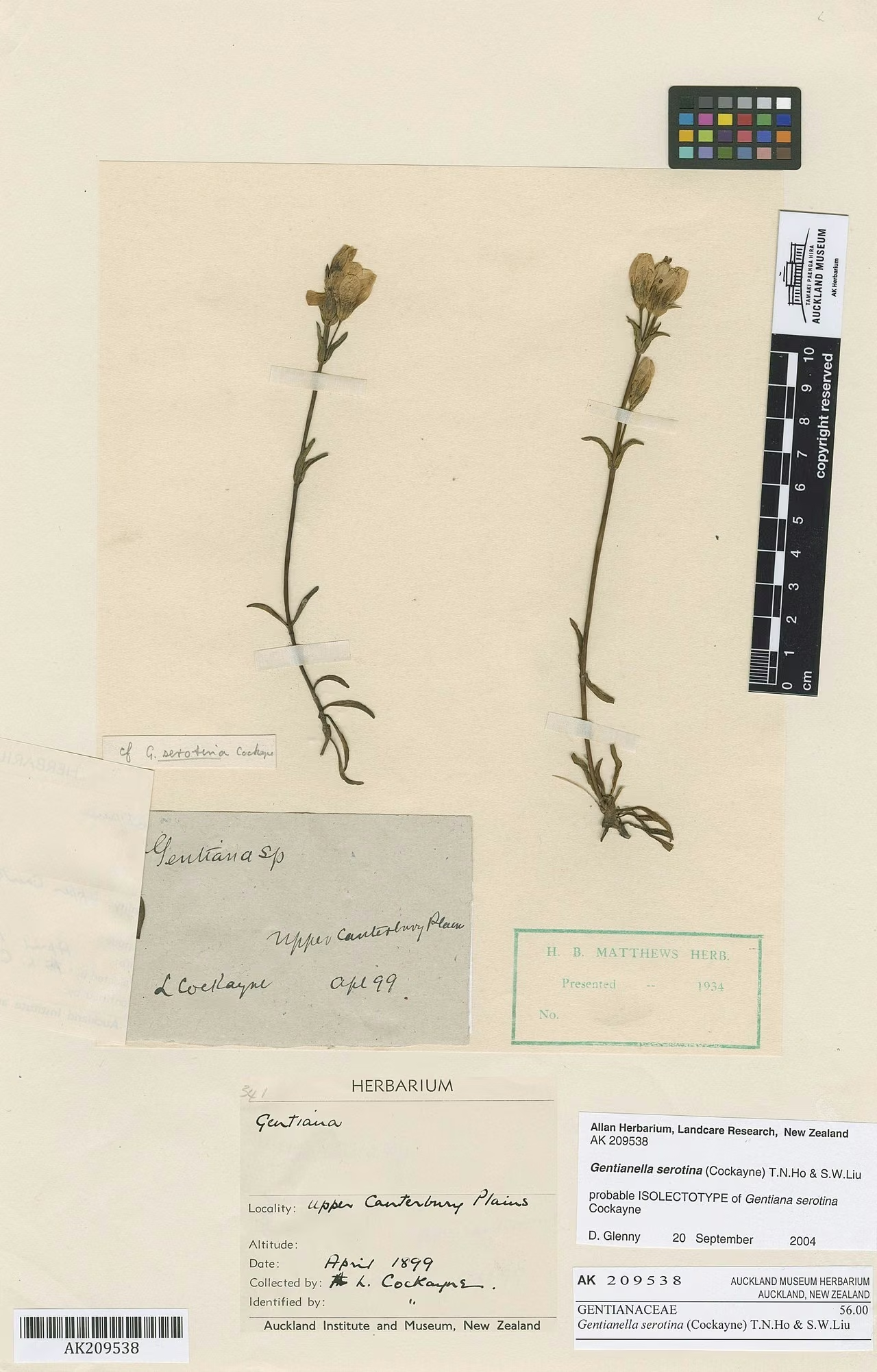
Gentianella serotina
Gentianella serotina
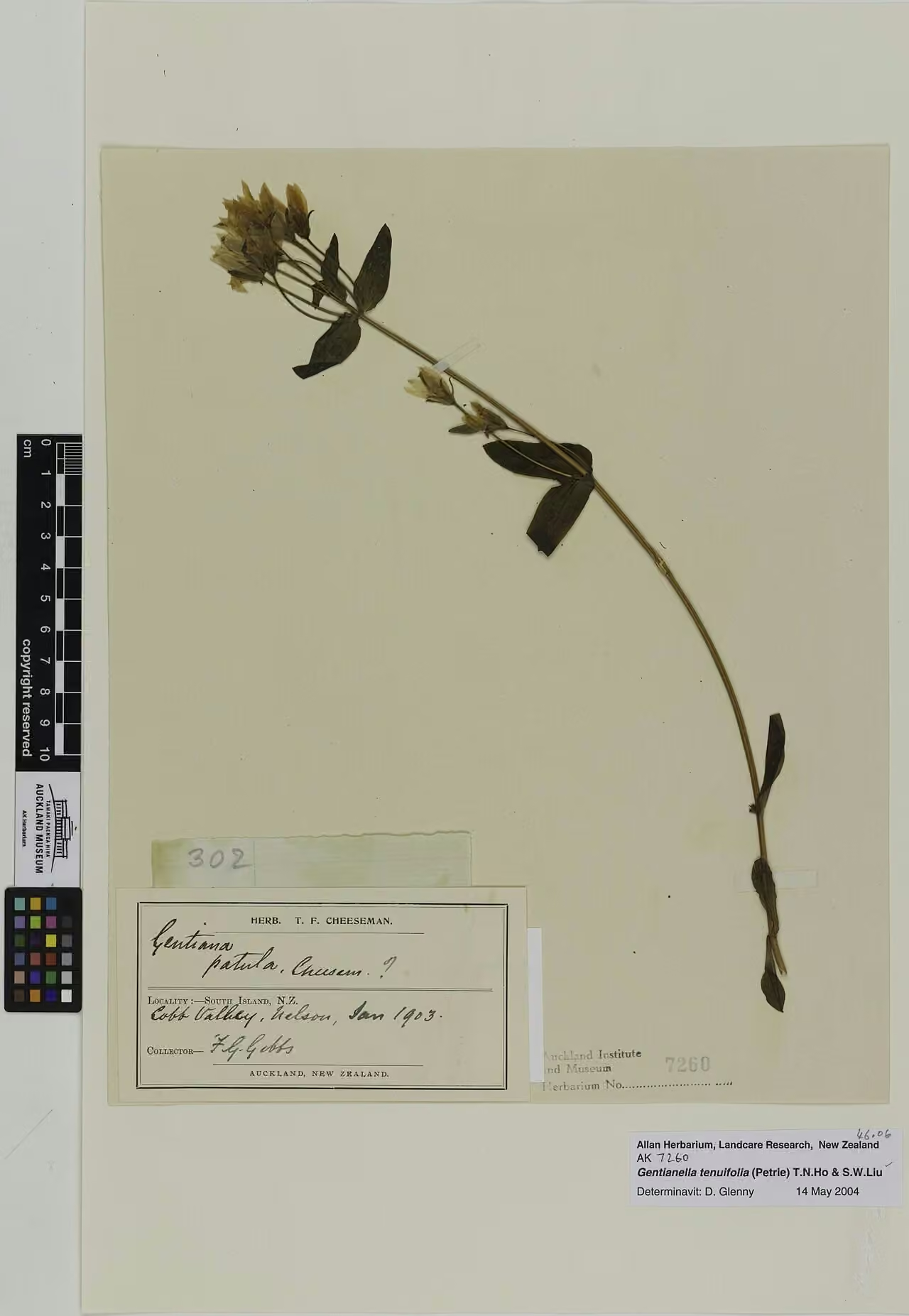
Gentianella tenuifolia
Gentianella tenuifolia
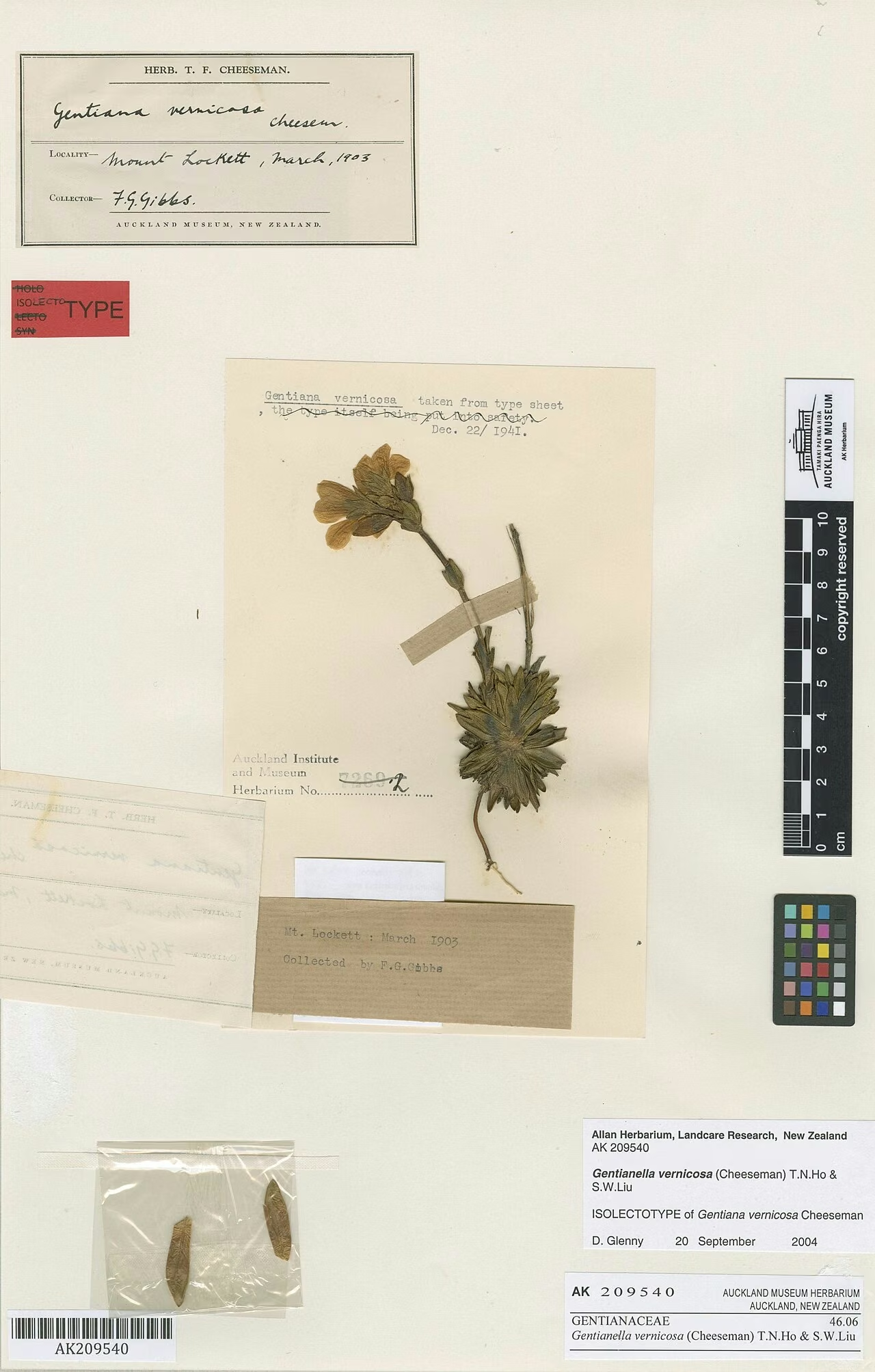
Gentianella vernicosa
Gentianella vernicosa
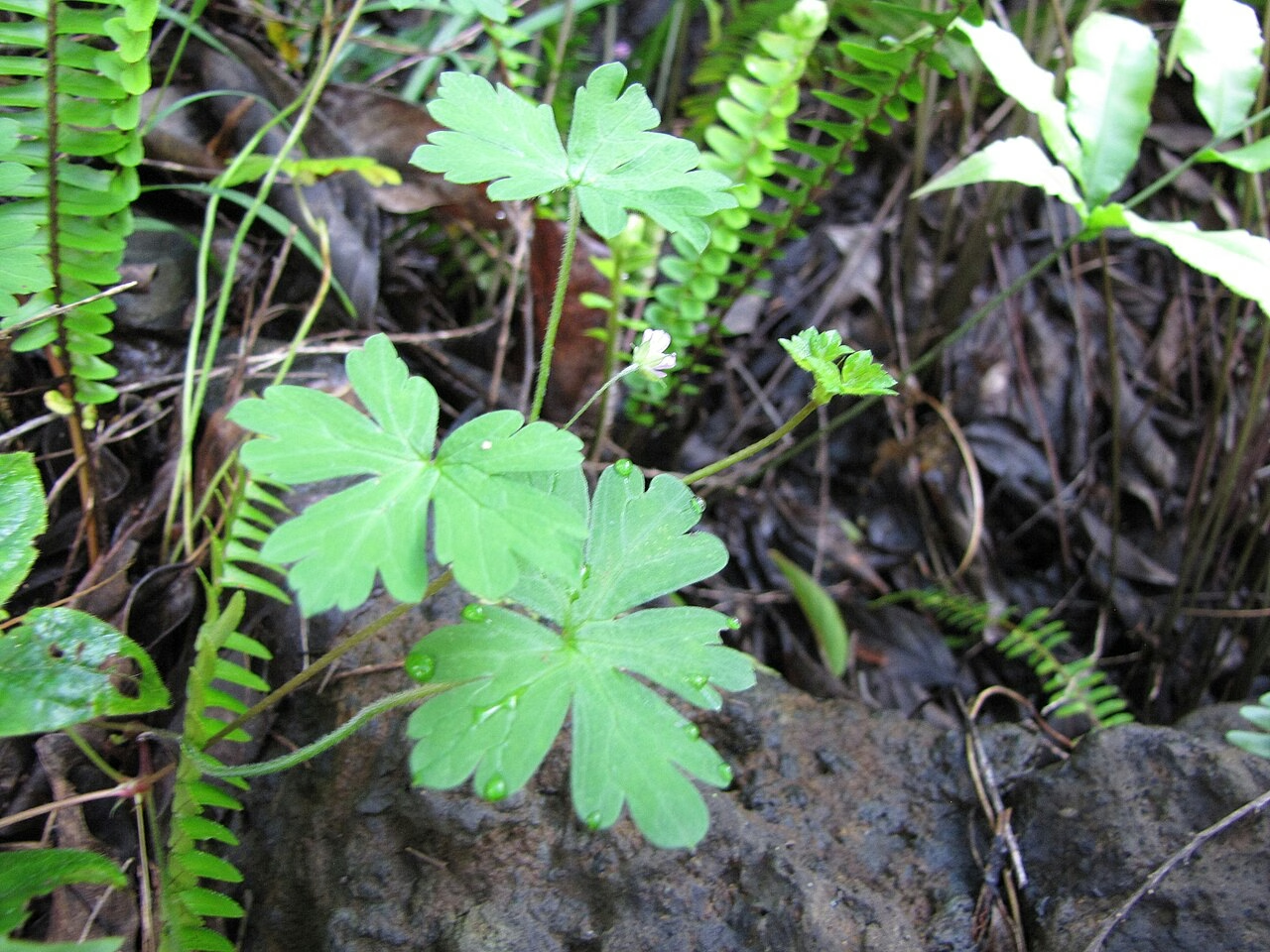
Pinakitere
Geranium homeanum
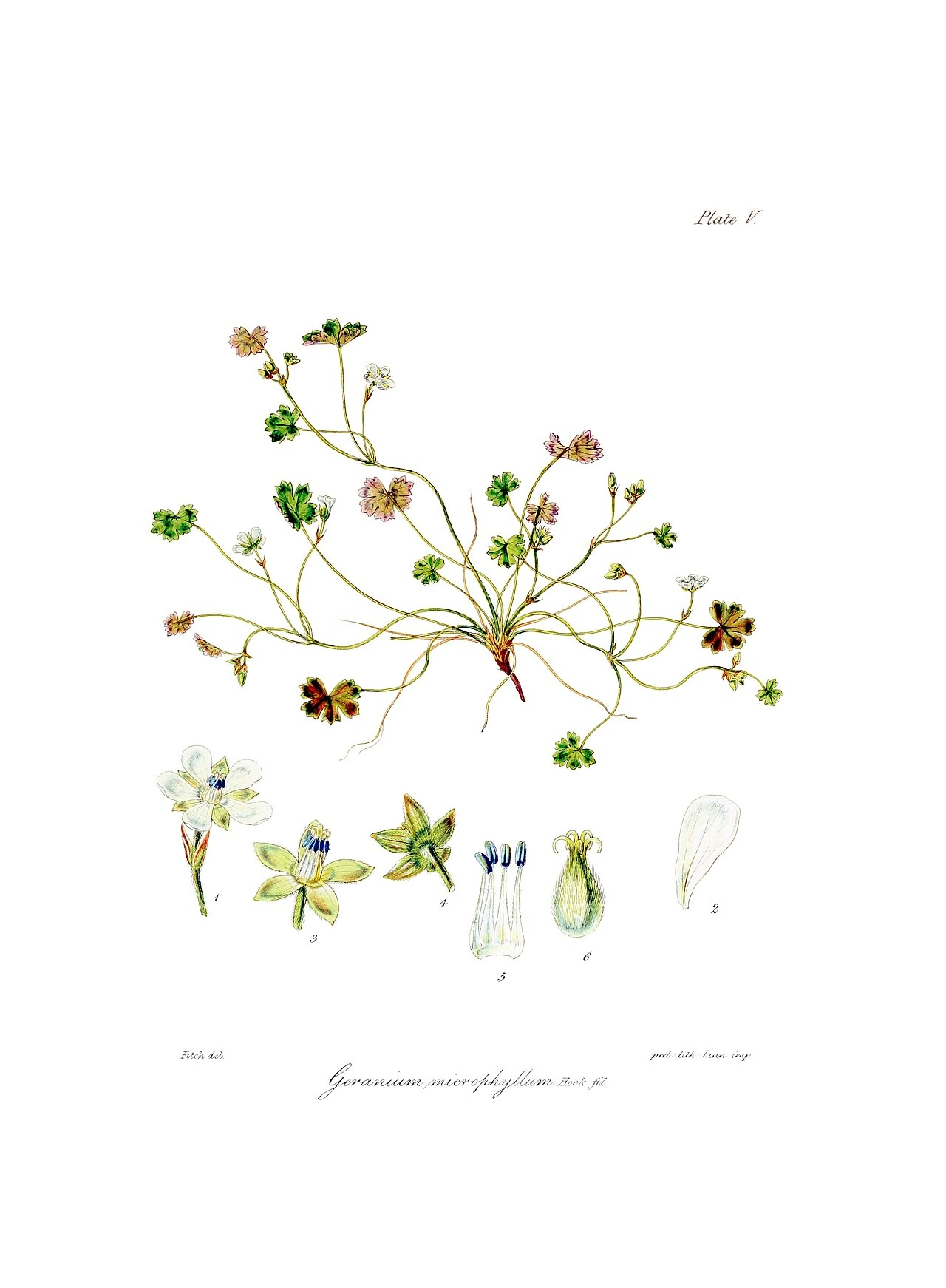
Small-Leaved Cranesbill
Geranium microphyllum
Plant Conservation
Spencer's gentian is ranked Not Threatened (2023). Much of its subalpine forest habitat in Nelson and Westland lies within conservation land, including national parks.
Otago lists it as Regionally Data Deficient (2025), meaning there is not enough information to judge its status there. Recording observations helps fill gaps in knowledge of its distribution.
Frequently Asked Questions
Where does Spencer's gentian grow?
It grows in the South Island from Nelson through Westland to about the Whitcombe River, in subalpine Nothofagus (beech) forest, associated scrub, forest clearings and along ridges.
How do you identify Gentianella spenceri?
Look for a single basal rosette of round to obovate leaves with rounded tips, sometimes slightly lobed, on an unbranched base, and white flowers with purple or crimson veins and crimson stigmas.
Does Spencer's gentian die after flowering?
Yes. It is a monocarpic biennial, so each plant forms a rosette, flowers once and then dies, relying on seed for the next generation.
Sources and Further Reading
The botanical, growing, and conservation details for Spencer's Gentian (Gentianella spenceri) on this page draw on the New Zealand plant references below. Consult them for full technical records and the latest distribution data.