Gentian
Gentianella serotina
Last updated:
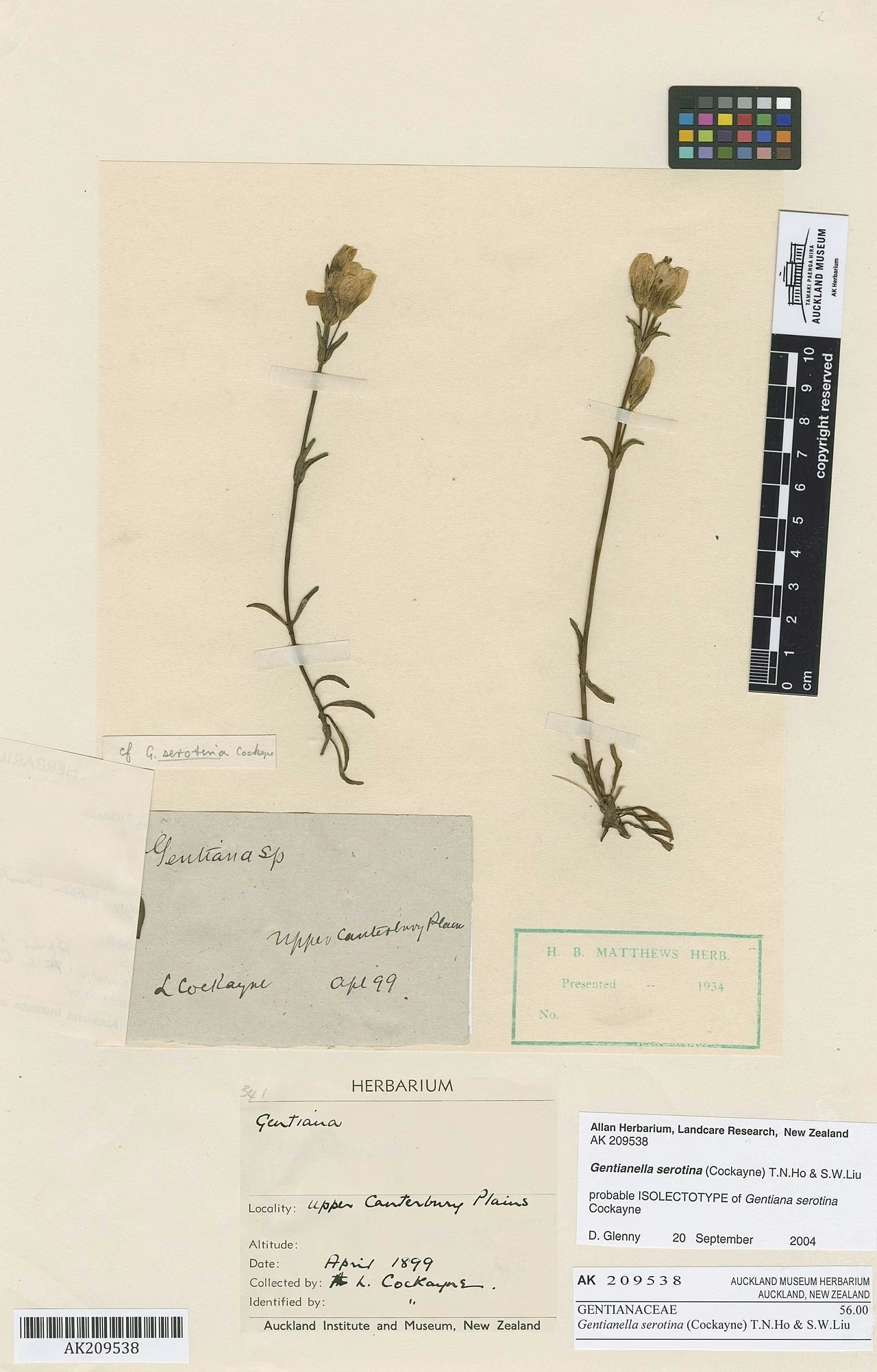
Gentianella serotina is a late-flowering perennial gentian of South Island tussock grassland, blooming from February to April when most alpine flowers are over. It grows 80 to 300 mm tall in flower from a rosette of long, narrow leaves often tinted crimson or purple-black, and carries up to 130 white or pale lilac flowers striped with magenta. It is endemic to Canterbury, Otago and Southland, growing from montane to subalpine elevations in tall and short tussockland, on valley floors and on river terraces. It is ranked Not Threatened nationally. The name serotina means late flowering. Explore more native flowering plants in our native plant guide.
Plant Description
Gentianella serotina is a perennial that can flower in more than one year. The root is 2 to 6.7 mm thick at the stem base. The rosette leaves are linear to narrowly elliptic, 32 to 160 mm long and 3.5 to 15 mm wide, and are often tinted crimson or purple-black.
Flowering stems arise from the sides of the rosette, from 1 to 13 per plant, and are typically decumbent, lying along the ground before curving up. Plants are 80 to 300 mm tall in flower and carry anywhere from 1 to about 130 flowers. Each flower is 15 to 21 mm long, with a white or pale lilac corolla striped with magenta. The capsules are 13 to 22 mm long.
It is most likely to be confused with Gentianella bellidifolia, from which it differs in being taller, with longer, narrower, flatter leaves, more flowering stems and decumbent lateral stems. It also resembles G. corymbifera subsp. gracilis, but that plant is a biennial with thicker flowering stems, while G. serotina is a longer-lived polycarpic perennial.
Quick Facts
| Scientific Name | Gentianella serotina |
|---|---|
| Height | 80-300 mm in flower |
| Spread | Rosette with decumbent lateral stems, about 0.15-0.3 m |
| Water Needs | Moderate; well-drained soils |
| Light | Full sun |
| Frost Tolerance | High; montane to subalpine |
| Salt Tolerance | None recorded; an inland species |
| Growth Rate | Moderate |
| Lifespan | Perennial (polycarpic) |
Climate Best Suited to
Suits the cold, frosty inland climate of the Canterbury, Otago and Southland high country, with snowy winters and warm, often dry summers.
Regional Suitability
| City | Climate Suitability |
|---|---|
| Auckland | Low |
| Wellington | Low |
| Christchurch | Medium |
| Dunedin | Medium |
Plant Habitat
Gentianella serotina is endemic to the South Island, in Canterbury, Otago and Southland. It ranges from montane to subalpine elevations.
It grows in tall and short tussockland, alongside fescue tussock (Festuca novae-zelandiae) and snow tussocks (Chionochloa species). It also occurs on valley floors and river terraces where the soils are well drained.
Growing Requirements
Soil Requirements
It favours well-drained grassland soils on terraces, valley floors and tussock slopes.
- Free-draining loams and stony terrace soils
- Low to moderate fertility
- Open spaces between tussocks
Light Requirements
Tussock grasslands are open and sunny, and it grows in the gaps between tussocks.
- Full sun
- Not suited to shade or tall dense cover
Water Requirements
It tolerates the drier summers of inland tussock country but needs moisture through its late growing season.
- Moderate watering in summer if grown
- Avoid wet, poorly drained ground
Planting and Establishing
NZPCN describes Gentianella serotina as difficult to grow and says it should not be removed from the wild. It is not normally sold by nurseries.
Growers working with legally sourced seed should use a sunny, well-drained bed or deep pot with stony soil, mimicking a river terrace, and protect seedlings from slugs.
Ecological Role
Gentianella serotina is part of the herb layer in fescue and snow tussock grasslands. NZPCN notes that its seeds are dispersed by ballistic projection, wind and water.
Because it flowers from February to April, it offers nectar and pollen late in the season when few other grassland herbs are in bloom, though the insects that visit it are not documented in the sources consulted.
Uses & Significance
Garden Uses
It is rarely grown and is best suited to specialist collections.
- Specialist native grassland plantings
- Alpine and rock garden collections using seed-raised plants
- Valued for late-summer and autumn flowers
Ecological Value
It is a characteristic late-season flower of eastern and southern South Island tussock grasslands.
- Endemic to Canterbury, Otago and Southland
- Late-season floral resource
- Regionally Naturally Uncommon in Otago
Landscaping Uses
Gentianella serotina is not a mainstream landscaping plant. In a native tussock garden it could be grown in the gaps between fescue tussocks, where its magenta-striped flowers would extend the display into autumn.
Plant it where low tussocks frame it without shading it, and allow seed to fall so that new plants can establish nearby.
Seasonal Care Calendar
Spring
The rosette grows actively and builds reserves for its late flowering.
- Keep competition from weeds down
- Water seedlings in dry spells
Summer
Lateral flowering stems develop through summer, with the first flowers in February.
- Watch for slugs
- Look for decumbent stems curving upward
Autumn
Flowering continues through March and April, and capsules ripen from April to June.
- Collect seed from cultivated plants
- Sow it fresh
Winter
Plants rest as rosettes through the frosty high country winter.
- No action needed
- Make sure drainage is good
When to Prune and How Much
No pruning is needed. Cut back dry flowering stems once the capsules have opened and the seed has been gathered or shed.
Leave the rosette leaves alone, as they sustain the plant through to the next season.
How to Grow Gentian
Gentianella serotina is described by NZPCN as difficult to propagate and should not be removed from the wild. No tested, species-specific propagation protocol was found in the sources consulted, so the methods below follow general practice for seed-raised New Zealand gentians from inland grasslands. Its seeds are naturally dispersed by ballistic projection, wind and water, and in cultivation they should be collected before the capsules shed them. Use only seed from cultivated plants or seed collected with proper permission, and expect variable results.
From Seed
Capsules ripen from April to June, late in the year because of the late flowering season. Sow the seed fresh into a well-drained mix and leave the pots outside over winter, which exposes them to natural cold; whether this is required for germination has not been documented for this species.
- Collect capsules in late autumn as they dry and open
- Sow on a gritty seed mix and cover lightly with fine grit
- Leave pots outdoors in a sheltered, bright spot over winter
- Keep moist but not saturated
- Pot seedlings individually once they have a few leaves
- Grow on in full sun in deep pots before planting out
Cuttings and Division
Cuttings are not a recorded method, and the plant's habit of producing lateral flowering stems from a single rosette makes division unreliable. Seed is the recommended route.
- Rely on seed rather than vegetative methods
- Keep several plants so that seed can be collected each year
Pests & Diseases
No specific pests or diseases are recorded for Gentianella serotina. In the wild, the spread of introduced grasses and woody weeds into tussock grassland reduces the open ground that small herbs need.
In cultivation, slugs and snails readily eat young rosettes, and plants are prone to rot in heavy, wet soils.
Cultural Significance
No Māori name or traditional use is recorded for Gentianella serotina in the sources consulted.
Leonard Cockayne first described it as Gentiana serotina, choosing an epithet that means late flowering. It was later placed in Chionogentias by L.G. Adams and is now treated in Gentianella. Its chromosome number is recorded as 2n = 36.
Bonus Tip
To find this gentian in flower, visit Canterbury, Otago or Southland tussock country in March, after most alpine flowers have finished. The magenta-striped flowers on stems that sprawl outward from the rosette are a good field sign that you are looking at G. serotina rather than G. bellidifolia.
Related Plants
Explore other native plants that share similar characteristics or habitats with Gentian (Gentianella serotina), offering further insights into New Zealand's diverse flora. These related species provide context and opportunities for complementary planting in your garden.
Scree Gentian
Gentianella magnifica
Gentianella patula
Gentianella patula
Gentianella saxosa
Gentianella saxosa
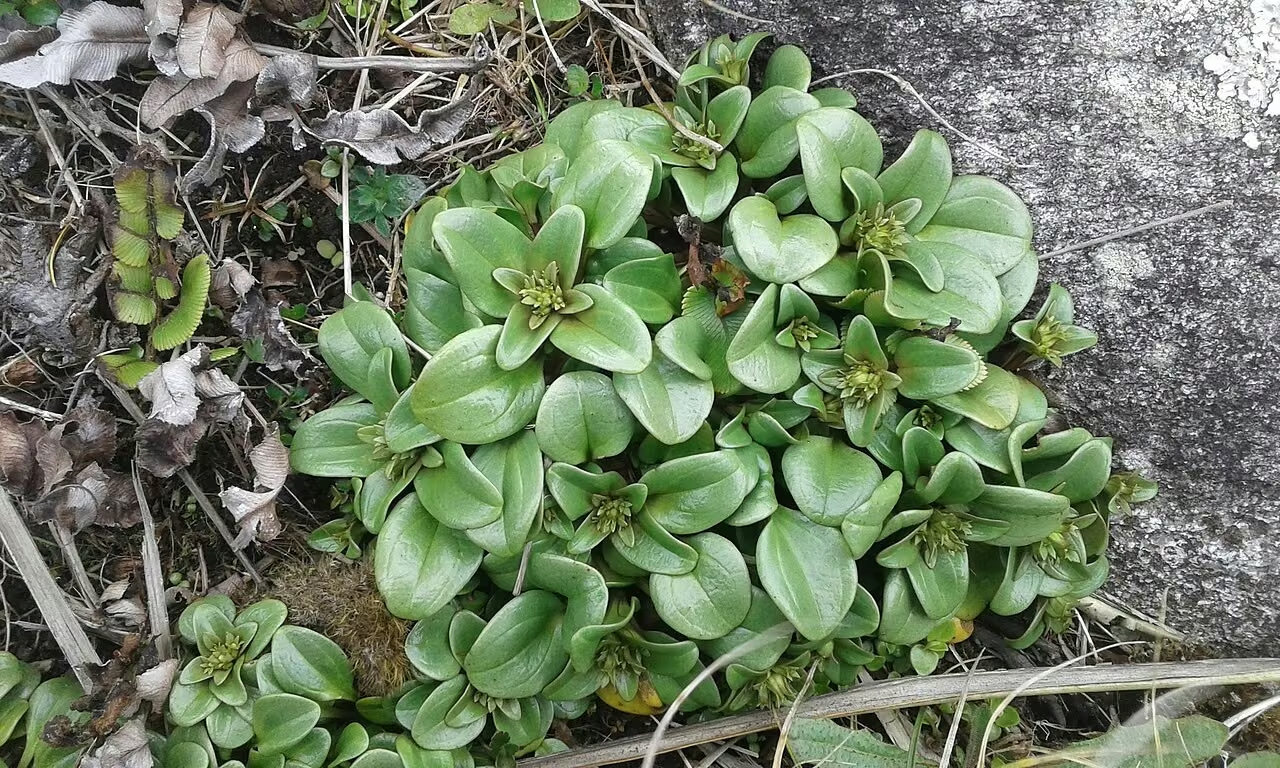
Charleston Gentian
Gentianella stevenii
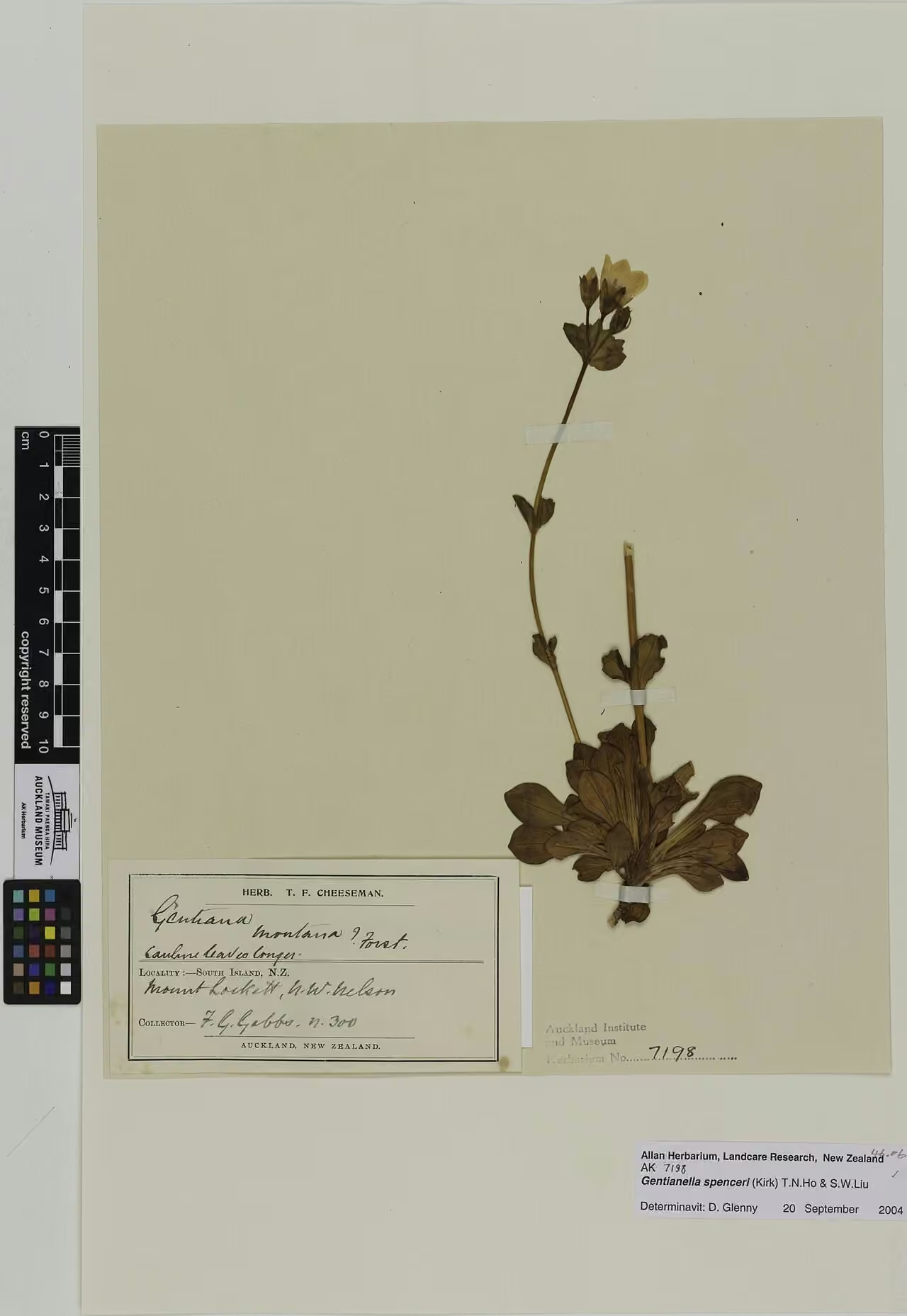
Spencer's Gentian
Gentianella spenceri
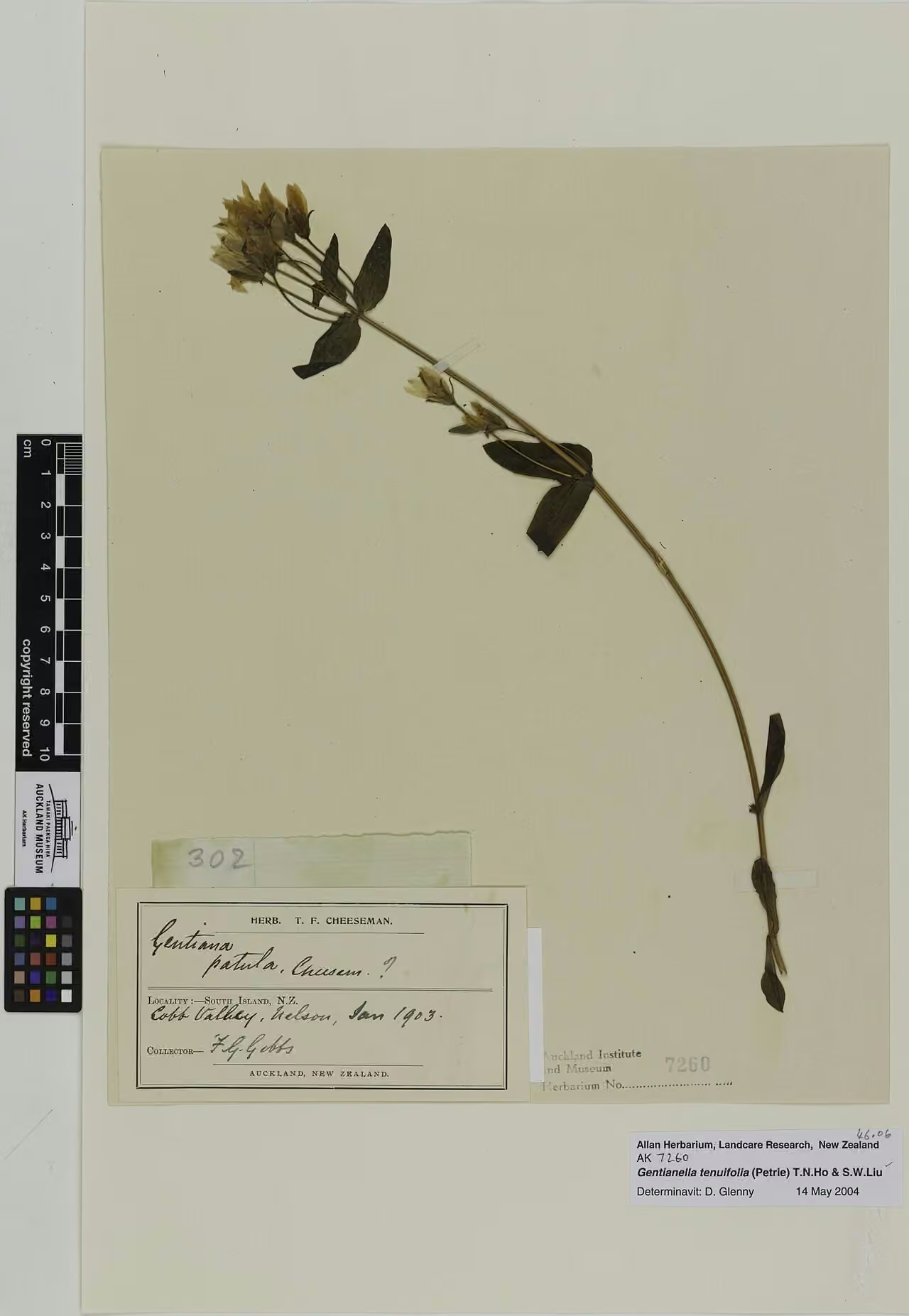
Gentianella tenuifolia
Gentianella tenuifolia
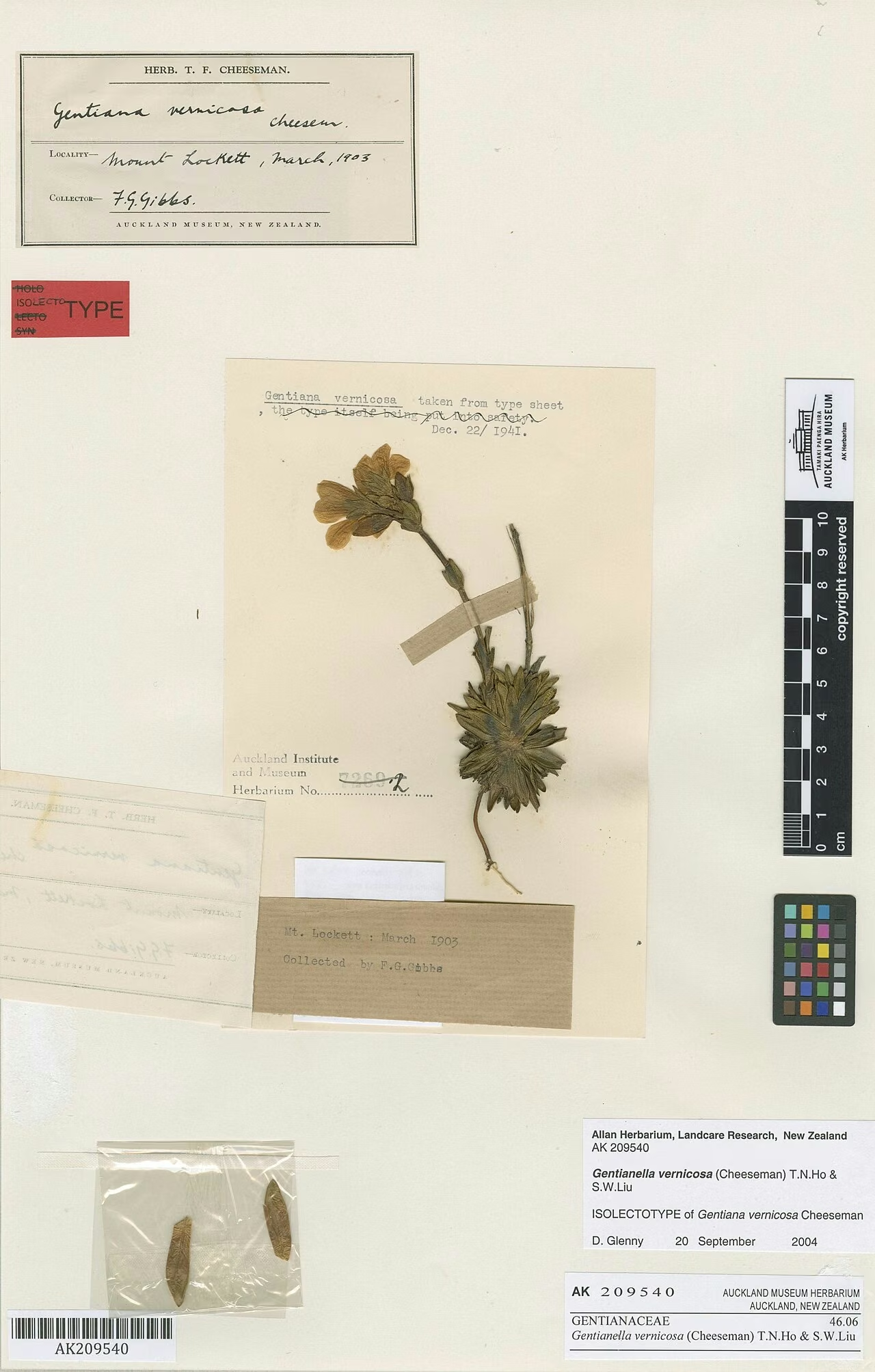
Gentianella vernicosa
Gentianella vernicosa
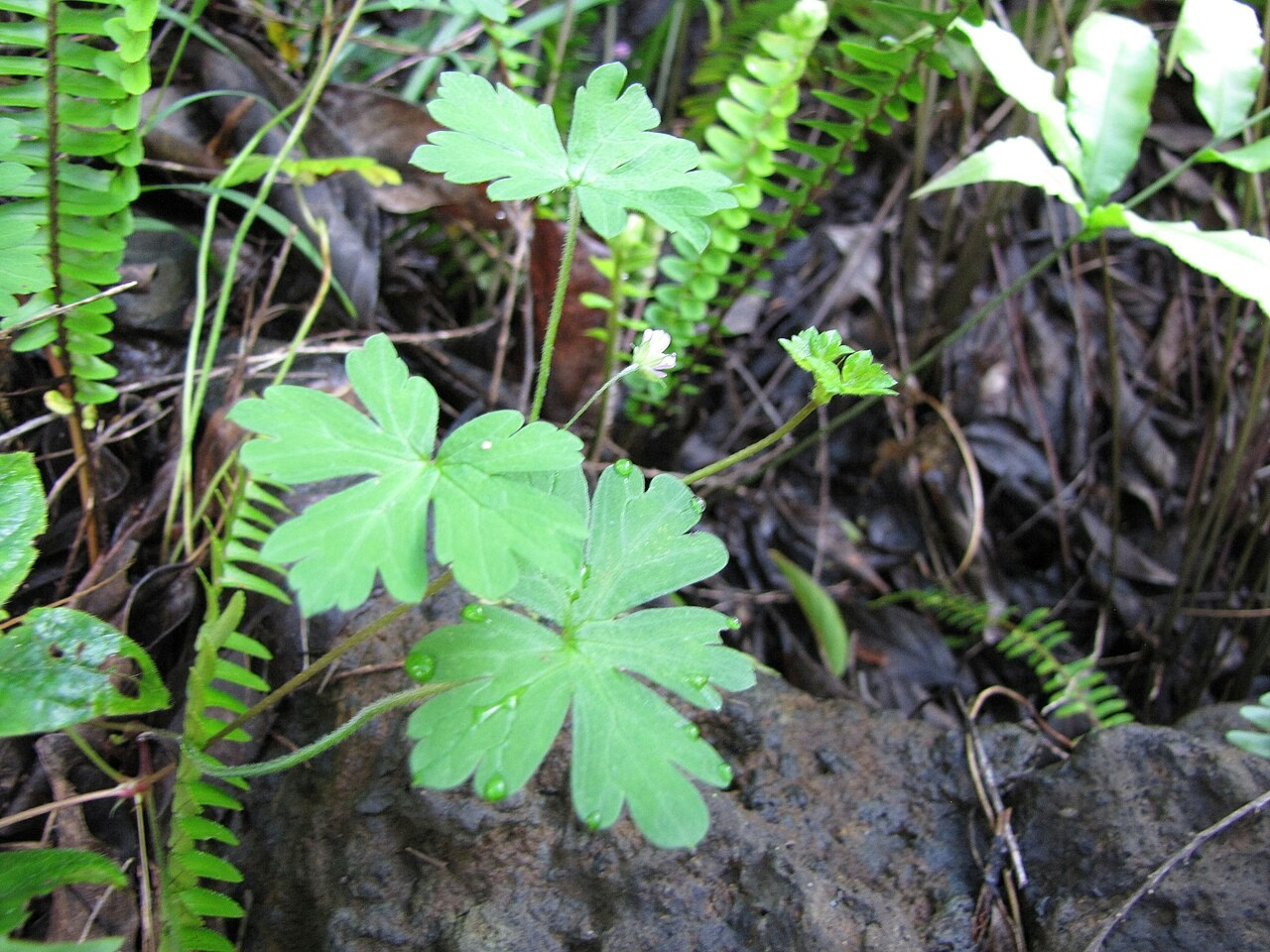
Pinakitere
Geranium homeanum
Plant Conservation
Gentianella serotina is ranked Not Threatened (2023). In Otago, however, it is Regionally Naturally Uncommon (2025), with several data-poor and sparse qualifiers.
Protecting tussock grasslands from conversion, weed invasion and heavy grazing helps maintain populations, particularly in Otago where it is regionally uncommon.
Frequently Asked Questions
Why is it called Gentianella serotina?
Serotina means late flowering. This gentian flowers from February to April, later than most New Zealand alpine and tussockland herbs.
What colour are Gentianella serotina flowers?
The corolla is white or pale lilac with magenta striping, carried on several lateral stems from a rosette of often crimson-tinted leaves.
How does Gentianella serotina differ from Gentianella bellidifolia?
G. serotina is taller, with longer, narrower and flatter leaves, more flowering stems, and lateral stems that lie along the ground before turning upward.
Where does Gentianella serotina grow?
It grows in montane to subalpine tussock grassland in Canterbury, Otago and Southland, including valley floors and river terraces with well-drained soils.
Sources and Further Reading
The botanical, growing, and conservation details for Gentian (Gentianella serotina) on this page draw on the New Zealand plant references below. Consult them for full technical records and the latest distribution data.