Charleston Gentian
Gentianella stevenii
Last updated:
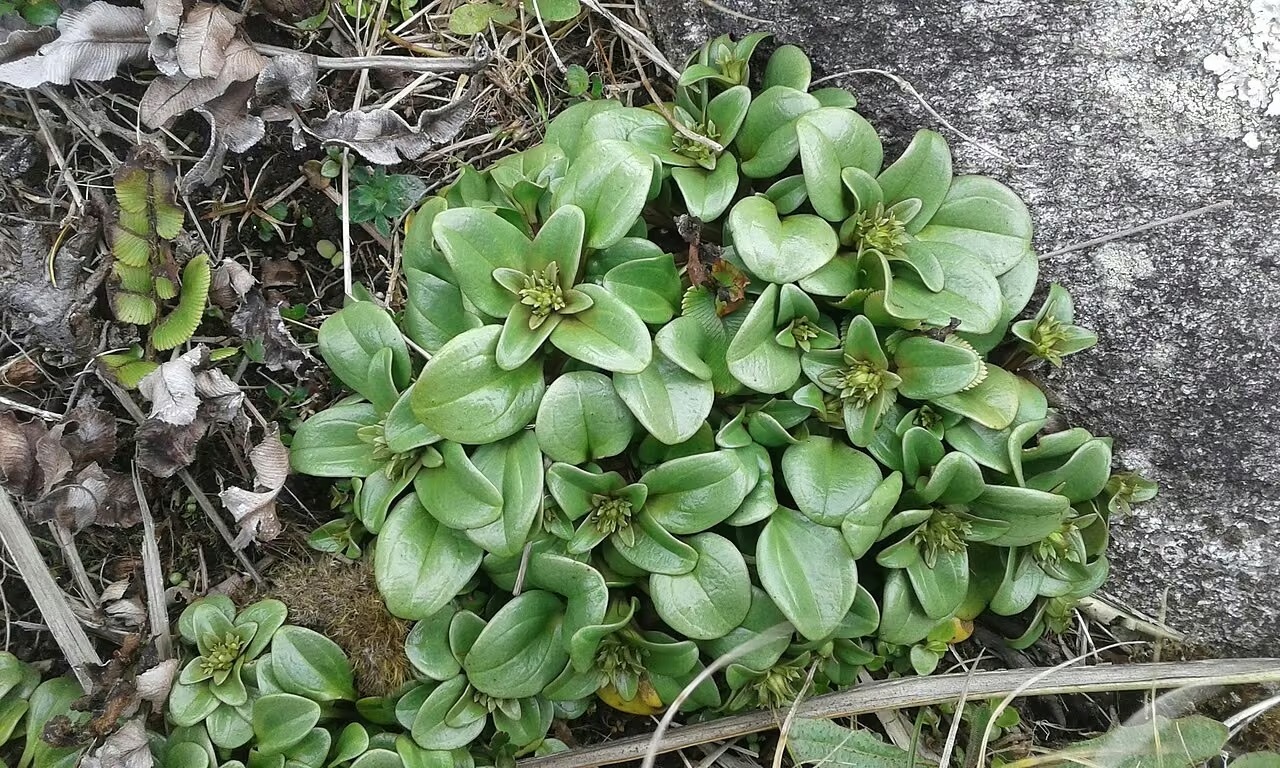
Charleston gentian (Gentianella stevenii, formerly published as Gentianella scopulorum) is one of New Zealand's rarest gentians, found only on coastal rock ledges near Charleston, south of Westport on the West Coast. It is a tufted perennial up to 130 mm tall in flower, with round, long-stalked leaves, crimson-tinted stems and white flowers marked with purple veins. It often grows within reach of sea spray. It is ranked Threatened - Nationally Critical, with threats from rock climbing, trampling, goats and weeds. Unusually for a New Zealand gentian, it grows readily from seed. Explore more native flowering plants in our native plant guide.
Plant Description
The Charleston gentian is a tufted perennial reaching about 130 mm tall in flower. Its rosette leaves are almost circular (orbicular), with green blades 35 to 44 mm long and 10 to 17.5 mm wide on distinct stalks 19 to 30 mm long.
Each plant sends up 4 to 10 flowering stems from the centre and sides of the rosette, and the stems are tinted crimson. A plant bears 8 to 38 flowers, each 12 to 15 mm long, with a white corolla striped with purple veins and a green calyx. The capsules are 10 to 11.8 mm long.
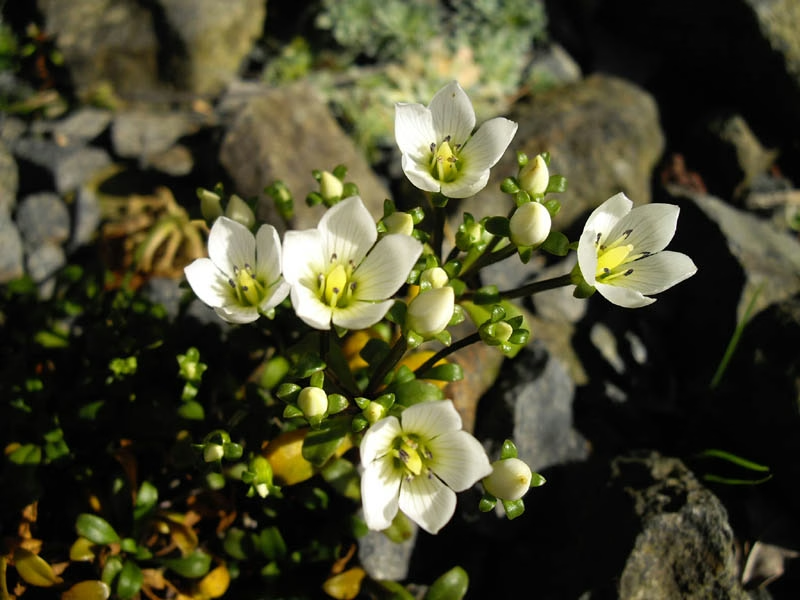
Its closest relative is Gentianella saxosa of Fiordland, Southland, Otago and Stewart Island. The Charleston gentian is distinguished by its round leaves, flat (not recurved) calyx lobes, crimson stems, purple-veined corollas and smaller anthers of 1 to 1.5 mm. The two are also widely separated, G. stevenii being confined to northern Westland.
Quick Facts
| Scientific Name | Gentianella stevenii |
|---|---|
| Height | Up to 130 mm in flower |
| Spread | Small tufts about 0.1-0.2 m across |
| Water Needs | Moderate to high; cool and damp |
| Light | Sunny but cool |
| Frost Tolerance | Low to moderate; a mild coastal species |
| Salt Tolerance | High; grows in the sea spray zone |
| Growth Rate | Moderate |
| Lifespan | Perennial |
Climate Best Suited to
Suits the mild, very wet, frost-light coastal climate of the northern West Coast, where sea spray and rain keep conditions cool and damp.
Regional Suitability
| City | Climate Suitability |
|---|---|
| Auckland | Low |
| Wellington | Medium |
| Christchurch | Low |
| Dunedin | Medium |
Plant Habitat
Gentianella stevenii is endemic to the West Coast of the South Island, where it is known only from near Charleston, south of Westport.
It grows on coastal rock ledges and in the coastal turf associated with them, often within the sea spray zone. The rocks near Charleston are also used for recreation, including rock climbing, which brings the plants into contact with people.
Growing Requirements
Soil Requirements
It grows in thin pockets of soil and turf on coastal rock ledges.
- Shallow, free-draining but damp soil
- Tolerant of salt deposited by spray
- Little competition from taller plants
Light Requirements
NZPCN advises a sunny but cool and damp position, matching its exposed but cool coastal ledges.
- Sun without heat build-up
- Open sites with fresh sea air
Water Requirements
The West Coast is very wet, and spray adds extra moisture to its ledges.
- Keep cultivated plants damp
- Never let pots dry out in summer
Planting and Establishing
Because it is Nationally Critical, plants must never be taken from the wild. Grow only plants raised from cultivated seed or supplied through a conservation programme.
Plant into a gritty, damp mix in a cool, sunny spot such as a rock garden or trough with good air movement. Coastal gardens in cooler, wetter parts of New Zealand suit it better than hot, humid ones.
Ecological Role
The Charleston gentian is a member of the specialised coastal rock and turf community on the northern West Coast. NZPCN notes that its seeds are dispersed by ballistic projection, wind and water (Thorsen et al. 2009).
Its pollinators have not been documented in the sources consulted. With such a tiny range, the condition of the coastal turf on a few rock ledges determines the survival of the whole species.
Uses & Significance
Garden Uses
It is one of the few New Zealand gentians that grows reasonably well in cultivation, which makes ex situ plants valuable.
- Conservation collections and botanic gardens
- Cool coastal rock gardens with legally sourced plants
- Troughs and pots in a sunny, damp, airy spot
Ecological Value
It is a single-site endemic, so every population matters for the survival of the species.
- Found nowhere else in the world
- Part of West Coast coastal turf communities
- A flagship for protecting the Charleston coastline
Landscaping Uses
In cultivation it is best placed in a rock garden pocket or trough where its purple-veined white flowers and crimson stems can be seen up close.
Gardeners growing it should keep it with other low coastal natives that will not overshadow it, and keep records of the source of their plants.
Seasonal Care Calendar
Spring
Flowering can begin from October or November on the coast.
- Check for slugs on rosettes
- Keep pots damp
Summer
Flowering continues to February, and capsules develop from December.
- Shade pots from hot afternoon sun
- Water during dry spells
Autumn
Fruiting continues into May, and seed can be collected from cultivated plants.
- Sow seed fresh
- Share seed with conservation programmes
Winter
Rosettes persist through the mild coastal winter.
- Avoid waterlogging
- Little intervention needed
When to Prune and How Much
No pruning is required. Remove flowering stems after seed has been collected.
Tidy any dead outer leaves to keep air moving around the crown.
How to Grow Charleston Gentian
NZPCN records that the Charleston gentian is easy to grow from seed and is one of the few New Zealand gentians to grow reasonably well in cultivation. It does best in a sunny but cool and damp situation. This makes cultivation a realistic safety net for a species confined to one stretch of coast, but wild plants and wild seed must not be collected except under an authorised Department of Conservation recovery effort. Seed from cultivated plants is the best starting point, and keeping a record of each plant's origin helps conservation programmes manage genetic diversity.
From Seed
Capsules develop between December and May. Collect them as they dry and begin to split, and sow the seed fresh onto a damp, gritty mix kept cool and bright.
- Collect ripe capsules from cultivated plants
- Sow on the surface of a moist, free-draining seed mix
- Cover with a fine layer of grit
- Keep the tray in a cool, bright position, never in hot sun
- Keep the mix damp until seedlings appear
- Pot on into individual pots once rosettes form
By Division
As a tufted perennial, an established cultivated plant may form more than one rosette. Division is not described in the sources consulted, so it should be treated as a backup to seed rather than a routine method.
- Lift a multi-rosette plant carefully in spring
- Separate a rosette with its own roots
- Replant into damp gritty mix and keep cool until it re-establishes
Pests & Diseases
In the wild, NZPCN lists rock climbing, human traffic (trampling), goats, weeds and habitat deterioration as threats. Goats graze the coastal turf, and weeds can overgrow the small rosettes.
In cultivation, slugs and snails are the most likely pests, and plants may rot if kept warm and humid.
Cultural Significance
No Māori name or traditional use is recorded for this gentian in the sources consulted.
David Glenny described the species as Gentianella stevenii in 2004, but that name was illegitimate. It was later renamed Gentianella stevenii (authority U.B.Deshmukh et Kottaim.), and the Flora of New Zealand notes that the new name honours Dr David Steven Glenny for his work on New Zealand Gentianella.
Bonus Tip
If you visit or climb on the coastal rocks around Charleston, keep to established routes and avoid ledges with low turf and small rosettes, especially from October to February when the plants are flowering. A few footsteps on the wrong ledge can affect a meaningful share of the entire species.
Related Plants
Explore other native plants that share similar characteristics or habitats with Charleston Gentian (Gentianella stevenii), offering further insights into New Zealand's diverse flora. These related species provide context and opportunities for complementary planting in your garden.
Gentianella lineata
Gentianella lineata
Scree Gentian
Gentianella magnifica
Gentianella patula
Gentianella patula
Gentianella saxosa
Gentianella saxosa
Gentianella serotina
Gentianella serotina
Spencer's Gentian
Gentianella spenceri
Gentianella tenuifolia
Gentianella tenuifolia
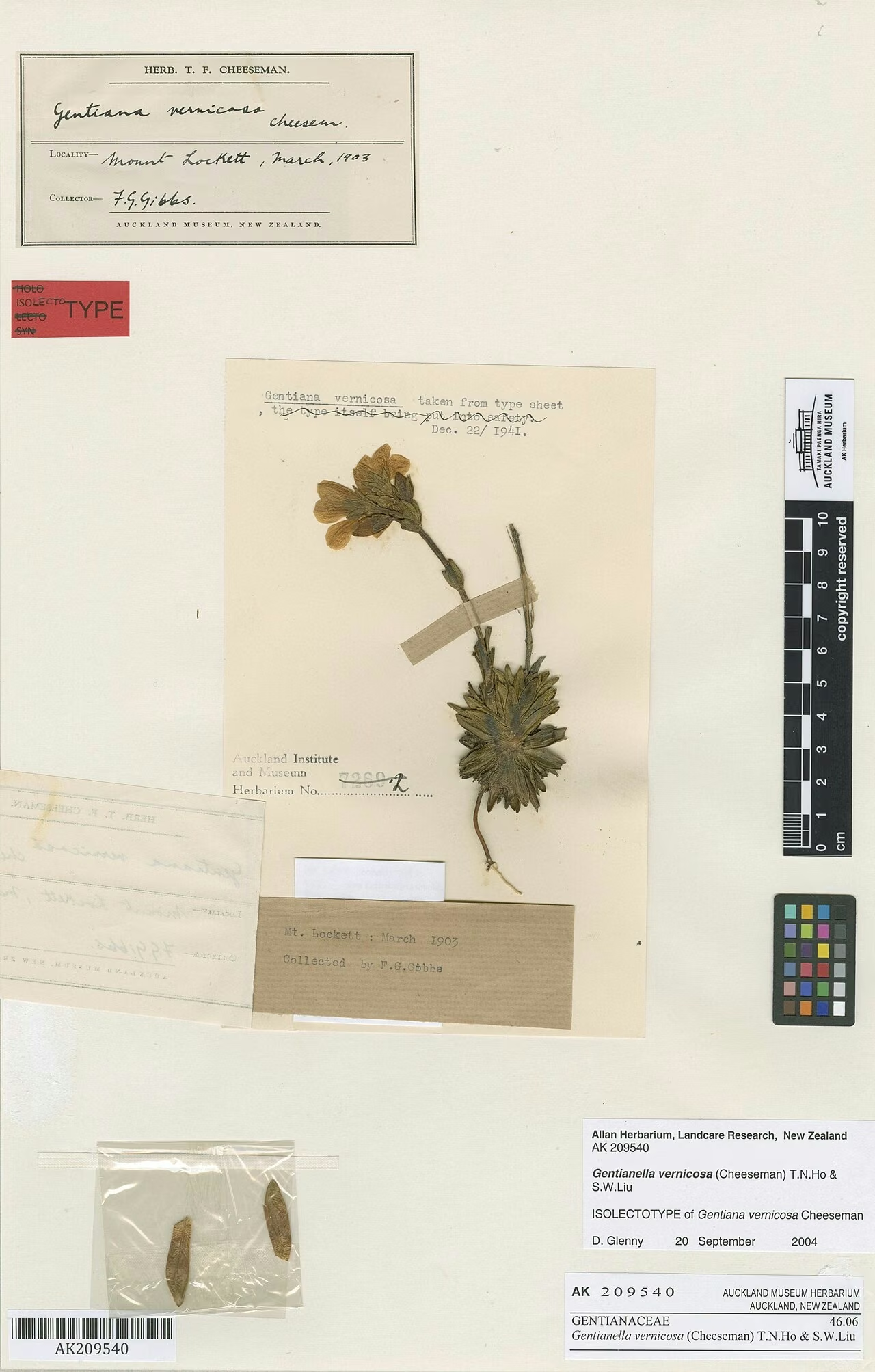
Gentianella vernicosa
Gentianella vernicosa
Plant Conservation
The Charleston gentian is ranked Threatened - Nationally Critical (2023) with the qualifiers Conservation Dependent, Extreme Fluctuations and One Location, and has held a Nationally Critical ranking since at least 2004.
Threats include rock climbing, trampling, goats, weeds and habitat deterioration. Goat control, weed control, managing access to the rock ledges and keeping plants in cultivation as an insurance population all help its survival.
Frequently Asked Questions
Why is Gentianella scopulorum now called Gentianella stevenii?
The name Gentianella scopulorum Glenny, published in 2004, turned out to be illegitimate because the same name had already been used, so the species was renamed Gentianella stevenii.
Where does the Charleston gentian grow?
Only on coastal rock ledges and associated coastal turf near Charleston, south of Westport on the West Coast of the South Island, often within the spray zone.
Why is the Charleston gentian Nationally Critical?
It has a single tiny range, and NZPCN lists rock climbing, trampling, goats, weeds and habitat deterioration as threats. It has held the Nationally Critical ranking since at least 2004.
Is the Charleston gentian easy to grow?
NZPCN says it is easy to grow from seed and does best in a sunny but cool and damp position, making it one of the few New Zealand gentians that grows reasonably well in cultivation.
Sources and Further Reading
The botanical, growing, and conservation details for Charleston Gentian (Gentianella stevenii) on this page draw on the New Zealand plant references below. Consult them for full technical records and the latest distribution data.