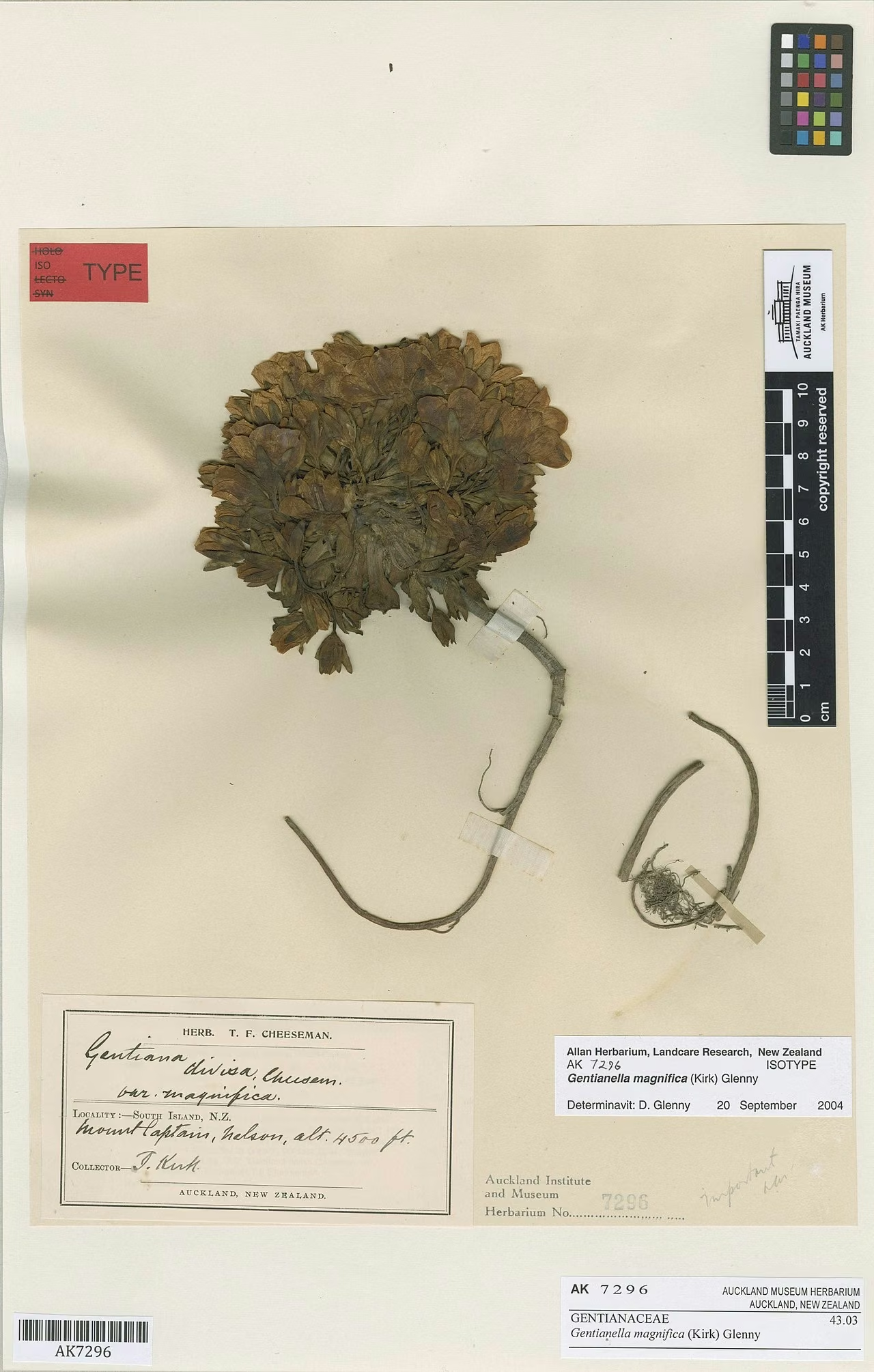
Scree Gentian
Gentianella magnifica
Last updated:
Scree gentian (Gentianella magnifica) is a showy alpine gentian found only in a few mountain ranges of Marlborough and North Canterbury. It grows 75 to 190 mm tall in flower but can carry 10 to 40 flowering stems and over 250 large white flowers, each about 2 cm long, from a single unbranched base. It lives in mobile and stable scree of finely shattered black argillite, up to about 1900 m. It flowers late, in February and March. It is ranked At Risk - Naturally Uncommon because it is known from very few, widely scattered sites. Explore more native flowering plants in our native plant guide.
Plant Description
Gentianella magnifica may be monocarpic, dying after it flowers, or polycarpic, flowering more than once, and behaves as a biennial or short-lived perennial. It grows from a single unbranched caudex topped by a rosette of leaves, from which 10 to 40 flowering stems spread outward.
In flower the plant stands 75 to 190 mm tall and carries an impressive 45 to 256 flowers. Each flower is 19 to 26 mm long with a white corolla and uncoloured veins, so a mature plant forms a low dome of large white blooms against the dark scree. The name magnifica means splendid.
It closely resembles Gentianella divisa but is larger in all its parts. Technical differences are in the ovary and seed: G. magnifica has 9 to 23 ovules and seeds 1.1 to 1.5 mm in diameter, whereas G. divisa has 29 to 56 ovules and seeds about 0.74 mm across.
Quick Facts
| Scientific Name | Gentianella magnifica |
|---|---|
| Height | 75-190 mm in flower |
| Spread | Single rosette with 10-40 radiating flowering stems |
| Water Needs | Low to moderate; free-draining scree |
| Light | Full sun |
| Frost Tolerance | Very high; alpine to about 1900 m |
| Salt Tolerance | None; an inland alpine plant |
| Growth Rate | Slow |
| Lifespan | Biennial or short-lived perennial |
Climate Best Suited to
Suits the cold, dry-summer, frost-prone alpine climate of the inland Marlborough and North Canterbury mountains, with long winter snow cover and intense summer sun. Lowland city climates do not suit it.
Regional Suitability
| City | Climate Suitability |
|---|---|
| Auckland | Low |
| Wellington | Low |
| Christchurch | Low |
| Dunedin | Low |
Plant Habitat
The scree gentian is endemic to the northern South Island. It is recorded from the Rachel and Crimea Ranges in Marlborough and from North Canterbury, including Mt Captain and Mt Miromiro. The sites are few and widely scattered.
It is a specialist of alpine scree, growing in both mobile and stable screes made mostly of finely shattered black argillite. It is occasionally found in and around rock outcrops on sparsely vegetated gravel pavements. It reaches elevations of about 1900 m.
Growing Requirements
Soil Requirements
It roots into fine, shattered argillite scree with almost no organic soil.
- Very free-draining stony debris
- Low fertility
- Loose, moving surface over moister fine material below
Light Requirements
Scree is open and unshaded, so the plant receives full alpine sun.
- Full sun
- No competition from taller plants on sparsely vegetated scree
Water Requirements
Moisture comes from snowmelt and rain held deep in the scree, while the surface dries quickly.
- Never waterlogged
- Relies on cool moisture beneath the stones
Planting and Establishing
Scree gentian is not commercially available, and NZPCN describes it as difficult to grow and says it should not be removed from the wild. It is not a plant for home gardens.
Specialist alpine growers working with legally sourced seed would need a deep pot or scree bed of sharp, stony mix, full sun, cool roots and excellent air movement.
Ecological Role
Gentianella magnifica is one of the few flowering plants able to establish on the mobile argillite screes of the inland Marlborough and North Canterbury ranges. Its deep anchorage and late flowering let it make use of a short, harsh growing season.
Its large white flowers appear in late summer when few other alpine plants are flowering, but the insects that visit and pollinate them are not documented in the sources consulted.
Uses & Significance
Garden Uses
It has no ordinary garden use; it is difficult to grow and is not sold.
- Specialist alpine collections only, from legally sourced seed
- Best appreciated on the high screes where it grows
Ecological Value
It is part of the specialised scree flora of the northern South Island mountains, a plant community found nowhere else.
- Endemic and range restricted
- Provides late-season flowers on otherwise sparse scree
- Contributes to the distinctive argillite scree flora
Landscaping Uses
Scree gentian is not used in landscaping. In a botanic garden alpine house it could be displayed in a deep trough of dark crushed rock that mimics argillite scree, which also shows off the white flowers.
Home gardeners wanting the look of a white-flowered gentian are better to admire wild plants than to attempt this species.
Seasonal Care Calendar
Spring
Snow melts off the screes late in spring and the rosette begins to grow.
- Wild plants need no attention
- Avoid walking across vegetated scree
Summer
Flowering stems develop through summer, and flowering begins in February.
- Plants can be found by searching black argillite scree
- Photograph rather than pick
Autumn
Flowering continues into March, and capsules ripen in April and May.
- Leave wild seed to fall
- Cultivated seed should be sown fresh
Winter
Plants survive under snow as dormant rosettes or as seed, since some plants die after flowering.
- No action needed
- Cultivated plants need to stay dry at the crown
When to Prune and How Much
Do not prune. Flowering stems wither after the seed is shed, and monocarpic plants die after flowering.
On cultivated plants, remove only dead material, leaving stems in place until seed has been collected.
How to Grow Scree Gentian
NZPCN describes Gentianella magnifica as difficult to propagate and says it should not be removed from the wild. No published propagation protocol specific to this species was found in the sources consulted. Because many individuals die after flowering, seed is the only realistic way to maintain it in cultivation, and its seeds are relatively large for a New Zealand gentian, 1.1 to 1.5 mm across. The notes below describe a careful alpine-grower approach and should only be applied to seed from cultivated plants or seed collected under authority for a conservation programme.
From Seed
Capsules ripen in April and May. Sow seed soon after collection into a stony, free-draining mix that resembles the fine scree the plant grows in. Whether cold stratification improves germination has not been documented for this species, but leaving sown pots outside over winter exposes them to natural cold.
- Collect capsules as they turn brown and begin to open in autumn
- Sow onto a mix of fine crushed rock, grit and a little sieved compost
- Top-dress with fine grit and leave the pot outdoors over winter
- Water from below and never let the pot become waterlogged
- Transplant seedlings individually into deep pots while still small
- Grow on in full sun with cool roots
Cuttings and Division
The single unbranched caudex means the plant cannot be divided, and cuttings are not a recorded method for this species. Seed remains the only practical option.
- Do not attempt to split the rosette
- Rely on fresh seed each season to keep a line going
Pests & Diseases
No specific pests are recorded for the scree gentian, and NZPCN notes there are no known threats in its high-elevation habitat.
In cultivation, the main causes of failure are root rot in damp, humid conditions and slugs or snails grazing young rosettes.
Cultural Significance
No Māori name or traditional use is recorded for Gentianella magnifica in the sources consulted.
Thomas Kirk first named it as a variety of Gentiana bellidifolia, and it was later treated as Gentiana divisa var. magnifica before David Glenny raised it to species rank as Gentianella magnifica. The epithet magnifica means splendid, a fitting name for a plant that can carry over 200 large white flowers.
Bonus Tip
If you are searching for this gentian, look in February or March on dark argillite scree in the Rachel or Crimea Ranges or around Mt Captain. The white flower domes stand out sharply against the black rock, but tread carefully because scree plants are easily dislodged.
Related Plants
Explore other native plants that share similar characteristics or habitats with Scree Gentian (Gentianella magnifica), offering further insights into New Zealand's diverse flora. These related species provide context and opportunities for complementary planting in your garden.
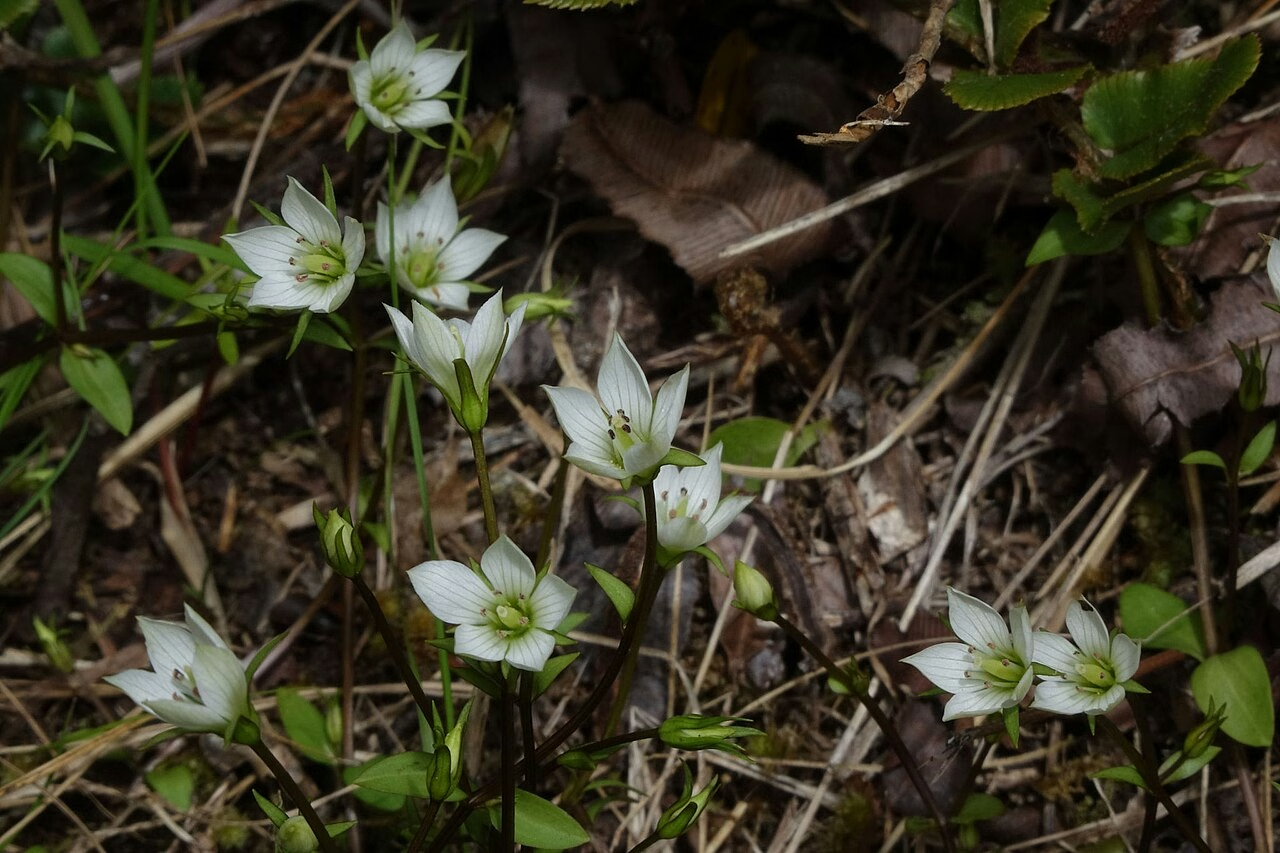
Forest Gentian
Gentianella grisebachii
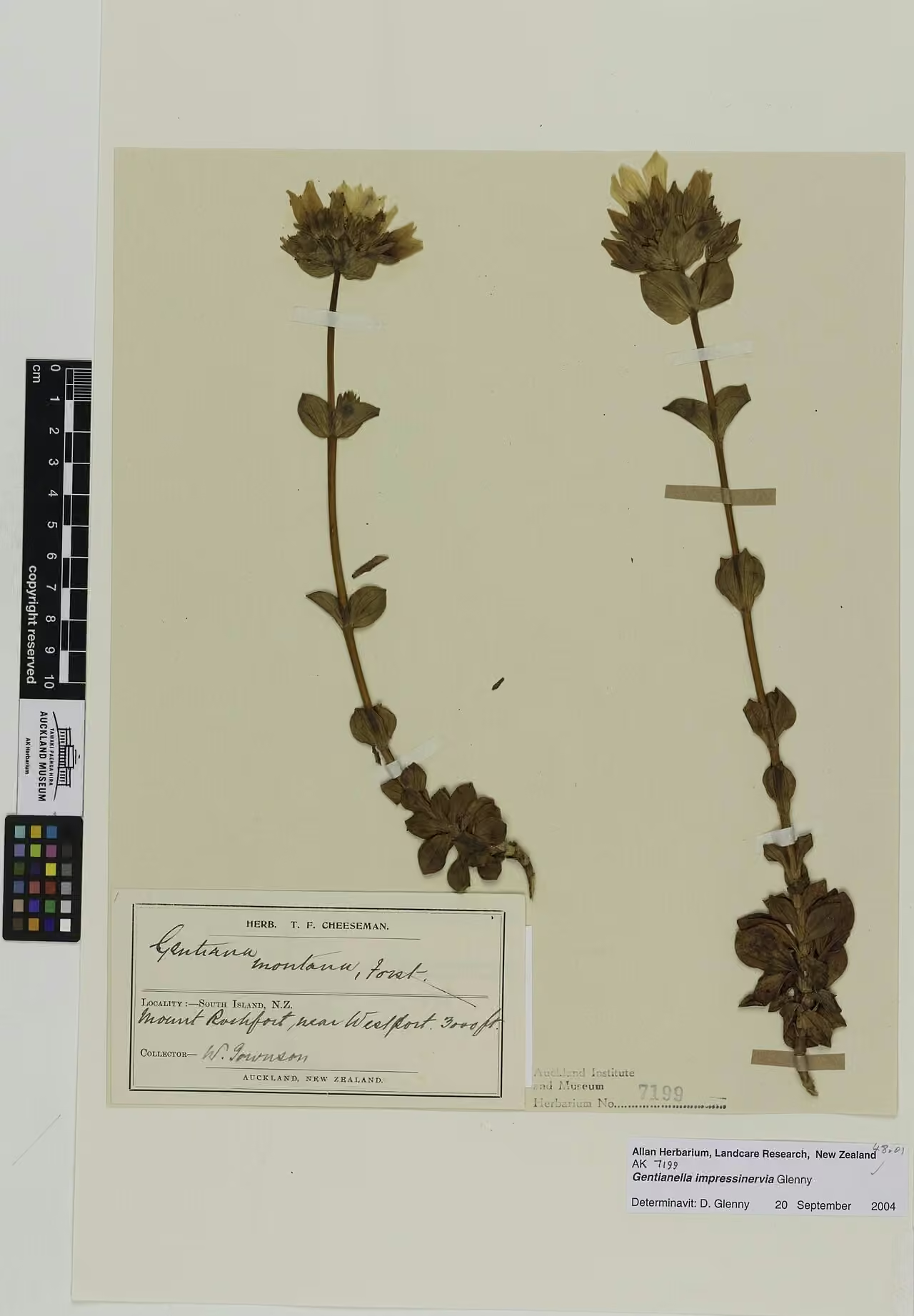
Gentianella impressinervia
Gentianella impressinervia
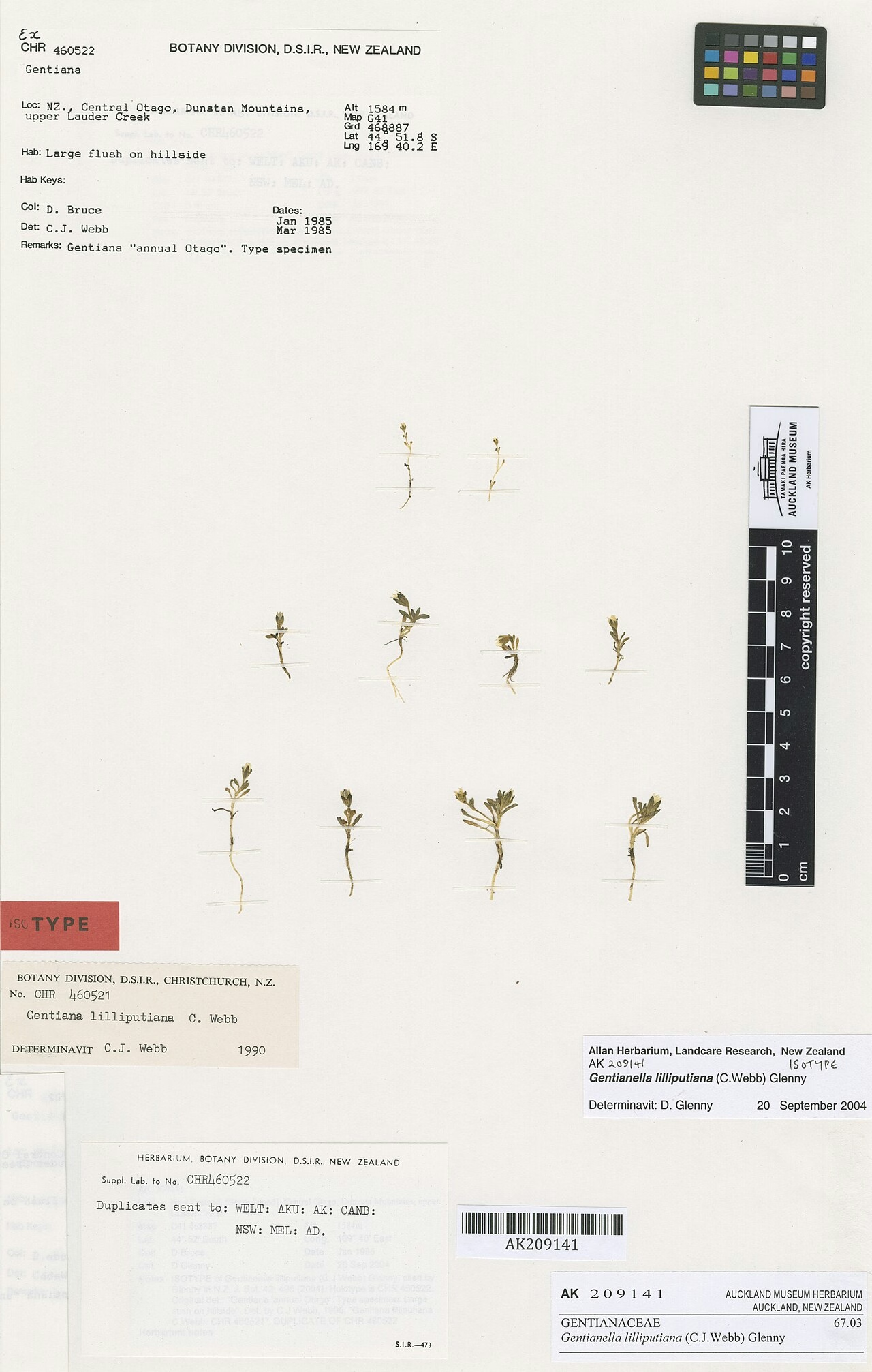
Little Gentian
Gentianella lilliputiana
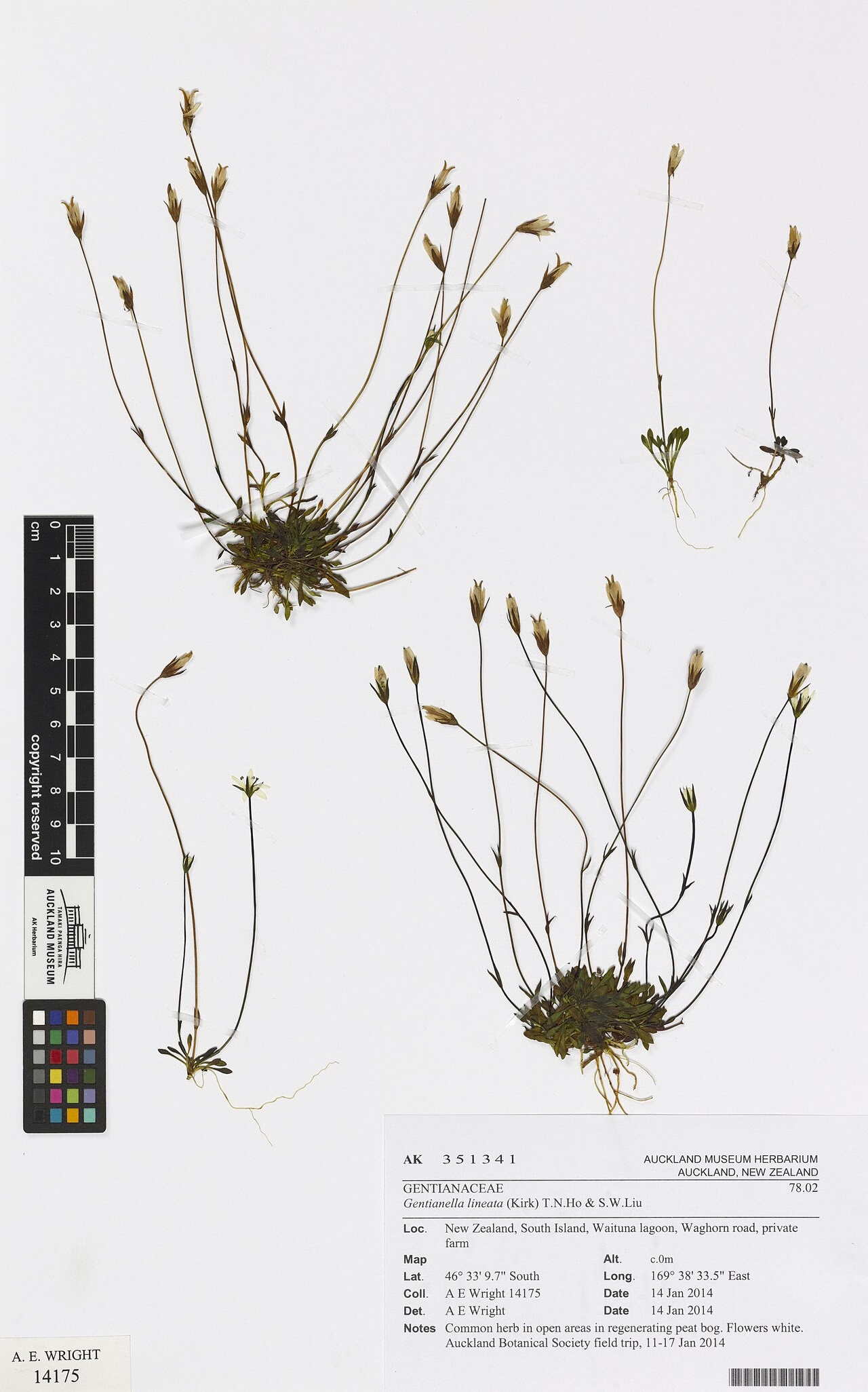
Gentianella lineata
Gentianella lineata
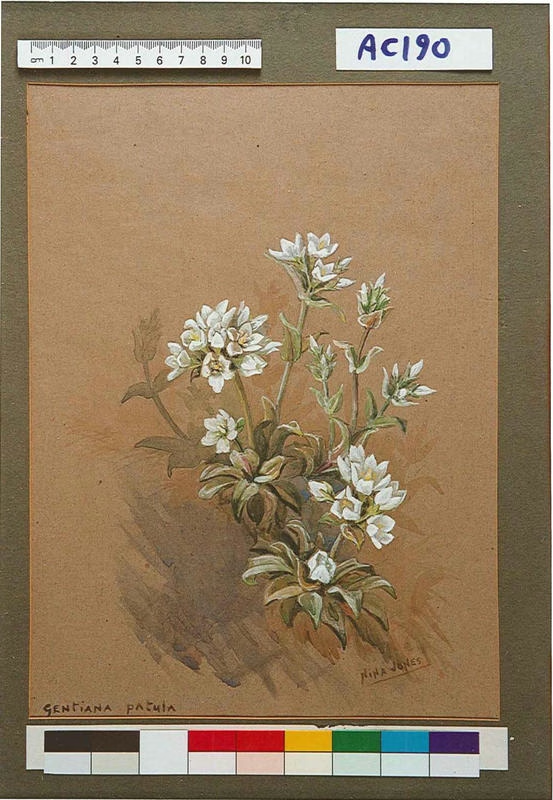
Gentianella patula
Gentianella patula
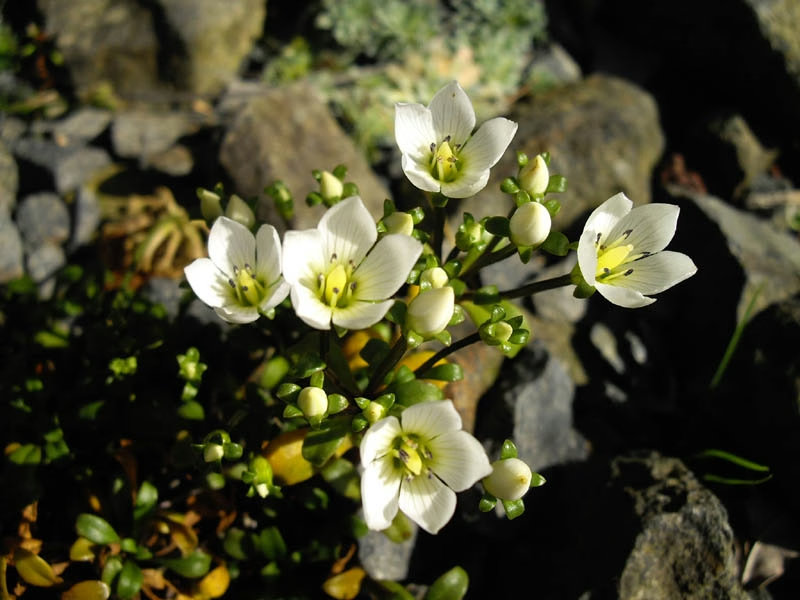
Gentianella saxosa
Gentianella saxosa
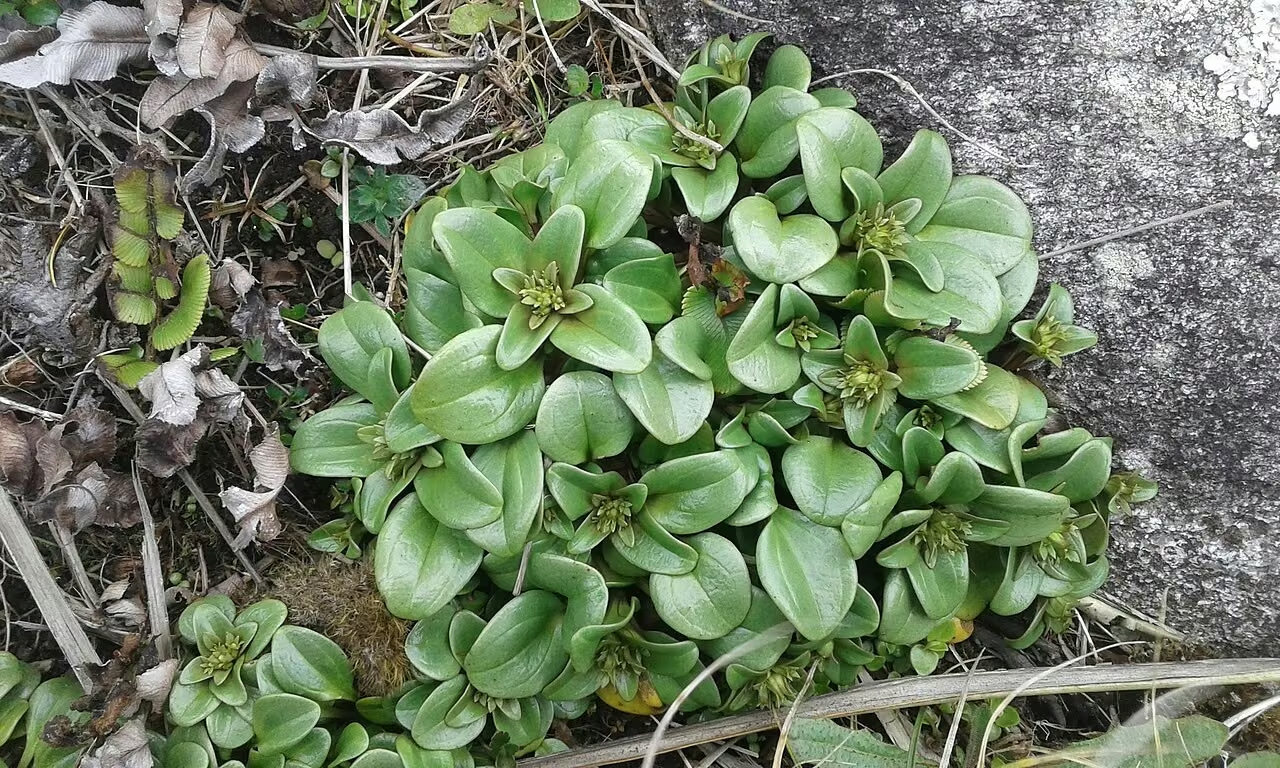
Charleston Gentian
Gentianella stevenii
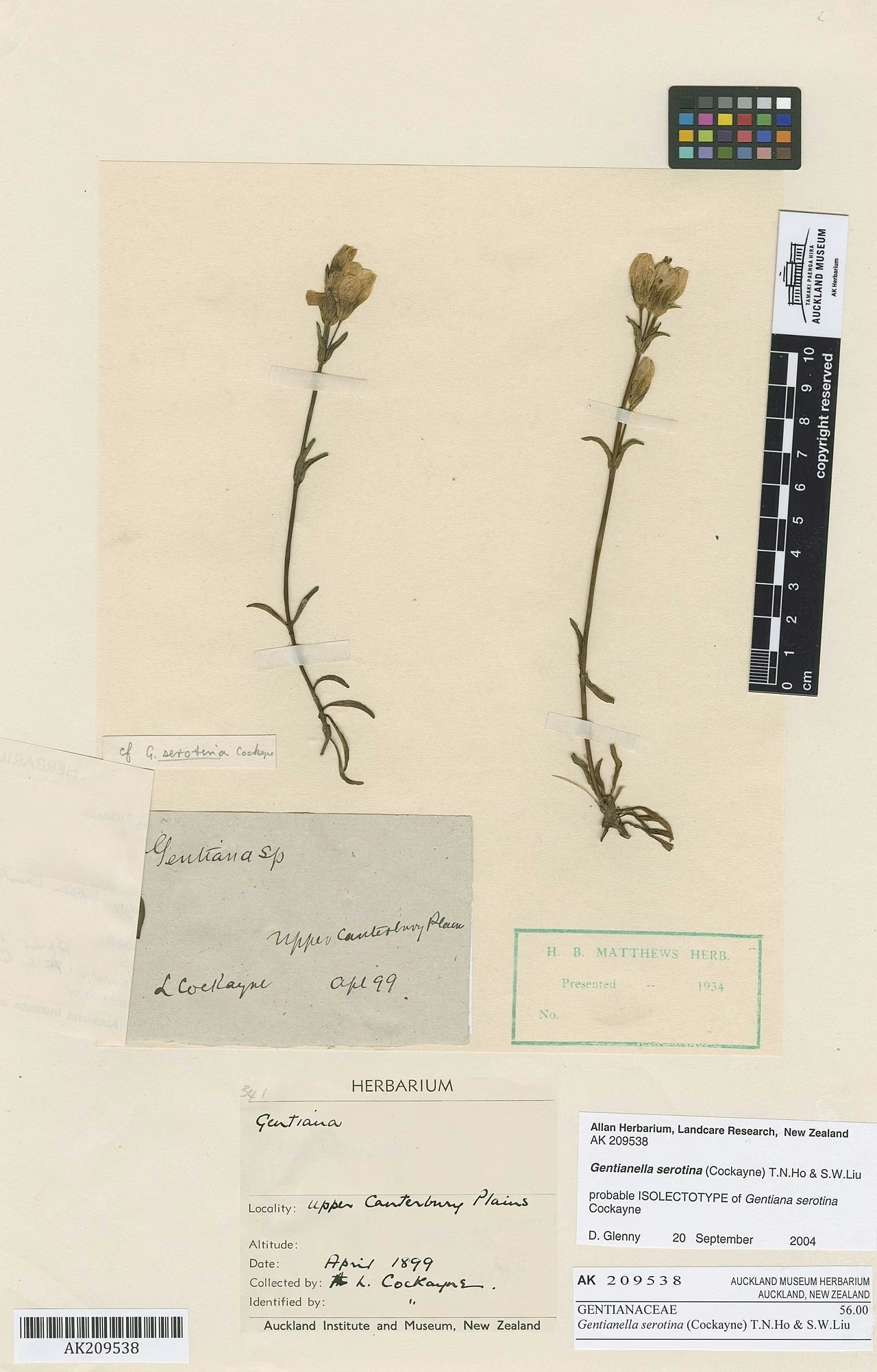
Gentianella serotina
Gentianella serotina
Plant Conservation
The scree gentian is ranked At Risk - Naturally Uncommon (2023) with the qualifiers Data Poor Size, Data Poor Trend and Range Restricted. It is known from very few, widely scattered sites and most populations are small.
NZPCN reports no known threats in its high-altitude habitat and considers it secure for the time being. Further survey of the northern South Island screes would improve knowledge of its numbers and trends.
Frequently Asked Questions
Where can you find the scree gentian?
It is known from the Rachel and Crimea Ranges in Marlborough and from North Canterbury, including Mt Captain and Mt Miromiro, growing in alpine scree up to about 1900 m.
How is Gentianella magnifica different from Gentianella divisa?
It looks like a larger G. divisa, but has fewer ovules per flower (9 to 23 rather than 29 to 56) and larger seeds, 1.1 to 1.5 mm across compared with about 0.74 mm.
When does the scree gentian flower?
It flowers late in the alpine season, in February and March, with seed capsules ripening in April and May.
Can scree gentian be grown in a garden?
NZPCN describes it as difficult to grow and says it should not be removed from the wild, and it is not commercially available.
Sources and Further Reading
The botanical, growing, and conservation details for Scree Gentian (Gentianella magnifica) on this page draw on the New Zealand plant references below. Consult them for full technical records and the latest distribution data.