Gentian
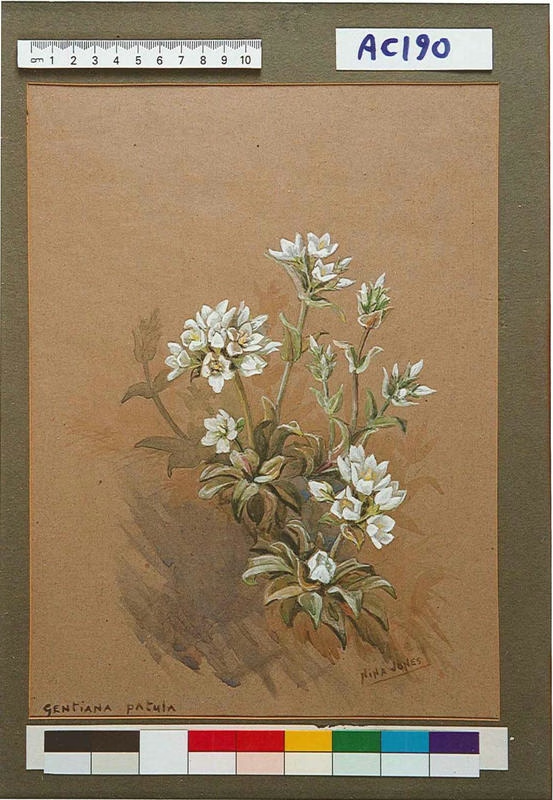
Gentianella patula
Last updated:
Gentianella patula is a spreading South Island gentian that can carry dozens, and occasionally over a hundred, white flowers on many stems. Plants are 60 to 370 mm tall in flower and grow from a rosette of stalked, elliptic leaves. It is endemic to Nelson, Marlborough and Canterbury, where it grows from valley floors up to high alpine tussock grassland, in herbfields, on alluvial fans and along subalpine scrub margins. It has a long flowering season, from December to May. It is ranked Not Threatened. The epithet patula means spreading. Explore more native flowering plants in our native plant guide.
Plant Description
Gentianella patula is a biennial, or a plant that may flower in more than one season before dying. It forms a basal rosette of elliptic leaves 18 to 44 mm long and 3.5 to 9 mm wide, each with a distinct stalk (petiole).
In flower it stands 60 to 370 mm tall. The flowering stems spread outward, matching the epithet patula, and a plant can bear from 3 to about 86 flowers, occasionally as many as 126. Flowers are 10 to 15 mm long with white corollas that may be tinted pink or purple. Lowland plants usually have coloured veins on the corolla, while high-altitude plants tend to be plain white. Each ovary has 24 to 44 ovules, and the capsules are 12 to 15 mm long.
Its closest relative is Gentianella montana. G. patula is the smaller plant overall, but it produces more flowering stems bearing smaller flowers, which gives a more open, sprawling look.
Quick Facts
| Scientific Name | Gentianella patula |
|---|---|
| Height | 60-370 mm in flower |
| Spread | Rosette with many spreading flowering stems, about 0.1-0.3 m |
| Water Needs | Moderate; moist but well-drained grassland |
| Light | Full sun |
| Frost Tolerance | High; montane to high alpine |
| Salt Tolerance | None recorded; an inland species |
| Growth Rate | Moderate; flowers in its second year or later |
| Lifespan | Biennial, sometimes flowering more than once |
Climate Best Suited to
Suits the cool, frosty, continental climate of the inland Nelson, Marlborough and Canterbury mountains and basins, with cold winters and warm, sometimes dry summers.
Regional Suitability
| City | Climate Suitability |
|---|---|
| Auckland | Low |
| Wellington | Low |
| Christchurch | Medium |
| Dunedin | Medium |
Plant Habitat
Gentianella patula is endemic to the northern and central South Island, in Nelson, Marlborough and Canterbury.
It has a broad habitat range for a gentian. It grows on valley floors and in high alpine tussock and other grasslands, in herbfields, on alluvial fans, and along the margins of subalpine scrub. Open grassland with short vegetation between tussocks is typical.
Growing Requirements
Soil Requirements
It grows in mineral grassland soils, including stony alluvial fans and valley-floor terraces.
- Well-drained, often stony soils
- Low to moderate fertility
- Open sward with gaps for seedlings
Light Requirements
Its habitats are open grasslands and herbfields with plenty of sun.
- Full sun
- Tolerates the edge of subalpine scrub but not dense shade
Water Requirements
It needs reliable moisture during the growing season but does not grow in saturated ground.
- Moist in spring and summer
- Free drainage to avoid crown rot
Planting and Establishing
NZPCN describes Gentianella patula as difficult to grow and says it should not be removed from the wild. It is not normally available from nurseries.
If grown from legally sourced seed, it would need a sunny spot in a gritty, well-drained bed or deep pot, kept cool and moist in summer and protected from slugs.
Ecological Role
This gentian is part of the herb flora of South Island tussock grasslands, herbfields and alluvial fans. As a biennial that relies on seed, it depends on open gaps between tussocks for seedlings to establish.
Its long flowering season, from December into May, means it provides white flowers late in the season when many grassland herbs have finished. The particular insects that visit it are not documented in the sources consulted.
Uses & Significance
Garden Uses
It is rarely grown because it is difficult in cultivation and short-lived.
- Specialist alpine collections
- Seed-raised displays of native grassland herbs
- Best seen in the wild in late summer
Ecological Value
It is a characteristic late-flowering herb of inland South Island grasslands.
- Endemic to Nelson, Marlborough and Canterbury
- Adds late-season floral resources to tussock grassland
- Shows how altitude shapes flower colour within one species
Landscaping Uses
Gentianella patula is not used in mainstream landscaping. In a specialist native grassland planting it could be scattered among low tussocks, where the spreading stems of white flowers would show in late summer.
Because individual plants are short-lived, any planting would need fresh seed sown each year to keep the display going.
Seasonal Care Calendar
Spring
Rosettes grow on after winter, and plants in their flowering year start to send up stems.
- Keep seedlings moist
- Watch for slug damage
Summer
Flowering begins in December and continues through summer, with fruiting from February.
- Look for spreading stems of white flowers in tussock grassland
- Note whether the veins are coloured
Autumn
Flowering can continue into May, while capsules ripen through to June.
- Collect seed from cultivated plants
- Sow fresh seed promptly
Winter
Young plants overwinter as rosettes; plants that have flowered usually die.
- No action needed
- Avoid waterlogging cultivated rosettes
When to Prune and How Much
No pruning is needed. Remove spent flowering stems only after the capsules have shed their seed.
Since plants die after their main flowering, there is nothing to cut back to encourage regrowth.
How to Grow Gentian
Gentianella patula is described by NZPCN as difficult to propagate, and it should not be removed from the wild. No species-specific propagation method has been published in the sources consulted. As a biennial with a single rosette, it can only realistically be raised from seed, which must be gathered and sown each year to keep a population going. The guidance below follows the general approach used for seed-raised New Zealand gentians and should only be applied to seed from cultivated plants or seed collected with appropriate permission.
From Seed
Capsules ripen between February and June. The seed is small. Sow it as soon as possible after collection, because old seed of gentians is often less viable. A period of winter cold outdoors may help, but this has not been tested specifically for this species.
- Collect capsules as they dry and split
- Sow on the surface of a gritty seed mix and press in lightly
- Cover with a thin layer of fine grit
- Keep the pot outdoors in a cool, bright, sheltered spot over winter
- Water so the mix stays moist but never sodden
- Pot seedlings individually once they form small rosettes
Cuttings and Division
Cuttings and division are not practical because each plant has a single short-lived rosette and dies after flowering. Keeping several plants of different ages in cultivation is the best way to ensure seed every year.
- Sow a batch of seed each season
- Grow plants of overlapping ages so flowering is continuous
Pests & Diseases
No specific pests or diseases of Gentianella patula are recorded. In the wild, grazing animals and competition from introduced pasture grasses can reduce the open grassland gaps it needs.
In cultivation, slugs and snails readily eat gentian rosettes, and plants are prone to rot in humid, poorly drained conditions.
Cultural Significance
No Māori name or traditional use is recorded for Gentianella patula in the sources consulted.
Thomas Kirk first described the plant in the genus Gentiana, and it was transferred to Gentianella by Holub. The epithet patula, meaning spreading, describes the way its many flowering stems fan out from the rosette.
Bonus Tip
If you see this gentian at different altitudes on the same trip, compare the flowers. Lower-elevation plants usually have coloured veins running along the white corolla, while high alpine plants tend to be pure white, a useful reminder that flower colour alone is not a reliable way to identify New Zealand gentians.
Related Plants
Explore other native plants that share similar characteristics or habitats with Gentian (Gentianella patula), offering further insights into New Zealand's diverse flora. These related species provide context and opportunities for complementary planting in your garden.
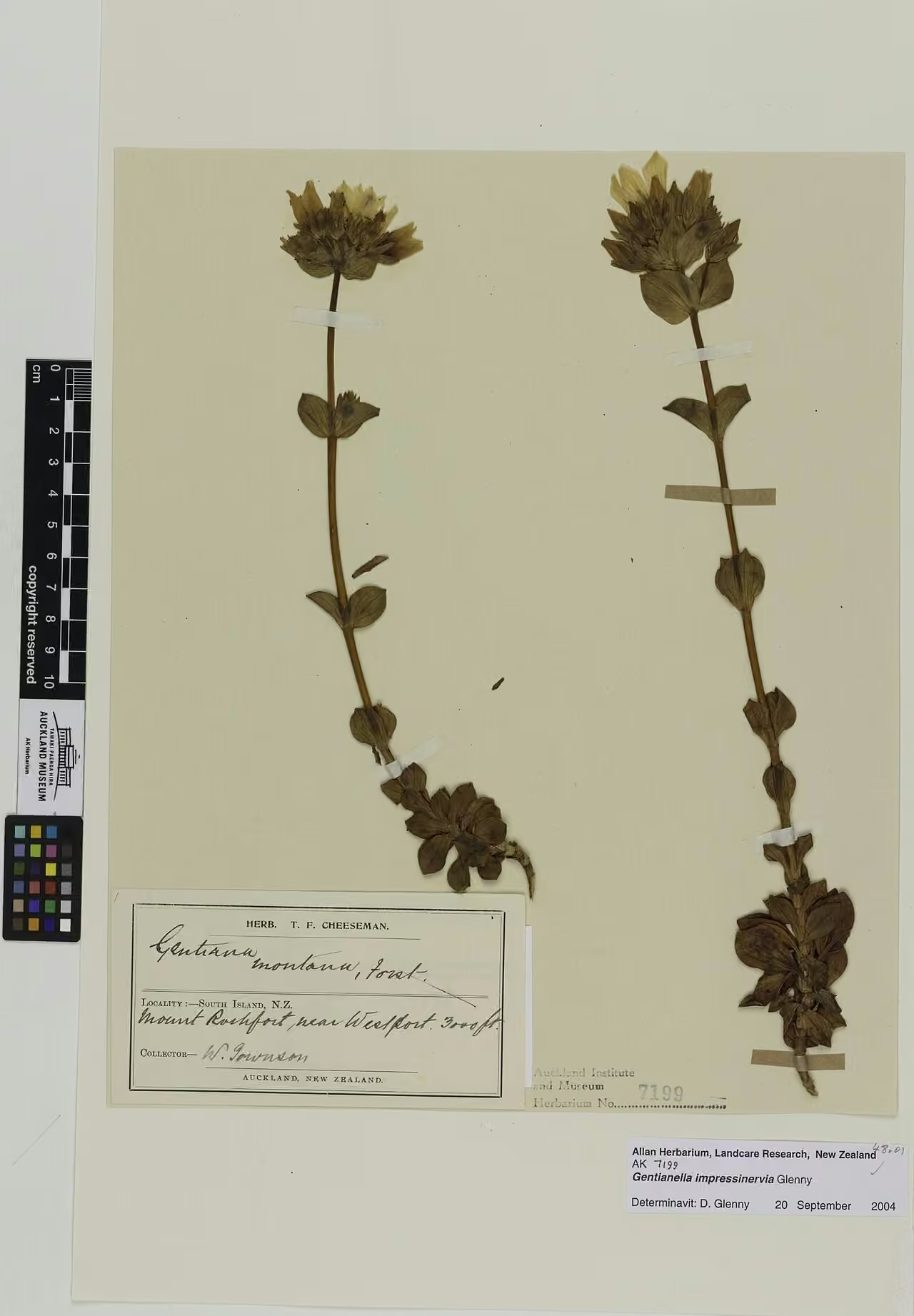
Gentianella impressinervia
Gentianella impressinervia
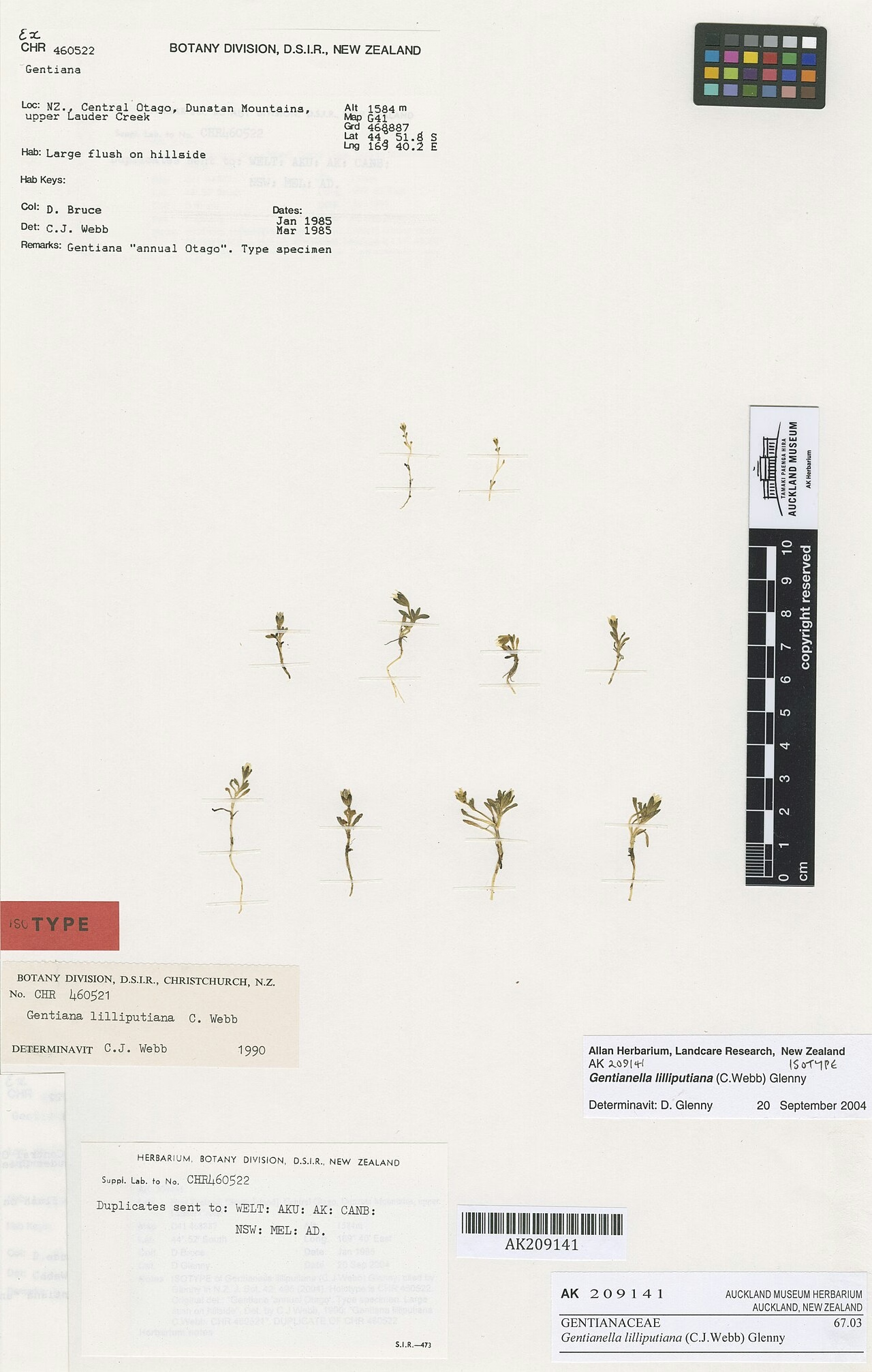
Little Gentian
Gentianella lilliputiana
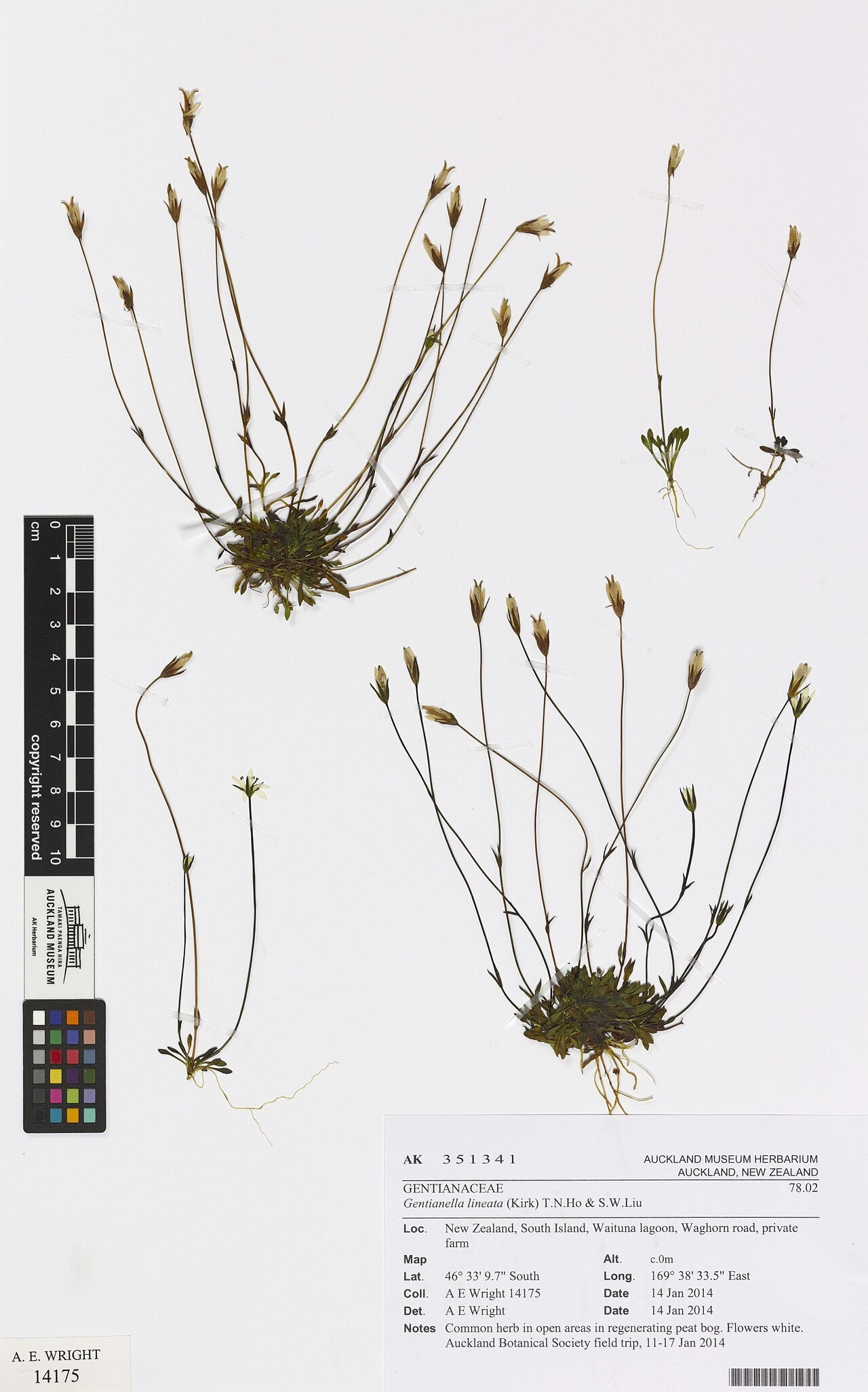
Gentianella lineata
Gentianella lineata
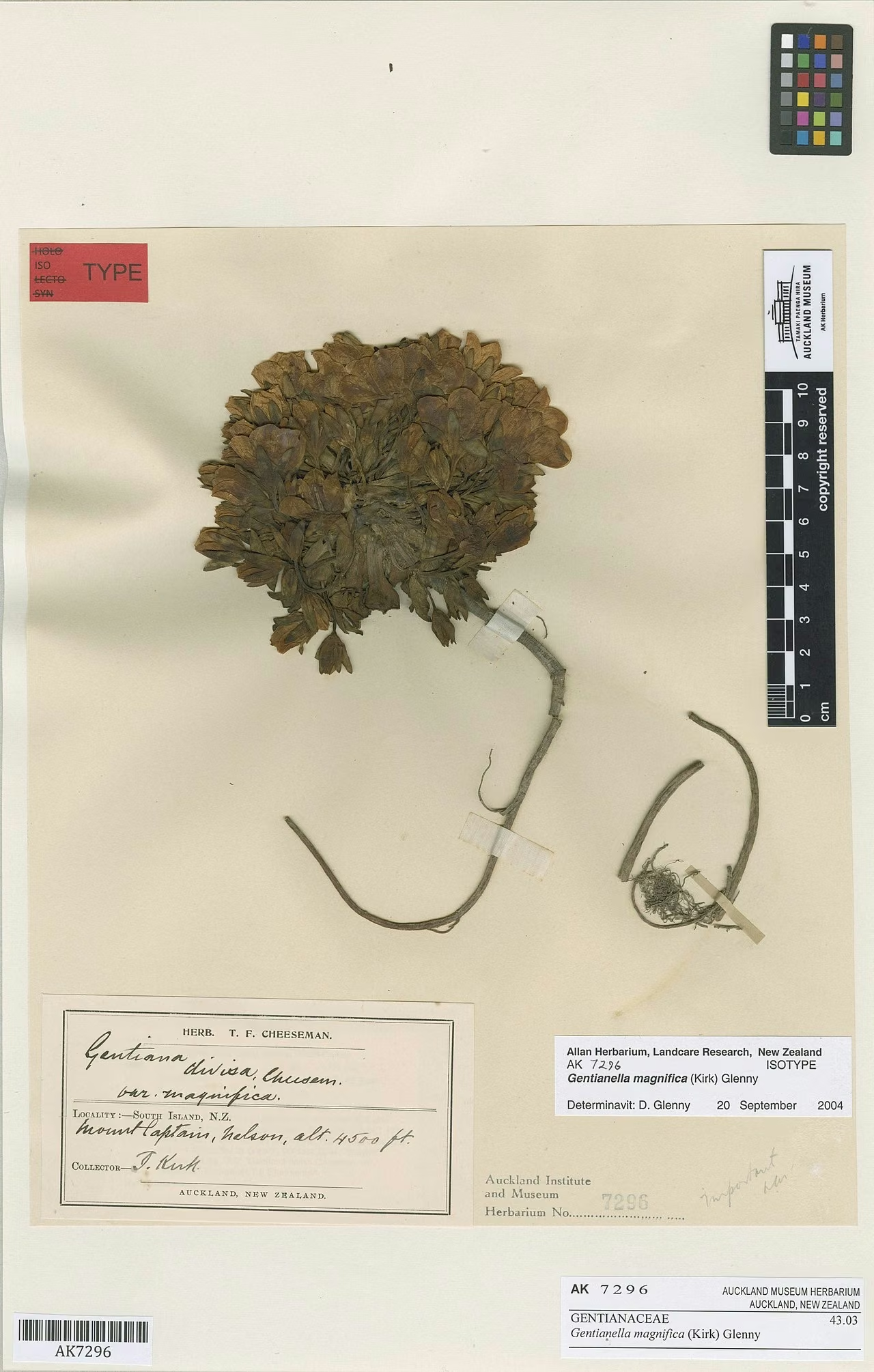
Scree Gentian
Gentianella magnifica
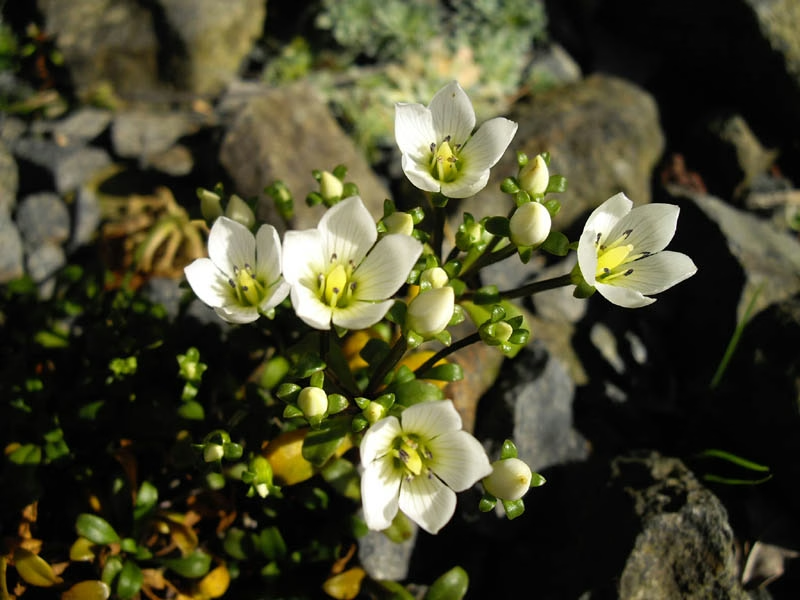
Gentianella saxosa
Gentianella saxosa
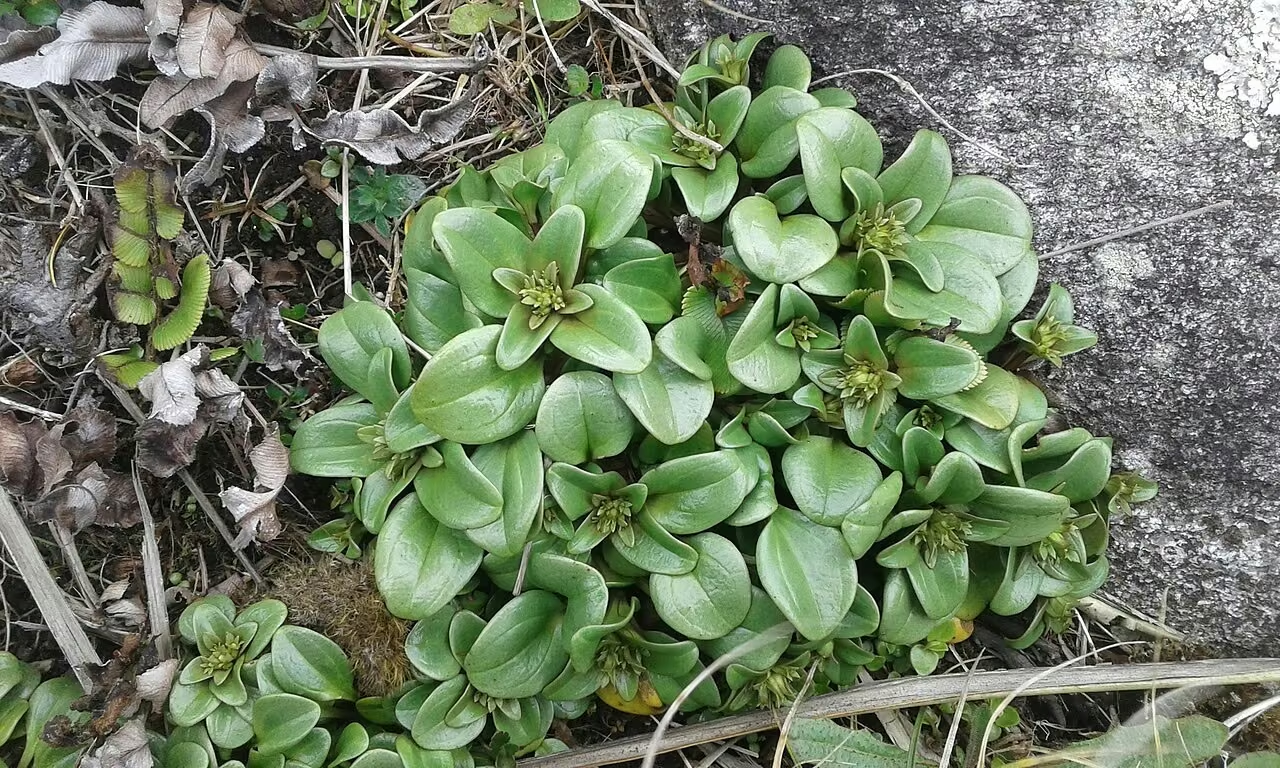
Charleston Gentian
Gentianella stevenii
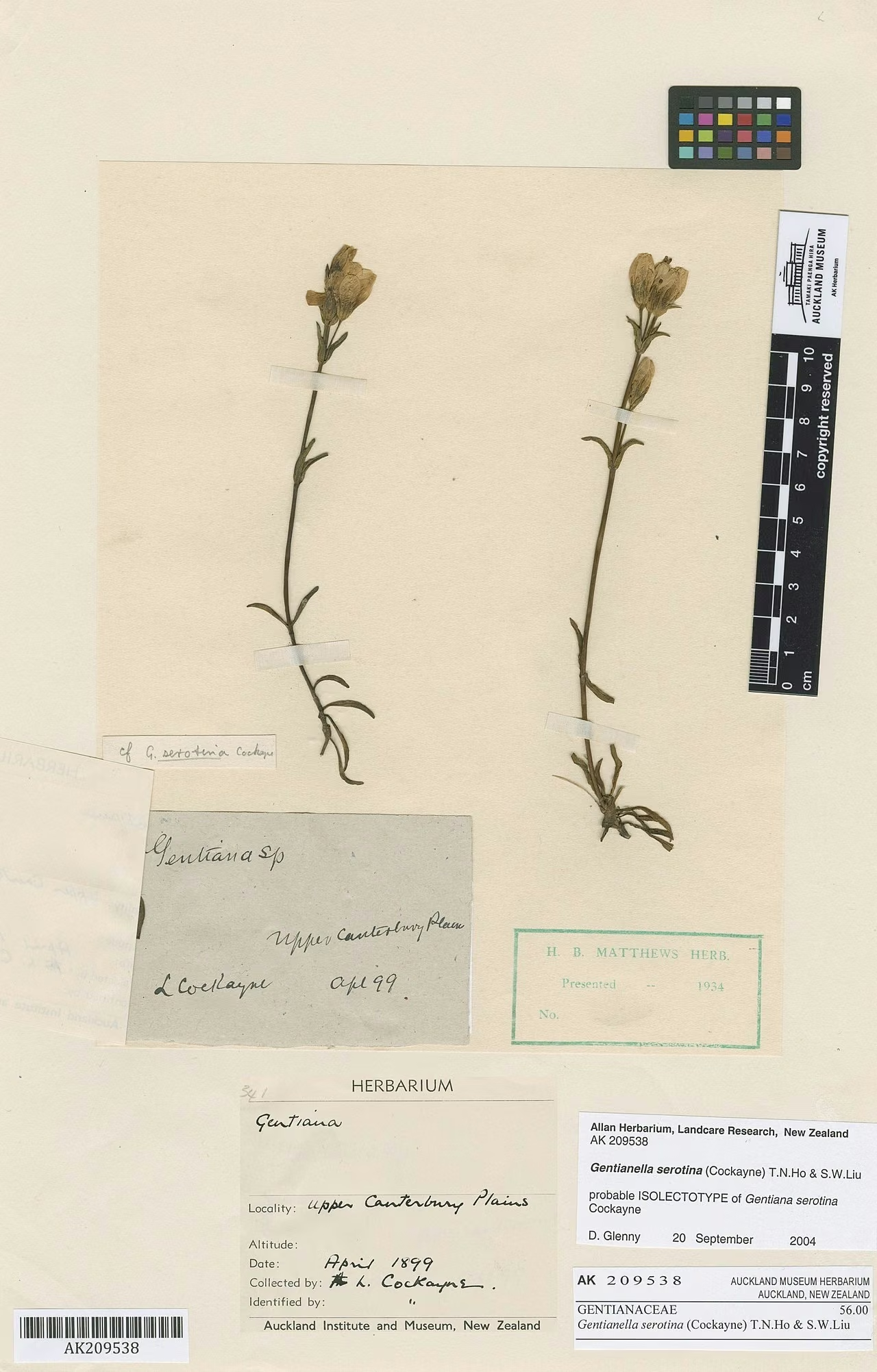
Gentianella serotina
Gentianella serotina
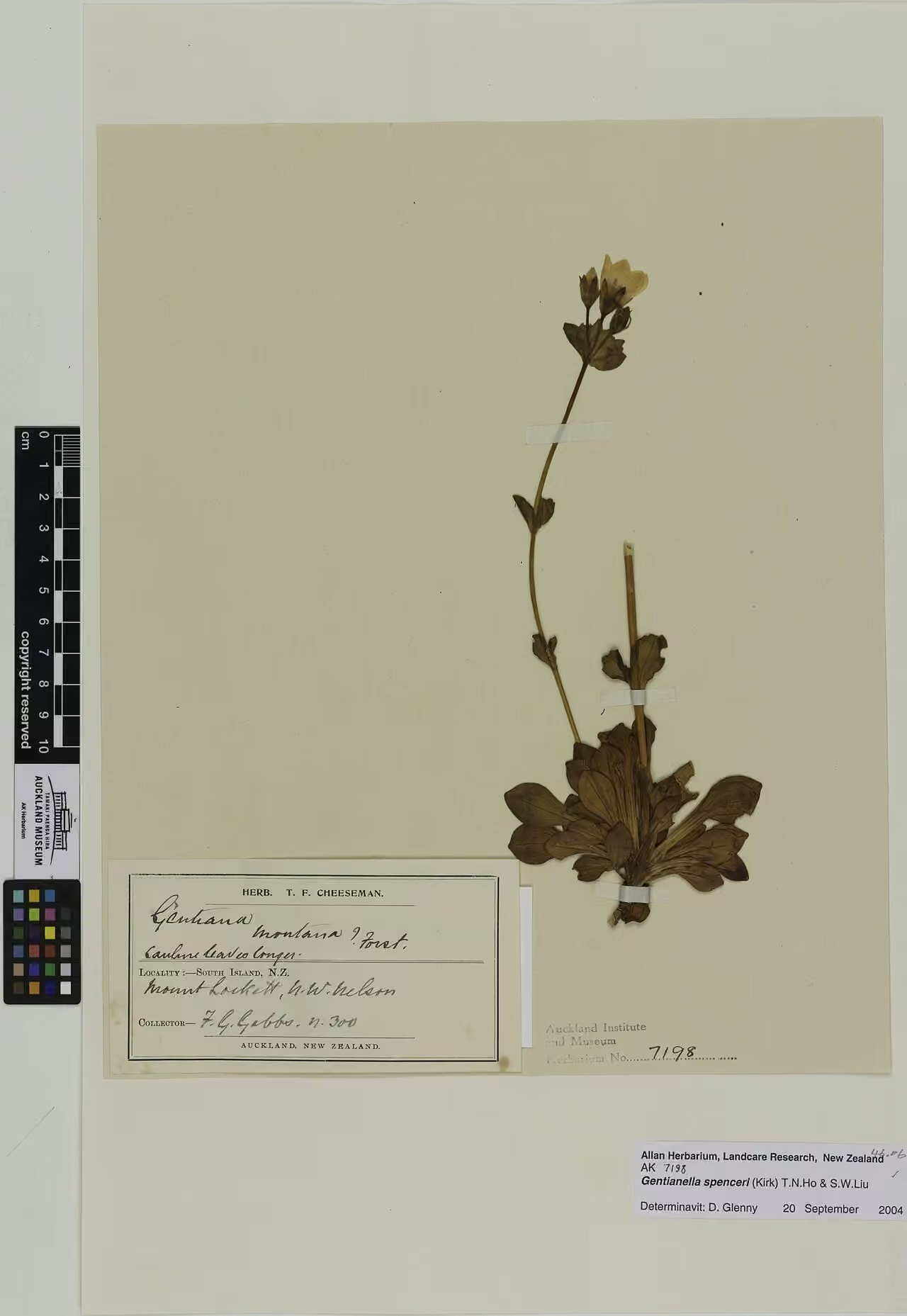
Spencer's Gentian
Gentianella spenceri
Plant Conservation
Gentianella patula is ranked Not Threatened (2023). It is widespread across Nelson, Marlborough and Canterbury and occupies a range of grassland and herbfield habitats.
Like other grassland gentians it benefits from the protection of intact tussock grassland, control of invasive weeds, and management of grazing in high country conservation areas.
Frequently Asked Questions
What does Gentianella patula look like?
It is a rosette-forming herb 60 to 370 mm tall in flower with many spreading flowering stems carrying white flowers 10 to 15 mm long, sometimes tinged pink or purple.
How do you tell Gentianella patula from Gentianella montana?
G. patula is smaller overall but has more flowering stems, and its individual flowers are smaller than those of G. montana.
Why do some Gentianella patula flowers have coloured veins?
NZPCN notes that high-elevation populations have plain white flowers without coloured veins, while lower-elevation populations tend to have flowers with coloured corolla veins.
Is Gentianella patula rare?
No. It is ranked Not Threatened (2023) and occurs across Nelson, Marlborough and Canterbury.
Sources and Further Reading
The botanical, growing, and conservation details for Gentian (Gentianella patula) on this page draw on the New Zealand plant references below. Consult them for full technical records and the latest distribution data.