Gentian
Gentianella impressinervia
Last updated:
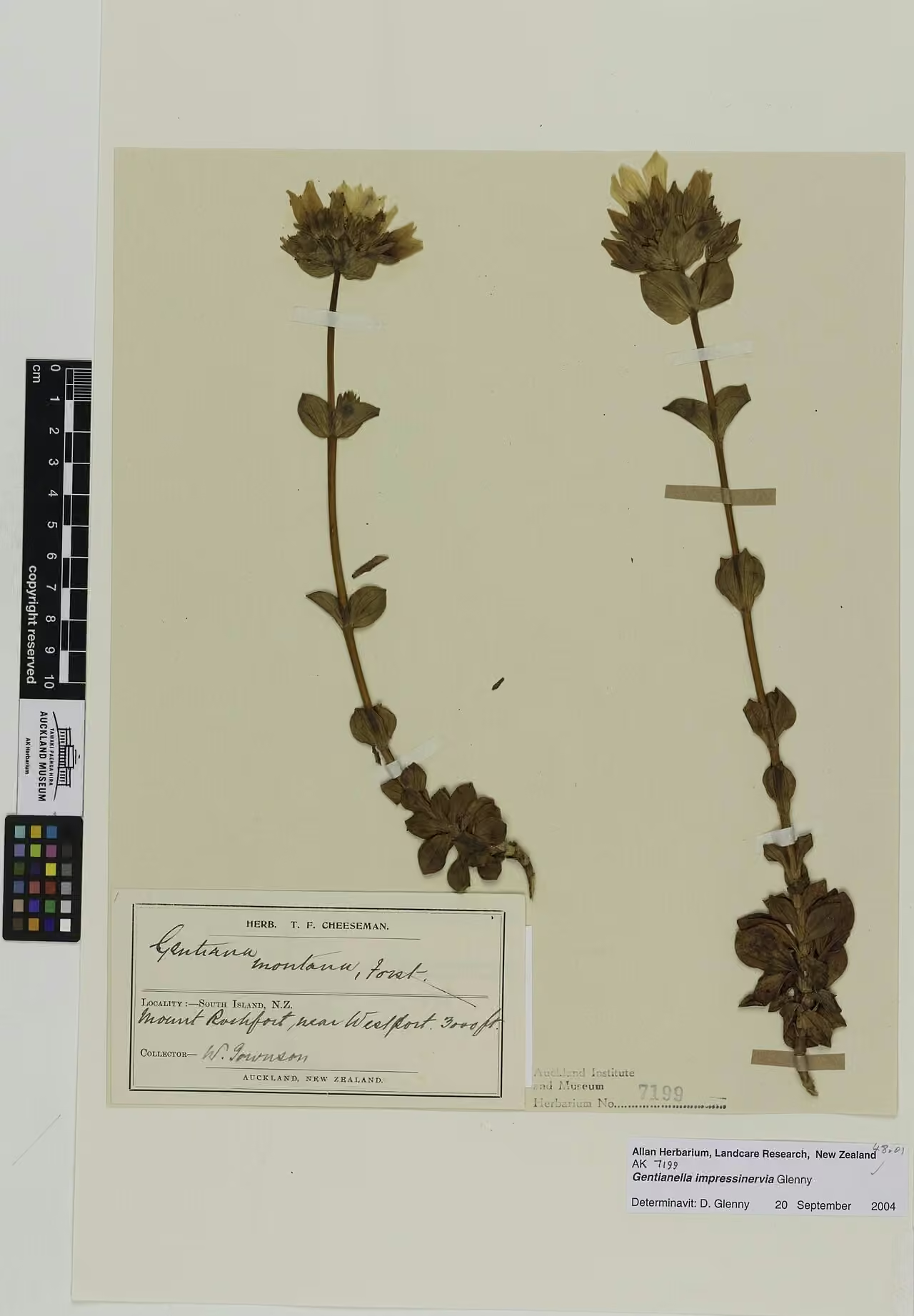
Gentianella impressinervia is a robust alpine gentian endemic to the South Island, found in north-west Nelson, North Westland and Canterbury. Unlike most New Zealand gentians, which die after flowering once, it is polycarpic: a long-lived perennial with a branched, scarred caudex and usually stolons, flowering year after year. Its glossy elliptic to obovate leaves have lateral veins sunk into the upper surface, which gives the species its name. Stems 16 to 60 cm tall carry 6 to 42 large flowers, 19 to 24 mm long, with white lobes and a yellow tube, in February and March. It grows in alpine tussock grassland and herbfield and is ranked Not Threatened. Explore more native flowering plants in our native plant guide.
Plant Description
Gentianella impressinervia is a tall gentian, 35 to 60 cm in flower, occasionally as low as 16 cm. It has a branched caudex 6.5 to 30 cm long marked by conspicuous leaf scars, and usually produces stolons. The leaves are elliptic or obovate, 18 to 61 mm long and up to 21 mm wide, green or tinted crimson beneath, glossy, with the lateral veins impressed on the upper surface and an apiculate or rounded tip.
Four to six crimson, brown or bronze flowering stems each carry two to seven pairs of almost stem-clasping leaves. Each plant has about 6 to 42 flowers, 19 to 24 mm long, on stalks 12 to 35 mm long. The corolla tube is yellow or yellow-green and the lobes white; the nectary is dark yellow. The anthers are notably large, 2.8 to 3.9 mm long, bluish-purple with a yellow mouth. Capsules are 20 to 23 mm long.
NZPCN notes it differs from the similar Gentianella montana in its yellow corolla tube. Its glossy, vein-impressed leaves, perennial branched caudex and large anthers are further distinguishing features.
Quick Facts
| Scientific Name | Gentianella impressinervia |
|---|---|
| Height | 0.16-0.6 m in flower |
| Spread | Forms clumps; usually spreads by stolons |
| Water Needs | Moderate; moist alpine soils |
| Light | Full sun |
| Frost Tolerance | Very high; alpine |
| Salt Tolerance | Low; an inland alpine plant |
| Growth Rate | Slow |
| Lifespan | Long-lived perennial |
Climate Best Suited to
Suits the cold, snowy alpine climate of the northern and central South Island mountains, from the very wet ranges of north-west Nelson and Westland to drier Canterbury.
Regional Suitability
| City | Climate Suitability |
|---|---|
| Auckland | Low |
| Wellington | Low |
| Christchurch | Low |
| Dunedin | Low |
Plant Habitat
This gentian is endemic to the South Island, recorded from north-west Nelson, North Westland and Canterbury.
It grows in the alpine zone in tall and short tussock grasslands on ridge lines and hill slopes, and in herbfield. Its taller stature allows it to hold flowers above the surrounding tussock.
Growing Requirements
Soil Requirements
It grows in alpine grassland and herbfield soils, which are typically stony, moist and low in nutrients.
- Free-draining alpine soils
- Ridge and slope sites rather than bog
- Low fertility
Light Requirements
It grows in open alpine grassland where it receives full light.
- Full sun
- Open tussock and herbfield
Water Requirements
Alpine rain and snowmelt keep its soils moist through the short growing season, while slopes and ridges provide drainage.
- Evenly moist in summer
- Not waterlogged
Planting and Establishing
Gentianella impressinervia is not commercially available, and NZPCN states it is difficult to propagate and should not be removed from the wild.
Because it is a perennial, it is in principle a better candidate for specialist alpine growers than the short-lived biennial gentians, but any material should come from legally collected seed.
Ecological Role
Its large, showy flowers with a dark yellow nectary are well suited to insect visitors, though specific pollinators are not documented in the sources consulted. Flowers are only rarely female. Seed is dispersed by ballistic projection, wind and water.
As a perennial that spreads by stolons and flowers repeatedly, it can form persistent clumps in tussock grassland, unlike the monocarpic gentians that rely on yearly seedling recruitment.
Uses & Significance
Garden Uses
It is not grown in ordinary gardens.
- Specialist alpine collections from legally sourced seed
- Botanic garden alpine displays
- Viewing on South Island alpine tracks
Ecological Value
It is a conspicuous late-summer flowering herb of South Island alpine tussock grasslands.
- Large flowers provide nectar and pollen for alpine insects
- A long-lived component of tussock and herbfield communities
- Part of the distinctive New Zealand gentian radiation
Landscaping Uses
It is not used in landscaping. In a specialist alpine garden its tall stems and large white and yellow flowers would make it a striking late-summer feature among small tussocks.
In the wild, protecting alpine grassland from browsing animals and fire maintains its habitat.
Seasonal Care Calendar
Spring
New shoots grow from the branched caudex and stolons after snowmelt.
- Glossy leaves emerge
- Clumps expand by stolons
Summer
Flowering stems elongate through summer, with flowering in February and March.
- Flowers have white lobes and a yellow tube
- Look on tussock ridges and slopes
Autumn
Capsules ripen from March to May.
- Seed is released
- Plants persist after flowering
Winter
The plant survives winter as a dormant caudex under snow.
- No above-ground growth
- Leaf scars mark previous seasons
When to Prune and How Much
No pruning is needed in the wild. In cultivation, remove flowering stems once seed has been shed to tidy the plant, since it will flower again the next year.
Avoid cutting into the caudex, which carries the buds for future growth.
How to Grow Gentian
NZPCN describes Gentianella impressinervia as difficult to propagate and advises that it should not be removed from the wild; it is not commercially available. Its perennial habit, branched caudex and stolons mean that, unlike most New Zealand gentians, it could potentially be increased vegetatively as well as from seed, but no propagation trials for this species were found in the sources consulted. The methods below are therefore based on general alpine gardening practice and the plant's documented growth form rather than tested protocols. Any seed or stolon material should come only from cultivated plants or be collected under Department of Conservation authorisation, and growers should expect slow progress and losses if conditions become warm or humid.
From Seed
Fruiting runs from March to May, and ovaries carry a generous 44 to 84 ovules. Large capsules 20 to 23 mm long make seed collection straightforward.
- Collect capsules as they start to split in autumn
- Sow fresh on a gritty, free-draining alpine mix
- Overwinter outdoors so seed receives natural chilling
- Keep seedlings cool, moist and in bright light
- Pot on carefully into deep pots as the caudex develops
Division of Stolons
Because plants usually produce stolons, a rooted stolon or side branch of the caudex on an established cultivated plant may be detached and grown on. This is an untested approach for this species.
- Choose a stolon or branch that already has its own roots
- Separate it in spring as growth resumes
- Pot into gritty mix and keep cool and shaded until established
Pests & Diseases
No specific pests are recorded for this species in the sources consulted. Introduced browsing mammals such as deer, chamois, tahr and hares graze alpine herbs and could affect it, though no impact is documented.
In cultivation, rot in warm, wet and poorly ventilated conditions is likely to be the main risk.
Cultural Significance
No Māori name or traditional use is recorded for this species in the sources consulted.
It was described as new to science by David Glenny in 2004. The name impressinervia refers to the impressed lateral leaf veins, a feature easily seen on its glossy leaves.
Bonus Tip
To tell this gentian from Gentianella montana in the field, look inside the flower: a yellow or yellow-green corolla tube under white lobes, together with glossy leaves whose side veins are pressed into the upper surface, points to Gentianella impressinervia.
Related Plants
Explore other native plants that share similar characteristics or habitats with Gentian (Gentianella impressinervia), offering further insights into New Zealand's diverse flora. These related species provide context and opportunities for complementary planting in your garden.
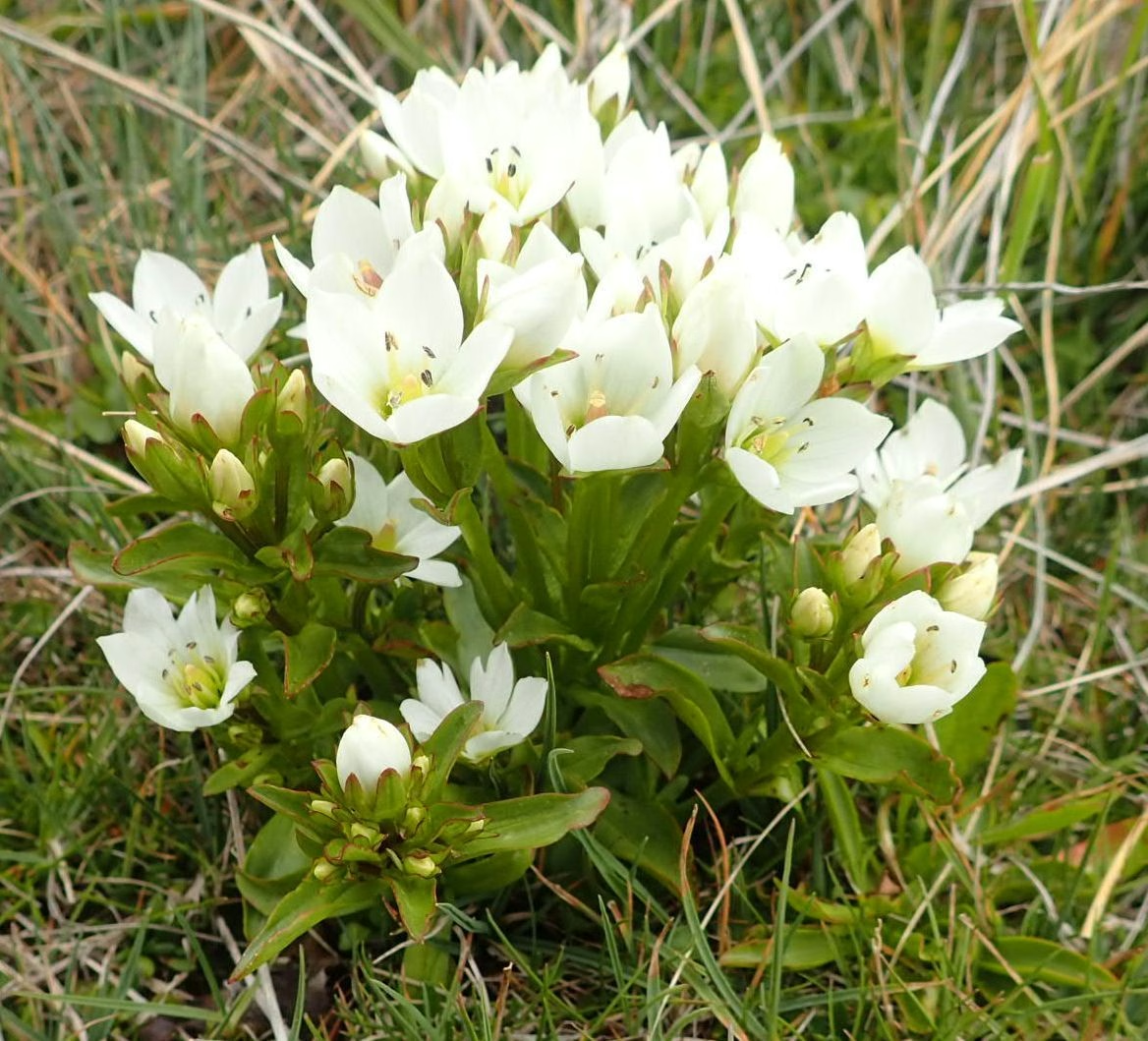
Gentianella divisa
Gentianella divisa
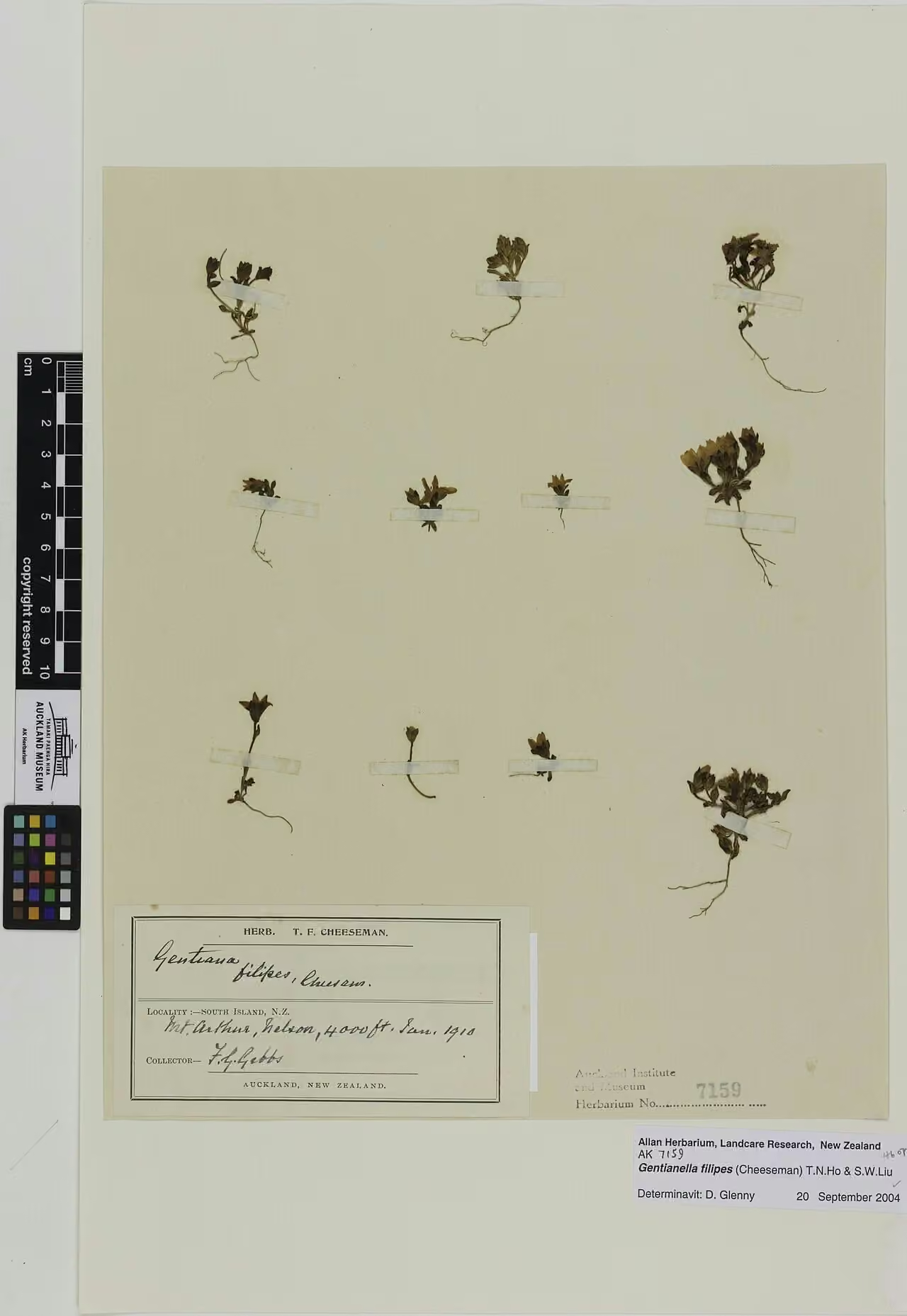
Gentianella filipes
Gentianella filipes
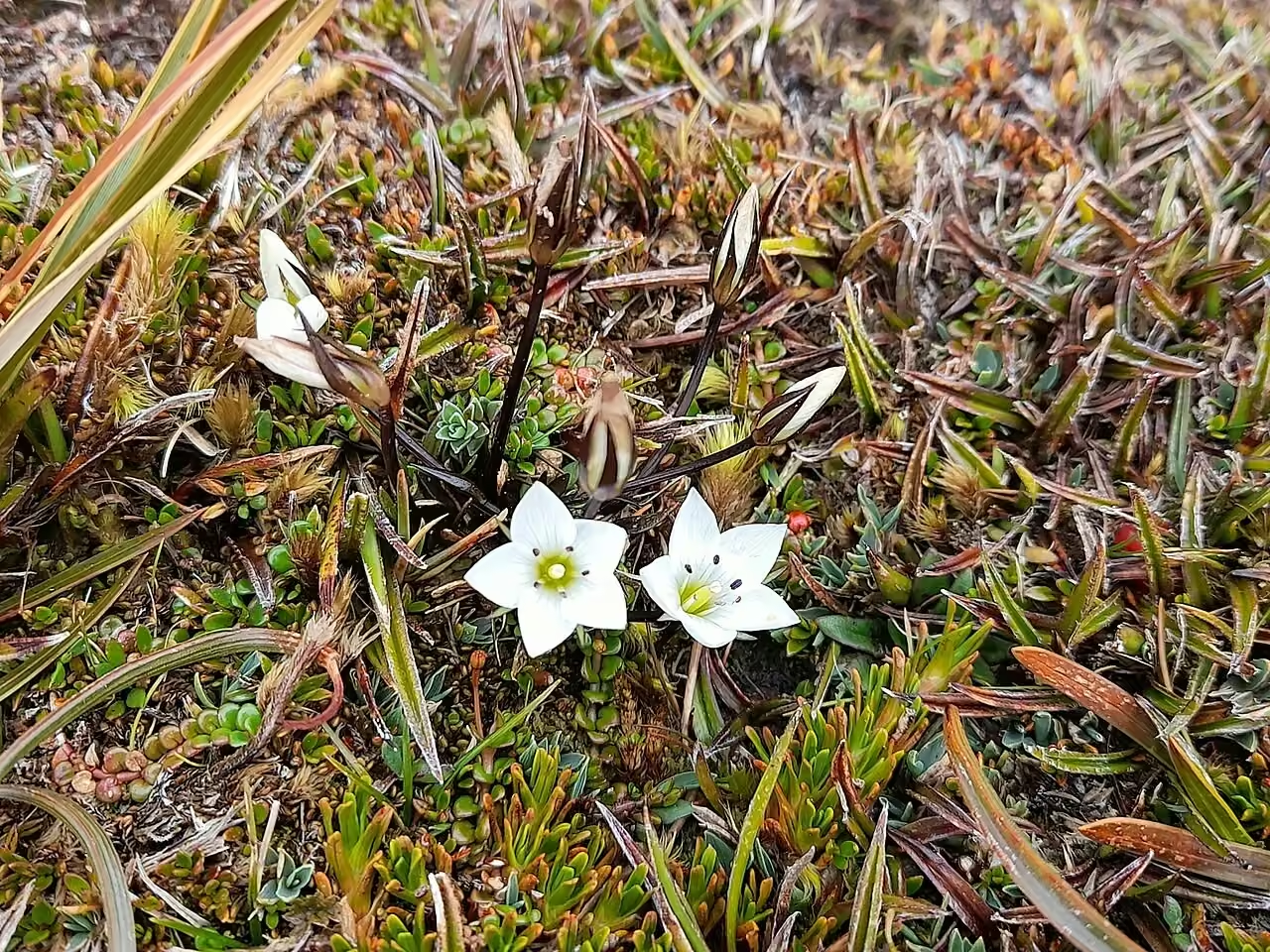
Mt Anglem Gentian
Gentianella gibbsii
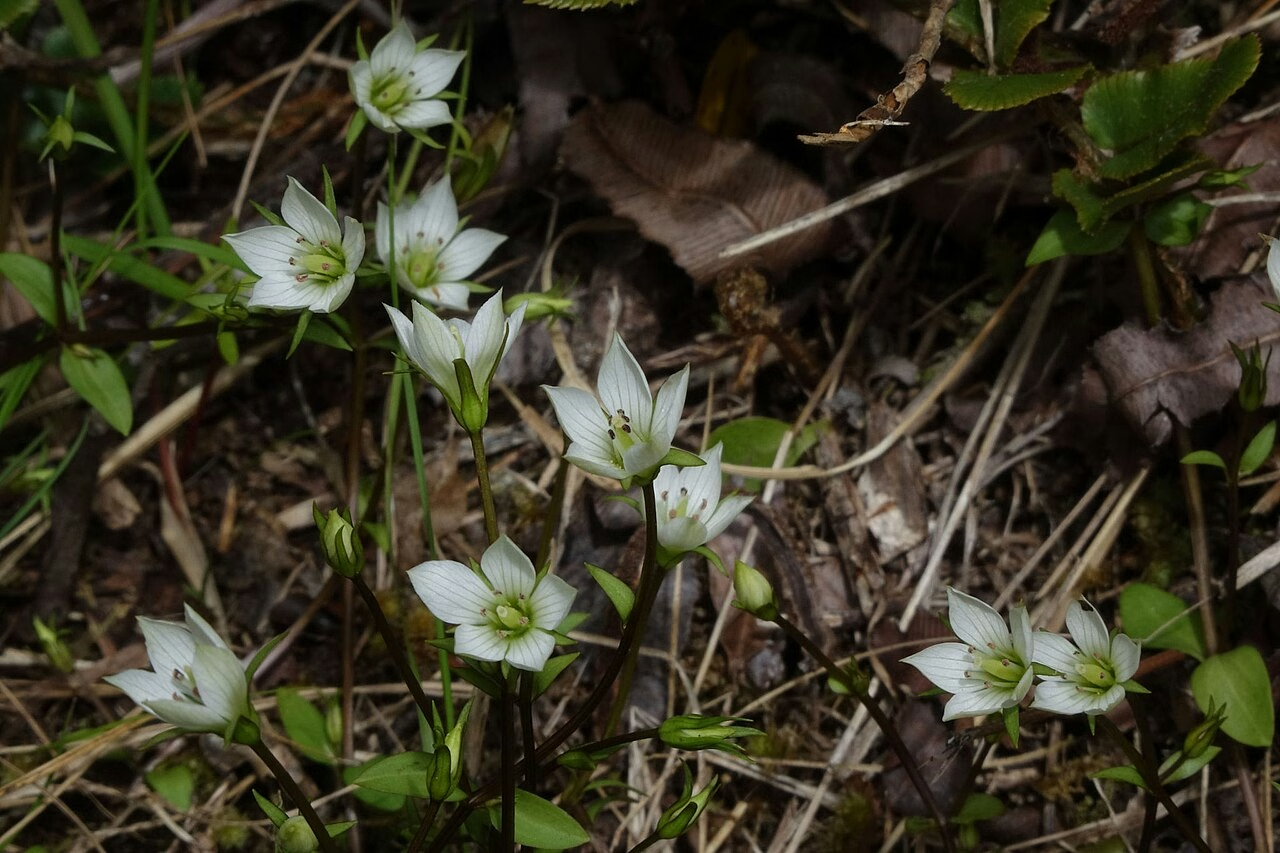
Forest Gentian
Gentianella grisebachii
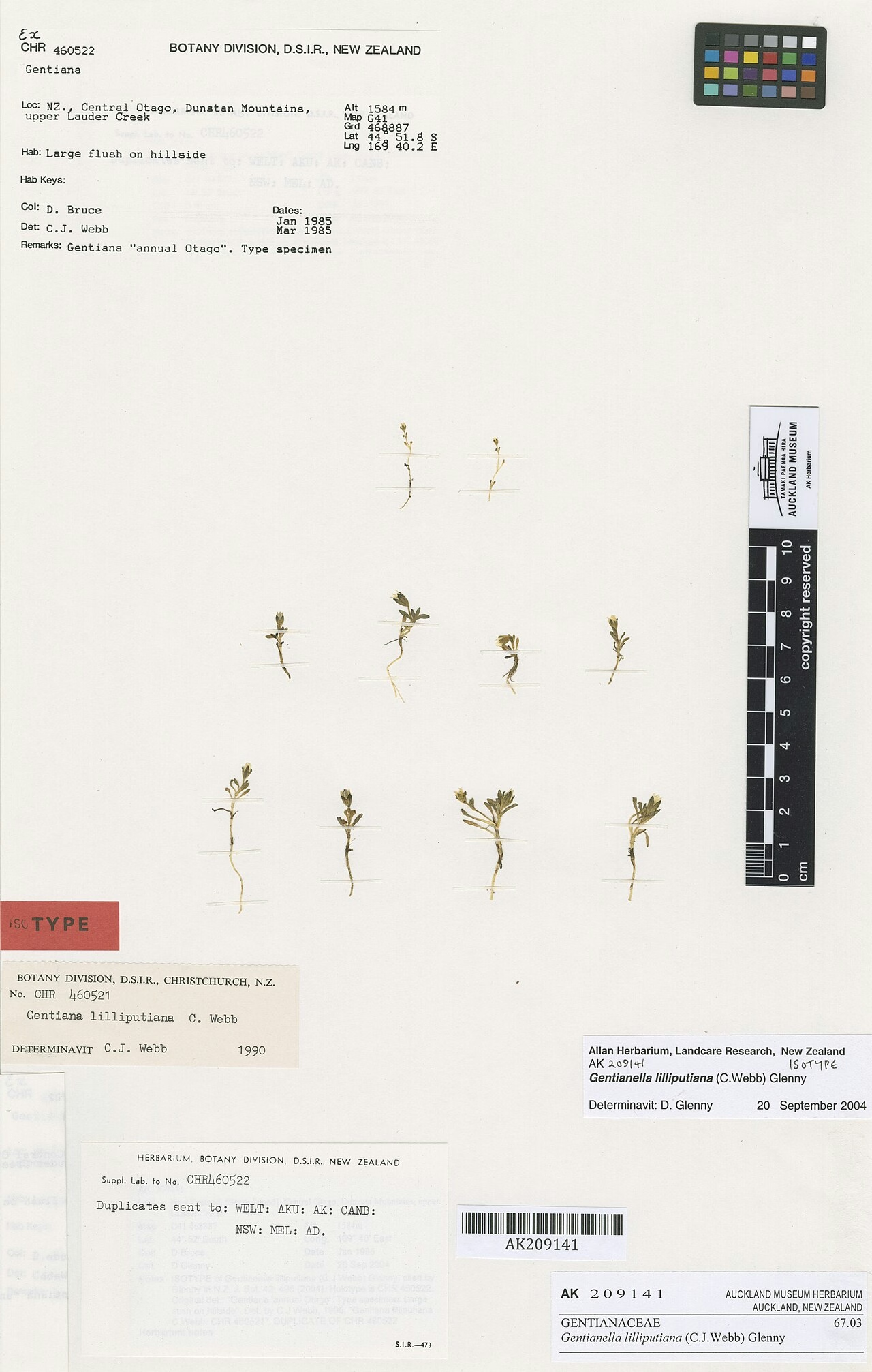
Little Gentian
Gentianella lilliputiana
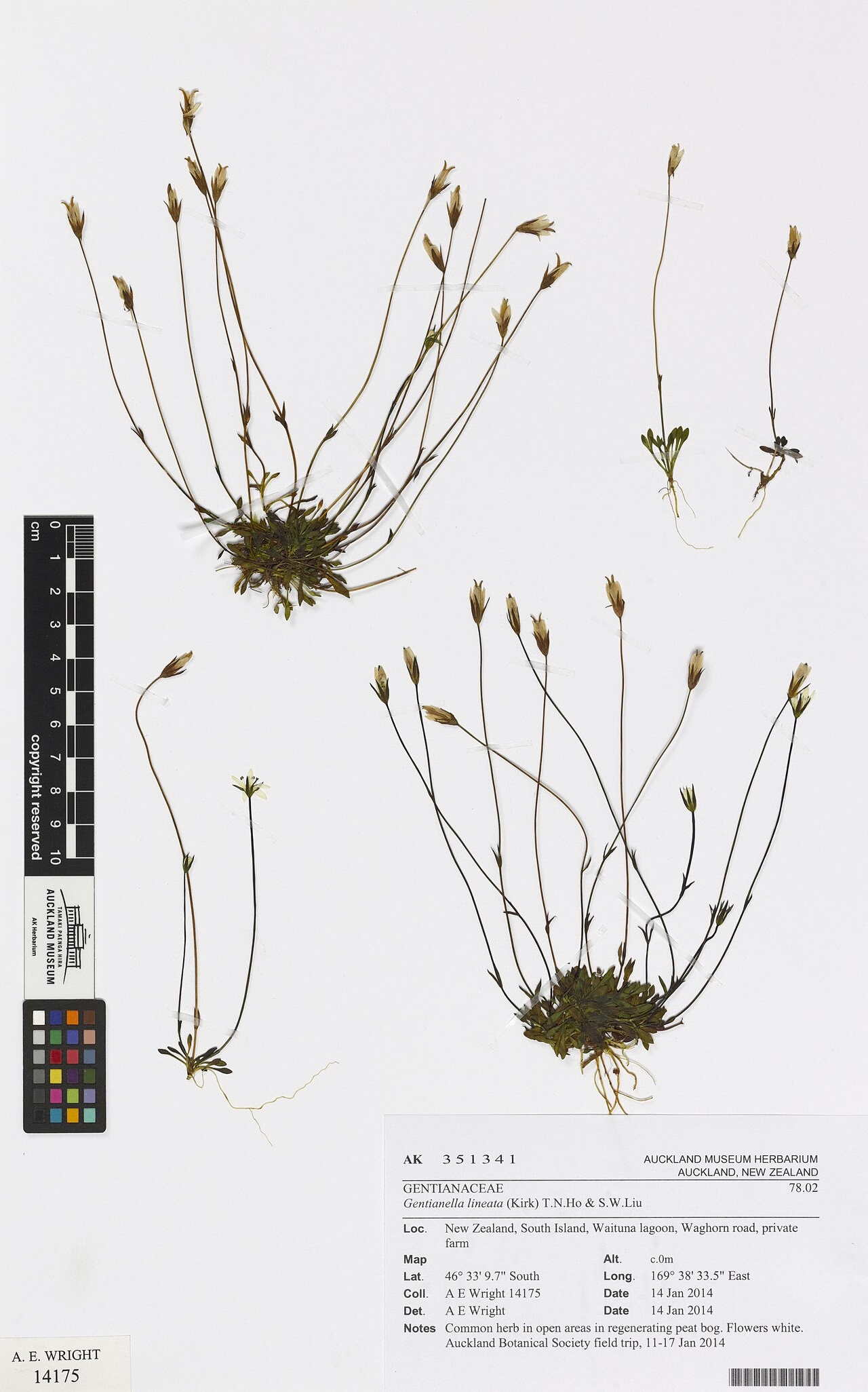
Gentianella lineata
Gentianella lineata
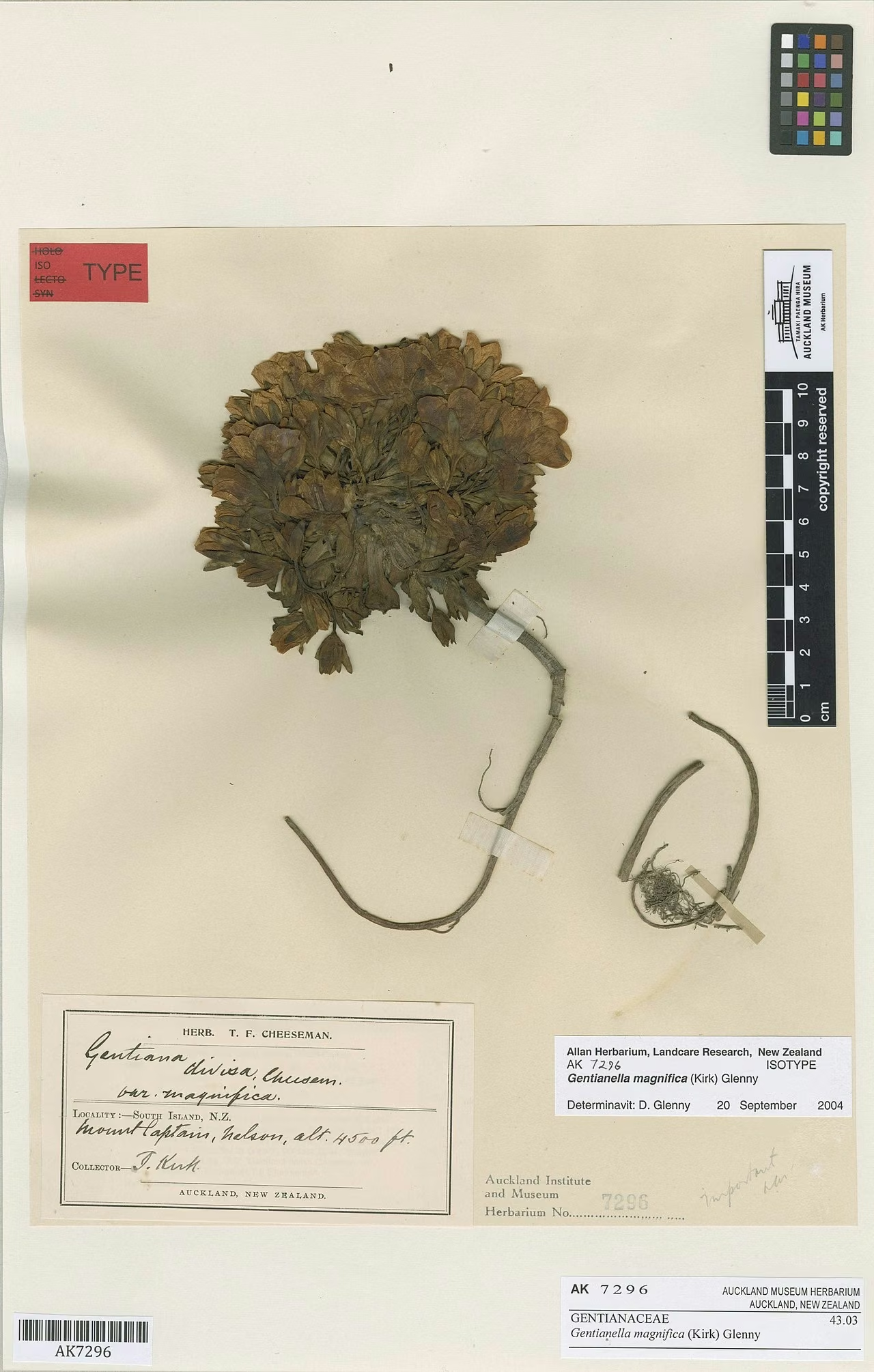
Scree Gentian
Gentianella magnifica
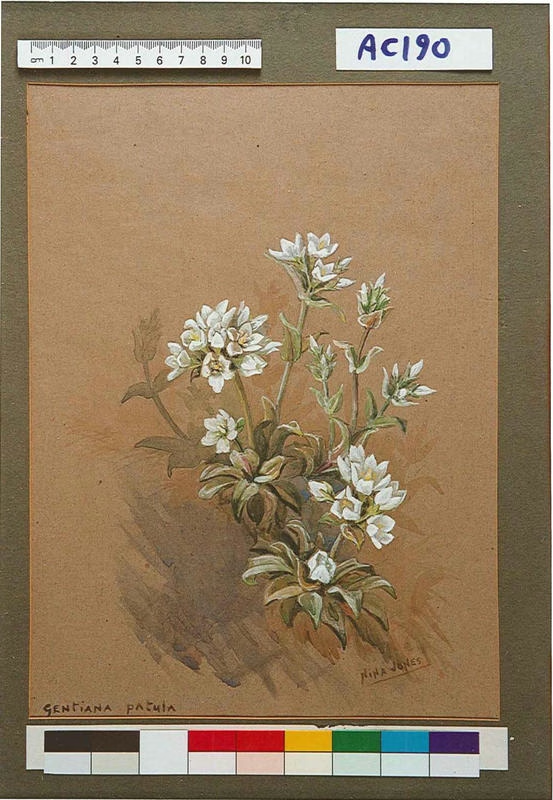
Gentianella patula
Gentianella patula
Plant Conservation
Gentianella impressinervia is ranked Not Threatened (2023). No specific threats to it are identified in the sources consulted.
Controlling browsing animals in alpine grasslands is the main management that benefits it and its companion species.
Frequently Asked Questions
How do you identify Gentianella impressinervia?
Look for glossy leaves with lateral veins impressed into the upper surface, a branched woody caudex with leaf scars, and large flowers 19 to 24 mm long with white lobes and a yellow or yellow-green tube.
Does Gentianella impressinervia die after flowering?
No. Unlike most New Zealand gentians it is polycarpic, a perennial that flowers in successive years from a branching caudex and often spreads by stolons.
Where does Gentianella impressinervia grow?
It is endemic to the South Island in north-west Nelson, North Westland and Canterbury, in alpine tall and short tussock grassland on ridges and hill slopes and in herbfield.
When was Gentianella impressinervia named?
It was described by David Glenny in 2004 as part of his revision of the New Zealand gentians, so it has no older synonyms.
Sources and Further Reading
The botanical, growing, and conservation details for Gentian (Gentianella impressinervia) on this page draw on the New Zealand plant references below. Consult them for full technical records and the latest distribution data.