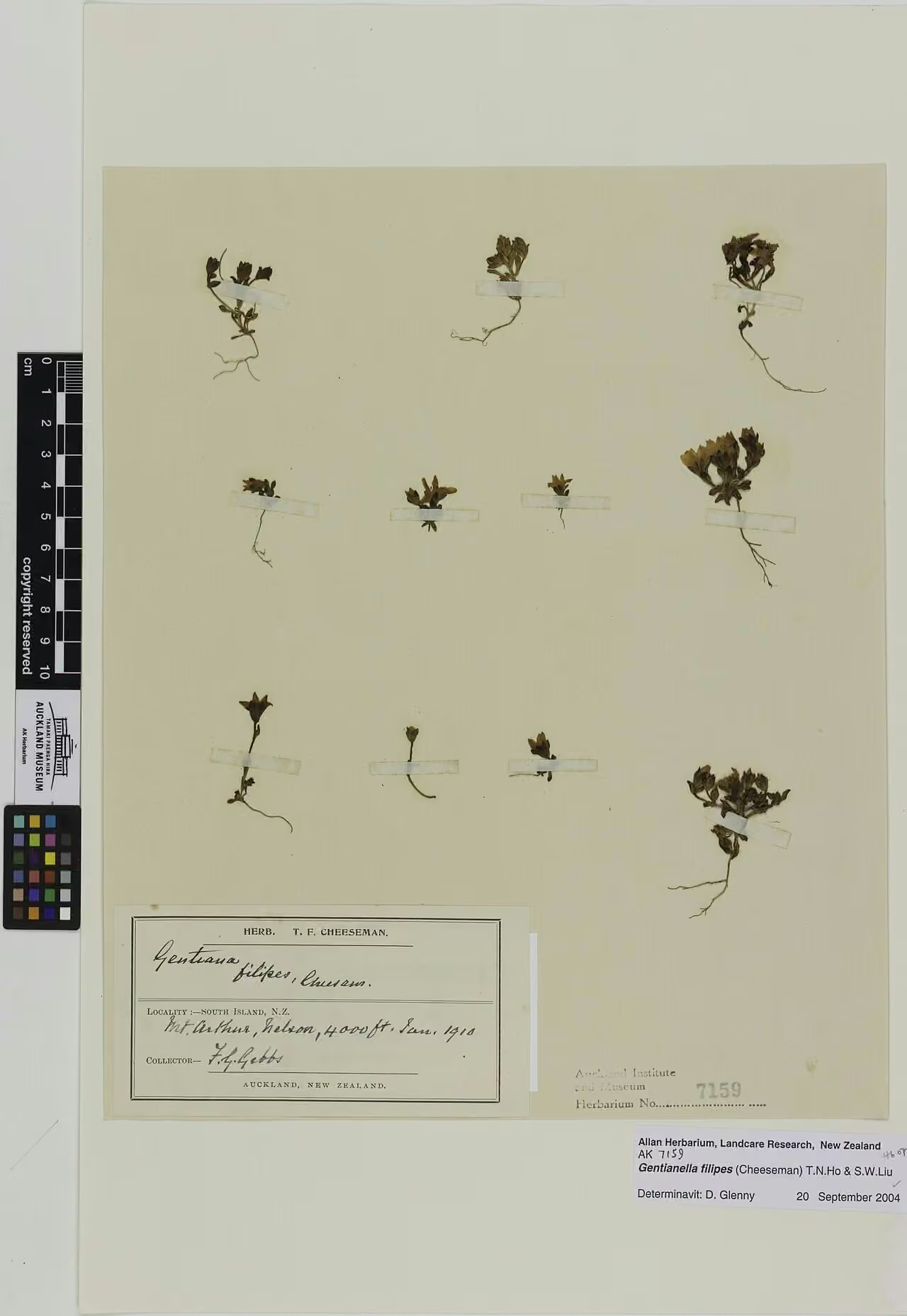
Gentian
Gentianella filipes
Last updated:
Gentianella filipes is a small annual gentian found only in north-west Nelson, where every known population lies within Kahurangi National Park. Flowering plants are 2 to 14 cm tall, with small green basal leaves and branching stems carrying from one to dozens of white flowers, sometimes tinted purple at the tips, on slender stalks; filipes means thread-like stalks. It grows on skeletal soils over marble, in Poa colensoi grassland, marble scree and talus, rock crevices, peat bog and gravel riverbeds. It flowers from January to April and is ranked At Risk - Naturally Uncommon because of its small range. Explore more native flowering plants in our native plant guide.
Plant Description
Gentianella filipes is a short annual herb 2 to 14 cm tall in flower, with a slender root under 1 mm thick at the stem base. It has no separate leaf rosette when flowering; the basal leaves are narrowly elliptic to ovate, 9 to 20 mm long and 2.6 to 6.4 mm wide, green and flat. Two to eight stems branch from the base and are green, often tinted crimson or purple-black.
Plants carry 1 to about 30 flowers, exceptionally up to 81, each 8 to 13 mm long on a thin stalk 4.5 to 32 mm long. The calyx is green tinted purple-black and strongly ridged between its lobes. The corolla is white, sometimes tinted purple at the tips, and the anthers are blue-black with a yellow mouth. Capsules are 8 to 9 mm long.
Its annual habit, small white flowers on long, threadlike stalks and its restriction to marble country in north-west Nelson separate it from the larger biennial gentians of the region.
Quick Facts
| Scientific Name | Gentianella filipes |
|---|---|
| Height | 0.02-0.14 m in flower |
| Spread | Up to about 0.1 m |
| Water Needs | Moderate; seasonally moist marble soils |
| Light | Full sun, open sites |
| Frost Tolerance | High; montane to alpine |
| Salt Tolerance | No information available |
| Growth Rate | Fast; completes life in one season |
| Lifespan | Annual (monocarpic) |
Climate Best Suited to
Suits the cool, very wet mountain climate of north-west Nelson, where high rainfall alternates with sunny spells and winters bring frost and snow.
Regional Suitability
| City | Climate Suitability |
|---|---|
| Auckland | Low |
| Wellington | Low |
| Christchurch | Low |
| Dunedin | Low |
Plant Habitat
Gentianella filipes is confined to north-west Nelson in the South Island. All its known populations occur within Kahurangi National Park, mostly in marble karst country.
It grows in alpine grasslands dominated by Poa colensoi, on marble scree and talus, in rock crevices, peat bogs and gravel riverbeds, typically on skeletal soils over marble.
Growing Requirements
Soil Requirements
It is closely tied to marble, growing in thin, skeletal soils and gravels over the karst rock.
- Shallow soils over marble
- Scree, talus and riverbed gravel
- Also peat bog where these occur within its range
Light Requirements
As a small annual it needs open ground with little competition from taller plants.
- Full sun in open grassland and scree
- Short Poa colensoi turf rather than tall tussock
Water Requirements
High rainfall keeps its habitats moist, though marble soils drain freely.
- Moist during the growing season
- Free drainage through rock and gravel
Planting and Establishing
Gentianella filipes is not grown in gardens. It is not commercially available, is difficult to propagate and should not be removed from the wild.
Its annual life cycle means a cultivated population would need to set and resow seed every year, which is rarely achieved with alpine annuals.
Ecological Role
Seeds are dispersed by ballistic projection, wind and water, which allows plants to colonise fresh scree and riverbed gravel. Some flowers are female only, which promotes cross-pollination.
Because it is an annual, populations depend on good seed set each year and can fluctuate in size from season to season. The insects that pollinate it have not been documented in the sources consulted.
Uses & Significance
Garden Uses
It has no role in home gardens.
- Viewing in Kahurangi National Park in summer
- Specialist research collections only
- Botanical photography of marble flora
Ecological Value
It is part of the specialised marble flora of north-west Nelson, an area with many locally endemic plants.
- A narrow-range endemic of Kahurangi National Park
- Colonises open marble scree and riverbed gravels
- Adds to the diversity of New Zealand's gentian radiation
Landscaping Uses
It has no landscaping use. Its significance lies in Kahurangi's protected marble landscapes, where keeping natural disturbance regimes on scree and riverbeds maintains the open ground it needs.
Visitors can help by avoiding trampling small herbs in marble grassland and on scree.
Seasonal Care Calendar
Spring
Seeds germinate as the ground warms and young plants grow rapidly.
- Seedlings are tiny and easily overlooked
- Avoid disturbing open gravels
Summer
Flowering begins in January and continues into autumn.
- Look for white flowers on threadlike stalks
- Plants branch from the base
Autumn
Flowering ends by April and fruiting runs from March to May.
- Capsules release seed
- Plants die after fruiting
Winter
The species survives winter only as seed in the soil.
- No living plants above ground
- Snow and frost cover the higher sites
When to Prune and How Much
Pruning does not apply to this short-lived annual. Leave spent stems so that capsules can shed seed.
Any management in the wild should avoid disturbing plants before seed has fallen.
How to Grow Gentian
NZPCN describes Gentianella filipes as difficult to propagate, notes that it is not commercially available and advises that it should not be removed from the wild. Because it is an annual, any cultivated population would have to be raised from seed every season, and there is no other way to increase it. Its entire range is within Kahurangi National Park, so collecting seed requires authorisation from the Department of Conservation. No germination trials for this species were found in the sources consulted. The general approach for New Zealand alpine gentians is to sow fresh seed in autumn, give it a cold winter outdoors and keep seedlings cool and moist in a very free-draining mineral mix; for this marble species, adding crushed limestone or marble chip to the mix would imitate its natural substrate.
From Seed
Fruiting runs from March to May. Ovaries contain 11 to 32 ovules, so seed numbers per flower are modest, though a plant with many flowers can yield a reasonable quantity.
- Collect ripe capsules only with the necessary permits
- Sow fresh seed on a gritty mix containing marble or limestone chip
- Overwinter the pot outdoors for natural chilling
- Keep moist and cool once seedlings emerge in spring
- Leave plants in place to flower and set seed rather than transplanting them
Cuttings and Division
As a single-season annual, it cannot be propagated by cuttings or division.
- Save seed from each generation
- Sow a fresh batch every autumn
Pests & Diseases
NZPCN records no known threats to this species. Browsing by introduced animals and trampling are possible local pressures on small alpine herbs but are not documented as problems for it.
As an annual dependent on yearly reproduction, it could be vulnerable to anything that prevents seed set, such as invasion of its open habitats by weeds.
Cultural Significance
No Māori name or traditional use is recorded for this species in the sources consulted.
Thomas Cheeseman described it as Gentiana filipes. It was later moved to Chionogentias and then to Gentianella in Glenny's 2004 revision.
Bonus Tip
On summer walks over the marble uplands of Kahurangi National Park, keep an eye on gravelly gaps in the Poa colensoi turf and on marble scree for tiny white flowers held on hair-thin stalks. That threadlike stalk, together with the lack of a leaf rosette at flowering, is the quickest clue to this annual species.
Related Plants
Explore other native plants that share similar characteristics or habitats with Gentian (Gentianella filipes), offering further insights into New Zealand's diverse flora. These related species provide context and opportunities for complementary planting in your garden.
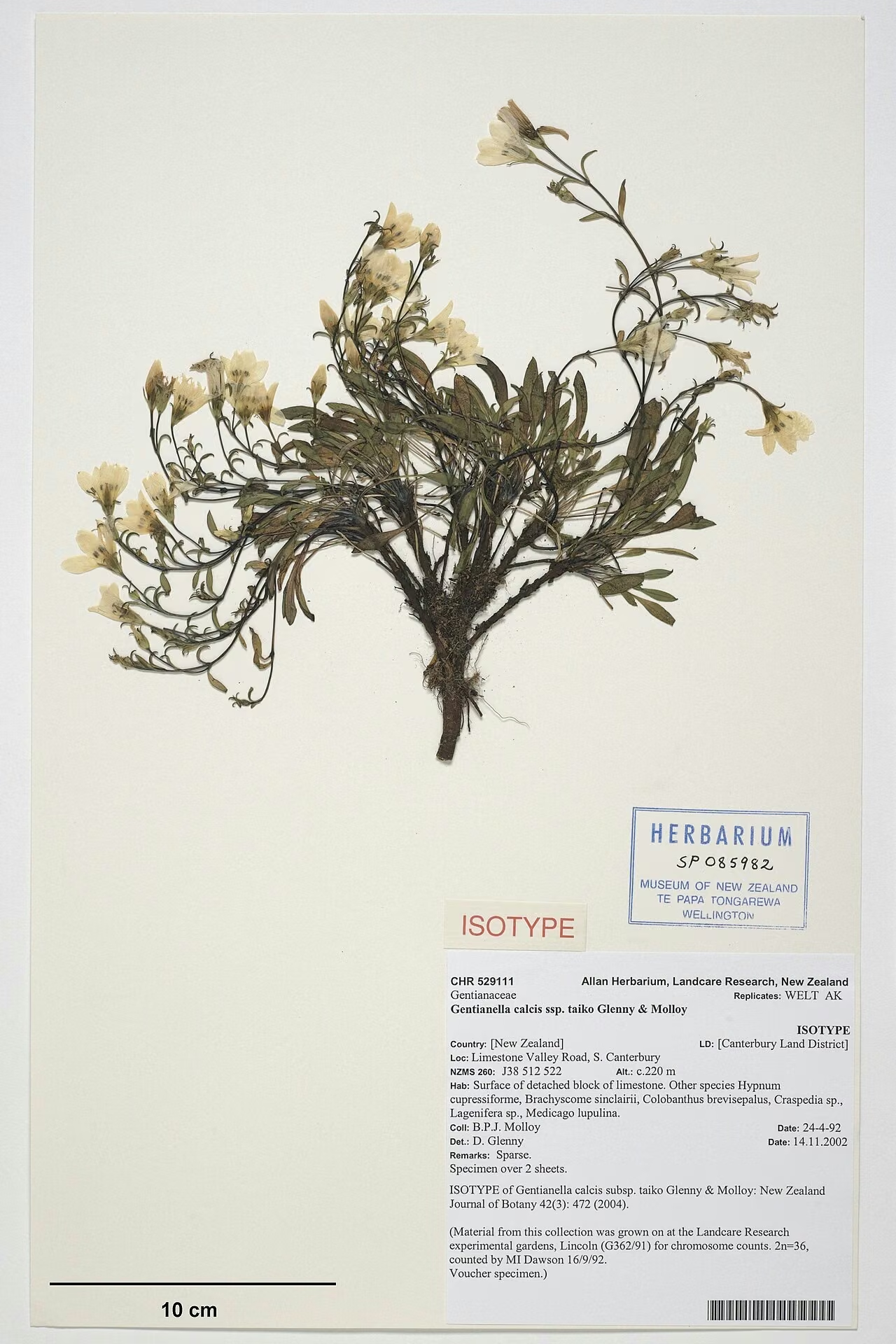
Pareora Gentian
Gentianella calcis subsp. taiko
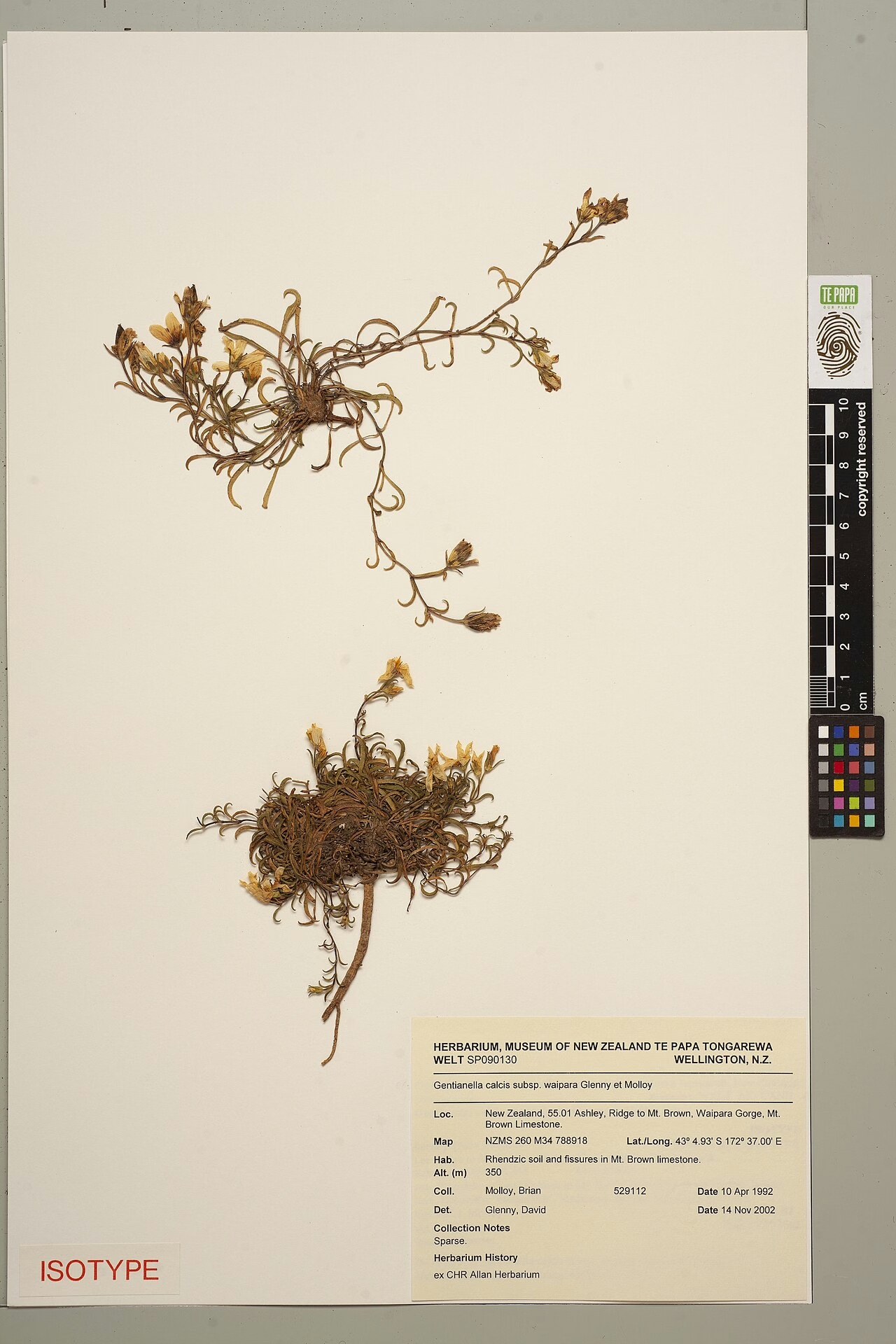
Waipara Gentian
Gentianella calcis subsp. waipara
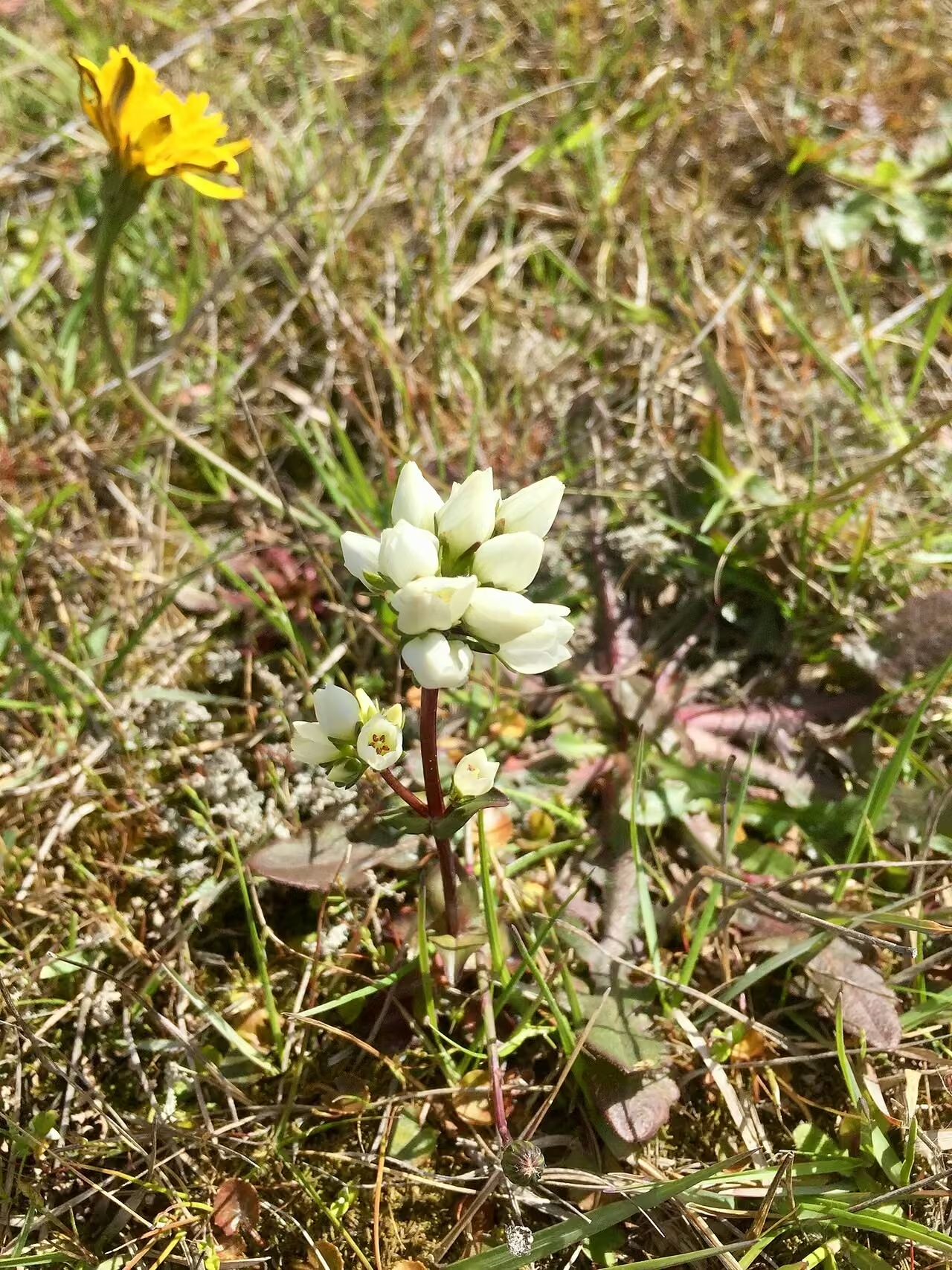
Chatham Island Gentian
Gentianella chathamica subsp. chathamica
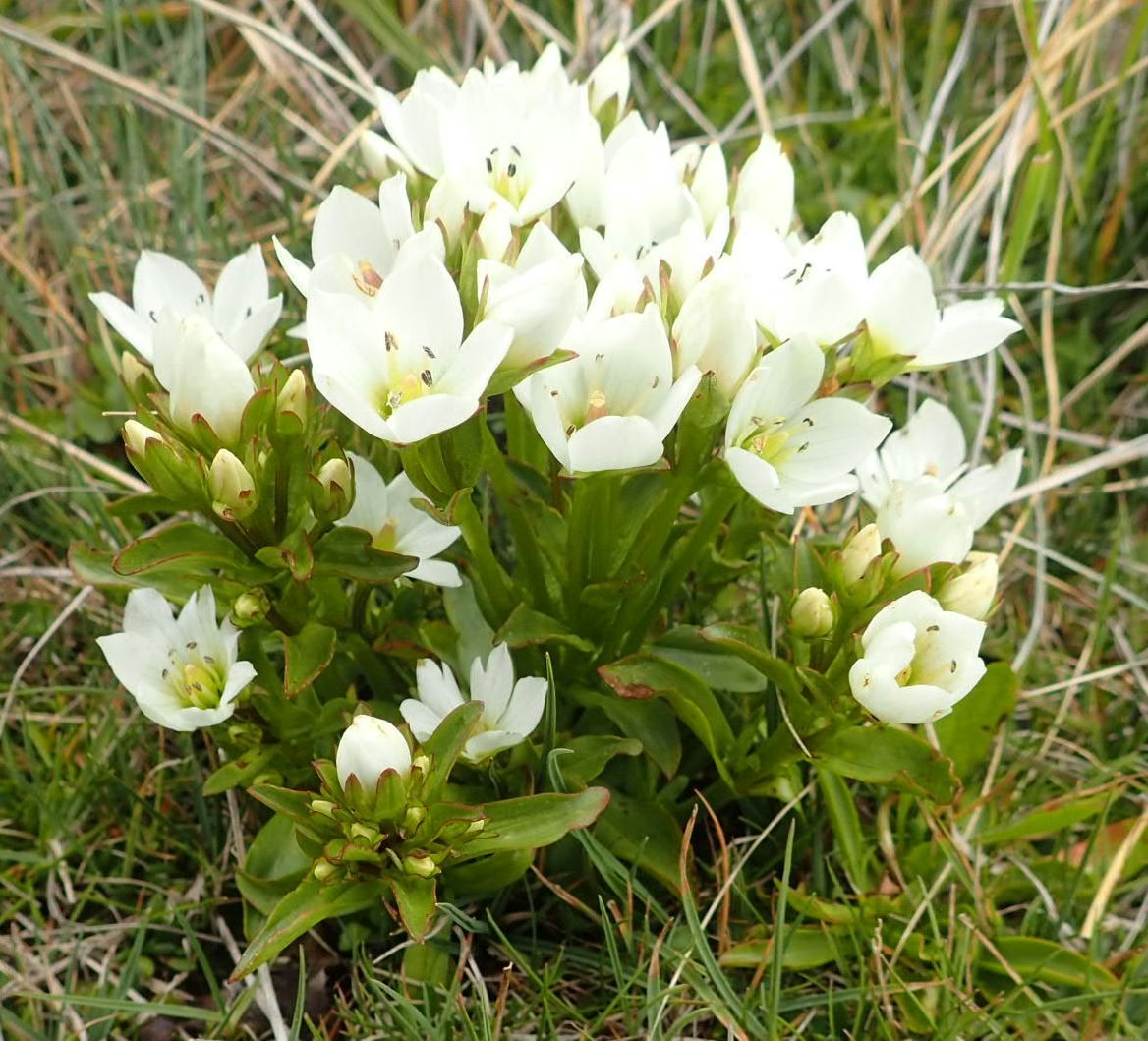
Gentianella divisa
Gentianella divisa
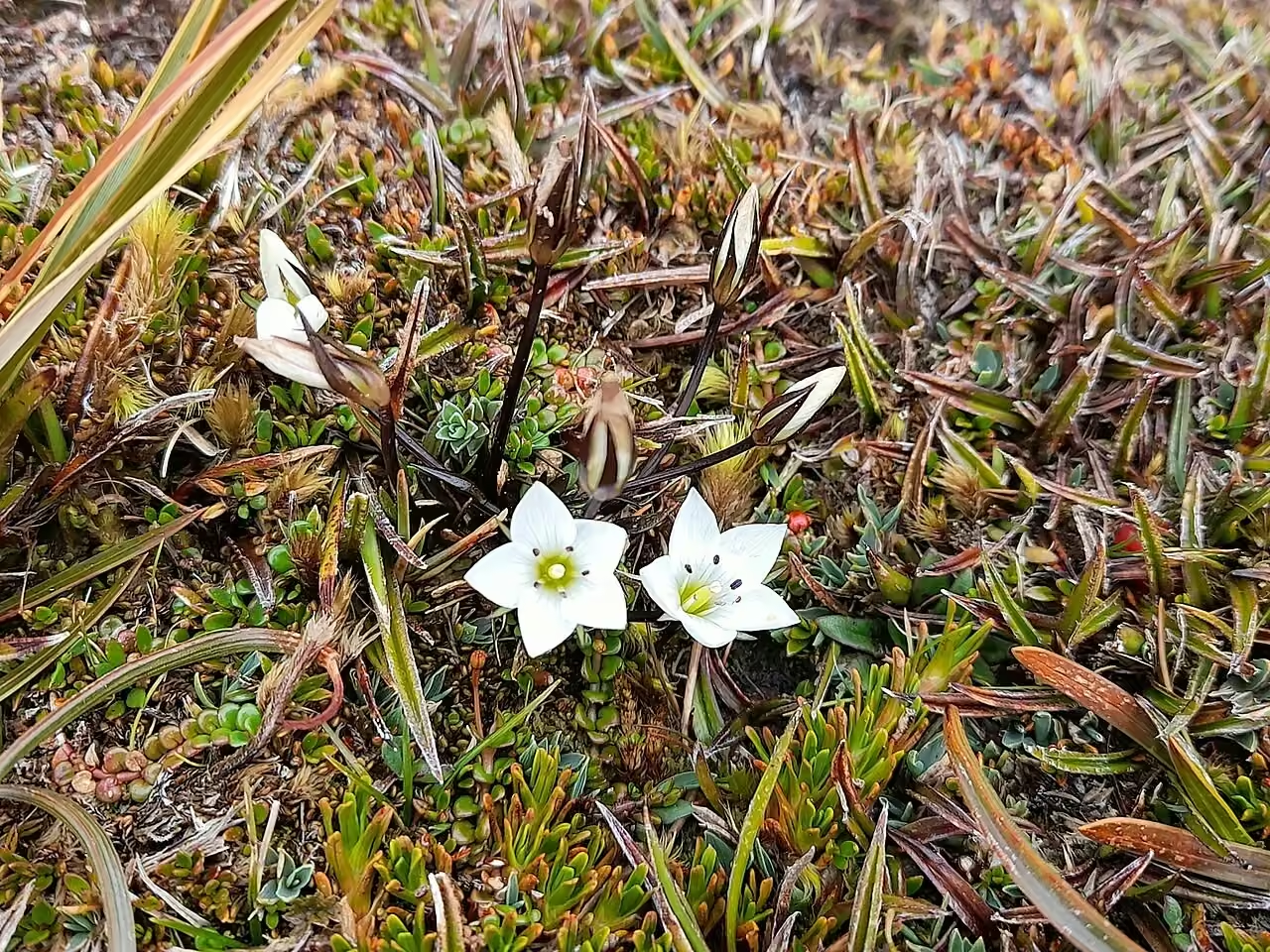
Mt Anglem Gentian
Gentianella gibbsii
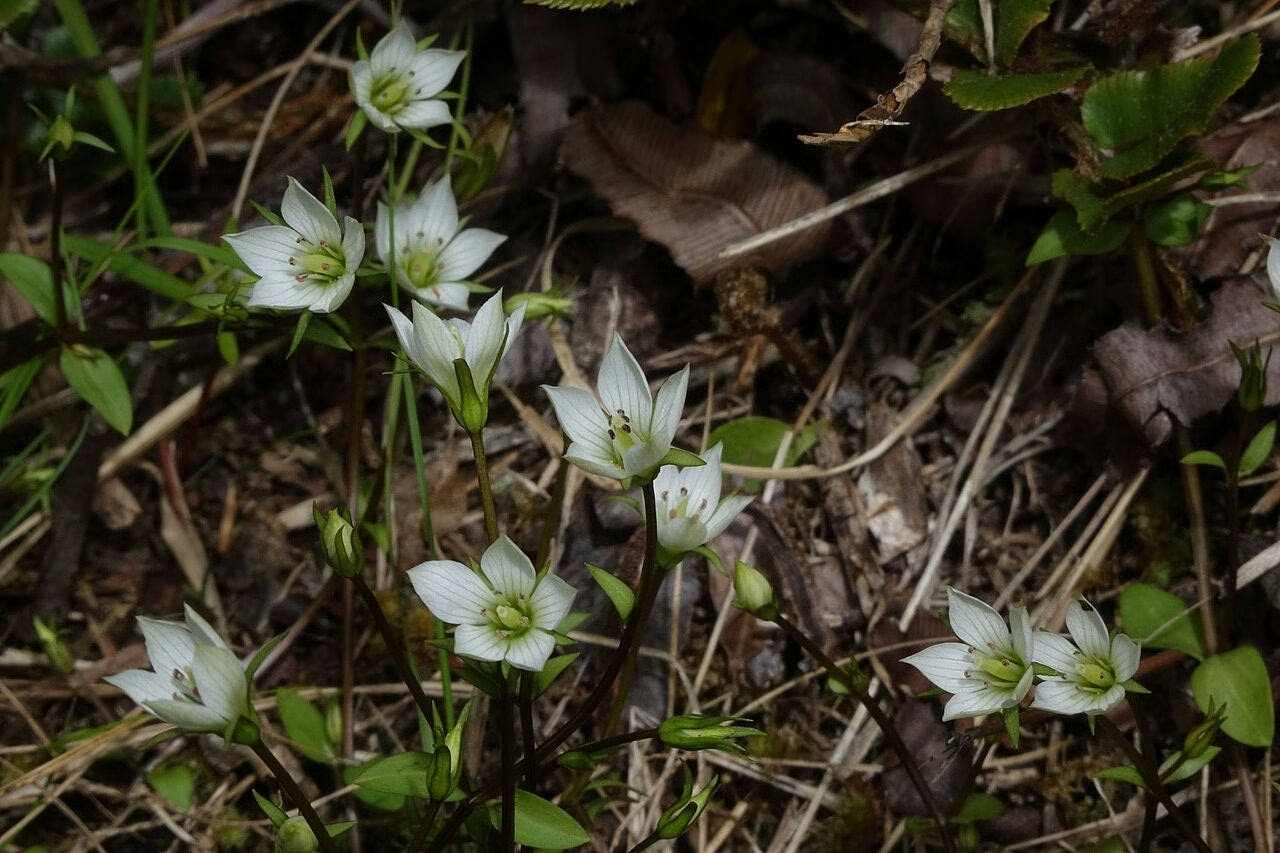
Forest Gentian
Gentianella grisebachii
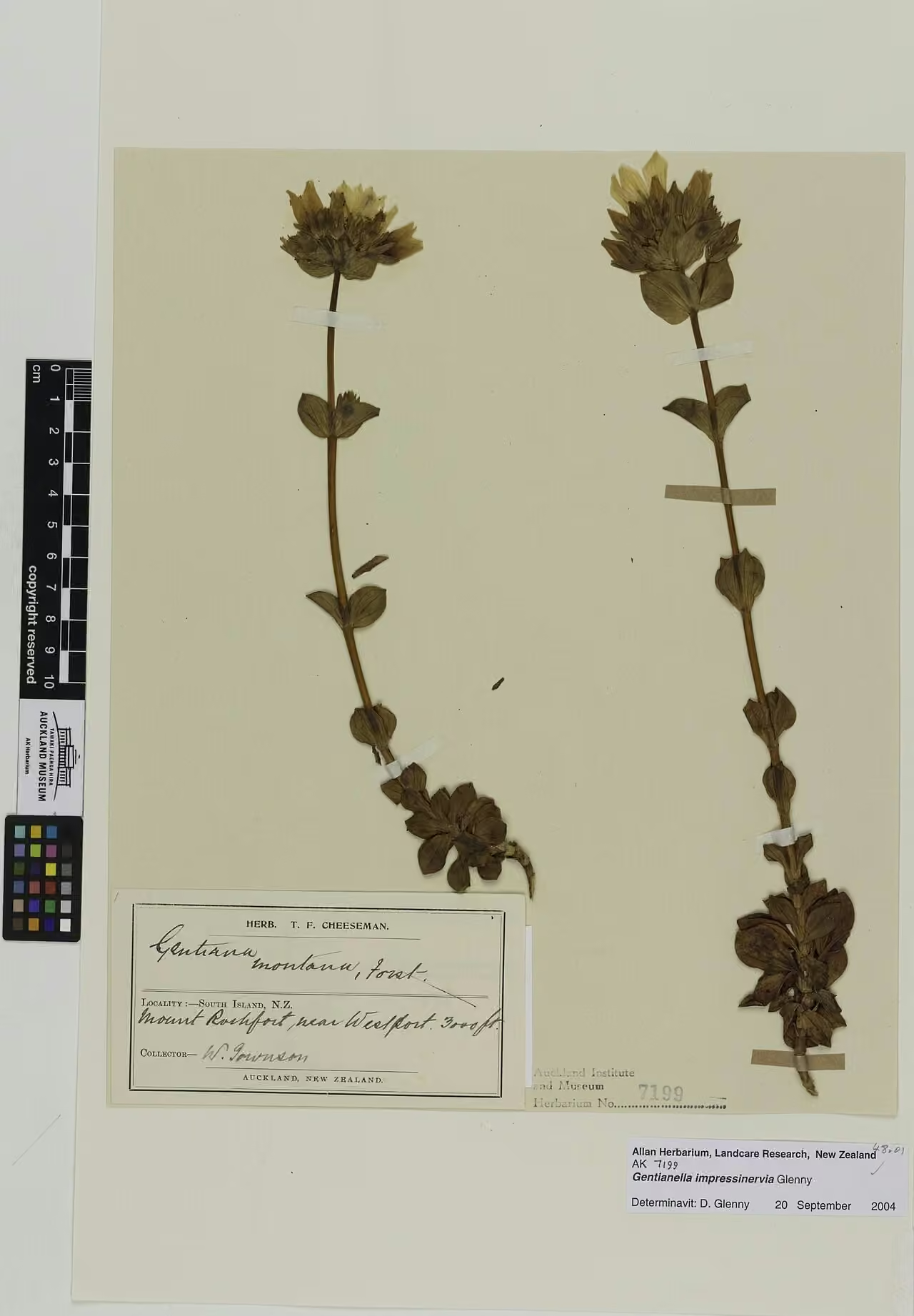
Gentianella impressinervia
Gentianella impressinervia
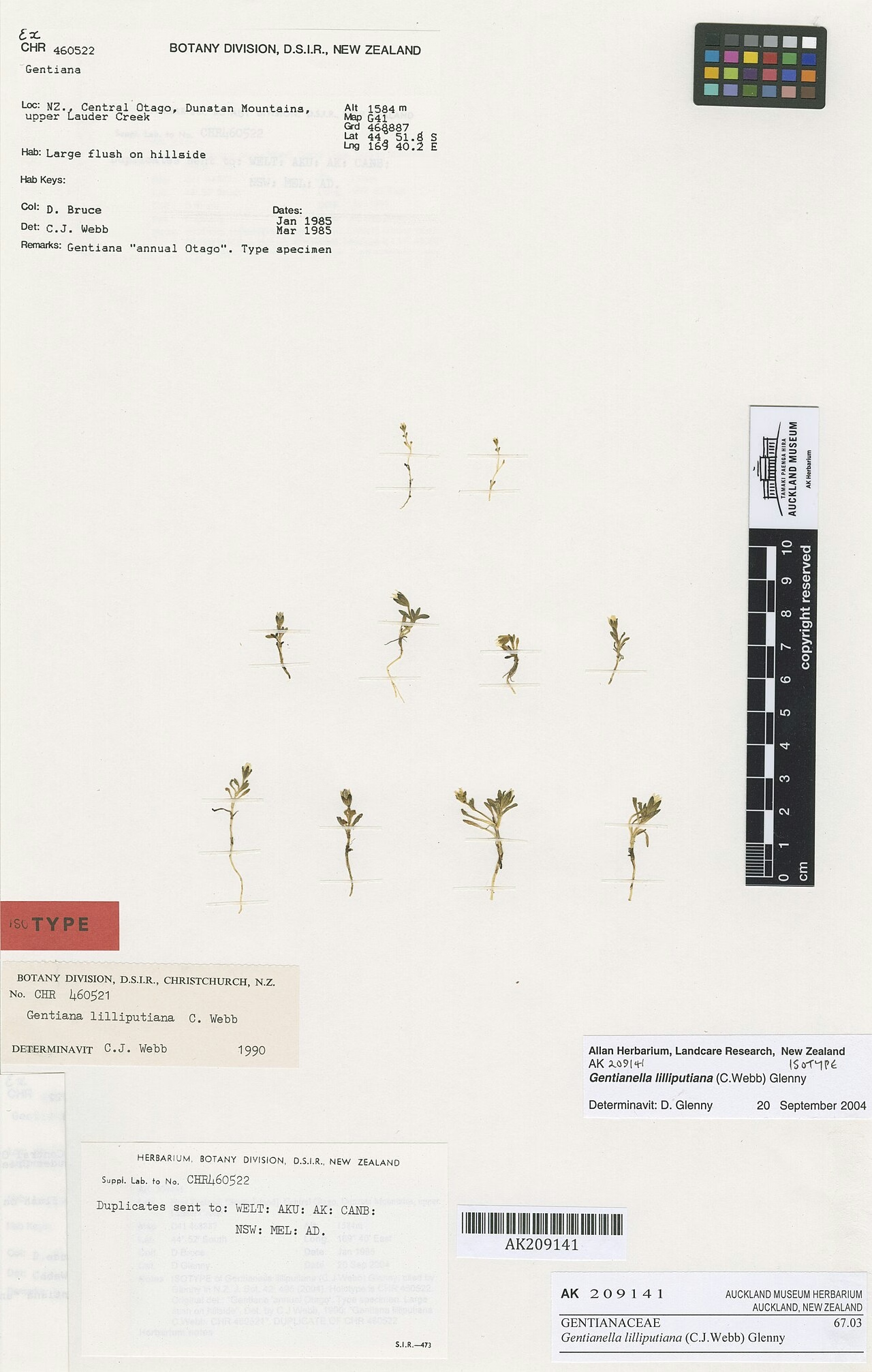
Little Gentian
Gentianella lilliputiana
Plant Conservation
Gentianella filipes is ranked At Risk - Naturally Uncommon (2023) with the qualifiers Data Poor: Size, Data Poor: Trend and Range Restricted. More survey information on population size and trend is needed.
All known populations are inside Kahurangi National Park, which provides strong legal protection. NZPCN describes it as sparse to locally abundant with no known threats.
Frequently Asked Questions
Where does Gentianella filipes grow?
It is endemic to north-west Nelson, growing on skeletal soils over marble in alpine grassland, scree, talus, rock crevices, peat bog and gravel riverbeds, all within Kahurangi National Park.
Is Gentianella filipes an annual?
Yes. It is a monocarpic annual that germinates, flowers and sets seed within a single season and then dies.
What does filipes mean?
Filipes means thread-like stalks, referring to the slender flower stalks that hold its small white flowers.
Is Gentianella filipes threatened?
It is ranked At Risk - Naturally Uncommon because of its restricted range, but NZPCN reports no known threats and describes it as sparse to locally abundant.
Sources and Further Reading
The botanical, growing, and conservation details for Gentian (Gentianella filipes) on this page draw on the New Zealand plant references below. Consult them for full technical records and the latest distribution data.