Gentian
Gentianella divisa
Last updated:
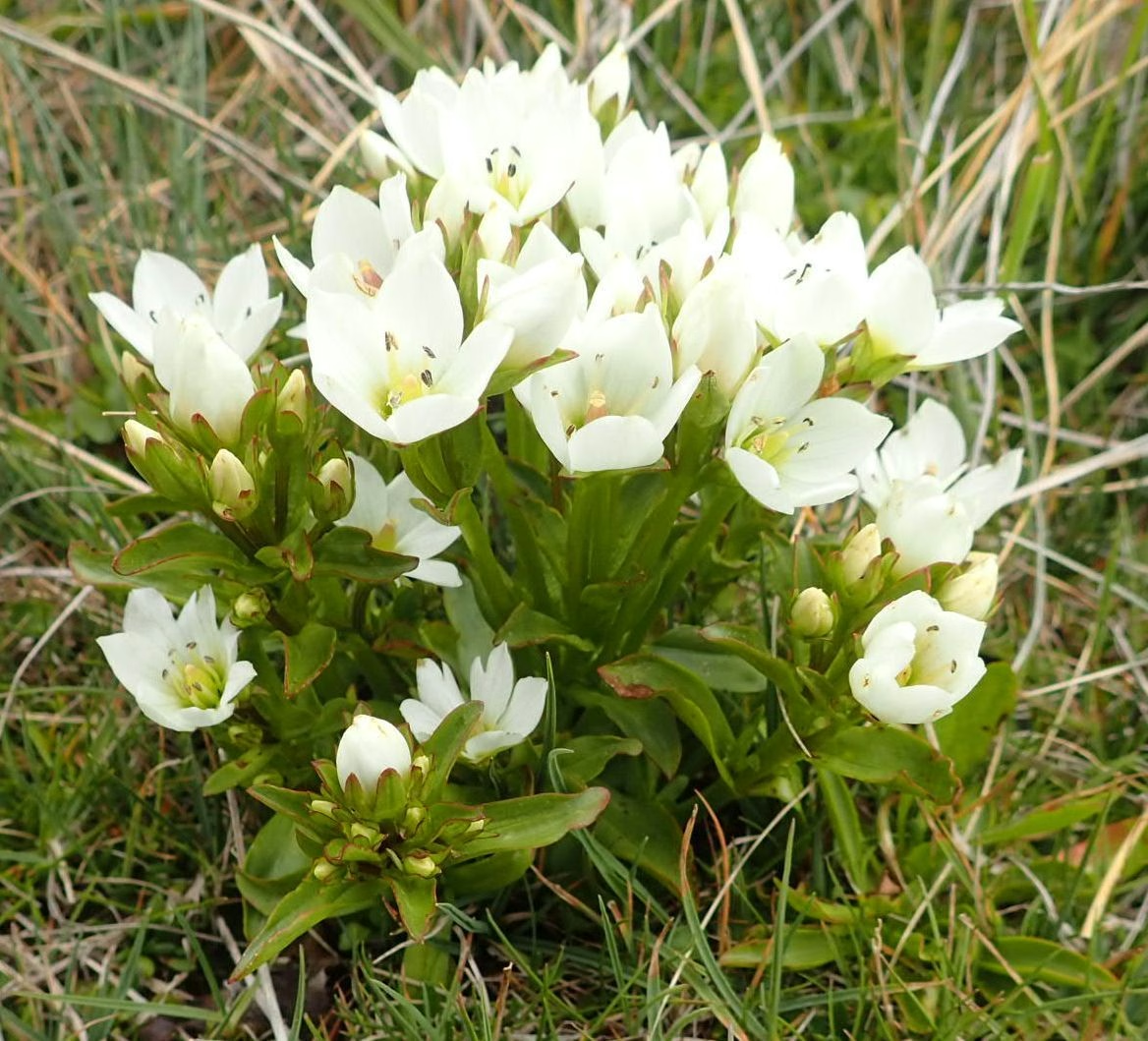
Gentianella divisa is an alpine gentian endemic to the South Island, ranging along the main divide from Canterbury south into Fiordland. It is a monocarpic biennial, possibly triennial, that forms a rosette of rounded to oval leaves and then flowers once, producing stems 4 to 20 cm tall with 11 to 60 white flowers 15 to 20 mm long, often with yellow or orange-red anther mouths. It grows in fellfield, on ridge lines, stable scree, snowbanks, cushion bog, herbfield and high tussock grassland, flowering from January to March. It is ranked Not Threatened and was once treated as a variety of Gentiana bellidifolia. Explore more native flowering plants in our native plant guide.
Plant Description
Gentianella divisa has a single, unbranched caudex about 20 mm long and a stout root. Its rosette leaves are elliptic, almost round or obovate, 16 to 65 mm long and 7.5 to 21 mm wide, green, usually flat with a rounded tip and an indistinct stalk. The flowering stem is green, sometimes tinted purple-black or bronze, with erect to sprawling side branches and up to four pairs of narrowly ovate stem leaves.
Plants bear 11 to 60 flowers, 15 to 20 mm long, on stalks 7 to 50 mm long; flowers are often female only. The calyx is usually five-lobed, green or bronze, with a wrinkled surface. The corolla is white with usually five broad lobes 10 to 14.5 mm long, and the anthers are blue-black with a yellow or orange-red mouth. Capsules are 15 to 17 mm long.
It belongs to the group of large-flowered snow gentians related to Gentianella bellidifolia, from which it was separated, and is distinguished by its broad, rounded rosette leaves, many-flowered stems and wrinkled calyx lobes.
Quick Facts
| Scientific Name | Gentianella divisa |
|---|---|
| Height | 0.04-0.2 m in flower |
| Spread | Rosettes about 0.1-0.2 m across |
| Water Needs | Moist; snowmelt and bog sites |
| Light | Full sun, open alpine sites |
| Frost Tolerance | Very high; alpine |
| Salt Tolerance | Low; an inland alpine plant |
| Growth Rate | Slow; flowers after two or three years |
| Lifespan | Biennial or triennial (monocarpic) |
Climate Best Suited to
Suits the cold, snowy alpine zone of the Southern Alps and Fiordland mountains, with short cool summers and long winters under snow. It is unsuited to lowland climates.
Regional Suitability
| City | Climate Suitability |
|---|---|
| Auckland | Low |
| Wellington | Low |
| Christchurch | Low |
| Dunedin | Low |
Plant Habitat
Gentianella divisa occurs in the South Island from Canterbury south along the main divide into Fiordland, in the alpine zone.
Its habitats include fellfield, ridge lines, stable scree slopes, snowbanks, cushion bog, herbfield and high-elevation tussock grassland. These are open sites where snow lies for much of the winter and meltwater keeps the ground moist into summer.
Growing Requirements
Soil Requirements
It grows on thin, stony alpine soils, stable scree and peaty bog surfaces that are cold and moist but not stagnant.
- Gritty, stony or peaty alpine soils
- Stable rather than mobile scree
- Low fertility and little competition
Light Requirements
It is a plant of open, treeless alpine country with full exposure.
- Full sun
- Open fellfield, herbfield and short tussock
Water Requirements
Snowmelt and frequent alpine rain keep its habitats moist through the growing season.
- Consistent moisture during spring and summer
- Good drainage on scree and ridge sites
Planting and Establishing
This gentian is not commercially available and NZPCN states that it should not be removed from the wild. Its short monocarpic life cycle and alpine requirements make it impractical in normal gardens.
It is best enjoyed on alpine tramps along the main divide in late summer.
Ecological Role
NZPCN records that its seeds are dispersed by ballistic projection from the capsule, by wind and by water, which suits snowmelt slopes and scree. Many of its flowers are female only, which encourages cross-pollination between plants.
Its large white flowers are open to visiting insects, but the specific pollinators of this species are not documented in the sources consulted.
Uses & Significance
Garden Uses
It has no practical role in home gardens.
- Specialist alpine collections using legally obtained seed
- Photography and botanising on alpine tracks
- Educational displays of alpine flora
Ecological Value
It is a characteristic late-summer flowering herb of South Island alpine communities.
- Provides nectar and pollen in the short alpine summer
- Colonises stable scree, snowbanks and fellfield
- Part of the diverse endemic New Zealand gentian radiation
Landscaping Uses
Gentianella divisa is not used in landscaping. In an alpine house or scree bed, it would be grown as a short-lived accent among cushion plants and small tussocks, renewed from seed.
Gardeners wanting a native gentian effect should look for the few gentians grown by specialist nurseries rather than seeking wild alpine species.
Seasonal Care Calendar
Spring
Rosettes emerge from under the melting snow and begin growing.
- Meltwater keeps soils moist
- First-year plants remain as rosettes
Summer
Flowering runs from January to March, with white flowers held on branching stems.
- Peak viewing on alpine routes
- Many flowers are female only
Autumn
Fruiting continues from March to May as capsules split and release seed.
- Seed is thrown, blown or washed away
- Flowered plants die
Winter
Young rosettes survive the winter under snow cover.
- No growth in the cold months
- Snow insulates the plants
When to Prune and How Much
No pruning is needed. Leave flowered stems standing until capsules have opened, since the plant relies entirely on seed for its next generation.
Removing spent flowers would prevent seed set and end the plant's line.
How to Grow Gentian
Gentianella divisa is difficult to propagate according to NZPCN, which also stresses that it should not be removed from the wild, and it is not commercially available. Because each plant flowers once and then dies after two or possibly three years, it can only be maintained by raising successive generations from seed. No published germination protocol for this species was found in the sources consulted, so the methods below describe the general approach alpine specialists use for New Zealand gentians: fresh seed, cold treatment over winter, a gritty and evenly moist mix and cool growing conditions. Seed should only be collected where permitted, for example from cultivated plants or under a Department of Conservation authorisation. Expect slow, uneven germination and losses in warm or humid weather.
From Seed
Capsules ripen from March to May. Each ovary contains roughly 29 to 56 ovules, so a flowering plant can produce plentiful seed if pollinated.
- Collect capsules as they turn brown and start to open
- Sow promptly on a gritty alpine mix with a little peat
- Leave the pot outdoors over winter to receive natural cold
- Keep evenly moist and shaded from hot afternoon sun after germination
- Pot seedlings individually once rosettes form, disturbing roots as little as possible
Cuttings and Division
This is a single-crowned, short-lived plant, so division and cuttings are not feasible.
- Rely on seed alone
- Allow cultivated plants to self-sow where possible
Pests & Diseases
No specific pests are recorded for this species in the sources consulted. Browsing by introduced mammals such as deer, chamois and hares may affect alpine herbs generally.
In cultivation, warm humid conditions and rot are likely to be the main causes of failure.
Cultural Significance
No Māori name or traditional use is recorded for this species in the sources consulted.
Thomas Kirk described it in 1895 as Gentiana bellidifolia var. divisa. Cheeseman raised it to species rank as Gentiana divisa, and it was later placed in Chionogentias before David Glenny transferred it to Gentianella in his 2004 revision of the genus.
Bonus Tip
When looking for this gentian on alpine tracks along the main divide, search snowbanks, cushion bogs and stable scree in February. Look closely at the rosette under the flowering stems: its broad, rounded leaves up to 21 mm wide are the easiest way to separate it from narrower-leaved gentians growing nearby.
Related Plants
Explore other native plants that share similar characteristics or habitats with Gentian (Gentianella divisa), offering further insights into New Zealand's diverse flora. These related species provide context and opportunities for complementary planting in your garden.
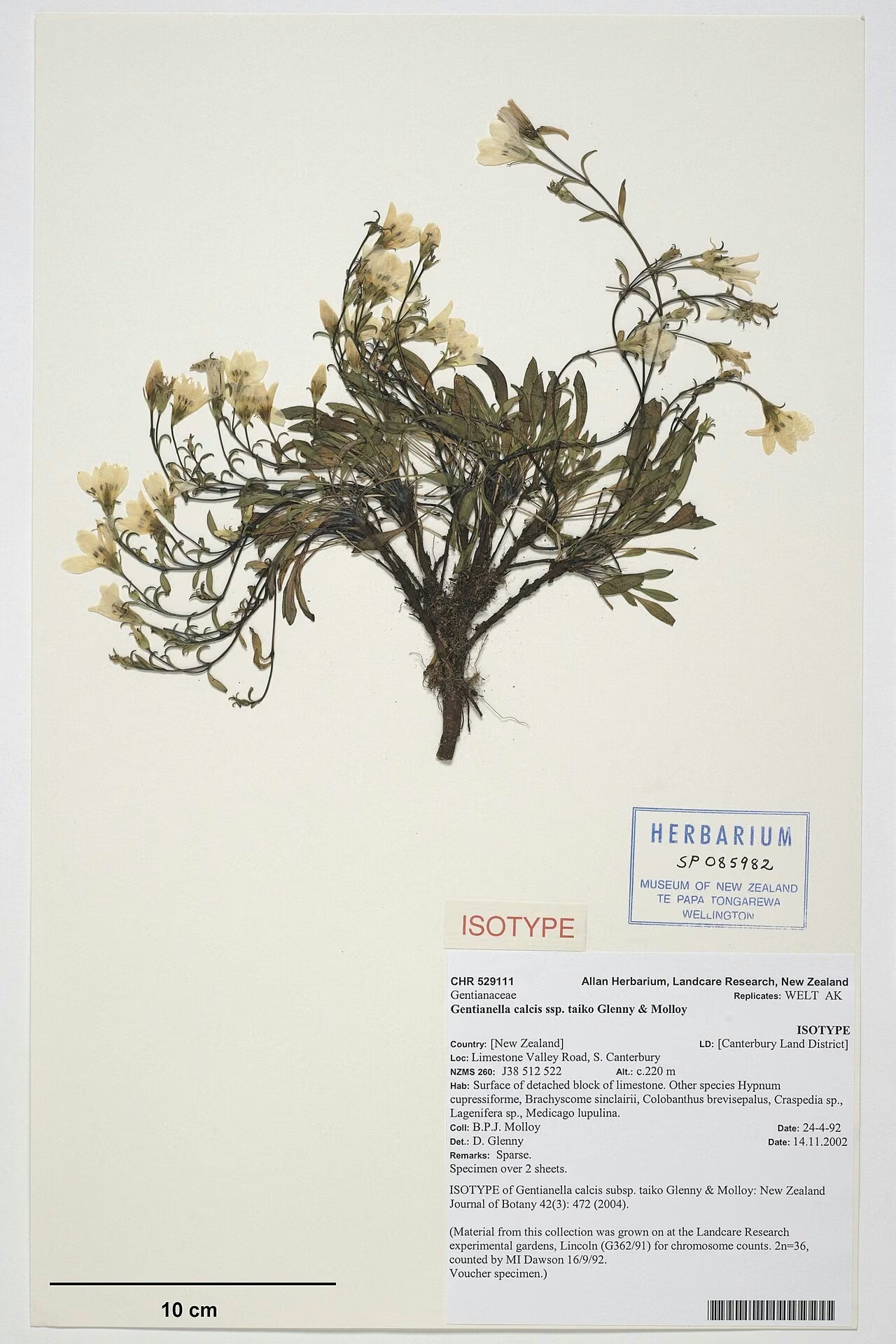
Awahokomo Gentian
Gentianella calcis subsp. calcis
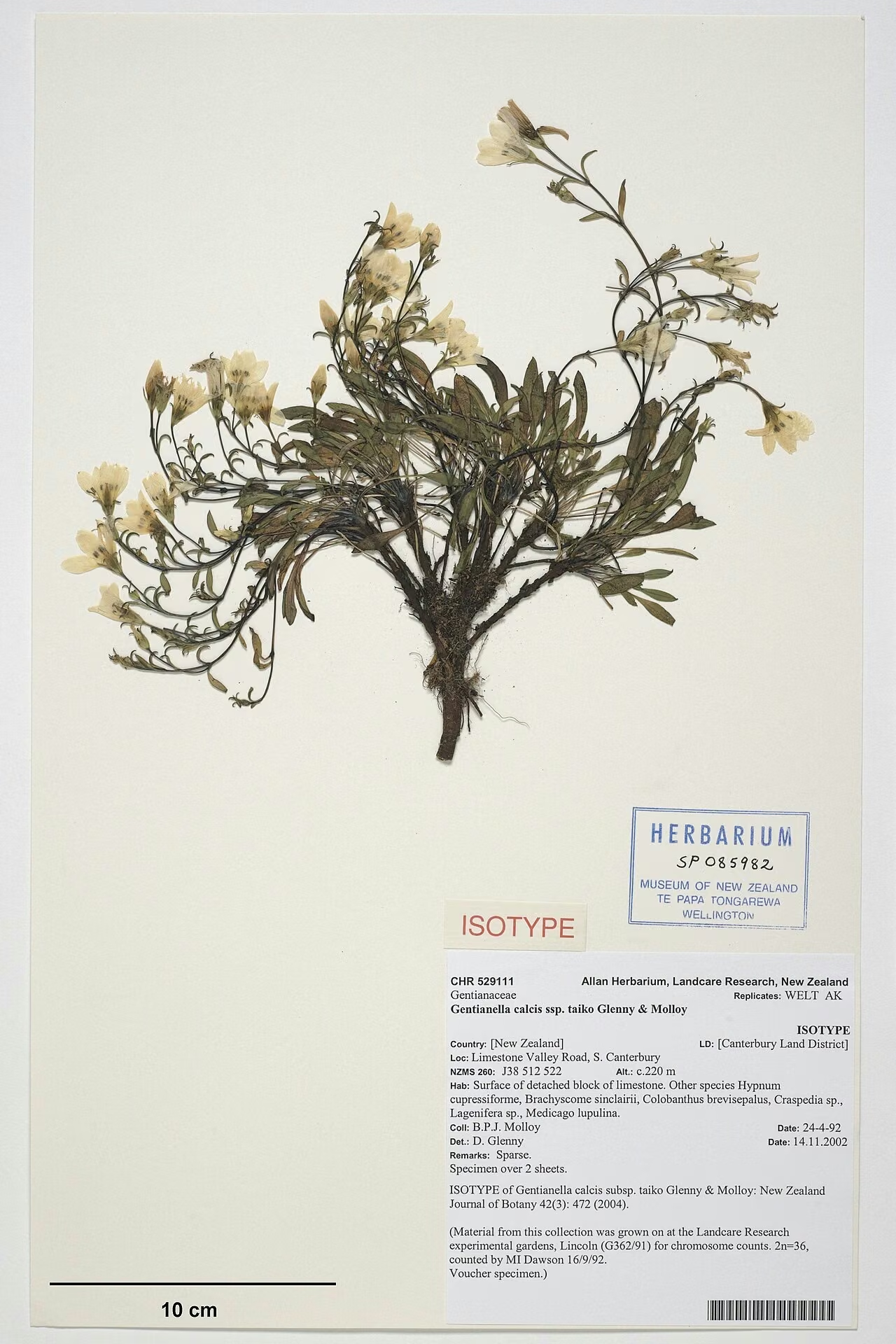
Pareora Gentian
Gentianella calcis subsp. taiko
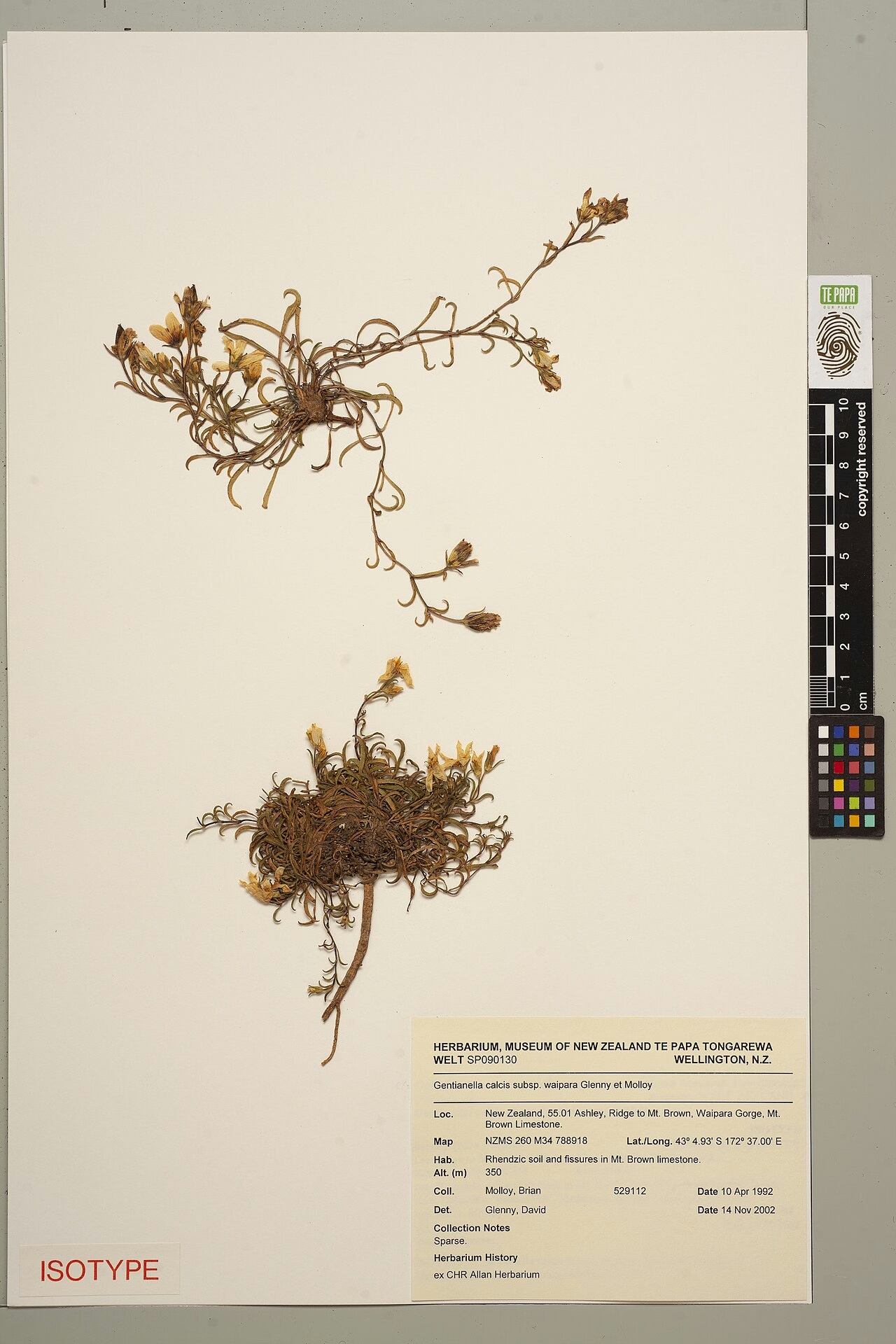
Waipara Gentian
Gentianella calcis subsp. waipara
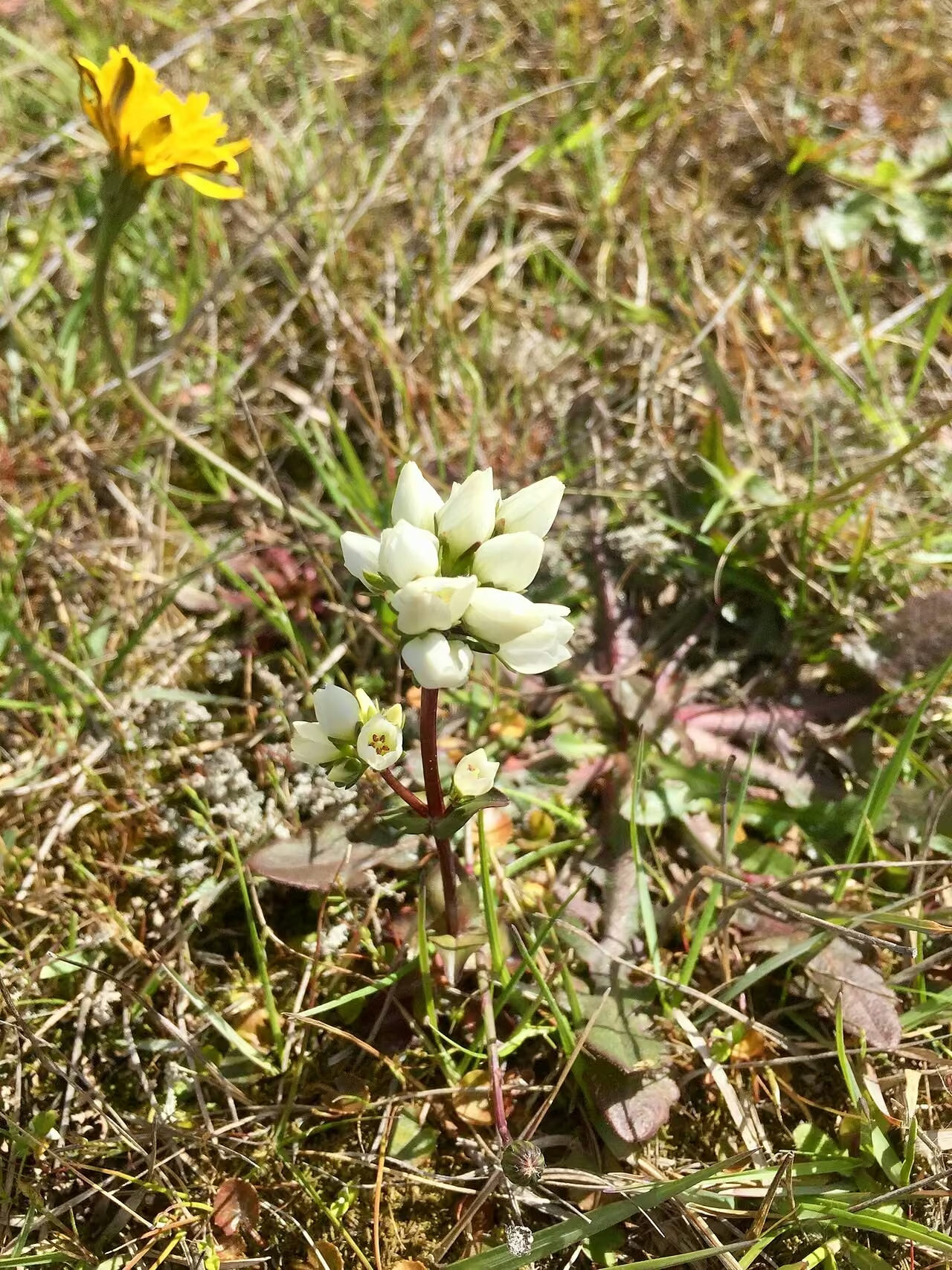
Chatham Island Gentian
Gentianella chathamica subsp. chathamica
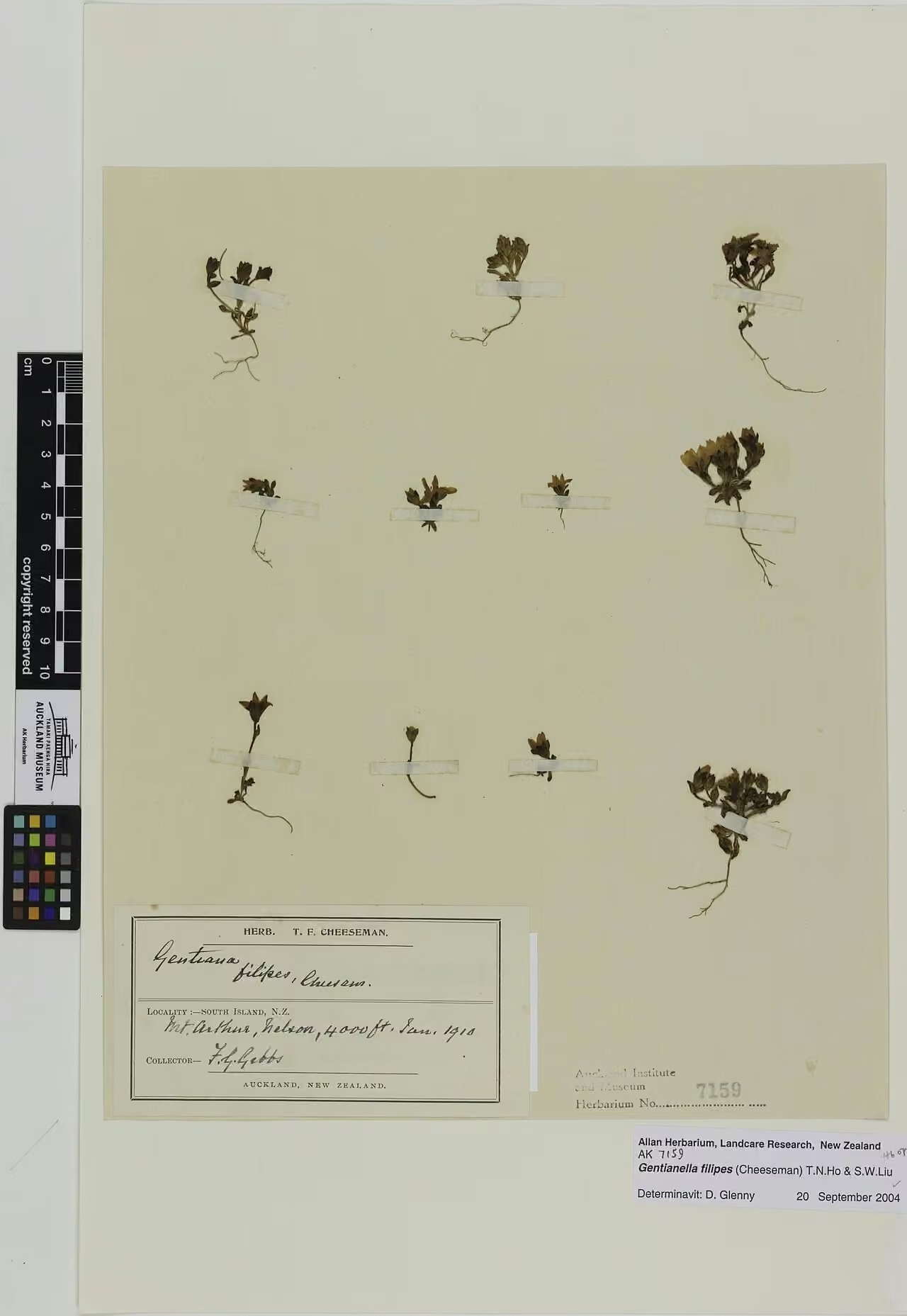
Gentianella filipes
Gentianella filipes
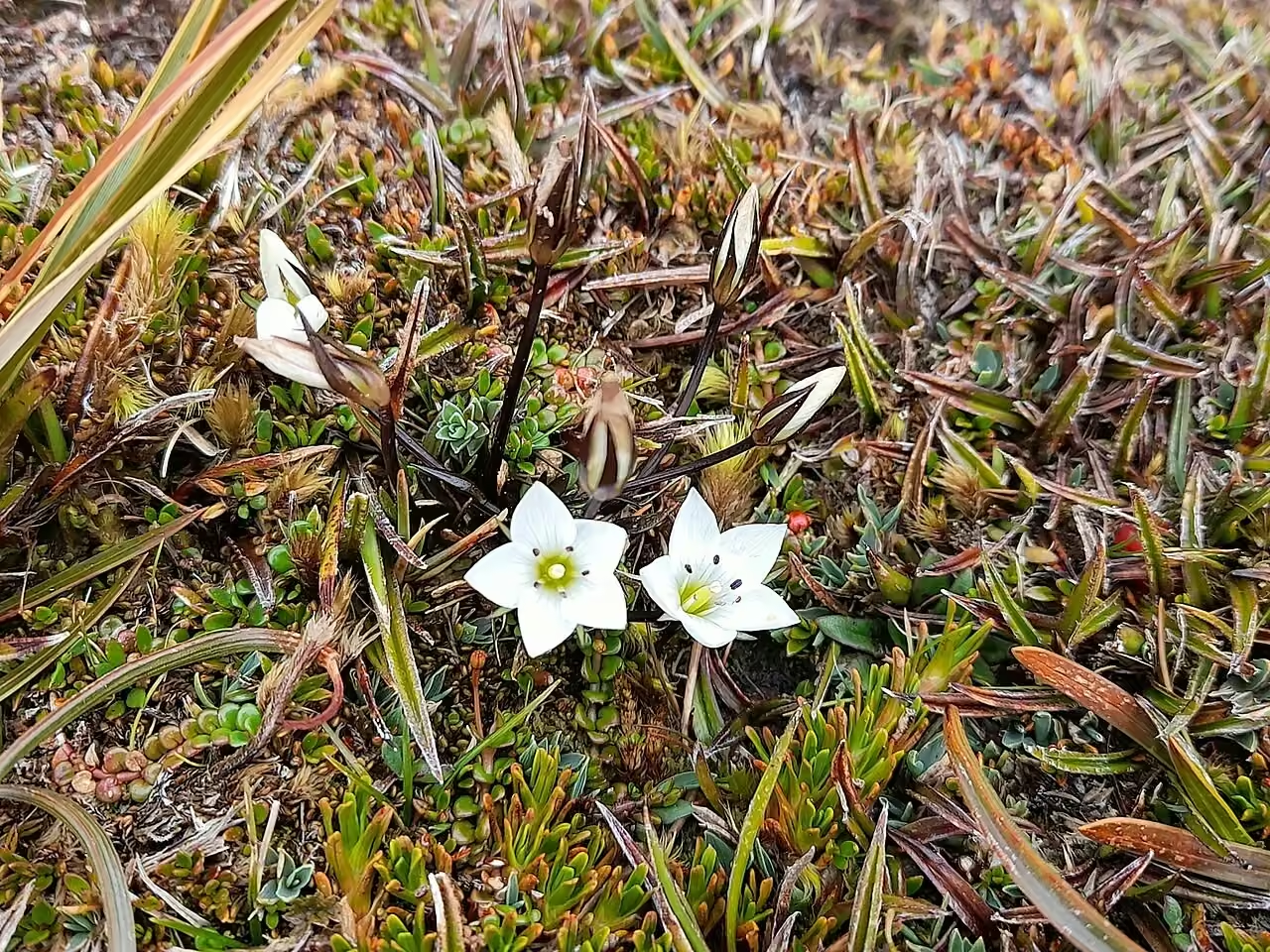
Mt Anglem Gentian
Gentianella gibbsii
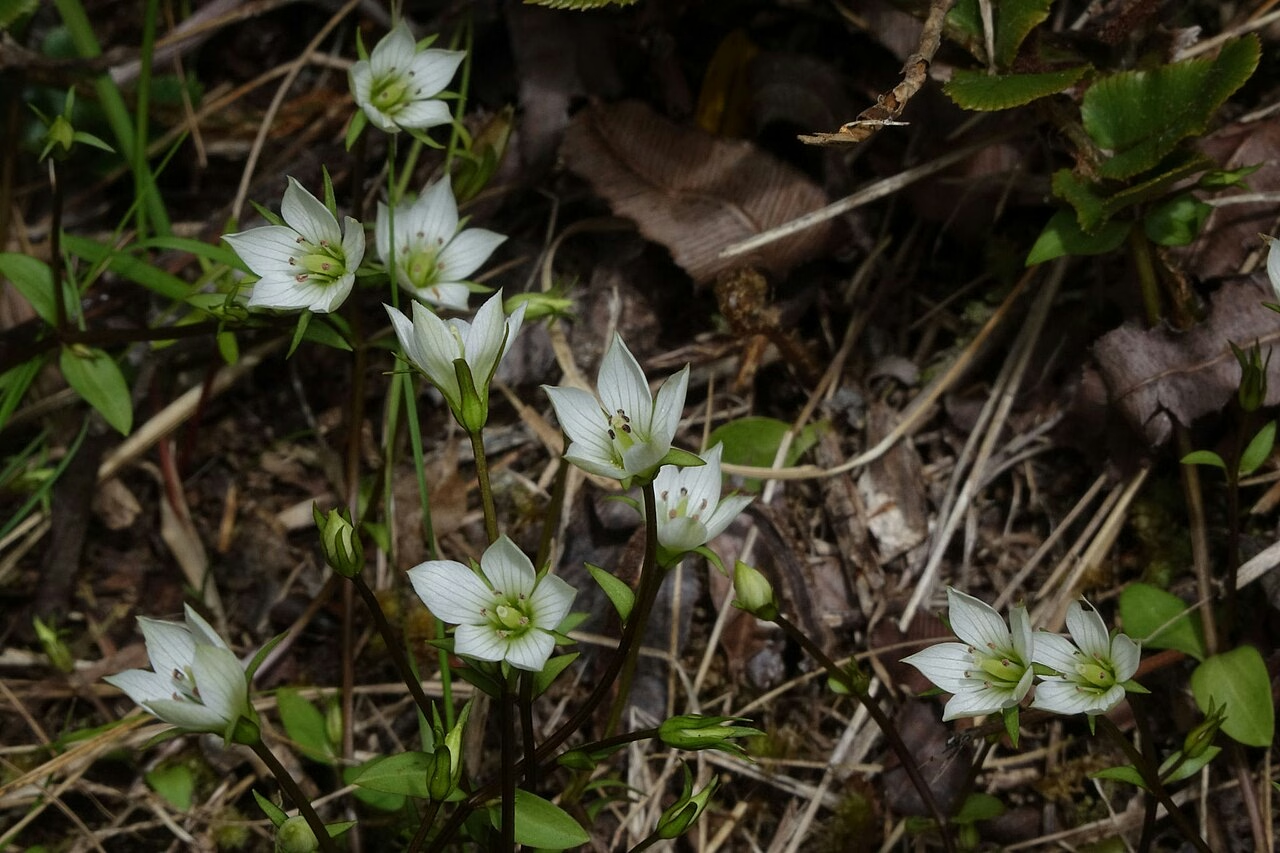
Forest Gentian
Gentianella grisebachii
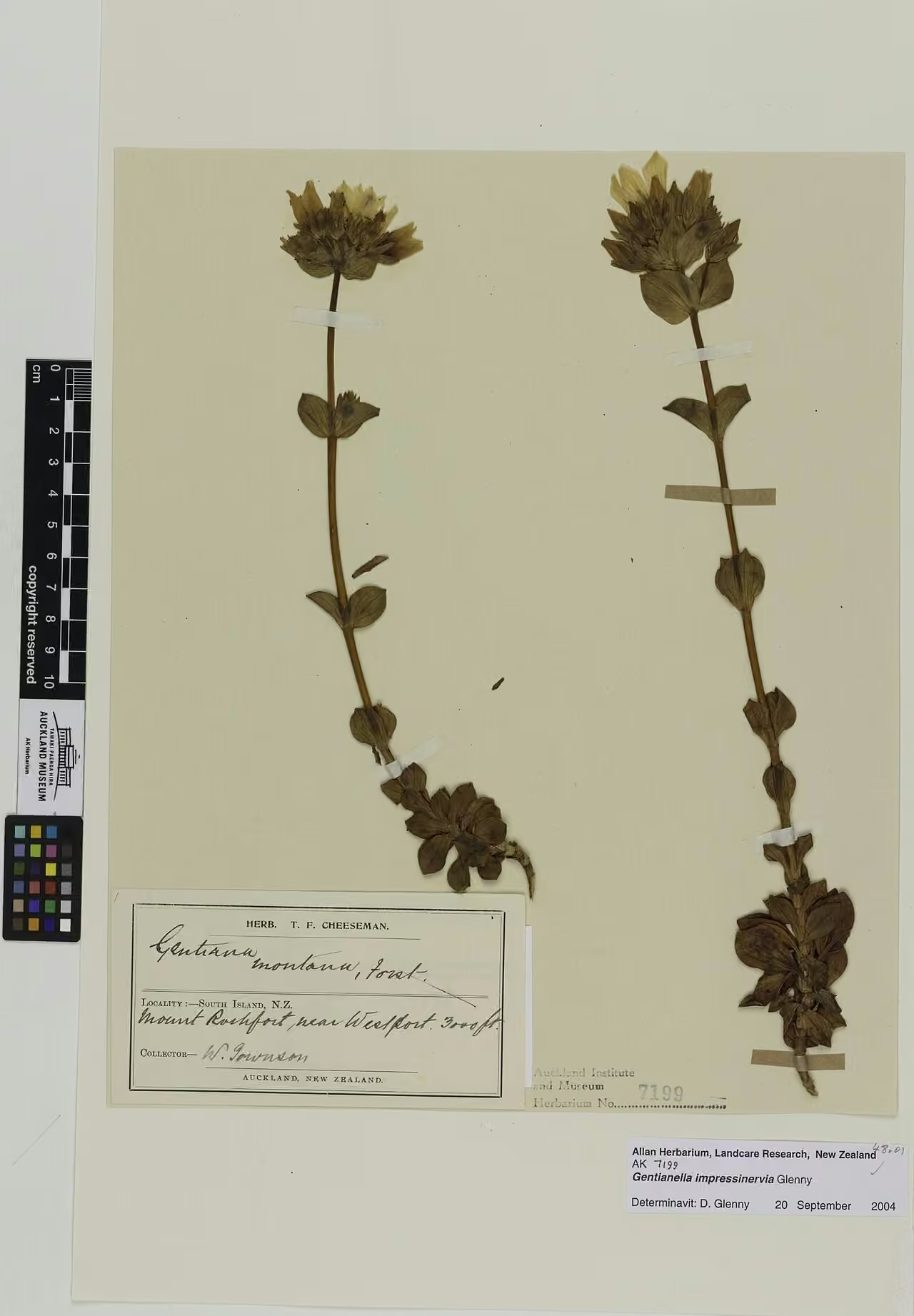
Gentianella impressinervia
Gentianella impressinervia
Plant Conservation
Gentianella divisa is ranked Not Threatened (2023). Otago's 2025 regional assessment lists it as Regionally Not Threatened, with several qualifiers including Sparse.
Most of its habitat lies in conservation land along the main divide. Controlling browsing animals and staying on tracks in fragile alpine bogs help protect it.
Frequently Asked Questions
Where is Gentianella divisa found?
It is endemic to the South Island, from Canterbury south along the main divide into Fiordland, in alpine fellfield, scree, snowbanks, cushion bog, herbfield and high tussock grassland.
How long does Gentianella divisa live?
It is monocarpic and usually biennial, possibly triennial, growing as a leaf rosette before flowering once and then dying.
What does the name divisa mean?
Divisa means divided. The plant was first described by Thomas Kirk in 1895 as Gentiana bellidifolia var. divisa before being raised to species rank.
Sources and Further Reading
The botanical, growing, and conservation details for Gentian (Gentianella divisa) on this page draw on the New Zealand plant references below. Consult them for full technical records and the latest distribution data.