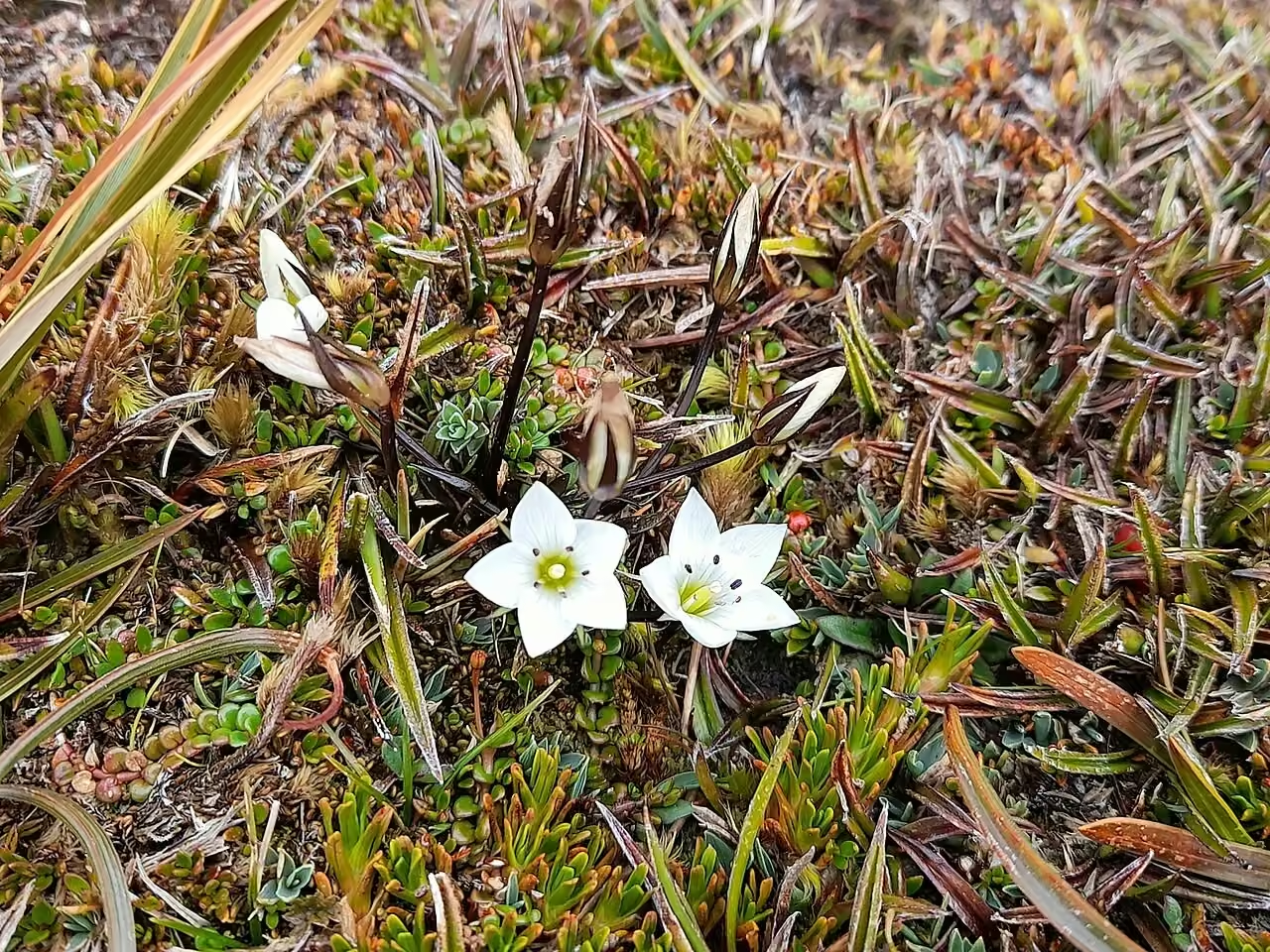
Mt Anglem Gentian
Gentianella gibbsii
Last updated:
Mt Anglem gentian (Gentianella gibbsii), also called Gibbs's gentian, is a small white-flowered herb found only on Mt Anglem (Hananui) and Little Mt Anglem on Stewart Island/Rakiura. It forms a distinct rosette of small elliptic leaves on long stalks, then flowers once on bronze stems 6 to 20 cm tall carrying up to 28 white flowers about 13 to 15 mm long. It is a monocarpic biennial of subalpine to alpine bogs, grassland and poorly drained ground under low scrub, flowering from December to March. It is ranked At Risk - Naturally Uncommon because it is known from a single location, though it is locally common there. Explore more native flowering plants in our native plant guide.
Plant Description
Gentianella gibbsii has a short, unbranched caudex 10 to 25 mm long and a slender root. Before flowering it forms a distinct rosette of elliptic leaves with pointed tips, 13 to 22 mm long and 3.6 to 7 mm wide, green and channelled, on unusually long stalks 7 to 14.5 mm long. The flowering stems are bronze, erect and number from one to nineteen, with two to four pairs of narrowly elliptic leaves.
Each plant bears 1 to 28 flowers, 12.5 to 15 mm long, on stalks up to 60 mm long. The calyx is bronze-green with long, narrow lobes 8.5 to 12 mm long, nearly as long as the corolla. The corolla is white, with pointed, slightly serrated lobes, and the anthers are blue-black with a yellow mouth and yellow pollen. The capsules are long for the plant, 15 to 27 mm.
Its long-stalked rosette leaves, bronze stems and calyx lobes almost as long as the petals help separate it from other gentians, such as the widespread forest gentian, Gentianella grisebachii.
Quick Facts
| Scientific Name | Gentianella gibbsii |
|---|---|
| Height | 0.06-0.2 m in flower |
| Spread | Rosettes about 0.05-0.1 m across |
| Water Needs | High; poorly drained bog ground |
| Light | Full sun to light shade under low scrub |
| Frost Tolerance | High; subalpine to alpine |
| Salt Tolerance | No information available |
| Growth Rate | Moderate; flowers in its second year |
| Lifespan | Biennial (monocarpic) |
Climate Best Suited to
Suits the cool, cloudy, wet and windy upland climate of northern Rakiura, with frequent mist and frosts but few extremes of heat.
Regional Suitability
| City | Climate Suitability |
|---|---|
| Auckland | Low |
| Wellington | Low |
| Christchurch | Low |
| Dunedin | Low |
Plant Habitat
This gentian is endemic to Stewart Island/Rakiura, where it is known only from Mt Anglem (Hananui), the island's highest peak, and neighbouring Little Mt Anglem. Both lie within Rakiura National Park.
It grows in the subalpine and alpine zones on poorly drained ground, either under low scrub or in open bogs and grasslands, and is locally common within this small area.
Growing Requirements
Soil Requirements
It grows in wet, peaty, poorly drained soils of the Rakiura uplands.
- Acidic peat and organic soils
- Waterlogged or seepage ground
- Low-fertility sites
Light Requirements
It occurs both in open bog and grassland and beneath low scrub, so tolerates some shade.
- Full sun in open bogs
- Light shade under low subalpine scrub
Water Requirements
Constant moisture from rain, mist and poor drainage is a feature of its habitat.
- Never dry
- Tolerates saturated ground
Planting and Establishing
Mt Anglem gentian is not grown in gardens. NZPCN describes it as difficult to propagate and says it should not be removed from the wild.
Its single-mountain distribution makes any collection inappropriate except under Department of Conservation authorisation for conservation purposes.
Ecological Role
As a monocarpic biennial, each plant flowers only once, so the population depends on regular seed set and seedling establishment in its boggy habitat. Its white flowers are open to insect visitors, but pollinators on Mt Anglem have not been documented in the sources consulted.
Its presence in both open bog and under scrub suggests it can persist through some vegetation change on the mountain, though how its population responds over time is not recorded.
Uses & Significance
Garden Uses
It has no role in home gardens.
- Viewing in the wild on the Mt Anglem track
- Possible conservation seed banking
- Educational interest as a single-mountain endemic
Ecological Value
It is one of the narrow-range endemics that make the Rakiura uplands botanically significant.
- Found on one mountain massif only
- Part of the subalpine bog and scrub flora of Hananui
- Provides summer flowers for alpine insects
Landscaping Uses
Mt Anglem gentian has no landscaping use. Its habitat is best protected by keeping walkers on the formed track to the summit of Mt Anglem and avoiding trampling of wet ground.
For a native gentian in a garden, choose one of the few species offered by specialist nurseries rather than a narrow endemic like this.
Seasonal Care Calendar
Spring
Rosettes resume growth as the Rakiura uplands warm.
- First-year plants grow as rosettes
- Second-year plants begin to elongate
Summer
Flowering runs from December to March on bronze stems.
- The best time to see it on Mt Anglem
- Stay on tracks to protect bogs
Autumn
Fruiting continues from February to May, and flowered plants die after shedding seed.
- Long capsules split to release seed
- Seedlings may appear on open wet ground
Winter
Young rosettes overwinter in the cold, wet uplands.
- Plants are dormant
- Frost and snow are possible at altitude
When to Prune and How Much
No pruning is required. Allow flowering stems to stand until the long capsules have released their seed.
Do not remove rosettes or leaves, which feed the plant before its single flowering.
How to Grow Mt Anglem Gentian
NZPCN describes Mt Anglem gentian as difficult to propagate and advises that it should not be removed from the wild. Because it is known from only one location within Rakiura National Park, any seed collection would need Department of Conservation approval. As a monocarpic biennial, a cultivated population could only be maintained by raising new plants from seed every year or two. No propagation protocol specific to this species was found in the sources consulted. The approach below follows general practice for New Zealand bog-dwelling gentians, which need fresh seed, cool temperatures and a constantly moist, acidic mix, and it should be treated as a starting point rather than a proven method. Expect slow growth and losses if conditions become warm or dry.
From Seed
Fruiting runs from February to May. Each ovary holds 36 to 49 ovules, and the capsules are long, so a single plant may yield a useful quantity of seed.
- Collect capsules only with authorisation, as they begin to split
- Sow seed fresh on a moist mix of peat and fine grit
- Keep the pot cool and stand it in shallow water so it never dries
- Give the seed a natural winter chill outdoors
- Grow seedlings on in cool, humid, bright conditions
Cuttings and Division
Division and cuttings are not practical for this single-rosette, short-lived plant.
- Rely on seed
- Encourage self-sowing in cultivation by leaving capsules on the plant and keeping nearby ground open and moist
Pests & Diseases
NZPCN lists no known current threats. White-tailed deer are present on Stewart Island and browse many native plants, but their effect on this gentian is not documented in the sources consulted.
Trampling of wet subalpine ground along the Mt Anglem route could damage plants locally.
Cultural Significance
No Māori name or traditional use is recorded for this gentian in the sources consulted. Hananui, the Māori name of Mt Anglem, is the mountain to which it is confined.
Donald Petrie described it as Gentiana gibbsii, naming it after Frederick G. Gibbs (1866 to 1953). It was later moved to Chionogentias and then to Gentianella by David Glenny in 2004.
Bonus Tip
If you climb Mt Anglem on Rakiura between December and March, watch the wet subalpine grassland and bog margins near the upper track for small white gentians on bronze stems. Because it grows nowhere else, this is the only place in the world you can see it.
Related Plants
Explore other native plants that share similar characteristics or habitats with Mt Anglem Gentian (Gentianella gibbsii), offering further insights into New Zealand's diverse flora. These related species provide context and opportunities for complementary planting in your garden.
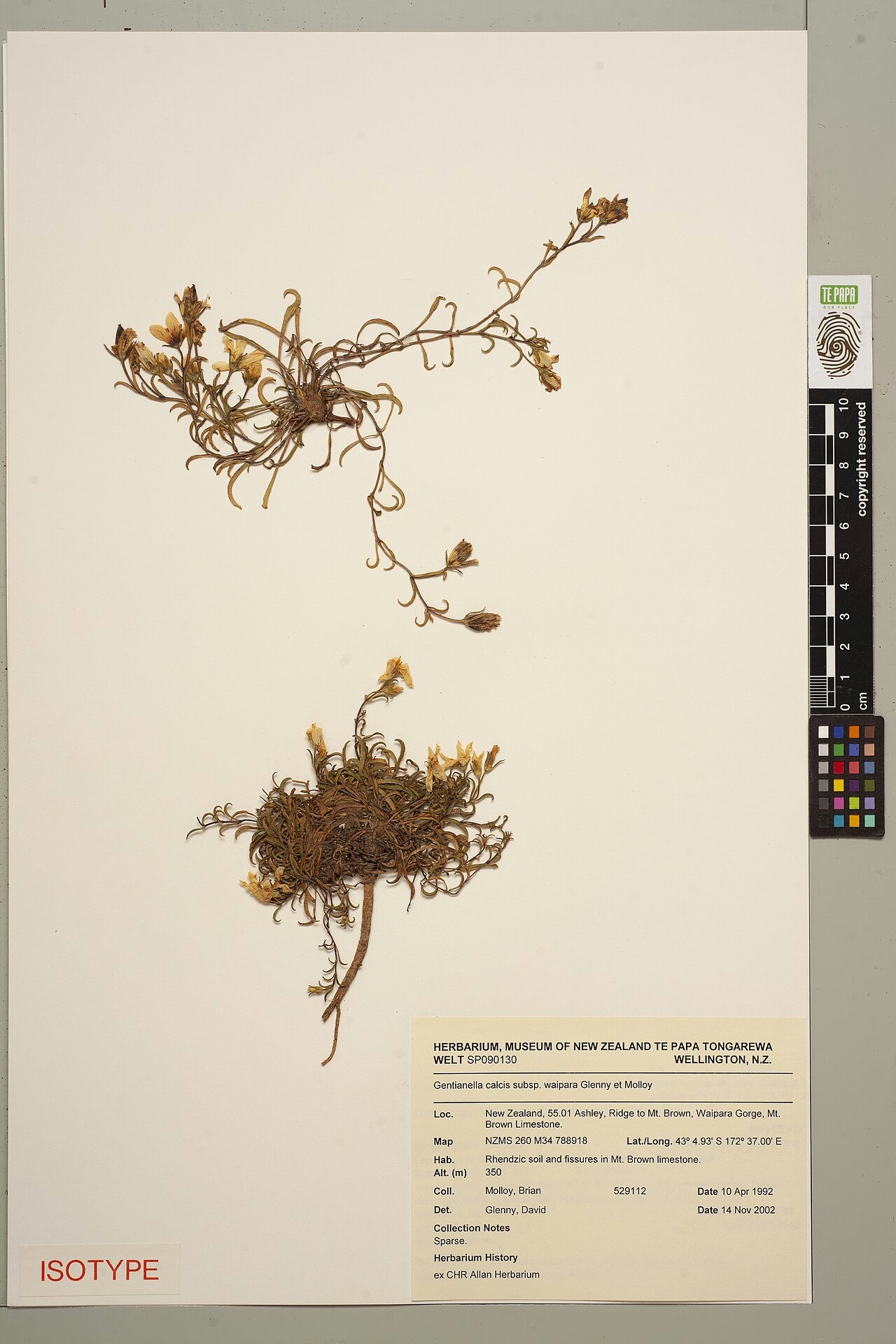
Waipara Gentian
Gentianella calcis subsp. waipara
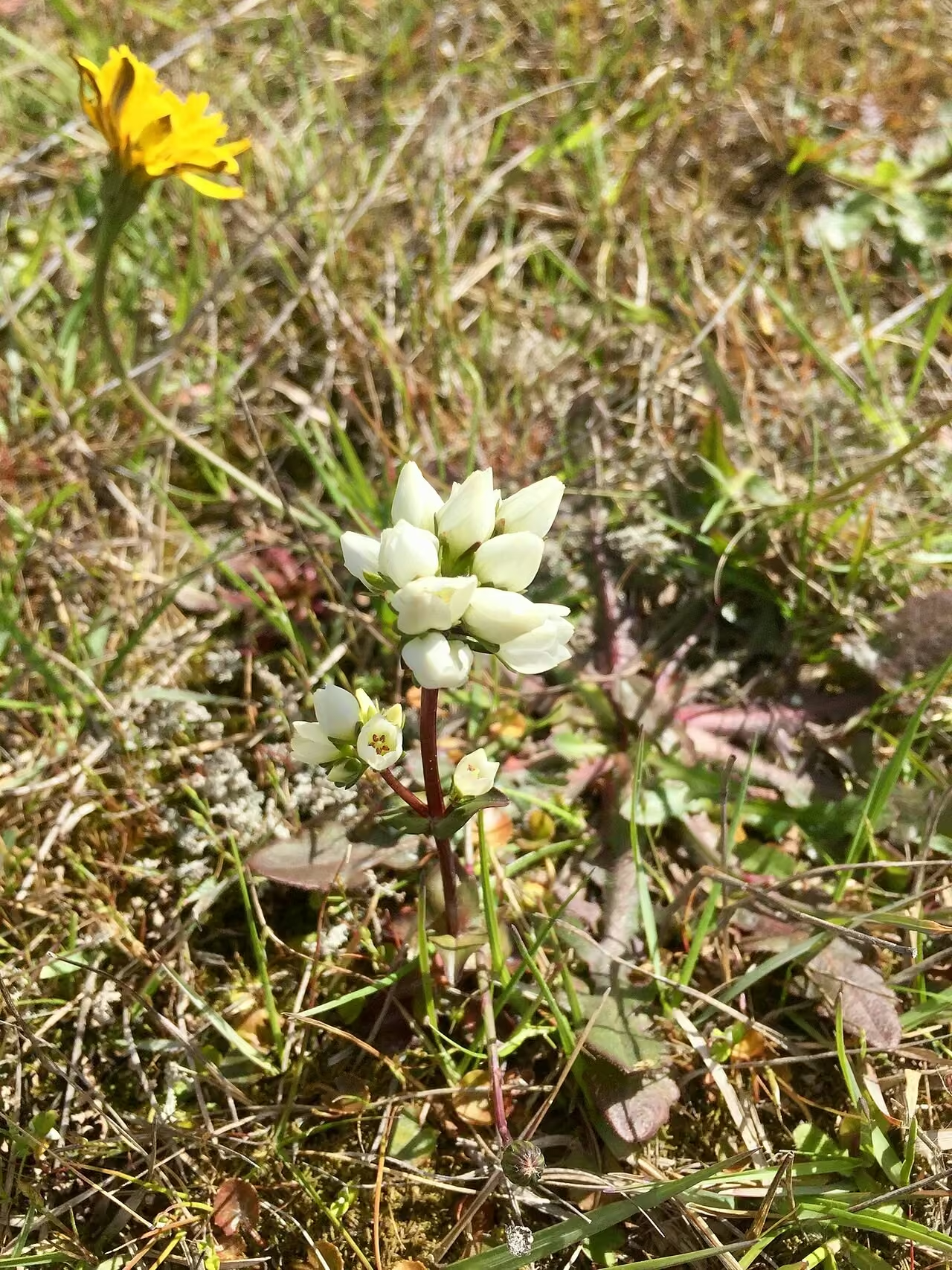
Chatham Island Gentian
Gentianella chathamica subsp. chathamica
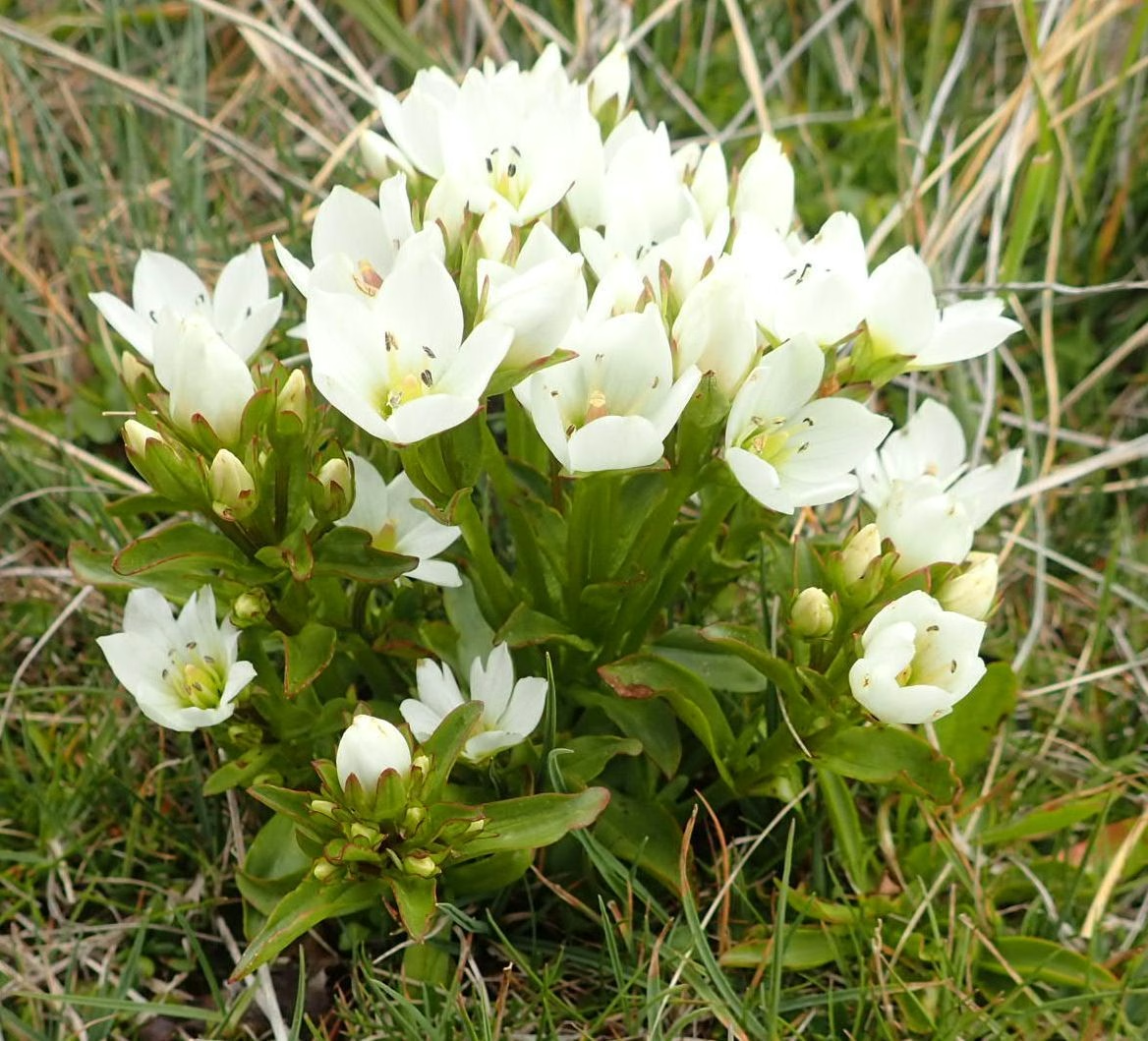
Gentianella divisa
Gentianella divisa
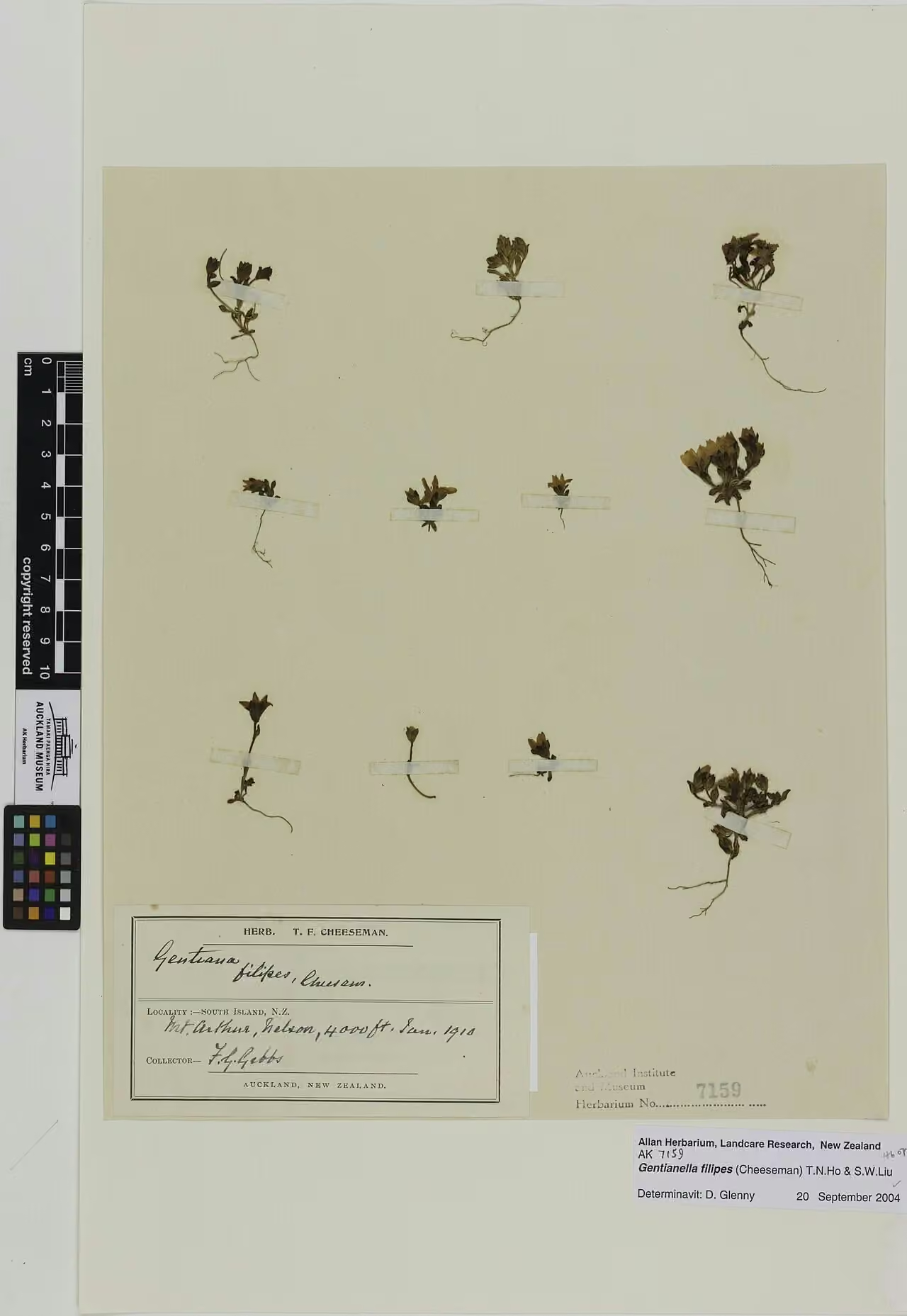
Gentianella filipes
Gentianella filipes
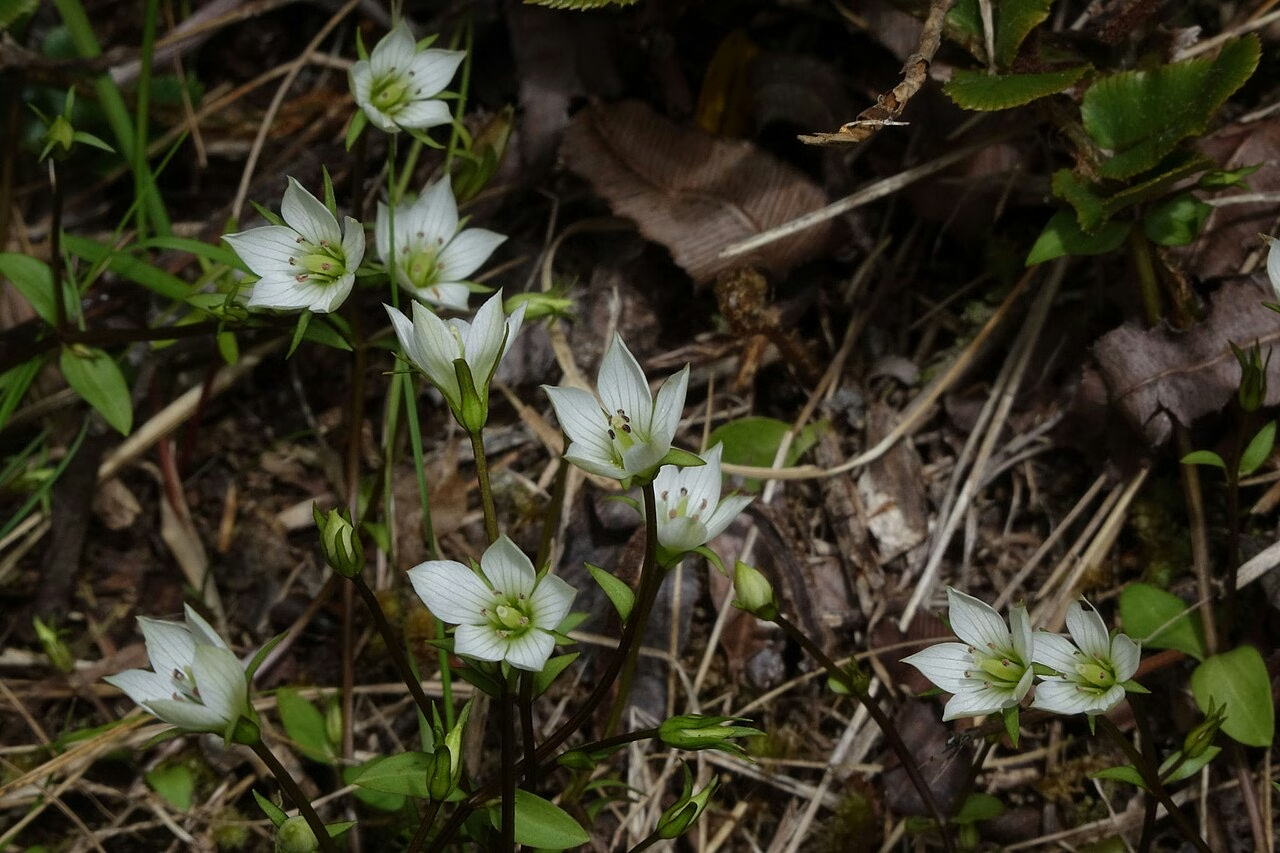
Forest Gentian
Gentianella grisebachii
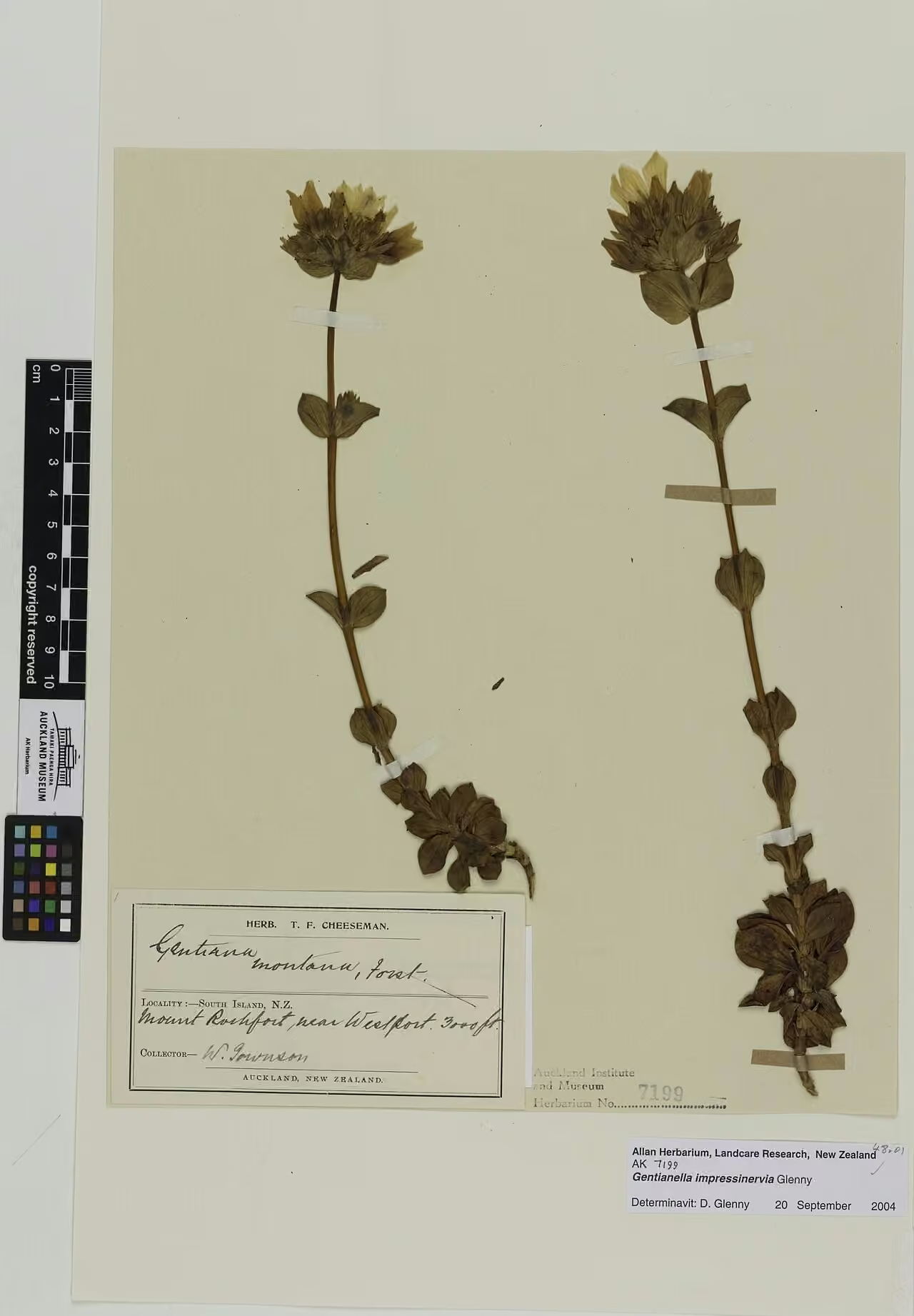
Gentianella impressinervia
Gentianella impressinervia
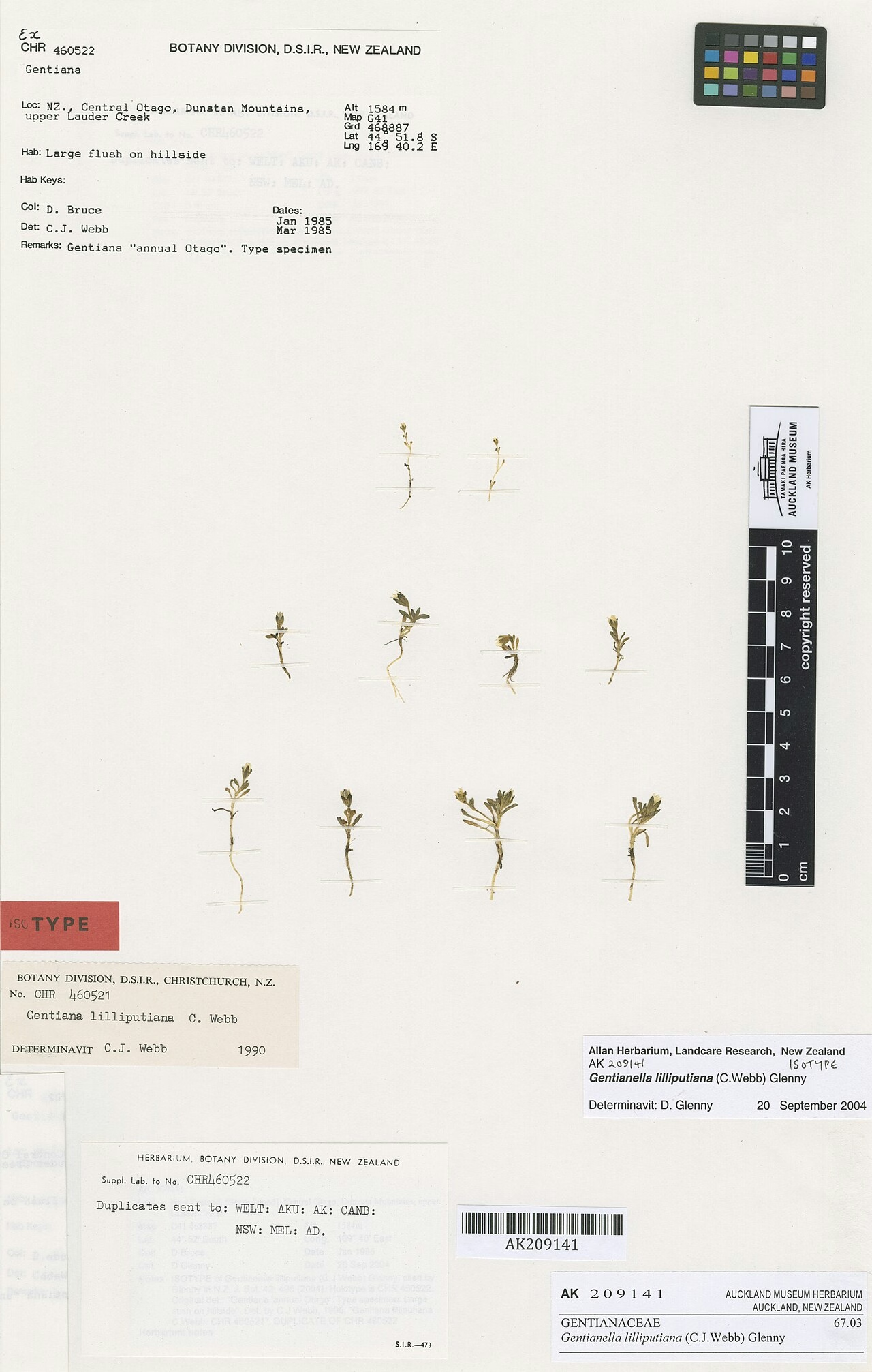
Little Gentian
Gentianella lilliputiana
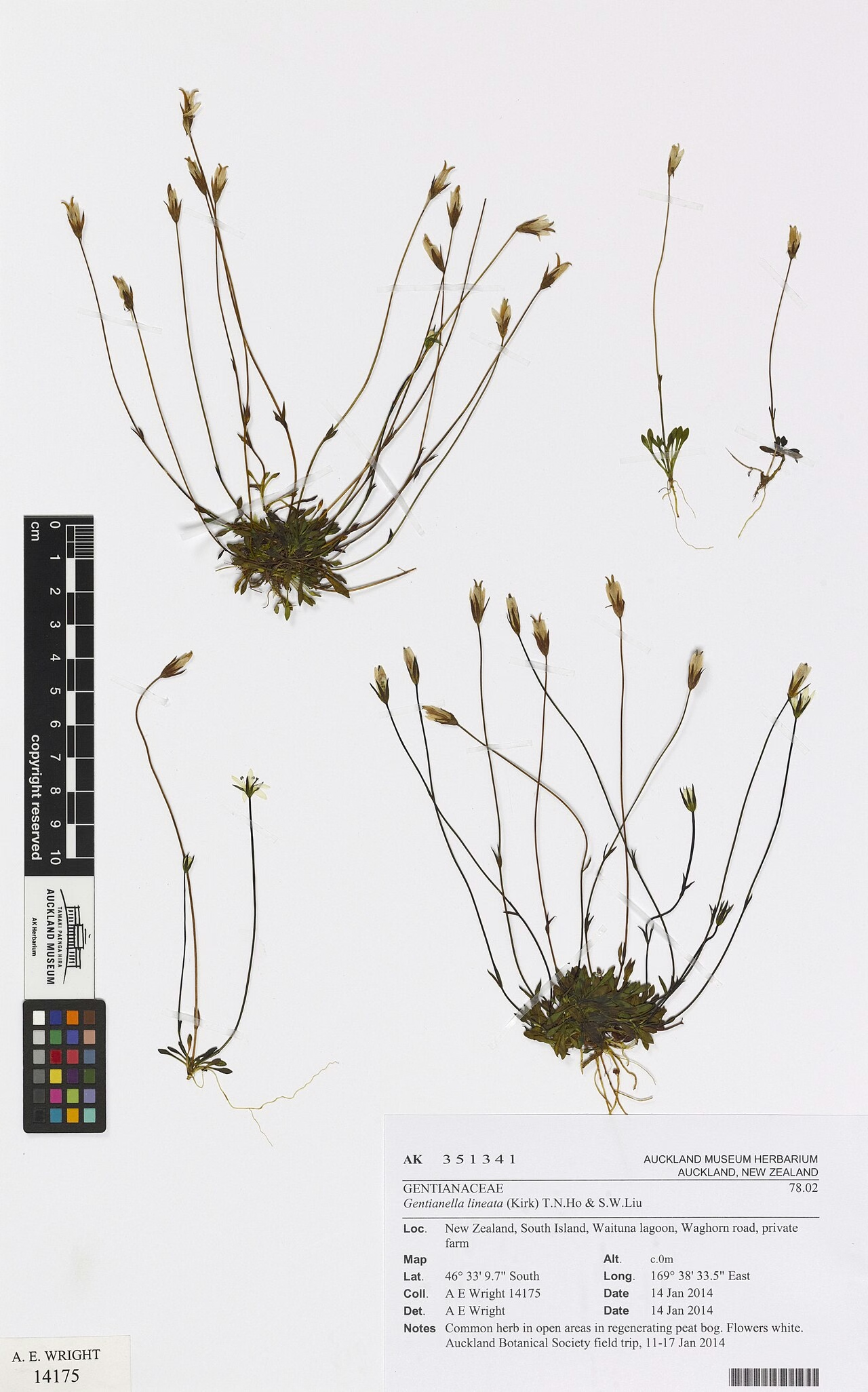
Gentianella lineata
Gentianella lineata
Plant Conservation
Gentianella gibbsii is ranked At Risk - Naturally Uncommon (2023) with the qualifier One Location, reflecting its restriction to the Mt Anglem massif.
Its entire range lies within Rakiura National Park and it is locally abundant there. Monitoring, deer control and keeping visitors to the track are the most useful protective measures.
Frequently Asked Questions
Where can you see the Mt Anglem gentian?
It grows only on Mt Anglem (Hananui) and Little Mt Anglem in the north of Stewart Island/Rakiura, on poorly drained subalpine and alpine ground within Rakiura National Park.
Who is Gentianella gibbsii named after?
The epithet honours Frederick G. Gibbs (1866 to 1953). The species was described by Donald Petrie as Gentiana gibbsii.
When does the Mt Anglem gentian flower?
It flowers from December to March and fruits from February to May, after which the flowering plants die.
Sources and Further Reading
The botanical, growing, and conservation details for Mt Anglem Gentian (Gentianella gibbsii) on this page draw on the New Zealand plant references below. Consult them for full technical records and the latest distribution data.