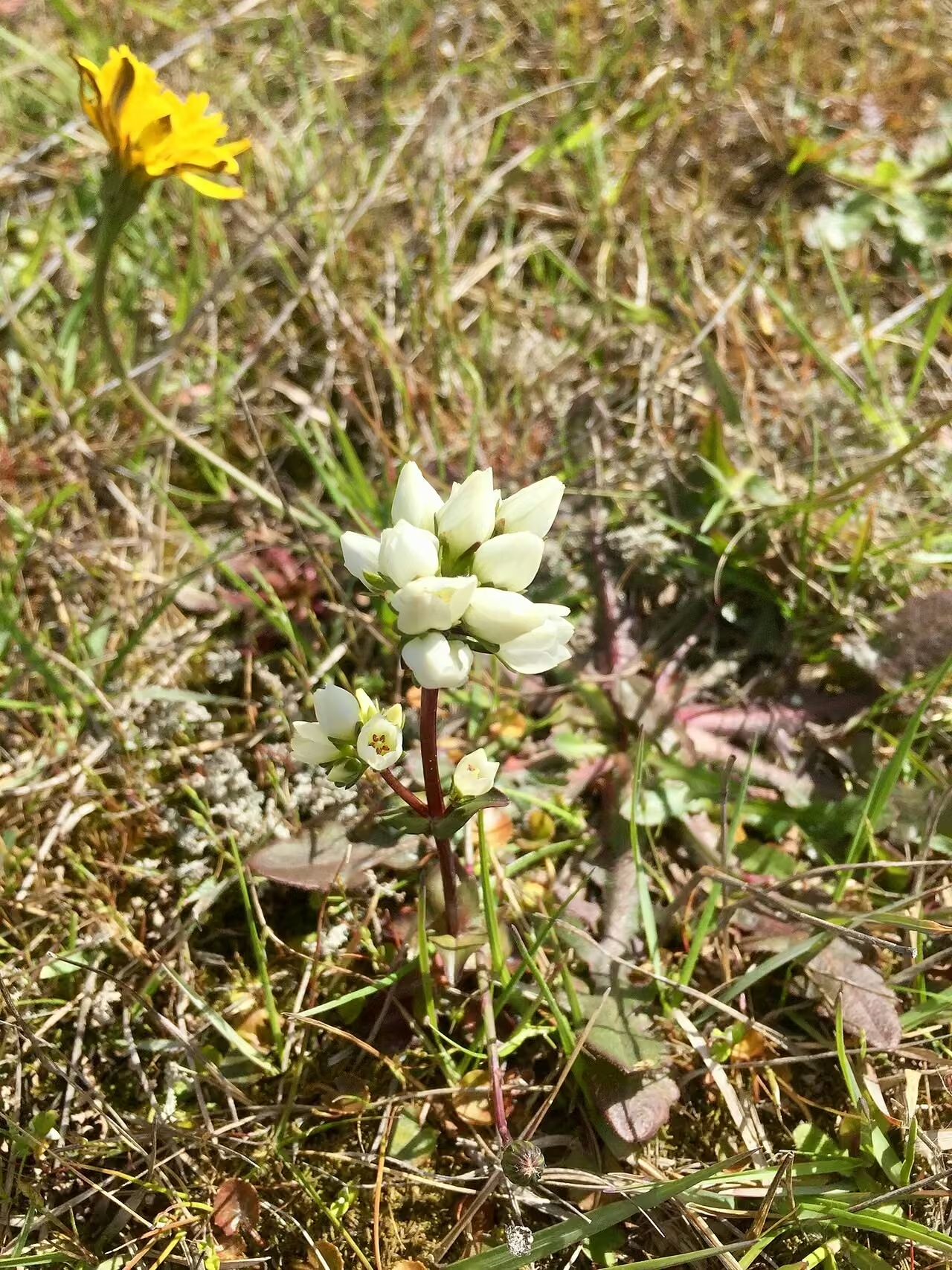
Chatham Island Gentian
Gentianella chathamica subsp. chathamica
Last updated:
Chatham Island gentian (Gentianella chathamica subsp. chathamica) is a hairless herb found only on Chatham Island and Pitt Island. From a rosette of fleshy, oval leaves it sends up stems 9 to 24 cm tall bearing anywhere from a few to more than 50 tulip-like flowers, white or tinted crimson or pink with coloured veins. It is a monocarpic biennial, flowering once in its second year and then dying. It grows in open peatland, restiad bog, bracken fernland and wet pasture, where stock tend to leave it alone, and is ranked At Risk - Naturally Uncommon because it is confined to the islands. Explore more native flowering plants in our native plant guide.
Plant Description
This is a hairless herb that begins as a rosette of fleshy, ovate leaves 21 to 31 mm long and 7 to 22 mm wide, green or tinged maroon, on a distinct stalk. In its flowering year it produces one to three, occasionally up to fifteen, stems 9 to 24 cm tall with one to three pairs of smaller, stalkless leaves.
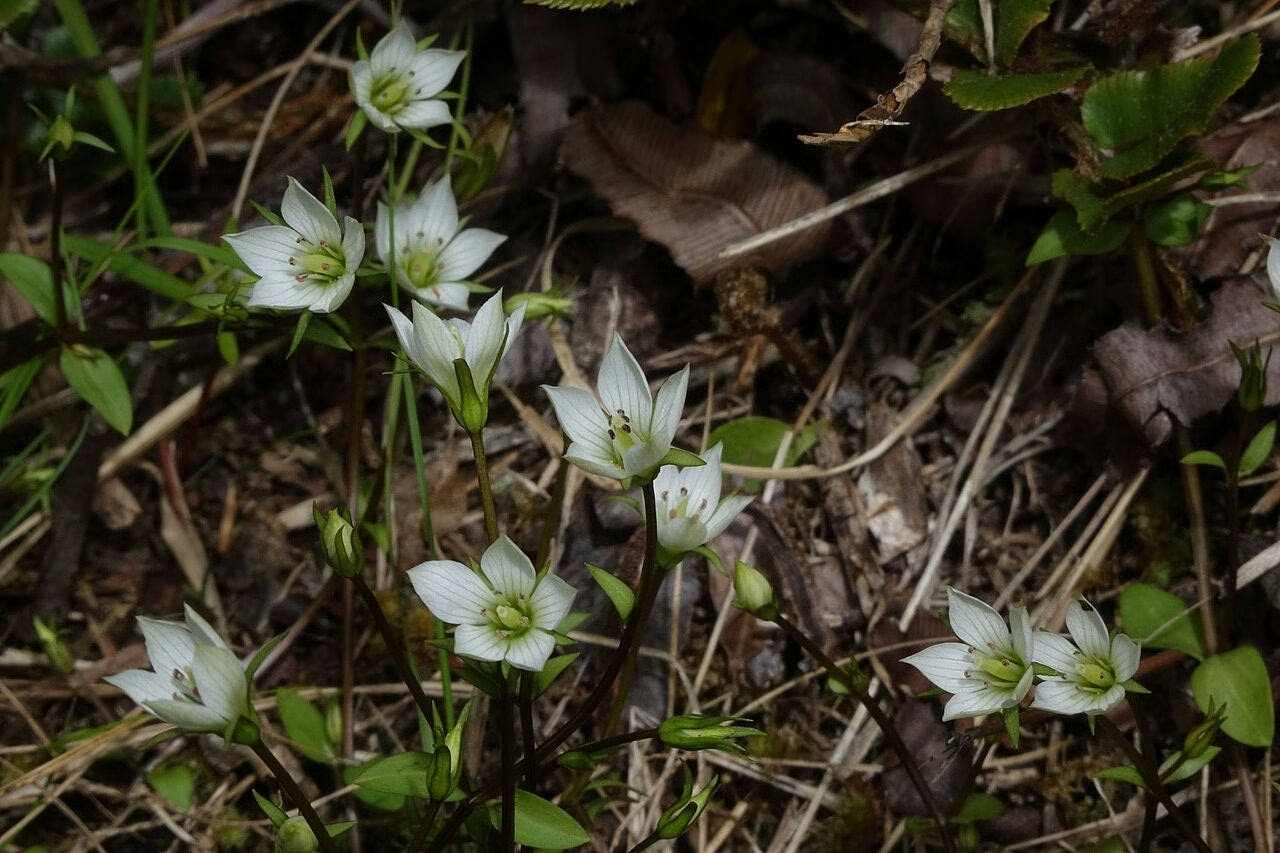
Flowers are borne singly on stalks 5 to 20 mm long, from 5 to more than 50 per plant. They are 6 to 12 mm long, cup or tulip shaped, with a white corolla tinted crimson or pink and often crimson veins; rarely the whole flower is pink or magenta. The anthers are purple-red with a yellow or orange-red mouth and pale orange pollen. Capsules are 7 to 12.5 mm long.
It is easily distinguished from mainland gentians by its rounded, fleshy rosette leaves, small flowers with crimson tinting and its lowland peat habitat.
Quick Facts
| Scientific Name | Gentianella chathamica subsp. chathamica |
|---|---|
| Height | 0.09-0.24 m in flower |
| Spread | About 0.1-0.2 m |
| Water Needs | High; peat bogs and wet ground |
| Light | Full sun in open bog and pasture |
| Frost Tolerance | Moderate; mild oceanic island climate |
| Salt Tolerance | Moderate; grows from the coast inland |
| Growth Rate | Moderate; flowers in its second year |
| Lifespan | Biennial (monocarpic) |
Climate Best Suited to
Suits the cool, windy, humid oceanic climate of the Chatham Islands, with mild winters, cool summers and frequent rain. It needs consistently moist conditions.
Regional Suitability
| City | Climate Suitability |
|---|---|
| Auckland | Low |
| Wellington | Medium |
| Christchurch | Low |
| Dunedin | Medium |
Plant Habitat
Chatham Island gentian is endemic to the Chatham Islands, where it is known from Chatham Island and Pitt Island. It occurs from near the coast to the island interiors.
It is widespread in open peatlands and restiad bog, in bracken fernland growing over peat, and in poorly drained pasture. Because livestock find it unpalatable, it often persists and can be abundant on marginal farmland.
Growing Requirements
Soil Requirements
It grows on acidic, waterlogged peat and poorly drained soils typical of the Chatham Islands uplands and lowland bogs.
- Acidic peat or peaty loam
- Constantly moist to wet ground
- Low-fertility, open sites
Light Requirements
It favours open, low vegetation where its rosettes are not overtopped.
- Full sun in bog and pasture
- Tolerates light cover among bracken
Water Requirements
Its bog and wet pasture habitats stay damp year round, and the plant is adapted to these saturated conditions.
- Do not let the root zone dry out
- Tolerates waterlogged peat
Planting and Establishing
Chatham Island gentian is not available commercially and NZPCN states it should not be removed from the wild. As a short-lived biennial it is also unsuited to permanent garden plantings.
Specialists who obtain legally sourced seed would need to replicate a cool, wet, acidic peat bed in full light, and allow plants to self-sow if they are to persist.
Ecological Role
Its numerous small cup-shaped flowers are open to insect visitors, though the pollinators on the Chatham Islands have not been documented in the sources consulted. Seed of New Zealand gentians is dispersed by ballistic projection from the capsule, wind and water.
Because it is avoided by livestock, it survives well in rough wet pasture and can be locally abundant there, a pattern that has helped it persist despite widespread farming on the islands.
Uses & Significance
Garden Uses
It is a botanical curiosity rather than a garden plant.
- Specialist bog garden collections using legally sourced seed
- Chatham Islands flora displays
- Best appreciated in flower on the islands
Ecological Value
It is part of the unique endemic flora of the Chatham Islands peatlands.
- One of many Chatham Islands endemic plants
- Contributes flowers to open bog communities over a long season
- Persists in modified pasture where other natives have been lost
Landscaping Uses
It is not used in landscaping. On Chatham Islands farms, retaining wet peaty corners and bog margins rather than draining them protects populations.
In a restoration context it suits open boggy ground alongside restiads, sedges and low shrubs rather than planted forest.
Seasonal Care Calendar
Spring
Flowering begins early, from about August or September, and continues through spring.
- Look for white and crimson flowers in bog and pasture
- First-year plants build rosettes
Summer
Flowering continues into summer, ending around February, while capsules ripen.
- Capsules split to release seed
- Flowering plants begin to die back
Autumn
Fruiting extends to May, and seed falls into the moist peat.
- Leave seed heads intact
- New seedlings appear on open ground
Winter
Young plants overwinter as leaf rosettes ready to flower the following season.
- Rosettes may be tinged maroon
- Avoid draining wet ground
When to Prune and How Much
No pruning is required. Since each plant dies after flowering, leave the spent stems standing until the capsules have released their seed.
Do not cut back rosettes; they are the plant's only growth before flowering.
How to Grow Chatham Island Gentian
NZPCN describes Chatham Island gentian as difficult to propagate and advises that it should not be removed from the wild. As a monocarpic biennial it can only be maintained in cultivation by raising a fresh generation from seed every year or two, since each plant flowers once and dies. No published protocol specific to this subspecies was found in the sources consulted. The general approach used by specialist growers for New Zealand gentians is to sow fresh seed onto a moist, low-fertility surface and keep the seedlings cool, evenly damp and in good light. For this bog species a peat-based mix that never dries out is the logical choice. Any seed should come from plants already in cultivation or be collected with landowner permission and in consultation with the Department of Conservation on the Chatham Islands.
From Seed
Fruiting runs from August to May, with capsules ripening progressively as flowering continues. Each ovary holds 22 to 60 ovules, so a single plant can produce a good quantity of seed.
- Collect capsules as they turn brown and begin to split
- Sow seed on the surface of a moist, acidic, peat-rich mix
- Stand the tray in a saucer of water to keep it constantly damp
- Grow seedlings in good light and cool temperatures
- Transplant young rosettes into a boggy bed before their second season
Division and Cuttings
Division is not possible for this short-lived, single-rosette plant, and cuttings are not a recorded method.
- Allow plants to self-sow to maintain a population
- Keep the ground open so seedlings can establish
Pests & Diseases
NZPCN lists no obvious threats for this subspecies. Grazing livestock generally avoid it because it is unpalatable.
Its habitat could still be affected by drainage of peatlands, conversion of rough pasture and invasion by rank weeds, which would reduce the open, wet ground it needs.
Cultural Significance
No Moriori or Māori name or traditional use for this gentian is recorded in the sources consulted.
It was first described by Thomas Cheeseman as Gentiana chathamica, and was later placed in Chionogentias before Glenny's 2004 revision transferred it to Gentianella. A varietal name published by Thomas Kirk, pleurogynoides var. umbellata, is also treated as a synonym.
Bonus Tip
Visitors to the Chatham Islands in spring and early summer can often find this gentian simply by looking in damp, rough pasture and bog edges, since stock leave it untouched. Its crimson-tinted white flowers are easy to spot against dark peat.
Related Plants
Explore other native plants that share similar characteristics or habitats with Chatham Island Gentian (Gentianella chathamica subsp. chathamica), offering further insights into New Zealand's diverse flora. These related species provide context and opportunities for complementary planting in your garden.
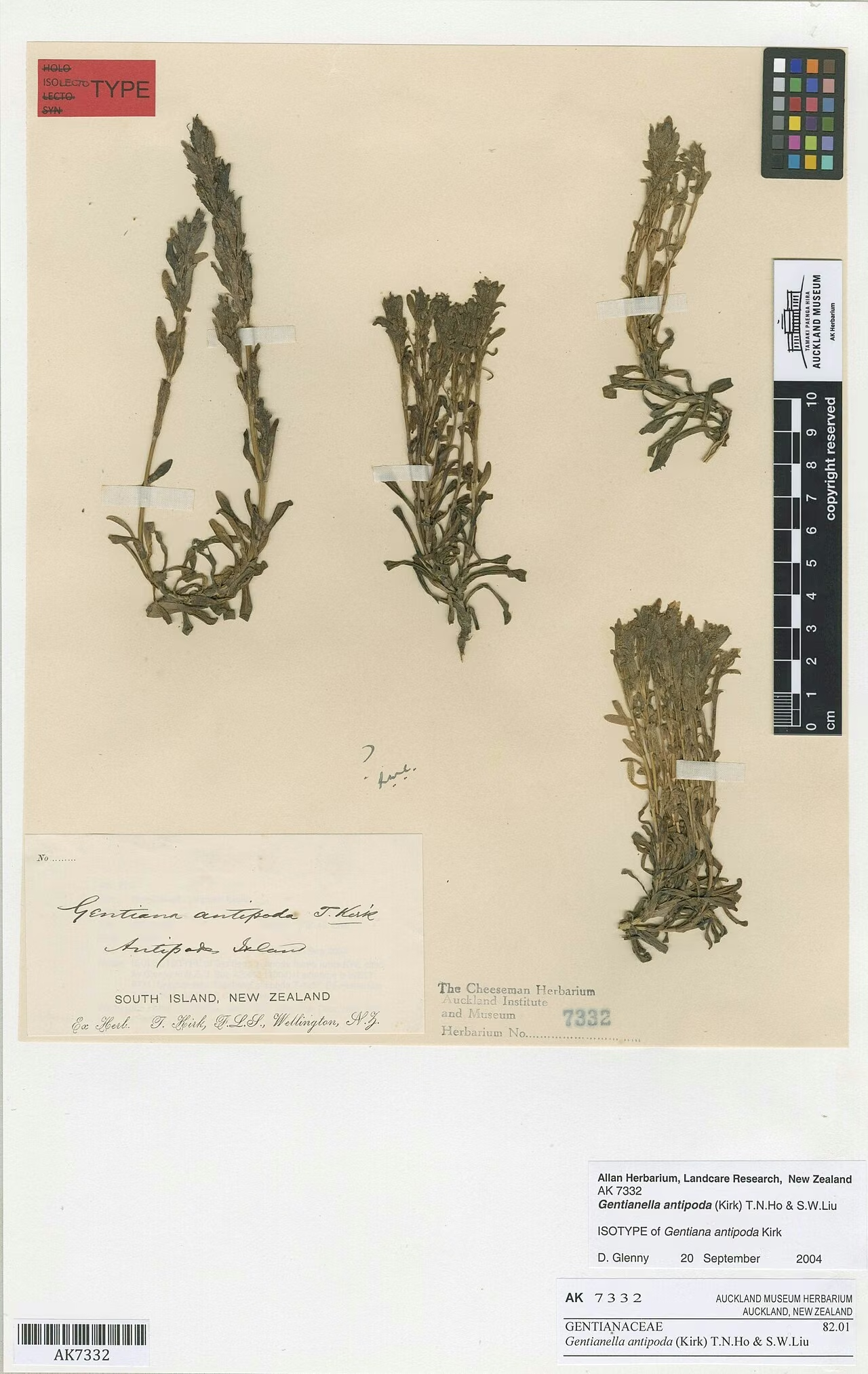
Antipodes Islands Gentian
Gentianella antipoda
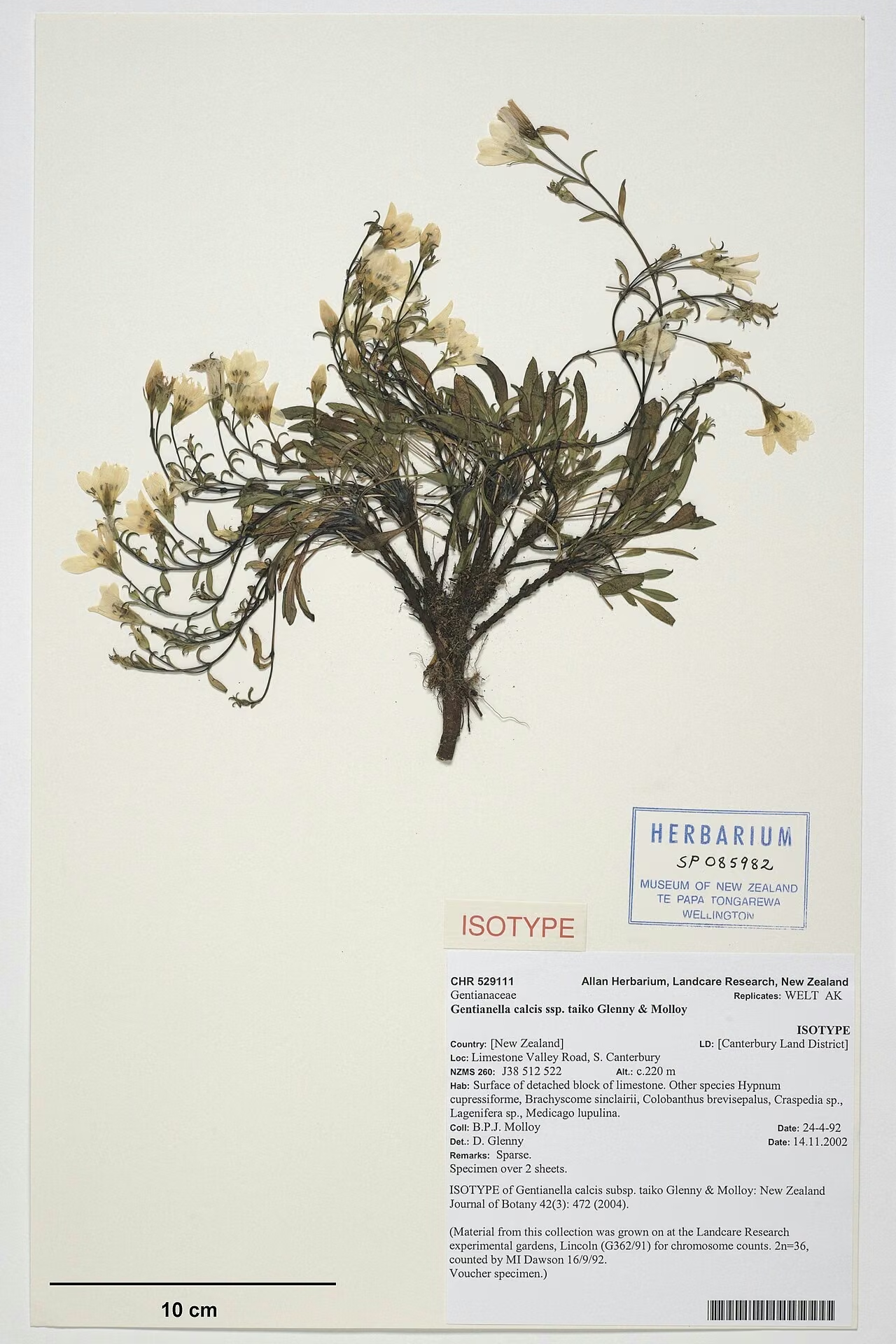
Awahokomo Gentian
Gentianella calcis subsp. calcis
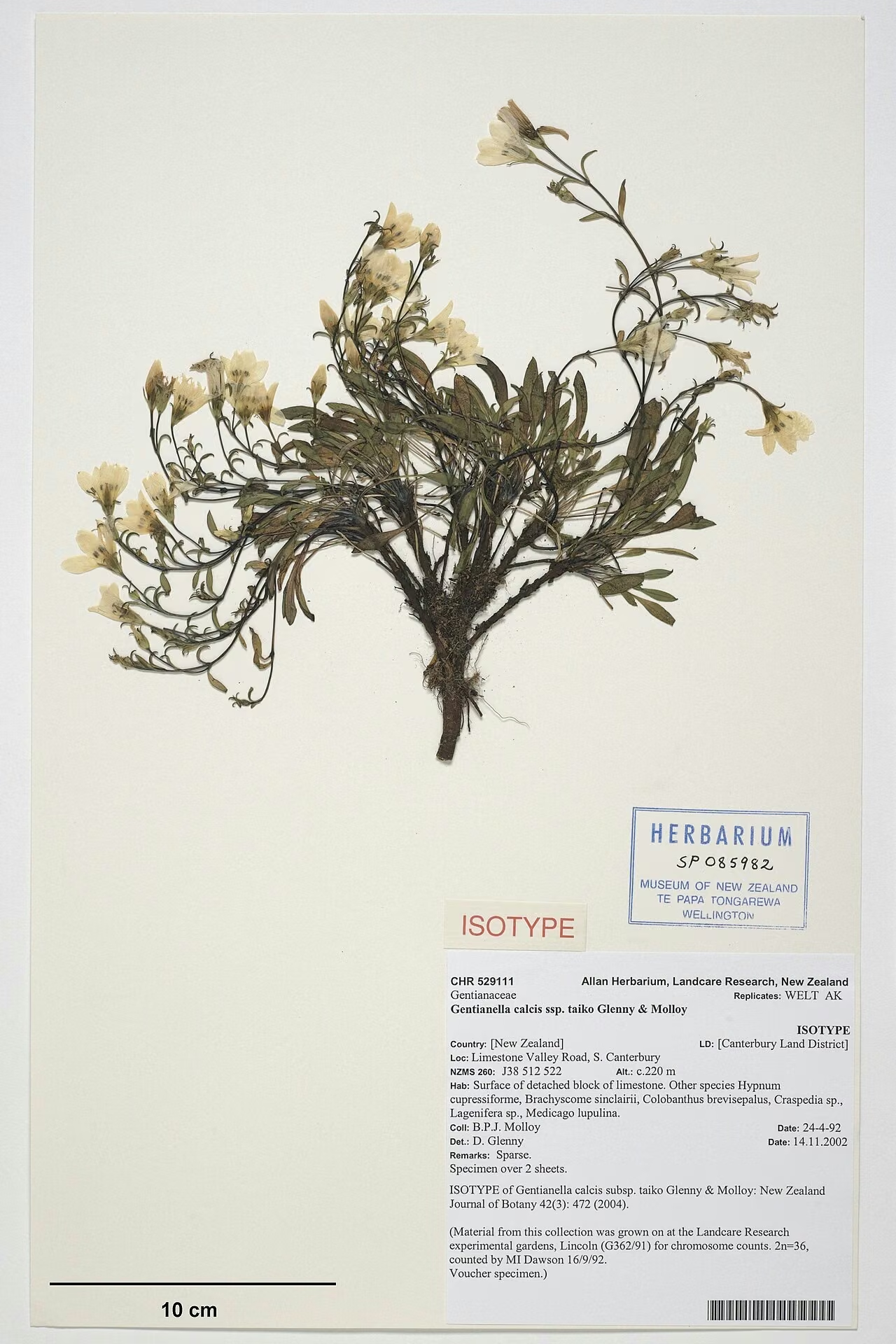
Pareora Gentian
Gentianella calcis subsp. taiko
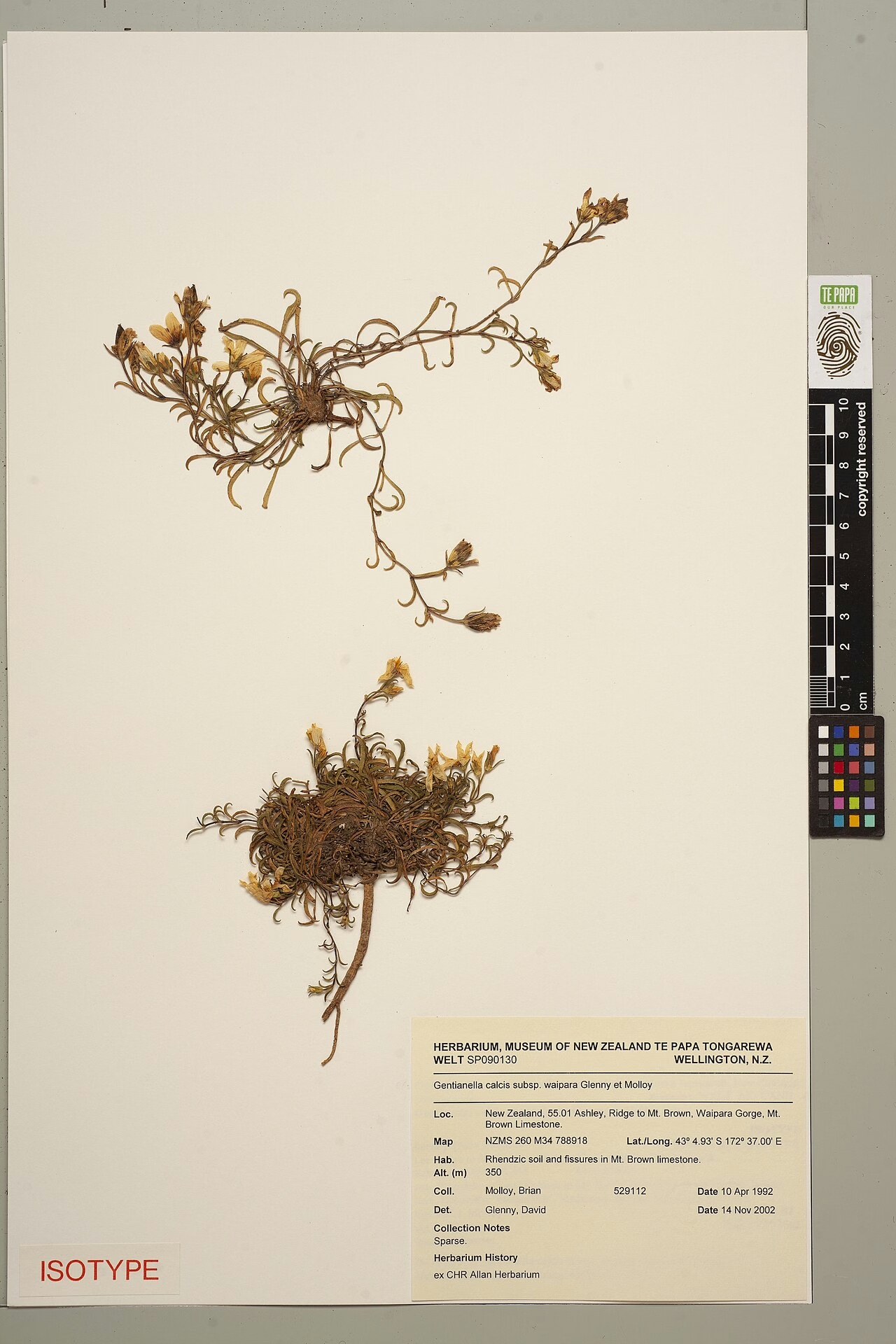
Waipara Gentian
Gentianella calcis subsp. waipara
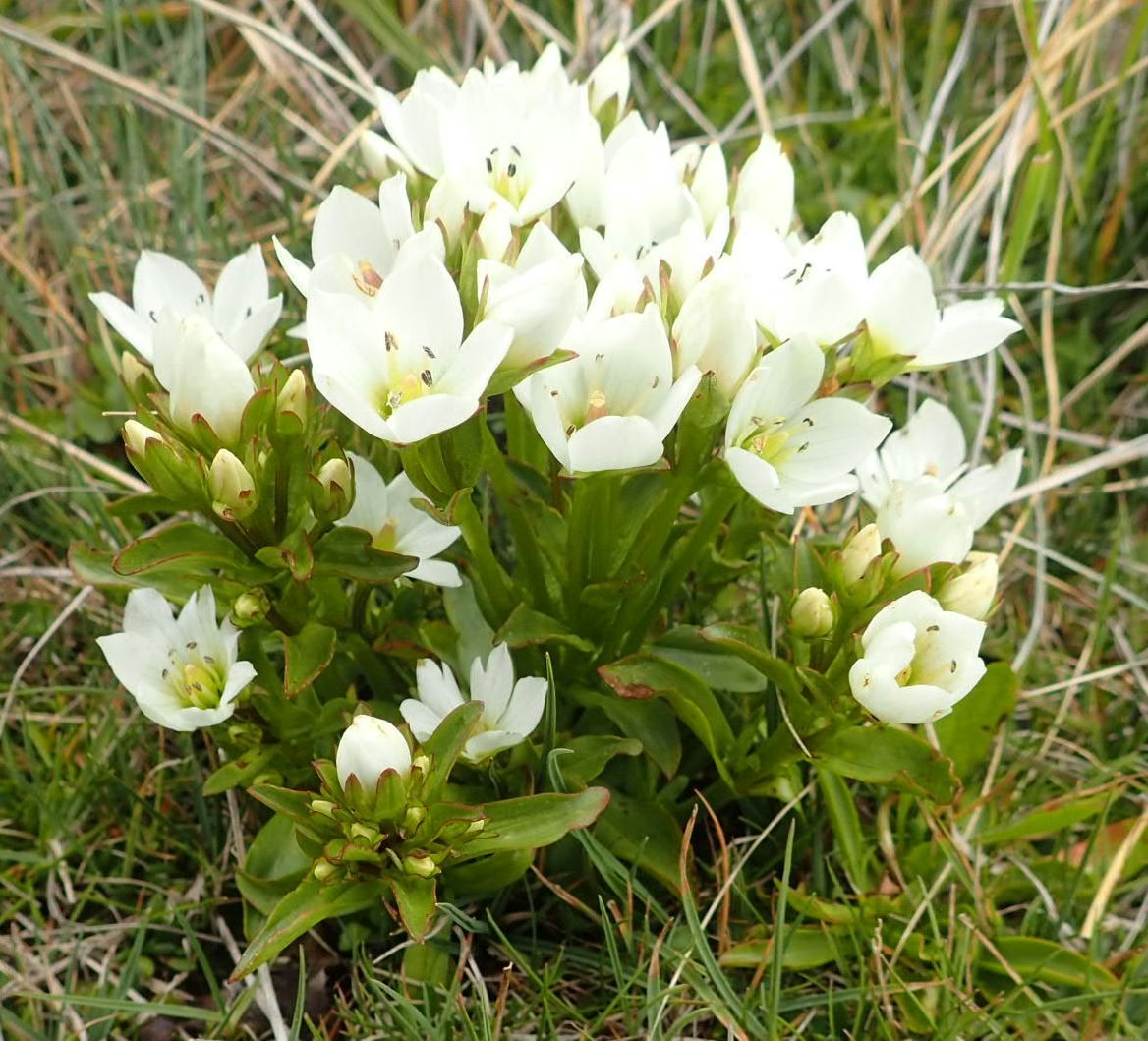
Gentianella divisa
Gentianella divisa
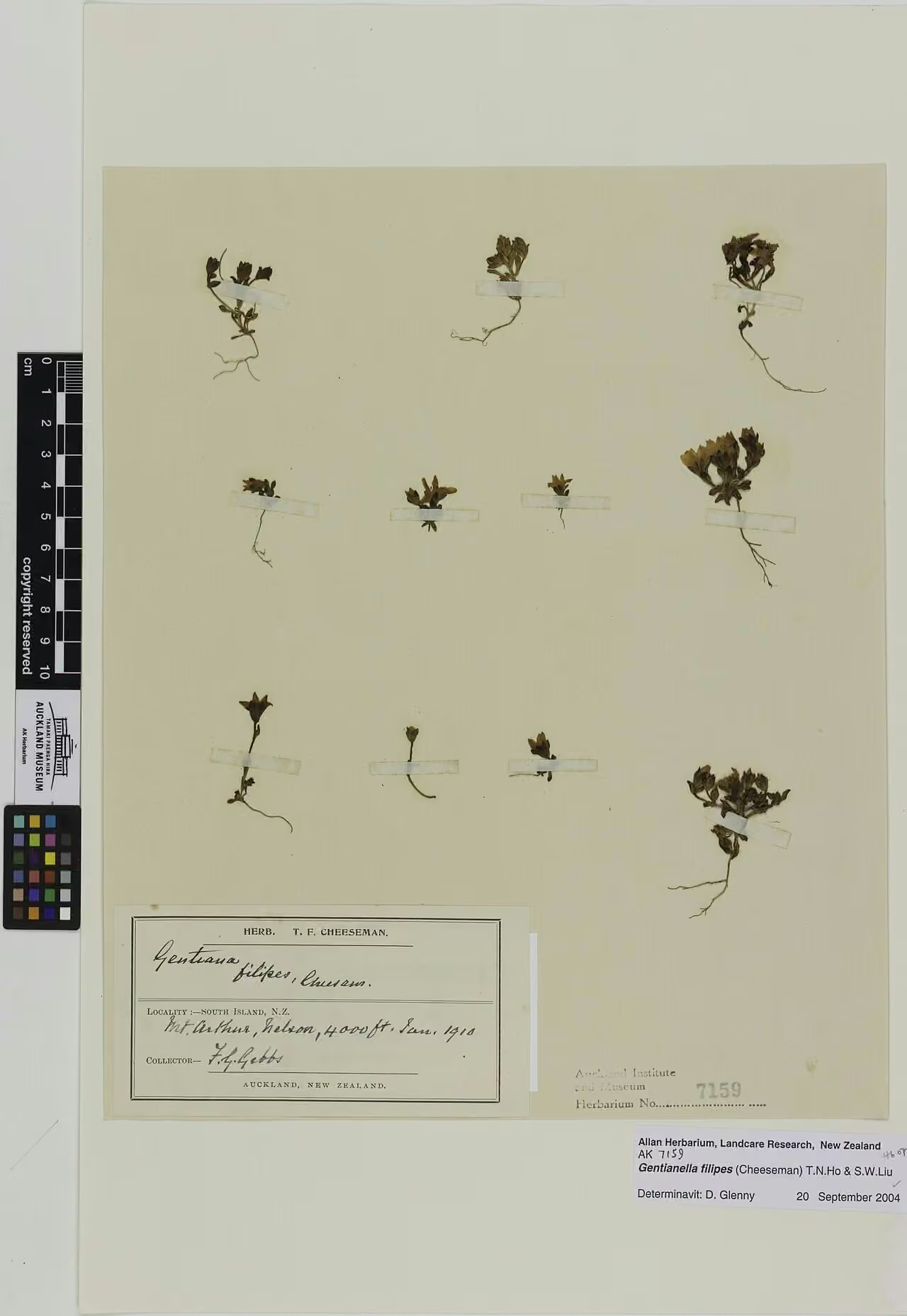
Gentianella filipes
Gentianella filipes
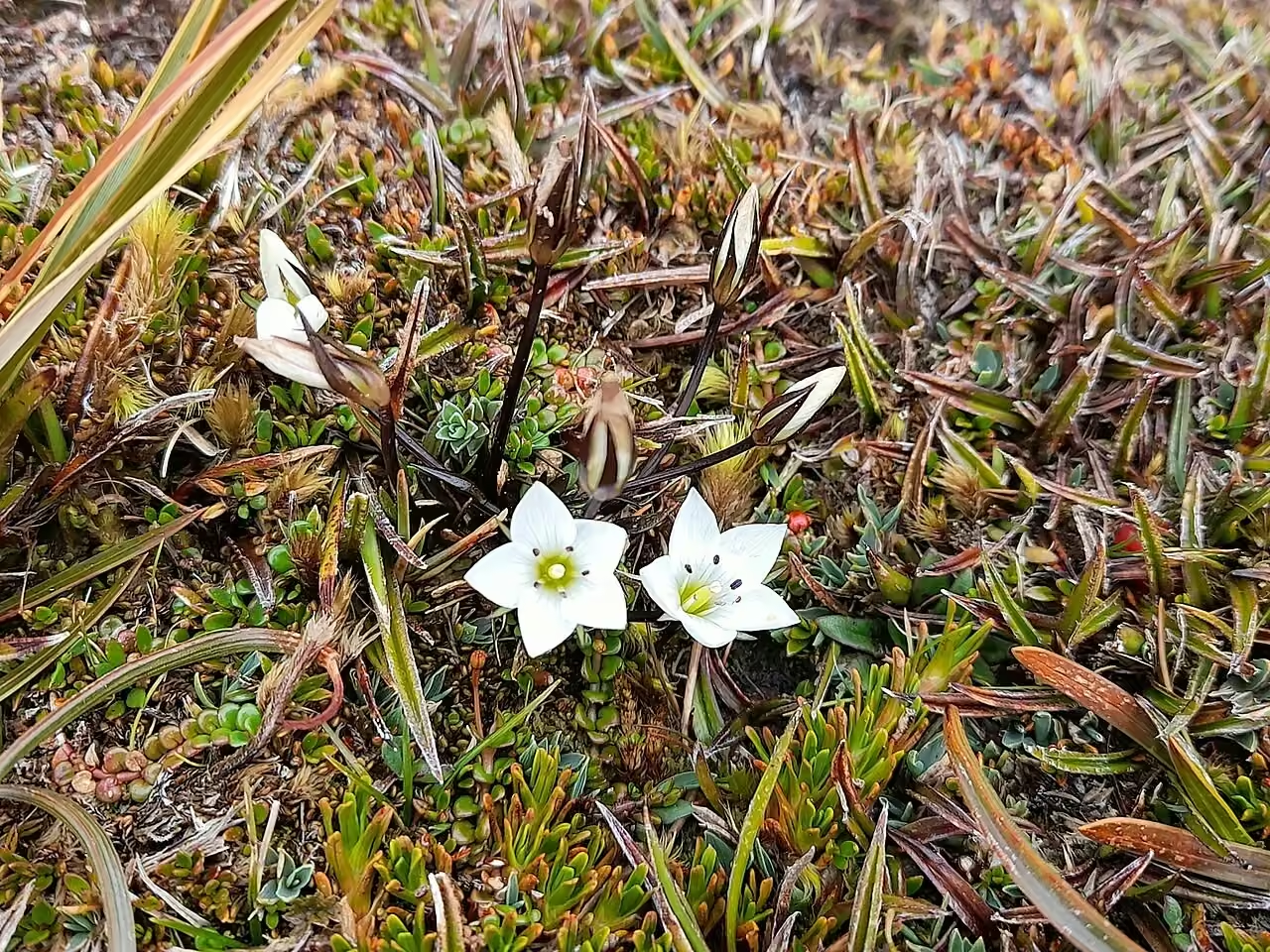
Mt Anglem Gentian
Gentianella gibbsii
Forest Gentian
Gentianella grisebachii
Plant Conservation
The typical subspecies is ranked At Risk - Naturally Uncommon (2023) with the qualifiers Island Endemic and Range Restricted. Its rarity reflects its small natural range rather than a known decline.
Retaining undrained peatlands and bogs on Chatham and Pitt Islands, and protecting existing reserves, are the most useful measures for its long-term security.
Frequently Asked Questions
Where does the Chatham Island gentian grow?
It is endemic to the Chatham Islands, on Chatham Island and Pitt Island, from the coast inland in open peatlands, restiad bog, bracken fernland on peat and poorly drained pasture.
What colour are Chatham Island gentian flowers?
The flowers are usually white, white with crimson, or pink-tinged, rarely fully pink or magenta, and often have pale green or crimson veins.
Does the Chatham Island gentian die after flowering?
Yes. It is a monocarpic biennial, forming a leaf rosette in its first year and flowering, setting seed and dying afterwards.
Is Gentianella chathamica threatened?
It is ranked At Risk - Naturally Uncommon as an island endemic with a restricted range, but NZPCN notes no obvious threats and it is often abundant on marginal farmland.
Sources and Further Reading
The botanical, growing, and conservation details for Chatham Island Gentian (Gentianella chathamica subsp. chathamica) on this page draw on the New Zealand plant references below. Consult them for full technical records and the latest distribution data.