Waipara Gentian
Gentianella calcis subsp. waipara
Last updated:
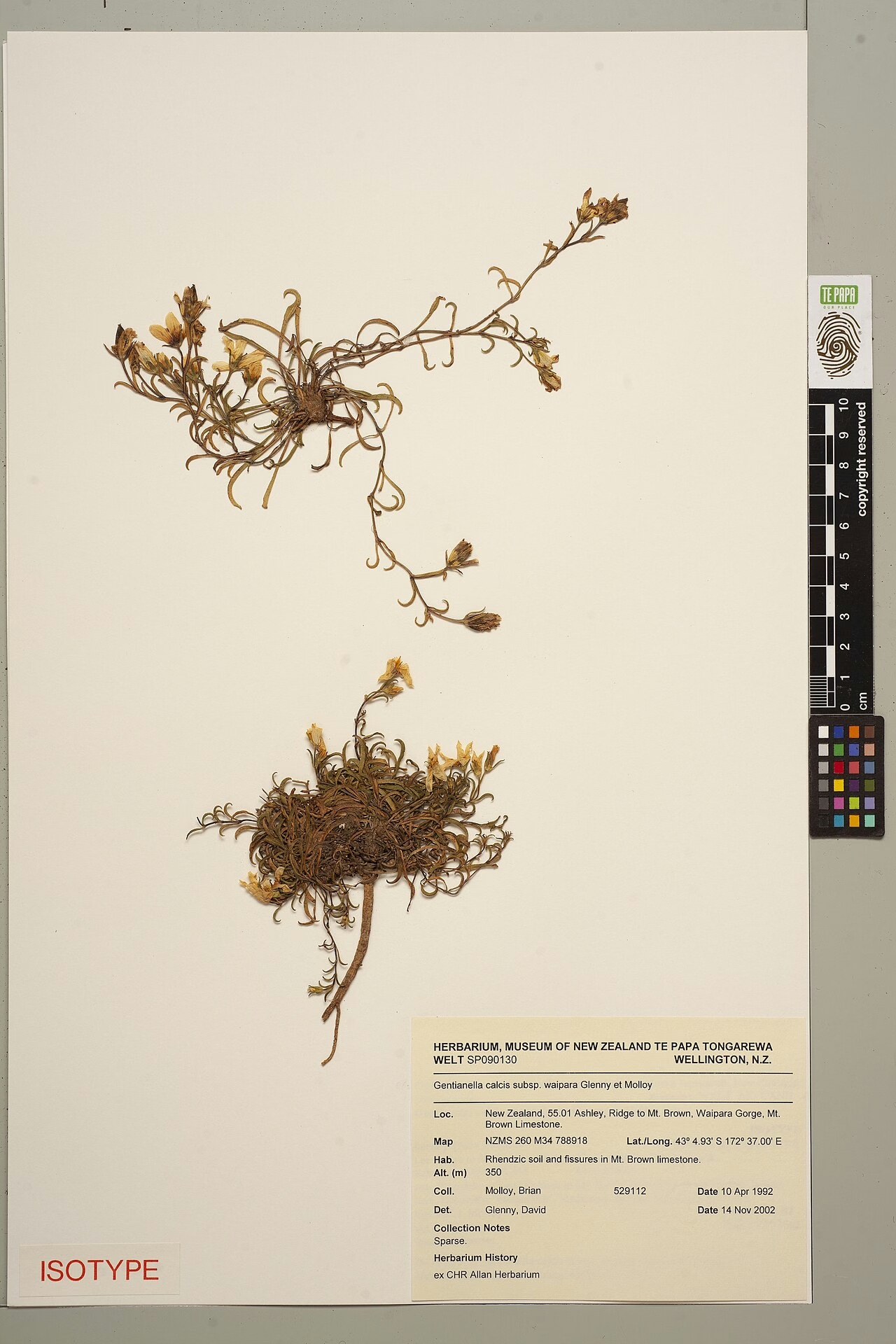
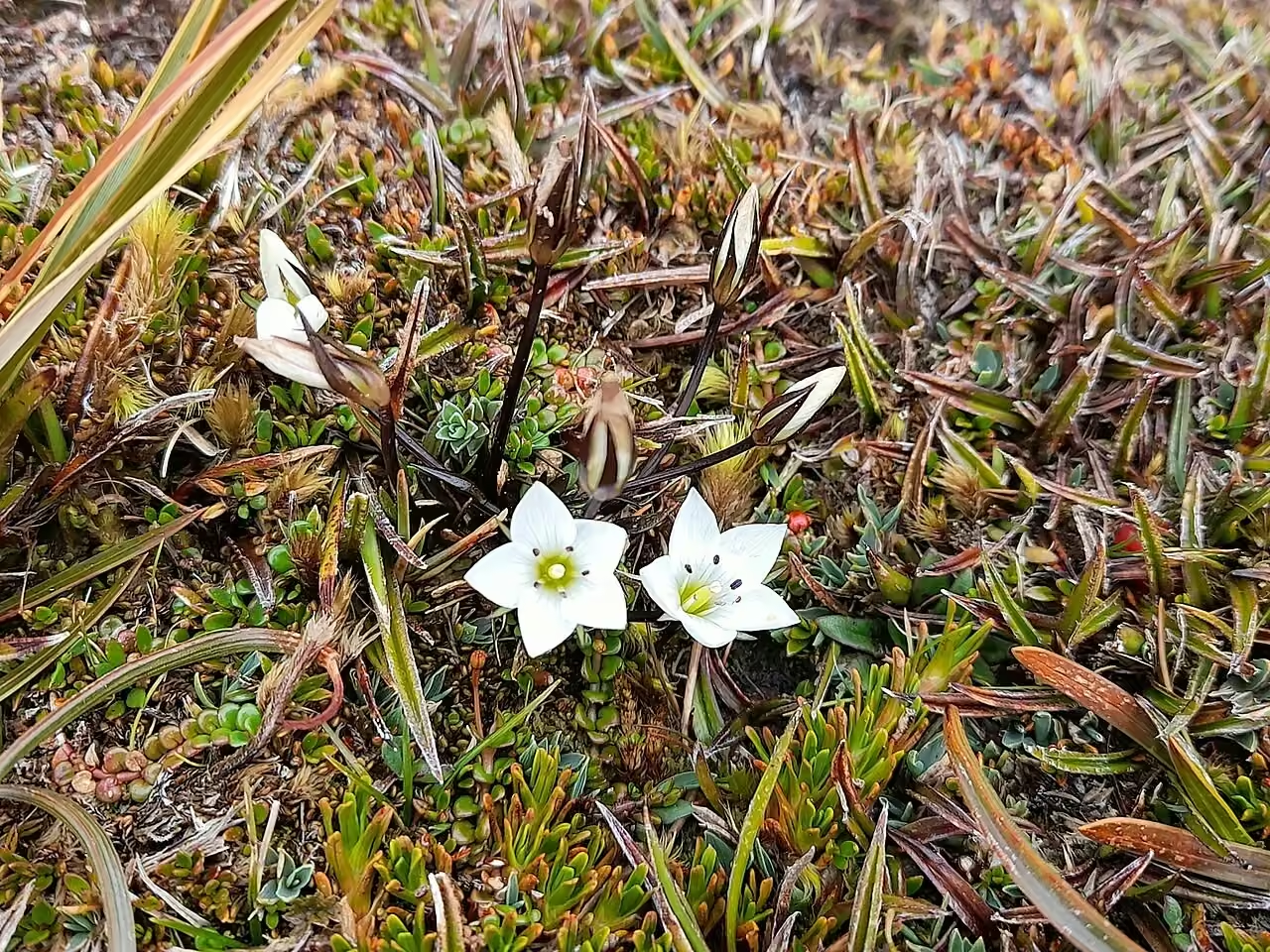
Waipara gentian (Gentianella calcis subsp. waipara) is a small tufted herb that grows only on limestone in North Canterbury, with one outlying site at Duntroon in North Otago. It forms a rosette of narrow, V-shaped leaves and sends up flowering stems 5 to 15 cm tall carrying up to about 25 white, cup-shaped flowers in autumn. It is one of four subspecies of Gentianella calcis, all confined to limestone in the eastern South Island. Ranked Threatened - Nationally Critical, it is among New Zealand's rarest gentians, threatened by weeds such as mouse-ear hawkweed, browsing goats, quarrying and rockfalls. Explore more native flowering plants in our native plant guide.
Plant Description
Waipara gentian is a tufted herb with a basal rosette of linear leaves 20 to 78 mm long and 3 to 7 mm wide. The leaves are green or tinged purple-black at the base, folded into a V-shape in cross-section, recurved at the tip and have minutely toothed margins and a distinct stalk. Up to four flowering stems arise from the plant, each with four to six pairs of narrow stem leaves.
Each plant carries roughly 3 to 25 flowers on slender stalks 6 to 19 mm long. The flowers are about 13 to 15 mm long, with a green or red-brown calyx and a white corolla that is yellowish toward the throat. The capsules that follow are 9 to 14 mm long.
Within Gentianella calcis, the subspecies are separated mainly by leaf shape and geography: subsp. waipara is the only one in North Canterbury and is recognised by its long, linear, V-shaped and recurved rosette leaves. Other limestone gentians, such as subsp. calcis of North Otago and subsp. taiko and manahune of South Canterbury, occur on separate limestone districts.
Quick Facts
| Scientific Name | Gentianella calcis subsp. waipara |
|---|---|
| Height | 0.05-0.15 m in flower |
| Spread | Small tufts about 0.1-0.15 m across |
| Water Needs | Low to moderate; seasonally dry limestone |
| Light | Full sun to light shade on open rock |
| Frost Tolerance | Good; grows in inland North Canterbury |
| Salt Tolerance | No information available |
| Growth Rate | Slow |
| Lifespan | Short-lived perennial |
Climate Best Suited to
Suits the dry, sunny inland hill country of North Canterbury, with warm summers, frosty winters and moderate rainfall. Its survival depends on limestone substrate more than on climate.
Regional Suitability
| City | Climate Suitability |
|---|---|
| Auckland | Low |
| Wellington | Low |
| Christchurch | Medium |
| Dunedin | Low |
Plant Habitat
This subspecies is known from North Canterbury near Waipara Gorge, White Rock (Whiterock), Weka Pass, the Waipara River and North and South Dean, with an outlying site at Duntroon in North Otago. Genetic work sampled populations at Mount Brown, with more than 300 plants, and Whiterock, with more than 100 plants, from about a dozen known locations.
It is a strict limestone plant of lowland to hill country, growing on bluffs and ridge lines in cracks, rock joints, clefts and ledges, on talus below outcrops, and on thin rendzina soils formed over limestone. These open, rocky sites are often surrounded by grazed farmland.
Growing Requirements
Soil Requirements
It is confined to limestone, rooting into crevices and thin, lime-rich rendzina soils that are free draining and low in competition.
- Calcareous rock crevices, ledges and talus
- Shallow, alkaline rendzina soils
- Open ground free of rank grass and hawkweed
Light Requirements
It grows on open limestone faces and ledges where tall vegetation cannot establish, so it receives strong light for much of the day.
- Open, sunny rock faces and ridge crests
- Shading by invading grasses and weeds suppresses it
Water Requirements
Its limestone habitat dries out in summer, and the plant relies on moisture held in rock joints and crevices.
- Tolerates dry summer conditions in the rock
- Sharp drainage is essential; it does not grow in wet ground
Planting and Establishing
Waipara gentian is not a garden plant. It is Nationally Critical, difficult to propagate, not available commercially and should never be dug up or collected from the wild.
Any planting is a matter for conservation agencies working with landowners, returning plants raised from legally collected seed to suitable, weed-controlled limestone sites within its natural range.
Ecological Role
The species is self-compatible, meaning flowers can set seed with their own pollen, which may help small isolated populations persist. Like other New Zealand gentians its open white flowers are visited by insects, though the specific pollinators of this subspecies are not documented in the sources consulted.
Genetic study of Gentianella calcis found the subspecies and their populations are strongly differentiated, with little gene flow between limestone outcrops. Subsp. waipara held notably higher genetic diversity than the South Canterbury subspecies, which makes each of its remaining populations valuable.
Uses & Significance
Garden Uses
It has no role in home gardens because of its critical status and specialised needs.
- Conservation and restoration projects on North Canterbury limestone
- Potential seed bank and ex situ collections by specialists
- Viewing in the wild on public limestone reserves, without disturbing plants
Ecological Value
It is part of the distinctive limestone flora of North Canterbury, a plant community with many specialised and threatened species.
- A genetically distinct lineage found nowhere else
- An indicator of intact, weed-free limestone habitat
- Late-season flowers provide autumn nectar for insects
Landscaping Uses
Waipara gentian is not used in landscaping. Its value lies in protecting the limestone outcrops where it grows, by fencing out goats and stock, controlling hawkweed and pasture grasses and avoiding quarrying near known sites.
Landowners with limestone bluffs in the Waipara and Weka Pass districts can help by keeping these outcrops free of weeds and reporting any gentians they find to the Department of Conservation.
Seasonal Care Calendar
Spring
Leaf rosettes grow actively in the moist spring months on the limestone.
- Spring is a good time to control hawkweed around known populations
- Check fences that exclude goats
Summer
The rock dries out and the plants build up their rosettes ahead of flowering.
- Avoid spraying herbicide near limestone outcrops
- Survey for rosettes before stems elongate
Autumn
Flowering runs from March to May, an unusually late season among New Zealand gentians.
- The best time to count plants in flower
- Seed capsules ripen after flowering
Winter
Plants persist as rosettes or die back after seeding through the frosty inland winter.
- Minimise disturbance on talus slopes
- Record rockfall or erosion damage at sites
When to Prune and How Much
No pruning is needed or appropriate. In the wild, the main management is removing competing weeds by hand from around plants, taking care not to dislodge the shallow roots from rock crevices.
Old flowering stems should be left in place so the capsules can release their seed.
How to Grow Waipara Gentian
NZPCN describes Waipara gentian as difficult to propagate and states that it should not be removed from the wild. Because it is Nationally Critical, propagation is only carried out by or with the approval of the Department of Conservation, using seed collected under permit from the limestone populations. No species-specific protocol was found in the sources consulted, so the steps below summarise the general approach used for New Zealand Gentianella, which typically need fresh seed, cool moist conditions and a free-draining mineral mix. Since the subspecies is self-compatible, seed set in the wild is usually possible even in small populations, but genetic research shows each population is distinct, so seed from one site should not be mixed with seed from another or planted outside its home area.
From Seed
Capsules ripen after the March to May flowering. Specialist growers usually sow New Zealand gentian seed fresh rather than storing it, and germination of this subspecies has not been documented in the sources consulted.
- Collect ripe capsules under permit, keeping each population's seed separate
- Sow on the surface of a gritty mix containing crushed limestone
- Keep cool and evenly moist, exposed to winter chilling outdoors
- Prick out seedlings carefully once they form small rosettes
- Grow on in deep pots with sharp drainage before returning plants to their site
Cuttings and Division
This gentian forms single tufts rather than spreading clumps, so division and cuttings are not practical methods and are not recorded for it.
- Do not attempt to divide wild plants
- Rely on seed for any recovery work
Pests & Diseases
The main threats are not insect pests but competition and browsing. Mouse-ear hawkweed (Pilosella officinarum) and pasture grasses invade the open limestone and smother rosettes, and feral goats browse the plants.
Habitat loss through limestone quarrying, erosion of soft rock and natural rockfalls also destroy plants, and farm herbicide use near outcrops is a further risk.
Cultural Significance
No Māori name or traditional use is recorded for this gentian in the sources consulted. Waipara, the name of the river and district where it grows, is a Māori place name.
The subspecies was named by David Glenny and Brian Molloy in Glenny's 2004 revision of New Zealand Gentianella. The genus name means little Gentiana, after Gentius, an ancient king of Illyria credited with discovering the medicinal value of gentian roots.
Bonus Tip
If you farm or walk in the Weka Pass and Waipara Gorge limestone country in autumn, look for small white gentians in rock clefts between March and May. Photograph them, note the location and send the record to DOC or iNaturalist NZ, as finding new plants of a Nationally Critical taxon can directly inform its protection.
Related Plants
Explore other native plants that share similar characteristics or habitats with Waipara Gentian (Gentianella calcis subsp. waipara), offering further insights into New Zealand's diverse flora. These related species provide context and opportunities for complementary planting in your garden.
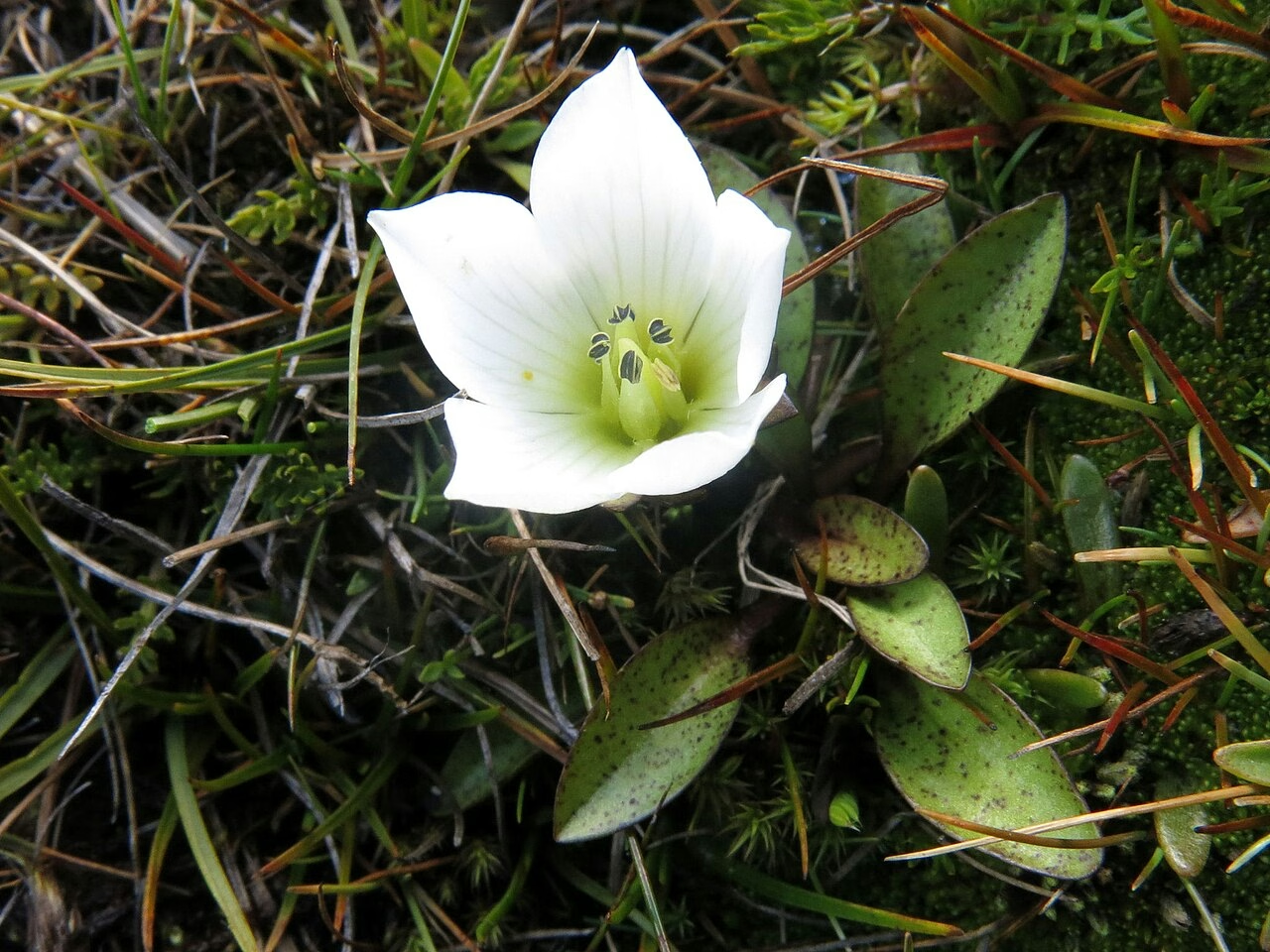
Gentianella amabilis
Gentianella amabilis
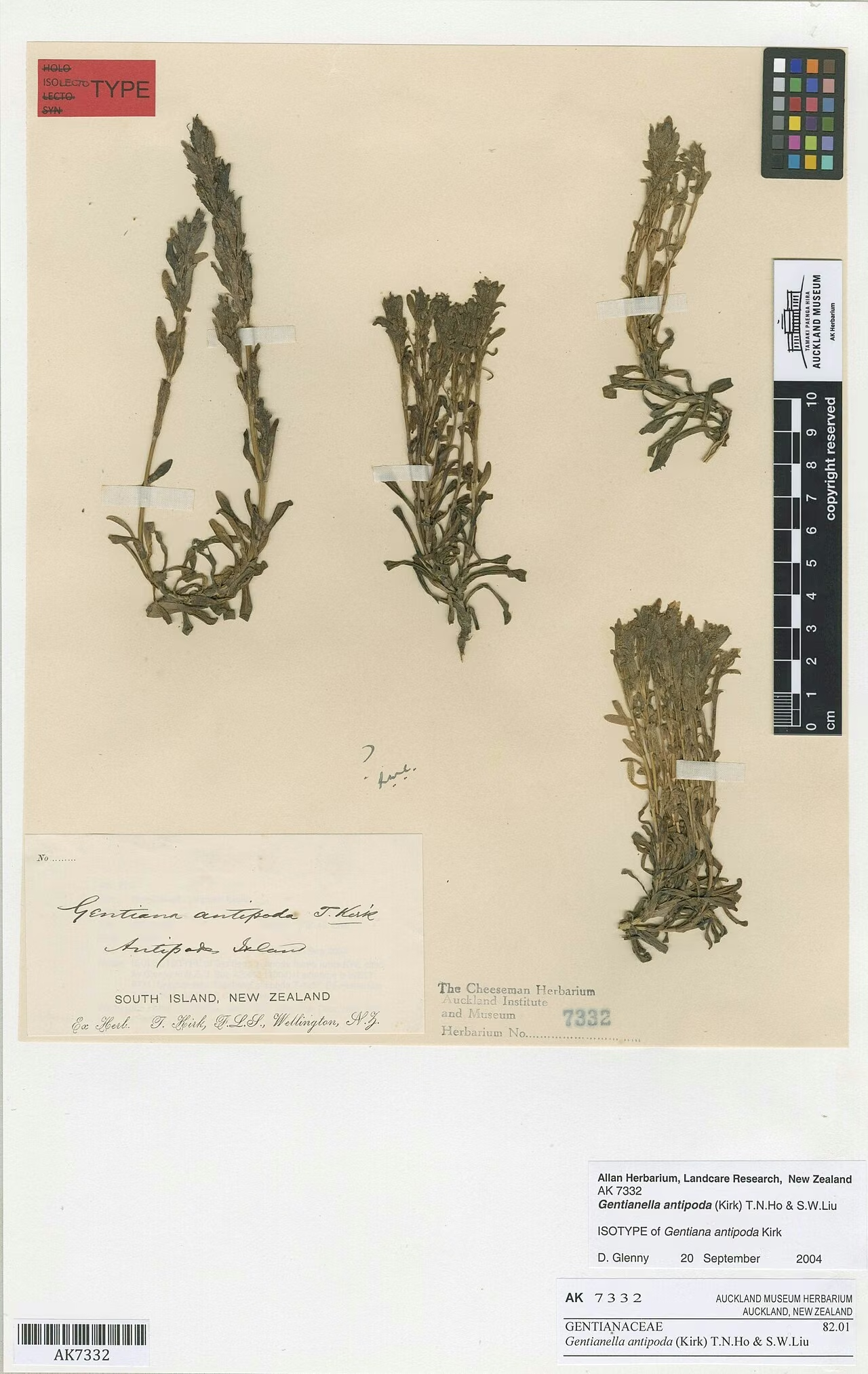
Antipodes Islands Gentian
Gentianella antipoda
Awahokomo Gentian
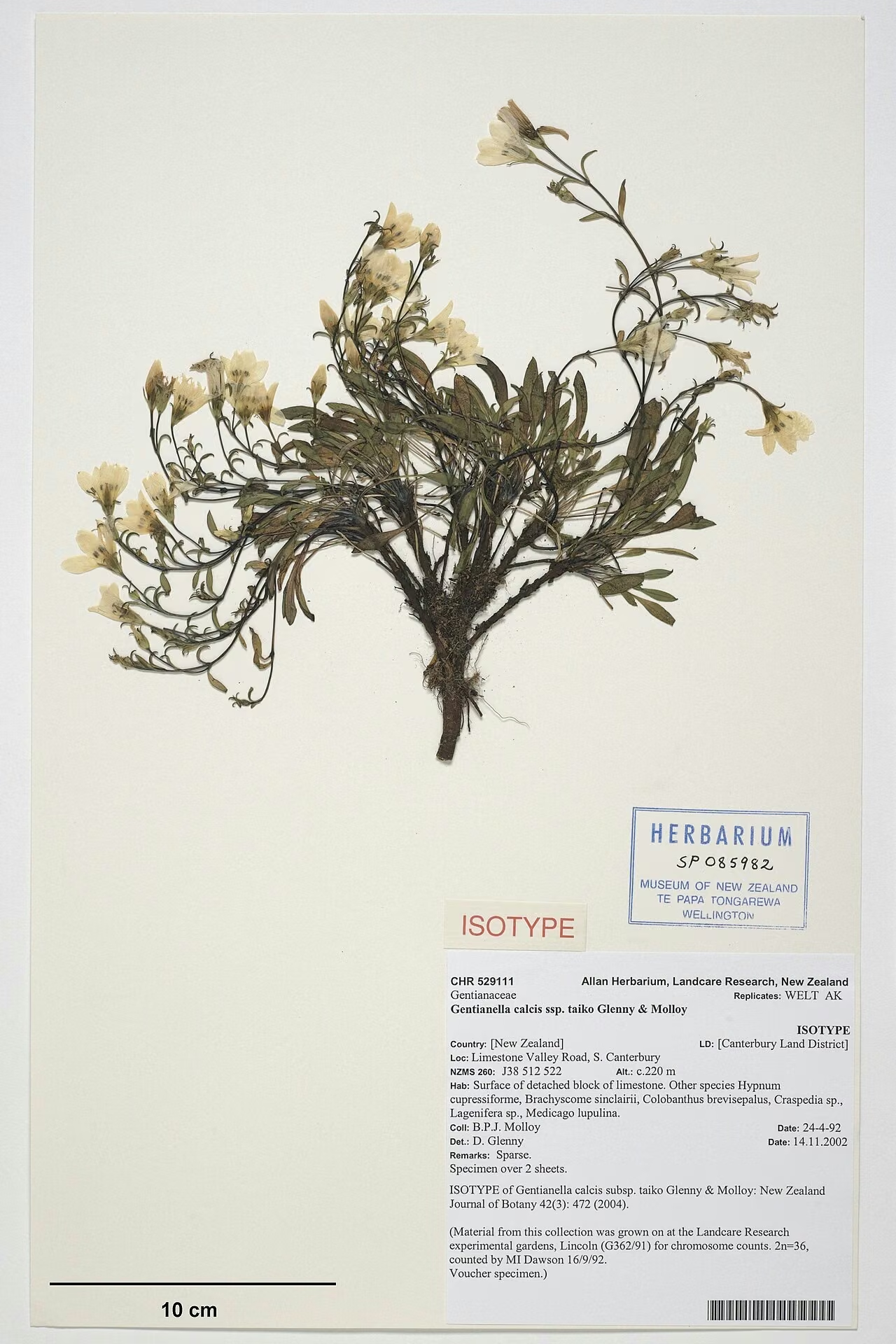
Gentianella calcis subsp. calcis
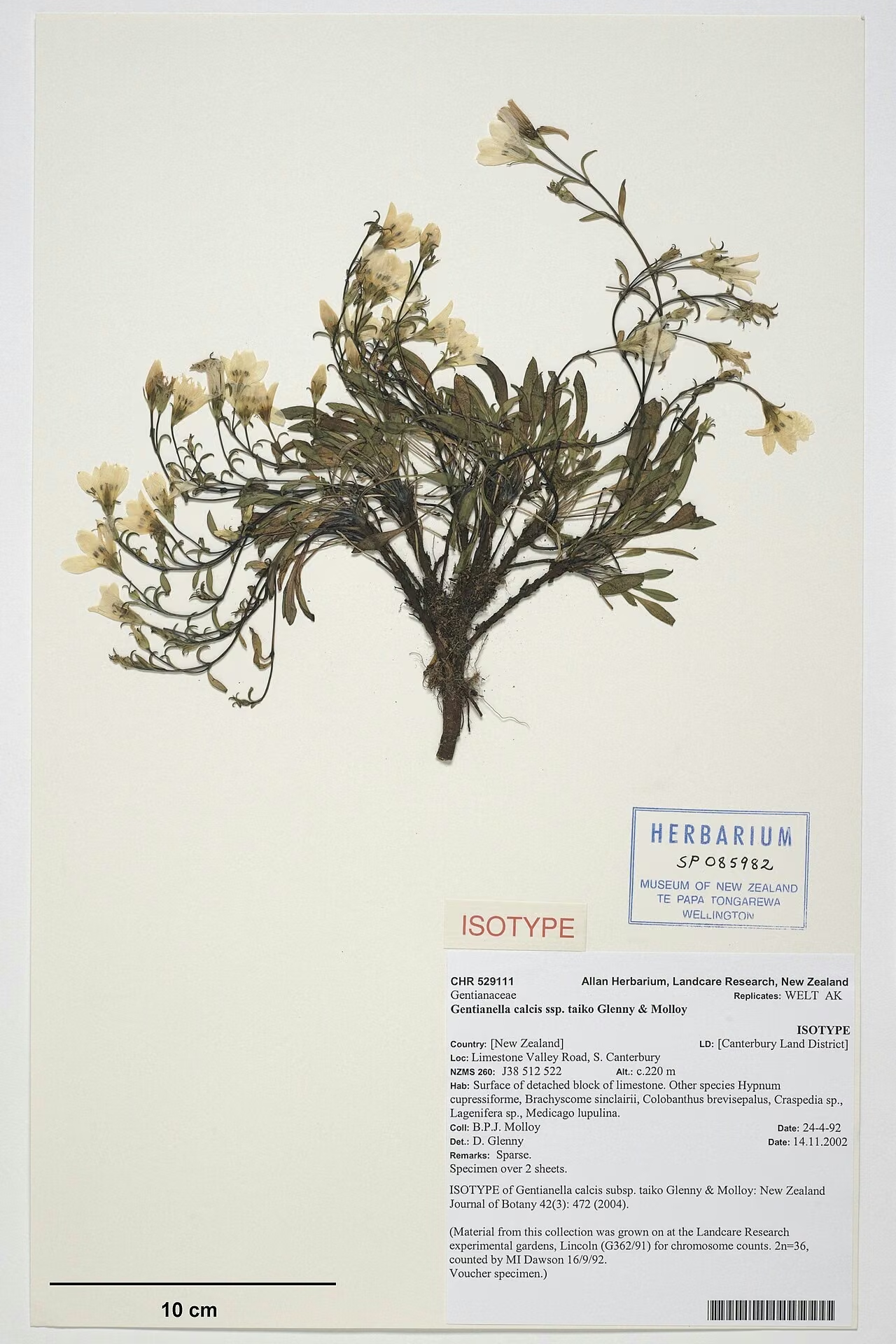
Pareora Gentian
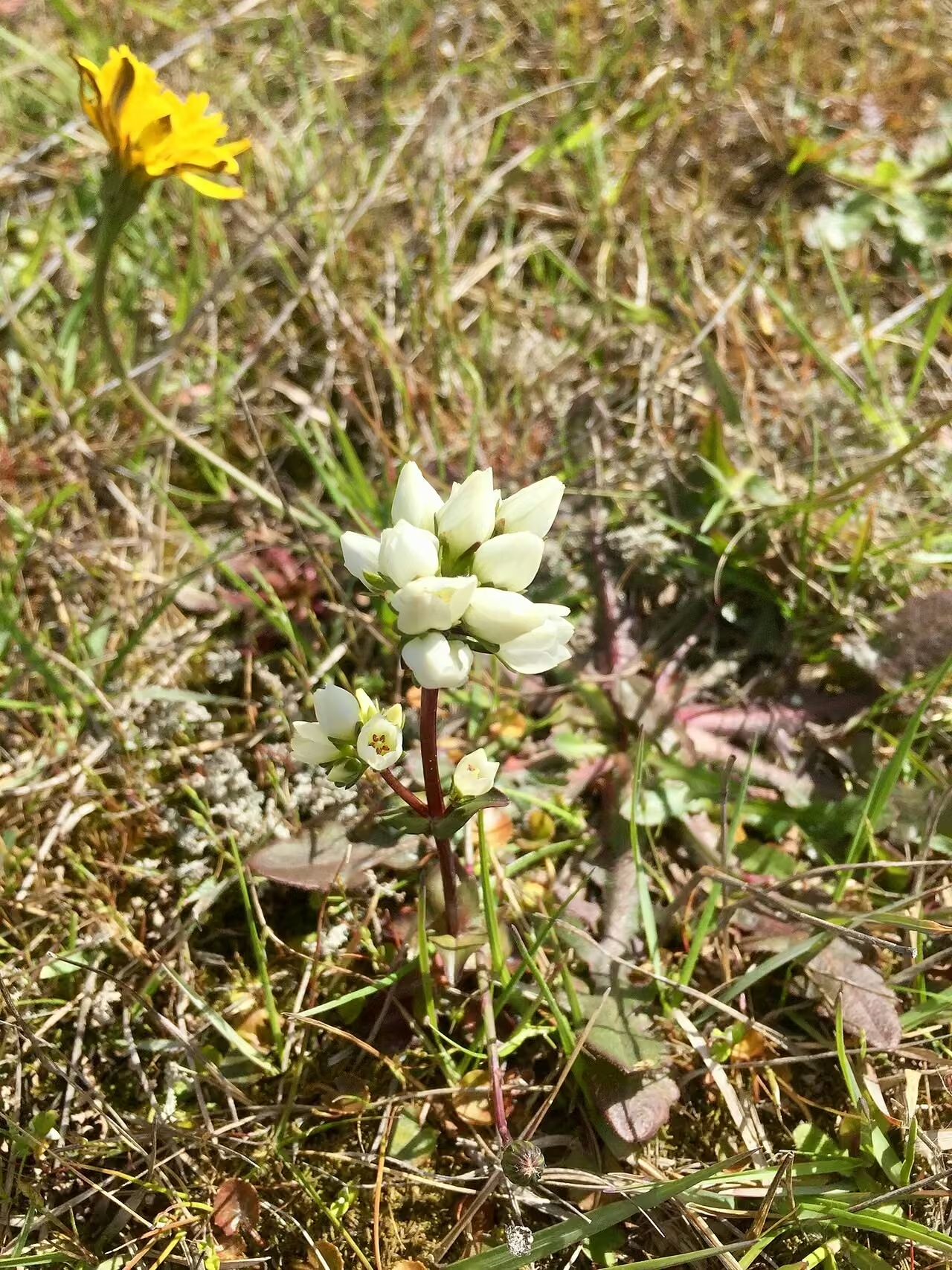
Gentianella calcis subsp. taiko
Chatham Island Gentian
Gentianella chathamica subsp. chathamica
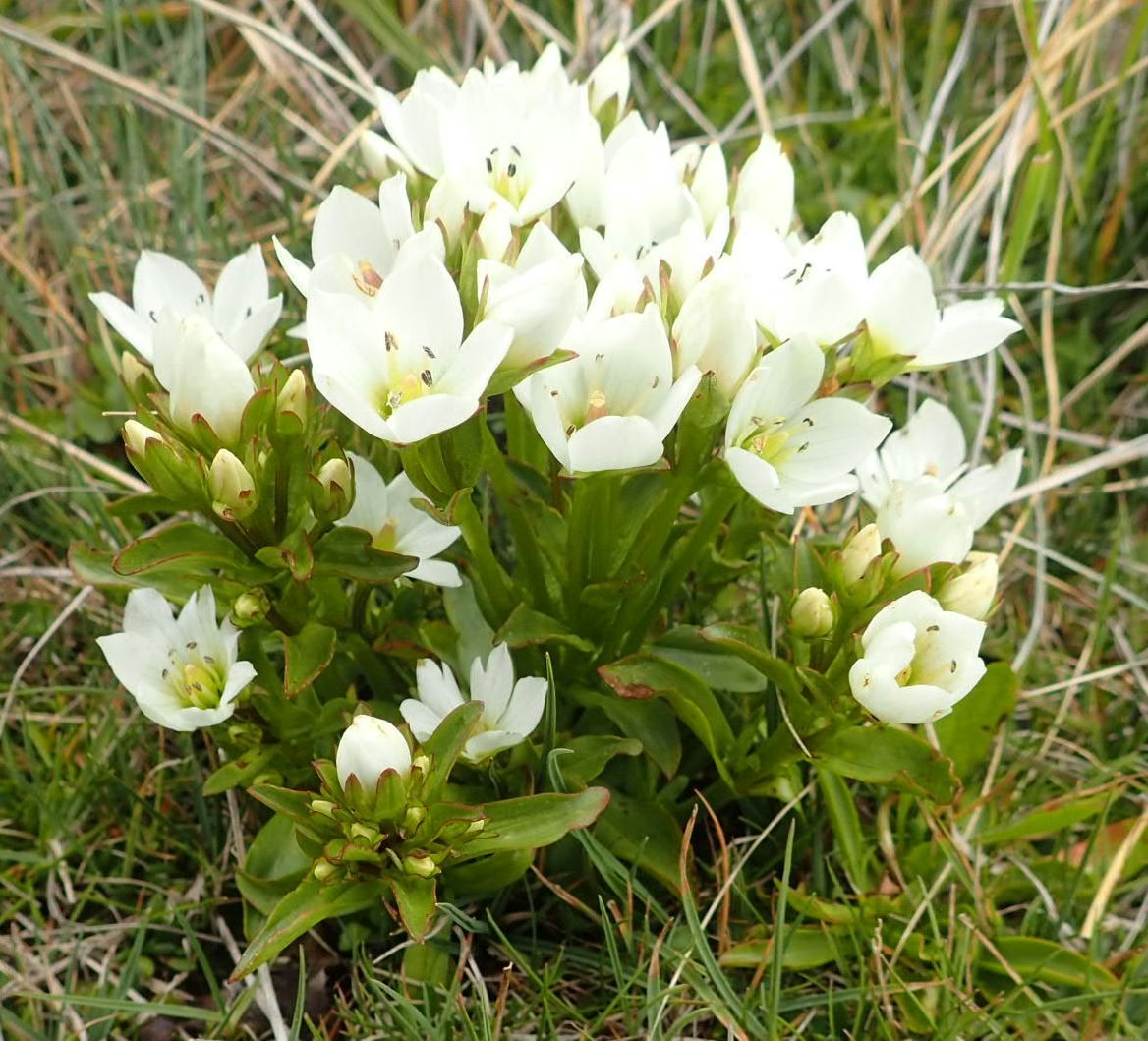
Gentianella divisa
Gentianella divisa
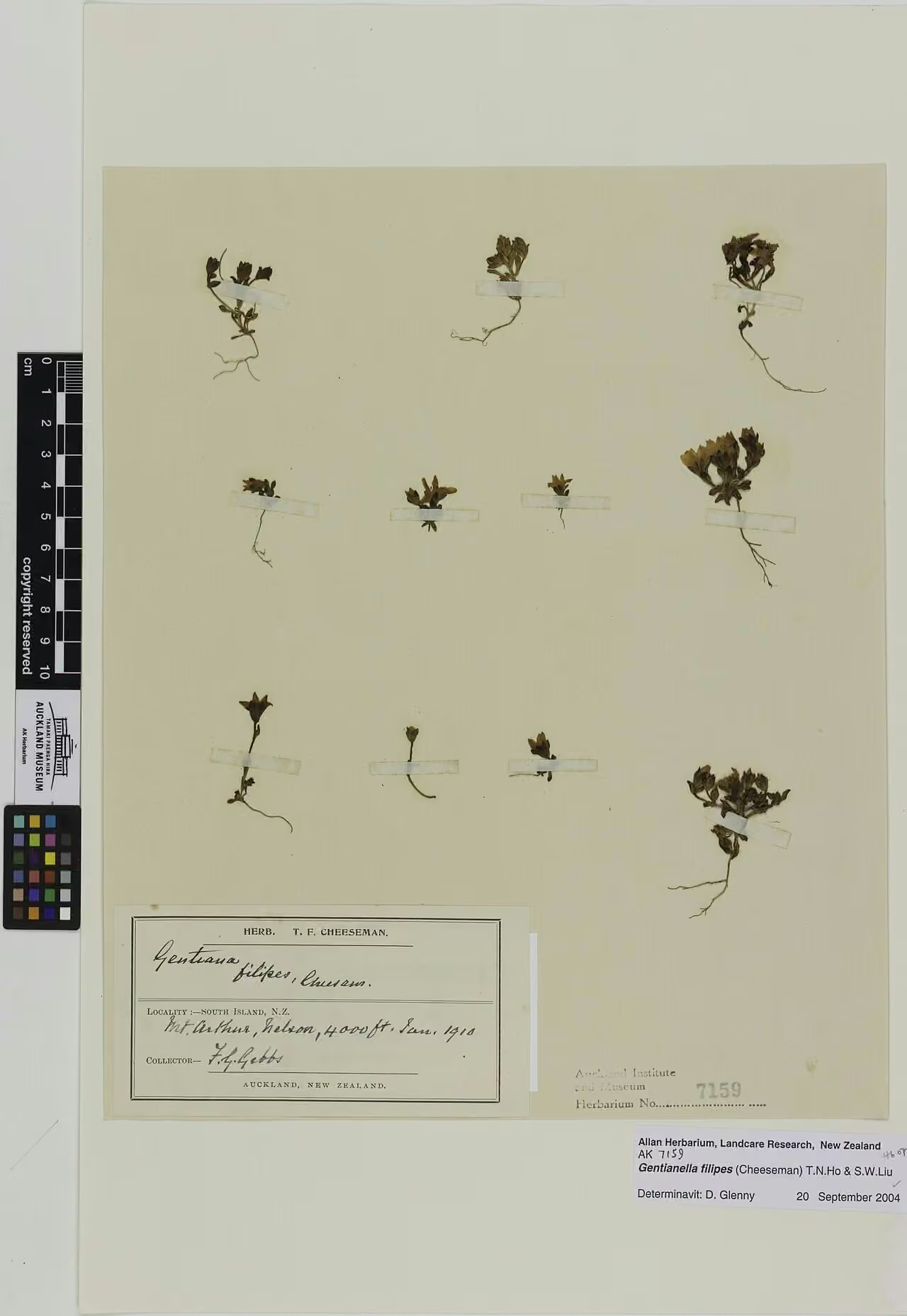
Gentianella filipes
Gentianella filipes
Mt Anglem Gentian
Gentianella gibbsii
Plant Conservation
Waipara gentian is ranked Threatened - Nationally Critical (2023) with the qualifiers Data Poor: Trend and Range Restricted, and has held that rank since at least 2008. It occurs in a small number of populations on scattered limestone outcrops.
Protection of the remaining sites, goat control, weed control especially of hawkweed, and avoiding quarrying and herbicide drift near outcrops are the key needs. Researchers recommend conserving both the Mount Brown and Whiterock populations because of their high and distinctive genetic diversity.
Frequently Asked Questions
Where does the Waipara gentian grow?
It grows on limestone bluffs, ridge lines, ledges, talus and rendzina soils near Waipara Gorge, White Rock, Weka Pass and the Waipara River in North Canterbury, with one site at Duntroon in North Otago.
Why is the Waipara gentian Nationally Critical?
It survives in a handful of small populations on limestone outcrops that are being invaded by mouse-ear hawkweed and pasture grasses, browsed by feral goats, and affected by quarrying, erosion and rockfalls.
When does Gentianella calcis subsp. waipara flower?
It flowers late in the season, from March to May, when its white flowers with a yellowish centre open on short stems above the leaf rosette.
Can I grow Waipara gentian at home?
No. NZPCN describes it as difficult to propagate and states it should not be removed from the wild, and it is not commercially available.
Sources and Further Reading
The botanical, growing, and conservation details for Waipara Gentian (Gentianella calcis subsp. waipara) on this page draw on the New Zealand plant references below. Consult them for full technical records and the latest distribution data.