Awahokomo Gentian
Gentianella calcis subsp. calcis
Last updated:
The Awahokomo gentian (Gentianella calcis subsp. calcis) is a rare white-flowered gentian found only on limestone bluffs at two sites in the Waitaki Valley of North Otago. It is a tufted perennial herb that partly dies back to its rootstock in winter, with narrow, strongly V-shaped rosette leaves 68 to 83 mm long and one to five purple-black flowering stems. Unusually for a New Zealand gentian it flowers in autumn, mainly in April. It grows in rock crevices, limestone talus and thin rendzina soils. Ranked Threatened - Nationally Critical, it is at serious risk from invasive weeds and rockfall. Explore more native flowering plants in our native plant guide.
Plant Description
The Awahokomo gentian is a perennial tufted herb that partially dies back to its rootstock in winter. Its rosette leaves lack an obvious stalk and measure 68 to 83 mm long by 2.6 to 4.1 mm wide. They are green to purple-green, strongly V-shaped in cross-section, with acute, recurved tips and minutely toothed or smooth margins.
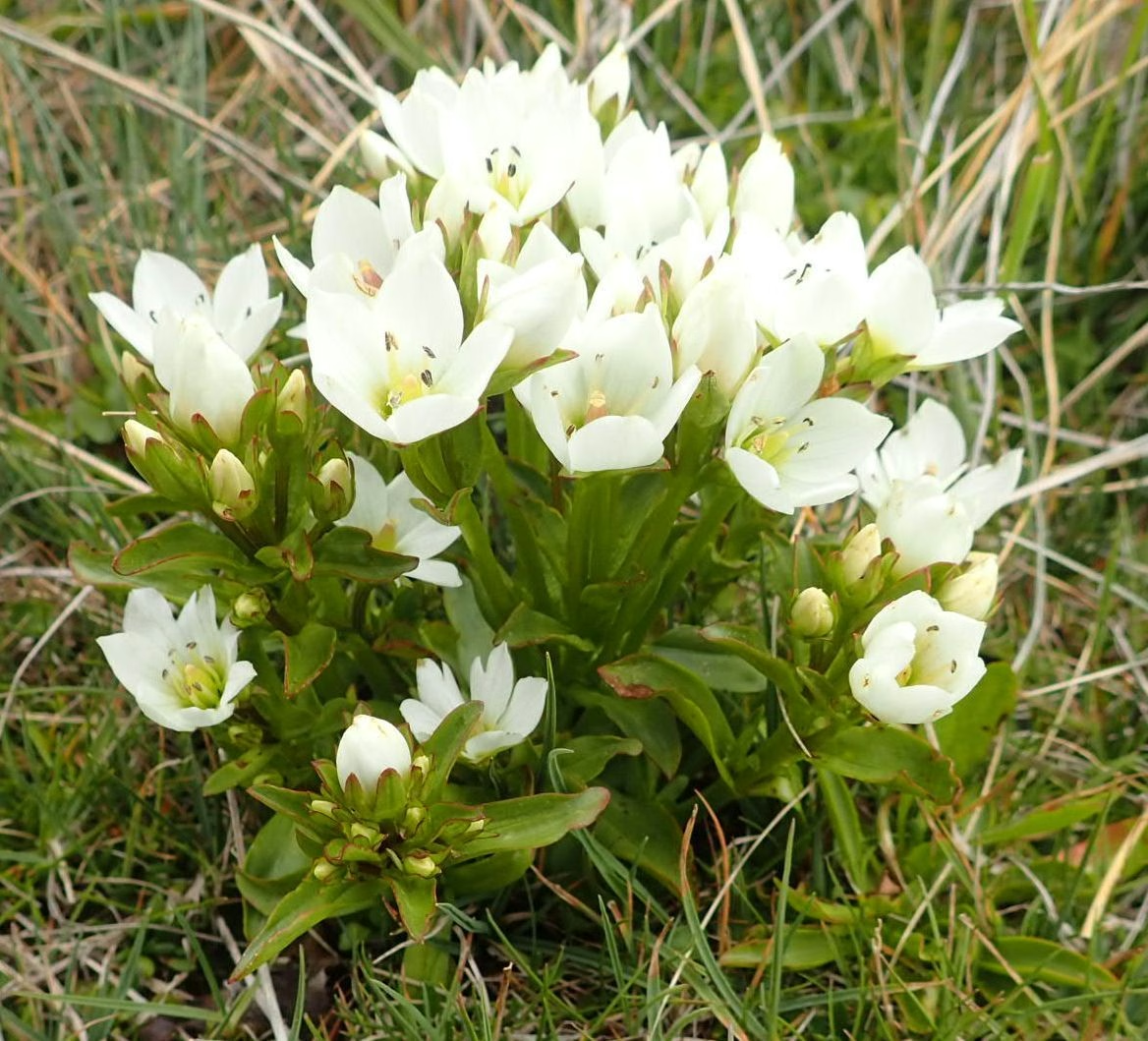
Each plant has one to five purple-black flowering stems. The flowers are 15 to 18 mm long on stalks 3.5 to 14 mm long. The corolla is white with colourless veins, 13.5 to 17 mm long, with lobes 10 to 12 mm long and 6.2 to 9 mm wide that have toothed margins. NZPCN lists white and yellow as its flower colours.
It is one of four subspecies of Gentianella calcis. It differs from the others in its longer and wider rosette leaves, and from subsp. manahune in having colourless rather than purple veins on the corolla.
Quick Facts
| Scientific Name | Gentianella calcis subsp. calcis |
|---|---|
| Height | Low tufted rosette with short flowering stems |
| Spread | A small tuft |
| Water Needs | Low to moderate; dry limestone bluffs |
| Light | Full sun on open, sparsely vegetated rock |
| Frost Tolerance | High; dies back partly in winter in a frosty inland climate |
| Salt Tolerance | No information available; an inland species |
| Growth Rate | Slow |
| Lifespan | Perennial, dying back partly to its rootstock each winter |
Climate Best Suited to
Suits the dry, continental climate of the Waitaki Valley, with hot summers, cold frosty winters and relatively low rainfall. It is adapted to the warm, free-draining microclimate of limestone bluffs.
Regional Suitability
| City | Climate Suitability |
|---|---|
| Auckland | Low |
| Wellington | Low |
| Christchurch | Low |
| Dunedin | Low |
Plant Habitat
Gentianella calcis subsp. calcis is endemic to the South Island, where it is known from only two sites in the Waitaki Valley, North Otago. A 2025 genetic study sampled both populations: Awahokomo, with roughly 1900 plants, and the Earthquakes, with about 100 plants.
It is a limestone endemic, confined to limestone bluffs where it grows in rock joints and crevices, in the thin rendzina soils that form on limestone, and on limestone talus and colluvium. It usually grows in bare or sparsely vegetated sites where competition from other plants is low.
Growing Requirements
Soil Requirements
It is restricted to limestone and the shallow, lime-rich rendzina soils that develop on it.
- Limestone rock joints and crevices
- Shallow rendzina soils
- Loose limestone talus and colluvium
Light Requirements
It favours open, bare or sparsely vegetated limestone, where taller plants do not shade or crowd it.
- Full light on open bluffs
- Suffers when grasses and weeds close in
Water Requirements
Limestone bluffs in the Waitaki are dry and freely draining, so the plant relies on moisture held in crevices and thin soils.
- Free drainage essential
- Tolerates dry summer conditions
Planting and Establishing
The Awahokomo gentian is not a garden plant. NZPCN describes it as difficult to propagate and states that it should not be removed from the wild, and it is not commercially available.
Any propagation for conservation is a matter for the Department of Conservation and its partners. The 2025 genetic study suggests plants grown from seed collected at each population could be used to boost population sizes.
Ecological Role
Gentianella calcis is self-compatible, and the 2025 genetic study found little evidence of clonal spread in the wild, so populations depend on seed. Its small, round, unornamented seeds are shaken from the open capsule in a censer-like fashion when the stems move.
It belongs to the specialised limestone flora of the eastern South Island, a set of plants found only on these rare rock types. Genetic work shows strong differentiation between populations and subspecies with little gene flow, so each population is treated as its own management unit.
Uses & Significance
Garden Uses
It has no garden use; conservation in its natural habitat is the priority.
- Not commercially available
- Should never be collected from the wild
- Valued as part of New Zealand's rare limestone flora
Ecological Value
As a Nationally Critical limestone endemic it represents a unique part of the Waitaki Valley's biodiversity.
- Autumn flowers for insects late in the season
- Part of rare limestone plant communities
- Genetically distinct from other Gentianella calcis populations
Landscaping Uses
This subspecies has no role in landscaping. Its landscape setting is the limestone country of the Waitaki Valley, part of the Waitaki Whitestone Geopark.
Landowners near limestone outcrops can help by keeping weeds such as stonecrop and hawkweed from spreading onto bluffs and by avoiding spraying near known sites.
Seasonal Care Calendar
Spring
New rosette growth emerges from the rootstock after winter die-back, while some capsules from the previous autumn may still hold seed.
- Rosette leaves expand
- Late fruit may persist to November
Summer
Plants grow on in the dry heat of the Waitaki, building rosettes before flowering.
- Flowering stems begin to develop late in summer
- Weeds compete strongly at this time
Autumn
The main flowering season, peaking in April, with white flowers on purple-black stems.
- Flowering from March to June
- Capsules begin to form
Winter
Plants partially die back to the rootstock while capsules ripen, mostly by August.
- Seed shed through winter
- Rootstock persists
When to Prune and How Much
Pruning does not apply to this wild herb.
Its natural cycle of partial winter die-back is part of its life history, and the dead stems should be left in place to shed seed.
How to Grow Awahokomo Gentian
NZPCN describes the Awahokomo gentian as difficult to propagate and says it should not be removed from the wild. Because it is Nationally Critical, any collection of seed or plants requires authorisation from the Department of Conservation. The 2025 genetic study by Eastman-Densem and colleagues recommended that plants grown from seed collected from each population could be used to increase population sizes, with seed kept separate by source because populations are strongly genetically distinct. The notes below describe the general approach for conservation propagation only.
From Seed
The species is self-compatible and relies on seed for reproduction. Seed ripens mainly over winter, roughly from April to November, and is shed from open capsules.
Seedlings grown for return to the wild should be planted into weeded, sparsely vegetated limestone ground similar to where the parent plants grow, since the species does poorly where grasses and other weeds close in.
- Collect seed only under permit and in small amounts
- Label seed by population, keeping Awahokomo and Earthquakes material separate
- Sow on the surface of a gritty, free-draining mix with crushed limestone
- Keep pots cool and lightly moist, avoiding waterlogging
- Grow seedlings on in individual pots before returning them to their source population
Division and Cuttings
Plants grow from a single rootstock and show little natural clonal spread, so division is not a practical method. Seed-raised plants keep the genetic diversity needed for recovery.
- Do not divide or dig wild plants
- Support seed banking and population monitoring programmes instead
- Report any new sightings of the gentian on limestone in the Waitaki district to the Department of Conservation
Pests & Diseases
The most serious threat comes from invasive weeds, including Chewings fescue (Festuca rubra), mouse-ear hawkweed (Pilosella officinarum), cocksfoot (Dactylis glomerata) and stonecrop (Sedum acre), which occupy the bare ground it needs.
Because the population is so small, natural disturbances such as storms, slumping and rock and boulder fall can destroy a large share of plants at once. Grazing and herbicide use near limestone sites can also harm the species.
Cultural Significance
No Māori name or traditional use is recorded for the Awahokomo gentian. Its common name comes from Awahokomo, one of its two limestone sites in the Waitaki Valley.
Gentianella calcis was described by David Glenny and Brian Molloy in the New Zealand Journal of Botany in 2004, as part of Glenny's revision of New Zealand gentians. The epithet calcis comes from the Latin for lime, reflecting the species' restriction to limestone.
Bonus Tip
Gentianella calcis subsp. calcis flowers in autumn, so surveys or photographic visits to its limestone sites should be planned for April rather than summer, when most other New Zealand gentians bloom. Always seek the landowner's permission and stay clear of fragile bluff edges.
Related Plants
Explore other native plants that share similar characteristics or habitats with Awahokomo Gentian (Gentianella calcis subsp. calcis), offering further insights into New Zealand's diverse flora. These related species provide context and opportunities for complementary planting in your garden.
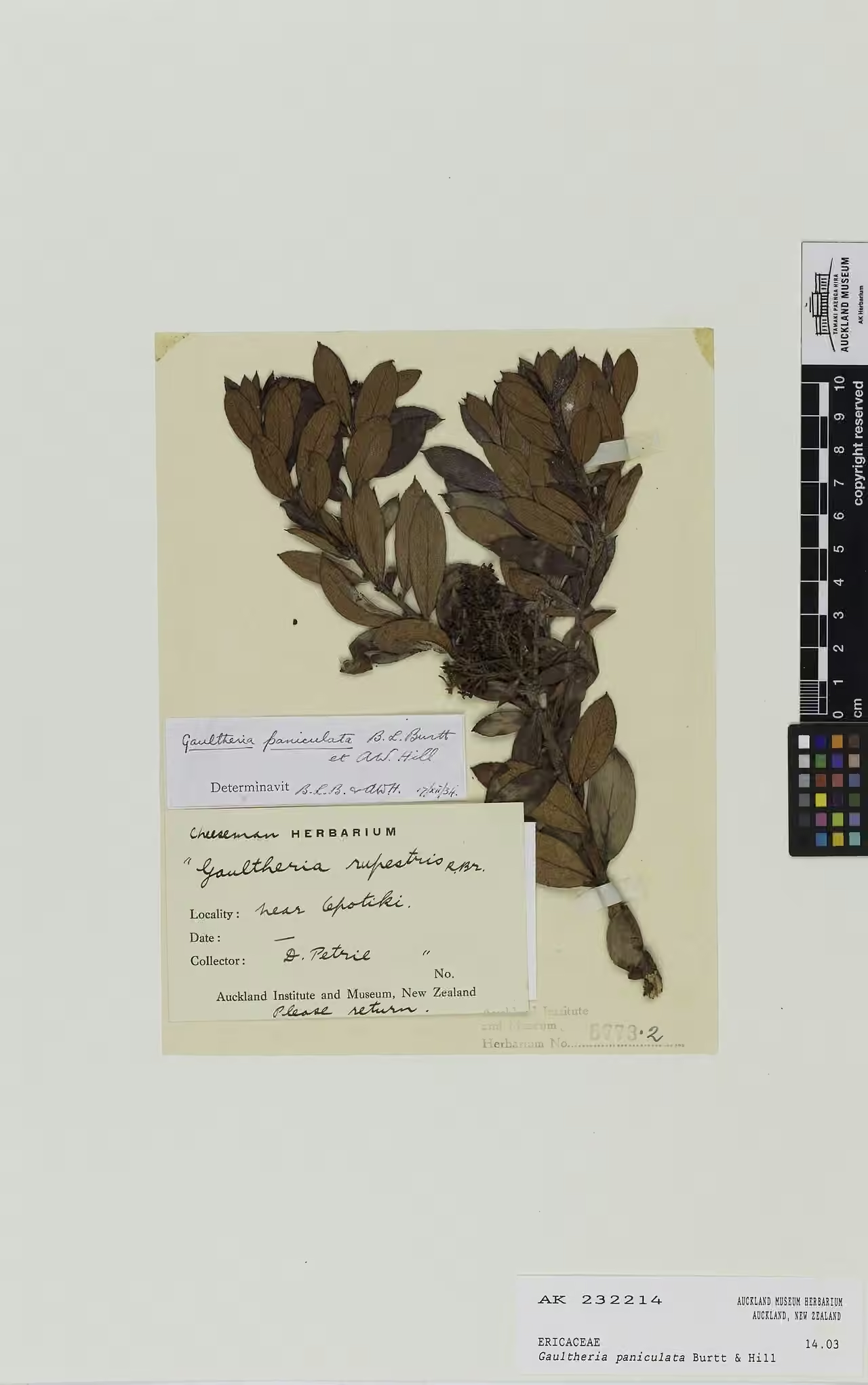
Gaultheria paniculata
Gaultheria paniculata
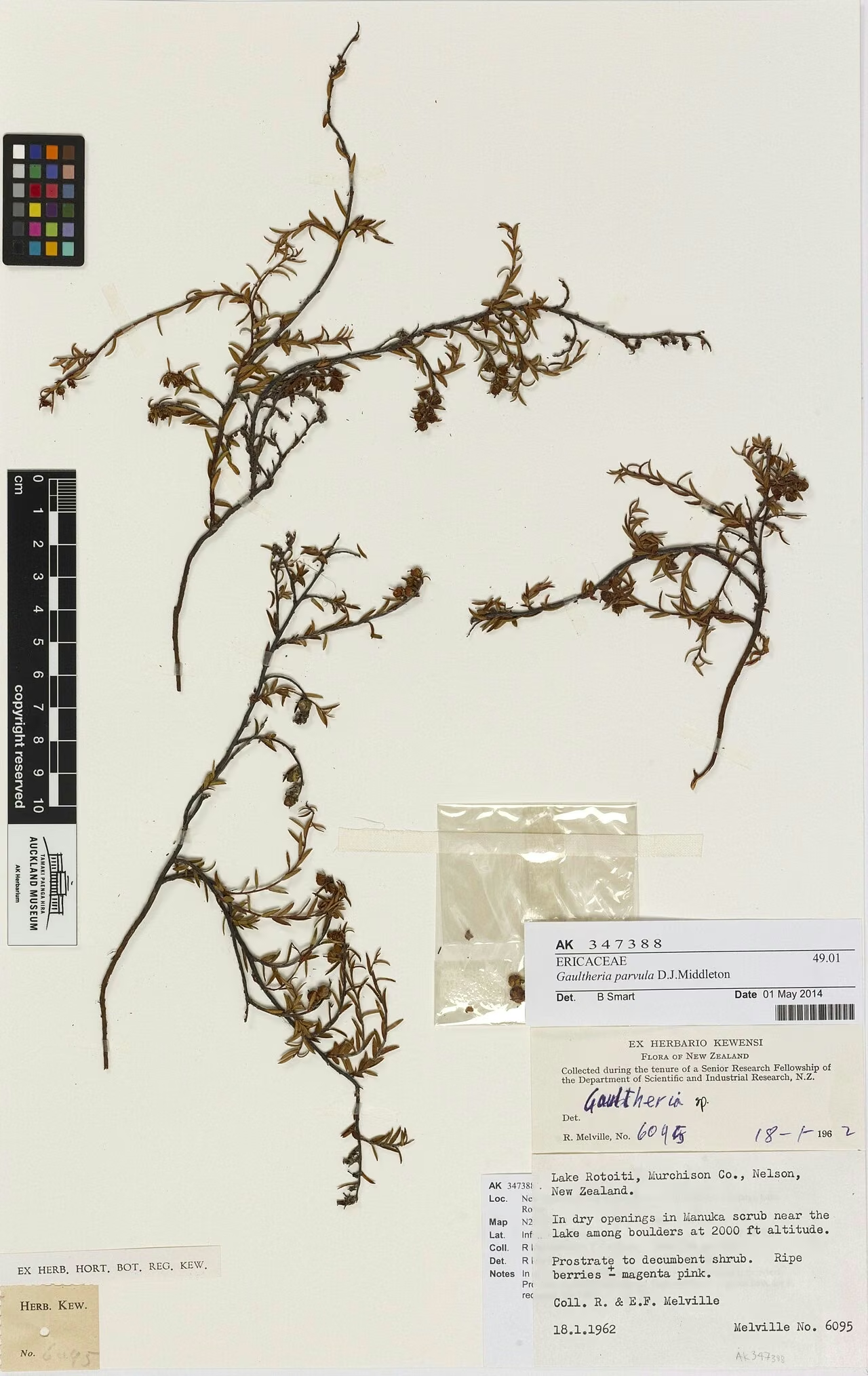
Gaultheria parvula
Gaultheria parvula
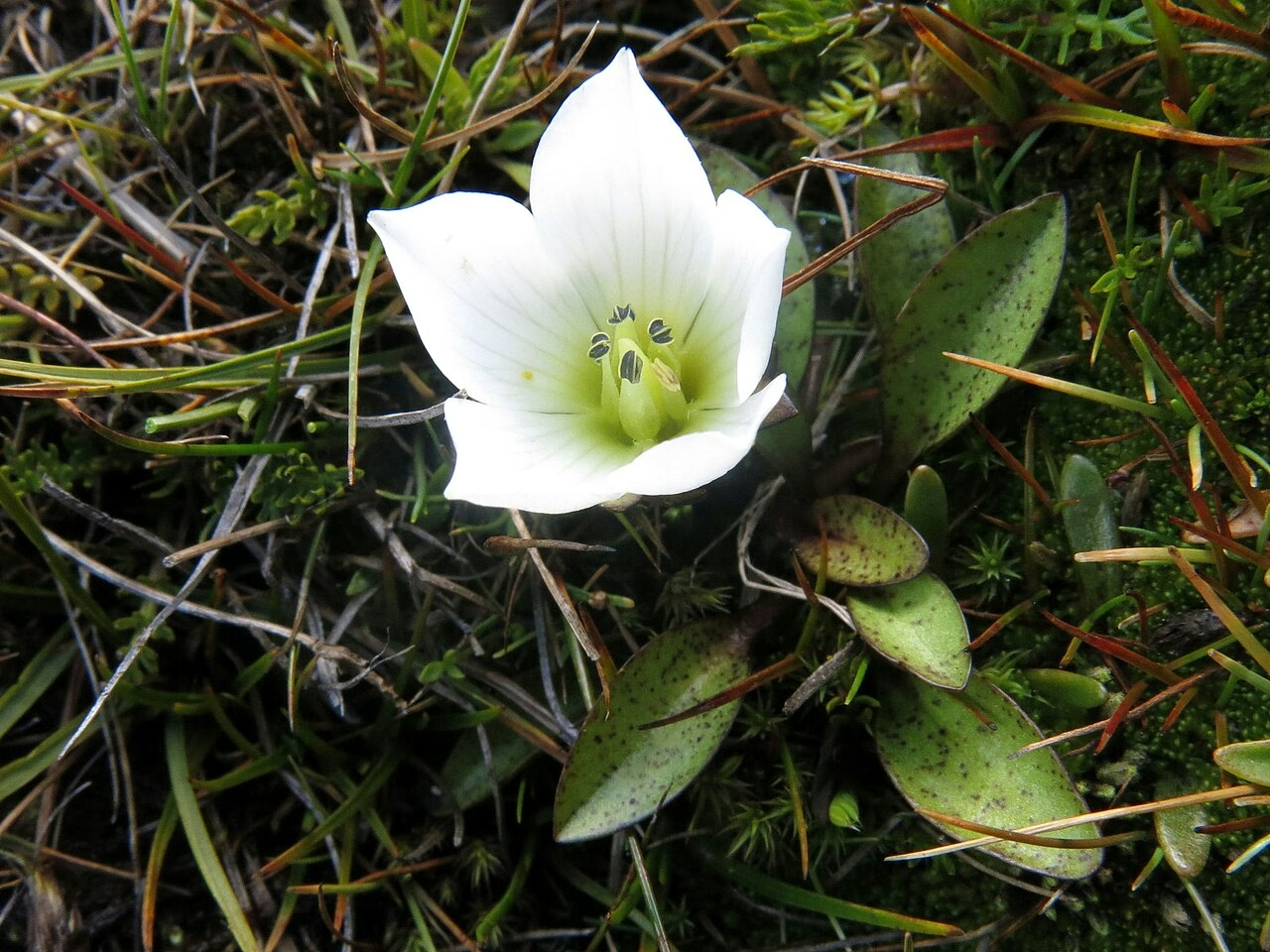
Gentianella amabilis
Gentianella amabilis
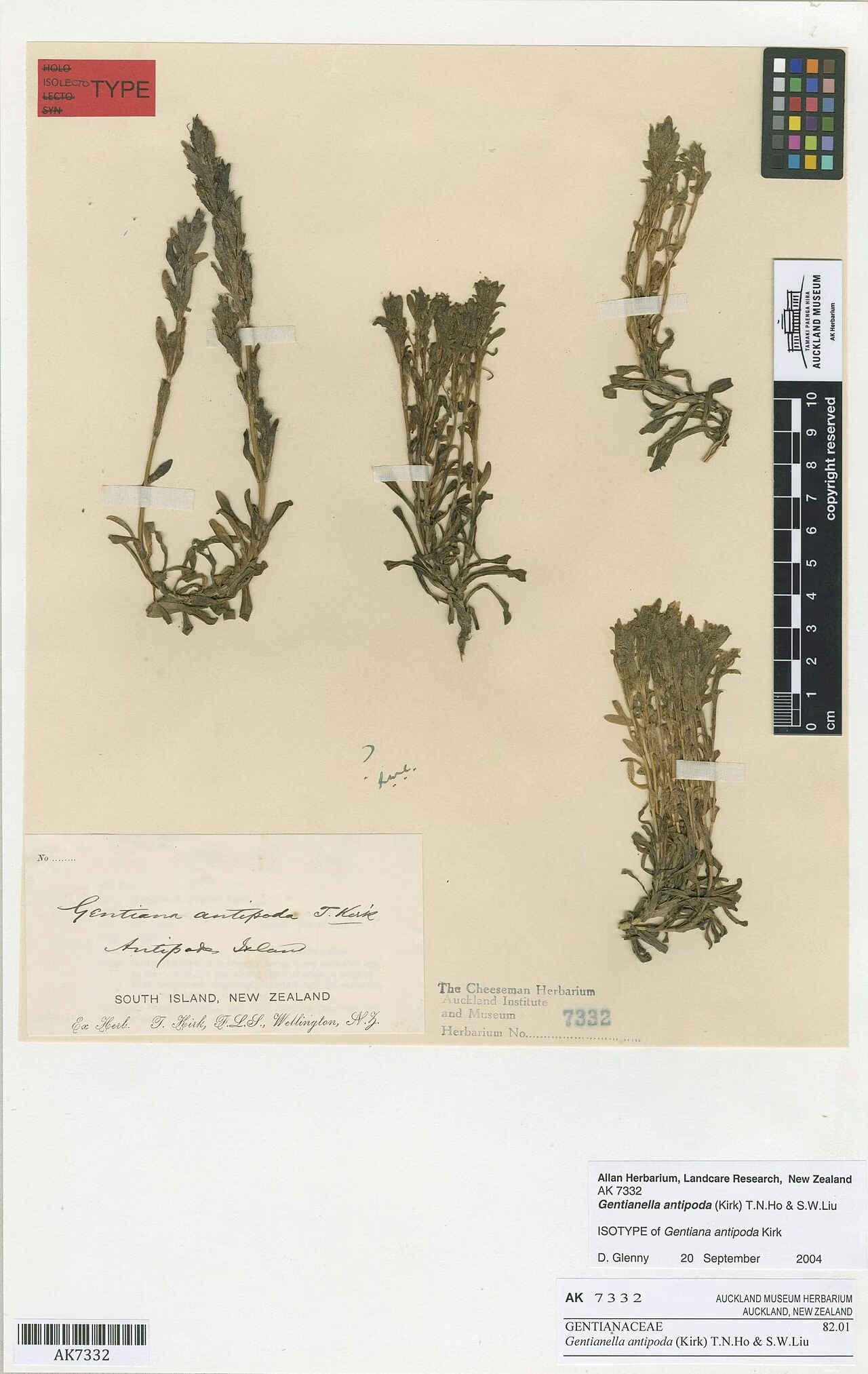
Antipodes Islands Gentian
Gentianella antipoda
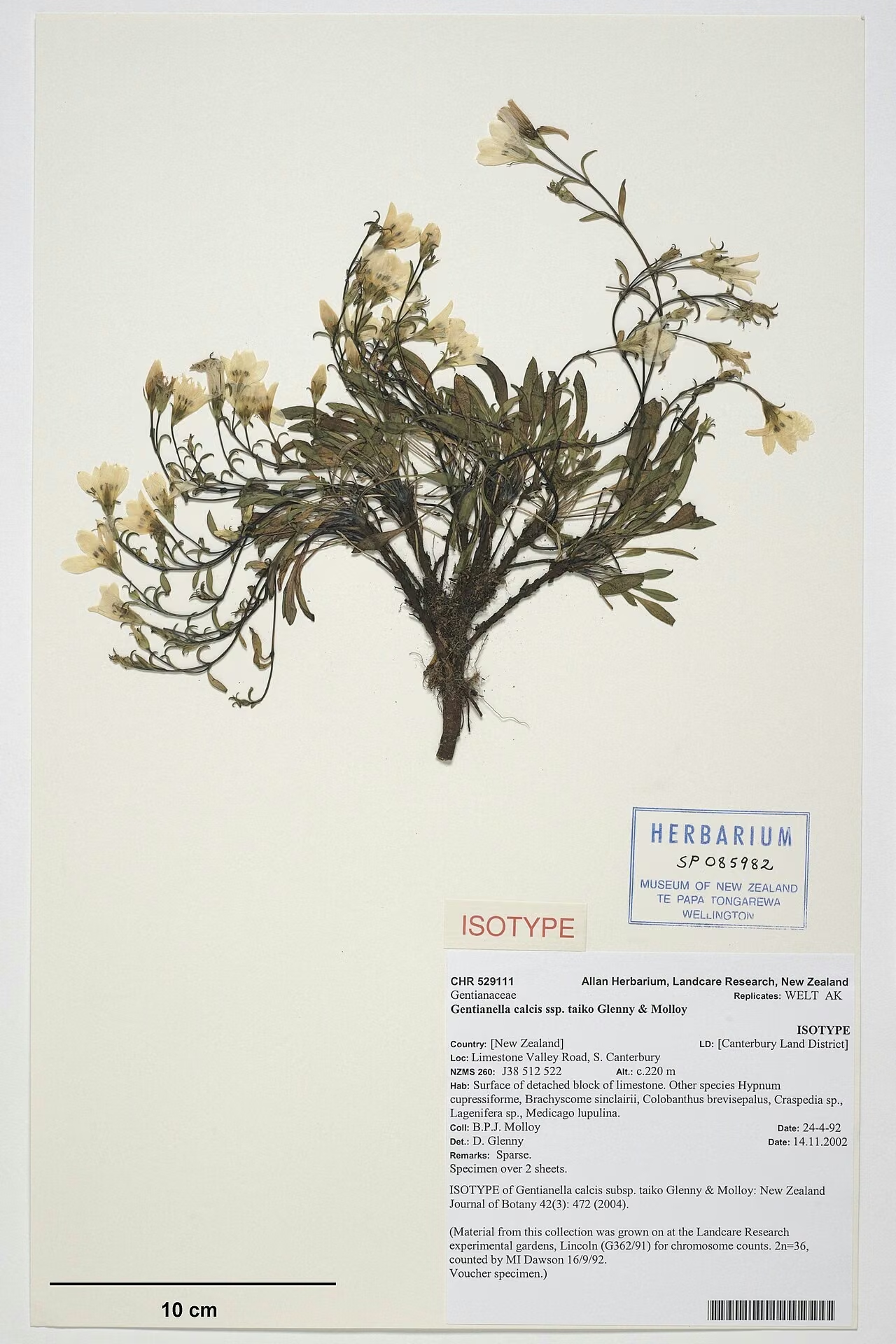
Pareora Gentian
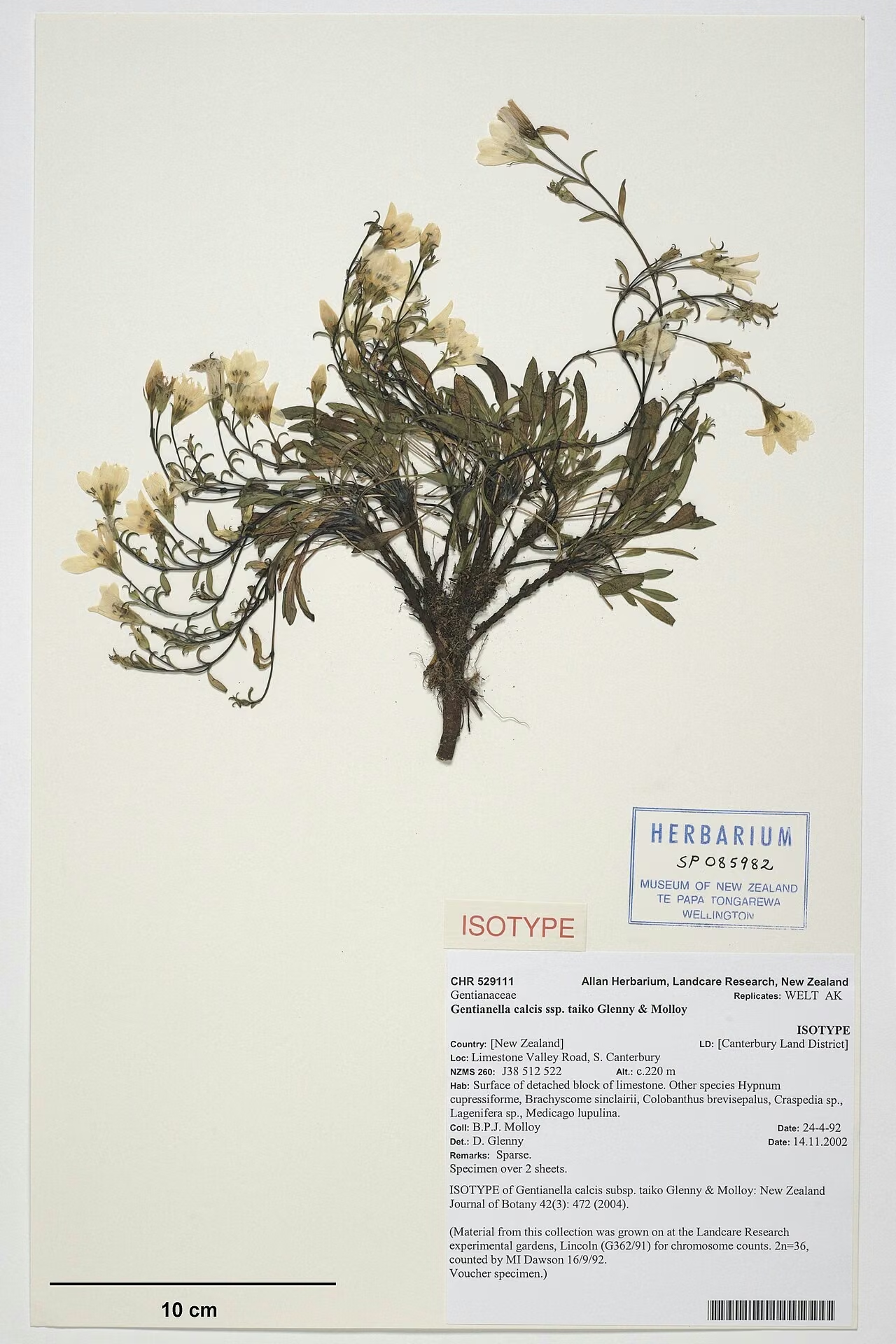
Gentianella calcis subsp. taiko
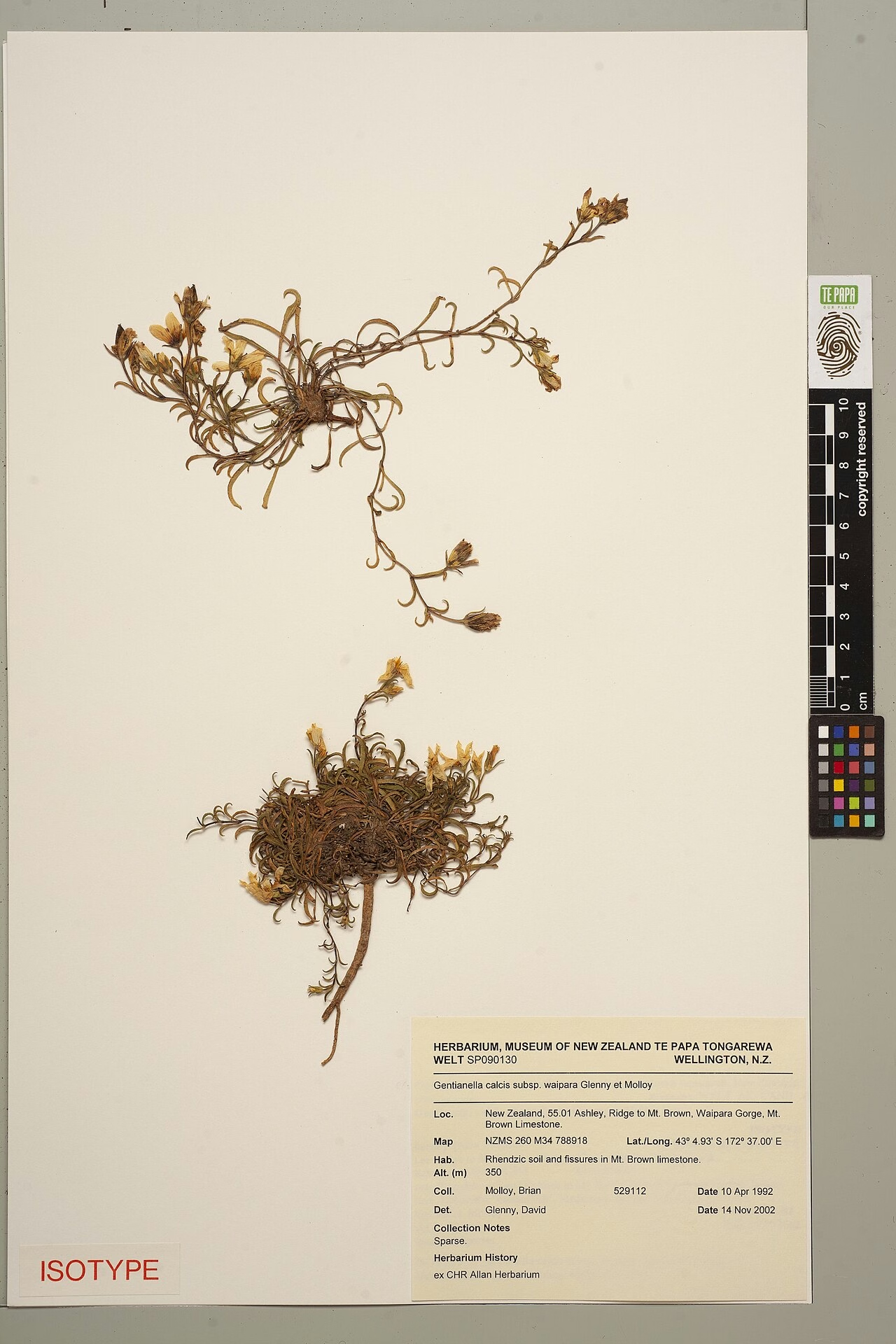
Waipara Gentian
Gentianella calcis subsp. waipara
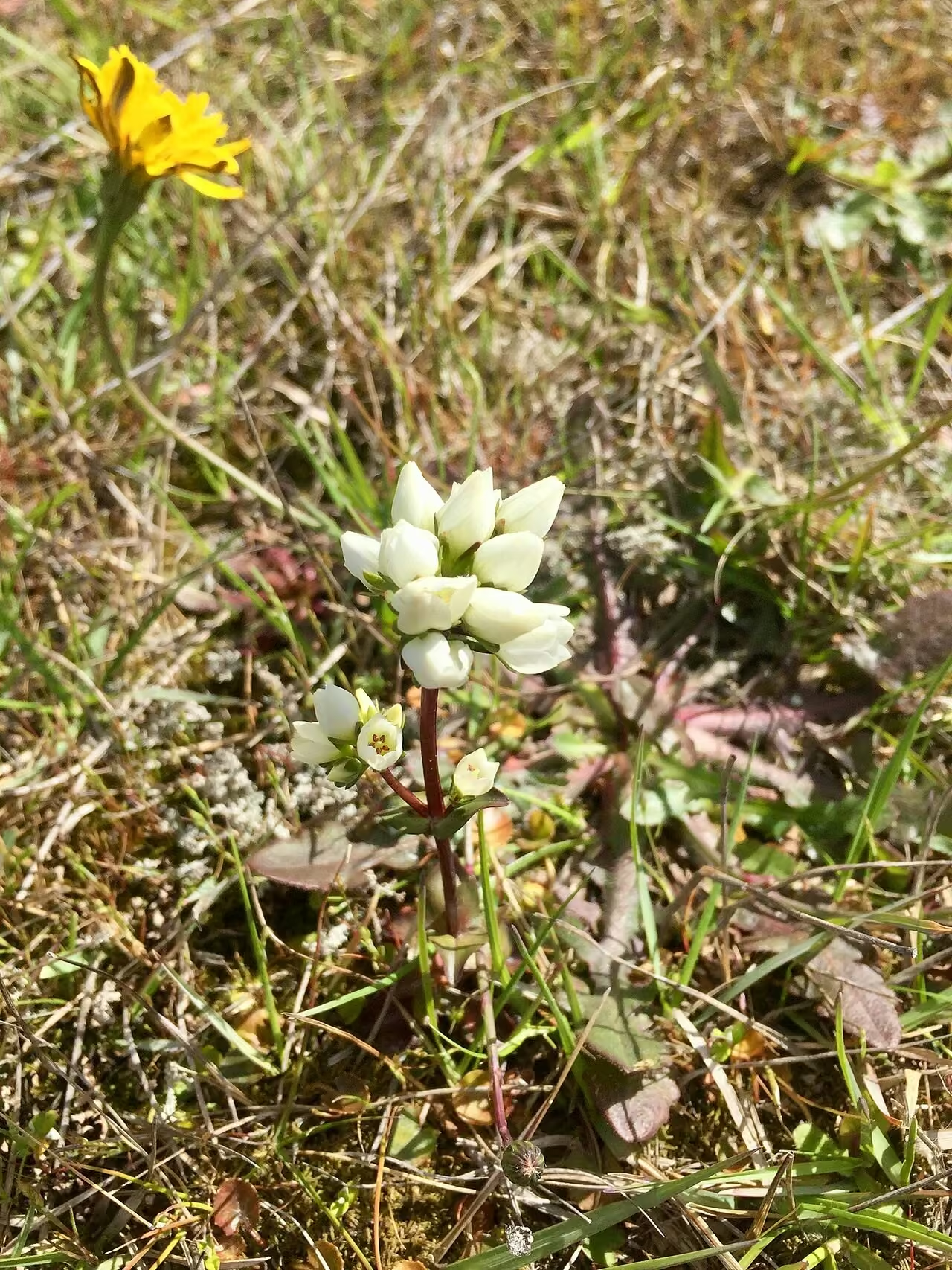
Chatham Island Gentian
Gentianella chathamica subsp. chathamica
Gentianella divisa
Gentianella divisa
Plant Conservation
The Awahokomo gentian is ranked Threatened - Nationally Critical (2023) with the qualifiers CD (conservation dependent) and OL (one location). All four subspecies of Gentianella calcis share this ranking.
Weed control, protection of its limestone sites from quarrying and land conversion, and seed collection for ex situ conservation are the main actions that help. The 2025 genetic study identified Awahokomo as the priority population for this subspecies because of its larger size.
Frequently Asked Questions
Where does the Awahokomo gentian grow?
It is known only from two limestone sites in the Waitaki Valley of North Otago, at Awahokomo and at the Earthquakes, where it grows on limestone bluffs, crevices and talus.
Why is Gentianella calcis subsp. calcis Nationally Critical?
Its population is confined to two small sites and is threatened by spreading weeds such as Chewings fescue, mouse-ear hawkweed, cocksfoot and stonecrop, and by natural events such as storms, slumping and rockfall.
When does the Awahokomo gentian flower?
It flowers mainly in April, sometimes from March and into June, which is later than most New Zealand gentians, and fruits from about April to November.
How many subspecies of Gentianella calcis are there?
There are four, all limestone specialists of the eastern South Island: subsp. calcis in North Otago, subsp. manahune and subsp. taiko in South Canterbury, and subsp. waipara in North Canterbury.
Sources and Further Reading
The botanical, growing, and conservation details for Awahokomo Gentian (Gentianella calcis subsp. calcis) on this page draw on the New Zealand plant references below. Consult them for full technical records and the latest distribution data.