Gentian
Gentianella amabilis
Last updated:
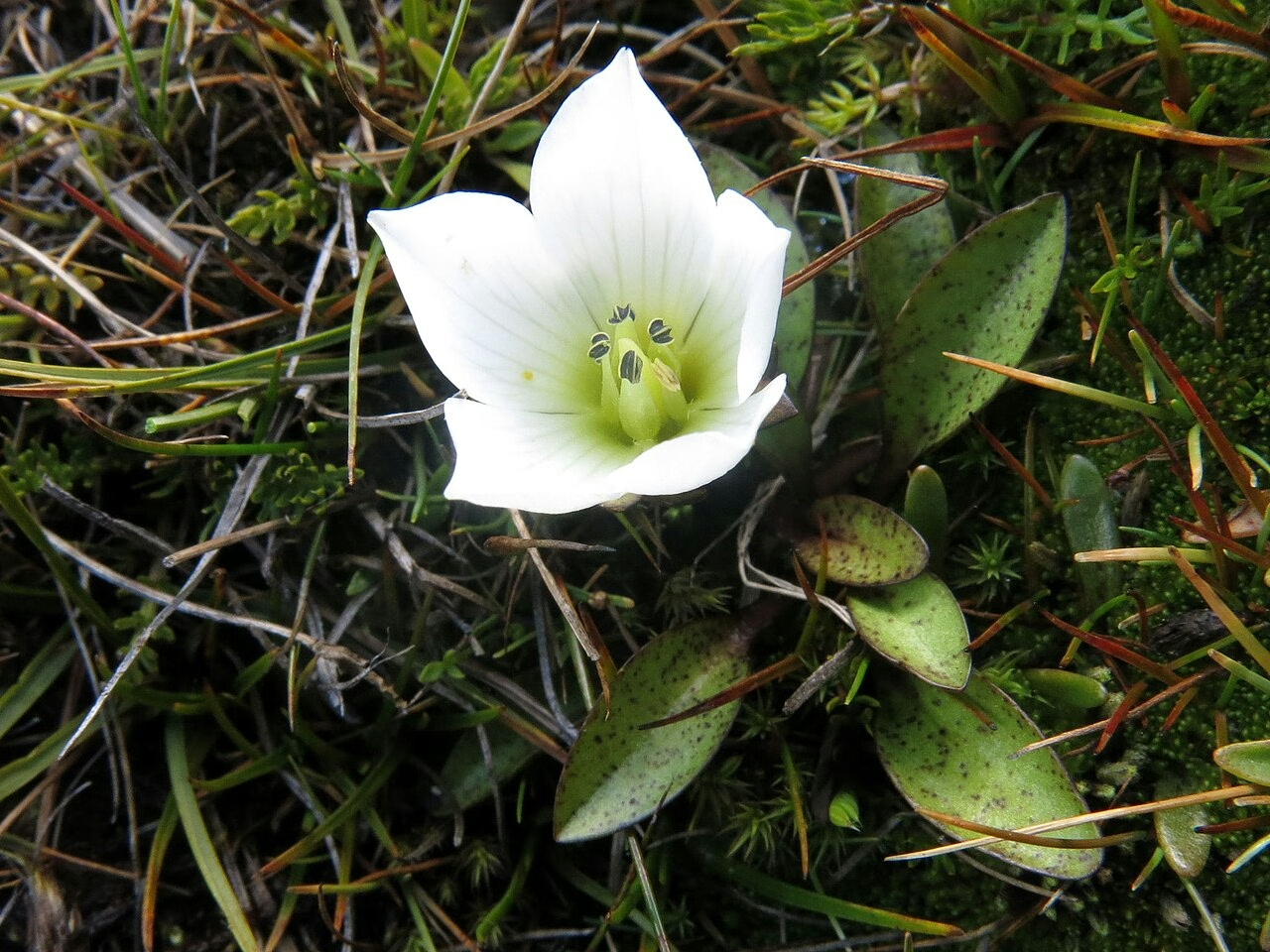
Gentianella amabilis is a small alpine gentian endemic to Otago and Southland, growing in subalpine and alpine cushion bogs and gently sloping flushes. It forms a rosette of leaves that are tinted crimson or purple-black and speckled purple, and in January and February sends up stems 3 to 13 cm tall carrying one to five, rarely up to eight, white flowers 12 to 22 mm long. Unlike many New Zealand gentians it is polycarpic, flowering in more than one year. The name amabilis means lovely. It is ranked Not Threatened nationally but is regarded as naturally uncommon in Otago. Explore more native flowering plants in our native plant guide.
Plant Description
Gentianella amabilis is a polycarpic herb, meaning individual plants can flower in more than one year, standing 30 to 130 mm tall in flower. It has an unbranched caudex about 80 mm long and an unbranched root 1.5 to 6 mm thick at the stem base. The stems are tinted purple. The rosette leaves are 10 to 52 mm long and 3.5 to 12 mm wide, tinted crimson underneath or purple-black and speckled with purple, with a dark purple petiole.
Each plant carries one to five, occasionally up to eight, flowers. The corolla is white and 11.8 to 22.5 mm long, opening into a cup of spreading lobes. NZPCN lists the flower colours as white and yellow. Flowering is in January and February, and the fruit, a capsule, ripens from March to May.
It is most likely to be confused with Gentianella bellidifolia, which is taller and has green, unspotted leaves and more flowers. The purple-speckled foliage and dark purple petioles of G. amabilis are the most useful field characters.
Quick Facts
| Scientific Name | Gentianella amabilis |
|---|---|
| Height | 3 to 13 cm in flower |
| Spread | A small single rosette |
| Water Needs | High; an obligate wetland plant |
| Light | Full sun in open bogs |
| Frost Tolerance | High; subalpine to alpine |
| Salt Tolerance | No information available |
| Growth Rate | Slow |
| Lifespan | Perennial, flowering in more than one season |
Climate Best Suited to
Suits cold, wet alpine and subalpine climates of the southern South Island mountains, with long winters, snow and cool summers. It cannot tolerate warm or dry conditions.
Regional Suitability
| City | Climate Suitability |
|---|---|
| Auckland | Low |
| Wellington | Low |
| Christchurch | Low |
| Dunedin | Low |
Plant Habitat
Gentianella amabilis is endemic to the South Island, where it is found in Otago and Southland. Allan Herbarium collections include bogs at the southern end of the Old Man Range, where it was noted as a common bog plant, and a Sphagnum bog at Teviot Swamp on the Lammerlaw Range at about 975 m.
Its habitat is subalpine to alpine cushion bog and low-angled flushes where water seeps constantly through the ground. It is rated an obligate wetland plant, meaning it almost always grows in wetlands.
Growing Requirements
Soil Requirements
It grows in wet, peaty, acidic soils within cushion bogs and seepages, where cushion plants and mosses keep the ground saturated.
- Permanently wet peat
- Low fertility and acidic
- Cold, flowing seepage water
Light Requirements
Cushion bogs and flushes are open and treeless, so the plant grows in full light among low cushions.
- Full sun
- No shade from taller vegetation
Water Requirements
As an obligate wetland plant it depends on constant moisture throughout the growing season.
- Saturated ground year round
- Cannot tolerate drying
Planting and Establishing
Gentianella amabilis is not a garden plant. NZPCN states that it is difficult to propagate and should not be removed from the wild, and it is not available from nurseries.
Gardeners wanting a native gentian should look for species that are offered by specialist alpine growers. Anyone visiting its bog habitat should keep to tracks, because trampling damages the fragile cushion vegetation it relies on.
Ecological Role
Like other New Zealand gentians, its open white flowers are pollinated by insects, though the particular visitors of this species are not recorded in the sources consulted. NZPCN notes that its seeds are dispersed by ballistic projection, wind and water, which suits a plant of flushes where seeps can carry seed downslope.
It is part of the specialised flora of southern South Island cushion bogs, communities built from cushion plants and mosses that hold water on the tops of the Central Otago and Southland ranges.
Uses & Significance
Garden Uses
It has no practical garden use; its value is in its wild habitat.
- Best appreciated in the wild in late summer
- Of interest for botanical study and photography
- Not available commercially
Ecological Value
It adds to the diversity of alpine wetlands, which are important water stores in the mountains of Otago and Southland.
- Late-summer flowers for alpine insects
- Part of distinctive cushion bog communities
- An indicator of intact alpine wetland
Landscaping Uses
Because it cannot be grown outside its specialised bog habitat, it has no place in ordinary landscaping. Its main landscape role is in the natural cushion bogs of the southern ranges.
Landowners and managers of high country can help it by keeping stock and vehicles out of alpine wetlands and flushes.
Seasonal Care Calendar
Spring
The rosette remains under snow or emerges late as snow melts on the ranges.
- Plants are inconspicuous
- Bogs are often still frozen
Summer
White flowers open in January and February on short purple-tinted stems.
- Best time to see it in the wild
- Stay on tracks to protect bogs
Autumn
Capsules ripen from March to May and release seed.
- Seed dispersed by projection, wind and water
- Rosettes persist into winter
Winter
The plant lies dormant beneath snow on the high ranges.
- No activity visible
- Snow insulates the rosette
When to Prune and How Much
No pruning applies to this small wild herb.
In the wild, flowering stems die back naturally after seed is shed, and the rosette persists to flower again in a later season.
How to Grow Gentian
Gentianella amabilis is described by NZPCN as difficult to propagate, and it should not be removed from the wild. New Zealand gentians in general are notoriously hard to keep in cultivation, needing cold, constantly moist conditions and careful handling of their sensitive roots. The notes below describe the approaches used for alpine gentians by specialist growers and seed banks, and are only appropriate where seed has been collected legally and with permission for conservation or research purposes.
From Seed
Seed is the only realistic way to raise this species, since the single rosette cannot be divided. Gentian seed is tiny, and alpine species usually need a period of cold, moist chilling before they germinate.
- Collect capsules only with permission, as they ripen between March and May
- Sow the fine seed on the surface of a moist, peaty, acidic mix with fine grit
- Keep pots constantly moist, standing in a shallow tray of water if necessary
- Expose the pots to winter cold outdoors or in a cool cabinet
- Move seedlings on carefully as single plants, disturbing roots as little as possible
Division and Cuttings
Division is not possible because each plant has an unbranched caudex and a single unbranched root. Cuttings are not used for New Zealand gentians, so seed is the only method.
- Do not attempt to divide or move wild plants
- Support seed banking programmes instead where conservation propagation is needed
- Record the source location of any seed so that plants raised for restoration can be returned to the same range
Pests & Diseases
No specific pests are recorded for Gentianella amabilis in the sources consulted. In its bog habitat the main pressures come from browsing and trampling animals rather than insects or disease.
Pigs, deer and stock can damage wet alpine ground, and drainage or vehicle tracks through bogs alter the water flow that the plant depends on.
Cultural Significance
No Māori name or traditional use specific to Gentianella amabilis was found in the sources consulted.
Donald Petrie, the Otago botanist who explored the Central Otago ranges, originally described the plant as Gentiana amabilis. David Glenny transferred it to Gentianella in his 2004 revision of the New Zealand gentians.
Bonus Tip
When looking for this gentian, check the leaves before the flowers: the crimson to purple-black, purple-speckled rosette with a dark purple stalk separates it from the green-leaved Gentianella bellidifolia even when the plants are not in bloom.
Related Plants
Explore other native plants that share similar characteristics or habitats with Gentian (Gentianella amabilis), offering further insights into New Zealand's diverse flora. These related species provide context and opportunities for complementary planting in your garden.
Gaultheria colensoi
Gaultheria colensoi
Gaultheria nubicola
Gaultheria nubicola
Gaultheria paniculata
Gaultheria paniculata
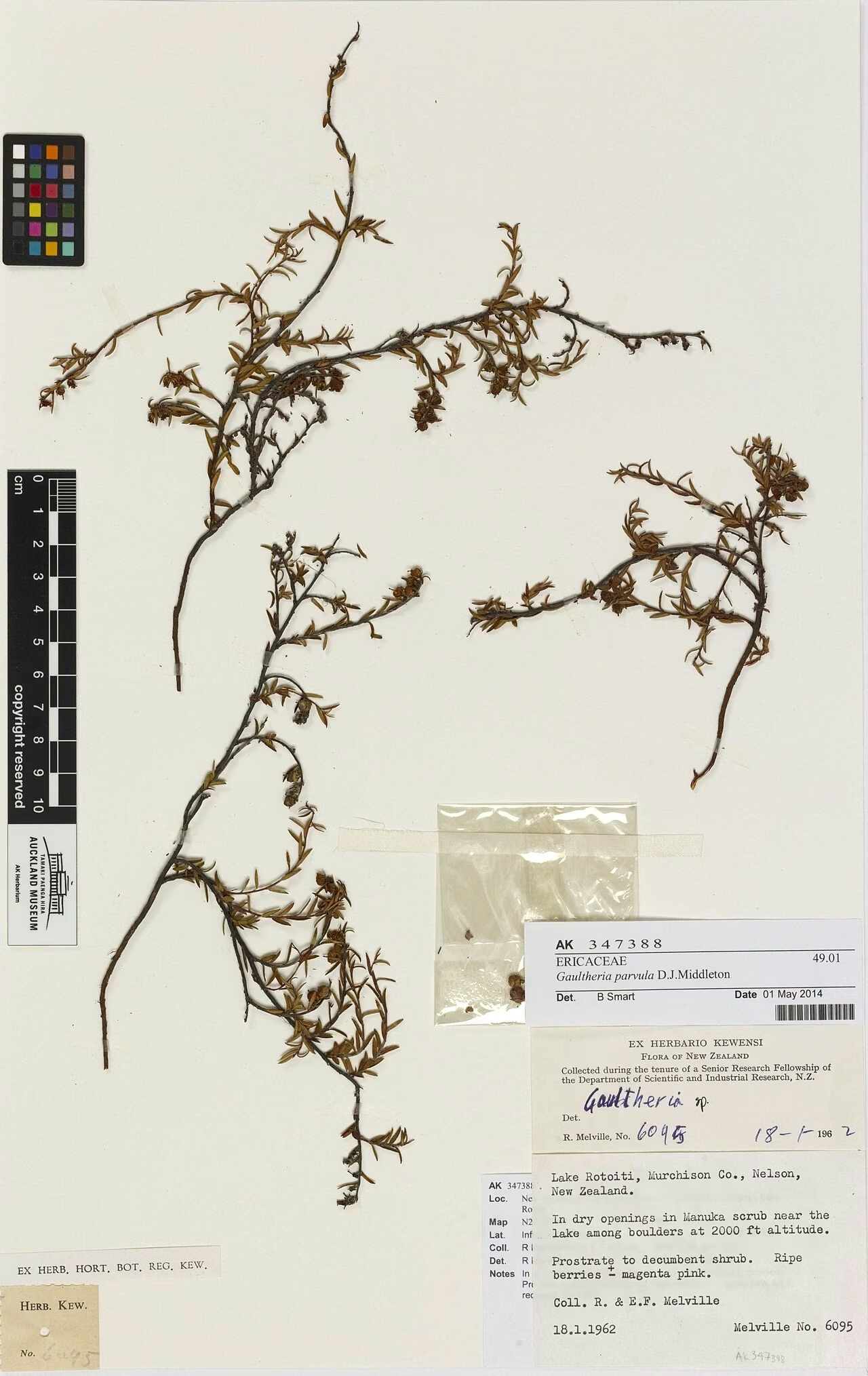
Gaultheria parvula
Gaultheria parvula
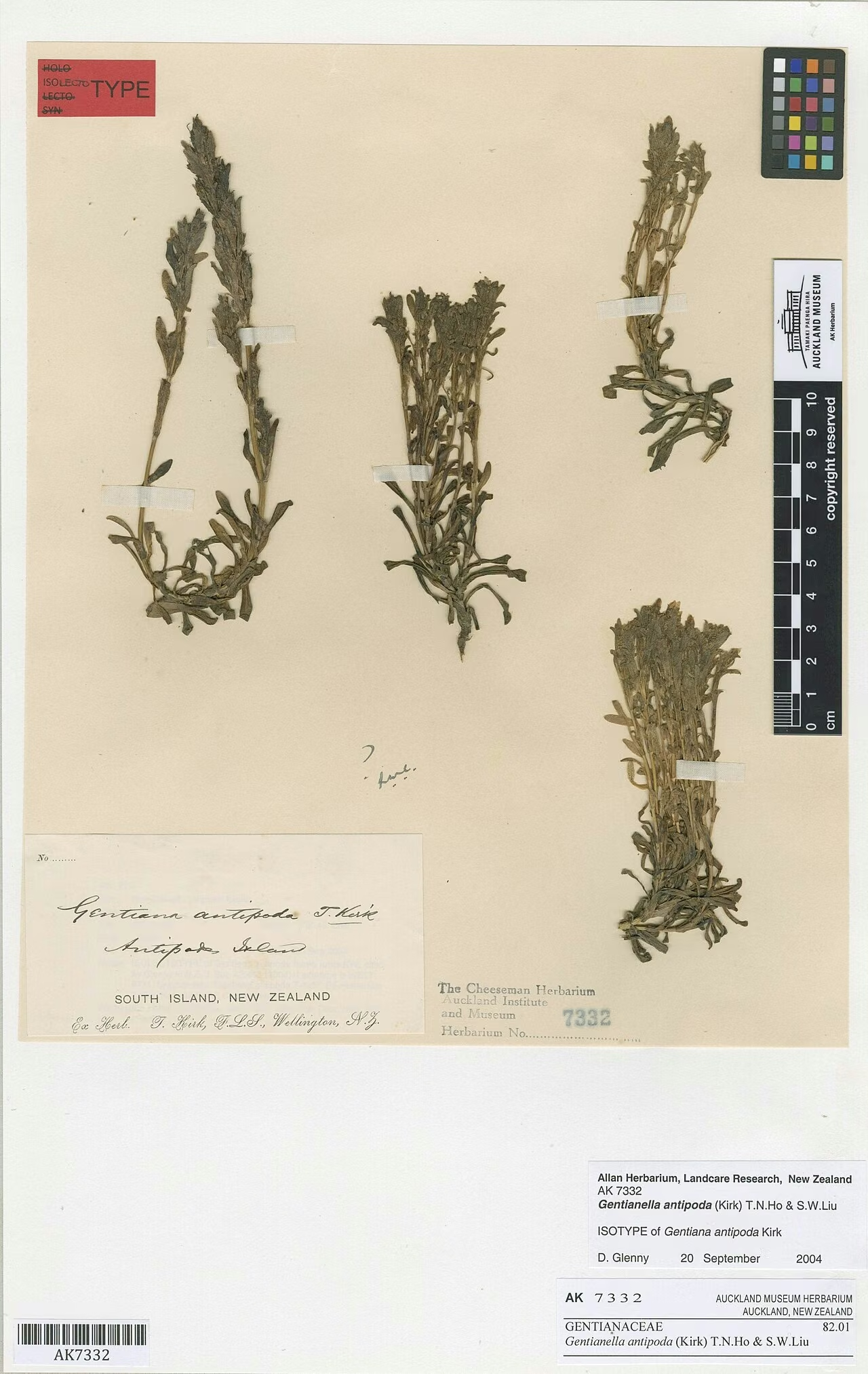
Antipodes Islands Gentian
Gentianella antipoda
Awahokomo Gentian
Gentianella calcis subsp. calcis
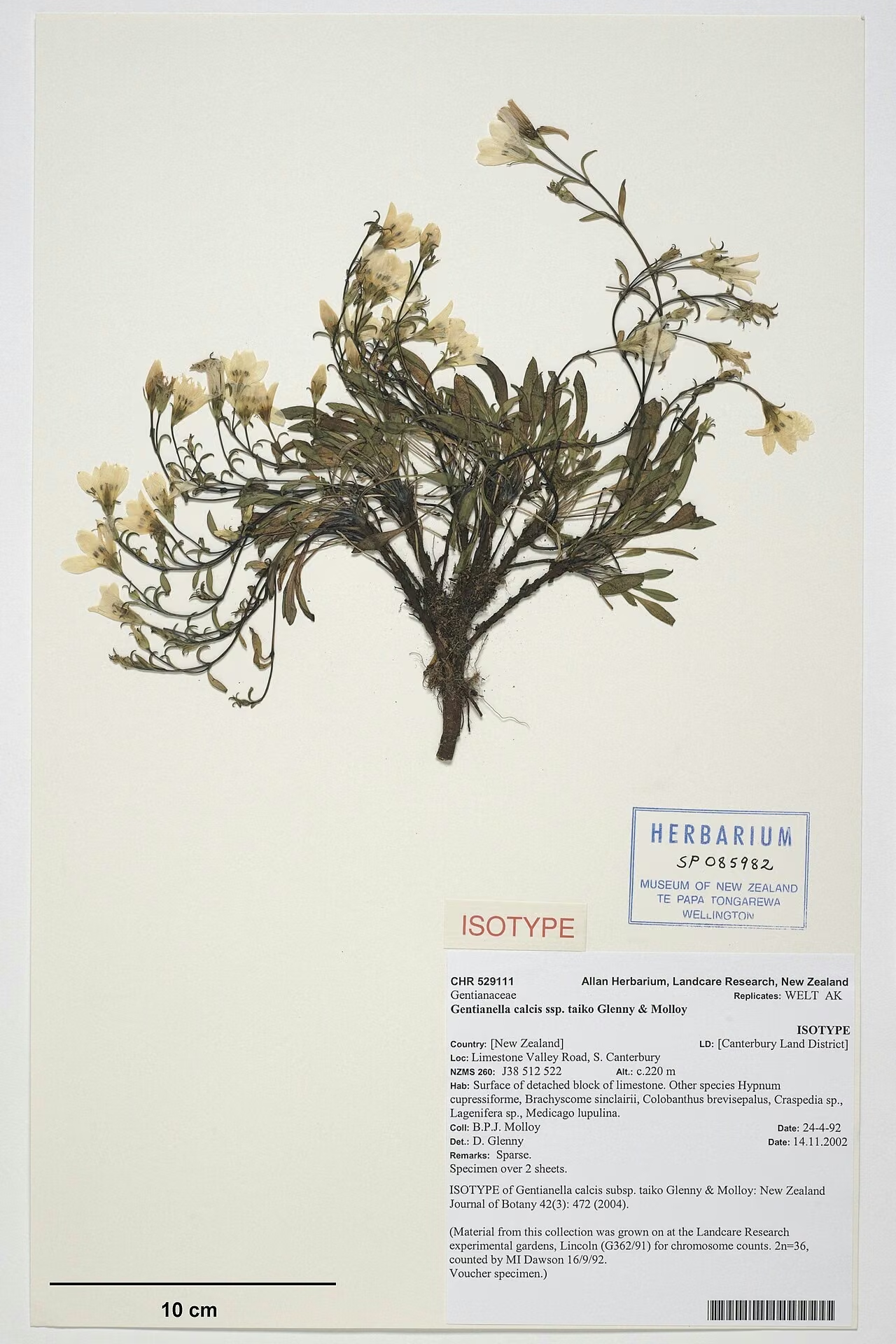
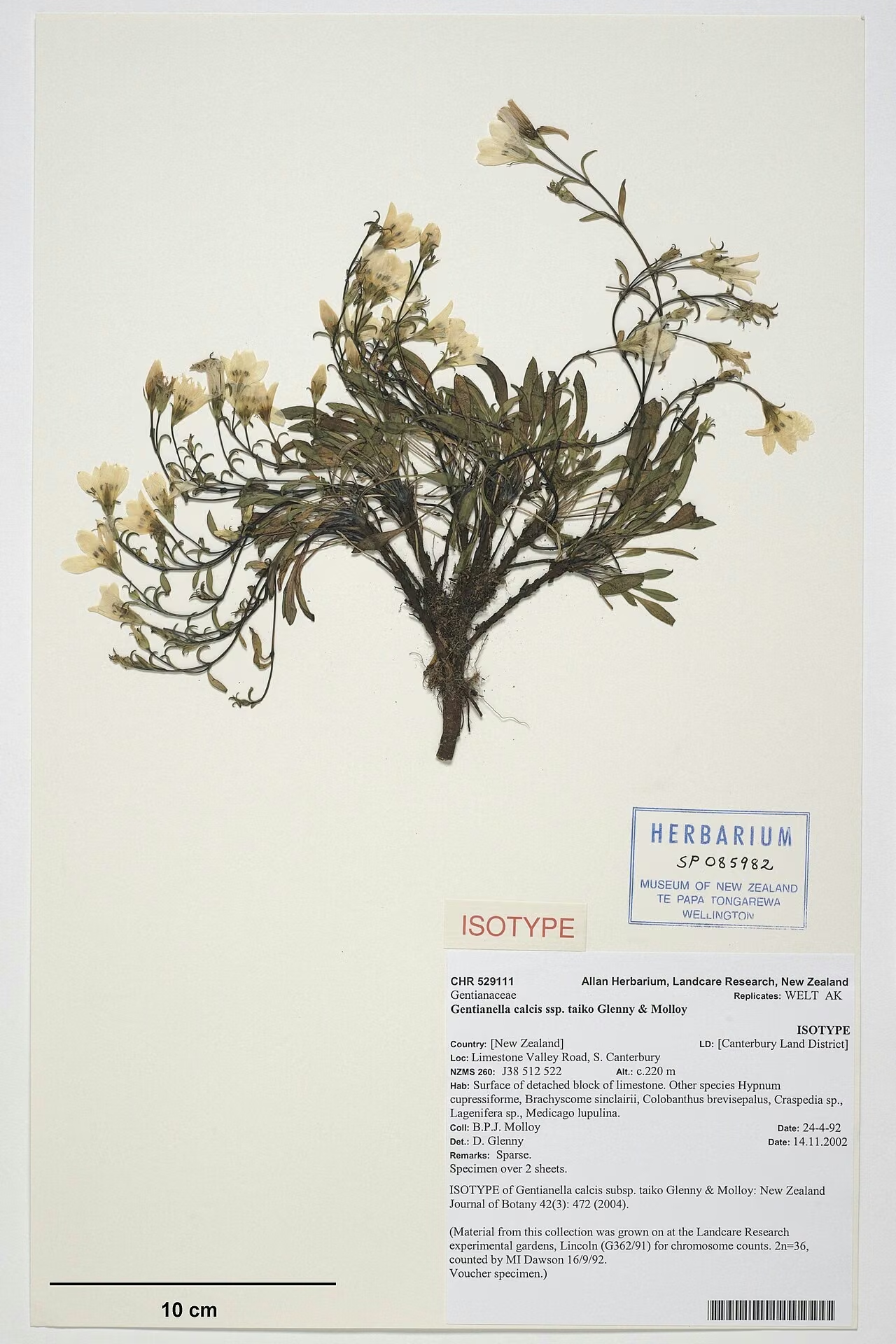
Pareora Gentian
Gentianella calcis subsp. taiko
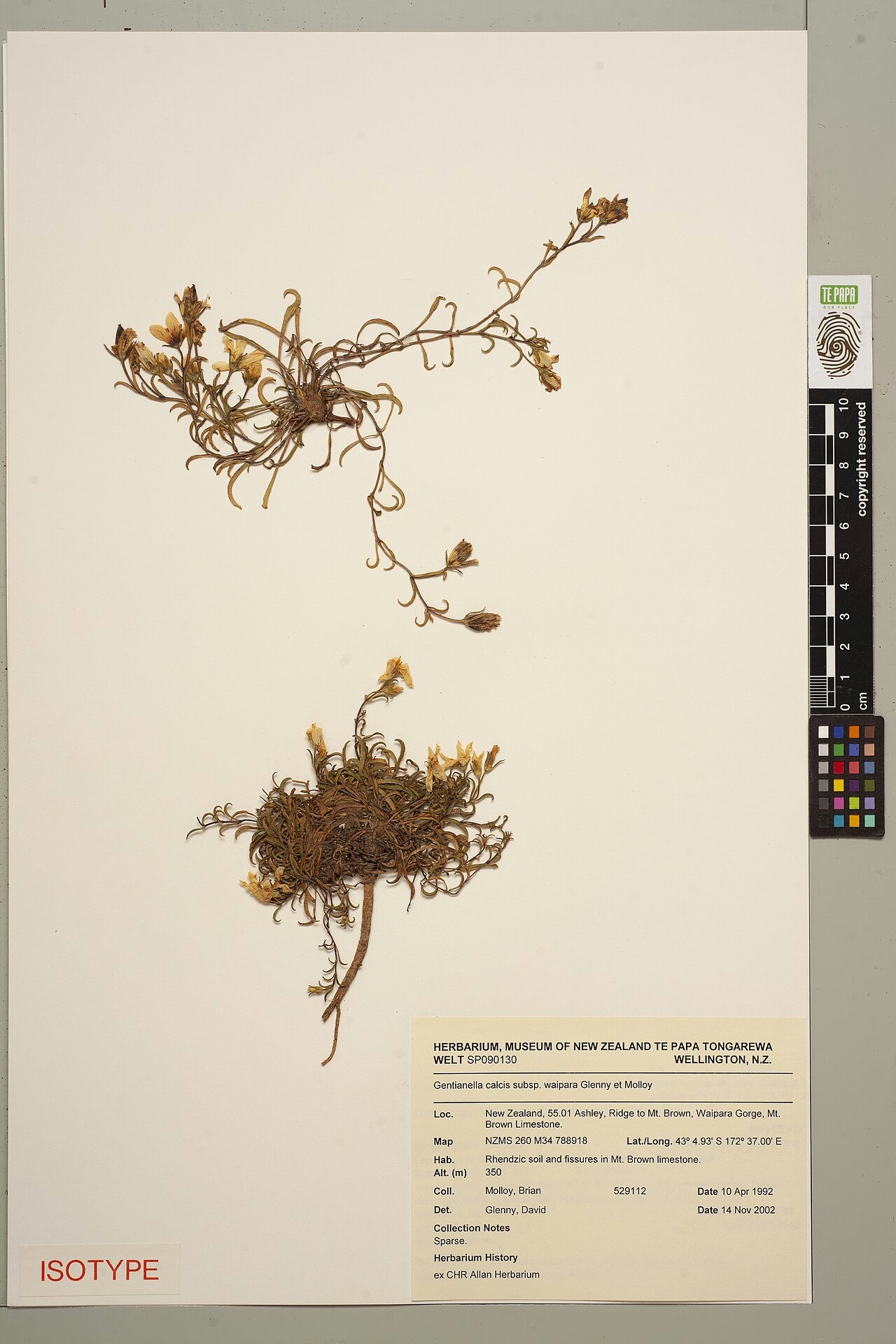
Waipara Gentian
Gentianella calcis subsp. waipara
Plant Conservation
Gentianella amabilis is ranked Not Threatened nationally (2023). In Otago it was assessed in 2025 as Regionally At Risk - Regionally Naturally Uncommon, with qualifiers including data poor and range restricted.
Its dependence on alpine cushion bogs makes it vulnerable to damage of these wetlands from trampling, stock, vehicles and changes to drainage. Protecting alpine wetlands within conservation land and high country stations is the best way to safeguard it.
Frequently Asked Questions
Where does Gentianella amabilis grow?
It is endemic to the South Island, in Otago and Southland, where it grows in subalpine to alpine cushion bogs and low-angled flushes. Herbarium records include the Old Man Range and Teviot Swamp on the Lammerlaw Range.
How do you tell Gentianella amabilis from Gentianella bellidifolia?
Gentianella amabilis is shorter, has purple-spotted leaves with a dark purple leaf stalk rather than plain green leaves, and bears fewer flowers, usually one to eight per plant.
Can I grow Gentianella amabilis in my garden?
NZPCN describes it as difficult to propagate and says it should not be removed from the wild. Its need for cold, permanently wet alpine bog makes it impractical for most gardens.
What does amabilis mean?
Amabilis comes from the Latin amare, to love, and means worthy of love or pleasing, a reference to the plant's attractive white flowers.
Sources and Further Reading
The botanical, growing, and conservation details for Gentian (Gentianella amabilis) on this page draw on the New Zealand plant references below. Consult them for full technical records and the latest distribution data.