Snowberry
Gaultheria parvula
Last updated:
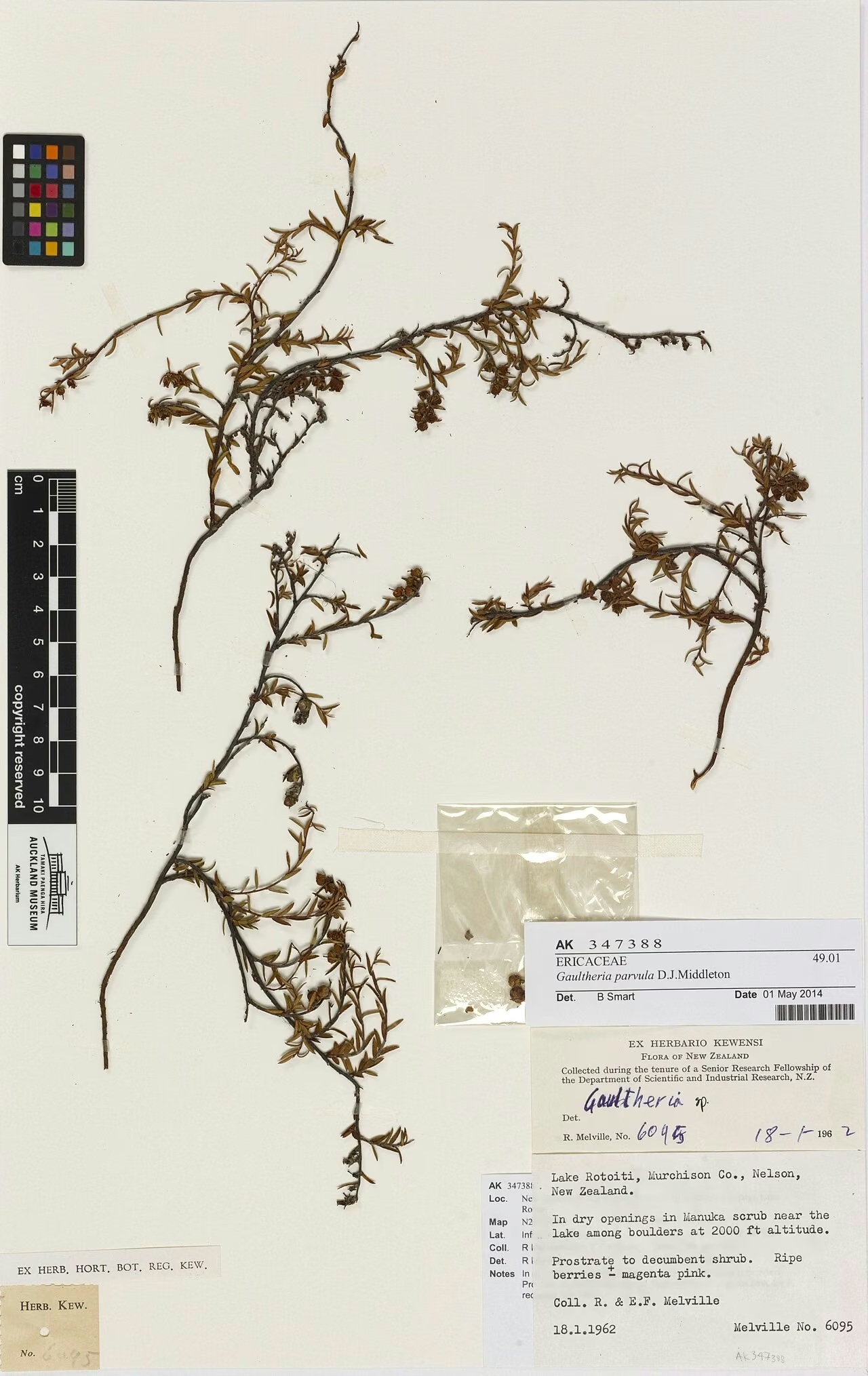
Gaultheria parvula is one of the smallest New Zealand snowberries, a creeping, matted shrublet that forms patches about 30 cm across in the mountains of the eastern South Island. Its slender stems lie flat and root as they go, sending up short tips only 2 to 5 cm tall crowded with tiny, thick, narrow leaves 2 to 4 mm long. The leaves are brownish with paler veins. Single white bell-shaped flowers appear among them, followed by round, fleshy berries 3 to 5 mm across that ripen white, pink or red. Its name means very small. It is ranked Not Threatened. Explore more native ground covers in our native plant guide.
Plant Description
Gaultheria parvula is a small, matted shrublet. Its main stems are slender, prostrate and rooting, with ascending tips about 2 to 5 cm long, and the twigs are hidden by the leaves. The leaves are 2 to 4 mm long and 0.5 to 1.5 mm wide, elliptic to narrowly elliptic, usually rather thick, with microscopically toothed margins. NZPCN notes that the paler veins contrast with the brownish leaf.
The flowers are solitary in the leaf axils, small, white and bell-shaped, scattered across the mat. The fruit is a globose fleshy berry about 3 to 5 mm across, white to pink or red. Photographs from the Ahuriri Valley show bright red-pink berries sitting on the mat in autumn.
It is distinguished from Gaultheria nubicola by its smaller, narrower, brownish leaves with pale veins, and from Gaultheria depressa and Gaultheria macrostigma by its much smaller size and tiny leaves. The two other creeping species have larger leaves and generally larger fruit.
Quick Facts
| Scientific Name | Gaultheria parvula |
|---|---|
| Height | 2 to 5 cm |
| Spread | Mats about 30 cm wide |
| Water Needs | Moderate; tolerates both damp and drier ground |
| Light | Full sun |
| Frost Tolerance | High; a mountain species of the eastern South Island |
| Salt Tolerance | No reliable information; an inland mountain plant |
| Growth Rate | Slow |
| Lifespan | Long-lived perennial |
Climate Best Suited to
Suits the continental mountain climate of the eastern South Island, with cold winters, hard frosts, snow and warm dry summers. It is not suited to humid lowland gardens.
Regional Suitability
| City | Climate Suitability |
|---|---|
| Auckland | Low |
| Wellington | Low |
| Christchurch | Medium |
| Dunedin | Medium |
Plant Habitat
Gaultheria parvula is endemic to New Zealand, where NZPCN describes it as inhabiting the mountains of the eastern South Island. NZPCN photographs come from Hakataramea Pass and the Ahuriri Valley in the Waitaki district, and in Otago it is assessed as Regionally Not Threatened, indicating it is reasonably widespread there.
It grows in open montane and subalpine country among tussock and low vegetation. NZPCN rates it as a facultative wetland plant, so it occurs in both damp sites and drier ground. More detailed habitat and altitude data were not found in the sources consulted.
Growing Requirements
Soil Requirements
It grows on thin, stony, acidic mountain soils that are low in nutrients.
- Gritty, free-draining mix
- Acidic and low in fertility
- No lime or fertiliser
Light Requirements
As a tiny mat of open country it needs full light and must not be shaded by taller plants.
- Full sun in a cool site
- Keep surrounding grasses short
Water Requirements
It tolerates a range of soil moisture in the wild but in pots and troughs should never dry out completely.
- Water troughs in dry summer weather
- Ensure winter drainage is sharp
Planting and Establishing
Gaultheria parvula is a plant for alpine troughs, scree beds and collections rather than general garden beds. Use a gritty, acidic mix, plant in autumn or early spring, and top-dress with fine stone chips so the mat rests on a dry surface.
It is rarely available commercially. Never dig plants from the wild; propagate from small rooted pieces or seed obtained with permission.
Ecological Role
NZPCN, citing Thorsen and colleagues (2009), records that its fleshy berries are dispersed by invertebrate frugivory. The small white bell flowers are presumably visited by insects, but specific pollinators of this species are not documented in the sources consulted.
Its rooting stems knit together a low mat over bare or thinly vegetated ground among tussocks, contributing to the diversity of small woody plants in eastern South Island mountain grasslands.
Uses & Significance
Garden Uses
A miniature native shrublet for specialist alpine gardeners.
- Alpine troughs and sinks
- Scree and crevice gardens
- Miniature native plant collections
Ecological Value
A small but distinctive component of eastern South Island mountain vegetation.
- Berries eaten by invertebrates
- Mat cover over bare stony ground
- Flowers for small insects
Landscaping Uses
Combine Gaultheria parvula with other miniature natives such as Raoulia, small Leptinella and tiny Pimelea in a trough, letting it creep over stones where its red or pink berries show up in autumn.
Its fine brownish foliage looks best against pale gravel or rock, which also keeps the mat dry.
Seasonal Care Calendar
Spring
New growth begins at the stem tips and flower buds form.
- Top-dress with grit
- Remove weeds from among the mat
Summer
Tiny white bell flowers appear singly among the leaves, as seen in NZPCN photographs from Hakataramea Pass in November.
- Keep the trough lightly moist
- Avoid fertiliser
Autumn
Berries ripen white, pink or red.
- Collect berries for seed
- Separate rooted pieces
Winter
The mat is dormant and tolerates hard frost and snow.
- Protect from waterlogging
- No pruning needed
When to Prune and How Much
Gaultheria parvula needs no pruning. Remove any dead patches in spring with fine scissors.
If the mat outgrows its space, cut away rooted edge pieces and pot them up as new plants.
How to Grow Snowberry
Gaultheria parvula is easiest to propagate from rooted pieces of its creeping stems, because the prostrate stems root naturally as they spread. It can also be raised from seed taken from its small fleshy berries, though seedlings grow slowly. Propagation suits growers with a cold frame or alpine house where small pots can be kept cool and evenly moist. As with all wild native plants, collect only small amounts with permission and never remove whole plants from their natural habitat.
By Division of Rooted Stems
The prostrate stems produce roots along their length, so small rooted sections can be detached with little disturbance to the parent mat. This is the most reliable method.
- In early autumn or spring, find stems at the edge of the mat that have rooted
- Cut a section a few centimetres long with its roots and a little soil
- Pot into a small pot of gritty acidic mix
- Keep cool, shaded and moist for several weeks
- Move to full light once new growth appears
From Seed
Seed is extracted from ripe berries in autumn. Sow fresh and expose to winter cold outdoors, as many mountain plants germinate after chilling.
- Squash ripe berries in water and collect the fine seeds
- Sow on the surface of a fine acidic seed mix
- Cover with a thin layer of fine grit
- Leave pots outside in a cool sheltered spot over winter
- Prick out seedlings carefully once large enough to handle
Pests & Diseases
No specific pests or diseases are recorded for Gaultheria parvula in the sources consulted. The main risks in cultivation are drought in shallow troughs and rot in prolonged winter wet.
Slugs and snails can graze small alpine plants in gardens, so check troughs after wet nights.
Cultural Significance
No Māori name or traditional use specific to Gaultheria parvula was found in the sources consulted.
William Colenso described the plant as Pernettya nana in the Transactions of the New Zealand Institute in 1890 (published 1891). After Middleton and Wilcock merged Pernettya into Gaultheria in 1990, the plant was published under the new name Gaultheria parvula, which means very small.
Bonus Tip
On an alpine walk, look for Gaultheria parvula in late summer and autumn when its pink or red berries stand out against the brownish mat. A hand lens shows the paler veins on the tiny leaves, the easiest way to separate it from young plants of other creeping snowberries.
Related Plants
Explore other native plants that share similar characteristics or habitats with Snowberry (Gaultheria parvula), offering further insights into New Zealand's diverse flora. These related species provide context and opportunities for complementary planting in your garden.
Native Bedstraw
Galium trilobum
Gaultheria colensoi
Gaultheria colensoi
Gaultheria nubicola
Gaultheria nubicola
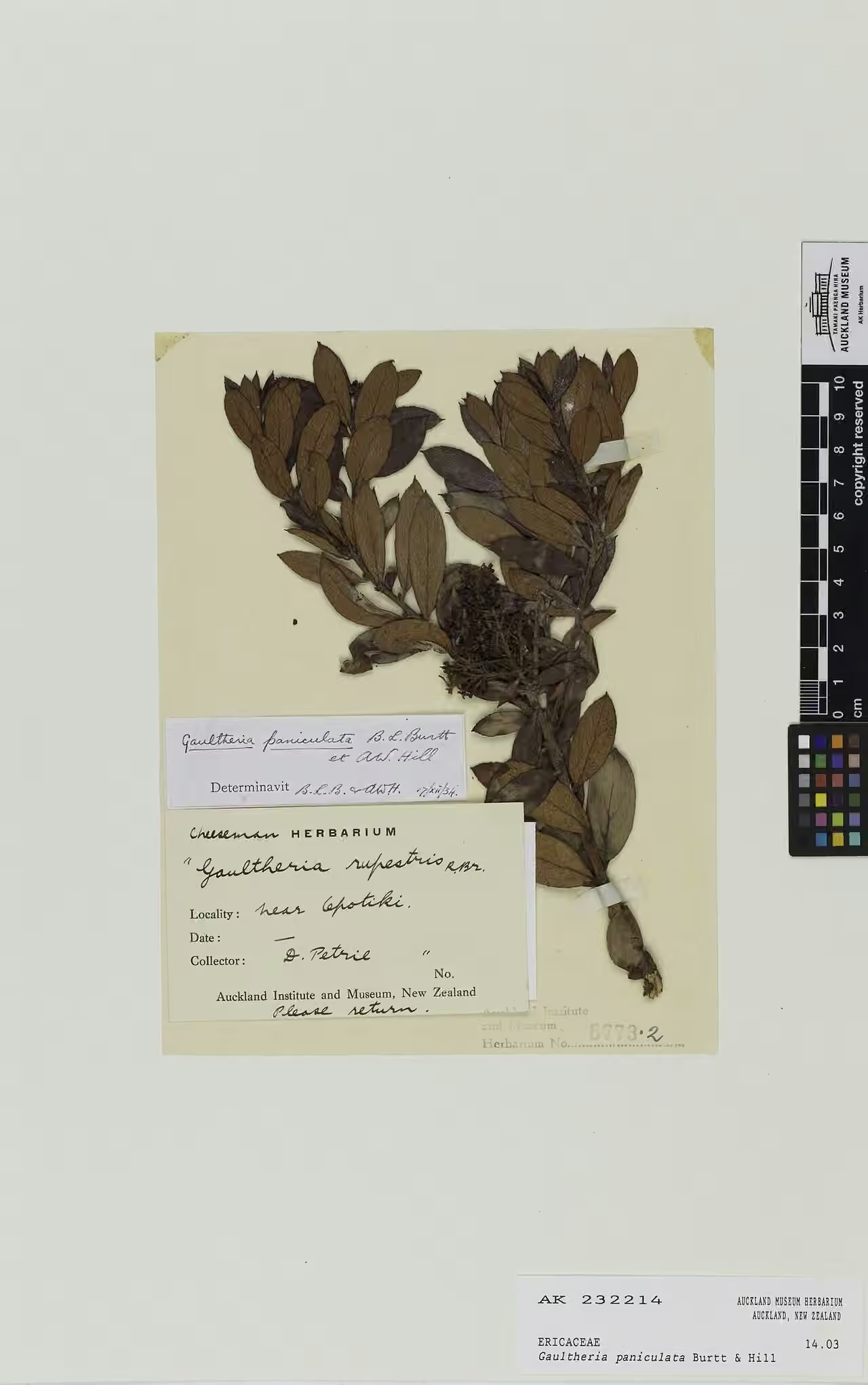
Gaultheria paniculata
Gaultheria paniculata
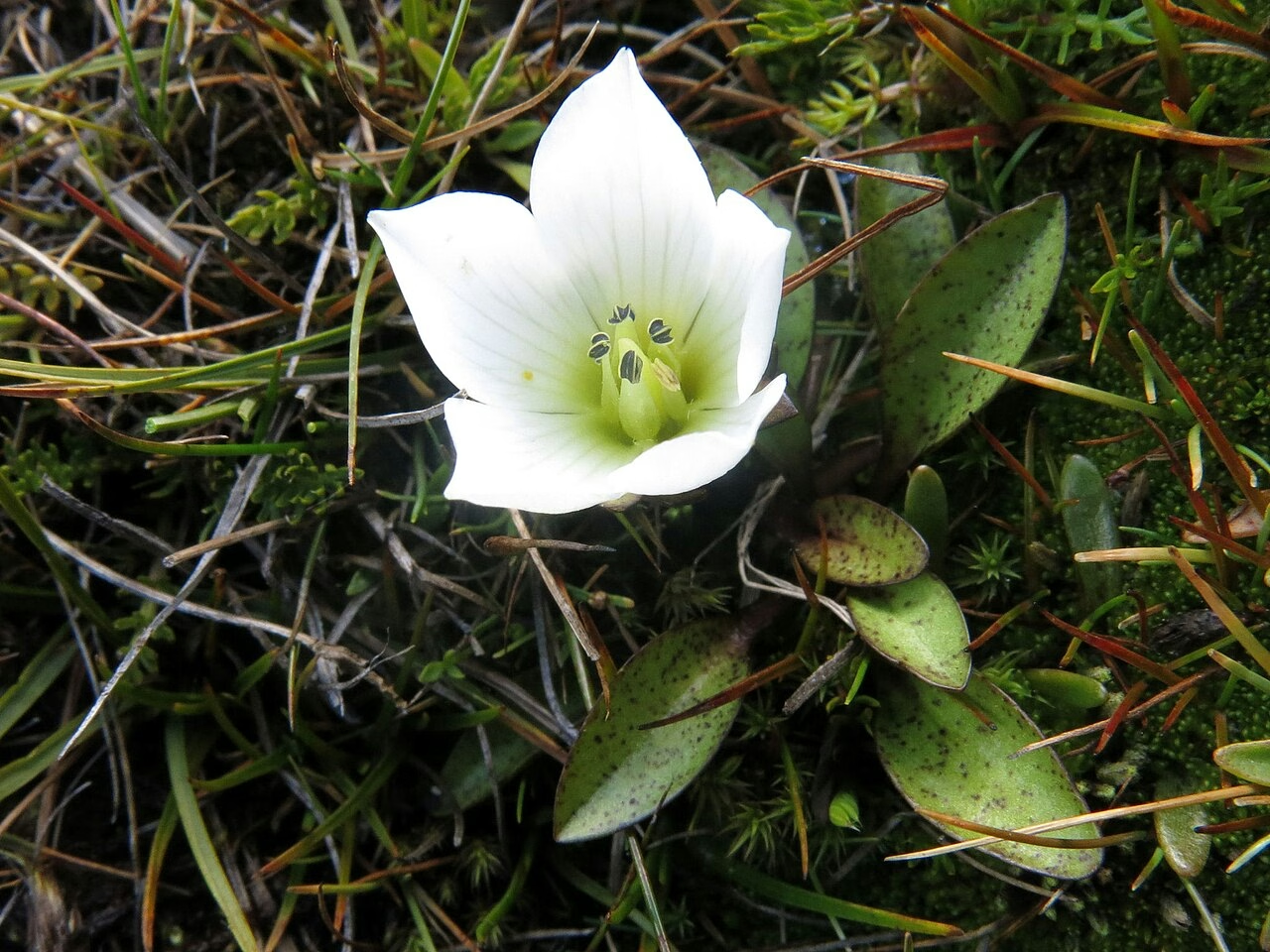
Gentianella amabilis
Gentianella amabilis
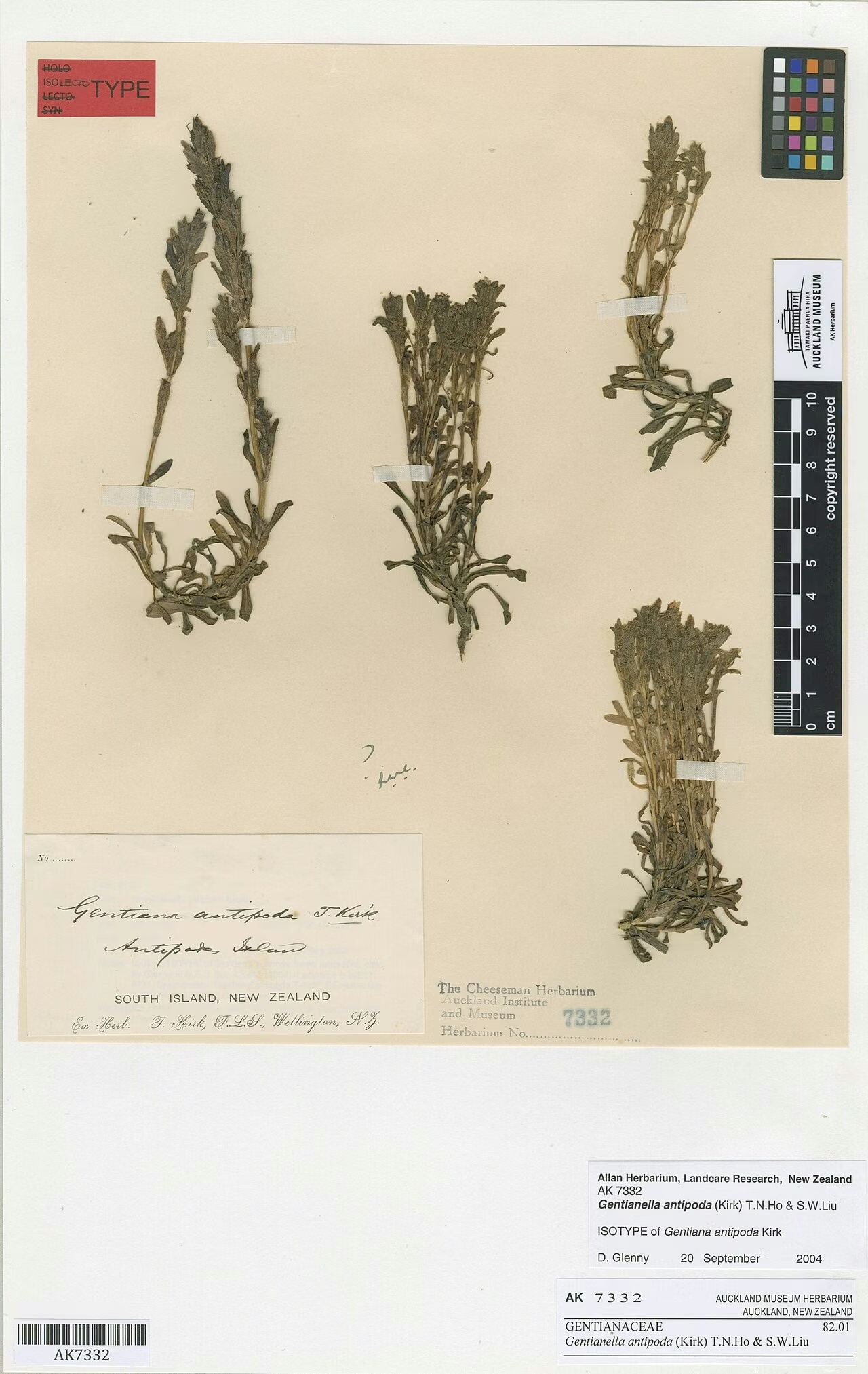
Antipodes Islands Gentian
Gentianella antipoda
Awahokomo Gentian
Gentianella calcis subsp. calcis
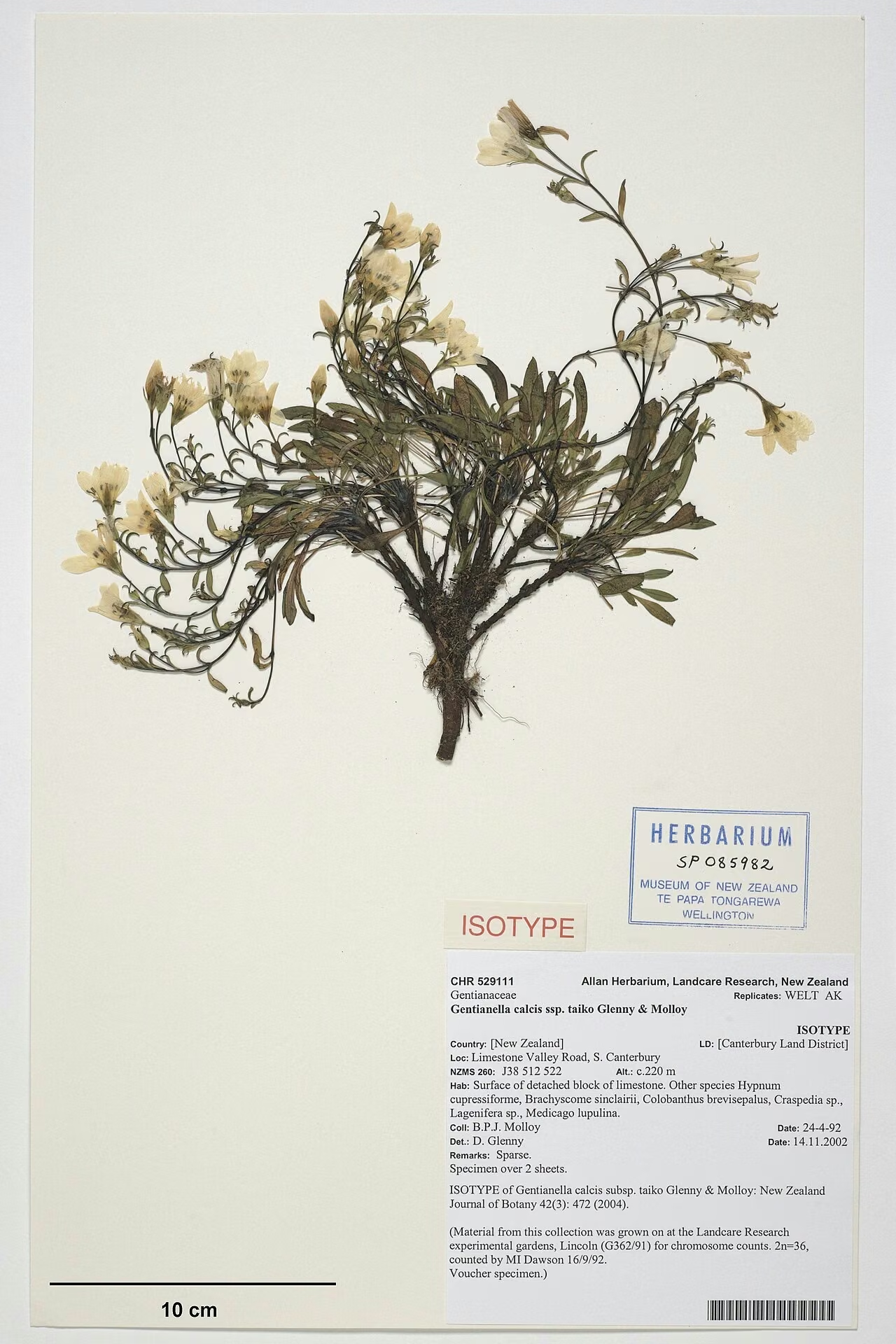
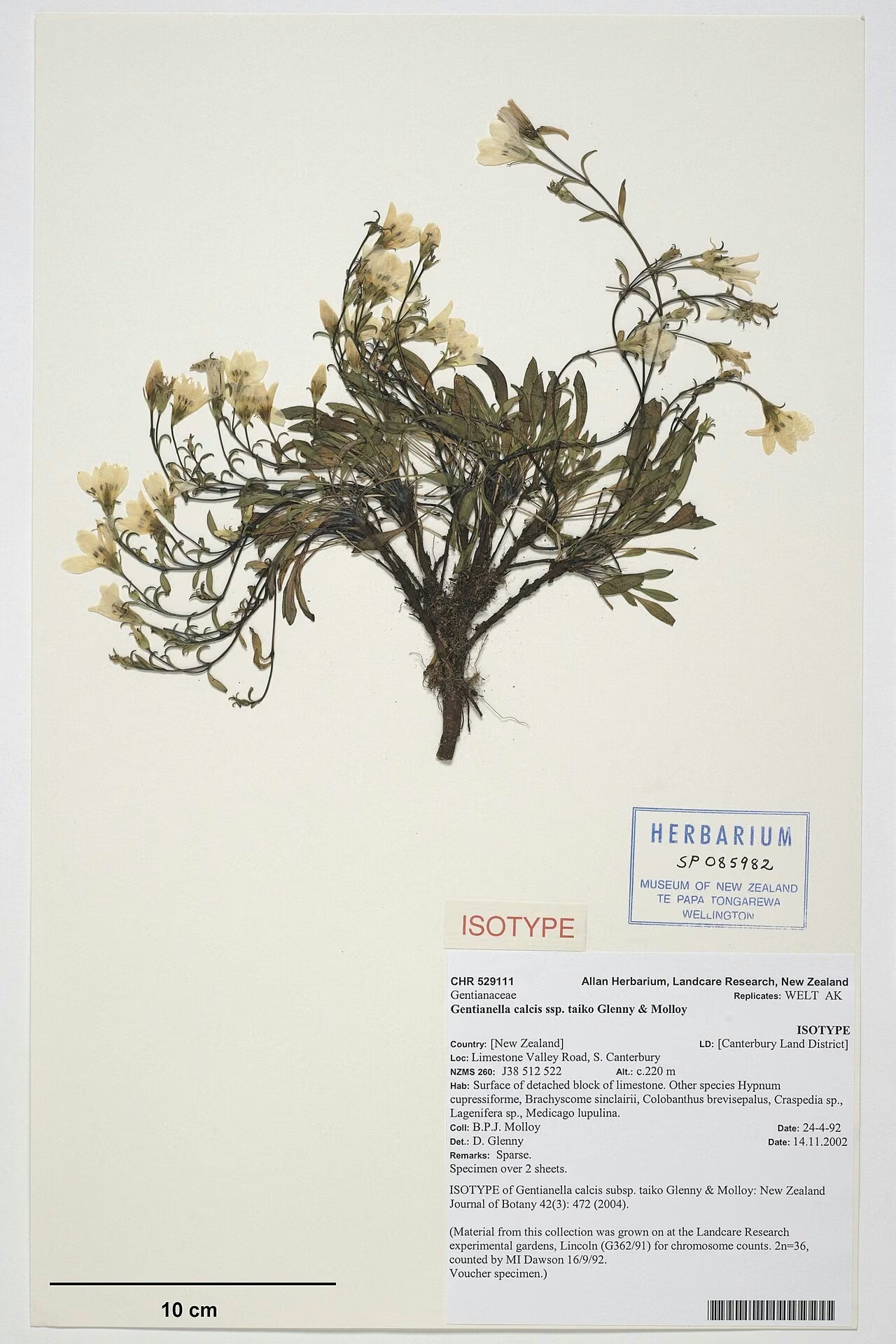
Pareora Gentian
Gentianella calcis subsp. taiko
Plant Conservation
Gaultheria parvula is ranked Not Threatened nationally and has held that status since 2004. In Otago it was assessed in 2025 as Regionally Not Threatened.
Like other small plants of eastern South Island tussock grasslands, it can be affected by weed invasion, such as Pilosella (mouse-ear hawkweed), and by land development. Protecting intact tussock grassland benefits it.
Frequently Asked Questions
How big does Gaultheria parvula grow?
It is a tiny creeping shrublet with upright tips only 2 to 5 cm tall, forming mats about 30 cm wide, which is why it was named parvula, meaning very small.
What was Gaultheria parvula called before?
William Colenso described it as Pernettya nana in 1890. When Pernettya was merged into Gaultheria, D.J. Middleton gave it the new name Gaultheria parvula in 1990.
Where can I see Gaultheria parvula in the wild?
It grows in the mountains of the eastern South Island, and NZPCN illustrates it from Hakataramea Pass and the Ahuriri Valley in the Waitaki catchment.
Sources and Further Reading
The botanical, growing, and conservation details for Snowberry (Gaultheria parvula) on this page draw on the New Zealand plant references below. Consult them for full technical records and the latest distribution data.