Snowberry
Gaultheria nubicola
Last updated:
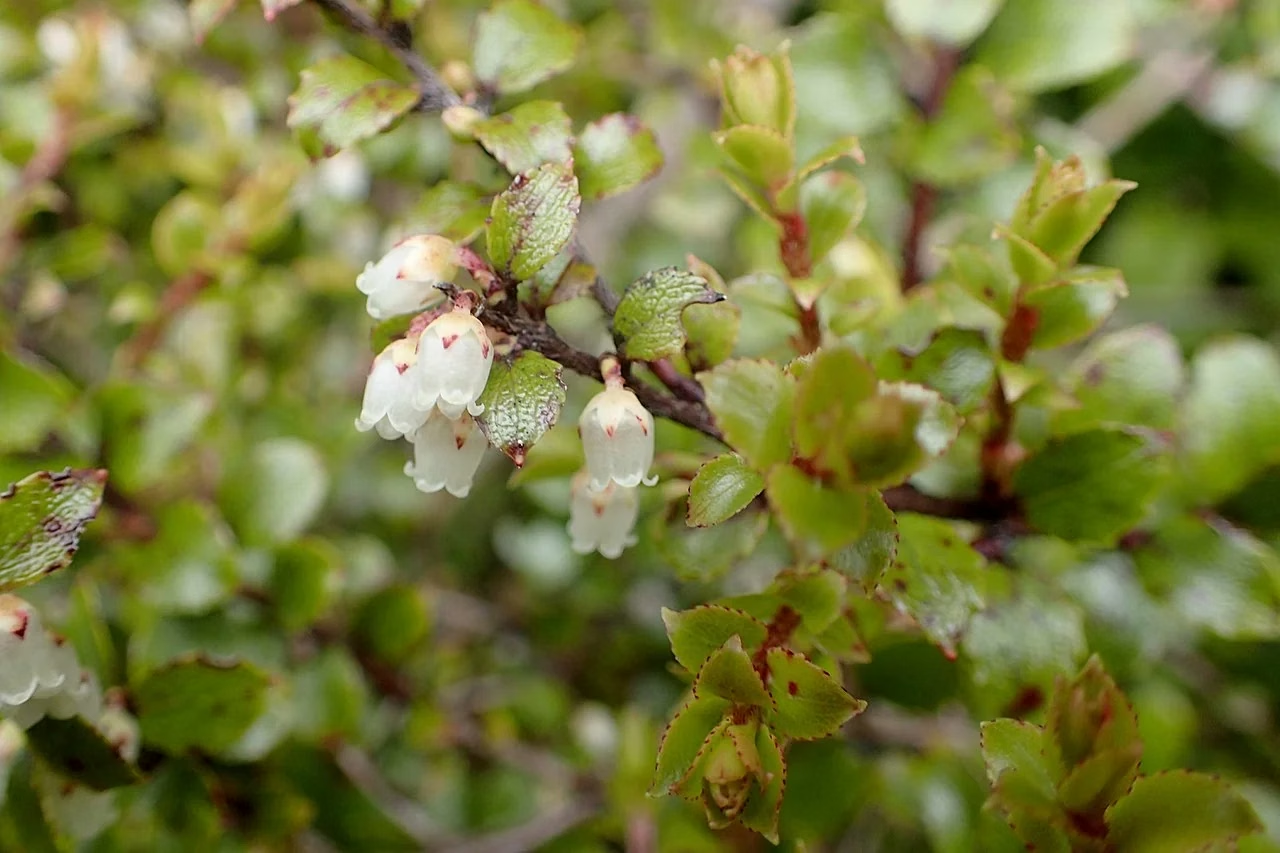
Gaultheria nubicola is a small, densely matted, creeping shrublet endemic to New Zealand, forming patches up to about 1 m across in the mountains of the South Island. Its stems are almost hidden by crowded, very thick, glossy leaves 3 to 7 mm long, each with a few small dark-tipped teeth. Single white bell-shaped flowers sit among the leaves, followed by round berries about 5 mm across that may stay greenish or turn white or red. The name nubicola means cloud dweller, a fitting name for a plant of wet alpine tussock, herbfield and fellfield. It is ranked Not Threatened nationally, though uncommon in Otago. Explore more native ground covers in our native plant guide.
Plant Description
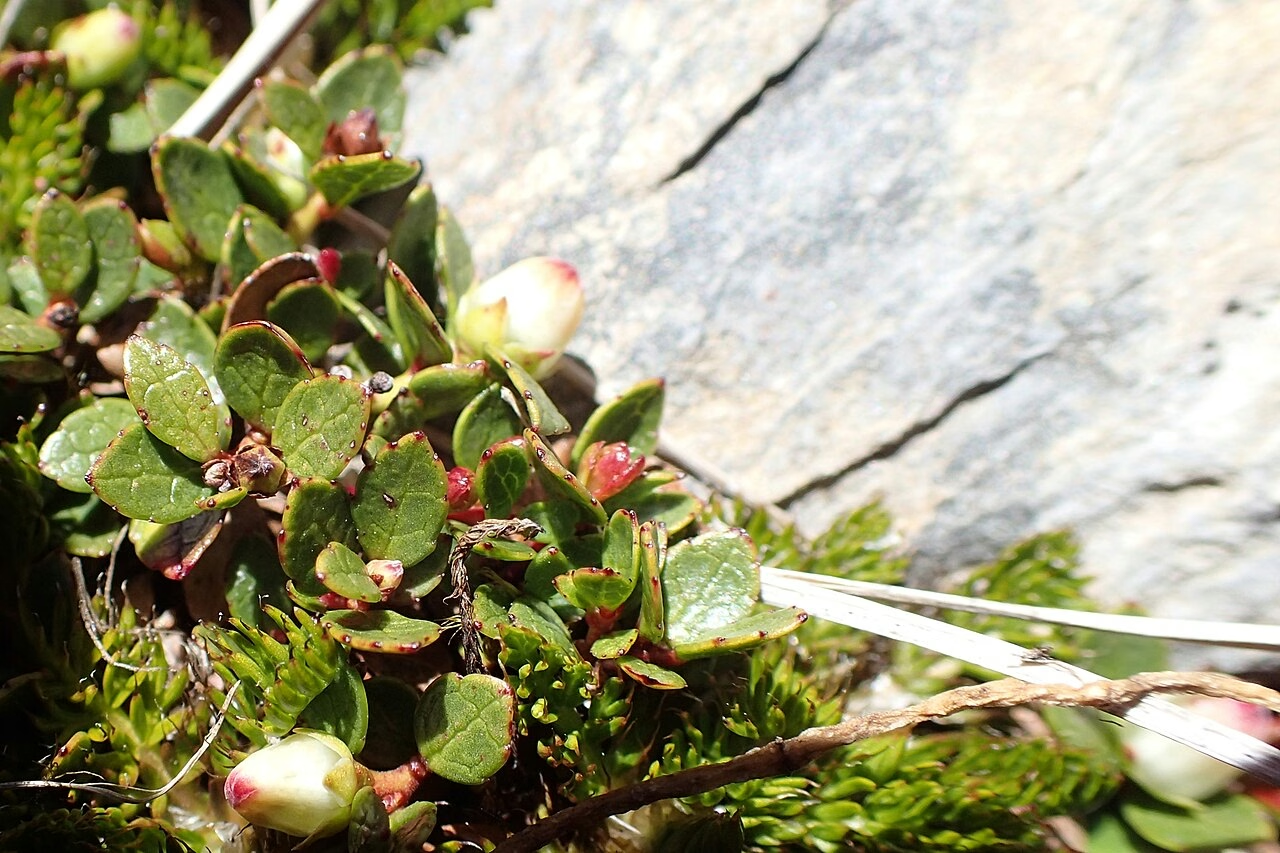
Gaultheria nubicola is a small, creeping, densely matted and much-branched shrublet. Its erect branchlets are only about 3 to 5 cm long, and the twigs are largely hidden by the leaves. The alternate leaves are close together, 3 to 7 mm long and 2 to 4 mm wide, very thick and leathery, glossy green, with impressed main veins and three to five small dark-tipped notches along the margin.
The flowers are solitary in the leaf axils, white and bell-shaped, scattered over the mat. The fruit is a globose berry about 5 mm long, 3 to 4 mm wide according to NZPCN, which may remain more or less green or ripen white or red.
Among the creeping New Zealand Gaultheria, G. nubicola is recognised by its relatively broad, very thick, glossy leaves with a few dark-tipped teeth. Gaultheria parvula of the eastern South Island has smaller, narrower brownish leaves with paler veins, while G. depressa usually has larger, more toothed leaves and bigger, more colourful fruit.
Quick Facts
| Scientific Name | Gaultheria nubicola |
|---|---|
| Height | A few centimetres; erect branchlets 3 to 5 cm long |
| Spread | Mats up to about 1 m wide |
| Water Needs | Moist; grows in wet tussock, seeps and fellfield |
| Light | Full sun, open alpine sites |
| Frost Tolerance | High; an alpine species |
| Salt Tolerance | No reliable information; one Stewart Island record is from coastal dunes |
| Growth Rate | Slow |
| Lifespan | Long-lived perennial |
Climate Best Suited to
Suits cold, wet alpine and subalpine climates with snow cover in winter, frequent cloud and cool summers. It is poorly suited to warm lowland gardens.
Regional Suitability
| City | Climate Suitability |
|---|---|
| Auckland | Low |
| Wellington | Low |
| Christchurch | Low |
| Dunedin | Medium |
Plant Habitat
Gaultheria nubicola is endemic to New Zealand and NZPCN gives its range as the mountain regions of the South Island. Herbarium specimens include collections from Arthur's Pass, the Craigieburn Range and the Lange Range above the Wilkinson River in Westland, where it was recorded at about 1220 m. It has also been collected on Stewart Island/Rakiura, where one plant was found commonly on the back of a dune at Doughboy Bay.
Its typical habitat is wet alpine snow tussock, herbfield and fellfield, often around seeps and on steep rocky slopes. NZPCN rates it as a facultative wetland plant, meaning it grows both in wet and in drier ground.
Growing Requirements
Soil Requirements
It grows on thin, acidic, often peaty or stony alpine soils that stay moist but are not stagnant.
- Acidic, low-fertility soil with peat or fine bark
- Gritty, free-draining texture
- No lime or added fertiliser
Light Requirements
It is a plant of open, treeless alpine country and needs good light to remain compact and flower.
- Full sun with cool temperatures
- Keep taller plants from overshadowing the mat
Water Requirements
Wet tussock, seeps and misty slopes keep its roots moist through the growing season.
- Never let the root zone dry out
- Good drainage is still needed to prevent rot
Planting and Establishing
This is a plant for specialist alpine growers rather than general gardens. Grow it in a trough, alpine house or cool, sunny rock garden with an acidic gritty mix that holds moisture, and top-dress with fine gravel so the mat sits dry while the roots stay damp.
It is not commonly available in nurseries. Do not dig plants from the wild; obtain material from growers or from small cuttings taken with permission.
Ecological Role
Its white bell flowers are visited by small insects, but specific pollinators of this species are not documented in the sources consulted. NZPCN, citing Thorsen and colleagues (2009), records that its fleshy berries are dispersed by invertebrate frugivory rather than mainly by birds.
As a dense creeping mat it helps cover bare ground in fellfield and herbfield, trapping moisture and organic matter among the stones. Like other New Zealand Gaultheria it may hybridise with related species where they grow together.
Uses & Significance
Garden Uses
Best suited to alpine enthusiasts who can provide cool, moist, bright conditions.
- Alpine troughs and scree beds
- Cool-climate rock gardens
- Botanical and educational collections of alpine plants
Ecological Value
It is a small but characteristic part of wet alpine plant communities in the South Island.
- Fruit eaten by invertebrates
- Mat cover for bare alpine ground
- Nectar for small alpine insects
Landscaping Uses
In a trough or scree garden, let Gaultheria nubicola spread between stones alongside small Celmisia, Raoulia and dwarf Coprosma. Its glossy dark leaves and white or red berries add interest on a small scale.
It needs space free of vigorous neighbours, as taller plants will soon smother such a low mat.
Seasonal Care Calendar
Spring
Growth resumes as snow melts, with new leaves forming at the tips of the short branchlets.
- Top-dress with fresh grit
- Check plants for winter damage
Summer
Single white bell flowers appear among the leaves, followed by small berries.
- Keep the root zone moist
- Shade troughs from hot afternoon sun in warm districts
Autumn
Berries ripen, staying greenish or turning white or red.
- Collect ripe berries for seed
- Take small cuttings
Winter
In the wild the mat lies under snow and is dormant.
- Protect from prolonged winter wet in lowland gardens
- No feeding required
When to Prune and How Much
No regular pruning is needed. Snip out any dead patches in spring so new growth can fill the gap.
If the mat spreads beyond its space, trim the outer stems lightly; rooted pieces removed this way can be potted as new plants.
How to Grow Snowberry
Gaultheria nubicola can be raised from seed taken from its berries or from small cuttings and rooted pieces of the creeping mat. As an alpine plant it grows slowly, so expect young plants to take a couple of years to form a useful mat. Propagation is best done by growers with an alpine house or shaded cold frame where temperatures stay cool. Never remove plants from the wild; take small amounts of seed or cuttings only with permission and from plants that will not be harmed.
From Seed
Seed comes from the small fleshy berries. Mountain heaths often germinate better after a period of winter cold, so sow in autumn and leave the pots outside.
- Collect ripe berries in autumn and squash them in water to free the tiny seeds
- Dry the seed briefly on paper
- Sow on the surface of a fine acidic mix of peat-free seed compost and grit
- Keep the pots moist and cool outdoors through winter
- Prick out seedlings into small pots when they have a few true leaves
From Cuttings and Rooted Layers
The creeping stems often root where they touch the ground, which makes layering simple. Short tip cuttings of the current season's growth also root in a humid, cool frame.
- Look for stems that have already rooted at the edge of the mat and sever them with a little soil
- Alternatively take 2 to 4 cm tip cuttings in late summer
- Insert cuttings into a gritty acidic mix and keep humid and shaded
- Pot rooted pieces into small pots and grow on in a cool frame
- Plant out once the root ball holds together
Pests & Diseases
No specific pests or diseases are recorded for Gaultheria nubicola in the sources consulted. In cultivation the main problems are drying out in warm weather and rotting in winter wet where drainage is poor.
In the wild, competition from introduced grasses and browsing animals in alpine grassland can affect small mat plants like this one.
Cultural Significance
No Māori name or traditional use specific to Gaultheria nubicola was found in the sources consulted.
The species was long known as Pernettya alpina. In 1990 D.J. Middleton and C.C. Wilcock published a critical examination of Pernettya and concluded it could not be kept separate from Gaultheria. The New Zealand plant was transferred to Gaultheria under the new name nubicola, meaning cloud dweller.
Bonus Tip
When identifying a creeping Gaultheria in the mountains, look closely at a leaf: G. nubicola has very thick, glossy, broad leaves with only three to five small dark-tipped teeth, whereas G. parvula has narrower brownish leaves with pale veins.
Related Plants
Explore other native plants that share similar characteristics or habitats with Snowberry (Gaultheria nubicola), offering further insights into New Zealand's diverse flora. These related species provide context and opportunities for complementary planting in your garden.
Dwarf Bedstraw
Asperula perpusilla
Native Bedstraw
Galium trilobum
Gaultheria colensoi
Gaultheria colensoi
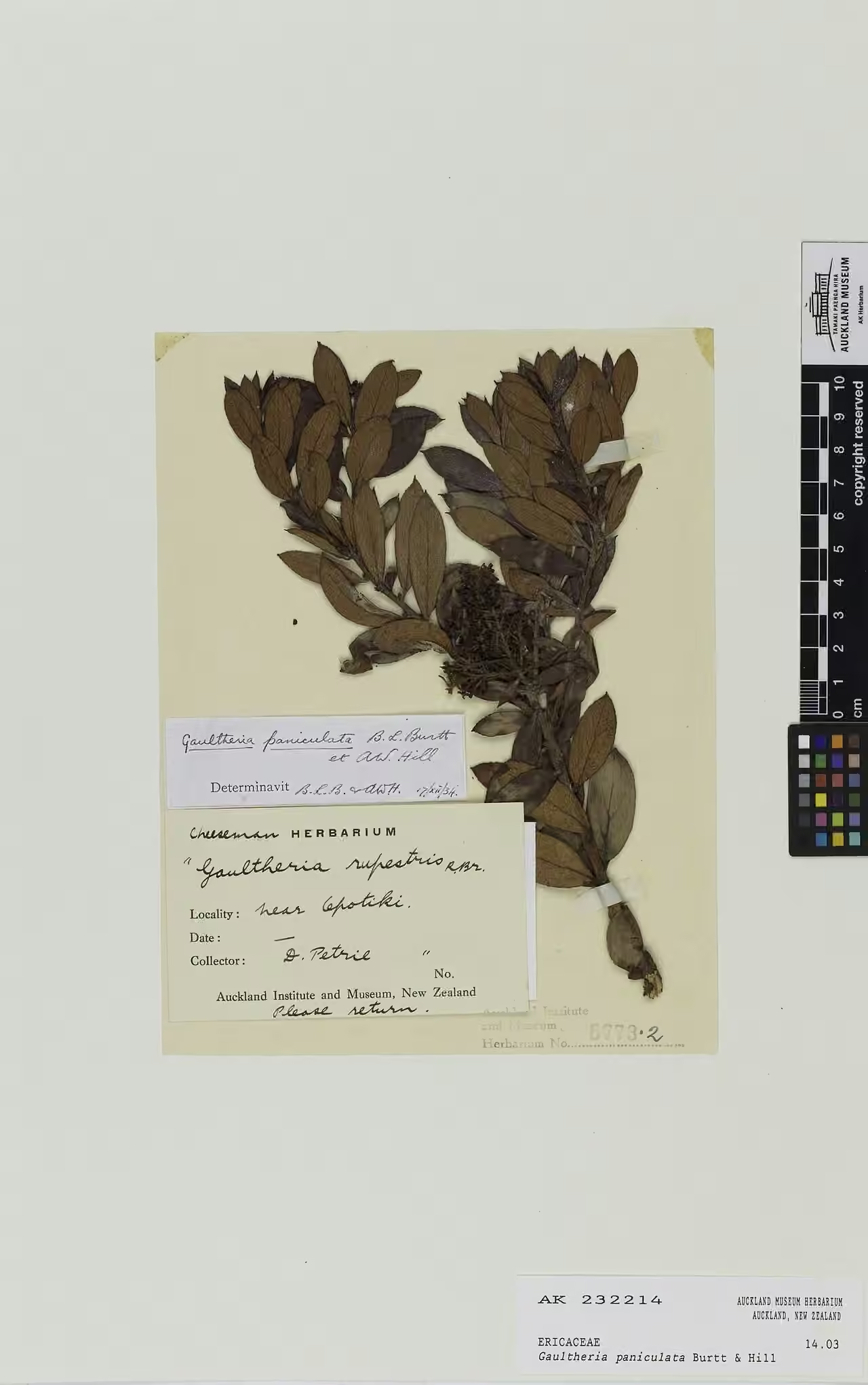
Gaultheria paniculata
Gaultheria paniculata
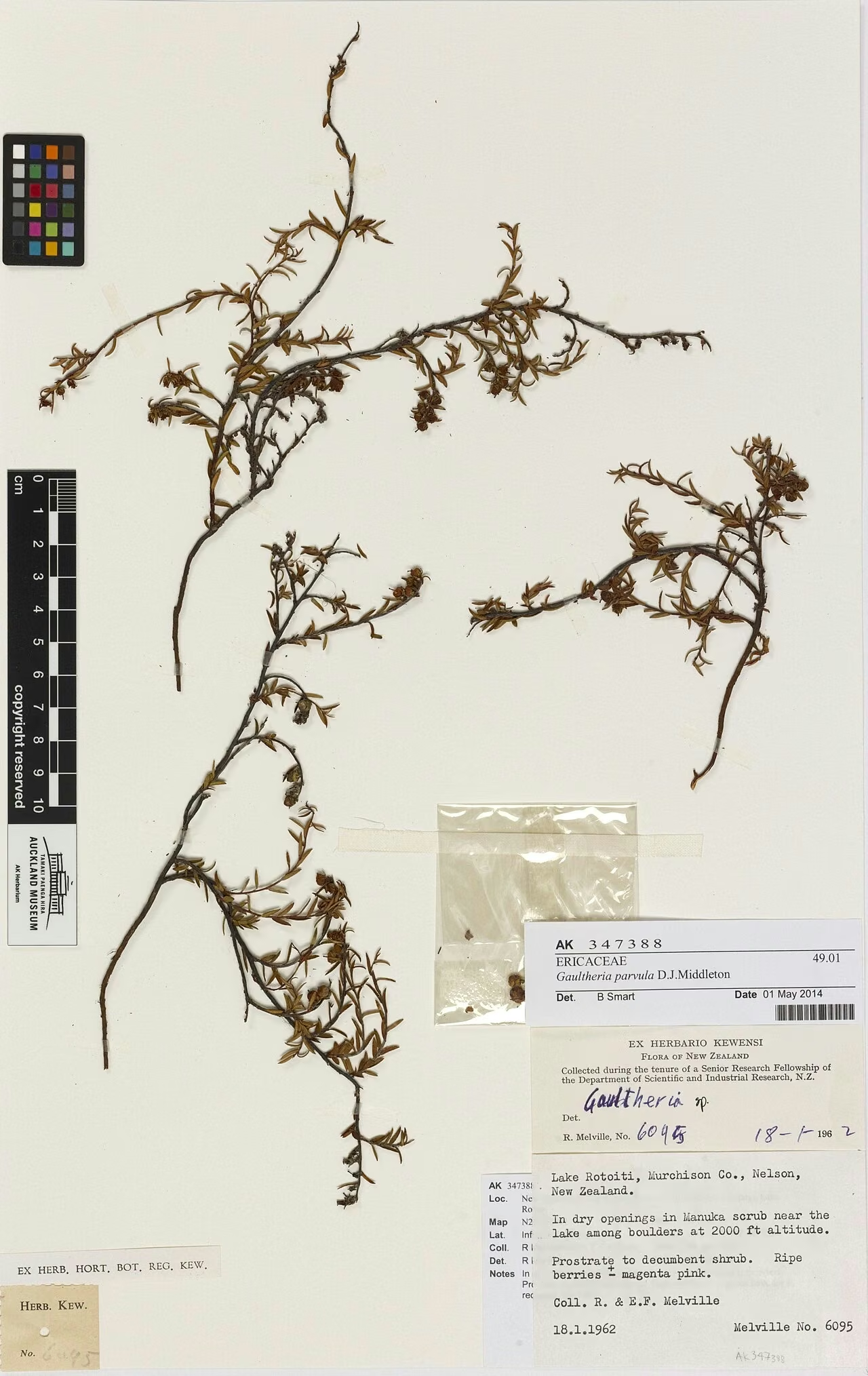
Gaultheria parvula
Gaultheria parvula
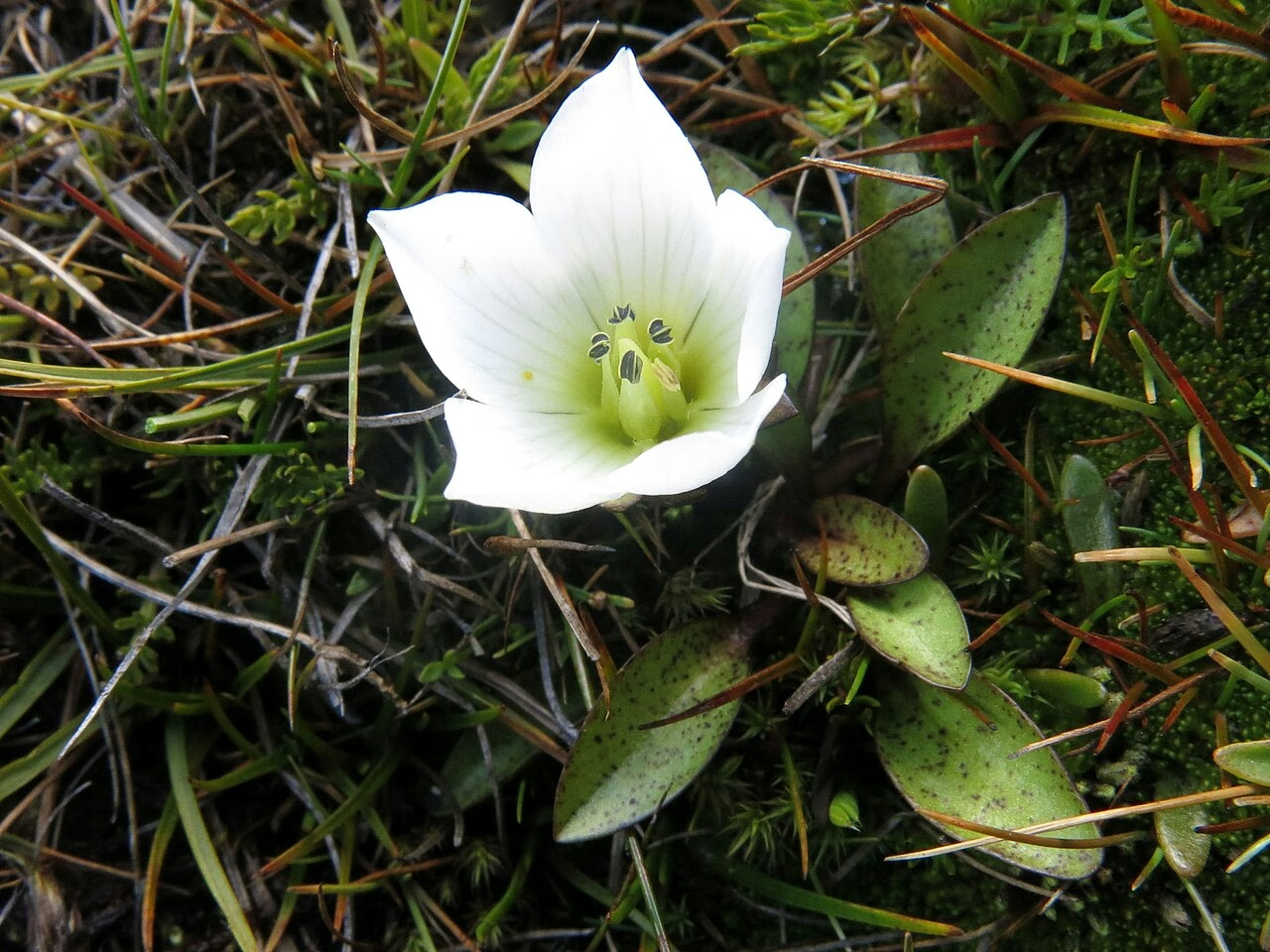
Gentianella amabilis
Gentianella amabilis
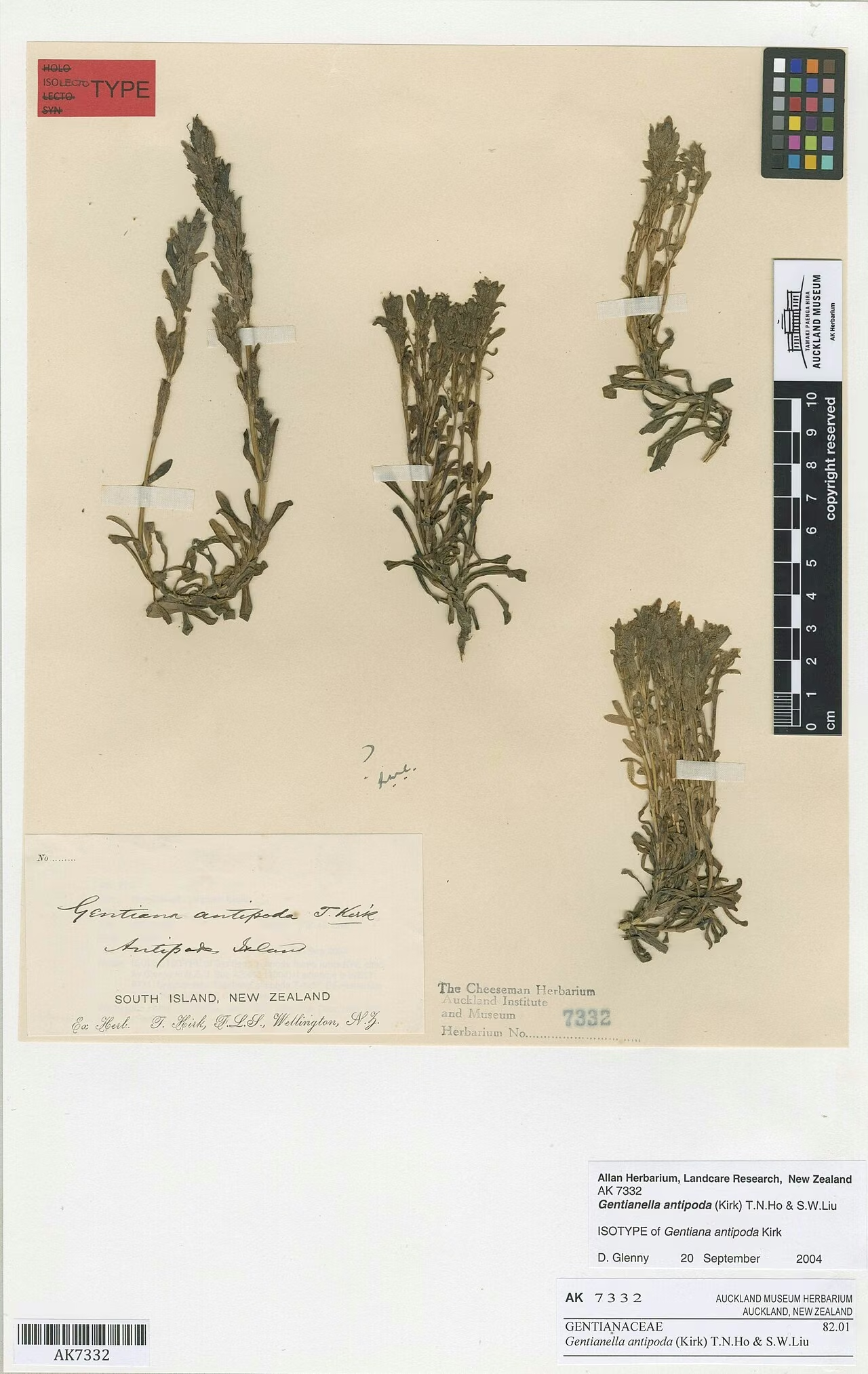
Antipodes Islands Gentian
Gentianella antipoda
Bush Snowberry
Bush Snowberry
Plant Conservation
Gaultheria nubicola is ranked Not Threatened nationally (2023). In Otago it was assessed in 2025 as Regionally At Risk - Regionally Naturally Uncommon, reflecting its scarcity in that region.
Much of its alpine habitat lies within conservation land. Keeping alpine grasslands free of invasive weeds and browsing animals, and avoiding trampling of wet seepage areas, helps protect it.
Frequently Asked Questions
What does nubicola mean?
Nubicola means cloud dweller, referring to the misty alpine and subalpine places where this creeping Gaultheria grows in the South Island mountains.
Is Gaultheria nubicola the same as Pernettya alpina?
Yes. It was known as Pernettya alpina until Pernettya was merged into Gaultheria, and D.J. Middleton published the new name Gaultheria nubicola in 1990.
Where is Gaultheria nubicola found?
It grows in mountain regions of the South Island, with herbarium records from places such as Arthur's Pass and the Lange Range in Westland, and it has also been collected from dunes at Doughboy Bay on Stewart Island/Rakiura.
Are the berries of Gaultheria nubicola eaten by animals?
NZPCN notes that its fleshy berries are dispersed by invertebrate frugivory, meaning insects or other invertebrates eat the fruit and move the seed.
Sources and Further Reading
The botanical, growing, and conservation details for Snowberry (Gaultheria nubicola) on this page draw on the New Zealand plant references below. Consult them for full technical records and the latest distribution data.