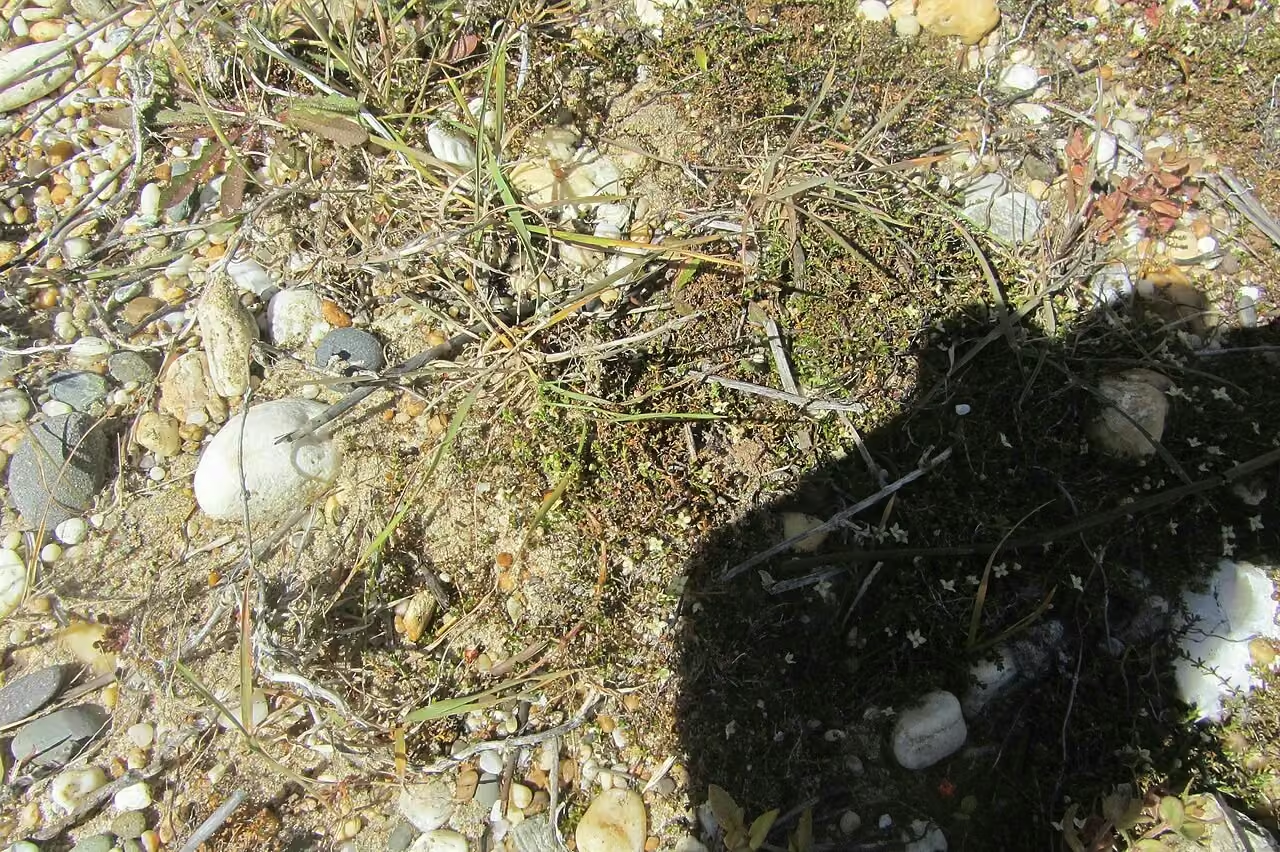
Dwarf Bedstraw
Asperula perpusilla
Last updated:
Dwarf bedstraw (Galium perpusillum, now treated as Asperula perpusilla) is a tiny perennial herb endemic to New Zealand. It forms low patches or sometimes small cushions of slender stems under 10 to 12 cm long, with minute shining leaves only 1.3 to 5 mm long arranged in whorls of four. Its whitish or creamy yellow flowers, mostly either male or female, appear from November to February, followed by round fruits about 2 mm across. Herbarium records place it in montane and subalpine tussockland, wet ground at the base of tussocks and stony lagoon edges. It is ranked Not Threatened but is easily overlooked because of its size. Explore more native ground covers in our native plant guide.
Plant Description
Dwarf bedstraw is a small perennial herb in the Rubiaceae, sometimes forming cushions. Its stems are slender, angular and prostrate, decumbent or erect, hairless or slightly hairy, and usually under 10 to 12 cm long. Leaves and leaf-like stipules sit in whorls of four. They are stalkless and often overlapping, narrowly lanceolate to linear-lanceolate, oblanceolate or narrowly elliptic, about 1.3 to 4 (rarely 5) mm long and 0.5 to 1.3 mm wide, with shining surfaces, tiny hairs on the margins and a short sharp point at the tip.
The flowers are solitary in the leaf axils and at shoot tips, and are generally unisexual. Male flowers are on short stalks up to about 3 mm long, while female flowers are almost stalkless. The corolla is whitish or creamy yellow, with a very short tube and a limb about 1.5 to 3.5 mm across, divided into more or less oblong lobes. The fruit splits into mericarps about 2 mm across, which are round, hairless and finely papillate.
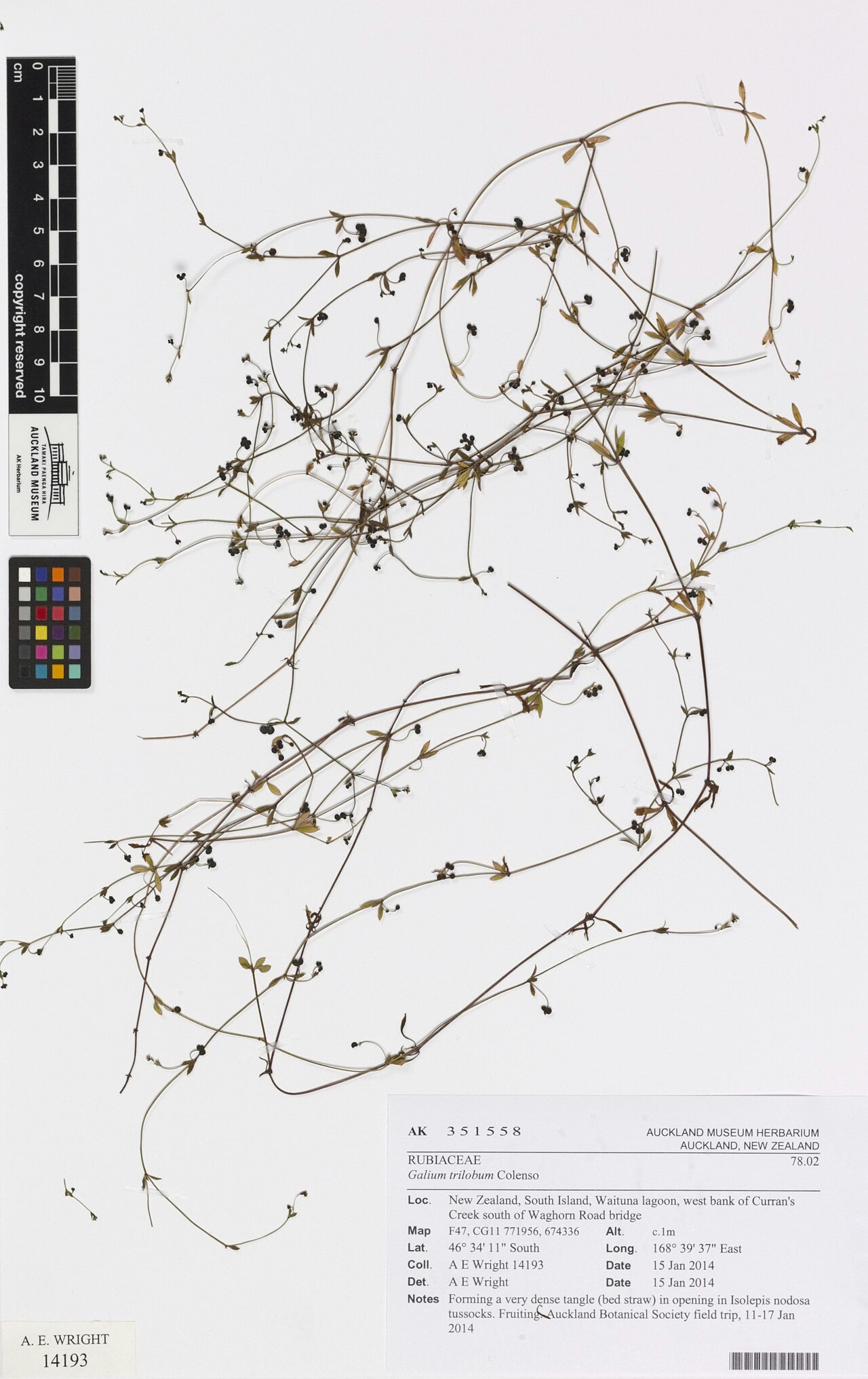
Its very small, shining, sharp-tipped leaves in fours, its tiny stature and its mostly unisexual flowers help separate it from other native bedstraws such as Galium trilobum and Galium propinquum, which are larger, straggling plants of lowland to montane damp places.
Quick Facts
| Scientific Name | Asperula perpusilla |
|---|---|
| Height | Under 0.05 m; stems to 0.1-0.12 m long |
| Spread | Small patches or cushions, a few centimetres to about 10 cm |
| Water Needs | Moist; often in damp ground |
| Light | Full sun in open tussockland |
| Frost Tolerance | High; montane to subalpine |
| Salt Tolerance | No information available |
| Growth Rate | No information available |
| Lifespan | Perennial |
Climate Best Suited to
It suits cool montane to subalpine climates with cold winters, frost and snow, and moist growing seasons.
Regional Suitability
| City | Climate Suitability |
|---|---|
| Auckland | Low |
| Wellington | Low |
| Christchurch | Medium |
| Dunedin | Medium |
Plant Habitat
Asperula perpusilla is endemic to New Zealand. Herbarium collections held by Landcare Research include material from Canterbury and Otago, including the Lake Tekapo, Lake Wānaka and Makarora River areas, and from the Wellington region, at altitudes from about 700 m to over 1500 m. NZPCN rates it Data Deficient in the Wellington region, reflecting how little is known of its northern populations.
Specimen labels describe it growing among stones at lagoon edges, at the base of tussocks on wet ground, in tussock grassland with schist boulders and in short subalpine shrubland with a diverse understorey of herbs. Its wetland indicator rating is Facultative, meaning it occurs in both wetland and non-wetland settings.
Growing Requirements
Soil Requirements
It grows in thin montane soils, from wet ground and stony margins to tussock grassland among boulders.
- Moist, stony or peaty soils
- Low-fertility tussockland soils
- Open ground free of tall competition
Light Requirements
It is a plant of short, open vegetation where it is not shaded by tall plants.
- Full sun or the light shade of tussock bases
- Avoid dense, tall cover
Water Requirements
Many collections come from wet ground, and it is rated Facultative for wetlands, so steady moisture suits it.
- Keep moist through the growing season
- Tolerates seasonally wet ground
Planting and Establishing
Dwarf bedstraw is not grown commercially and there is no established cultivation practice for it. A specialist could try it in a damp trough or alpine pan with gritty, moisture-retentive mix in an open position.
Do not dig up wild plants. Any material for cultivation should come from seed or a small rooted piece collected with permission.
Ecological Role
Asperula perpusilla is part of the small-herb flora that fills gaps between tussocks, stones and shrubs in montane and subalpine vegetation. Its largely unisexual flowers are tiny, and the insects that visit them have not been documented in the sources consulted.
NZPCN, citing Thorsen and colleagues' 2009 study of seed dispersal in the New Zealand flora, records that its mericarps are dispersed by attachment, for example to the fur, feathers or clothing of passing animals, and possibly also by wind.
Uses & Significance
Garden Uses
It has very limited garden use because of its tiny size and lack of availability.
- Possible in alpine troughs or pans for specialists
- Of interest to botanical collectors
Ecological Value
It contributes to the diversity of the small endemic herbs that make up montane tussockland and wetland margins.
- Endemic component of tussockland flora
- Covers small patches of bare ground among stones
- Fruits may be carried by animals to new sites
Landscaping Uses
There is no practical landscaping role for dwarf bedstraw. For a damp shaded garden spot, the larger native Galium trilobum or Galium propinquum are better choices.
In restoration of montane wetland margins, maintaining open, short vegetation lets small herbs like this persist on their own.
Seasonal Care Calendar
Spring
New growth begins as snow melts and soils warm.
- Shoots lengthen
- Good time to sow any collected seed
Summer
Tiny whitish or creamy yellow flowers open from November to February.
- Main flowering season
- Fruits start forming
Autumn
Round, papillate fruits about 2 mm across ripen and split into mericarps.
- Fruits ripen
- Collect seed if needed
Winter
Plants are dormant, often under snow or frost in their mountain habitats.
- Little growth
- Fully frost hardy
When to Prune and How Much
No pruning is required for such a small herb.
In a pan or trough, simply remove any dead stems and keep surrounding plants from overtopping it.
How to Grow Dwarf Bedstraw
NZPCN gives no propagation information for Asperula perpusilla, and it is not commercially available. Its biology suggests two possible methods: seed from the small two-part fruits, and division of rooted patches, since its prostrate stems form low mats or cushions. These are general approaches used for small Rubiaceae herbs rather than tested methods for this species, so results are uncertain. Because flowers are mostly unisexual, a fruiting plant may need both male and female flowers nearby to set seed.
From Seed
Collect the round mericarps when they are ripe in late summer or autumn. Because it is a montane plant, outdoor sowing over winter allows natural cold to help break any dormancy.
- Collect ripe fruits after the November to February flowering season.
- Sow on the surface of a moist, gritty seed mix.
- Cover with a very thin layer of fine grit.
- Leave outdoors over winter in a cool, sheltered place.
- Keep moist and watch for seedlings in spring.
- Pot seedlings into small pans of gritty mix once large enough to handle.
By Division
A cultivated patch or cushion can be carefully split, keeping roots attached to each piece. Spring is the best time, as new growth starts.
Keep divisions reasonably large, with several rooted shoots each, because tiny fragments of such a small plant dry out quickly and are hard to re-establish.
- Lift a cultivated plant in early spring.
- Tease it apart into a few rooted pieces.
- Replant into moist, gritty mix and keep shaded until established.
Pests & Diseases
No pests or diseases are recorded for dwarf bedstraw. In the wild, the main pressures on small montane herbs are invasion by taller exotic grasses and weeds, and trampling or grazing of wet ground.
In cultivation, slugs and drying out are the likely risks for so small a plant.
Cultural Significance
No traditional Māori name or use for Asperula perpusilla is recorded in the sources consulted.
The name has moved between genera: Joseph Hooker described it as Asperula perpusilla in 1853, H. H. Allan transferred it to Galium, and NZPCN has returned it to Asperula. Asperula refers to rough leaves, from Greek asper, and perpusilla means tiny or very small.
Bonus Tip
To find dwarf bedstraw, kneel at the base of tussocks on damp montane ground and look for minute, shiny, sharp-tipped leaves in fours. A hand lens helps confirm the whorls of four and the tiny flowers.
Related Plants
Explore other native plants that share similar characteristics or habitats with Dwarf Bedstraw (Asperula perpusilla), offering further insights into New Zealand's diverse flora. These related species provide context and opportunities for complementary planting in your garden.
Plant Conservation
Asperula perpusilla is ranked Not Threatened (2023) and has held that ranking in every assessment since 2004. It is Regionally Not Threatened in Otago and Regionally Data Deficient in Wellington.
Protecting montane tussockland and wetland margins from weed invasion, drainage and heavy trampling supports this and other small native herbs.
Frequently Asked Questions
Is Galium perpusillum the same as Asperula perpusilla?
Yes. Hooker described it as Asperula perpusilla in 1853, Allan later moved it to Galium as Galium perpusillum, and NZPCN now uses Asperula perpusilla as the accepted name.
How small is dwarf bedstraw?
Its stems are usually less than 10 to 12 cm long and its leaves are only about 1.3 to 5 mm long and up to 1.3 mm wide, so plants form very low patches or small cushions.
Where does dwarf bedstraw grow?
Herbarium specimens come from Canterbury, Otago and the Wellington region, mostly between about 700 m and over 1500 m, from wet ground at the base of tussocks, stony lagoon edges and tussock grassland.
When does Asperula perpusilla flower?
The Flora of New Zealand records flowering from November to February. The flowers are tiny and whitish or creamy yellow.
Sources and Further Reading
The botanical, growing, and conservation details for Dwarf Bedstraw (Asperula perpusilla) on this page draw on the New Zealand plant references below. Consult them for full technical records and the latest distribution data.