Ewartia
Ewartiothamnus sinclairii
Last updated:
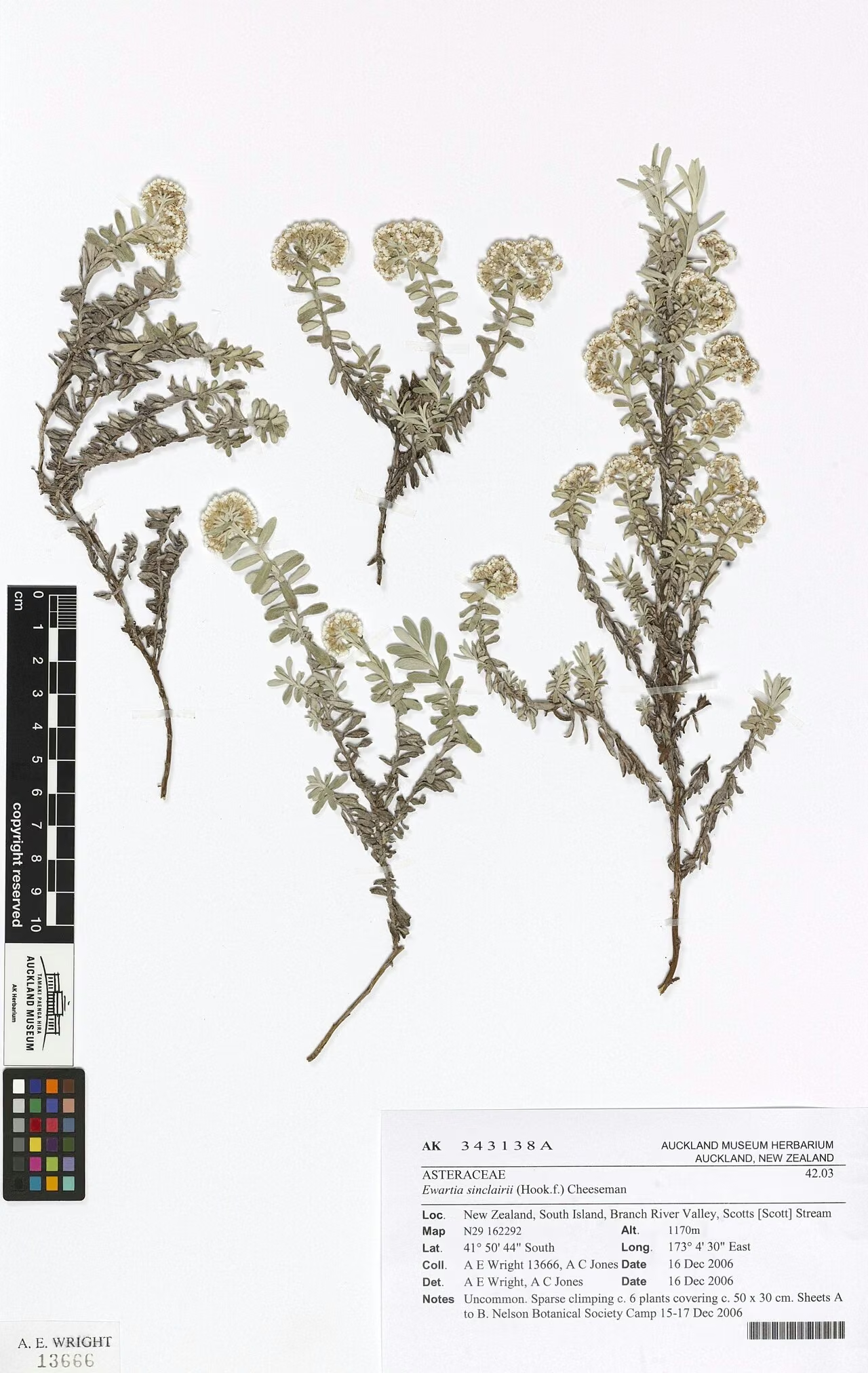
Ewartia (Ewartiothamnus sinclairii) is a small, densely white-woolly subshrub in the daisy family, endemic to Marlborough in the South Island. It is much-branched from a stout woody base and grows to roughly 0.4 to 0.8 m tall. It is virtually confined to streams draining into the upper Awatere and Clarence river catchments, where it clings to dry cliff faces in steep rocky gorges. Clusters of everlasting-type flower heads appear from October to February. It is the only species in its genus and is ranked At Risk - Naturally Uncommon because of its tiny natural range. Explore more native shrubs in our native plant guide.
Plant Description
Ewartiothamnus sinclairii is a perennial subshrub, much-branched from a stout woody base. The single most striking feature is the dense white tomentum (felted hair) that covers every part of the plant except the florets, so the whole shrub looks silver-white against dark rock. The leaves are small, 6 to 10 mm long and about 2 mm wide, lanceolate to spathulate, and closely overlapping (imbricate) along the branchlets.
The flower heads (capitula) are borne in clusters at the branch tips, often about 25 per cluster, with each cluster 15 to 20 mm across. They are typical of the everlasting daisy tribe Gnaphalieae. The fruits are small cypselae topped by a pappus of bristles that carries them on the wind.
It can superficially resemble species of Anaphalioides, but the conspicuous thick white hair covering separates it. It differs from Helichrysum, where it was once placed, by its heavy investment of hair and its spindle-shaped (fusiform) achenes. It is the only member of its genus.
Quick Facts
| Scientific Name | Ewartiothamnus sinclairii |
|---|---|
| Height | 0.4-0.8 m |
| Spread | No reliable figure recorded; a compact, much-branched subshrub |
| Water Needs | Low; grows on dry cliffs |
| Light | Full sun |
| Frost Tolerance | Good; inland Marlborough gorges have hard winter frosts |
| Salt Tolerance | No information available; an inland species |
| Growth Rate | No reliable information; probably slow in the wild |
| Lifespan | Perennial |
Climate Best Suited to
Ewartia suits the dry, sunny inland climate of Marlborough, with hot summers, cold frosty winters and low humidity. It struggles in humid, mild climates.
Regional Suitability
| City | Climate Suitability |
|---|---|
| Auckland | Low |
| Wellington | Low |
| Christchurch | Medium |
| Dunedin | Low |
Plant Habitat
Ewartiothamnus sinclairii is endemic to the South Island, where it is restricted to Marlborough. It is virtually confined to streams draining into the upper Awatere and Clarence river catchments, a dry inland region of greywacke ranges.
Its habitat is steep rocky gorges, usually dry cliff sides overhanging streams and rivers. NZPCN also records it occasionally on boulders and slopes nearby. The cliffs give it full sun, sharp drainage and refuge from browsing animals.
Growing Requirements
Soil Requirements
In the wild it roots into cracks in rock with very little soil. In cultivation NZPCN recommends a free-draining but deep soil.
- Sharply drained, gritty soil or rock crevices
- Deep root run if grown in a garden
- Avoid heavy, wet or poorly drained soil
Light Requirements
This is a sun-loving plant of exposed rock faces, and its white hairs reflect strong light and reduce water loss.
- Full sun
- Open, airy position
Water Requirements
It grows on dry cliffs and is adapted to drought. Overwatering and humid air are the main causes of failure in cultivation.
- Water sparingly once established
- Keep foliage dry
- Good air movement helps
Planting and Establishing
Plant nursery-raised stock in spring into a hot, sunny position with excellent drainage, such as a raised scree bed, a sunny wall top or a large trough of gritty mix. NZPCN notes it does best in full sun in a free-draining, deep soil, and that it is difficult to grow in humid climates.
Avoid planting in sheltered, damp corners where air is still. Mulch around the neck with stone chips rather than organic mulch so that the woolly stems are not kept wet.
Ecological Role
Ewartia is a cliff specialist. Its dense white tomentum protects it from the intense sun and drying winds of inland Marlborough gorges. The specific insect pollinators have not been documented in the sources consulted, though its clustered heads are typical of everlasting daisies.
Its seeds are pappate cypselae dispersed by wind, which suits a plant that needs to reach new ledges and crevices on cliff faces. Growing on cliffs also keeps it largely out of reach of browsing animals, which NZPCN lists among potential threats.
Uses & Significance
Garden Uses
For specialist growers in dry climates, ewartia is a distinctive silver-white subshrub for rock gardens and alpine collections.
- Rock gardens and scree beds
- Large troughs and alpine houses
- Silver foliage contrast with dark rock or green plants
Ecological Value
As the only member of an endemic genus, it has high botanical significance and is part of the distinctive dryland flora of inland Marlborough.
- Monotypic endemic genus
- Part of the Marlborough cliff and gorge flora
- Holds the thin soils of rock crevices
Landscaping Uses
In a dry eastern garden, ewartia can be used as a small accent on a rock outcrop or retaining wall, where its white felted foliage stands out against stone. It combines well with other dryland natives that need the same sharp drainage.
It is not suited to mass planting, hedges or shady beds. Treat it as a collector's plant and give it the hottest, driest spot available.
Seasonal Care Calendar
Spring
New growth emerges densely white, and flowering begins from October.
- Flowering starts in October
- Good time to plant nursery stock
Summer
Flowering continues to February and the first fruits ripen from November.
- Clusters of flower heads
- Seed begins to ripen
Autumn
Fruiting continues through to April, with wind-dispersed seed released from the heads.
- Collect fresh seed
- Reduce watering
Winter
The plant is evergreen and dormant. Its main risk in cultivation is winter wet rather than cold.
- Keep the crown dry
- Protect potted plants from heavy rain
When to Prune and How Much
Little pruning is needed. Remove spent flower clusters after seed has been collected to keep the plant tidy, and cut out any dead or rotted shoots back to healthy growth.
Avoid heavy cutting into old woody stems, as recovery from the woody base of slow-growing subshrubs can be unreliable.
How to Grow Ewartia
NZPCN describes Ewartiothamnus sinclairii as easy to propagate from fresh seed and from cuttings, although it is difficult to grow on in humid climates. Because the plant is At Risk - Naturally Uncommon and has a very small range, wild material should only be collected with permission from the landowner and, where relevant, the Department of Conservation, and in small quantities. Nursery-grown plants should be the first choice for gardeners.
From Seed
Seed ripens from November to April. The cypselae carry a pappus of bristles, so collect heads when they begin to fluff up and before the wind takes the seed. Sow fresh, as NZPCN specifies fresh seed for good results.
- Collect ripe, fluffy seed heads between summer and autumn.
- Sow fresh seed on the surface of a gritty, free-draining seed mix.
- Cover lightly with fine grit and keep in a bright, airy place.
- Water from below to keep the surface just moist, avoiding wet foliage.
- Prick out seedlings into individual pots of gritty mix once they can be handled.
- Grow on in full sun and plant out the following spring.
From Cuttings
Short cuttings of firm side shoots root readily according to NZPCN. The dense hair can hold moisture against the stem, so use a very open mix and good ventilation to prevent rot.
- Take 4 to 6 cm cuttings of firm, non-flowering side shoots.
- Strip the lowest leaves and insert into pumice or coarse sand.
- Keep in bright shade with good air movement rather than a closed humid tent.
- Pot on into gritty mix once roots form.
Pests & Diseases
No specific pests are recorded for ewartia. In cultivation the main problem is rot of the woolly stems and roots in humid or wet conditions, which is why NZPCN describes it as difficult to grow in humid climates.
In the wild, NZPCN lists browsing animals, flooding and landslips as potential threats to its small populations.
Cultural Significance
No traditional Māori name or use for Ewartiothamnus sinclairii is recorded in the sources consulted.
The species honours Andrew Sinclair (c. 1796 to 1861), Colonial Secretary and an active naturalist who collected plants in New Zealand. Hooker originally described it as Gnaphalium sinclairii; it later passed through Helichrysum and Ewartia before Anderberg erected the genus Ewartiothamnus for it in 1991.
Bonus Tip
Grow ewartia in a clay pot plunged in sand in an alpine house or under a rain shelter if you live anywhere humid. Keeping rain off the woolly foliage in winter is more important for its survival than protecting it from frost.
Related Plants
Explore other native plants that share similar characteristics or habitats with Ewartia (Ewartiothamnus sinclairii), offering further insights into New Zealand's diverse flora. These related species provide context and opportunities for complementary planting in your garden.
Euphrasia integrifolia
Euphrasia integrifolia

Euphrasia repens
Euphrasia repens
Euphrasia townsonii
Euphrasia townsonii
Euphrasia zelandica
Euphrasia zelandica
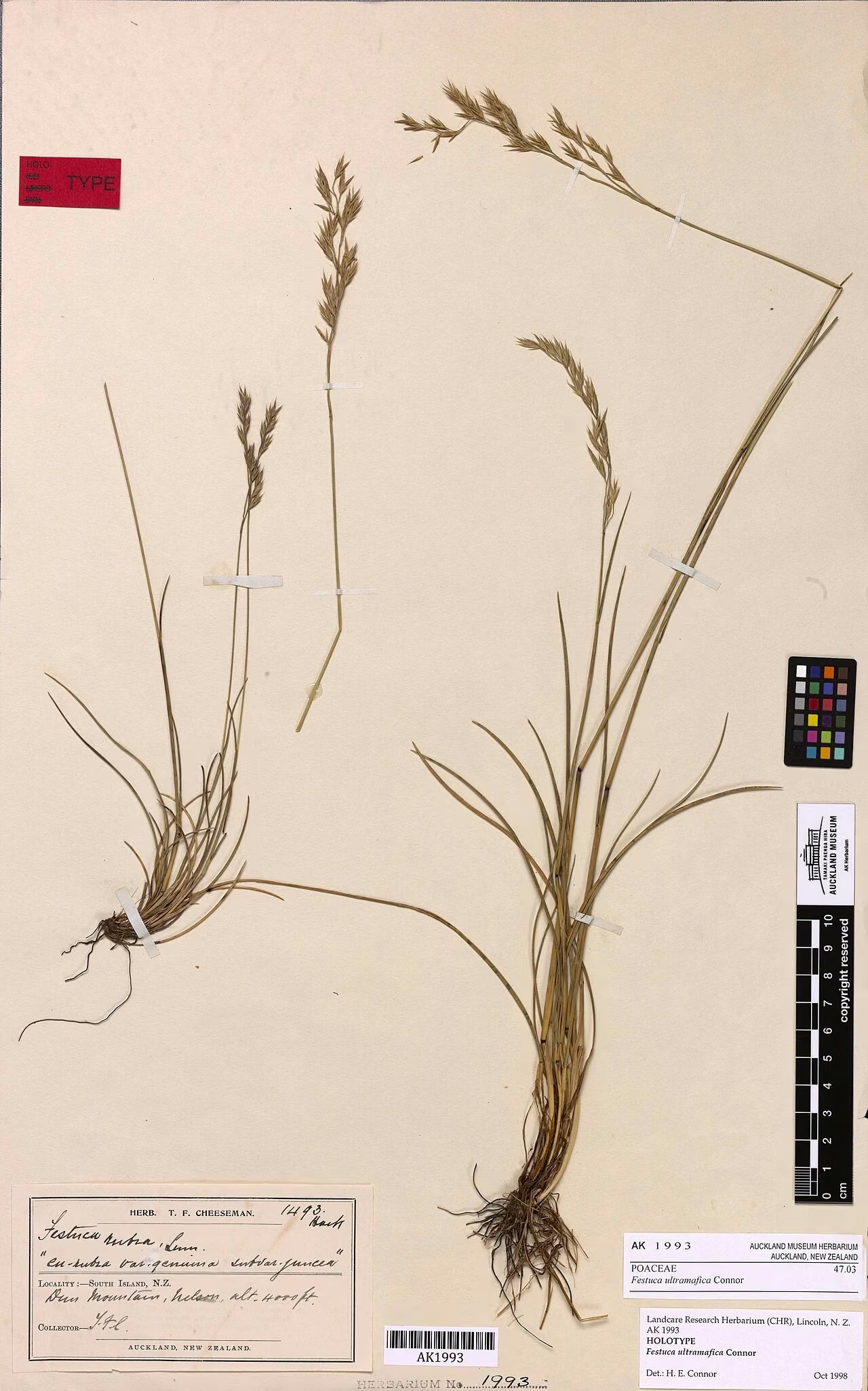
Serpentinite Fescue
Festuca ultramafica
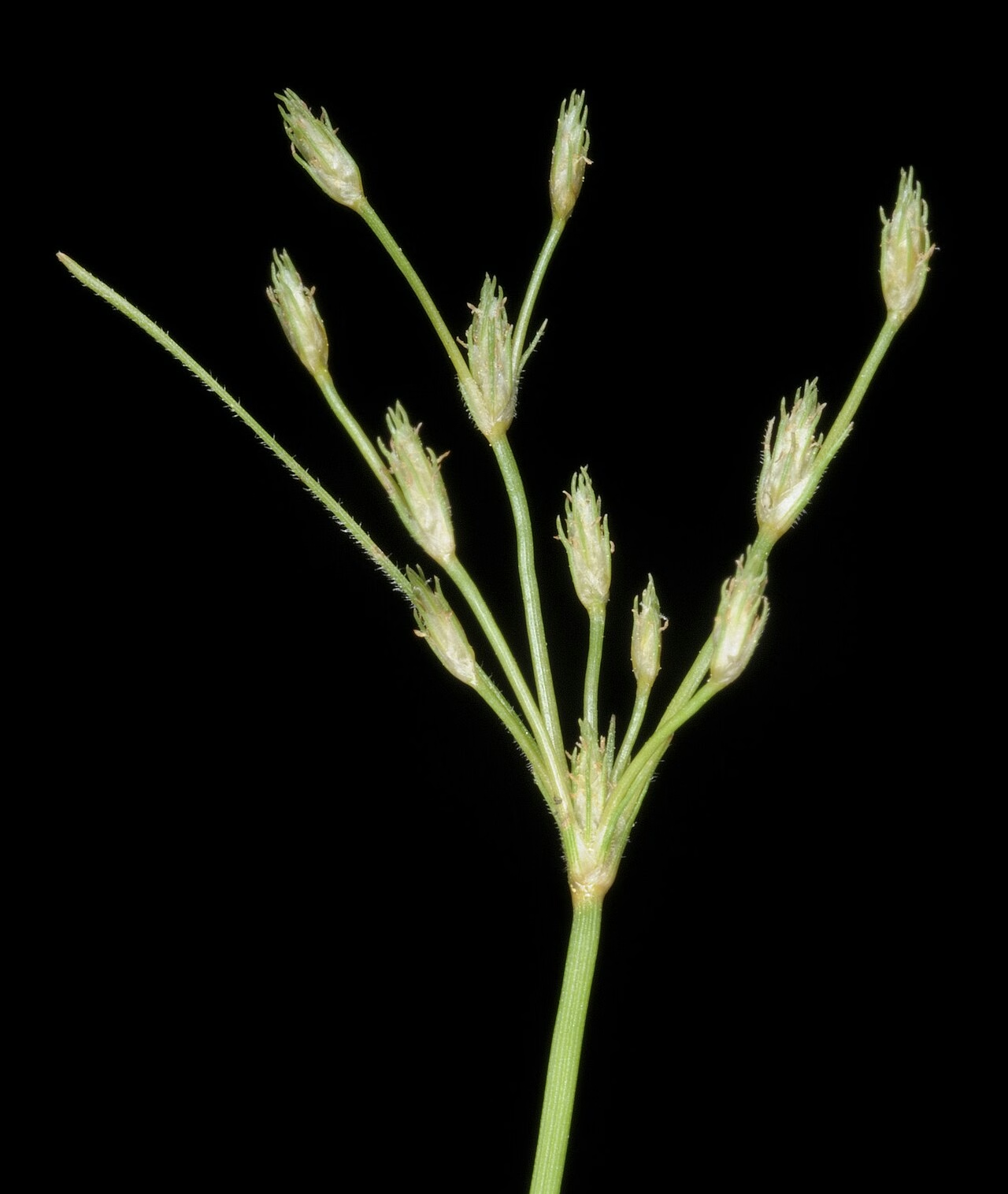
Fimbristylis velata
Fimbristylis velata
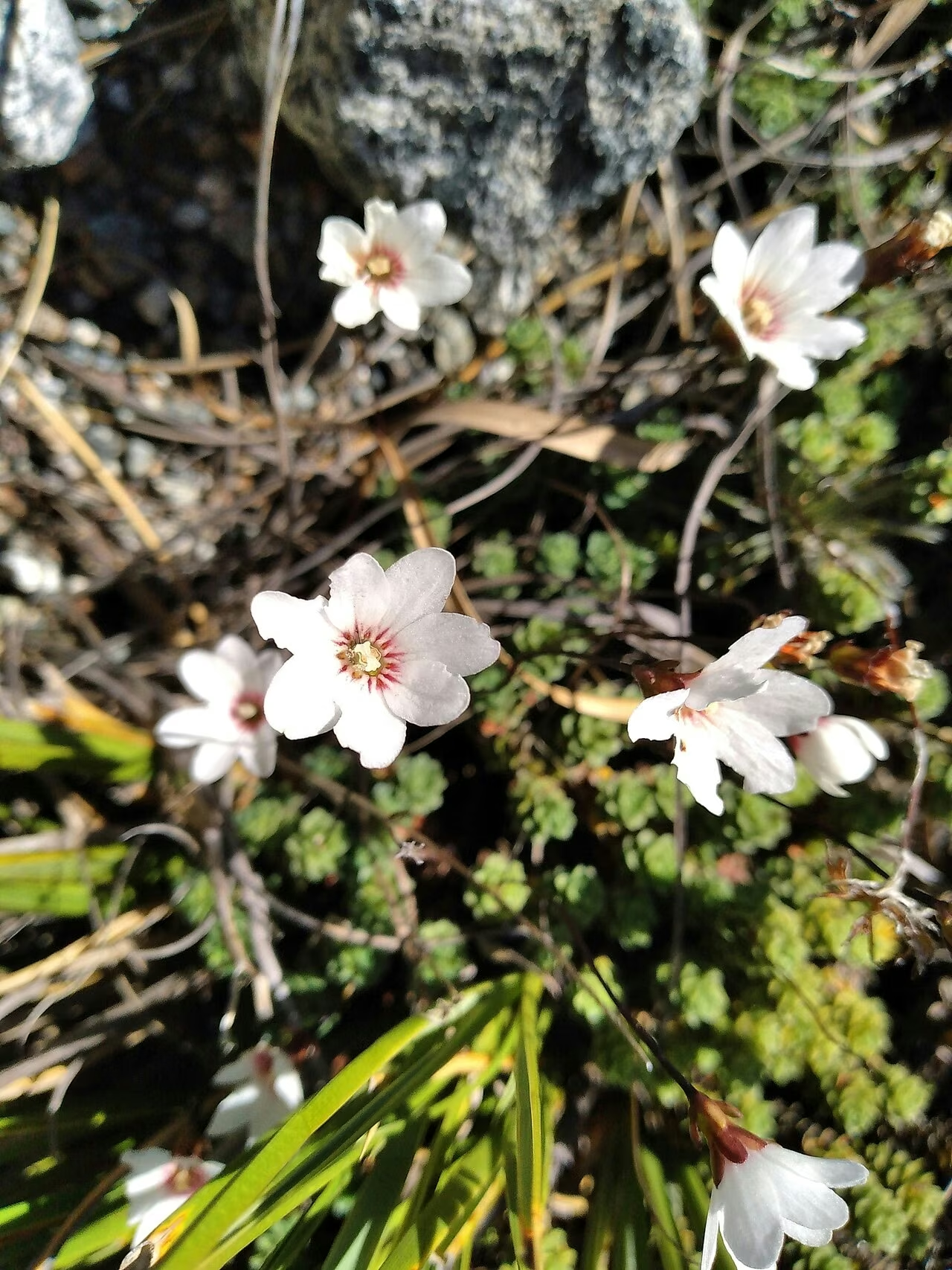
Forstera sedifolia
Forstera sedifolia
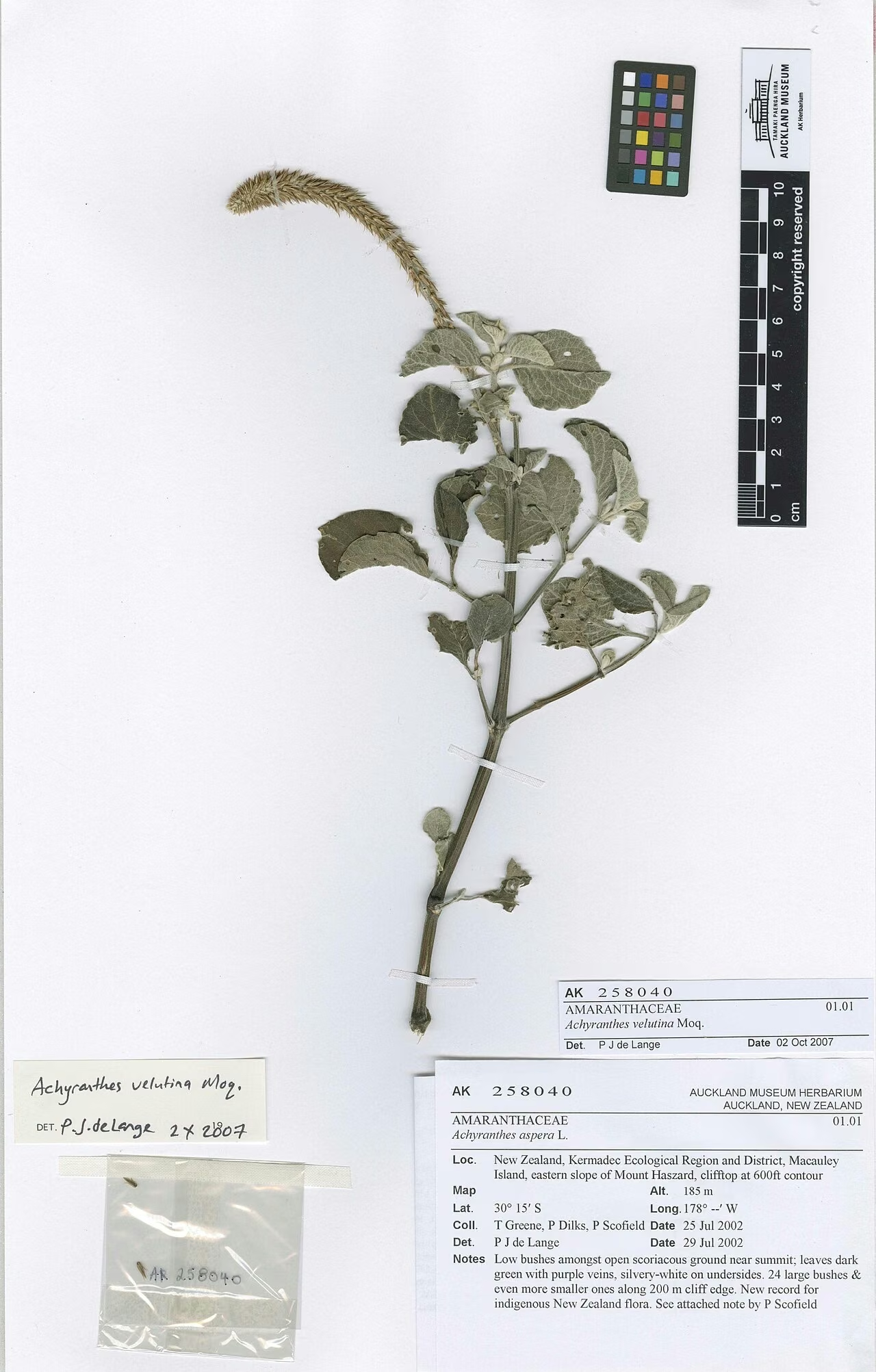
Devil's Horsewhip
Achyranthes velutina
Plant Conservation
Ewartiothamnus sinclairii is ranked At Risk - Naturally Uncommon (2023) with the qualifier Sp (sparse). Its natural range is very small, limited to gorges of the upper Awatere and Clarence catchments.
Threats to its small populations include flooding, landslips and browsing animals. Controlling goats, deer and other browsers in the Marlborough gorges, and growing it in cultivation as an insurance, both help secure the species.
Frequently Asked Questions
Where does Ewartiothamnus sinclairii grow in the wild?
It is endemic to Marlborough and virtually confined to streams draining into the upper Awatere and Clarence river catchments, mostly on dry cliffs overhanging streams in steep rocky gorges.
Why is it called Ewartia?
The plant was formerly placed in the genus Ewartia as Ewartia sinclairii. In 1991 A. A. Anderberg moved it into its own genus, Ewartiothamnus, but Ewartia remains its common name.
Can you grow Ewartiothamnus sinclairii in a garden?
NZPCN says it is easy from fresh seed and cuttings but difficult in humid climates. It does best in full sun in deep, free-draining soil, so it suits dry eastern gardens or alpine houses.
Who is Ewartiothamnus sinclairii named after?
The species epithet honours Andrew Sinclair (c. 1796 to 1861), Colonial Secretary of New Zealand and a keen naturalist and plant collector.
Sources and Further Reading
The botanical, growing, and conservation details for Ewartia (Ewartiothamnus sinclairii) on this page draw on the New Zealand plant references below. Consult them for full technical records and the latest distribution data.