Fimbristylis
Fimbristylis velata
Last updated:
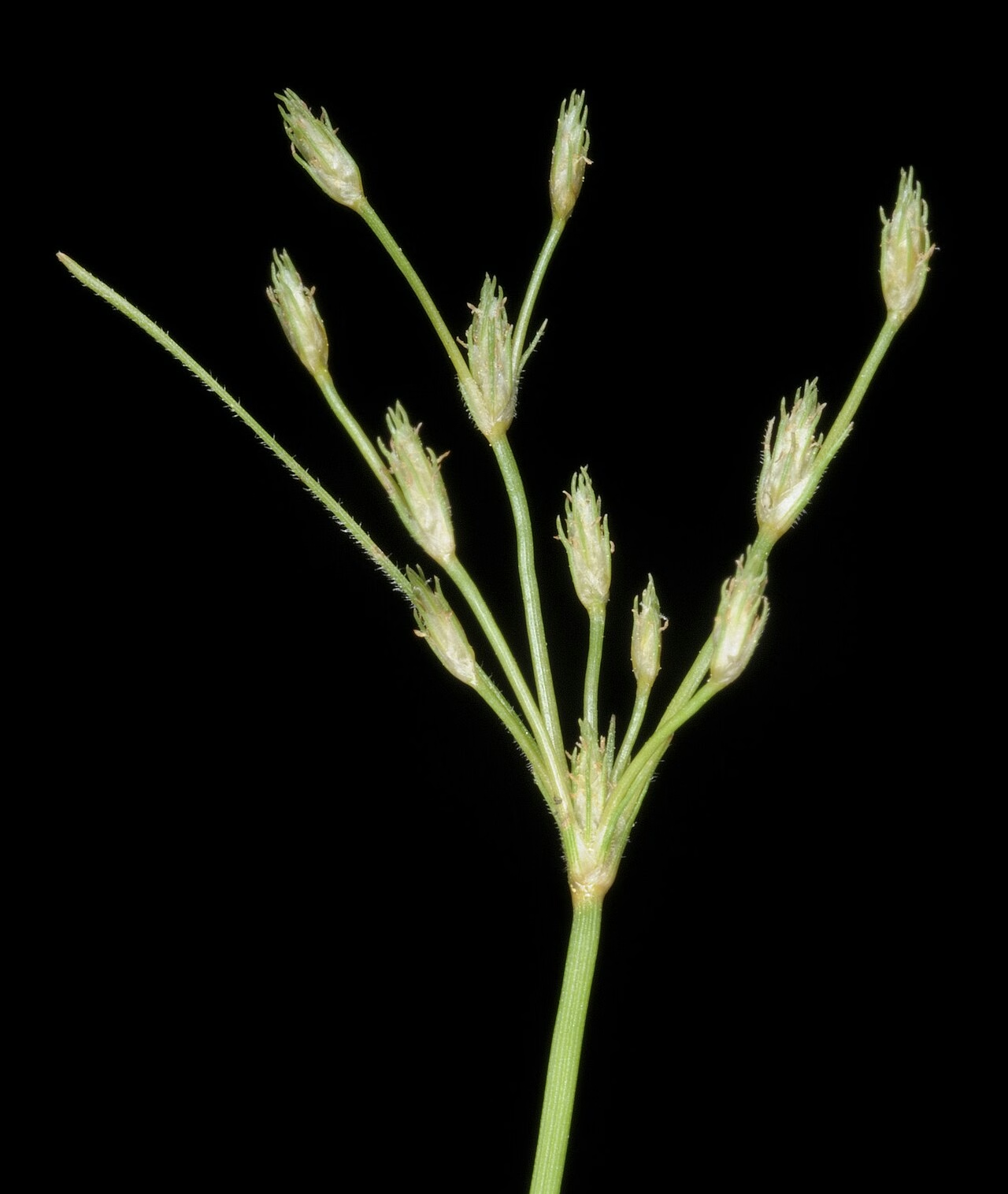
Fimbristylis velata is a small annual sedge that forms soft, finely hairy, spreading tufts on freshly exposed, sunny, damp or muddy ground. Its flowering stems are 30 to 280 mm long and carry spreading umbels of small spikelets. In New Zealand it is native to the North Island from Ngawha Springs and the Bay of Islands south to Lake Taupō, and it also occurs in Australia. It is most common on the receding shores of the Huntly Basin lakes and on warm ground around geothermal fumaroles. Once feared close to extinction here, it was rediscovered in the late 1980s and is now ranked At Risk - Naturally Uncommon. Explore more native grasses and flaxes in our native plant guide.
Plant Description
Fimbristylis velata is a strict annual sedge in the family Cyperaceae. It forms small, finely hairy (pubescent), spreading tufts. The culms are 30 to 280 mm long, rather flaccid and spreading rather than upright, and finely pubescent. The leaves are usually shorter than the culms and are brown-green to glaucous green.
The inflorescence is a compound, spreading umbel of stalked spikelets. The glumes are elliptic with a prominent, rigid, dark green keel that is rough to the touch. The style is forked, and Wikipedia notes a whorl of long whitish hairs pressed closely around the nut, partly covering it. The nut is biconvex, straw-coloured and glossy.
In New Zealand it is most likely to be confused with the common toad rush, Juncus bufonius, which grows in similar muddy places. Fimbristylis velata differs in its widely spreading hairy culms, its umbellate inflorescence and its obvious sedge spikelets.
Quick Facts
| Scientific Name | Fimbristylis velata |
|---|---|
| Height | 0.03-0.28 m stems, spreading |
| Spread | Small tufts, a few centimetres to about 0.2 m |
| Water Needs | High; damp mud |
| Light | Full sun |
| Frost Tolerance | Low; NZPCN describes it as cold sensitive |
| Salt Tolerance | No information available; a freshwater species |
| Growth Rate | Fast; completes its life in one season |
| Lifespan | Annual |
Climate Best Suited to
It suits warm, frost-free northern climates. NZPCN notes it is cold sensitive, which helps explain why it reaches only as far south as Lake Taupō, where geothermal ground provides warmth.
Regional Suitability
| City | Climate Suitability |
|---|---|
| Auckland | High |
| Wellington | Low |
| Christchurch | Low |
| Dunedin | Low |
Plant Habitat
Fimbristylis velata is indigenous to New Zealand, where it is known only from the North Island, ranging from Ngawha Springs, the Bay of Islands, Pouto Peninsula and Great Barrier Island south to Lake Taupō. It is most prevalent in the Huntly Basin around Lakes Whangape, Rotongaro and Rotongaroiti. It is also native to Australia, including Western Australia, the Northern Territory, Queensland, New South Wales, Victoria and South Australia.
It is most often found along the shorelines of receding shallow lakes and on river margins, in damp mud and organic sediments exposed as water levels fall. It also grows on permanently damp ground around active fumaroles in geothermal areas, and NZPCN records it as a wetland weed of urban redevelopment sites.
Growing Requirements
Soil Requirements
It colonises freshly exposed mud, silt and organic sediment, usually bare of other vegetation.
- Damp mud and organic lake sediments
- Warm, damp geothermal soils
- Bare, recently disturbed ground
Light Requirements
It needs open, sunny ground and cannot tolerate competition or shading from taller plants.
- Full sun
- No overtopping vegetation
Water Requirements
It grows on damp to wet mud, typically exposed by falling water levels in late spring and summer.
- Keep permanently damp
- Shallow standing water is tolerated around the margins of its sites
Planting and Establishing
NZPCN says it grows best in pots or in permanently damp ground in a warm, sheltered, sunny place. In practice it is grown from seed sown directly where it is to grow, such as a muddy pond margin or a shallow tray kept wet.
Because it can become invasive in suitable conditions, keep it to a pot or a contained bog area. It will be crowded out by taller plants, so it is best on bare mud rather than in a planted wetland.
Ecological Role
Fimbristylis velata is an opportunistic colonist of freshly disturbed wetland ground. It germinates on mud as lake levels recede, flowers and fruits quickly, and leaves seed to persist until conditions suit again. On the Huntly Basin lakes it can become locally dominant on the exposed shores.
Like most sedges it is wind pollinated. NZPCN suggests the nuts are possibly wind dispersed. It forms part of a distinctive turf community of small annual and perennial herbs that relies on fluctuating water levels.
Uses & Significance
Garden Uses
This is a plant for specialists and restoration projects rather than general gardens.
- Pots kept wet in a warm sunny spot
- Contained bog gardens or pond edges
- Wetland restoration where lake levels fluctuate
Ecological Value
It is part of the specialised ephemeral turf vegetation of receding lake shores and geothermal ground, habitats that have been much reduced in the North Island.
- Indicator of naturally fluctuating lake margins
- Quick cover on bare mud
- Part of the geothermal flora
Landscaping Uses
It has little landscaping value because of its small size, annual habit and preference for bare mud. In a constructed wetland, a seasonally drawn-down muddy shelf could support it alongside other small native turf plants.
Avoid planting it in permanently shaded or densely vegetated wetland margins, where it will not persist.
Seasonal Care Calendar
Spring
Seed germinates on exposed damp mud as water levels drop and the ground warms. Flowering can begin in October.
- Germination on bare mud
- Flowering starts
Summer
Plants are in full flower and fruit on receding lake shores.
- Main flowering and fruiting season
- Keep potted plants wet
Autumn
Fruiting continues until about June, and the plants then die off.
- Collect seed
- Plants senesce
Winter
The species survives as seed. Rising lake levels cover many of its sites.
- Present only as seed
- Cold sensitive
When to Prune and How Much
No pruning is needed. It is an annual that dies after fruiting.
In a pot, simply leave the plants to shed seed, then remove the dead tufts once the seed has dropped onto the mud surface.
How to Grow Fimbristylis
NZPCN describes Fimbristylis velata as easy from fresh seed and notes that it performs best in pots or in permanently damp ground in a warm, sheltered, sunny place. It is cold sensitive and cannot tolerate competition from taller plants, and in good conditions it can spread itself readily. As a strict annual, it is propagated only from seed. For restoration work, source seed locally with permission from the land manager.
From Seed
Collect ripe spikelets between summer and autumn when the nuts are straw-coloured and glossy. Sow them fresh onto a wet mud or fine silt surface, which closely copies the receding lake shores where it germinates naturally.
Warmth matters. Germinate pots in a warm, sheltered and sunny spot, and keep the mix permanently wet by standing pots in a saucer of water.
As a strict annual it must grow, flower and fruit within a single season, so a pot sown in spring should be kept warm and wet right through summer to give plants time to set seed. Scraping a little fresh mud from a natural site is not recommended, because it can also carry weed seeds and invertebrates; clean collected seed is the better option.
- Collect ripe spikelets from summer to autumn.
- Fill a pot or tray with fine, silty potting mix and saturate it.
- Scatter the seed on the surface without covering it.
- Stand the pot in a shallow tray of water in a warm, sunny, sheltered place.
- Keep weed seedlings out, as taller plants will smother it.
- Allow plants to set seed in the pot to maintain a population year to year.
Pests & Diseases
No specific pests or diseases are recorded. The main threats are environmental: stabilised lake levels that stop mud being exposed, invasion of lake margins by taller exotic weeds, and drainage of shallow wetlands.
In cultivation it is short-lived by nature, so failure after fruiting is normal rather than a sign of disease.
Cultural Significance
No traditional Māori name or use for Fimbristylis velata is recorded in the sources consulted.
The species attracted attention among New Zealand botanists because it was once thought to be seriously at risk here, before its rediscovery in the late 1980s showed it to be locally abundant on Waikato lake shores. The synonym Fimbristylis squarrosa is used in some older literature.
Bonus Tip
Search for this sedge in late summer on the muddy, freshly exposed shores of shallow Waikato lakes. Look low down for small, soft, hairy tufts with umbels of spikelets, and check the hairy spreading stems to rule out toad rush.
Related Plants
Explore other native plants that share similar characteristics or habitats with Fimbristylis (Fimbristylis velata), offering further insights into New Zealand's diverse flora. These related species provide context and opportunities for complementary planting in your garden.
Plant Conservation
Fimbristylis velata is ranked At Risk - Naturally Uncommon (2023), with qualifiers including Sp (sparse), DPR, DPS and DPT (data poor), EF (extreme fluctuations) and SO (secure overseas). It is regionally Naturally Uncommon in Northland and Data Deficient in Auckland.
It depends on natural fluctuations in water levels that expose mud each year, and on geothermal ground. Maintaining natural water regimes in shallow lakes, controlling weedy lake-margin vegetation and protecting geothermal sites all help this species.
Frequently Asked Questions
Where does Fimbristylis velata grow in New Zealand?
It grows in the North Island from Ngawha Springs, the Bay of Islands, Pouto Peninsula and Great Barrier Island south to Lake Taupō, and is most common around Lakes Whangape, Rotongaro and Rotongaroiti in the Huntly Basin.
Is Fimbristylis velata a weed?
No, it is a native annual sedge. It does colonise freshly disturbed wet ground, including urban redevelopment sites, and NZPCN notes it can become invasive in cultivation, but it cannot cope with competition from taller plants.
How do you tell Fimbristylis velata from toad rush?
It can be mistaken for Juncus bufonius, but Fimbristylis velata has widely spreading, finely hairy culms, umbel-shaped flower heads and obvious spikelets.
Why is Fimbristylis velata ranked At Risk?
It depends on a specialised habitat of seasonally exposed lake and river margins and geothermal ground, so it is ranked At Risk - Naturally Uncommon even though it is locally dominant on some receding lake shores.
Sources and Further Reading
The botanical, growing, and conservation details for Fimbristylis (Fimbristylis velata) on this page draw on the New Zealand plant references below. Consult them for full technical records and the latest distribution data.