Serpentinite Fescue
Festuca ultramafica
Last updated:
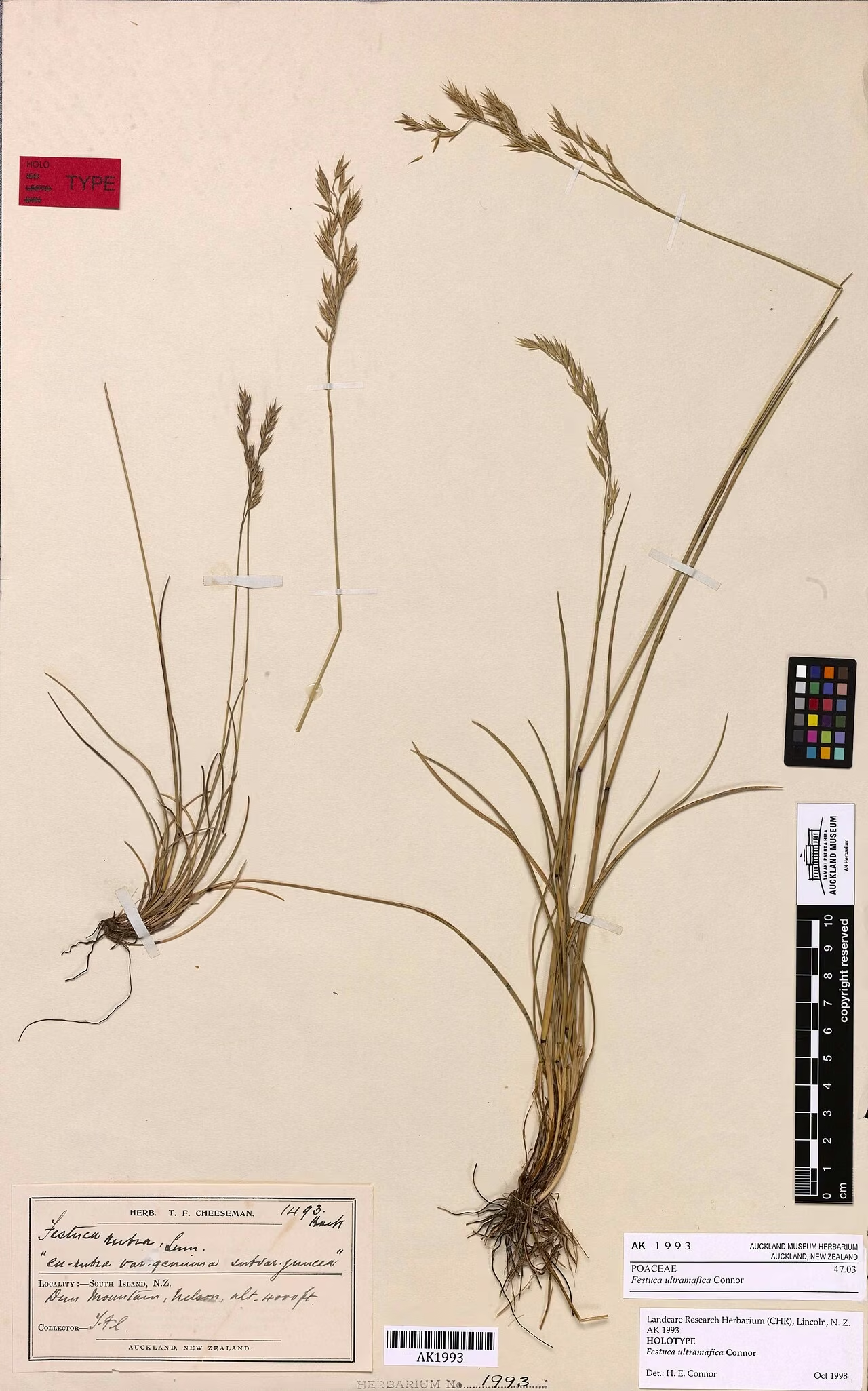
Serpentinite fescue (Festuca ultramafica) is a tufted, shortly rhizomatous grass endemic to the Nelson region of the South Island. It has stiff, sharp-pointed leaves only 6 to 12 cm long beneath much taller, smooth flowering stems 20 to 50 cm high, with violet-tinged spikelets. It is confined to soils formed from ultramafic rock, such as serpentinite, in the Dun Mountain mineral belt, from montane to alpine levels. These magnesium-rich, nutrient-poor soils exclude most plants, which makes it a true specialist. It is ranked At Risk - Naturally Uncommon because of its restricted range, though it is abundant where it grows. Explore more native grasses and flaxes in our native plant guide.
Plant Description
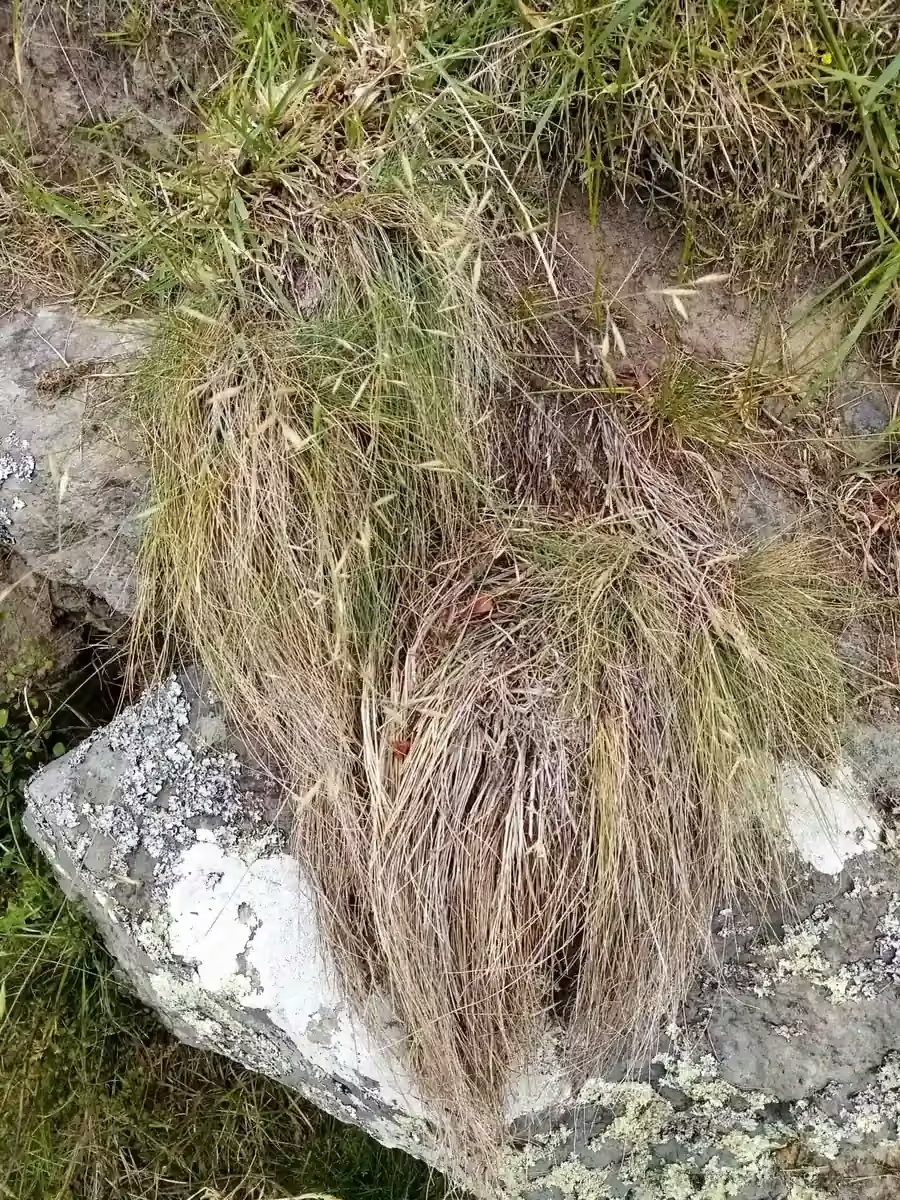
Festuca ultramafica is a tufted, shortly rhizomatous perennial grass. Its leaf blades are stiff, thick and pungent (sharply pointed), about 6 to 12 cm long and 0.6 to 1.2 mm in diameter, with white hairs. The leaves are much shorter than the flowering stems, which gives the plant a distinctive look of a low, prickly tuft with tall wiry culms rising well above it.
The culms are 20 to 50 cm tall and smooth. They carry a narrow panicle of about 12 to 25 spikelets that are suffused with violet. The florets are smooth and glaucous, and the lemmas bear awns 1.5 to 4.2 mm long. NZPCN lists the flower colour as yellow, referring to the anthers.
Its combination of very short, rigid leaves, tall smooth culms and violet spikelets, together with its restriction to ultramafic ground, separates it from New Zealand's more widespread fescues such as hard tussock (Festuca novae-zelandiae) and Festuca matthewsii.
Quick Facts
| Scientific Name | Festuca ultramafica |
|---|---|
| Height | 0.2-0.5 m in flower |
| Spread | A compact tuft; no reliable figure recorded |
| Water Needs | Low to moderate; needs sharp drainage |
| Light | Full sun |
| Frost Tolerance | High; montane to alpine |
| Salt Tolerance | No information available; an inland mountain species |
| Growth Rate | Slow; NZPCN notes it can be very slow growing |
| Lifespan | Perennial |
Climate Best Suited to
It grows in the cool, frosty montane to alpine climate of the Nelson ranges. NZPCN notes it dislikes humidity and will not flower at low altitudes in warm areas.
Regional Suitability
| City | Climate Suitability |
|---|---|
| Auckland | Low |
| Wellington | Low |
| Christchurch | Medium |
| Dunedin | Medium |
Plant Habitat
Festuca ultramafica is endemic to the South Island, where NZPCN records it from Dun Mountain, near Mount Duppa and the Motueka River in Nelson. All these sites lie on the Dun Mountain ophiolite belt, a band of ultramafic rocks that produces the bare, reddish mineral belt landscape above Nelson.
It ranges from montane to alpine altitudes and is confined to soils derived from ultramafic parent material. It grows mostly in open grassland or sparsely vegetated rubble, boulder fields and scree, where the toxic soil chemistry keeps vegetation low and open.
Growing Requirements
Soil Requirements
This is a soil specialist. Ultramafic soils are high in magnesium, nickel and chromium and low in calcium and other nutrients, and NZPCN recommends a well drained, magnesium-enriched soil in cultivation.
- Stony, sharply drained soil or scree
- Magnesium-rich, low-nutrient conditions
- Avoid rich garden soil and heavy fertiliser
Light Requirements
In the wild it grows in open, sparsely vegetated ground with little shade.
- Full sun
- Open site with good air movement
Water Requirements
Its stony habitats drain rapidly, and it dislikes humidity. Steady moisture at the roots with fast drainage suits it best.
- Water moderately in dry spells
- Never leave sitting in wet soil
- Avoid humid, still air
Planting and Establishing
Plant in spring into a raised scree bed, trough or deep pot of gritty mix in full sun. Because it is very slow growing, give it a site where faster neighbours will not overtop it.
Some growers of serpentine plants add a small amount of dolomite or magnesium-rich rock to the mix to imitate its natural soil; NZPCN states only that it grows best in well drained, magnesium-enriched soil. It is not commercially available, so plants will normally come from specialist growers.
Ecological Role
Festuca ultramafica is one of a suite of plants adapted to the harsh chemistry of the Nelson mineral belt, where ordinary vegetation struggles. Its stiff, narrow leaves and tufted form suit exposed, nutrient-poor rubble and scree.
Like other grasses it is wind pollinated. Its role in stabilising loose ultramafic rubble and scree is part of the unusual open grassland that characterises these sites. Its flowering and fruiting times are recorded as not known because the species has been insufficiently studied and collected.
Uses & Significance
Garden Uses
Serpentinite fescue is a collector's grass for alpine and rock gardens, valued for its rarity and its stiff tufts with violet-tinged flower heads.
- Rock gardens and scree beds
- Troughs and pots of gritty mix
- Collections of ultramafic or Nelson mineral belt plants
Ecological Value
It is a characteristic plant of one of New Zealand's most distinctive ecosystems, the ultramafic vegetation of the Dun Mountain mineral belt.
- Endemic specialist of ultramafic soils
- Abundant within its narrow range
- Helps hold loose rubble and scree
Landscaping Uses
In a landscape it works only as a small textural accent among rocks, in the manner of a miniature tussock. Plant it in groups of three or more on a stony bank for a more natural look.
Combine it with other low, sun-loving natives that tolerate lean soils. Do not expect it to perform in lowland warm gardens, where NZPCN notes it will not flower.
Seasonal Care Calendar
Spring
New growth begins as soils warm. This is the best time to plant or divide.
- Plant out or divide
- Check drainage after winter rain
Summer
Flowering stems rise above the leafy tufts at higher altitudes, although exact flowering times in the wild have not been recorded.
- Possible flowering
- Water during prolonged drought
Autumn
Collect any ripe seed and sow it fresh, as NZPCN recommends fresh seed.
- Collect and sow fresh seed
- Remove spent culms if untidy
Winter
Fully frost hardy. Protect potted plants from prolonged waterlogging.
- Keep drainage open
- Little or no watering
When to Prune and How Much
No regular pruning is needed. Pull out old flowering stems once they have shed their seed, and comb out dead leaves by hand to keep the tuft healthy.
Avoid cutting the tuft hard back, because it is slow growing and recovers slowly.
How to Grow Serpentinite Fescue
NZPCN describes Festuca ultramafica as easy from fresh seed and from division of whole plants, but it can be very slow growing and it will not flower at low altitudes in warm areas. It is not commercially available. Because it is At Risk - Naturally Uncommon, collect seed only with permission and in small amounts, and do not dig up wild plants.
From Seed
Seed should be sown fresh. Collect it when the spikelets turn straw-coloured and the seeds come away easily from the panicle. Use a lean, gritty mix that mimics its natural rubble habitat.
- Collect ripe seed heads and sow promptly rather than storing the seed.
- Fill trays with free-draining seed mix mixed with grit or pumice.
- Sow thinly on the surface and cover with a fine layer of grit.
- Keep in a cool, bright, well ventilated place and water lightly.
- Pot seedlings individually when they have several leaves.
- Grow on slowly in full sun for at least a season before planting out.
By Division
Established clumps can be lifted and divided. Because it is shortly rhizomatous, it can be split into rooted pieces, though slow growth means divisions should not be made too small.
- Lift a cultivated clump in early spring.
- Split it into a few pieces, each with healthy roots and shoots.
- Trim long leaves slightly to reduce water loss.
- Replant into gritty mix and keep lightly moist until new growth appears.
Pests & Diseases
No specific pests or diseases are recorded for serpentinite fescue. In cultivation, the main risks are rot from poor drainage and decline in humid conditions, which NZPCN says it dislikes.
In the wild its toxic, open soils limit weed invasion, which partly explains why it remains abundant within its small range.
Cultural Significance
No traditional Māori name or use for Festuca ultramafica is recorded in the sources consulted.
The epithet ultramafica refers to the ultramafic rocks it grows on, from Latin ultra, beyond, and mafic, a term for ferromagnesian minerals. Dun Mountain itself gave its name to dunite, an ultramafic rock first described there, and the nearby mineral belt was the scene of early copper mining and New Zealand's first railway, the Dun Mountain Railway.
Bonus Tip
If you want to see this grass, walk the Dun Mountain Trail above Nelson: the abrupt change from forest to open, reddish scrubland marks the start of the ultramafic mineral belt where serpentinite fescue and other specialist plants grow.
Related Plants
Explore other native plants that share similar characteristics or habitats with Serpentinite Fescue (Festuca ultramafica), offering further insights into New Zealand's diverse flora. These related species provide context and opportunities for complementary planting in your garden.
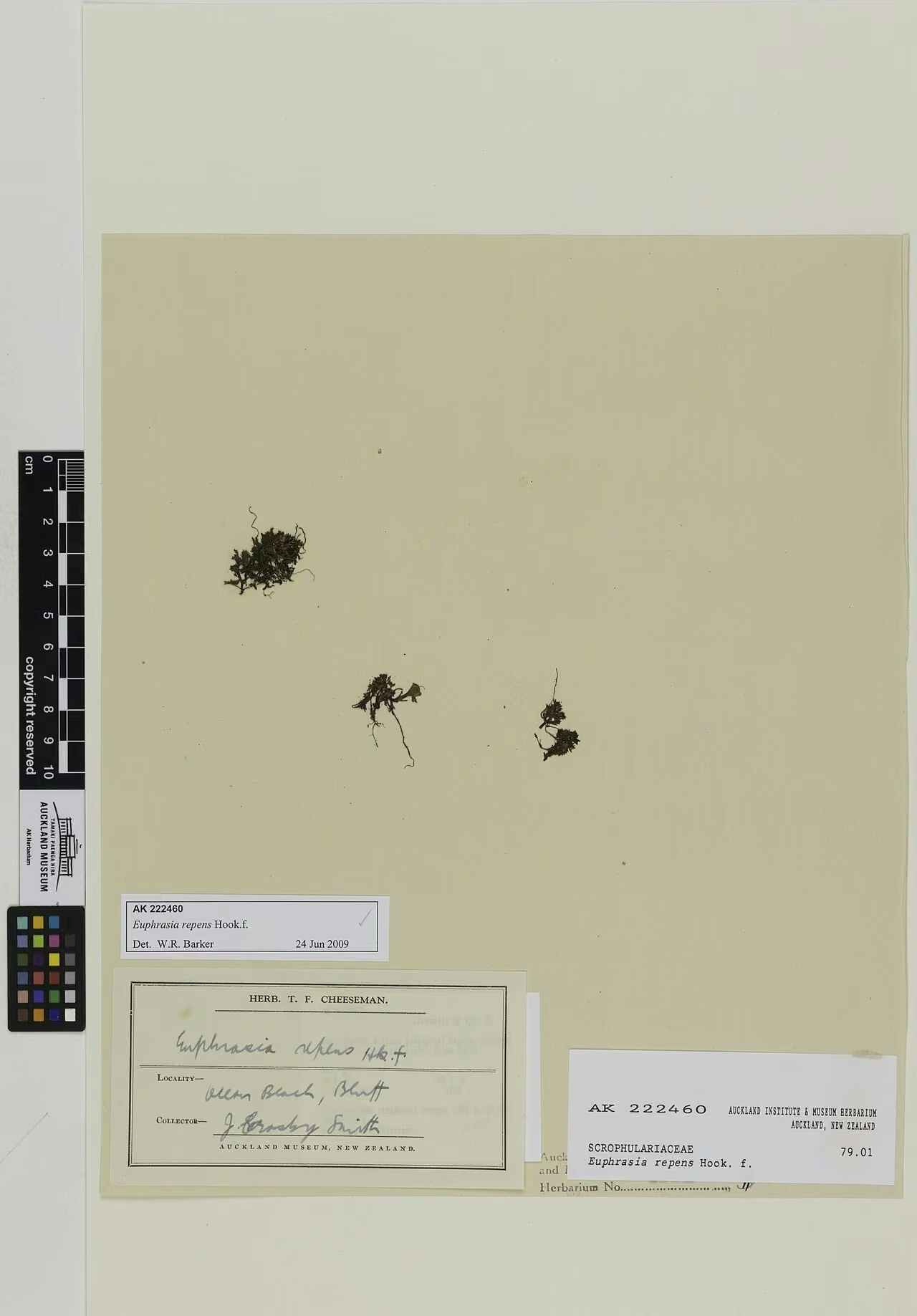
Euphrasia repens
Euphrasia repens
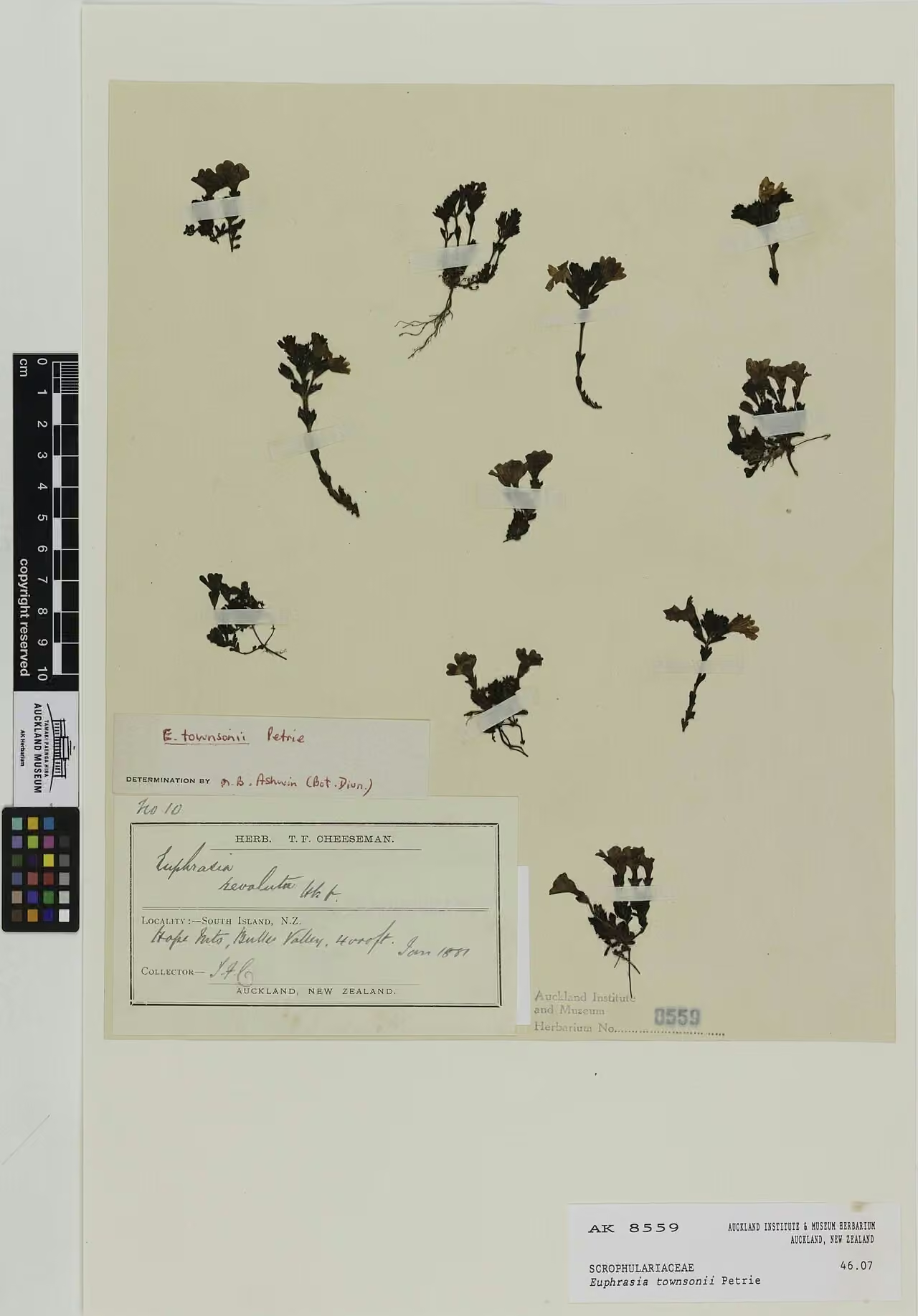
Euphrasia townsonii
Euphrasia townsonii
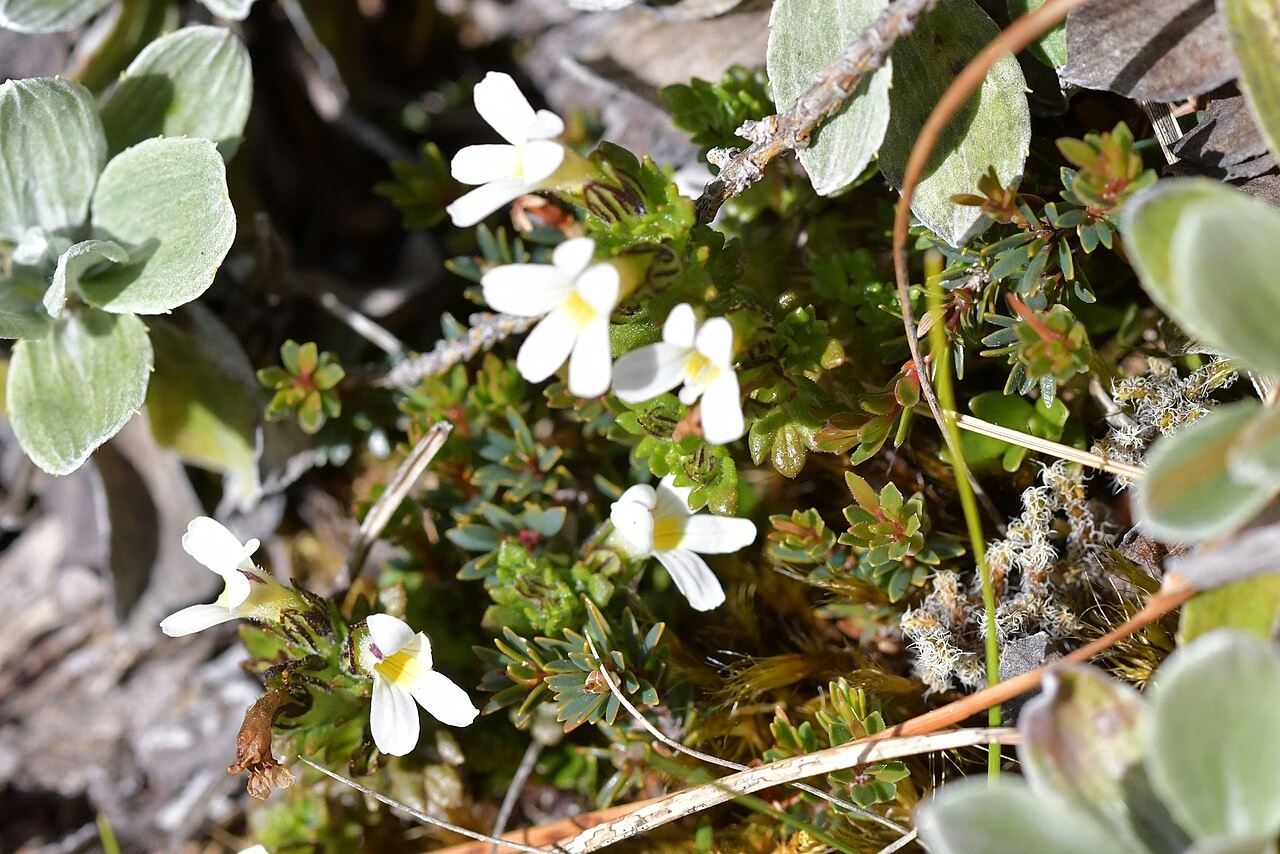
Euphrasia zelandica
Euphrasia zelandica
Ewartia
Ewartiothamnus sinclairii
Fimbristylis velata
Fimbristylis velata
Forstera sedifolia
Forstera sedifolia
Dwarf Bedstraw
Asperula perpusilla
Banks Peninsula Blue Tussock
Banks Peninsula Blue Tussock
Plant Conservation
Festuca ultramafica is ranked At Risk - Naturally Uncommon (2023) with the qualifiers RR (range restricted) and Sp (sparse). NZPCN describes it as a local endemic that is abundant within its preferred habitat and geographic range.
Its main vulnerability is its tiny geographic range. Protecting the mineral belt from mining disturbance, vehicle damage and weed invasion at its margins helps keep its populations secure.
Frequently Asked Questions
What is an ultramafic soil?
Ultramafic soils form from rocks very rich in iron and magnesium minerals, such as serpentinite and dunite. They are high in magnesium and heavy metals and low in calcium, so only specialised plants like Festuca ultramafica thrive on them.
Where is serpentinite fescue found?
It is endemic to the Nelson area of the South Island, recorded from Dun Mountain, near Mount Duppa and the Motueka River, on the ultramafic rocks of the Dun Mountain mineral belt.
Is Festuca ultramafica easy to grow?
NZPCN says it is easy from fresh seed and division, but it can be very slow growing, prefers well drained magnesium-enriched soil, dislikes humidity and will not flower at low altitudes in warm areas.
How can you recognise Festuca ultramafica?
Look for a tufted grass with stiff, pungent leaf blades much shorter than the tall smooth flowering stems, and a narrow panicle of violet-suffused spikelets with short-awned florets.
Sources and Further Reading
The botanical, growing, and conservation details for Serpentinite Fescue (Festuca ultramafica) on this page draw on the New Zealand plant references below. Consult them for full technical records and the latest distribution data.