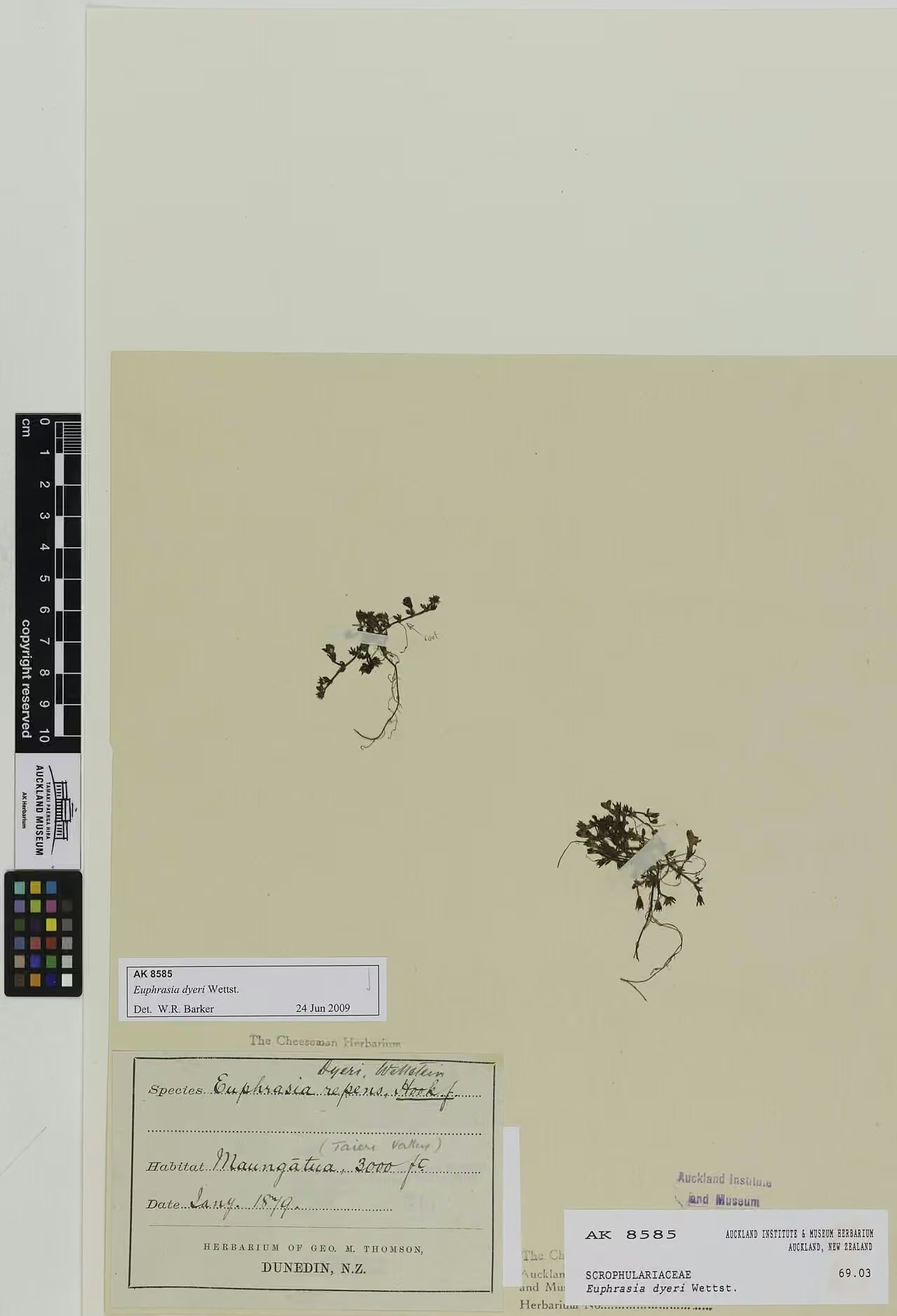
Creeping Eyebright
Euphrasia dyeri
Last updated:
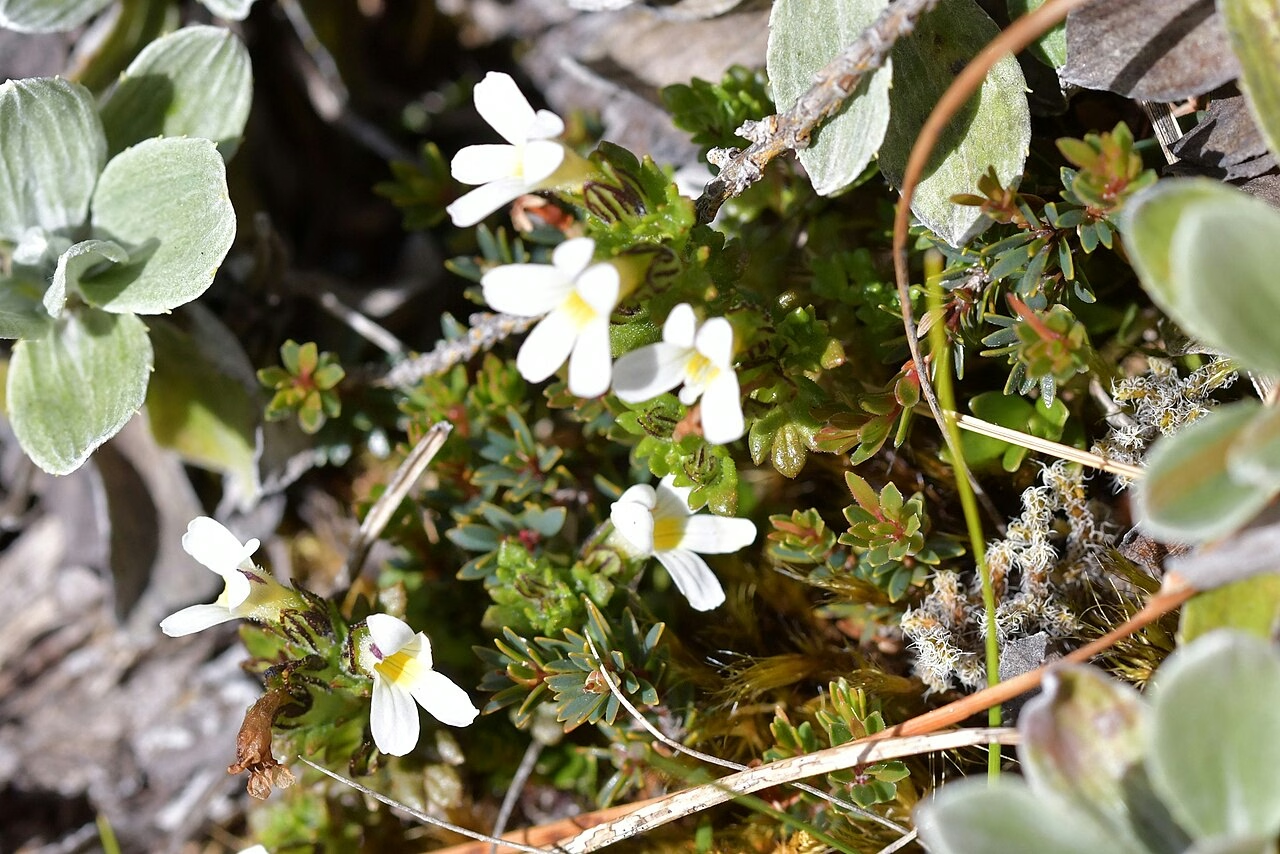
Creeping eyebright (Euphrasia dyeri) is a delicate, succulent annual herb endemic to the South Island and Stewart Island/Rakiura. It can flower when less than 10 mm tall, though plants occasionally elongate into branched stems up to 100 mm long. Its small leaves are divided like fingers into three to seven narrow segments, and it bears white flowers with yellow to golden brown anthers from January to March. It lives in montane bogs up to 1500 m, from north-west Nelson to Otago, Southland and Rakiura. It is a hemiparasite, and is ranked Not Threatened nationally. Explore more native flowering plants in our native plant guide.
Plant Description
Euphrasia dyeri is a delicate succulent annual. Some plants flower when they are less than 10 mm high, while others become elongated with branched stems up to 100 mm long. The stems occasionally root at the nodes, but the plant does not form mats.
The leaves are thin and membranous, 4 to 6 mm long, and digitately divided into three to seven acute segments, giving them a small hand-like shape. The white flowers sit on membranous stalks; the calyx is 4 to 5 mm long and the corolla 8 to 15 mm long, with a slender tube much longer than the calyx. The anthers are yellow to golden brown with slender awns. The capsule is oval and densely bristly at the tip.
Its closest look-alike is Euphrasia repens. NZPCN separates them by habitat and habit: E. dyeri grows in subalpine bogs, is usually only slightly rooting, is not mat-forming and usually has larger leaves, while E. repens is a mat-forming plant of coastal sand and shingle.
Quick Facts
| Scientific Name | Euphrasia dyeri |
|---|---|
| Height | 0.01-0.1 m |
| Spread | Small single plants, not mat-forming |
| Water Needs | Wet; bog conditions |
| Light | Full sun in open bogs |
| Frost Tolerance | High; montane bogs to 1500 m |
| Salt Tolerance | No information available |
| Growth Rate | Fast; completes its life cycle in a season |
| Lifespan | Annual |
Climate Best Suited to
Suits cold, wet montane and subalpine climates in the southern half of the South Island and on Rakiura, with cool summers and frosty winters.
Regional Suitability
| City | Climate Suitability |
|---|---|
| Auckland | Low |
| Wellington | Low |
| Christchurch | Low |
| Dunedin | Low |
Plant Habitat
Creeping eyebright is endemic to the South Island and Stewart Island/Rakiura. NZPCN lists it from the mountains of north-west Nelson (Mount Gouland), Otago, Southland and Stewart Island, with an outlying record from Mount Somers in Canterbury.
It grows in montane bogs up to about 1500 m above sea level. These are wet, open, peaty sites with low vegetation, where the plant's tiny size is not a disadvantage.
Growing Requirements
Soil Requirements
It grows in the saturated, acid, nutrient-poor peat of montane bogs.
- Permanently wet peat
- Very low fertility
- Open bog surfaces among cushion plants, mosses and sedges
Light Requirements
Open bogs give it full light; it would be lost under taller vegetation.
- Full sun
- Low surrounding vegetation
Water Requirements
As an obligate wetland plant it depends on bogs that stay wet all summer.
- Saturated ground through the growing season
- Vulnerable to drainage or drying of bogs
Planting and Establishing
Creeping eyebright is not cultivated, and its tiny size, annual life cycle and dependence on host plants make it unsuitable for planting. Do not remove plants from bogs.
If you visit montane bogs in Otago, Southland or on Rakiura in late summer, look closely among cushion plants and sedges for its small white flowers.
Ecological Role
Like all eyebrights, Euphrasia dyeri is a hemiparasite that partly feeds from the roots of neighbouring plants while also photosynthesising. Its host plants in bogs have not been documented. NZPCN records that its seeds are dispersed by wind and possibly by water and ballistic release from the capsule.
The white flowers with their long tubes are suited to insect visitors, though which insects pollinate it is not known. As an annual of open bog, it relies on gaps in the vegetation where seed can germinate each spring.
Uses & Significance
Garden Uses
This species has no practical garden use.
- Not grown or sold commercially
- Of interest to botanists and wetland surveyors
- Best appreciated in its natural bog habitat
Ecological Value
It is part of the specialised small-herb flora of southern montane bogs.
- Obligate wetland endemic
- Root hemiparasite linked to surrounding bog plants
- Contributes to bog plant diversity
Landscaping Uses
Creeping eyebright is not suitable for landscaping. In bog restoration projects within its range, the priority is to restore natural water levels and keep the bog surface open.
Its presence can be a sign of an intact, open montane bog, which is worth protecting from drainage, vehicles and weed invasion.
Seasonal Care Calendar
Spring
Seed germinates in the bog as snow melts and temperatures rise.
- Seedlings are minute
Summer
Flowering begins in January and continues to March, with plants sometimes flowering at under 10 mm tall.
- Best time to search for it
Autumn
Bristly-tipped capsules ripen between February and April.
- Plants die after releasing seed
Winter
The species persists only as seed in the cold, often snow-covered bog.
- Nothing visible above ground
When to Prune and How Much
Pruning does not apply to this small annual.
In the wild, simply avoid trampling bog surfaces during the flowering and seeding period.
How to Grow Creeping Eyebright
No cultivation of Euphrasia dyeri has been documented, and growing it is likely to be very difficult. It reproduces only by seed and, as a hemiparasite, needs host roots nearby. NZPCN states for a related native eyebright that cultivation is impossible without first studying host relationships. The outline below is a cautious, experimental approach for researchers or conservation nurseries only, using seed collected with permission from secure populations.
From Seed in a Bog Pot
Capsules ripen from February to April. Since the plant lives among bog mosses, sedges and cushion plants, a small pot of wet peat containing some of those same species is the closest imitation of its natural setting.
Nothing is known of its germination requirements. Sowing in autumn and keeping the pot outside over winter allows the seed to experience natural seasonal cold before spring.
Because a single plant may be only a centimetre tall, seedlings are very easy to lose. Use a fine, uniform peat surface so they can be spotted, keep slugs away, and never let the pot dry even for a day, since a bog annual has no reserves to recover from drought.
- With permission, collect a few ripe capsules in late summer or autumn
- Fill a pot with wet, acid peat and plant small bog sedges or mosses in it
- Sow the seed on the surface between the host plants
- Stand the pot permanently in water outdoors in a cold, open spot
- In spring, check regularly for germination and remove weeds
- Note which plants seedlings grow beside, as possible hosts
Pests & Diseases
No pests or diseases are recorded for Euphrasia dyeri.
Its real risks are to its habitat: drainage, trampling, vehicle damage and the spread of weeds or wilding conifers into open montane bogs.
Cultural Significance
No Māori name or traditional use has been recorded for this species. The genus name Euphrasia means eye-medicine, from historic European herbal use of other eyebrights.
NZPCN notes that the origin of the epithet dyeri is uncertain; it may honour the botanist Robert Allen Dyer or William Turner Thiselton-Dyer, director of Kew, but this has not been confirmed.
Bonus Tip
To separate this species from its coastal look-alike, consider where you are first: a finely-leaved white eyebright in a montane bog is E. dyeri, while one forming rooting mats on sand or shingle near Foveaux Strait is E. repens. Then check whether the stems root along their length.
Related Plants
Explore other native plants that share similar characteristics or habitats with Creeping Eyebright (Euphrasia dyeri), offering further insights into New Zealand's diverse flora. These related species provide context and opportunities for complementary planting in your garden.
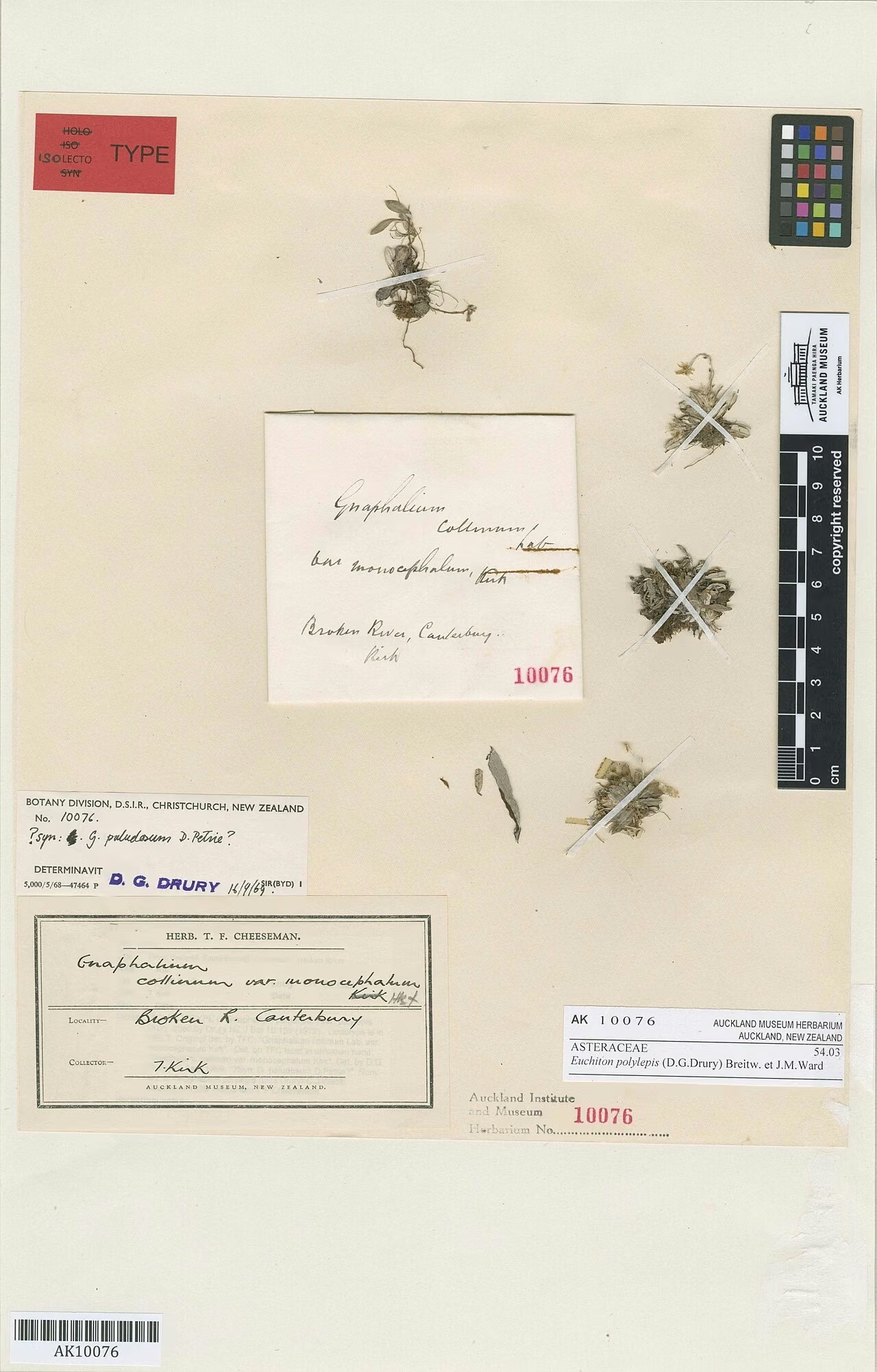
Native Cudweed
Euchiton polylepis
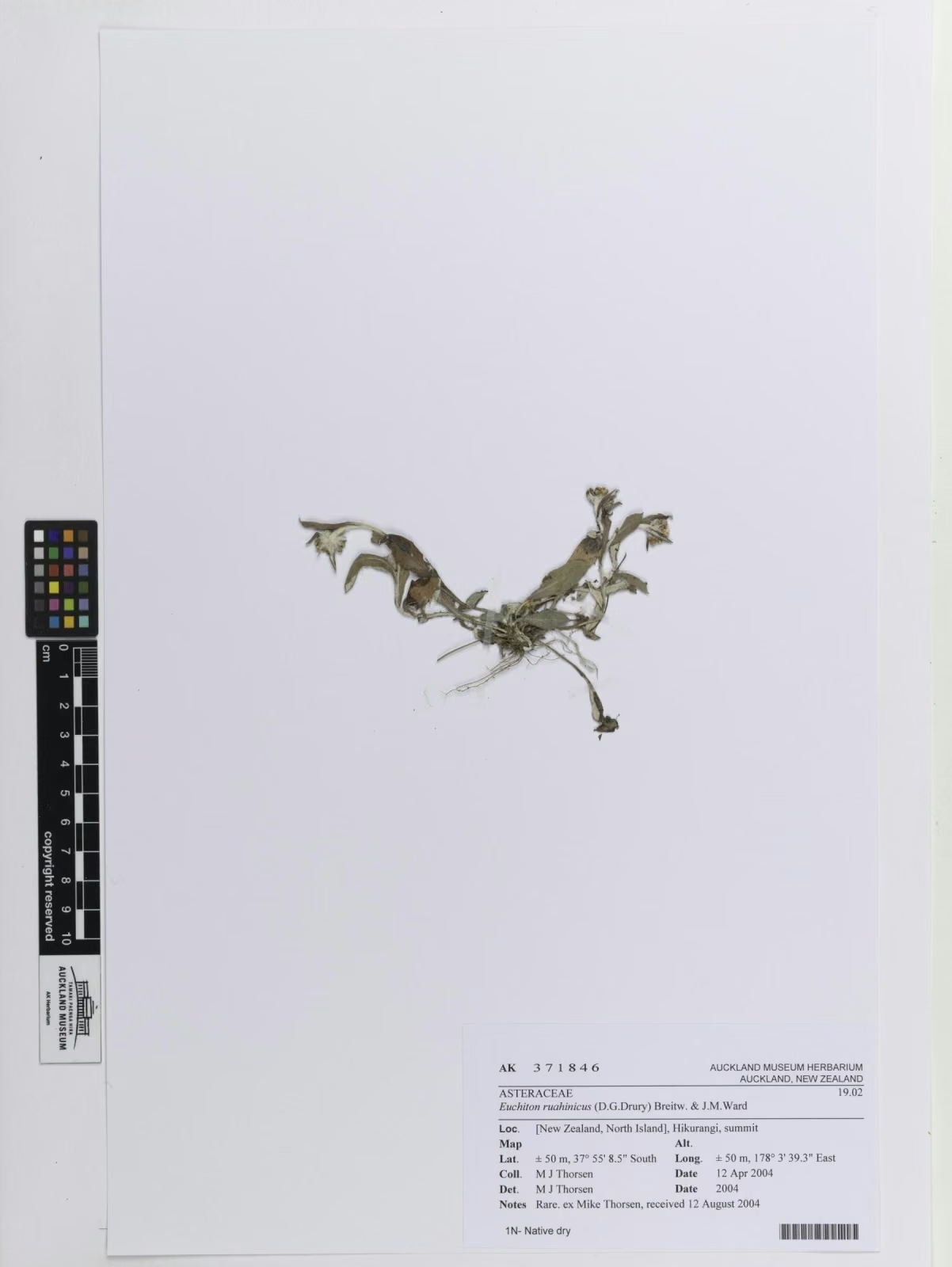
Euchiton ruahinicus
Euchiton ruahinicus
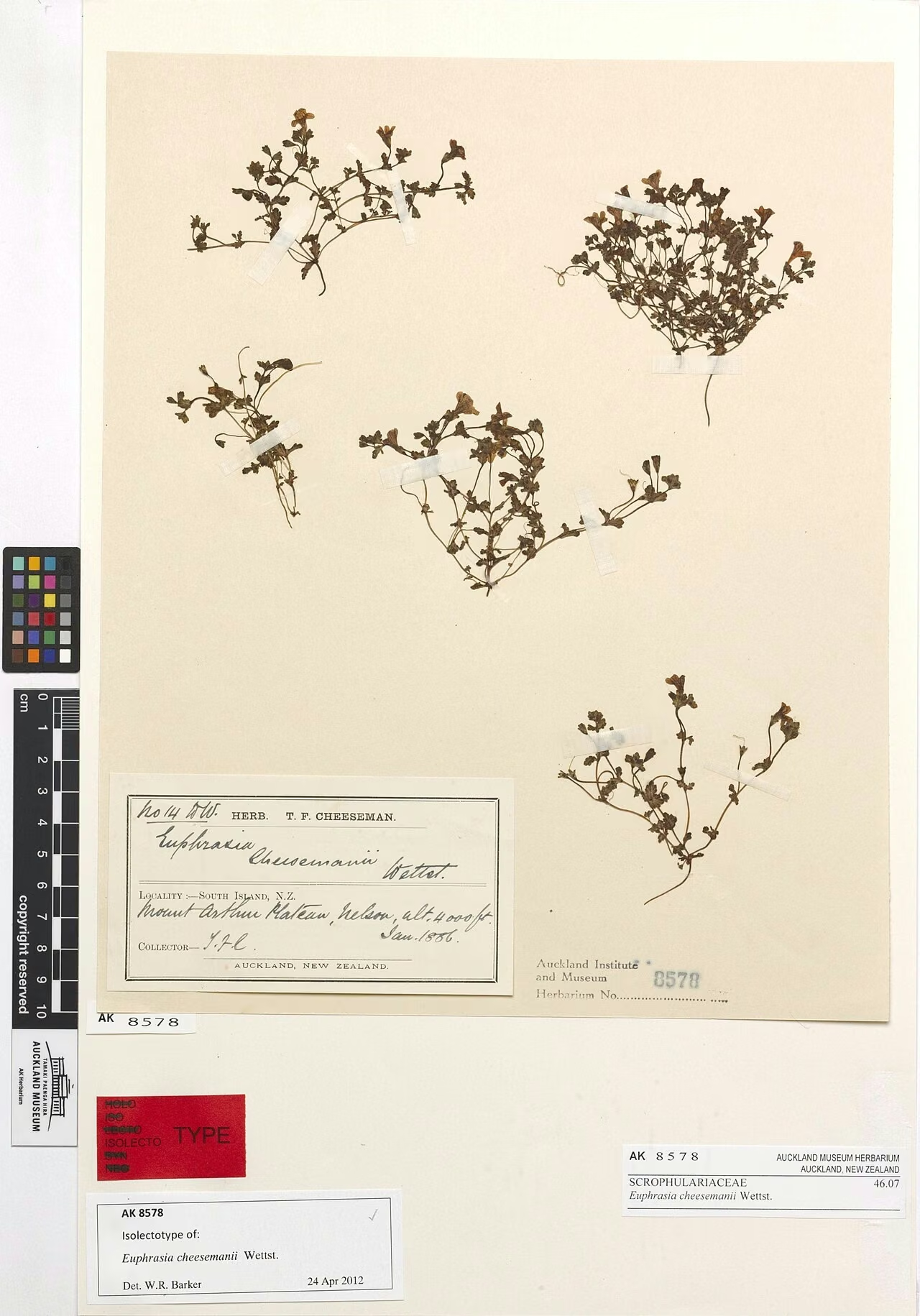
Euphrasia cheesemanii
Euphrasia cheesemanii
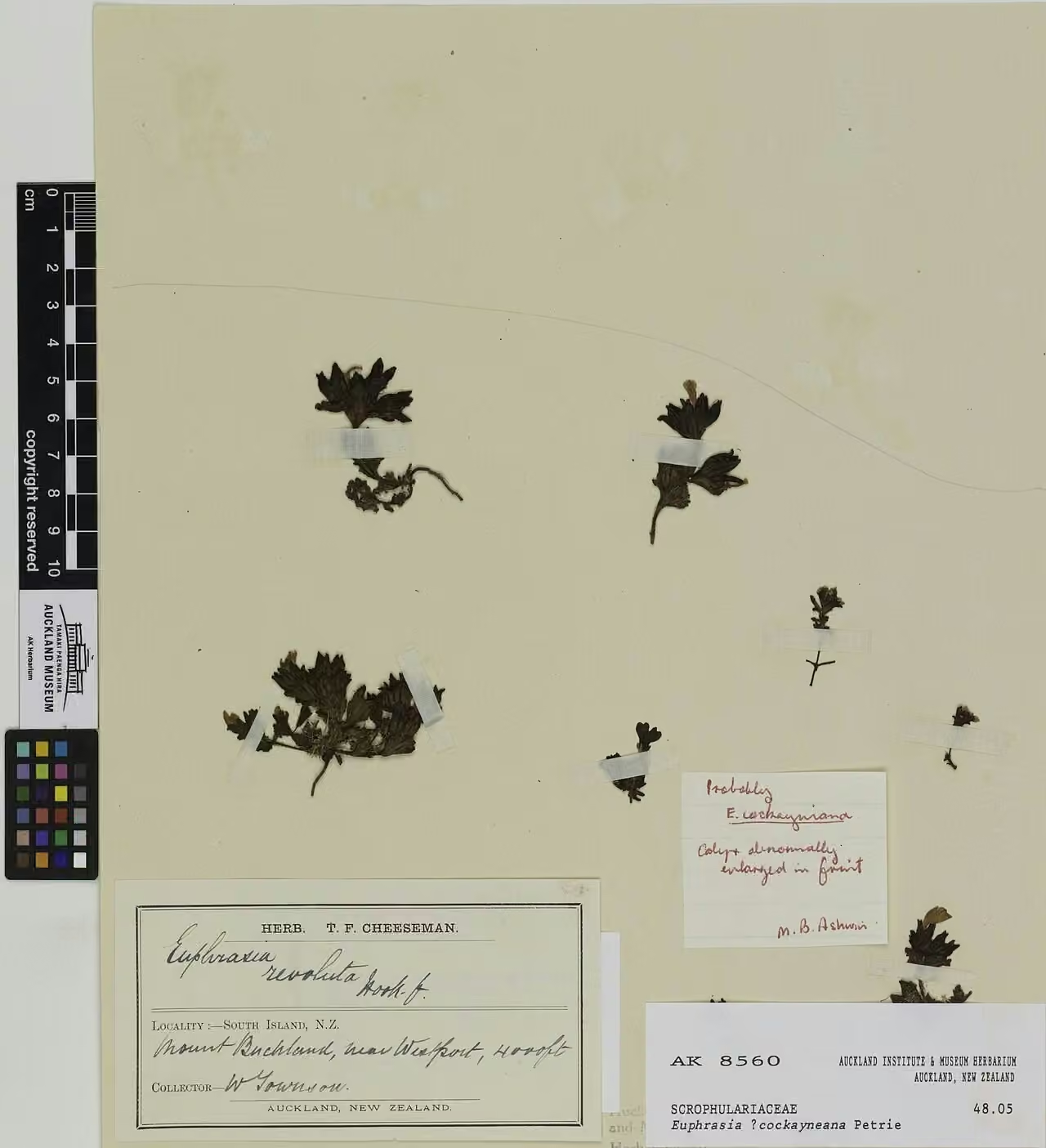
Yellow Eyebright
Euphrasia cockayneana
Euphrasia integrifolia
Euphrasia integrifolia
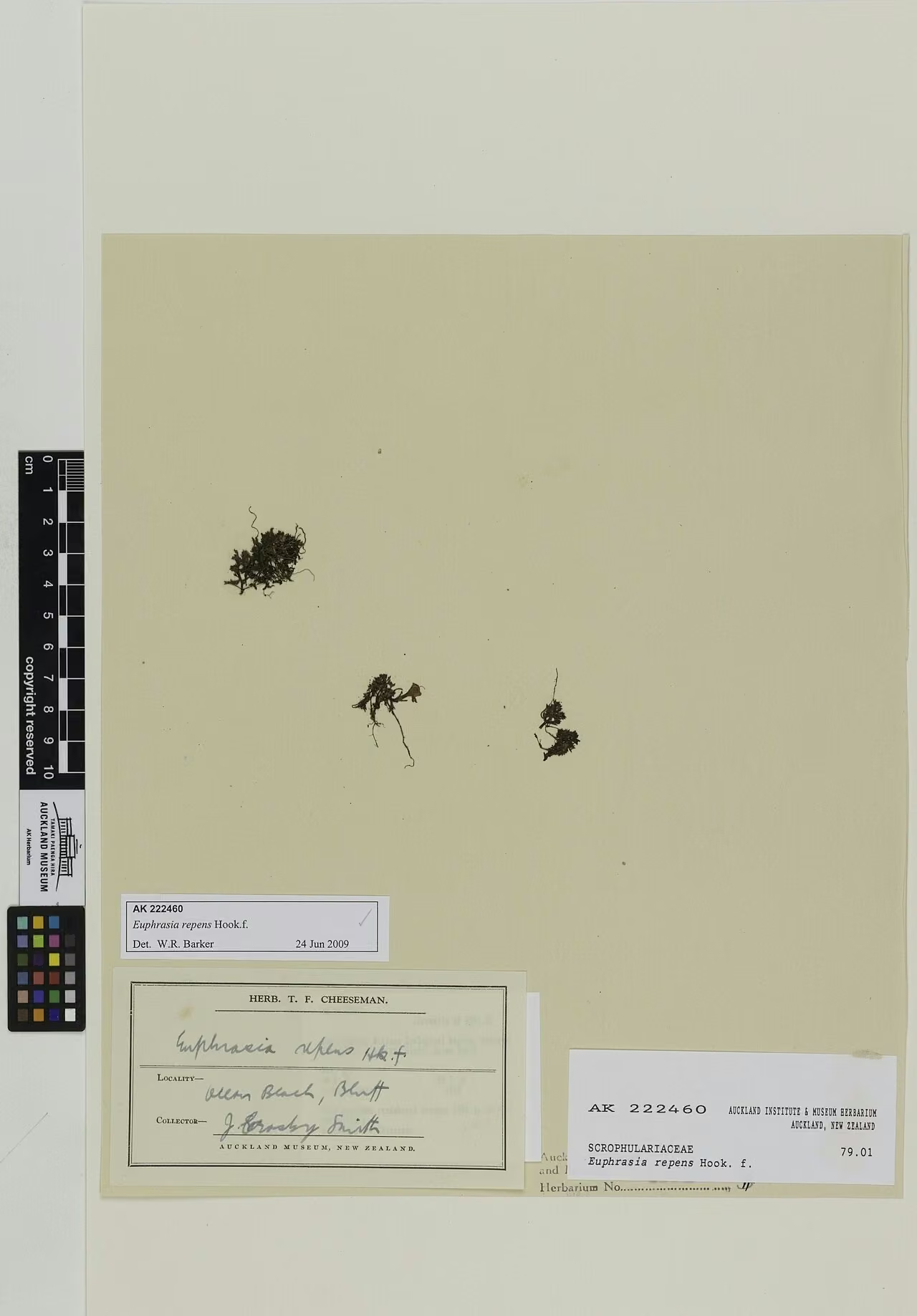
Euphrasia repens
Euphrasia repens
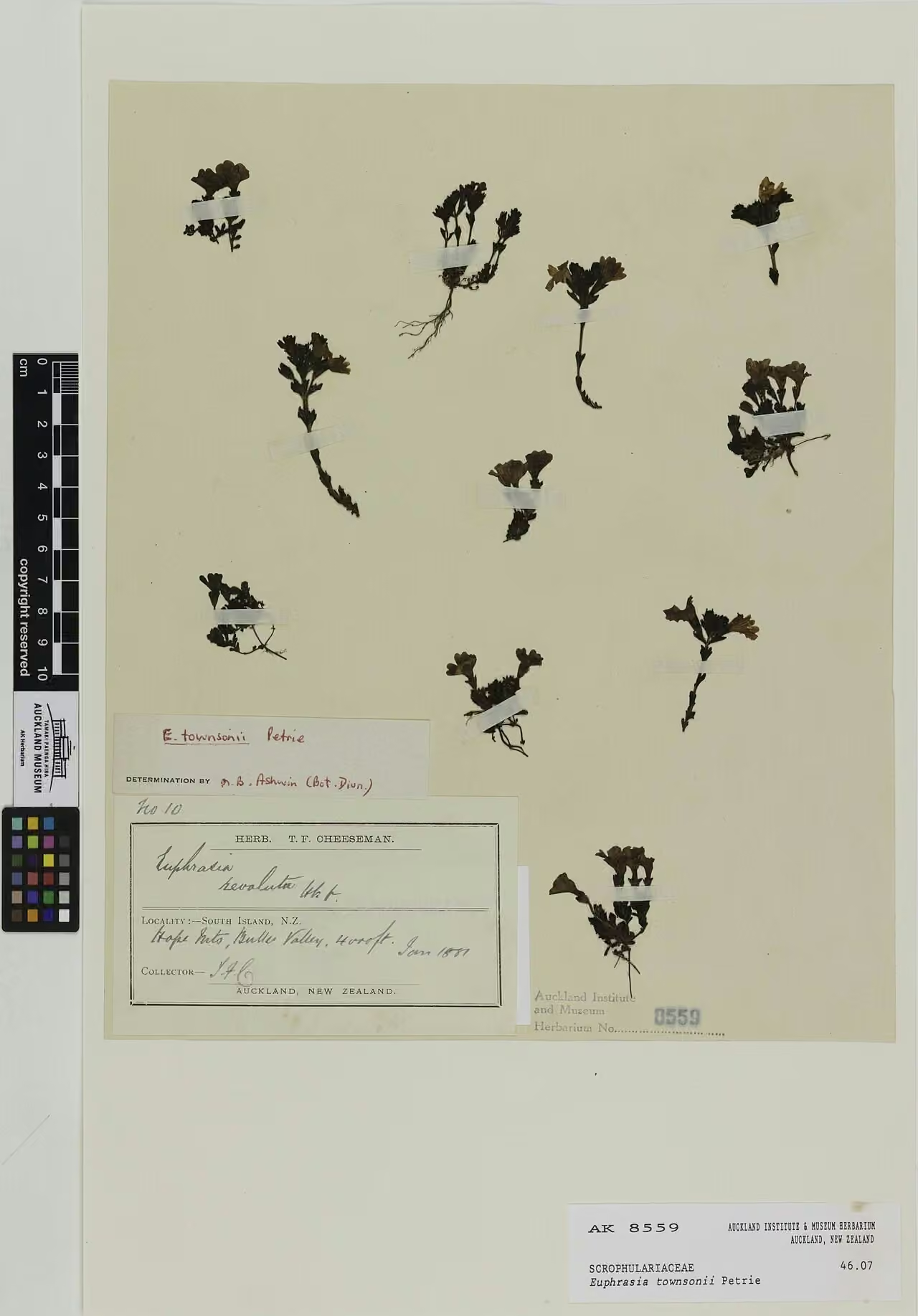
Euphrasia townsonii
Euphrasia townsonii
Euphrasia zelandica
Euphrasia zelandica
Plant Conservation
Euphrasia dyeri is ranked Not Threatened nationally (2023). In Otago, however, it was assessed in 2025 as Regionally At Risk - Regionally Naturally Uncommon, reflecting its scattered occurrence there.
Protection of montane bogs is the key to its future. Maintaining natural water tables, keeping vehicles and stock off bogs and controlling invasive plants all benefit it.
Frequently Asked Questions
How do you identify Euphrasia dyeri?
Look for a tiny succulent annual in a bog with membranous leaves 4 to 6 mm long divided into three to seven pointed segments, white flowers 8 to 15 mm long with a slender tube, and yellow to golden brown anthers.
What is the difference between Euphrasia dyeri and Euphrasia repens?
They look alike, but E. dyeri grows in subalpine bogs, roots only slightly and does not form mats, and usually has larger leaves. E. repens grows on coastal sand and shingle around Foveaux Strait and forms creeping, rooting mats.
Is Euphrasia dyeri a wetland plant?
Yes. NZPCN classes it as an obligate wetland plant, meaning it almost always occurs in wetlands, specifically montane bogs up to 1500 m altitude.
Sources and Further Reading
The botanical, growing, and conservation details for Creeping Eyebright (Euphrasia dyeri) on this page draw on the New Zealand plant references below. Consult them for full technical records and the latest distribution data.