Creeping Cudweed
Euchiton ruahinicus
Last updated:
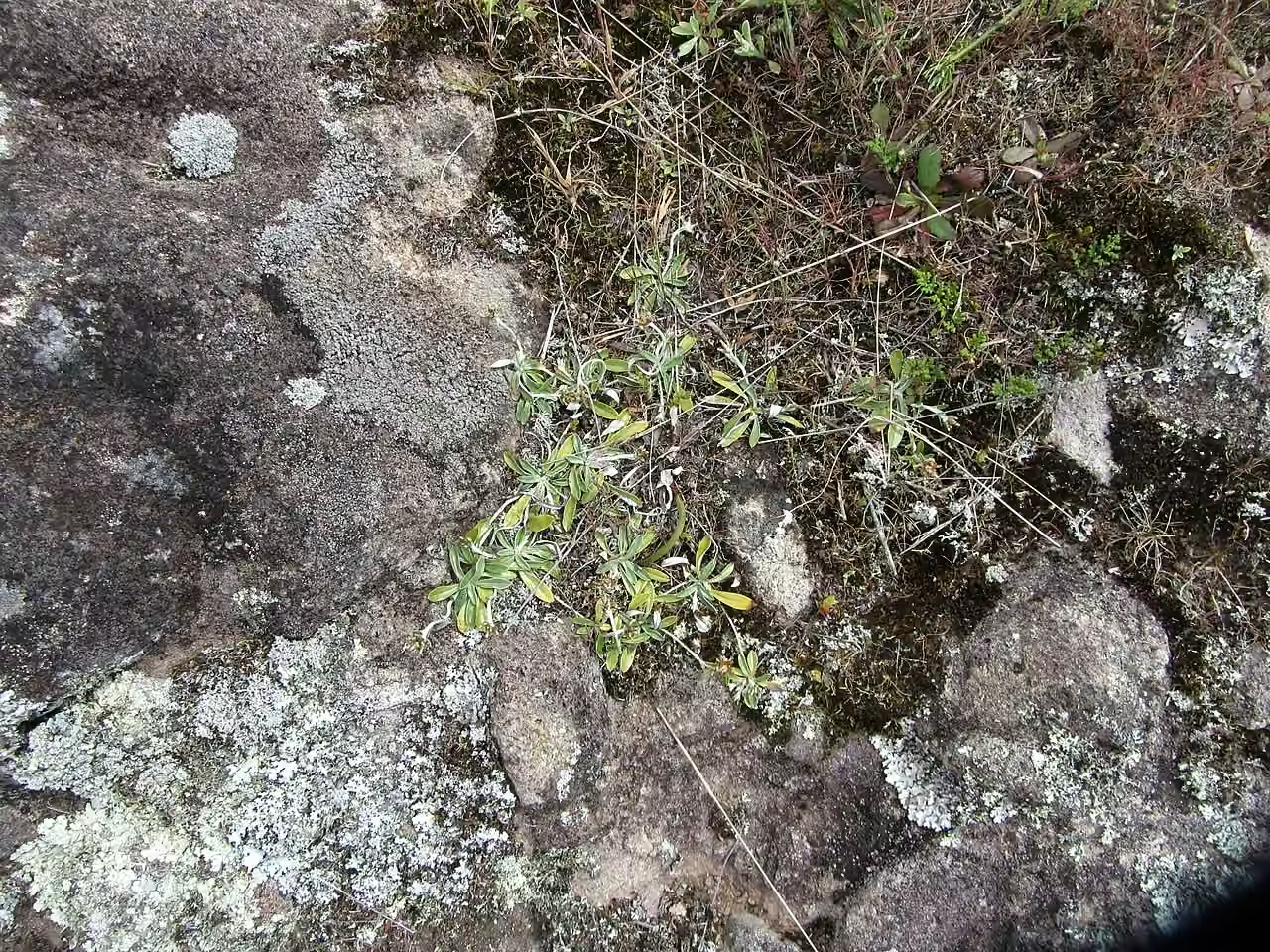
Creeping cudweed (Euchiton ruahinicus) is a stoloniferous perennial daisy endemic to New Zealand and named after the Ruahine Range. It spreads by runners and raises ascending stems usually 3 to 15 cm tall, occasionally to 30 cm, topped by dense rounded clusters of tiny brownish flower heads. Its leaves are densely white-woolly underneath. It occurs in both main islands and on Stewart Island/Rakiura, with herbarium records from steep rocky slopes, damp cliffs, short grassland, scree, road banks and gravel beaches. It is ranked Not Threatened, but it is seldom noticed and little has been written about it. Explore more native ground covers in our native plant guide.
Plant Description
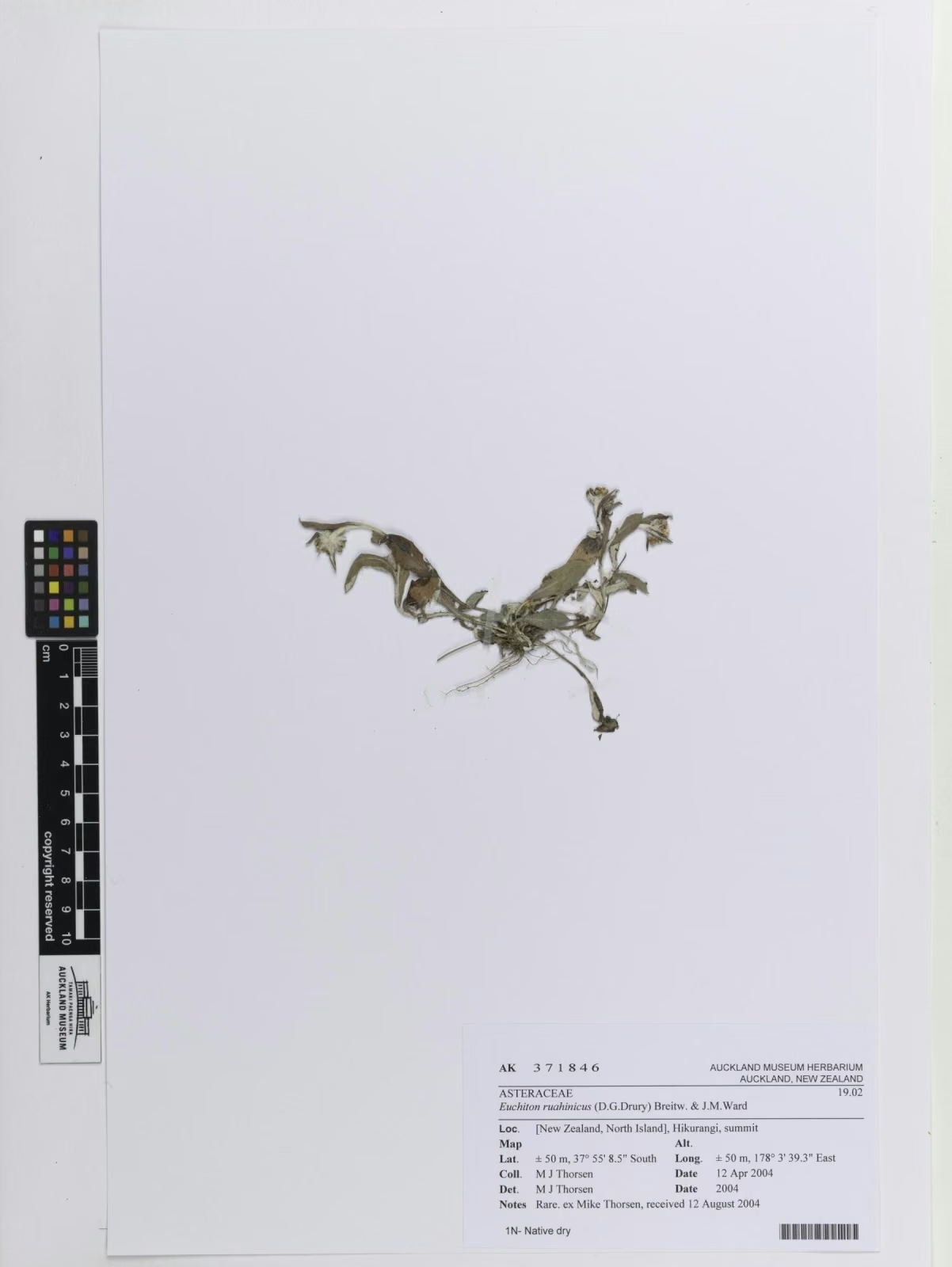
Euchiton ruahinicus is a stoloniferous perennial herb in the daisy family. It produces one to a few stems that are usually ascending, sometimes erect and unbranched, generally 3 to 15 cm tall and occasionally reaching 30 cm. Both basal and stem leaves are present when it flowers.
The basal leaves are short-stalked, narrowly obovate to oblanceolate, tapering to the base, with an acute tip ending in a small point. They are commonly 30 to 50 mm long (ranging from 8 to 100 mm) and 4 to 10 mm wide, densely white-woolly beneath and sparsely to moderately woolly above. The stem leaves are scarcely smaller than the basal ones.
The flower heads are only 1.5 to 2 mm across but are numerous, packed into dense, more or less globular clusters at the stem tips. The involucral bracts are oblong, blunt, 3.5 to 4.5 mm long, with a mid to dark brown lamina that gives the clusters their brownish look. The seeds (achenes) are about 0.7 mm long and minutely papillate, and carry pappus hairs. The clustered terminal heads and taller stems distinguish it from smaller native cudweeds such as Euchiton polylepis.
Quick Facts
| Scientific Name | Euchiton ruahinicus |
|---|---|
| Height | 0.03-0.15 m (occasionally to 0.3 m) |
| Spread | Spreads by stolons into loose patches |
| Water Needs | Moderate; damp to freely drained ground |
| Light | Full sun to light shade |
| Frost Tolerance | High; recorded from mountain sites |
| Salt Tolerance | No information available |
| Growth Rate | No information available |
| Lifespan | Perennial |
Climate Best Suited to
Suits cool, moist hill and mountain climates, from the East Cape ranges to Fiordland and Rakiura. It tolerates frost and cold winters.
Regional Suitability
| City | Climate Suitability |
|---|---|
| Auckland | Low |
| Wellington | Medium |
| Christchurch | Medium |
| Dunedin | High |
Plant Habitat
Euchiton ruahinicus is endemic to New Zealand and is recorded from the North Island, South Island and Stewart Island/Rakiura. Herbarium specimens held by Landcare Research come from places including the East Cape region, Fiordland, South Westland and Stewart Island, and the species was first described from the Ruahine Range.
Specimen labels describe it growing on steep rocky slopes, damp cliffs, short grassland and rocky areas, on scree beside a forestry track, on road banks, and on gravel beaches at the edge of mountain beech and silver beech forest. These records point to a plant of open, often disturbed, mineral ground. Its precise altitudinal range is not well documented.
Growing Requirements
Soil Requirements
The habitats recorded for it are mostly thin mineral soils: rock, scree, gravel and road-cut banks.
- Gritty, free-draining, low-fertility soil
- Open ground with little competing vegetation
- Can cope with damp seepage on cliffs
Light Requirements
Records from cliffs, scree and short grassland indicate a preference for open, well-lit sites.
- Full sun or the light shade of a forest edge
- Not suited to deep shade under dense canopy
Water Requirements
It grows in places that can be damp or quite dry at the surface, but usually where moisture is available at depth or from seepage.
- Water during long dry spells in cultivation
- Avoid stagnant waterlogged pots
Planting and Establishing
There is no published cultivation guidance for this species. Based on its wild habitats, plant it into a sunny scree bed, rock garden crevice or gravelly bank with free drainage, setting rooted pieces at the same depth they grew and firming them in.
Keep the planting area free of vigorous grasses and groundcovers so the stolons can spread over bare grit, and water in well after planting.
Ecological Role
NZPCN, citing Thorsen and others (2009), records that its pappus-bearing seeds are dispersed by wind and water. This helps explain its occurrence on newly exposed ground such as road banks, scree and gravel beaches. Its pollinators have not been documented.
As a low plant of open rocky and gravelly ground it acts as an early coloniser of bare surfaces, alongside other small herbs, mosses and grasses, before taller vegetation closes in.
Uses & Significance
Garden Uses
It is a plant for enthusiasts of small native daisies rather than a mainstream garden plant.
- Scree and gravel gardens
- Rock garden crevices and troughs
- Revegetating raw banks within its natural range
Ecological Value
It contributes to the native herb layer of rocky slopes, banks and forest-edge gravels.
- Endemic species adding to local plant diversity
- Colonises bare mineral ground
- Stolons help bind loose surface material
Landscaping Uses
The silvery leaf undersides and compact brown flower clusters suit a naturalistic alpine or scree planting, set among grey stones where the woolly foliage stands out. Grow it with other small natives of open ground such as Raoulia, small Acaena and native grasses.
In a trough or container it can be viewed at close range, which shows off the dense globular flower clusters that are easy to miss in the field.
Seasonal Care Calendar
Spring
New stolons and leaves develop as temperatures rise.
- Weed around plants
- Plant out rooted pieces
Summer
Flowering stems carry dense clusters of tiny brownish heads; exact flowering months are not documented.
- Water in dry spells
- Note when heads open in your area
Autumn
Seed heads become fluffy as the pappus-bearing seeds ripen and disperse.
- Collect seed
- Pot up runners that have rooted
Winter
Plants persist as low, woolly-leaved patches.
- Ensure good drainage
- Protect pots from prolonged waterlogging
When to Prune and How Much
No pruning is needed. Spent flowering stems can be snipped off at the base after the seed has been shed to keep the patch tidy.
If neighbouring plants start to lean over it, cut them back rather than the cudweed.
How to Grow Creeping Cudweed
No propagation method has been published specifically for Euchiton ruahinicus. NZPCN reports that the closely related Euchiton polylepis is easily raised from seed and from rooted pieces of stem, and E. ruahinicus has the same stoloniferous growth and pappus-bearing seeds, so the same two approaches are the logical starting points. Treat them as trials and record your results. Collect material only with landowner permission, and only small amounts from any one wild population.
From Seed
The seeds are about 0.7 mm long with pappus hairs, so they are light and easily lost. Collect heads just as they turn fluffy, before the wind takes the seed.
- Collect fluffy seed heads into a paper envelope
- Sow thinly on the surface of a gritty seed mix
- Press the seed lightly onto the mix but do not bury it
- Keep evenly moist in a cool, bright position
- Prick out seedlings when large enough to handle and grow on in small pots
From Rooted Stolons
Because the plant spreads by stolons, sections that have rooted can be separated from the parent to give an established young plant more quickly than seed. Late spring, when the stolons are actively growing, is a sensible time to try this.
- Find a runner that has rooted into the soil
- Sever it with a few centimetres of stolon attached
- Pot into a free-draining mix with added grit
- Keep in light shade and moist until new growth appears
- Harden off in full light before planting out
Pests & Diseases
No pests or diseases have been recorded for this species. In a nursery, slugs and snails are the most likely cause of damage to seedlings and soft new growth, so check pots after wet nights.
Overly wet, poorly drained potting mix is likely to cause more losses than any pest, given its natural preference for gravelly, open ground.
Cultural Significance
No traditional Māori use or Māori name has been recorded specifically for Euchiton ruahinicus. Its scientific name honours the Ruahine Range, and NZPCN explains that ruahine is a Māori word meaning old woman or wise woman.
It was first described by D.G. Drury as a subspecies of Gnaphalium audax, raised to species rank by C.J. Webb in 1987, and transferred to Euchiton by Breitwieser and Ward in 1998, reflecting the reorganisation of New Zealand's cudweeds into several genera.
Bonus Tip
When identifying native cudweeds in the field, look at the arrangement of the flower heads. Euchiton ruahinicus has many small heads crowded into a dense ball at the top of the stem, with dark brown bracts, which separates it from species whose heads are solitary or sit hidden among the leaves.
Related Plants
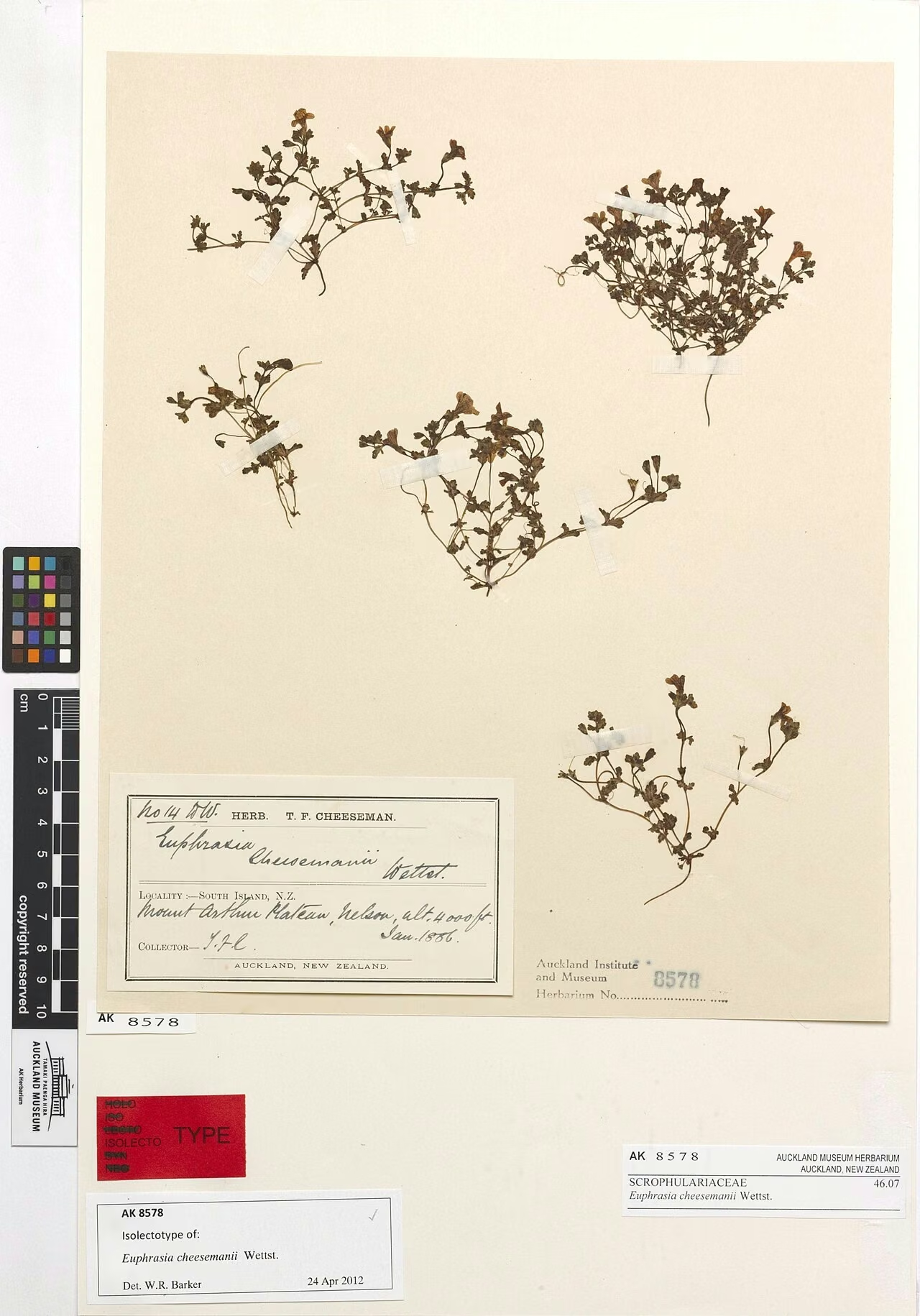
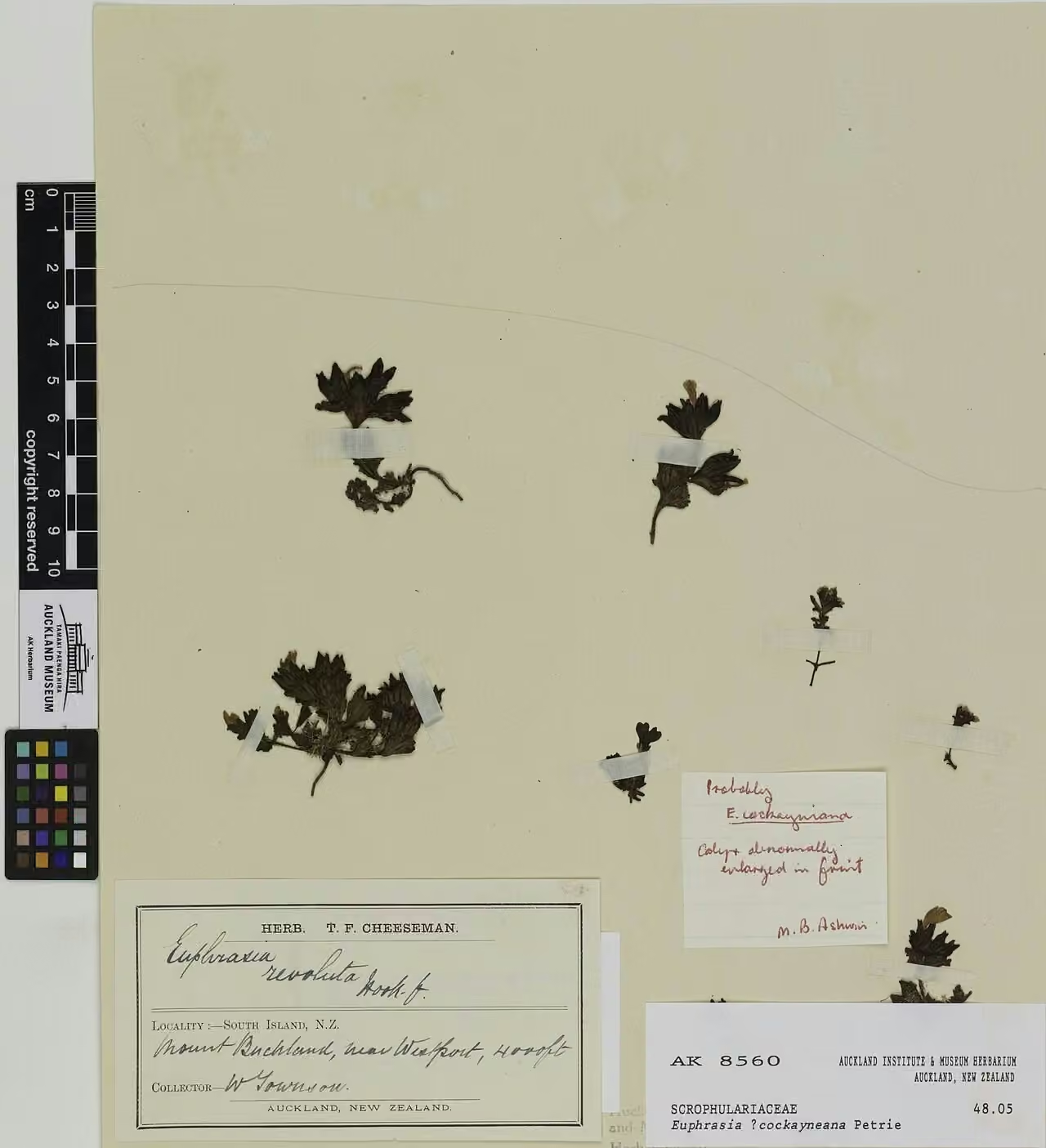
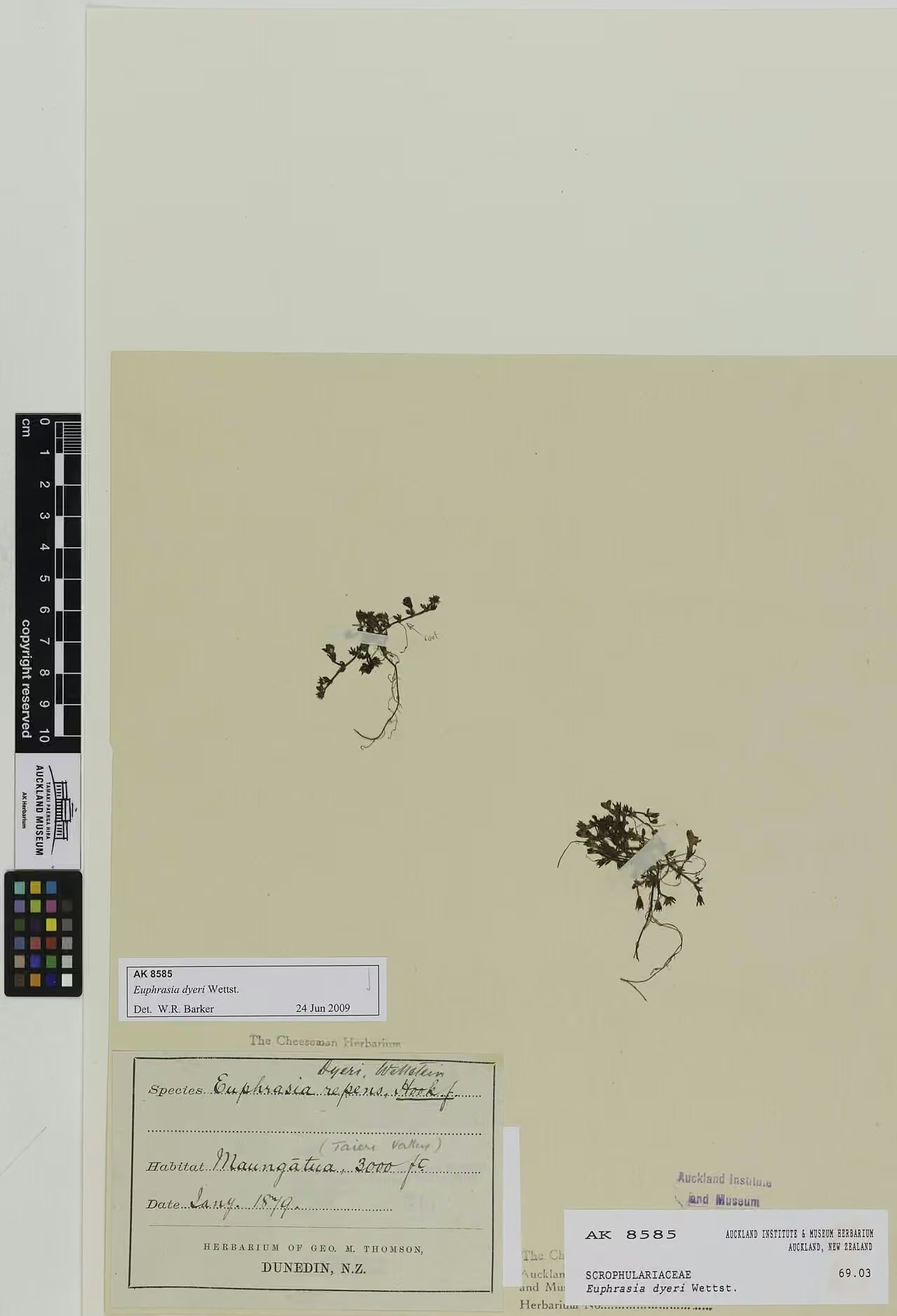
Explore other native plants that share similar characteristics or habitats with Creeping Cudweed (Euchiton ruahinicus), offering further insights into New Zealand's diverse flora. These related species provide context and opportunities for complementary planting in your garden.
Plant Conservation
Euchiton ruahinicus has been assessed as Not Threatened in every national assessment from 2004 to 2023. It is also ranked Regionally Not Threatened in Otago and Wellington (2025).
Although secure, it is under-recorded, with relatively few observations on iNaturalist NZ. Recording sightings, with photos of the flower clusters and leaf undersides, would improve knowledge of its distribution and habitat.
Frequently Asked Questions
Where does Euchiton ruahinicus get its name?
The epithet ruahinicus refers to the Ruahine Range in the lower North Island. NZPCN notes that ruahine is a Māori word meaning old woman or wise woman.
What is the difference between Euchiton ruahinicus and Euchiton polylepis?
E. ruahinicus is a taller plant, with stems usually 3 to 15 cm tall and many flower heads in dense terminal clusters, while E. polylepis has stems only 1 to 6 cm tall and solitary heads hidden among the leaves.
Is Euchiton ruahinicus a wetland plant?
Not usually. NZPCN lists it as facultative upland, meaning it is occasionally found in wet places but usually grows on non-wetland ground such as rocky slopes and banks.
Sources and Further Reading
The botanical, growing, and conservation details for Creeping Cudweed (Euchiton ruahinicus) on this page draw on the New Zealand plant references below. Consult them for full technical records and the latest distribution data.