Sea Holly
Eryngium undulatum
Last updated:
Sea holly (Eryngium undulatum) is a small, prostrate, prickly herb of the carrot family, endemic to New Zealand and long known here as Eryngium undulatum. In 2025 botanists showed the New Zealand plants differ from the Australian E. vesiculosum and named them as a new species. It spreads by stolons or rhizomes into grey-green patches about 30 cm across, with soft tubular leaves in winter and spiny, wavy-edged leaves in summer, and small heads of white to pale bluish flowers. It grows on sandy beaches, coastal gravels, river mouths and headlands from Manawatū and the Wairarapa coast south, and is ranked At Risk - Declining. It was previously known as Eryngium vesiculosum. Explore more native ground covers in our native plant guide.
Plant Description
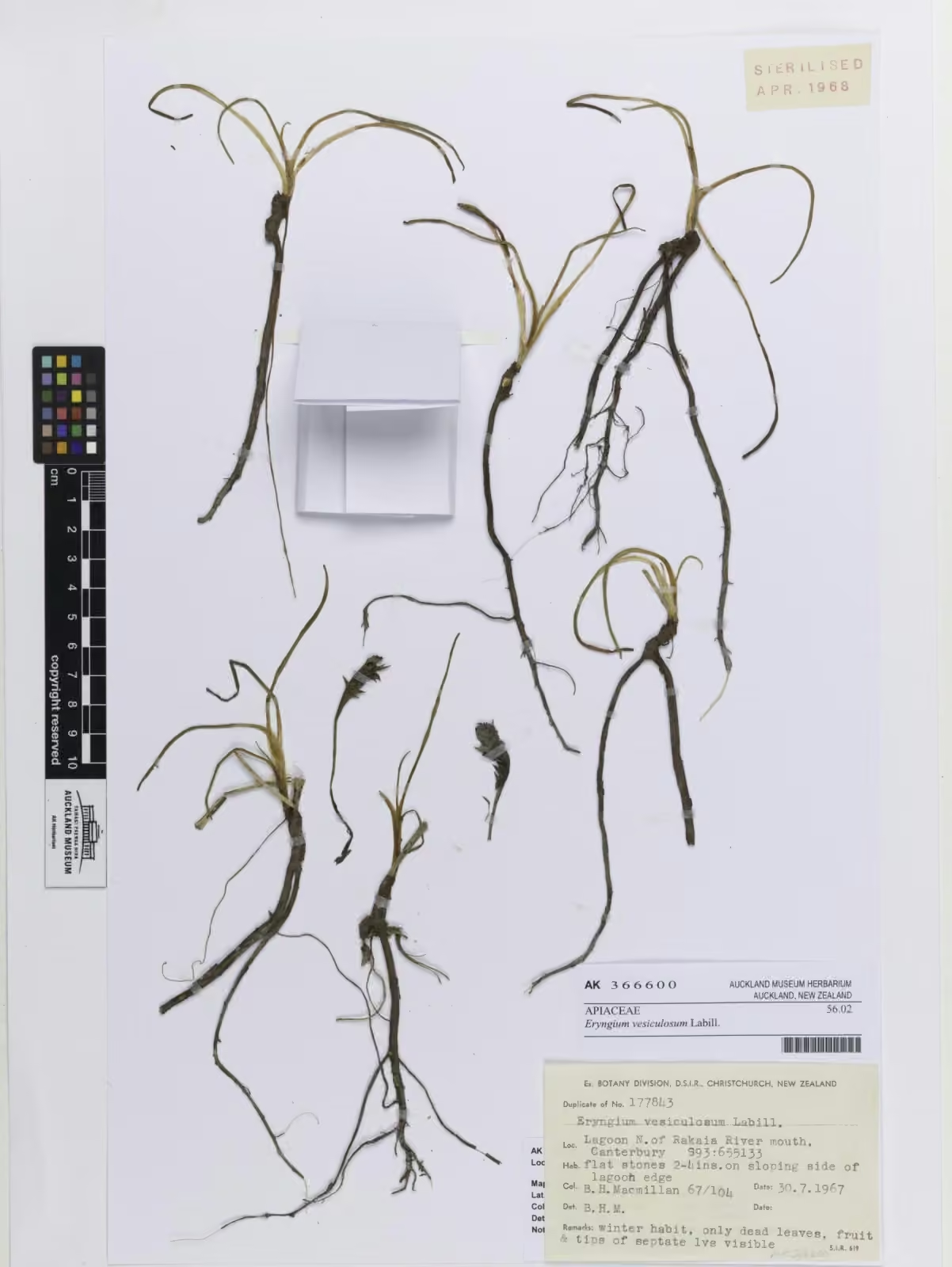
Eryngium undulatum is a tufted perennial with stolons or rhizomes, forming low patches up to about 30 cm in diameter. It is strikingly heterophyllous. Winter leaves are entire, fistular (hollow and tube-like) and septate, while summer leaves are lanceolate to ovate or spathulate, long-stalked, 5 to 12 cm long, deeply spiny-toothed and often wavy along the margin; the new name undulatum (wavy) presumably refers to this.
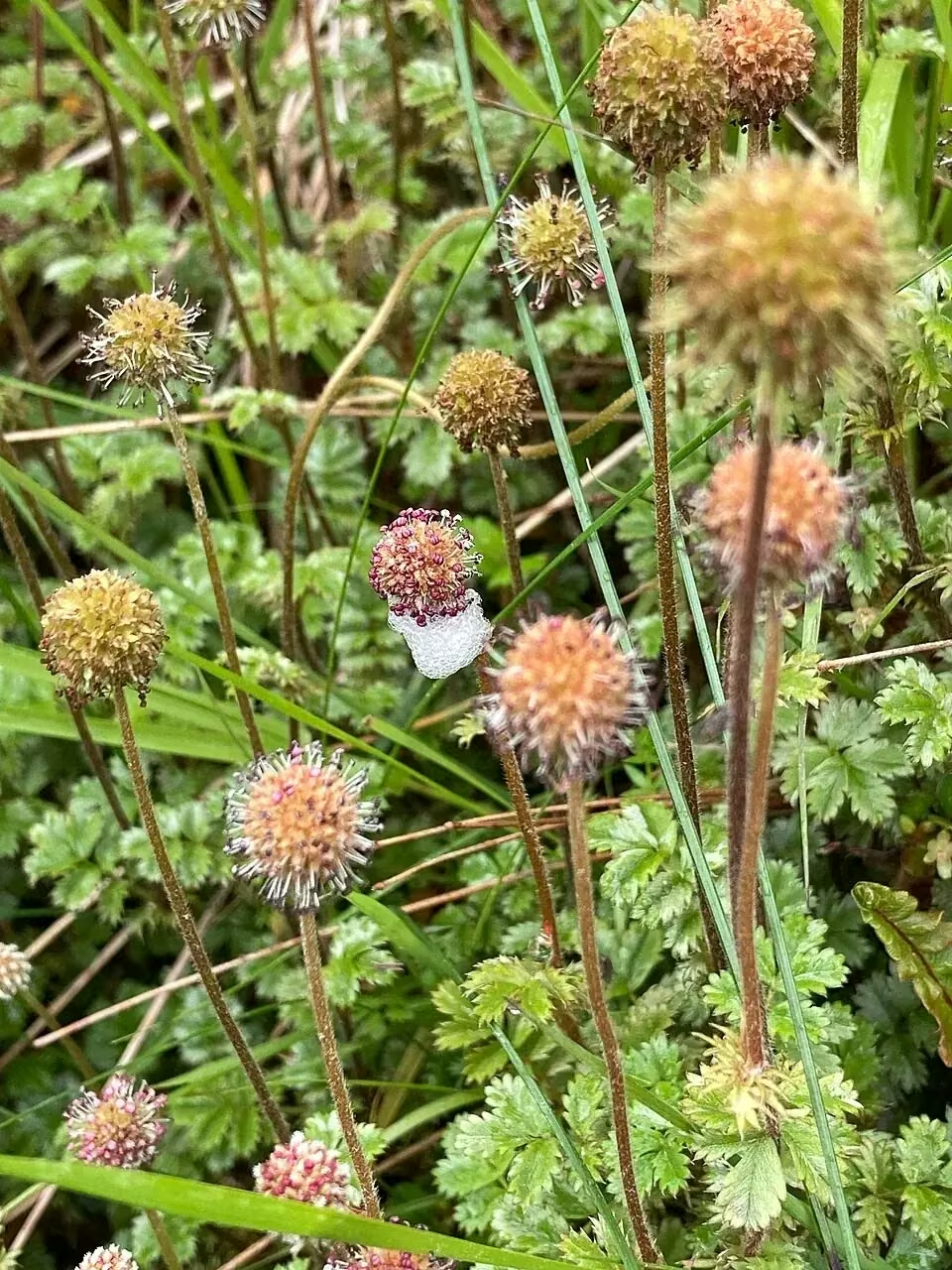
The flowers are tiny, 1 to 3 mm across, packed into dense heads surrounded by spiny involucral bracts mostly 5 to 7 mm long. NZPCN and NZ Flora describe them as white, while the NZPCN Trilepidea note describes the heads as pale blue. The fruits are scaly mericarps up to 3 mm long.
Its prostrate habit is the main feature separating it from the Australian Eryngium undulatum, which is taller and suberect to erect. Within New Zealand nothing else on beaches combines rosettes of spiny, holly-like summer leaves with tubular winter leaves and tight thistle-like flower heads.
Quick Facts
| Scientific Name | Eryngium undulatum |
|---|---|
| Height | Prostrate, flower stems low to the ground |
| Spread | Patches up to about 0.3 m across |
| Water Needs | Low to moderate; free-draining sand or gravel |
| Light | Full sun |
| Frost Tolerance | Moderate to high; grows on cold eastern South Island coasts |
| Salt Tolerance | High; a plant of beaches and exposed headlands |
| Growth Rate | Slow to moderate |
| Lifespan | Perennial |
Climate Best Suited to
Suits exposed, windy, sunny coastal climates of the lower North Island and eastern South Island, including cold, dry winters and summer drought on gravel and sand.
Regional Suitability
| City | Climate Suitability |
|---|---|
| Auckland | Low |
| Wellington | High |
| Christchurch | High |
| Dunedin | Medium |
Plant Habitat
Sea holly is endemic to New Zealand. In the North Island it is found from the Manawatū and eastern Wairarapa coastline south, and in the South Island mainly east of the main divide. It is regionally rare in both Wellington and Otago.
It is mostly coastal, growing on sandy beaches, coastal gravels, the lower reaches of rivers and exposed headlands, and occasionally inland in similar open habitats such as river gravels and lake shores. These are open, low-competition sites where other plants struggle to establish.
Growing Requirements
Soil Requirements
It grows in clean sand and gravel with little organic matter, so excellent drainage and low fertility are essential.
- Coarse sand, fine gravel or shingle
- Low fertility; no compost or rich mulch
- Never heavy or waterlogged
Light Requirements
A plant of open beaches and headlands, it needs full, unobstructed sun and will be swamped by taller vegetation.
- Full sun all day
- Keep clear of overhanging or crowding plants
- Tolerates strong wind and salt-laden air
Water Requirements
It copes with the hot, dry conditions of summer gravels and sands, and its seasonal leaf change is thought to be linked to water availability.
- Water sparingly once established
- Keep winter wet from pooling around the crown
- Occasional deep watering in long droughts for potted plants
Planting and Establishing
Plant in spring into a sunny gravel garden, sand bed or coastal planting with sharp drainage. Use only nursery-grown plants, since wild populations are declining and should not be disturbed.
Mulch with shingle or coarse sand rather than bark, and space plants so that weeds and grasses can be kept well away, as competition is one of the main threats to sea holly in the wild.
Ecological Role
The dense flower heads offer small florets for insects, but specific pollinator studies for New Zealand sea holly were not found. Its scaly fruits fall close to the parent, and spread by stolons and rhizomes helps it build patches on mobile sand and gravel.
Sea holly is part of the specialised flora of open beaches, river mouths and coastal gravels, a habitat that has been heavily reduced by development, weeds such as marram and introduced grasses, vehicles and grazing.
Uses & Significance
Garden Uses
It is a distinctive and unusual native for coastal and gravel gardens, and growing it helps keep this declining species in cultivation.
- Coastal gravel and sand gardens
- Rock gardens and dry scree beds
- Containers of gritty mix in exposed sunny spots
- Threatened plant collections
Ecological Value
As an endemic of open coastal and riverine habitats, sea holly is a valuable inclusion in dune and gravel beach restoration within its natural range.
- Contributes to native beach and shingle plant communities
- Supports insects with summer flowers
- Indicator of intact, weed-free coastal gravel habitat
Landscaping Uses
Plant sea holly among stones and driftwood in a coastal-themed garden, where its grey-green, prickly summer rosettes contrast with soft native grasses such as Poa and with sprawling plants like pōhuehue (Muehlenbeckia complexa).
Because it is prostrate and small, give it a prominent, uncrowded position near a path edge where the unusual leaves and thistle-like flower heads can be seen.
Seasonal Care Calendar
Spring
As days lengthen the soft, tubular winter leaves are replaced by broader, spiny summer leaves.
- Plant out new stock
- Weed carefully around patches
Summer
Flowering takes place from about December to March, with small white to pale bluish heads held close to the rosette.
- Water potted plants in prolonged drought
- Wear gloves when handling the spiny leaves
Autumn
Fruits ripen and the plant begins shifting back towards winter foliage as day length shortens.
- Collect ripe fruit for sowing
- Clear fallen leaves from the patch
Winter
Plants carry soft, entire, hollow leaves and grow slowly.
- Keep drainage sharp
- Avoid fertilising
When to Prune and How Much
No pruning is needed. Remove old flower stems and dead leaves by hand, wearing gloves because of the spiny summer foliage.
The most important maintenance task is weeding, since sea holly is low-growing and easily smothered by grasses and other competitors.
How to Grow Sea Holly
NZPCN does not give propagation notes for New Zealand sea holly, and specific published propagation trials were not found. The methods below follow the plant's known biology: it produces small scaly fruits and spreads by stolons or rhizomes. Because the species is ranked At Risk - Declining, never dig plants from the wild. Use plants from specialist native nurseries, or work with the Department of Conservation or local restoration groups, who may hold seed or stock of known local origin.
From Seed
The fruit is a pair of small scaly mericarps up to 3 mm long. Collect them from cultivated plants once the flower heads have dried in late summer or autumn.
- Cut dry flower heads from cultivated plants and rub out the fruits
- Sow on the surface of a sandy, free-draining seed mix
- Cover lightly with coarse sand or grit
- Keep just moist in a bright, sheltered spot; germination may be slow and uneven
- Pot seedlings individually into gritty mix once they have a few true leaves
By Division of Rhizomes
Established cultivated plants spread by stolons or rhizomes to form patches, and rooted portions can be separated to make new plants.
- In spring, lift a well-established cultivated patch
- Cut away a portion of rhizome or stolon with its own roots and leaves
- Pot into a coarse sand and grit mix and water in
- Keep in a sunny, sheltered spot until new growth appears before planting out
Pests & Diseases
No specific insect pests are recorded. In cultivation the main risks are rot in poorly drained or rich soils and smothering by weeds.
In the wild, NZPCN identifies weeds and trampling by stock grazing along river and lake shores as major threats, and vehicles and foot traffic on beaches can also damage the low patches.
Cultural Significance
No traditional Māori name or use for this sea holly was found in the sources consulted.
Its story is a recent piece of botanical history. For well over a century New Zealand botanists treated these plants as the Australian Eryngium undulatum, but a 2025 comparison of plants on each side of the Tasman by Peter Michael and Peter Wilson, published in Telopea, showed the New Zealand populations are distinct, and they were named Eryngium undulatum. The genus name comes from the Greek eryngion, a spiny-leaved thistle-like plant.
Bonus Tip
Grow sea holly in a shallow terracotta bowl of coarse sand and pebbles placed in the sunniest, windiest spot you have, and watch its leaves through the year. The shift from soft, tubular winter leaves to prickly summer rosettes is triggered by day length, making it a fascinating plant to show children or visitors.
Related Plants
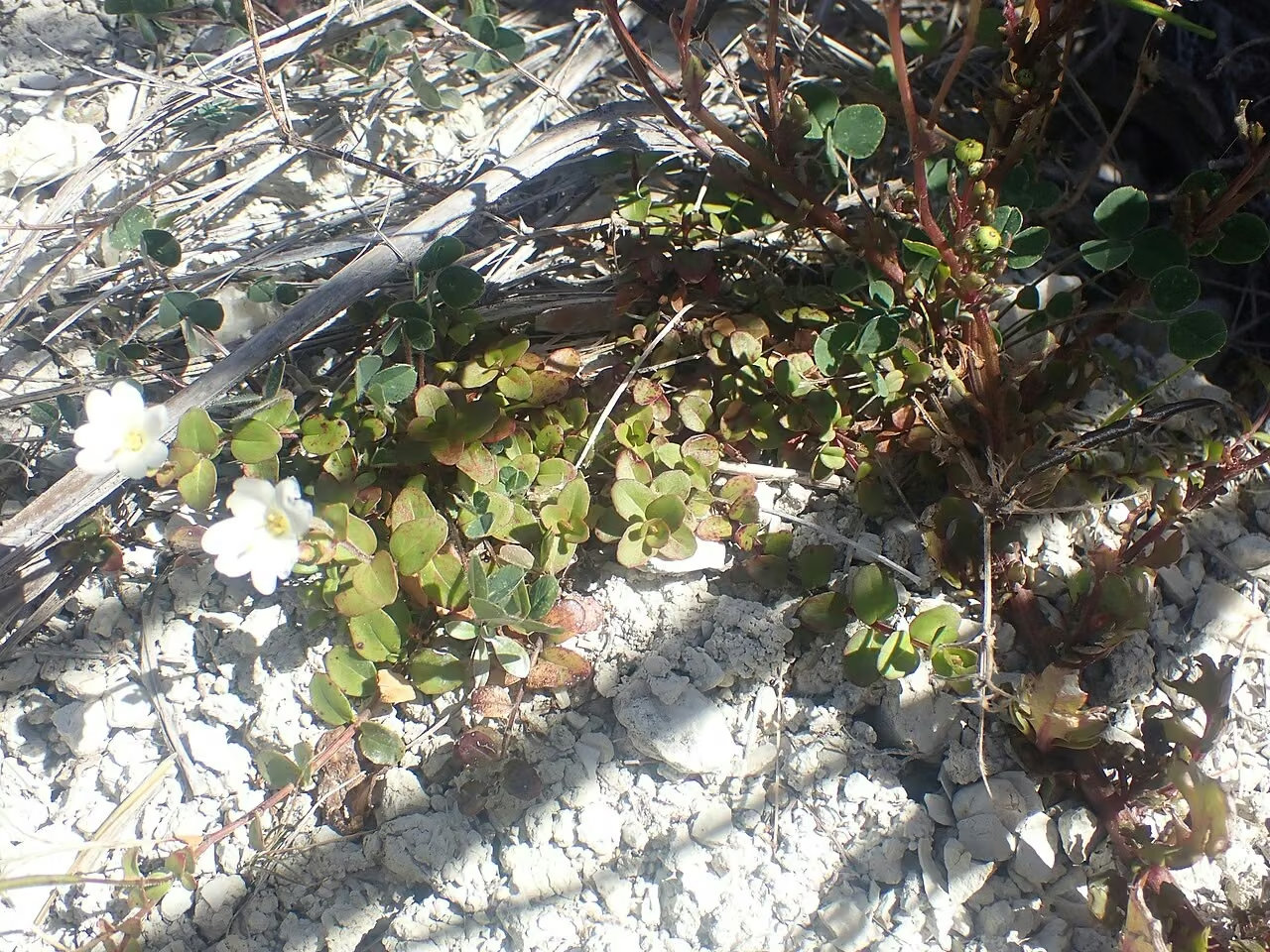
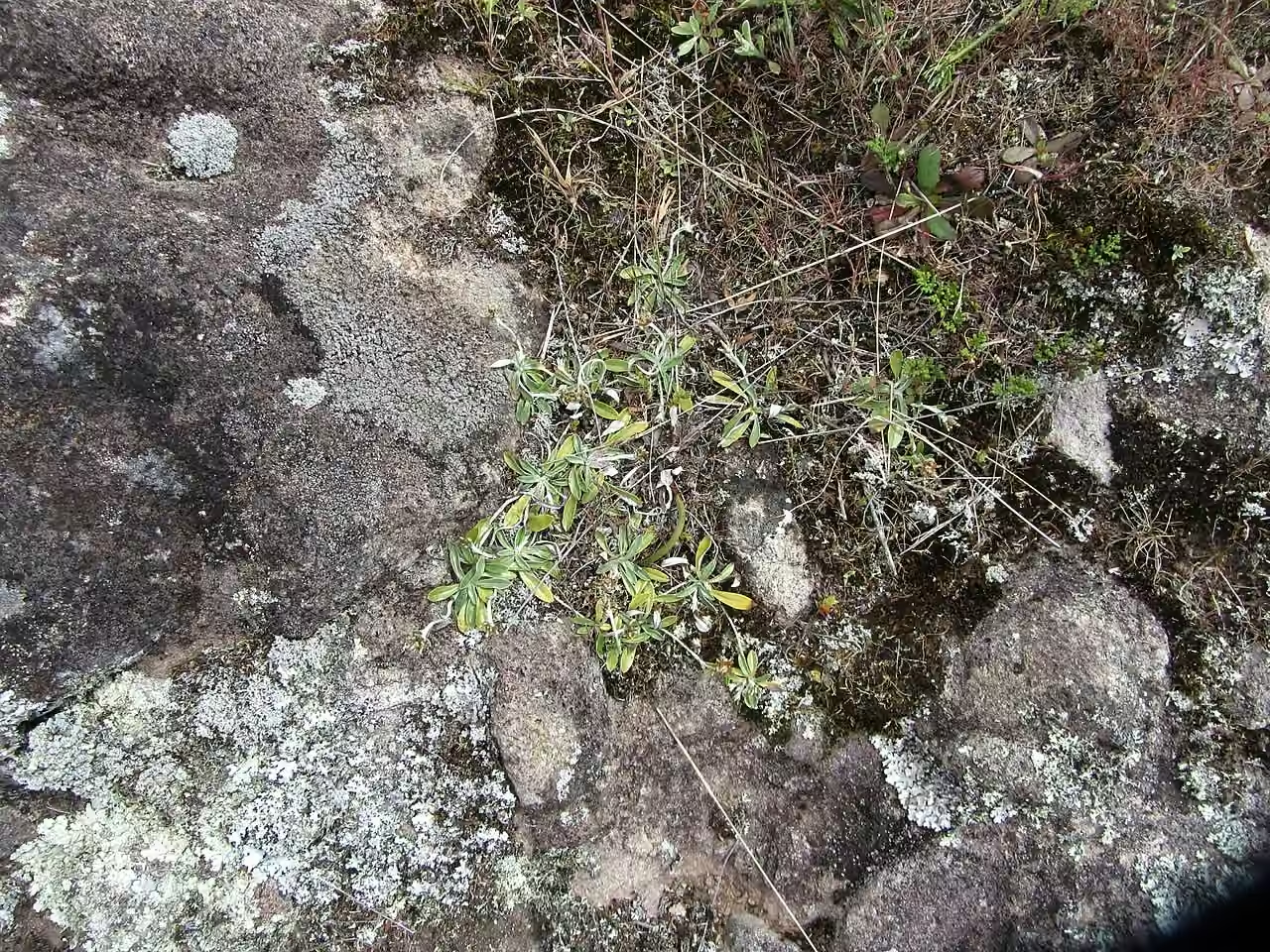
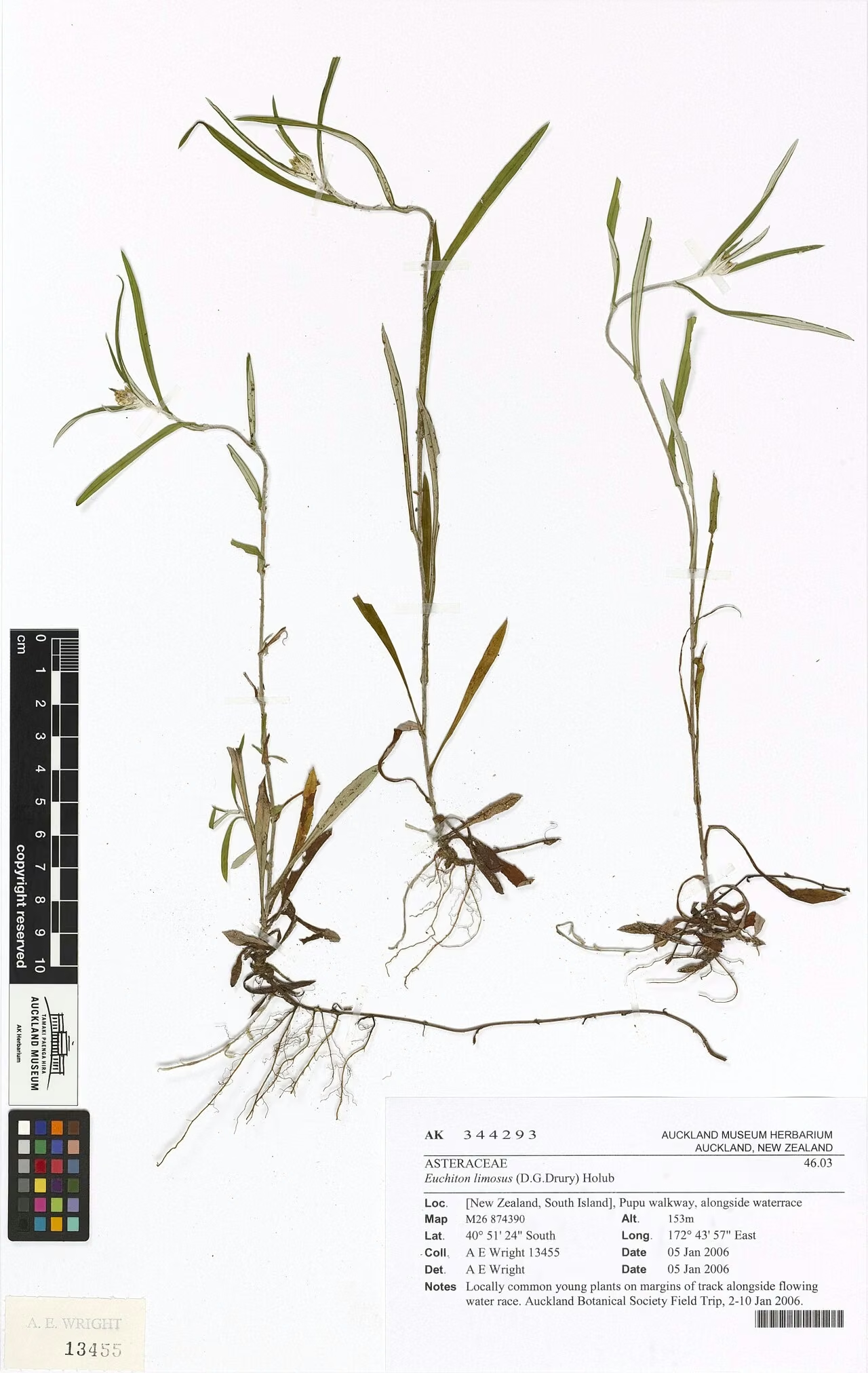
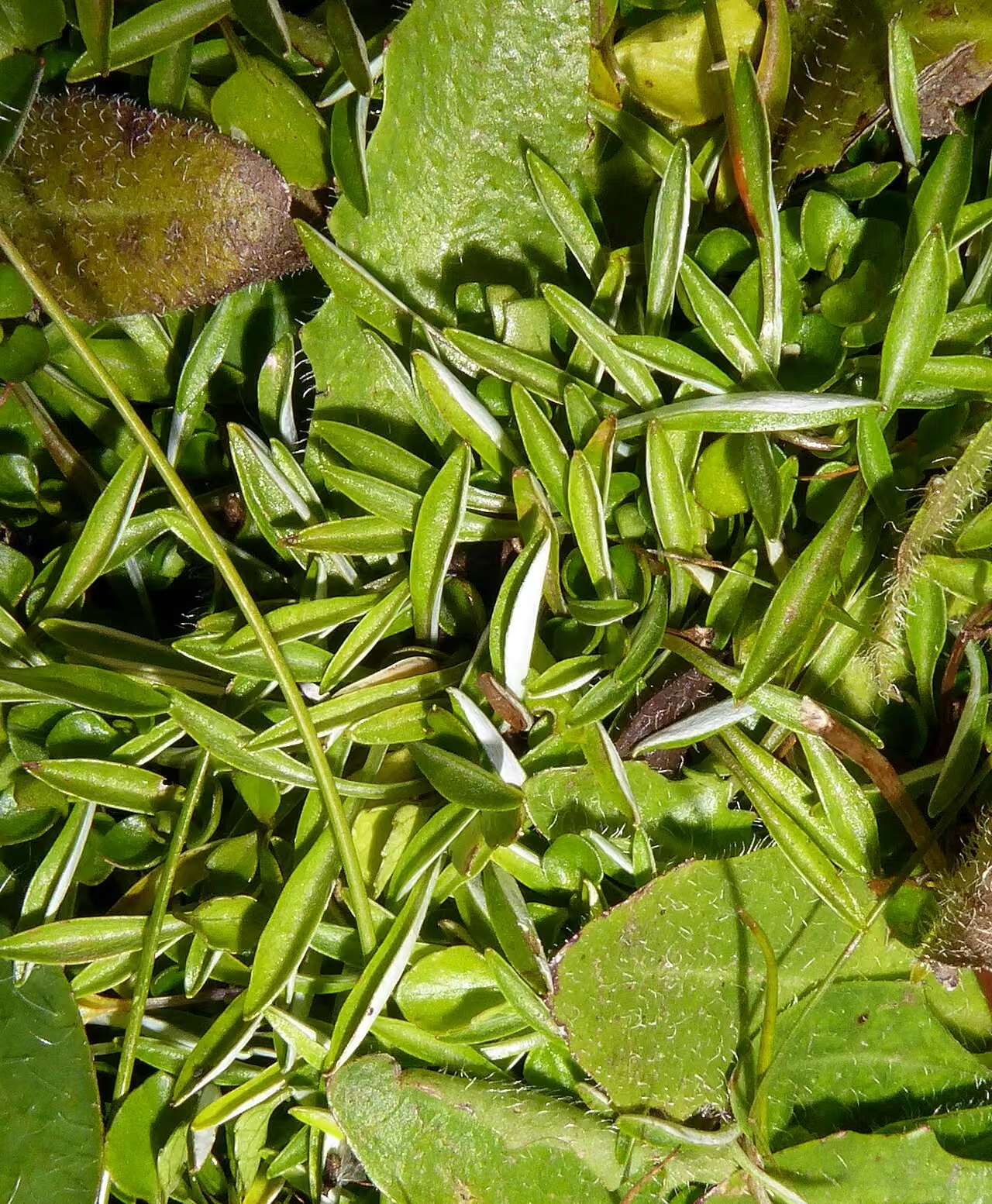
Explore other native plants that share similar characteristics or habitats with Sea Holly (Eryngium undulatum), offering further insights into New Zealand's diverse flora. These related species provide context and opportunities for complementary planting in your garden.
Plant Conservation
Eryngium undulatum is ranked At Risk - Declining (2023), with qualifiers including Range Restricted, Sparse, Climate Impact and Secure Overseas (the last assigned before the 2025 split, when it was thought to also grow in Australia), and data on its population size and trend are poor. Regionally it is assessed as Regionally Critical in Otago and Regionally Endangered in Wellington (2025).
Weed invasion and trampling by stock on river and lake shores are the main threats, along with general degradation of beaches and coastal gravels. Fencing stock out of shorelines, controlling weeds around known populations, and including sea holly in local beach restoration plantings all help.
Frequently Asked Questions
Is Eryngium vesiculosum the same as Eryngium undulatum?
In New Zealand, yes in practice. Plants previously called E. vesiculosum were described in 2025 as a distinct endemic species, Eryngium undulatum. True E. vesiculosum is an Australian plant that is taller and suberect rather than prostrate.
Why does New Zealand sea holly have two kinds of leaves?
It is heterophyllous. In winter it produces soft, entire, tubular leaves, and in summer tougher, broader, spiny and often wavy leaves. NZPCN's Trilepidea note says the change is cued by day length and probably relates to seasonal water availability.
Where does sea holly grow in New Zealand?
It occurs in the North Island from the Manawatū and eastern Wairarapa coast south, and in the South Island mainly east of the main divide, on sandy beaches, coastal gravels, river mouths, exposed headlands and occasionally inland river and lake shores.
Is New Zealand sea holly endangered?
It is ranked At Risk - Declining (2023). Weeds and trampling by stock grazing along river and lake shores are the main threats, and it is regarded as regionally critical in Otago and regionally endangered in Wellington.
Sources and Further Reading
The botanical, growing, and conservation details for Sea Holly (Eryngium undulatum) on this page draw on the New Zealand plant references below. Consult them for full technical records and the latest distribution data.