Wilson's Willowherb
Epilobium wilsonii
Last updated:
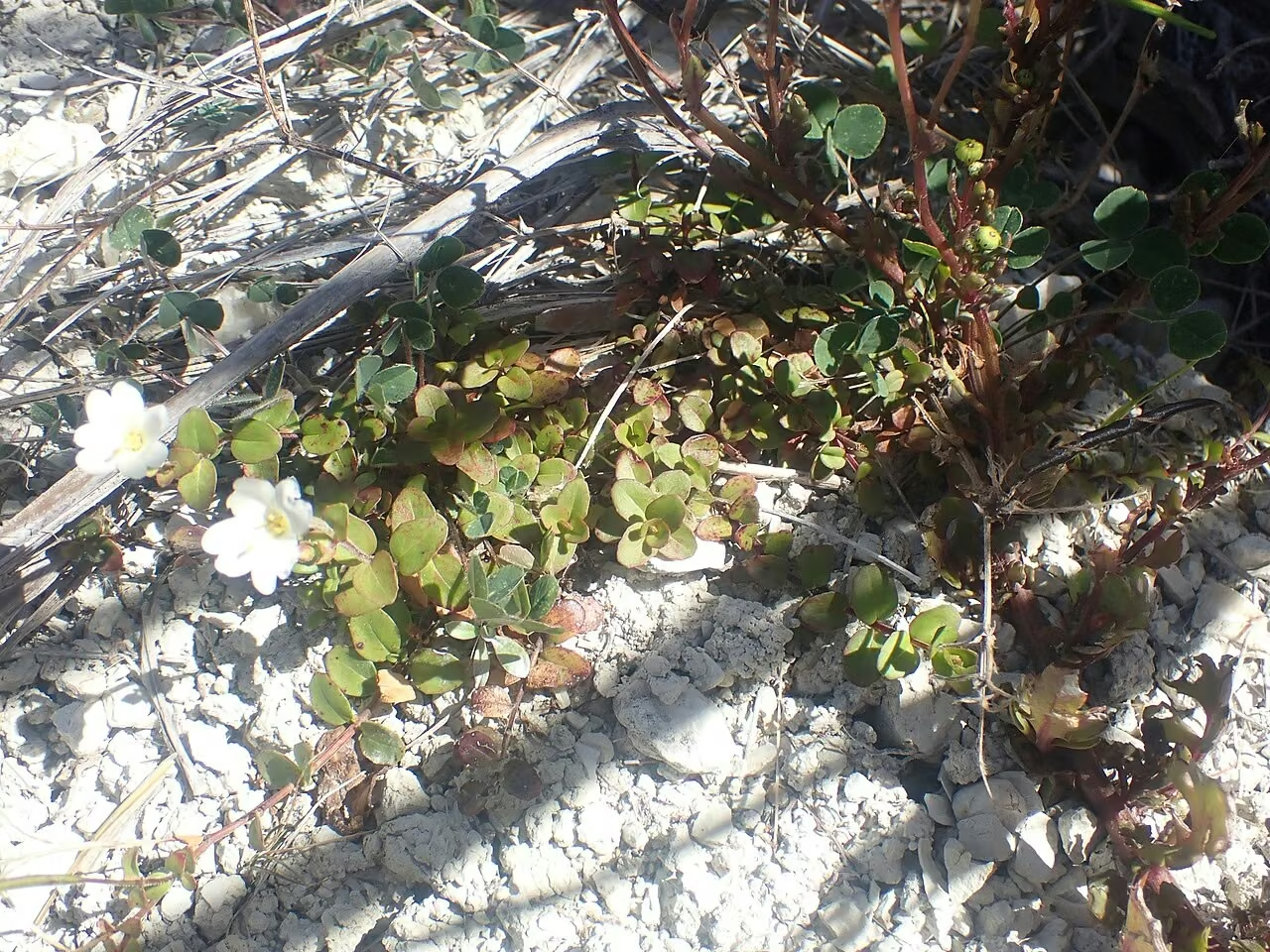
Wilson's willowherb (Epilobium wilsonii) is a clump-forming perennial herb endemic to the South Island, where it grows only on limestone and other calcareous rocks. Its purplish stems reach 6 to 30 cm tall and carry thick, leathery, ovate leaves and unusually large flowers for a native willowherb, with white or pink petals up to 18 mm long. It is found from sea level to about 1200 m in eastern Marlborough, north Canterbury and on the Owen Range in Kahurangi National Park. Because it is confined to scattered limestone outcrops, it is ranked At Risk - Naturally Uncommon, yet it grows easily from seed in a sunny, free-draining garden. Explore more native flowering plants in our native plant guide.
Plant Description
Epilobium wilsonii forms small clumps of stems 60 to 300 mm tall that are typically purplish and marked with broad lines of non-glandular hairs, which may lie flat or stand out from the stem. The leaves are opposite, coriaceous (thick and leathery), ovate to broadly ovate, 10 to 40 mm long and 6 to 20 mm wide, with four to eight teeth along each margin or sometimes entire.
The flowers are large for the genus. The petals are white or pink, 10 to 18 mm long and 6 to 15 mm wide, each with a distinct notch 3 to 5 mm deep at the tip. The fruit is a slender capsule 19 to 55 mm long containing narrowly obovoid brown seeds 1.4 to 2.2 mm long, each with a coma of hairs 5 to 6 mm long.
Its combination of leathery leaves, purplish hairy stems, large notched petals and a strict association with calcareous rock helps separate it from the many small-flowered native willowherbs. Noting the rock type where a plant is growing is a useful first clue.
Quick Facts
| Scientific Name | Epilobium wilsonii |
|---|---|
| Height | 0.06-0.3 m |
| Spread | Small clumps, about 0.2-0.3 m |
| Water Needs | Low to moderate; dislikes waterlogging |
| Light | Full sun |
| Frost Tolerance | High; recorded up to 1200 m |
| Salt Tolerance | Moderate; occurs on coastal limestone at Motunau Beach and Kaikōura |
| Growth Rate | Moderate |
| Lifespan | Perennial |
Climate Best Suited to
Suits the dry, sunny, frosty climate of eastern Marlborough and north Canterbury, with hot summers and cold winters. It does best where rainfall is moderate and drainage is sharp.
Regional Suitability
| City | Climate Suitability |
|---|---|
| Auckland | Low |
| Wellington | Medium |
| Christchurch | High |
| Dunedin | Medium |
Plant Habitat
Wilson's willowherb is endemic to the South Island. Its main range is eastern Marlborough, from near Lake Grassmere to Mt Fyffe and the Kaikōura Peninsula, and north Canterbury at the Waikari River, Mt Terako and Motunau Beach. A separate population grows on the Owen Range in Kahurangi National Park, north-west Nelson.
It ranges from the coast to the alpine zone (0 to 1200 m) and is always found on calcareous rocks such as limestone, in open shrubland, grassland or rock field. These outcrops are naturally scattered, which accounts for its sparse and range-restricted distribution.
Growing Requirements
Soil Requirements
It grows in crevices and thin soils on limestone and other calcareous rock, so it prefers free-draining, alkaline or neutral conditions.
- Sharp-draining gritty mix
- Add limestone chips or crushed shell to raise pH
- Avoid heavy, wet clay or peaty acid soils
Light Requirements
Its natural sites are open rock fields and outcrops in grassland and shrubland, so it expects plenty of sun.
- Full sun for best flowering
- Tolerates light shade for part of the day
- Avoid crowding by taller plants
Water Requirements
Eastern Marlborough and north Canterbury limestone country is dry for much of the summer, and this willowherb copes with periods of drought once established.
- Water young plants regularly until established
- Let the surface dry between waterings
- Never allow pots or beds to become waterlogged
Planting and Establishing
NZPCN notes it does well in a free-draining soil in full sun. Plant in spring into a rock garden, limestone scree or crevice between rocks, working some limestone chips into the planting hole if your soil is acidic.
In containers use a gritty mix and a clay pot, and top-dress with limestone gravel to keep the crown dry and reflect the conditions of its natural outcrops.
Ecological Role
The relatively large white or pink flowers are open and well suited to insect visitors such as native bees and flies, though specific pollinator studies for this species were not found. Its tiny seeds, each with a tuft of hairs, are dispersed by wind between rock outcrops.
It belongs to the specialised plant communities of calcareous outcrops in Marlborough, north Canterbury and north-west Nelson, which depend on open, uncrowded rock habitat that is naturally patchy across the landscape.
Uses & Significance
Garden Uses
Wilson's willowherb is one of the most ornamental native willowherbs and is ideal for gardeners interested in rare regional plants.
- Limestone rock gardens and crevice gardens
- Alpine troughs and gritty containers
- Conservation and threatened plant collections
- Long summer flowering in a dry, sunny bed
Ecological Value
As a naturally uncommon limestone specialist, every wild population contributes to the distinctive flora of South Island calcareous outcrops.
- Indicator of intact limestone rock habitat
- Long flowering season for native insects
- Useful in restoration of eastern South Island limestone sites
Landscaping Uses
Place it in a sunny crevice or at the foot of a limestone boulder, where its purplish stems and pink or white flowers stand out against pale stone. It pairs well with other small dryland natives such as Raoulia mats and fine tussocks.
Because individual clumps are small, plant several together or repeat them through a scree garden to create a visible drift of flowers through summer.
Seasonal Care Calendar
Spring
New stems grow from the base and flower buds form late in the season, with flowering beginning around November.
- Plant out new stock
- Top up limestone gravel mulch
Summer
The peak flowering period, with large white or pink flowers followed by slender capsules.
- Water only in prolonged drought
- Collect seed as capsules begin to split
Autumn
Flowering continues until about April, and fruit ripens through to June.
- Sow fresh seed
- Remove spent stems if untidy
Winter
Growth slows and plants persist as low leafy clumps through frost.
- Keep crowns free of wet debris
- Protect potted plants from prolonged rain
When to Prune and How Much
Little pruning is needed. Cut flowered stems back to the basal foliage once the capsules have released their seed, which keeps the clump compact and tidy.
Remove any dead or rotting stems promptly, particularly in wetter gardens, to maintain air flow around the crown.
How to Grow Wilson's Willowherb
NZPCN reports that Epilobium wilsonii is easily grown from fresh seed and rooted pieces, and that it does well in free-draining soil in full sun. Because it is ranked At Risk - Naturally Uncommon, wild plants should not be disturbed: obtain seed or divisions from cultivated stock, or collect only with the appropriate permission from landowners or the Department of Conservation. Growing it in gardens near its natural range can be a useful way to keep local genetic stock in cultivation.
From Seed
Fruiting runs from November to June. The seeds are brown, 1.4 to 2.2 mm long and carry a tuft of hairs that lets them blow away quickly once the capsule opens, so timing matters.
- Watch capsules and pick them as they turn brown and begin to split
- Sow the fresh seed on the surface of a gritty seed mix with a little added lime
- Cover very lightly with fine grit
- Keep evenly moist in a bright, sheltered spot
- Prick out seedlings into individual pots when they have two or three pairs of leaves
By Division of Rooted Pieces
Established clumps produce stems that root at the base, and these can be separated to make new plants.
- In early spring, ease a clump out of its pot or bed
- Gently separate rooted stems, keeping a good portion of roots on each
- Pot into a free-draining gritty mix and water in
- Keep out of hot sun for a week or two, then grow on in full sun
Pests & Diseases
No specific pests are recorded for Wilson's willowherb. In cultivation, slugs and snails may damage young shoots, and aphids can gather on flower stems in sheltered spots.
Root and crown rot in wet, poorly drained soil is the most common reason plants fail in gardens.
Cultural Significance
No traditional Māori name or use for Epilobium wilsonii was found in the sources consulted.
The species was described by Thomas Cheeseman, author of the Manual of the New Zealand Flora. The epithet honours a person named Wilson, but who that was could not be confirmed from the sources consulted.
Bonus Tip
If your garden soil is acidic, grow Wilson's willowherb in a trough or pot filled with gritty mix and a generous handful of crushed limestone or old concrete rubble. Mimicking the calcareous rock it grows on in the wild gives sturdier, more floriferous plants than a standard potting mix.
Related Plants
Explore other native plants that share similar characteristics or habitats with Wilson's Willowherb (Epilobium wilsonii), offering further insights into New Zealand's diverse flora. These related species provide context and opportunities for complementary planting in your garden.
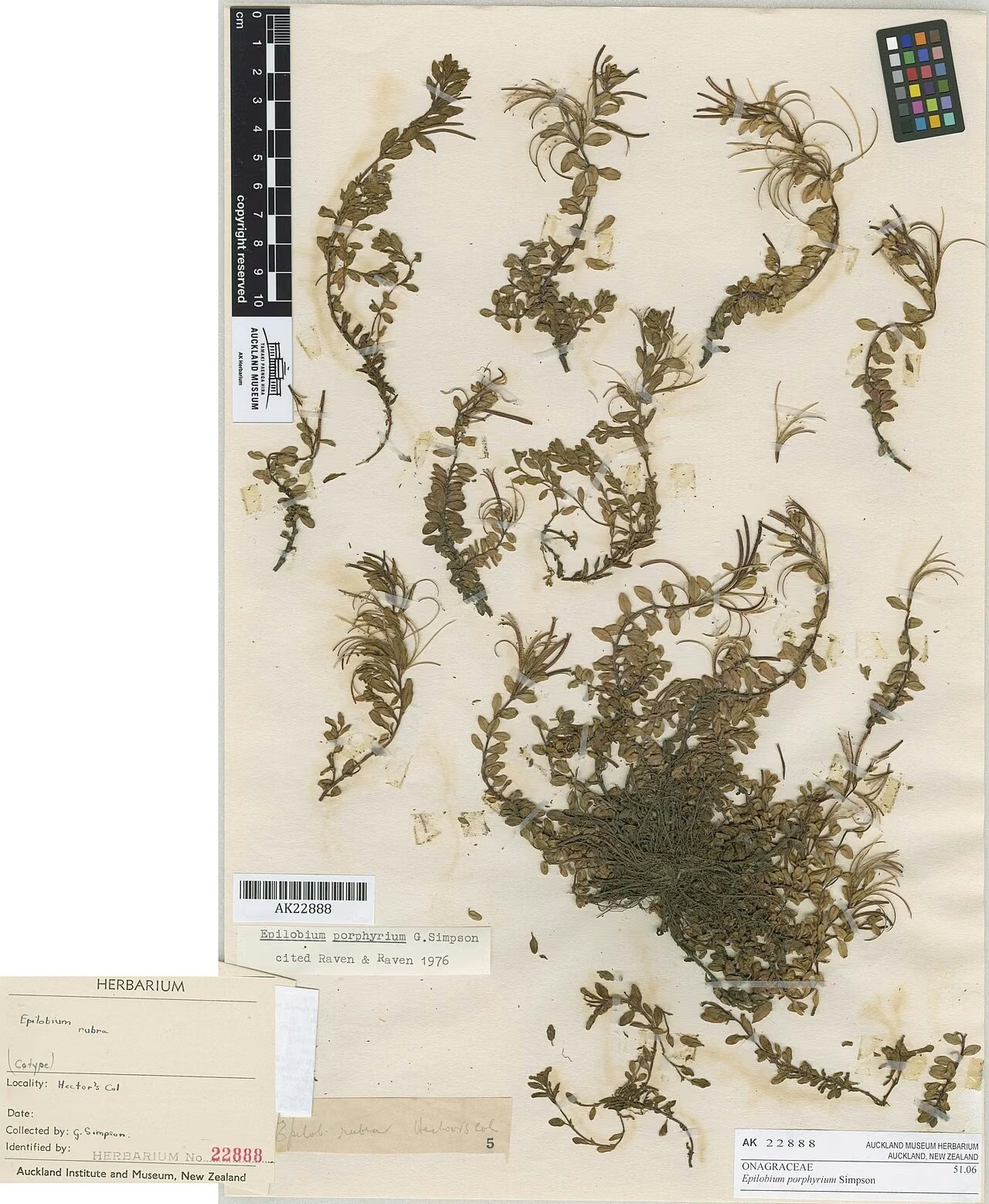
Epilobium porphyrium
Epilobium porphyrium
Epilobium rostratum
Epilobium rostratum
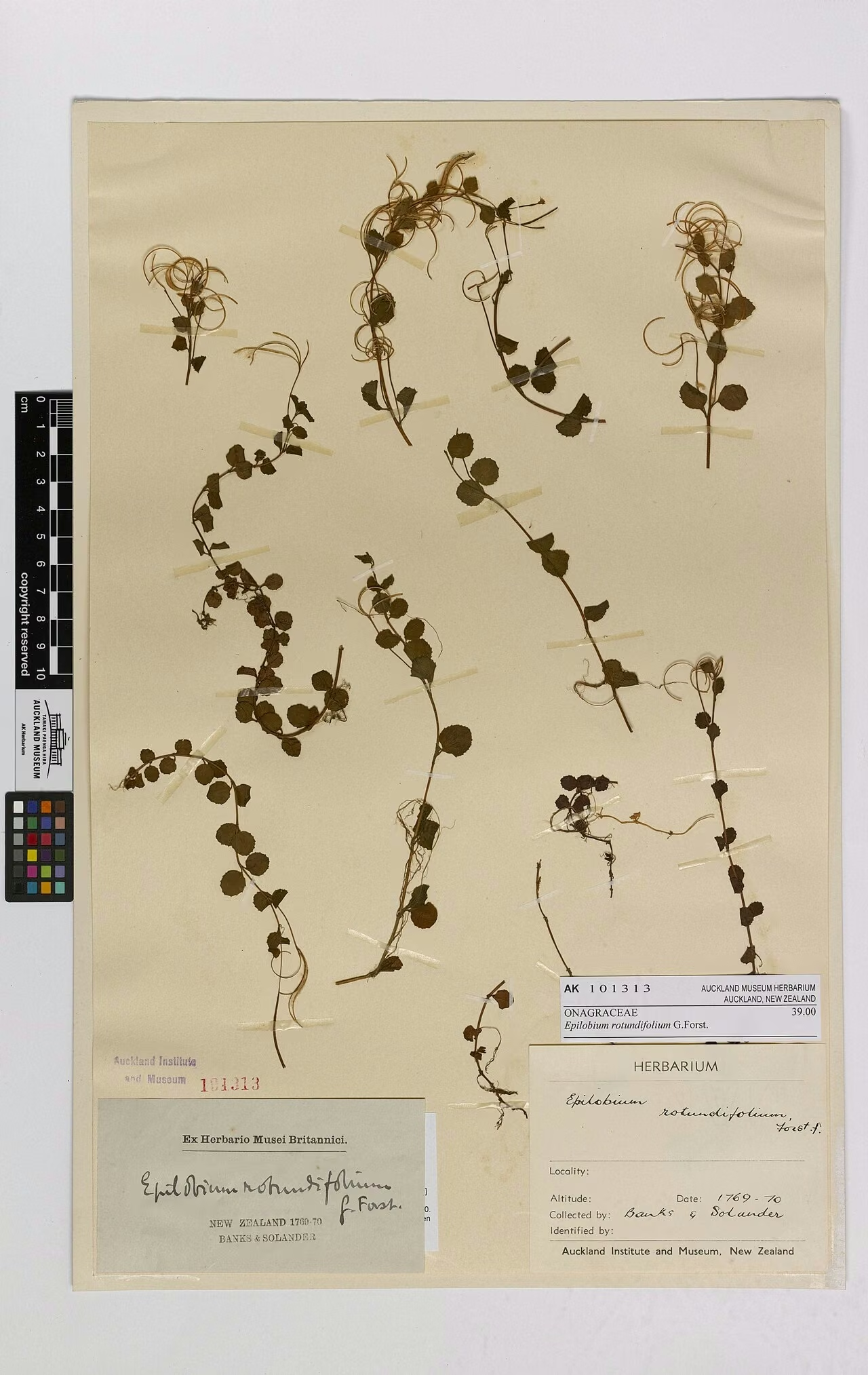
Round-Leaved Willowherb
Epilobium rotundifolium
Epilobium tasmanicum
Epilobium tasmanicum
Eryngium undulatum
Eryngium undulatum
Euchiton audax
Euchiton audax
Euchiton limosus
Euchiton limosus
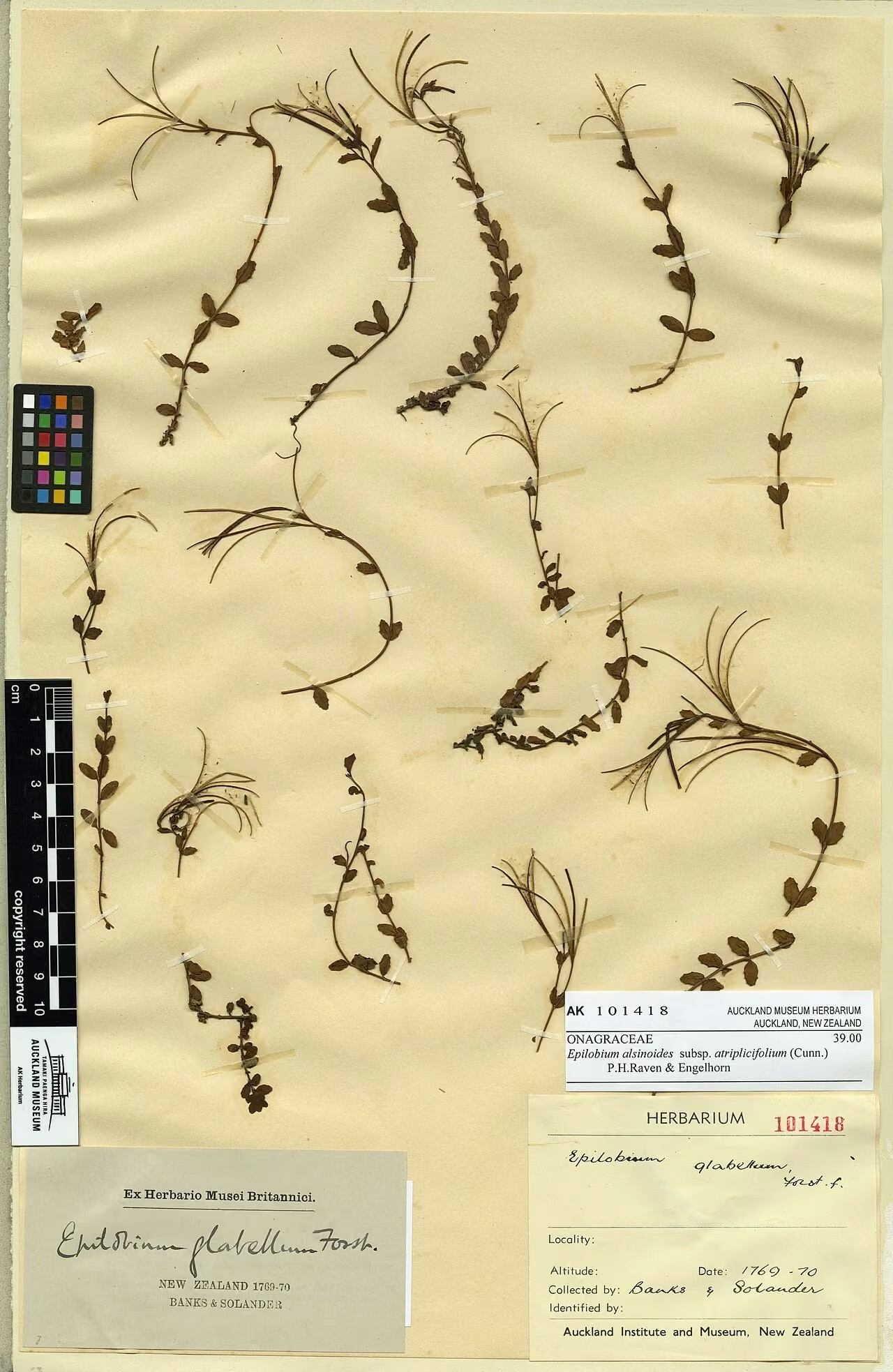
Epilobium alsinoides
Epilobium alsinoides
Plant Conservation
Epilobium wilsonii is ranked At Risk - Naturally Uncommon (2023) with the qualifiers Sparse, Range Restricted, Data Poor: Size and Data Poor: Trend. Its rarity reflects its dependence on scattered calcareous outcrops, and the poor data on population size and trend mean that local declines could go unnoticed.
Potential pressures on limestone sites include weed invasion, browsing animals and quarrying or land development. Protecting limestone outcrops, controlling weeds that crowd open rock, and keeping cultivated plants of known wild origin all help secure the species.
Frequently Asked Questions
Where does Wilson's willowherb grow?
It is endemic to the South Island, from near Lake Grassmere to Mt Fyffe and the Kaikōura Peninsula in eastern Marlborough, at the Waikari River, Mt Terako and Motunau Beach in north Canterbury, and on the Owen Range in north-west Nelson.
Why does Epilobium wilsonii only grow on limestone?
It is a calcicole, recorded only on calcareous rocks in open shrubland, grassland or rock field. These scattered outcrops are its only habitat, which explains its small, patchy range.
Is Wilson's willowherb threatened?
It is ranked At Risk - Naturally Uncommon (2023) because it is range restricted and sparse, being confined to calcareous rock outcrops rather than declining from a once wider range.
What colour are the flowers of Epilobium wilsonii?
The petals are white or pink, 10 to 18 mm long with a notch 3 to 5 mm deep, and appear between November and April.
Sources and Further Reading
The botanical, growing, and conservation details for Wilson's Willowherb (Epilobium wilsonii) on this page draw on the New Zealand plant references below. Consult them for full technical records and the latest distribution data.