Round-Leaved Willowherb
Epilobium rotundifolium
Last updated:
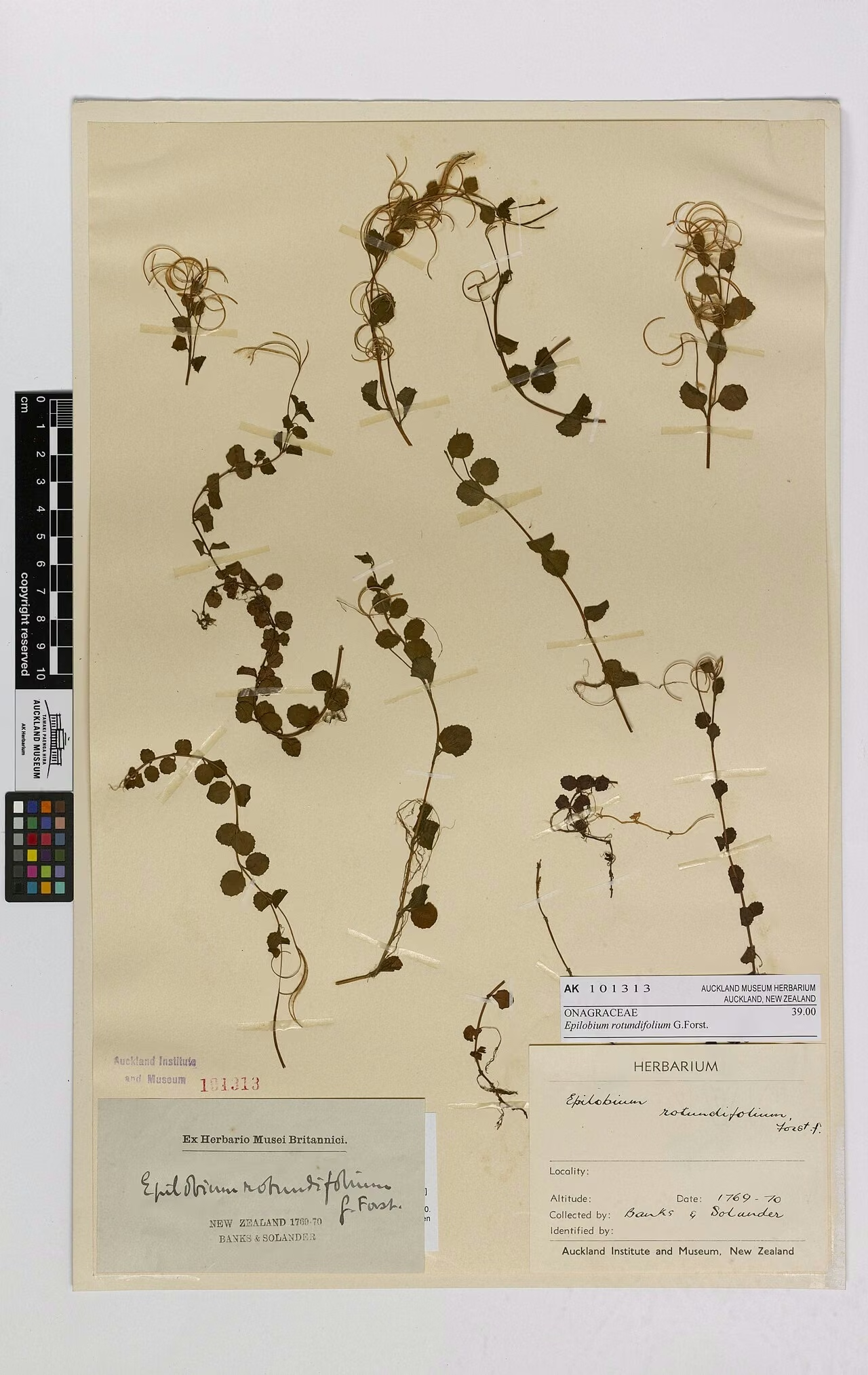
Round-leaved willowherb (Epilobium rotundifolium) is a small, widely creeping herb endemic to New Zealand and found on the North, South, Stewart and Chatham Islands. Its much-branched stems sprawl to form loose patches 10 to 40 cm tall, clothed in rounded, toothed leaves that are green to coppery above and pinkish to wine-red beneath. Tiny white flowers sit at the tips of nodding shoots from spring to autumn, followed by slender pods that release fluffy wind-borne seeds. It grows from the coast to the subalpine zone on moist stream banks, rocks in rivers and forest seepages. It is ranked Not Threatened, and has even become naturalised in Tasmania and Britain. Explore more native ground covers in our native plant guide.
Plant Description
Epilobium rotundifolium is a widely creeping, much-branched perennial herb whose stems reach 100 to 400 mm tall, often sprawling over damp rock and soil. The leaves are opposite on the lower stems and alternate higher up. Each is broadly to very broadly ovate, 3 to 25 mm long and 3 to 20 mm wide, with serrate margins. The upper surface is green to coppery and the underside is distinctly pinkish or wine-red, which gives patches a warm bronze tone.
The flowers are small, with white petals 2.5 to 5 mm long, and are carried on nodding inflorescences that straighten as they mature. The fruit is a slender capsule 20 to 50 mm long that splits to release orange-brown, finely textured seeds 0.6 to 0.9 mm long, each topped with a tuft (coma) of white to pale brown hairs 4 to 7 mm long.
NZPCN separates it from other New Zealand willowherbs by the combination of a sprawling habit, broadly ovate copper-coloured leaves with wine-red undersides, a nodding inflorescence and orange-brown seeds. Checking the seed colour and leaf undersides is the most reliable way to confirm it in the field.
Quick Facts
| Scientific Name | Epilobium rotundifolium |
|---|---|
| Height | 0.1-0.4 m |
| Spread | Widely creeping, forming loose patches |
| Water Needs | High; constantly moist ground |
| Light | Partial shade |
| Frost Tolerance | High; grows up to the subalpine zone |
| Salt Tolerance | No information available |
| Growth Rate | Fast |
| Lifespan | Perennial |
Climate Best Suited to
Suits cool to mild, moist climates throughout New Zealand, from lowland coastal valleys to subalpine streamsides, as long as the ground never dries out.
Regional Suitability
| City | Climate Suitability |
|---|---|
| Auckland | Medium |
| Wellington | High |
| Christchurch | Medium |
| Dunedin | High |
Plant Habitat
Round-leaved willowherb is endemic to New Zealand and is found on the North, South, Stewart and Chatham Islands. It ranges from coastal to subalpine elevations and is one of the more widespread native willowherbs.
It frequents open forest, shrubland and grassland, usually growing in partial shade on moist stream banks, on rocks within streams and rivers, or on damp banks, among boulders and in seepages inside forest. Outside New Zealand it has naturalised in Tasmania and the United Kingdom.
Growing Requirements
Soil Requirements
In the wild it roots into thin, wet soil over rock, silty stream margins and seepage ground, so it needs a soil that stays moist rather than one that is especially rich.
- Moist to wet loam, silt or gritty mix
- Tolerates thin soil over rock if water is constant
- Avoid dry, sandy or free-draining sunny beds
Light Requirements
It usually grows in partial shade beside streams and in forest seepages, where the leaves take on their best coppery colour without scorching.
- Dappled or partial shade is ideal
- Tolerates more sun only where the ground stays wet
- Too much deep shade gives sparse, leggy growth
Water Requirements
Constant moisture is the key requirement. Its natural sites are seepages, splash zones and wet banks, so it suffers quickly in a dry spell.
- Keep soil moist all year
- Well suited to pond edges, damp walls and rain garden margins
- Water during summer dry spells if planted away from water
Planting and Establishing
Plant rooted pieces or small potted plants in spring or autumn into moist ground in partial shade, such as beside a stream, a pond or a dripping retaining wall. Space pieces about 20 to 30 cm apart and they will soon knit together.
Because NZPCN notes this species is inclined to become weedy in cultivation, place it where self-sown seedlings and creeping stems are welcome, or away from treasured small alpines that it could smother.
Ecological Role
Its small white flowers are open and simple, the type visited by small native bees, flies and other generalist insects, though specific pollinator studies for this species were not found. The minute seeds carry a tuft of hairs and are dispersed by wind, which helps it colonise newly exposed wet banks and stream rocks.
As a fast-spreading herb of disturbed, damp ground it acts as an early coloniser along streams and in forest gaps, binding fine soil on banks and providing low cover for invertebrates in moist microhabitats.
Uses & Significance
Garden Uses
Round-leaved willowherb is a useful filler for damp, shaded corners of a native garden where few other small plants thrive.
- Ground cover for wet, semi-shaded banks
- Softening the edges of ponds and streams
- Planting between stones in a damp rock wall
- Bronze foliage contrast with green ferns and mosses
Ecological Value
It is a common endemic that knits together wet ground and provides habitat in streamside margins.
- Stabilises silt and soil on damp stream banks
- Flowers over a long season for small insects
- Quick native cover in riparian restoration
Landscaping Uses
Use it as a living mulch around the base of larger streamside plants such as Carex, ferns and Coprosma, where its coppery leaves give a pleasant contrast. It also looks natural trailing over the edge of rocks in a shaded water feature.
Because it spreads freely, it works best in informal, naturalistic plantings rather than formal borders or tidy rock gardens.
Seasonal Care Calendar
Spring
New shoots extend across the ground and flowering begins from about September.
- Plant or divide rooted pieces
- Remove unwanted runners from neighbouring plants
Summer
The main flowering and fruiting season, when slender pods split to release fluffy seed.
- Keep soil moist through dry spells
- Collect seed from splitting capsules if wanted
Autumn
Flowering tapers off around May, and the foliage often colours more strongly in cooler weather.
- Pull out excess seedlings
- Good time to plant new patches
Winter
Growth slows, but the plant stays evergreen in mild, damp sites.
- Little care needed
- Check that drainage channels around it have not dried
When to Prune and How Much
No regular pruning is needed. Trim back sprawling stems with shears or by hand whenever they encroach on other plants, and pull out unwanted rooted pieces.
Cutting off spent flowering shoots before the pods split reduces self-seeding, which is worthwhile in a small garden given its tendency to become weedy.
How to Grow Round-Leaved Willowherb
NZPCN describes round-leaved willowherb as very easily grown from rooted pieces and from fresh seed. Because its creeping stems root as they spread, a single established plant can supply many divisions. Seed is produced in large numbers in slender capsules, and fresh seed germinates readily. The main caution is that it propagates itself too well: grow only what you need and avoid planting it near natural areas where it is not already present.
From Seed
The capsules are 20 to 50 mm long and ripen from late spring into winter. Each releases many orange-brown seeds with silky hairs, so pick pods just as they begin to split.
- Collect capsules as they start to split and shake the seed into a paper bag
- Sow fresh seed thinly on the surface of a moist seed-raising mix
- Do not cover the seed, or cover it only with a fine dusting of grit
- Keep the tray moist in a sheltered, partly shaded spot
- Prick out seedlings once they have a few pairs of leaves
By Division of Rooted Pieces
This is the quickest method. Stems that have rooted along the ground can be lifted with a small clump of soil and replanted directly, or potted up for a few weeks first.
- In spring or autumn, find stems that have rooted at the nodes
- Cut a section with roots attached using clean scissors or a knife
- Plant into a pot of moist potting mix or directly into damp ground
- Keep well watered and lightly shaded until new growth appears
Pests & Diseases
No serious pests are recorded for this species. Slugs and snails may graze the soft leaves in damp, shaded sites, and aphids occasionally cluster on flowering shoots.
The main cultivation problem is drought stress, which causes the plant to shrivel quickly when the soil dries.
Cultural Significance
No traditional Māori name or use specific to Epilobium rotundifolium was found in the sources consulted.
The species was named by Georg Forster, who sailed with James Cook, making it one of the earliest New Zealand willowherbs described by Europeans. The genus name comes from the Greek epi (upon) and lobos (pod), because the flower sits on top of the long seed pod, and rotundifolium means round-leaved.
Bonus Tip
If you want this willowherb for its coppery leaves but not its seedlings, plant it in a container standing in a shallow saucer of water in a shady courtyard, and snip off flowering shoots after the flowers fade. The wet saucer mimics a seepage and keeps the foliage colour rich while the pods never get the chance to scatter seed.
Related Plants
Explore other native plants that share similar characteristics or habitats with Round-Leaved Willowherb (Epilobium rotundifolium), offering further insights into New Zealand's diverse flora. These related species provide context and opportunities for complementary planting in your garden.
Rock Willowherb
Epilobium petraeum
Grassland Willowherb
Epilobium pictum
Epilobium porphyrium
Epilobium porphyrium
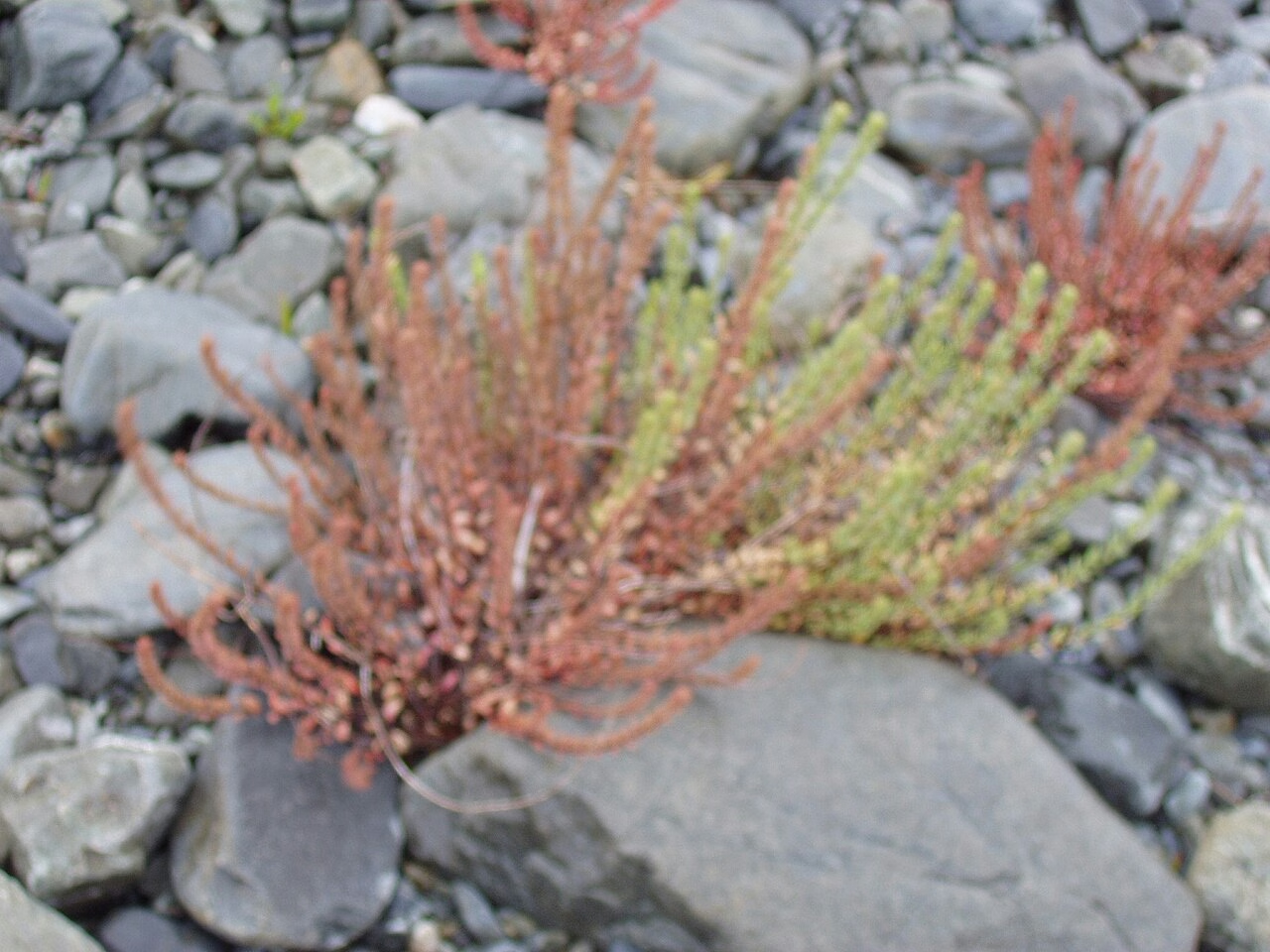
Epilobium rostratum
Epilobium rostratum
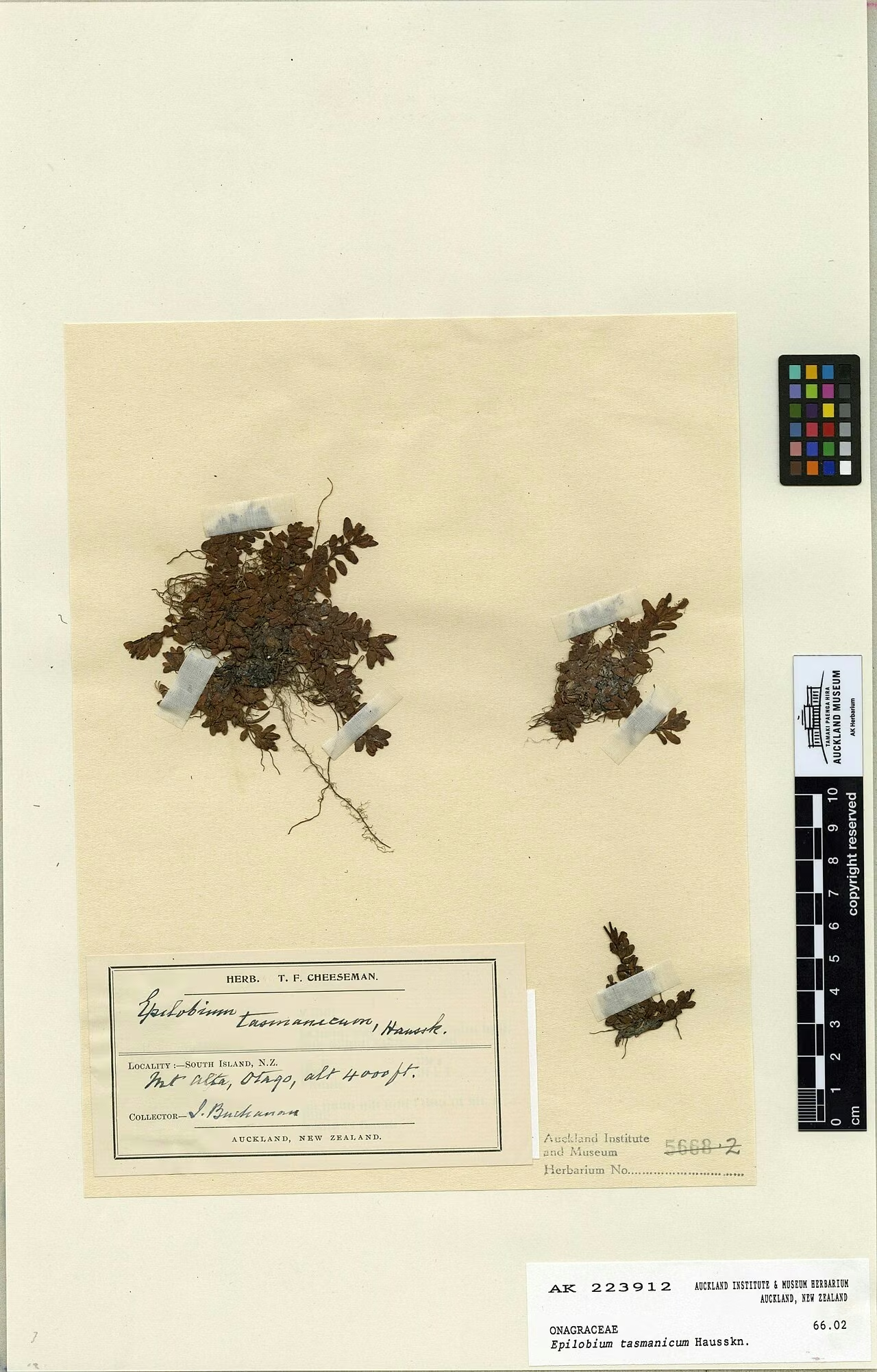
Epilobium tasmanicum
Epilobium tasmanicum
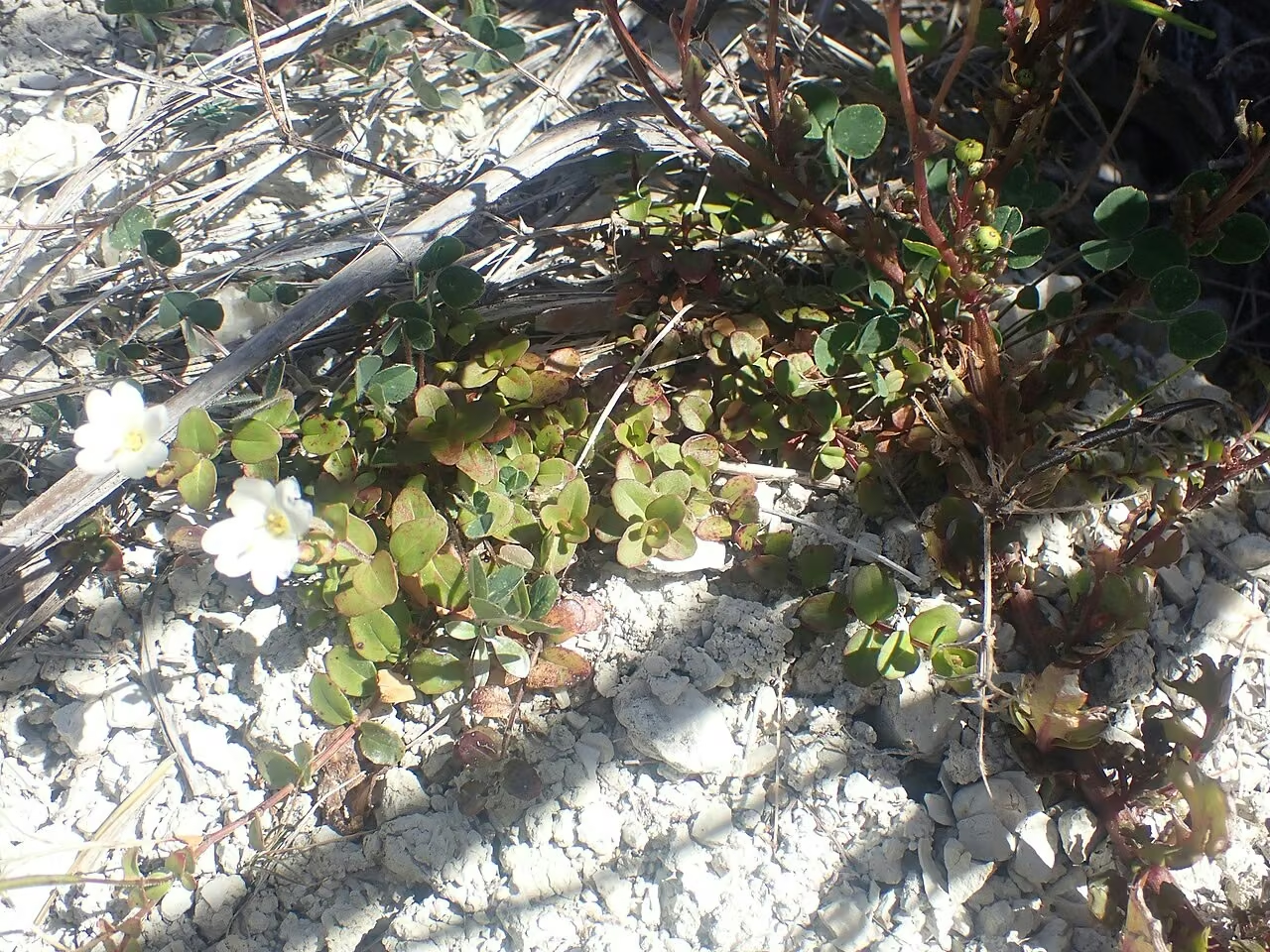
Wilson's Willowherb
Epilobium wilsonii
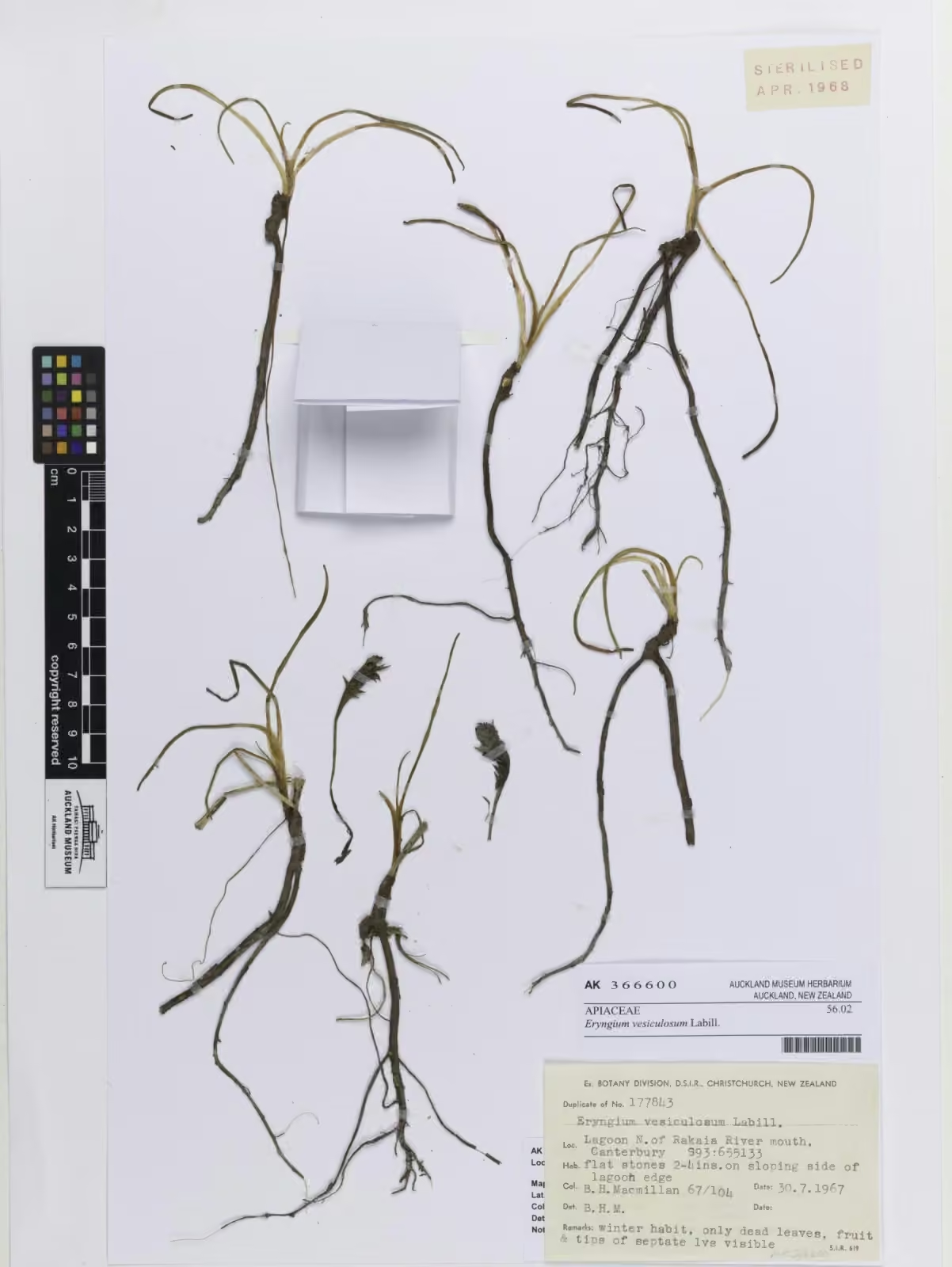
Eryngium undulatum
Eryngium undulatum
Euchiton audax
Euchiton audax
Plant Conservation
Epilobium rotundifolium is ranked Not Threatened (2023). It is widespread from the coast to the subalpine zone and readily recolonises disturbed damp ground, so it faces no significant threat as a species.
Protecting stream margins and forest seepages from drainage, stock trampling and invasive weeds benefits this and the many other small herbs that share its habitat.
Frequently Asked Questions
How do you identify round-leaved willowherb?
Look for a sprawling, much-branched herb with broadly ovate, toothed leaves up to 25 mm long that are coppery green on top and pinkish or wine-red underneath, plus small white flowers on nodding shoot tips and orange-brown seeds.
Where does Epilobium rotundifolium grow in New Zealand?
It is found throughout the North, South, Stewart and Chatham Islands from the coast to the subalpine zone, usually in partial shade on moist stream banks, rocks in rivers, damp banks and seepages in forest.
Is round-leaved willowherb a weed?
It is a native, endemic plant in New Zealand, but NZPCN notes it is inclined to become weedy in cultivation, and it has naturalised overseas in Tasmania and the United Kingdom.
When does Epilobium rotundifolium flower?
NZPCN records flowering from September to May and fruiting from October to July, so plants can carry flowers and seed pods for much of the year.
Sources and Further Reading
The botanical, growing, and conservation details for Round-Leaved Willowherb (Epilobium rotundifolium) on this page draw on the New Zealand plant references below. Consult them for full technical records and the latest distribution data.