Grassland Willowherb
Epilobium pictum
Last updated:
Grassland willowherb (Epilobium pictum) is a slender, spreading willowherb endemic to the South Island and one of New Zealand's most threatened plants, ranked Threatened - Nationally Critical. It forms loose clumps up to 40 cm tall and wide from a loosely rhizomatous root crown, and is unmistakable for its grey-green or light green leaves mottled with darker bluish green, hence the epithet pictum, painted. Small white flowers open from nodding buds between December and April. It grows sparsely at bush margins and in tussock grassland, often near rock overhangs, mostly east of the Main Divide, and has disappeared from many recorded sites. Explore more native flowering plants in our native plant guide.
Plant Description
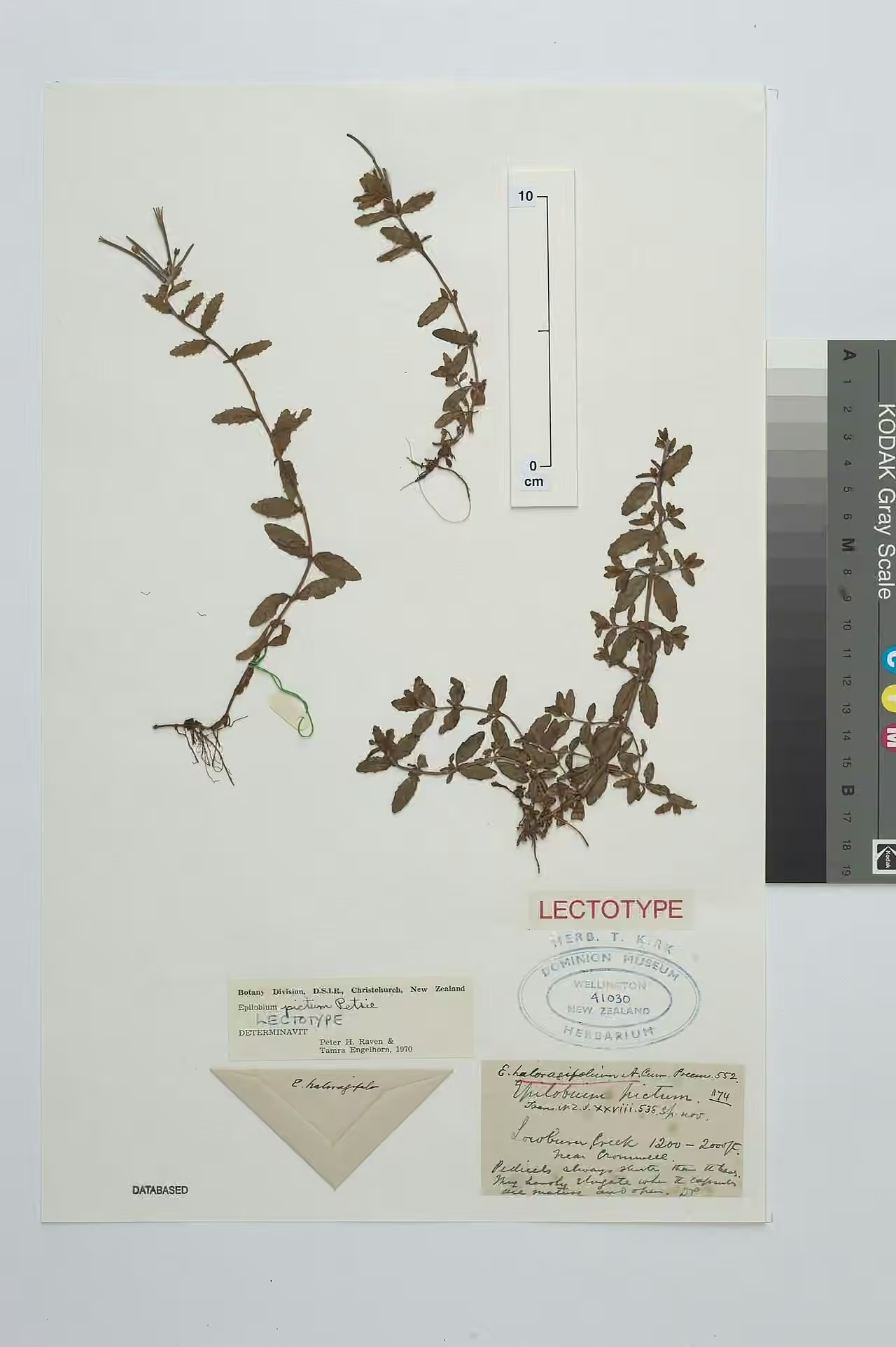
Epilobium pictum is a gracile perennial herb up to about 40 cm tall and wide, with numerous stems arising from an open, loosely rhizomatous root crown. The stems are densely covered in more or less flattened hairs, grey in the inflorescence. The leaves are opposite except near the flowers, narrowly elliptic to elliptic, 8 to 22 mm long and 2.5 to 6 mm wide, coarsely toothed with three to six teeth per side, and finely hairy along the stalk, margins and undersides.
The leaf colour is the key feature: the upper surface is grey-green or light green with darker bluish green to dark green mottling, while the underside is usually reddish. The flower buds nod, but the open flowers are erect, up to 9 mm across, with notched white petals 2.8 to 4.5 mm long and a ring of long white hairs inside the floral tube. The narrow, grey-hairy capsules are 20 to 25 mm long on short stalks.
NZPCN describes it as easily distinguished from other willowherbs by its loosely rhizomatous, spreading habit, its finely and densely hairy stems, leaf stalks, margins and undersides, its mottled leaves, and its flowers that nod in bud but stand erect when open.
Quick Facts
| Scientific Name | Epilobium pictum |
|---|---|
| Height | 0.07-0.4 m |
| Spread | Up to 0.4 m |
| Water Needs | Low to moderate; dry rocky sites |
| Light | Semi-shade to part sun |
| Frost Tolerance | High; inland South Island |
| Salt Tolerance | No information available |
| Growth Rate | Moderate |
| Lifespan | Perennial |
Climate Best Suited to
Suits the dry, continental inland climates of the eastern South Island, with cold winters and warm, dry summers.
Regional Suitability
| City | Climate Suitability |
|---|---|
| Auckland | Low |
| Wellington | Low |
| Christchurch | Medium |
| Dunedin | Medium |
Plant Habitat
Grassland willowherb is endemic to the South Island, scattered throughout but mostly east of the Main Divide. The original collections were from mountain valleys of Central Otago, including Lowburn Creek, Obelisk Creek and Mt St Bathans, and herbarium records extend to the Tasman Valley in Aoraki Mt Cook National Park.
It is an uncommon, sparsely distributed plant of bush and forest margins and tussock grassland at about 100 to 900 m, usually near rock overhangs, in semi-shaded sites or in dry rocky places.
Growing Requirements
Soil Requirements
It grows among rocks and in dry, stony ground at forest margins and in grassland.
- Free-draining, stony soil
- Rock crevices and the bases of overhangs
- Avoid rich, heavy soil where weeds thrive
Light Requirements
It usually grows near rock overhangs or in semi-shaded sites rather than in full exposure.
- Semi-shade or dappled light
- Some direct sun tolerated
Water Requirements
The Flora notes it often grows in dry rocky places, so it tolerates dry conditions but benefits from the cool shelter of overhangs.
- Water sparingly once established
- Ensure good drainage
- Avoid prolonged wet
Planting and Establishing
In cultivation, plant grassland willowherb in a semi-shaded, well-drained rock garden pocket or at the foot of a boulder, mimicking the overhangs it favours. Keep the area free of competing grasses and weeds.
Because it is Nationally Critical, plants should only come from legitimate cultivated sources or as part of an authorised recovery programme.
Ecological Role
Grassland willowherb is a naturally sparse member of the eastern South Island flora, occupying the sheltered ground beneath rock overhangs and along bush margins. Its minute plumed seeds are dispersed by wind (Thorsen et al. 2009).
NZPCN reports that it is now threatened at most sites by habitat loss and competition from weeds, which crowd out small herbs in these open, semi-shaded places. Its pollinators are not recorded in the sources consulted.
Uses & Significance
Garden Uses
Mainly a plant for conservation collections and specialist growers, where its mottled foliage makes it an interesting specimen.
- Conservation and botanic garden collections
- Semi-shaded rock garden pockets
- Pots in an alpine house
Ecological Value
As a Nationally Critical endemic, every remaining population matters for the survival of the species.
- Endemic to the South Island
- Part of the eastern dryland and bush-margin flora
- Cultivated plants act as a safeguard against extinction
Landscaping Uses
In a specialist garden, grow grassland willowherb where its mottled grey-green leaves can be appreciated close up, such as in a trough beside a shaded rock.
Keep it away from vigorous groundcovers and grasses, which will quickly overwhelm its slender stems.
Seasonal Care Calendar
Spring
New stems arise from the rhizomatous root crown.
- Weed carefully around plants
- Check for slug damage
Summer
Flowering runs from December into autumn, with white flowers opening from nodding buds.
- Water lightly in long droughts
- Keep weeds away
Autumn
Flowering continues to April and capsules ripen from January to July.
- Collect seed from cultivated plants
- Sow fresh
Winter
Plants persist through cold inland winters.
- Keep potted plants on the dry side
- Late capsules may still be shedding seed
When to Prune and How Much
No regular pruning is needed. Remove old, dead stems in late winter before new growth starts.
Leave fruiting stems in place until seed has been collected or shed, since seed is valuable for this rare species.
How to Grow Grassland Willowherb
NZPCN states that grassland willowherb is easily grown from seed and from rooted pieces of stem. This makes cultivation an important safeguard for a species ranked Nationally Critical and recorded as lost from many former sites. It flowers from December to April and fruits from January to July, so seed can be gathered over a long period, and the loosely rhizomatous root crown produces stems that can be detached with roots attached. Use only cultivated stock, or work under the direction of the Department of Conservation or a recognised recovery group, as collecting from wild plants of a Nationally Critical species is inappropriate. Keep accurate records of the origin of any material so that plants can be used in future restoration and returned to the right district.
From Seed
Fresh seed from cultivated plants germinates well when sown promptly.
- Collect capsules as they split between January and July
- Remove the seed from its white tuft of hairs
- Sow on the surface of a free-draining seed mix
- Keep lightly moist in bright, indirect light
- Pot on seedlings once they have two or three pairs of leaves
From Rooted Stem Pieces (Division)
Stems with roots attached can be separated from the root crown in spring.
- Ease soil away from the edge of the root crown
- Detach a stem with some roots
- Pot into a gritty, free-draining mix
- Keep in semi-shade and lightly moist until new shoots show it has established
Pests & Diseases
No specific insect pests or diseases are recorded for grassland willowherb in the sources consulted.
Its main threats are habitat loss and competition from weeds. In gardens, keeping it free of competing grasses and groundcovers is the most important care task.
Cultural Significance
No traditional Māori name or use is recorded for Epilobium pictum in the sources consulted.
It was named by Donald Petrie, and the original localities recorded for it were mountain valleys of Central Otago, including Lowburn Creek, Obelisk Creek and Mt St Bathans. Thomas Kirk applied the name Epilobium haloragifolium to this plant, a usage now treated as a synonym.
Bonus Tip
If you think you have found grassland willowherb, check the upper leaf surface for its distinctive dark bluish green mottling on a grey-green background, photograph it, and record the location on iNaturalist NZ or report it to the Department of Conservation. New records of a Nationally Critical plant are valuable.
Related Plants
Explore other native plants that share similar characteristics or habitats with Grassland Willowherb (Epilobium pictum), offering further insights into New Zealand's diverse flora. These related species provide context and opportunities for complementary planting in your garden.
Epilobium nerteroides
Epilobium nerteroides
Swamp Willowherb
Epilobium pallidiflorum
Epilobium pernitens
Epilobium pernitens
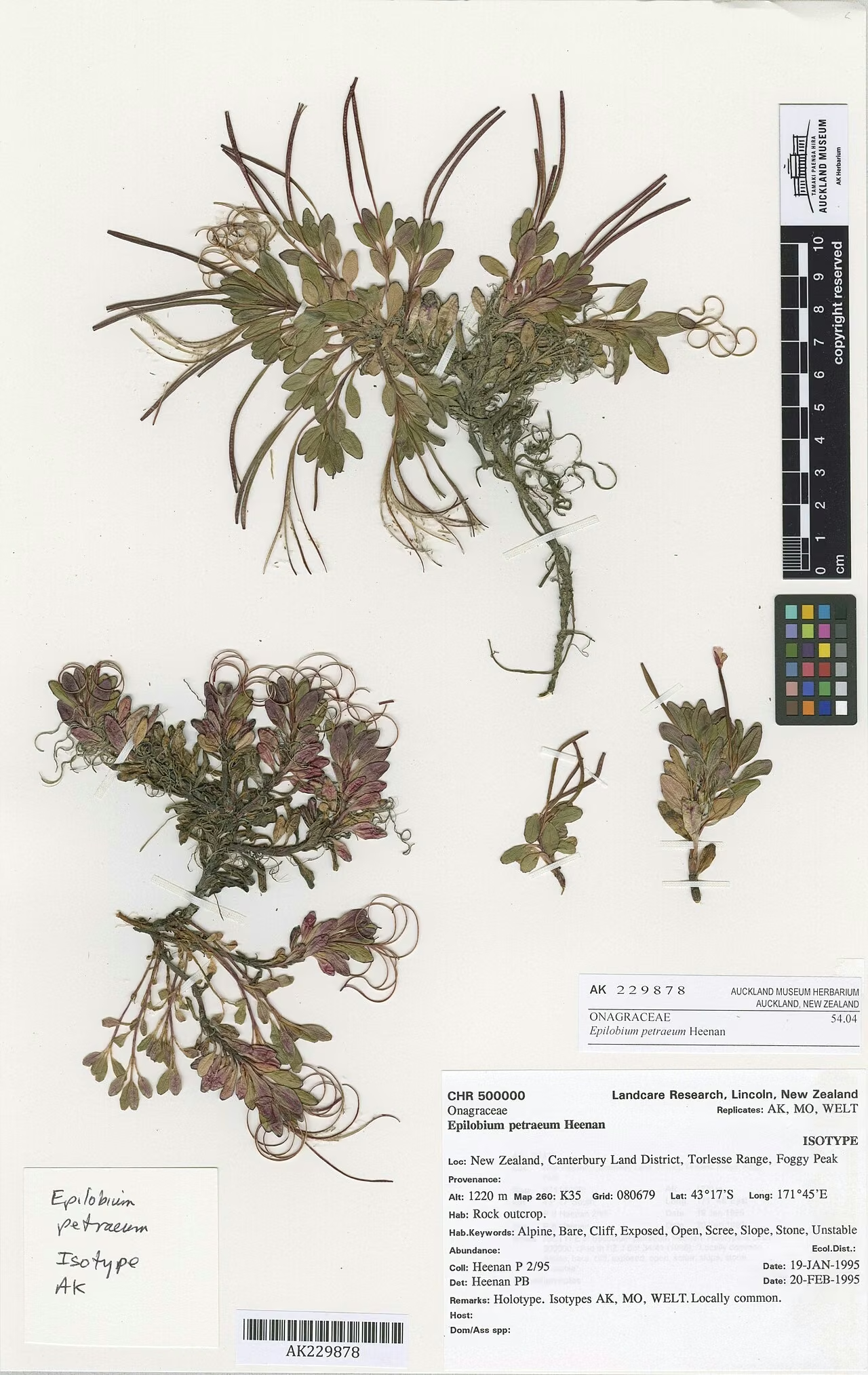
Rock Willowherb
Epilobium petraeum
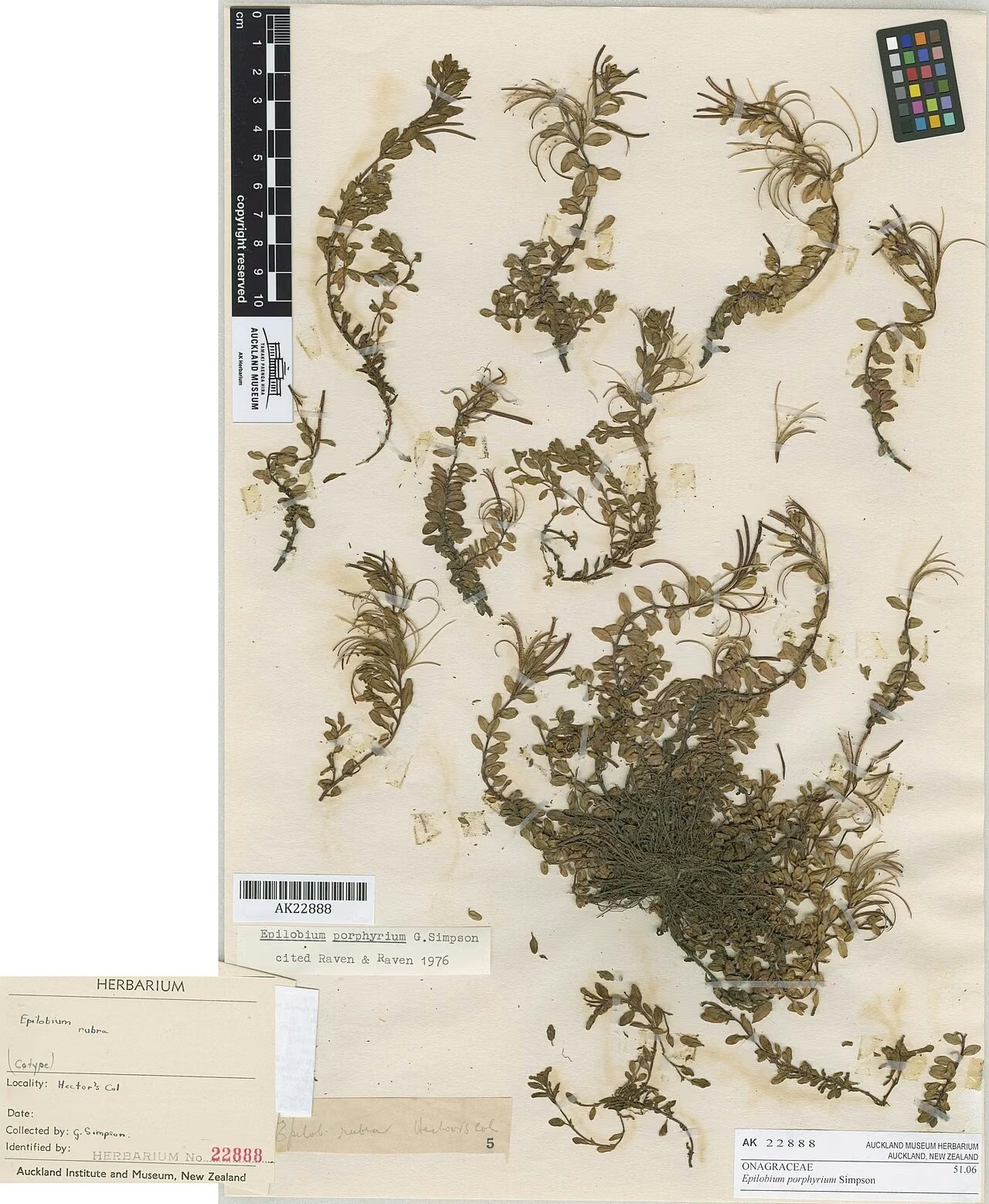
Epilobium porphyrium
Epilobium porphyrium
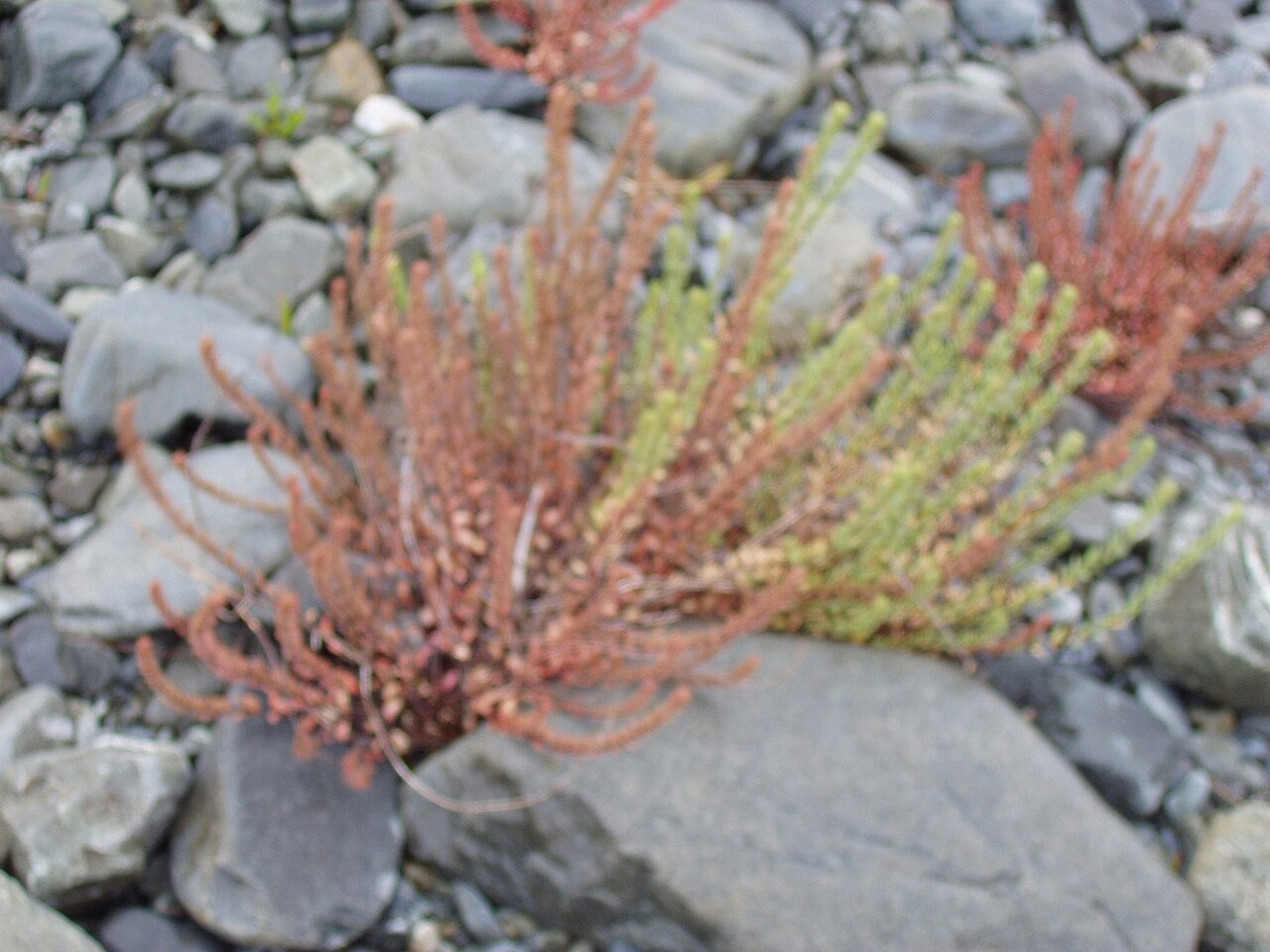
Epilobium rostratum
Epilobium rostratum
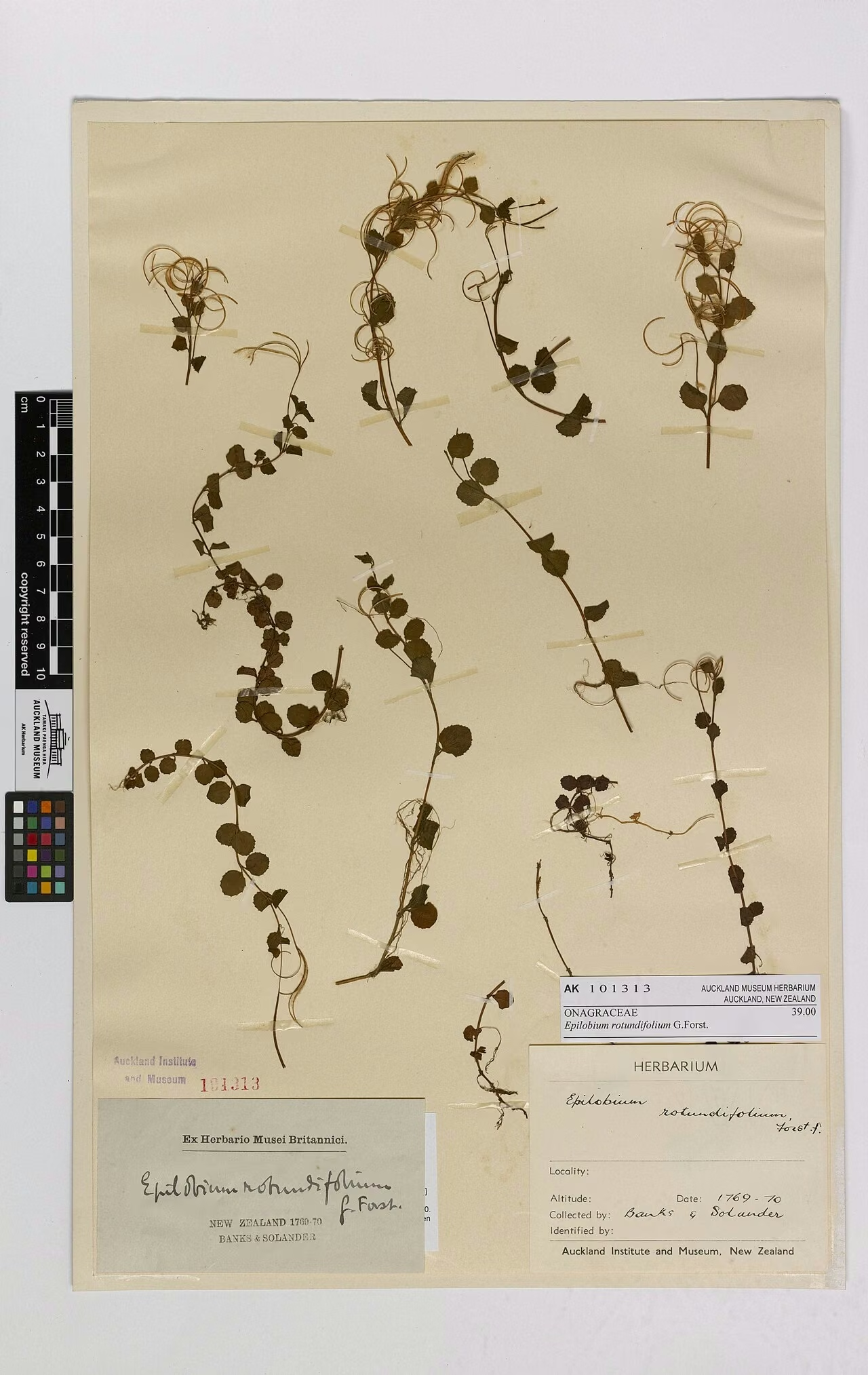
Round-Leaved Willowherb
Epilobium rotundifolium
Epilobium tasmanicum
Epilobium tasmanicum
Plant Conservation
Grassland willowherb is ranked Threatened - Nationally Critical (2023) with the qualifiers Sp (Sparse), DPS, DPT and NO, and was also Nationally Critical in 2012 and 2017. In Otago it is assessed as Regionally Critical (2025).
NZPCN describes it as naturally uncommon and sparsely distributed, now threatened at most sites by habitat loss and weed competition, with recent surveys suggesting it has gone extinct at many sites recorded 20 to 30 years ago. Weed control at known sites, protection of bush margins and rock overhang habitat, and cultivation of plants as an insurance population are key actions.
Frequently Asked Questions
Why is Epilobium pictum called painted?
Pictum means painted or variegated, describing its grey-green or light green leaves distinctly mottled with darker bluish green, a pattern that separates it from every other New Zealand willowherb.
How rare is grassland willowherb?
It is ranked Threatened - Nationally Critical, the highest threat category. NZPCN reports that surveys suggest it has gone extinct at many sites where it was recorded 20 to 30 years ago.
What habitat does Epilobium pictum need?
It grows at bush and forest margins and in tussock grassland, usually near rock overhangs or in semi-shaded, often dry rocky places, at about 100 to 900 m, mostly east of the South Island's Main Divide.
Sources and Further Reading
The botanical, growing, and conservation details for Grassland Willowherb (Epilobium pictum) on this page draw on the New Zealand plant references below. Consult them for full technical records and the latest distribution data.