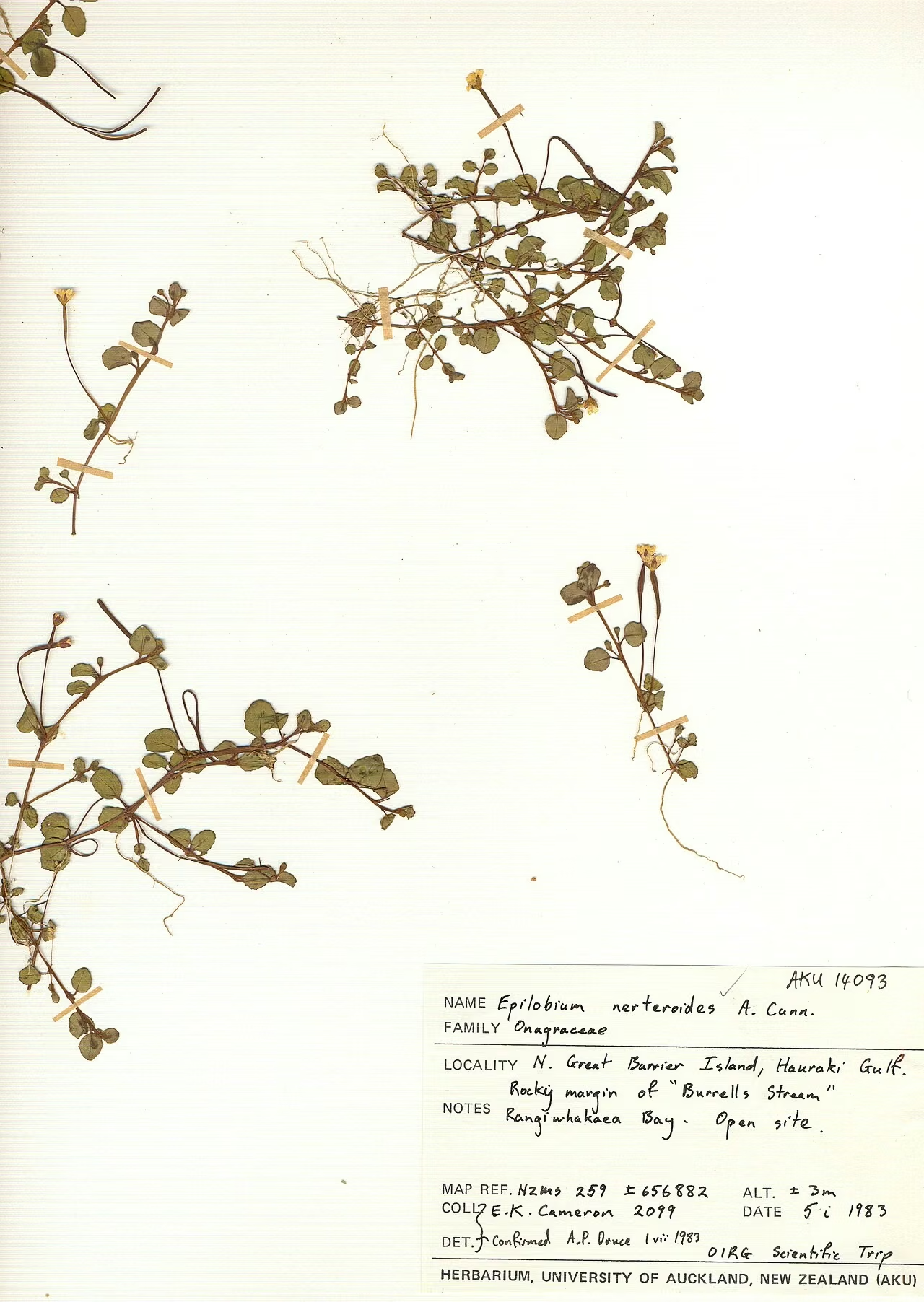
Willowherb
Epilobium nerteroides
Last updated:
Epilobium nerteroides is a small, loosely matted willowherb endemic to New Zealand. Its creeping, rooting stems form patches up to 0.4 m across, with paired, dull green leaves 4 to 11 mm long and single white, rarely pale pink, flowers held in the leaf axils on long slender stalks. It grows on moss- and liverwort-covered rocks along streams inside forest and dense scrub, from the coast to the subalpine zone, on the North, South, Stewart and Chatham Islands. The name means Nertera-like, after the unrelated beadplants it resembles. It is ranked Not Threatened. Explore more native ground covers in our native plant guide.
Plant Description
Epilobium nerteroides is a loosely matted, creeping perennial whose stems root as they grow, forming patches up to 0.4 m across. The plant is hairless or nearly so, at most with a few flattened hairs in lines running down from the leaf stalks. The leaves are opposite, dull pale to dark green, on distinct stalks 1 to 6 mm long, broadly elliptic to ovate, about 4 to 11 mm long, with a few small, widely spaced teeth along each margin.
Flowers arise singly from the leaf axils, and the stems keep growing and rooting beyond them. They are erect, with white, rarely pale pink, notched petals 2.5 to 5.3 mm long, and they self-pollinate, the anthers shedding pollen directly onto the stigma. The hairless capsules are 15 to 42 mm long and sit on very long, slender stalks of about 3.5 to 9 cm. The seeds are orange-brown with a white tuft of hairs.
It is most often confused with E. brunnescens, with which it often grows. E. nerteroides has narrower leaves, a more open habit, nearly hairless stems and hairless ovaries, and its flowers drop before the flower stalk has finished elongating.
Quick Facts
| Scientific Name | Epilobium nerteroides |
|---|---|
| Height | Under 0.05 m (creeping mat) |
| Spread | Up to 0.4 m |
| Water Needs | High; constantly damp |
| Light | Shade to part shade |
| Frost Tolerance | Moderate to high; coastal to subalpine |
| Salt Tolerance | No information available |
| Growth Rate | Moderate to fast |
| Lifespan | Perennial |
Climate Best Suited to
Suits cool, humid, sheltered sites with constant moisture, from coastal gullies to subalpine streams. It does poorly in hot, dry, exposed positions.
Regional Suitability
| City | Climate Suitability |
|---|---|
| Auckland | Medium |
| Wellington | High |
| Christchurch | Medium |
| Dunedin | High |
Plant Habitat
Epilobium nerteroides is endemic to New Zealand and recorded from the North, South, Stewart and Chatham Islands, from coastal to subalpine elevations.
Its typical habitat is riparian: it creeps over moss and liverwort encrusted rocks along watercourses within forest and dense scrub. Raven and Raven (1976) contrasted this with E. brunnescens, which prefers open stream gravels, though NZPCN notes the two are not uncommonly found together in the central North Island.
Growing Requirements
Soil Requirements
In nature it roots into moss, liverworts and thin, wet organic matter over rock rather than deep soil.
- Constantly moist, humus-rich mix
- Mossy rocks or damp stones
- Avoid drying out
Light Requirements
It grows under forest and scrub canopies beside streams, so it prefers shade.
- Shade or dappled light
- Shelter from hot afternoon sun
Water Requirements
NZPCN advises a damp, shaded site, matching its streamside rocks. It is rated Facultative (FAC) on the national wetland plant list.
- Keep consistently moist
- Ideal near water features or seepages
- Water often in dry weather
Planting and Establishing
Plant Epilobium nerteroides beside a pond, stream or damp rock in shade, where its stems can creep over stones and moss. A shady, moist corner of a fernery is ideal.
Because NZPCN notes it can be weedy, place it where its spreading, self-seeding habit is welcome, or keep it in a pot.
Ecological Role
Epilobium nerteroides is one of the small herbs of mossy stream margins in New Zealand forests. Its flowers are largely self-pollinating, with anthers shedding pollen directly onto the stigma before or after the flower opens, and its tiny plumed seeds are dispersed by wind (Thorsen et al. 2009).
Its rooting stems let it hold onto wet, mossy rock surfaces and spread vegetatively along watercourses.
Uses & Significance
Garden Uses
A modest groundcover for damp, shaded places where few other plants will establish.
- Moist rock faces and stream edges
- Ferneries and shade gardens
- Pond margins
Ecological Value
It is a widespread endemic of forest stream margins and part of the moss-covered rock flora along New Zealand waterways.
- Endemic to New Zealand
- Colonises wet, mossy streamside rocks
- Occurs on the main and Chatham Islands
Landscaping Uses
Let Epilobium nerteroides weave over wet stones beside a stream or water feature, where its tiny white flowers on long, thread-like stalks catch the light in shade.
It pairs naturally with mosses, small ferns and Nertera species in damp, shaded settings.
Seasonal Care Calendar
Spring
Flowering begins as early as September or October.
- Keep the root zone damp
- Trim back any spread you do not want
Summer
Flowering continues and capsules ripen on long stalks from November.
- Water often in dry spells
- Keep in shade
Autumn
Fruiting continues into May and plumed seed is shed.
- Collect seed if wanted
- Pull unwanted seedlings
Winter
Plants persist as low mats in cool, wet conditions.
- Little care needed
- Clear fallen leaves smothering the mat
When to Prune and How Much
No formal pruning is needed. Pull or trim runners that spread beyond where you want the mat.
Removing spent fruiting stalks before the capsules split will reduce self-seeding if it becomes weedy.
How to Grow Willowherb
NZPCN describes Epilobium nerteroides as easily grown from fresh seed and rooted pieces, preferring a damp, shaded site, and warns that it is inclined to be weedy. Because its creeping stems root as they grow, division of rooted pieces is the simplest and fastest method, and a single small piece can form a sizeable mat within a season or two. Seed is also straightforward: the flowers largely self-pollinate, so even a single plant sets capsules, which ripen from November to May on their long stalks. Sow seed fresh, as the tiny plumed seeds are short-lived in storage for many willowherbs. Keep both seedlings and divisions constantly moist and out of direct sun until established.
By Division
Rooted pieces can be lifted at almost any time of year when the plant is in active growth.
- Choose a stem section that has rooted at its nodes
- Cut it free with a few centimetres of stem
- Lay it on a moist, humus-rich mix and press lightly in
- Keep damp and shaded until new growth shows
From Seed
Collect capsules as they begin to split on their long stalks.
- Gather ripening capsules between November and May
- Sow seed on the surface of a fine, moist mix
- Cover the tray with glass or plastic to hold humidity
- Place in a shaded spot and keep constantly moist
- Prick out seedlings once they have two or three leaf pairs
Pests & Diseases
No specific pests or diseases are recorded for Epilobium nerteroides in the sources consulted. Slugs and snails may graze small plants in damp, shaded gardens.
In gardens, the bigger issue is the plant itself spreading, as NZPCN notes it is inclined to be weedy.
Cultural Significance
No traditional Māori name or use is recorded for Epilobium nerteroides in the sources consulted.
It was named by Allan Cunningham, and the epithet nerteroides means resembling Nertera, an unrelated genus of creeping plants whose small rounded leaves and mat-forming habit it shares.
Bonus Tip
If you are unsure whether a mat by a stream is E. nerteroides or E. brunnescens, check the young ovaries below the flowers: in E. nerteroides they are hairless, and the flowers usually fall before the stalks have fully lengthened.
Related Plants
Explore other native plants that share similar characteristics or habitats with Willowherb (Epilobium nerteroides), offering further insights into New Zealand's diverse flora. These related species provide context and opportunities for complementary planting in your garden.
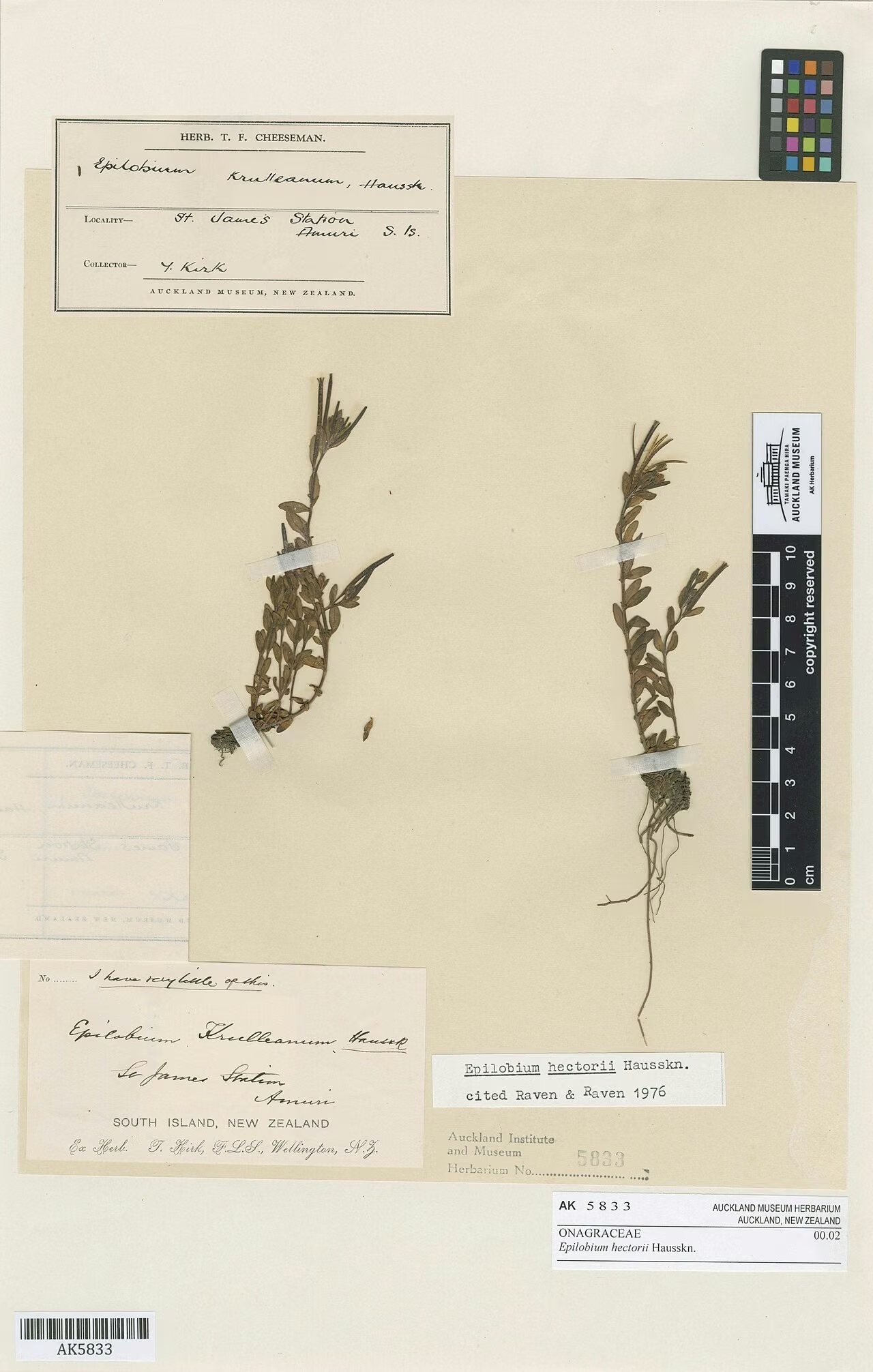
Epilobium hectorii
Epilobium hectorii
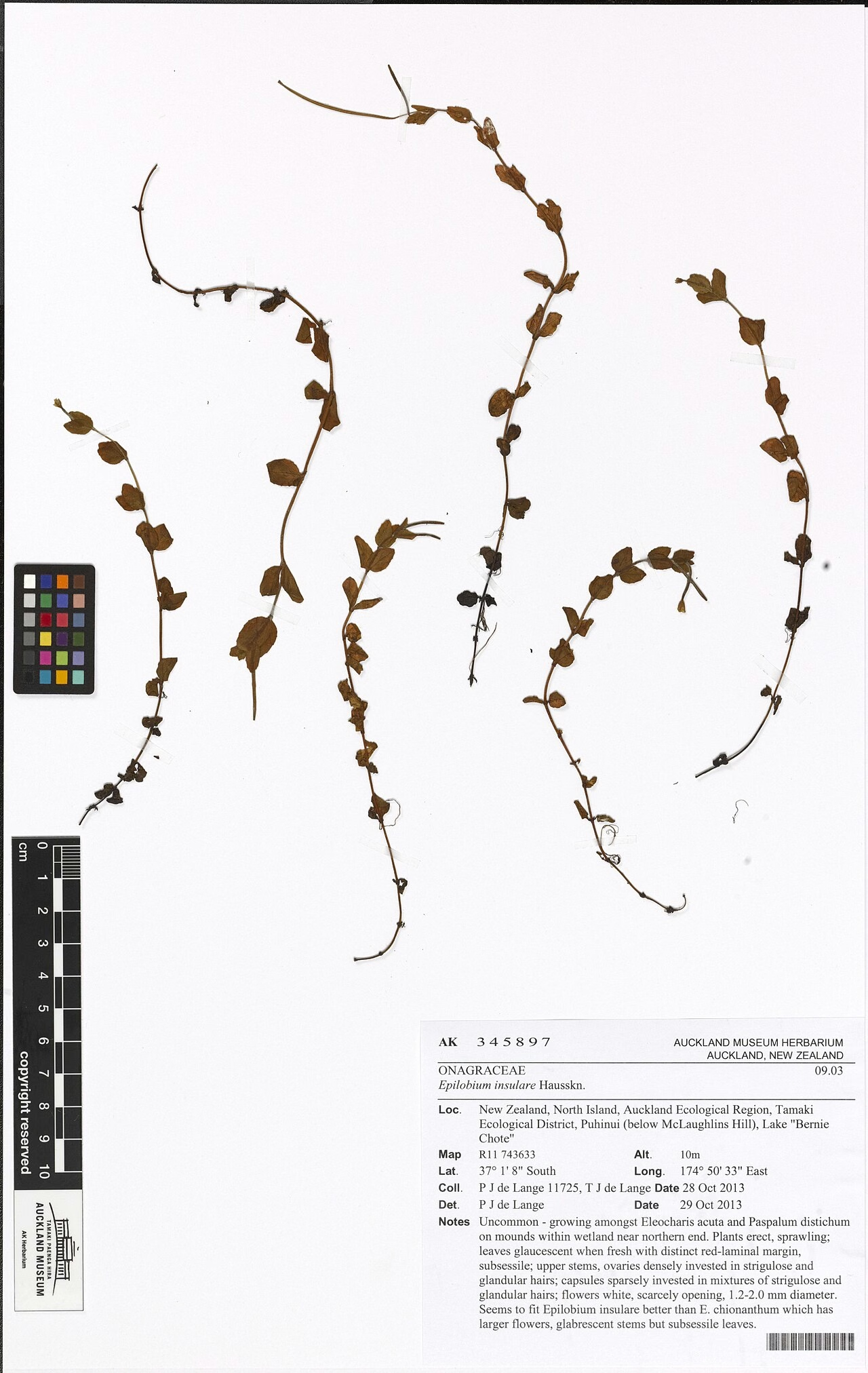
Epilobium insulare
Epilobium insulare
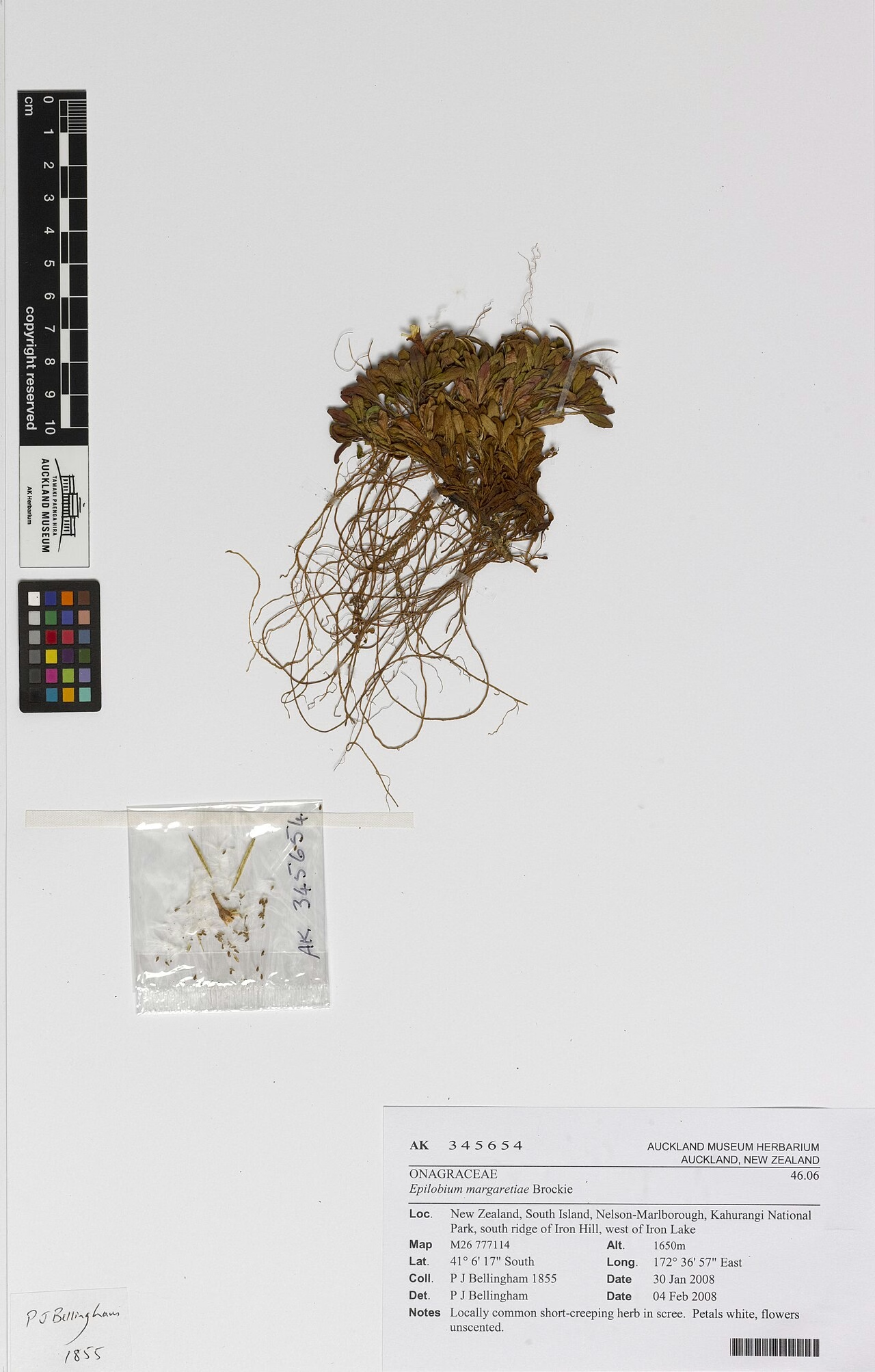
Epilobium margaretiae
Epilobium margaretiae
Epilobium microphyllum
Epilobium microphyllum
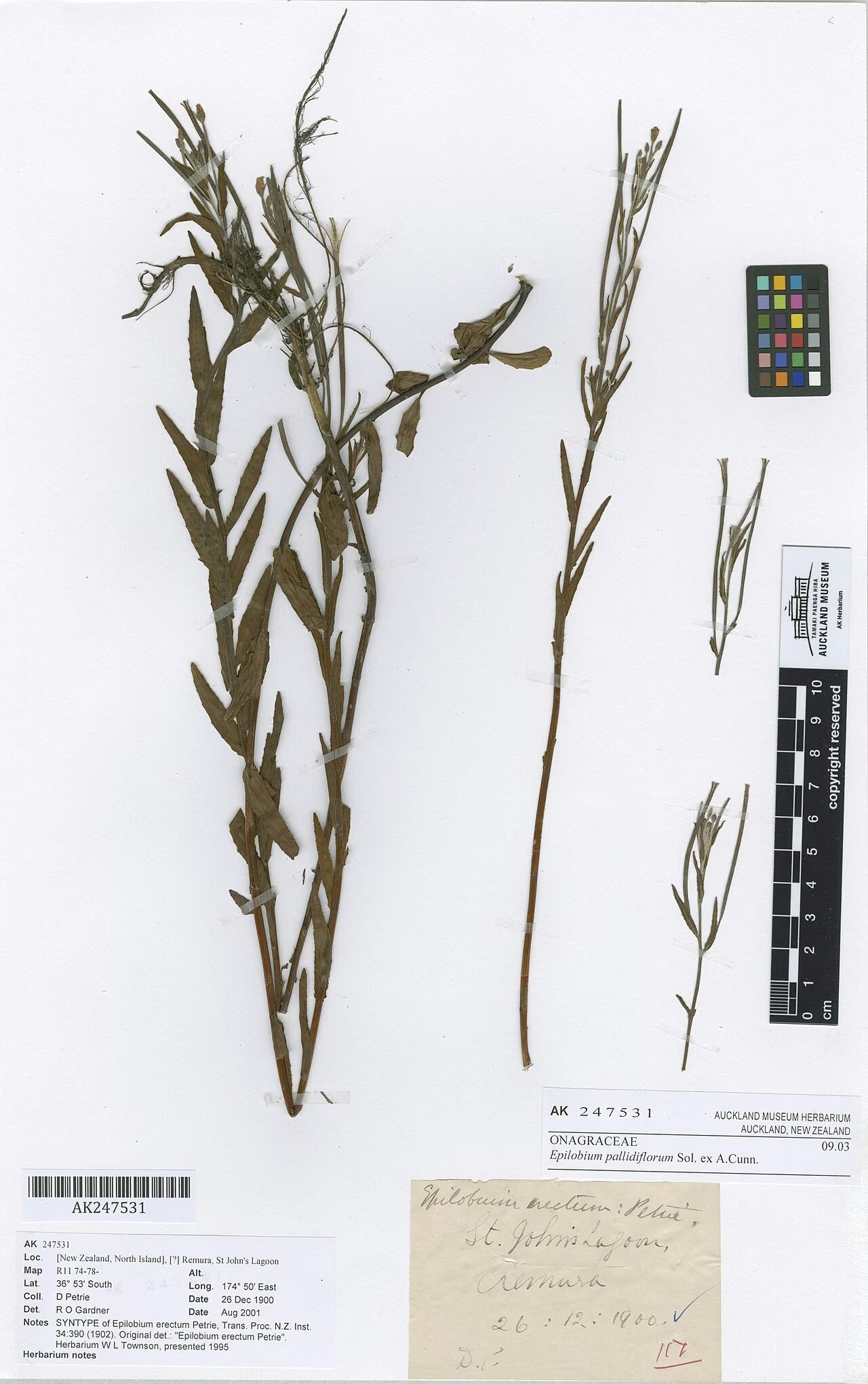
Swamp Willowherb
Epilobium pallidiflorum
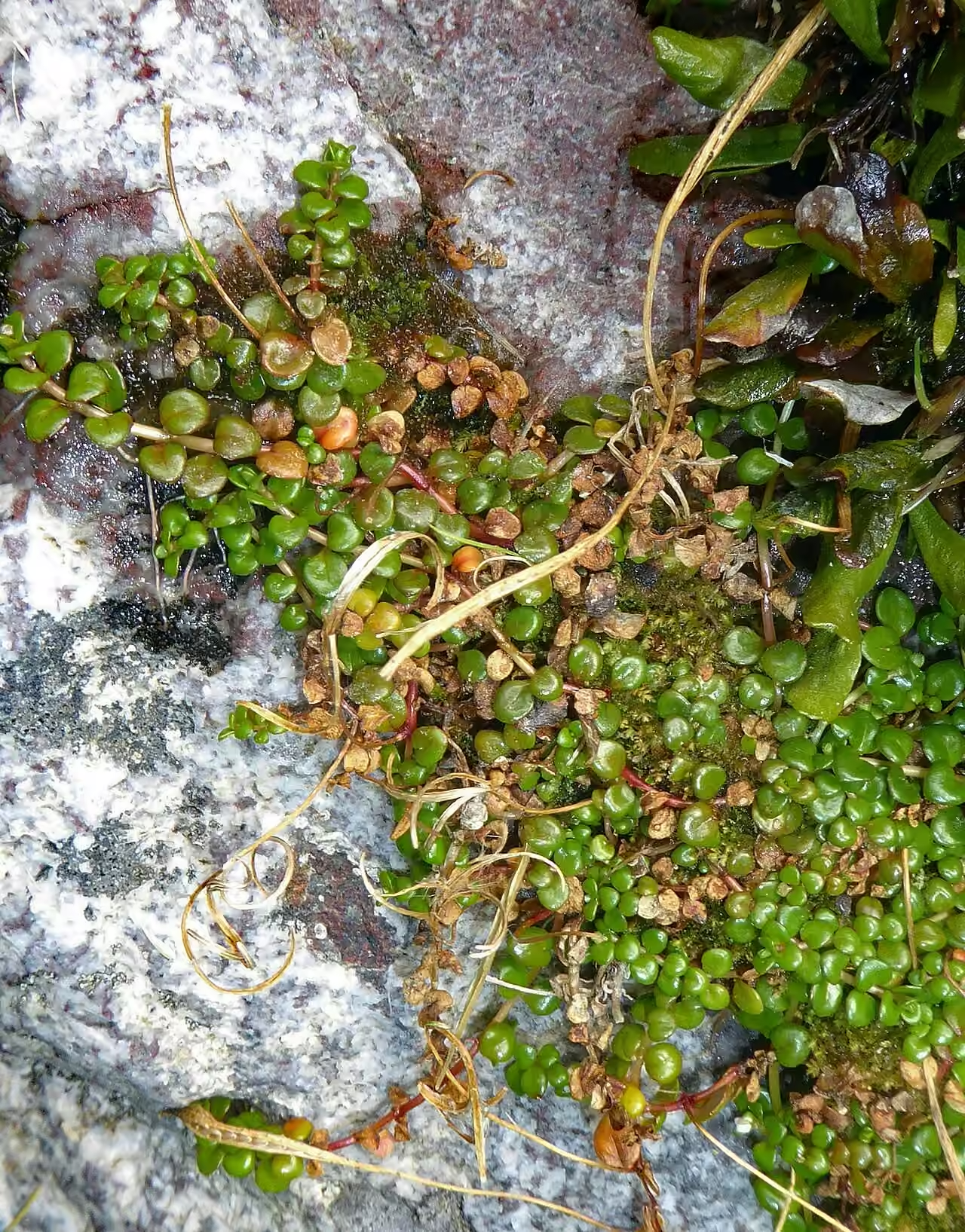
Epilobium pernitens
Epilobium pernitens
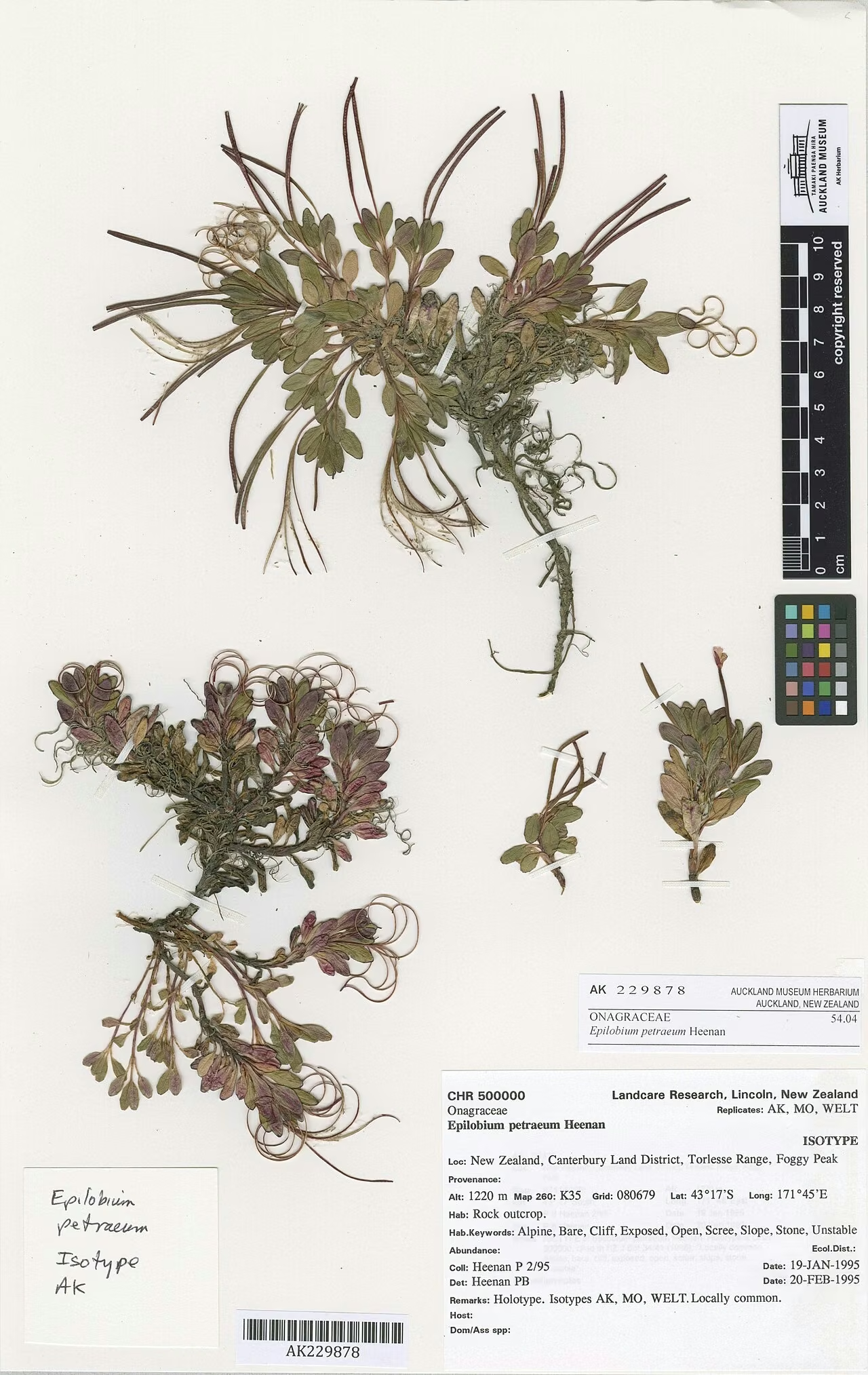
Rock Willowherb
Epilobium petraeum
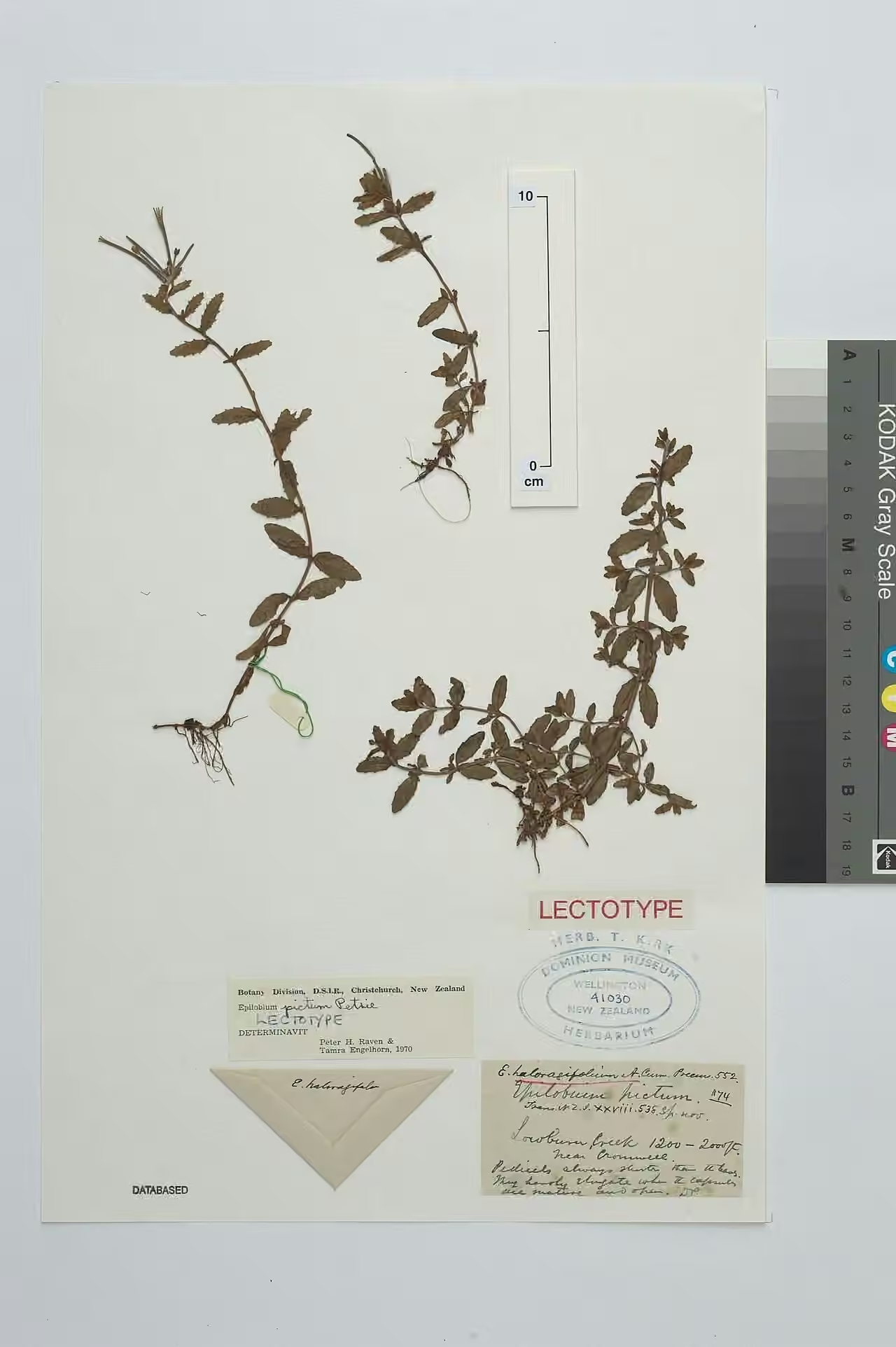
Grassland Willowherb
Epilobium pictum
Plant Conservation
Epilobium nerteroides is ranked Not Threatened (2023). It is widespread across New Zealand and no specific threats are documented in the sources consulted.
Protecting streamside forest and keeping waterways shaded and free of smothering weeds maintains its mossy rock habitat.
Frequently Asked Questions
Where does Epilobium nerteroides grow?
It grows in shaded riparian sites within forest and dense scrub, creeping over moss and liverwort encrusted rocks along watercourses, from coastal to subalpine levels throughout New Zealand.
How do you tell Epilobium nerteroides from Epilobium brunnescens?
E. nerteroides has narrower leaves, a more open habit, almost hairless stems, hairless ovaries, and flowers that fall before the stalk finishes lengthening. It also favours shaded mossy rocks, while E. brunnescens prefers open gravel, though the two can grow together.
Is Epilobium nerteroides easy to grow?
Yes. NZPCN says it grows easily from fresh seed and rooted pieces in a damp, shaded site, but warns it can be inclined to be weedy.
Sources and Further Reading
The botanical, growing, and conservation details for Willowherb (Epilobium nerteroides) on this page draw on the New Zealand plant references below. Consult them for full technical records and the latest distribution data.